

The Journal of Practical Medicine ›› 2026, Vol. 42 ›› Issue (18): 3399-3407.doi: 10.3969/j.issn.1006-5725.2026.18.019
• Treatise:Mechanism and Practice • Previous Articles
Meijuan Liu1, Yong Zhang2, Yanna Si1, Jun Lu1, Fangzhou Lu1, Juan Liu1( )
Received:2026-06-23
Revised:2026-08-08
Accepted:2026-08-18
Online:2026-09-25
Published:2026-10-19
Contact:
Juan Liu
About author:Liu Meijuan performed the experiments and wrote the article. Zhang Yong, Lu Jun and Lu Fangzhou performed the experiments. Si Yanna revised the article. Liu Juan designed the study and reviewed the article. All authors read and approved the final manuscript as submitted.
CLC Number:
Meijuan Liu, Yong Zhang, Yanna Si, Jun Lu, Fangzhou Lu, Juan Liu. Development and validation of a nomogram for predicting postoperative pulmonary complications in patients with spontaneous intracerebral hemorrhage[J]. The Journal of Practical Medicine, 2026, 42(18): 3399-3407.
Tab.1
Comparison of general conditions and perioperative data indicators between the two groups of patients in the training set"
| 指标 | PPCs组(n = 186) | 非PPCs组(n = 122) | t/Z/χ2 值 | P值 |
|---|---|---|---|---|
| 男性 | 116(62.4) | 82(67.2) | 0.754 | 0.385 |
| 年龄≥ 65岁 | 72(38.7) | 22(18.0) | 14.854 | < 0.001 |
| BMI(x ± s)/(kg/m2) | 23.7 ± 3.8 | 24.3 ± 2.8 | 1.479 | 0.140 |
| ASA/例 | 0.756 | 0.449 | ||
| Ⅱ级 | 20 | 18 | ||
| Ⅲ级 | 88 | 56 | ||
| Ⅳ级 | 78 | 48 | ||
| 高血压 | 92(49.5) | 60(49.2) | 0.002 | 0.961 |
| 糖尿病 | 64(34.4) | 38(31.1) | 0.354 | 0.552 |
| 冠心病 | 24(12.9) | 14(11.5) | 0.139 | 0.709 |
| 脑卒中史 | 14(7.5) | 8(6.6) | 0.104 | 0.747 |
| 近1个月呼吸道感染史 | 30(16.1) | 10(8.2) | 4.102 | 0.043 |
| 吸烟史 | 100(53.8) | 76(62.3) | 2.190 | 0.139 |
| 饮酒史 | 32(17.2) | 20(16.4) | 0.035 | 0.853 |
| 术前肾功能异常 | 18(9.6) | 12(9.8) | 0.002 | 0.963 |
| 术前肝功能异常 | 20(10.7) | 14(11.5) | 0.039 | 0.843 |
| 术前低氧 | 71(38.2) | 32(26.2) | 4.721 | 0.030 |
| 术前GCS评分[M(P 25,P 75)]/分 | 11(9,12) | 12(11,12) | 4.187 | < 0.001 |
| 术前血糖[M(P 25,P 75)]/(mmol/L) | 8(7,8) | 8(6,8) | 1.806 | 0.071 |
| 术前白蛋白[M(P 25,P 75)]/(g/L) | 37(33,40) | 38(35,41) | 1.831 | 0.067 |
| 术前血红蛋白[M(P 25,P 75)]/(g/dL) | 13(12,15) | 14(12,14) | 0.492 | 0.623 |
| 出血部位/例 | 3.549 | 0.470 | ||
| 基底节 | 30 | 28 | ||
| 丘脑 | 38 | 28 | ||
| 小脑 | 82 | 48 | ||
| 脑室 | 30 | 14 | ||
| 脑干 | 6 | 4 | ||
| 瞳孔异常 | 44(23.7) | 28(23.0) | 0.020 | 0.886 |
| 昏迷 | 78(41.9) | 50(41.0) | 0.027 | 0.868 |
| 吞咽困难 | 110(59.1) | 56(45.9) | 5.196 | 0.023 |
| 术前预防使用抗生素 | 124(66.7) | 70(57.4) | 2.727 | 0.099 |
| 出血破入脑室 | 66(35.5) | 36(29.5) | 1.188 | 0.276 |
| 手术时间(x ± s)/h | 4.2 ± 1.3 | 4.0 ± 1.1 | 1.863 | 0.063 |
| 术中出血量[M(P 25,P 75)]/mL | 1 163(782,1 416) | 1 000(900,1 200) | 0.958 | 0.338 |
| 输液量(x ± s)/mL | 2 500.8 ± 526.6 | 2 440.6 ± 429.5 | 1.054 | 0.293 |
| SII[M(P 25,P 75)] | 1 175(888,1 266) | 926(877,1 018) | 5.751 | < 0.001 |
Tab.2
Comparison of general conditions and perioperative data indicators between the training set and the validation set"
| 指标 | 训练集(n = 308) | 验证集(n = 132) | t/Z/χ2 值 | P值 |
|---|---|---|---|---|
| PPCs发生率 | 186(60.4) | 78(59.1) | 0.065 | 0.799 |
| 男性 | 198(64.3) | 78(59.1) | 3.280 | 0.070 |
| 年龄≥ 65岁 | 94(30.5) | 33(25.0) | 1.371 | 0.242 |
| BMI(x ± s)/(kg/m2) | 24.0 ± 3.5 | 24.2 ± 3.1 | 0.730 | 0.466 |
| ASA/例 | 0.140 | 0.889 | ||
| Ⅱ级 | 38 | 18 | ||
| Ⅲ级 | 144 | 60 | ||
| Ⅳ级 | 126 | 54 | ||
| 高血压 | 152(49.4) | 70(53.0) | 0.500 | 0.479 |
| 糖尿病 | 102(33.1) | 55(41.7) | 2.943 | 0.086 |
| 冠心病 | 38(12.3) | 24(18.2) | 2.607 | 0.106 |
| 脑卒中史 | 22(7.1) | 12(9.1) | 0.492 | 0.483 |
| 近1个月呼吸道感染史 | 40(13.0) | 18(13.6) | 0.034 | 0.854 |
| 吸烟史 | 176(57.1) | 64(48.5) | 2.794 | 0.095 |
| 饮酒史 | 52(16.9) | 26(19.6) | 0.502 | 0.479 |
| 术前肾功能异常 | 30(9.7) | 12(9.1) | 0.045 | 0.832 |
| 术前肝功能异常 | 34(11.0) | 14(10.6) | 0.018 | 0.894 |
| 术前低氧 | 103(33.4) | 48(36.4) | 0.350 | 0.554 |
| 术前GCS评分[M(P 25,P 75)]/分 | 11(10,12) | 11(9,13) | 1.636 | 0.102 |
| 术前血糖[M(P 25,P 75)]/(mmol/L) | 8(7,8) | 7(7,8) | 1.473 | 0.141 |
| 术前白蛋白[M(P 25,P 75)]/(g/L) | 37(34,40) | 36(34,39) | 1.516 | 0.130 |
| 术前血红蛋白[M(P 25,P 75)]/(g/dL) | 13(12,15) | 13(12,15) | 0.766 | 0.444 |
| 出血部位/例 | 2.534 | 0.639 | ||
| 基底节 | 58 | 32 | ||
| 丘脑 | 66 | 30 | ||
| 小脑 | 130 | 52 | ||
| 脑室 | 44 | 14 | ||
| 脑干 | 10 | 4 | ||
| 瞳孔异常 | 72(23.4) | 38(28.8) | 1.443 | 0.230 |
| 昏迷 | 128(41.6) | 50(37.9) | 0.519 | 0.471 |
| 吞咽困难 | 166(53.9) | 80(60.6) | 1.688 | 0.194 |
| 术前预防使用抗生素 | 194(63.0) | 95(72.0) | 3.308 | 0.069 |
| 出血破入脑室 | 102(33.1) | 36(27.3) | 1.466 | 0.226 |
| 手术时间(x ± s)/h | 4.1 ± 1.2 | 4.1 ± 1.3 | 0.516 | 0.606 |
| 术中出血量[M(P 25,P 75)]/mL | 1 069.5(892,1 321) | 1 163.5(992,1 373) | 1.918 | 0.055 |
| 输液量(x ± s)/mL | 2 477.0 ± 490.6 | 2 405.1 ± 435.0 | 1.455 | 0.146 |
| SII[M(P 25,P 75)] | 999(888,1 216) | 1 094(931,1 206) | 1.769 | 0.077 |
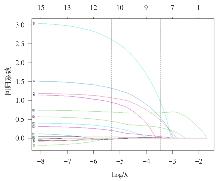
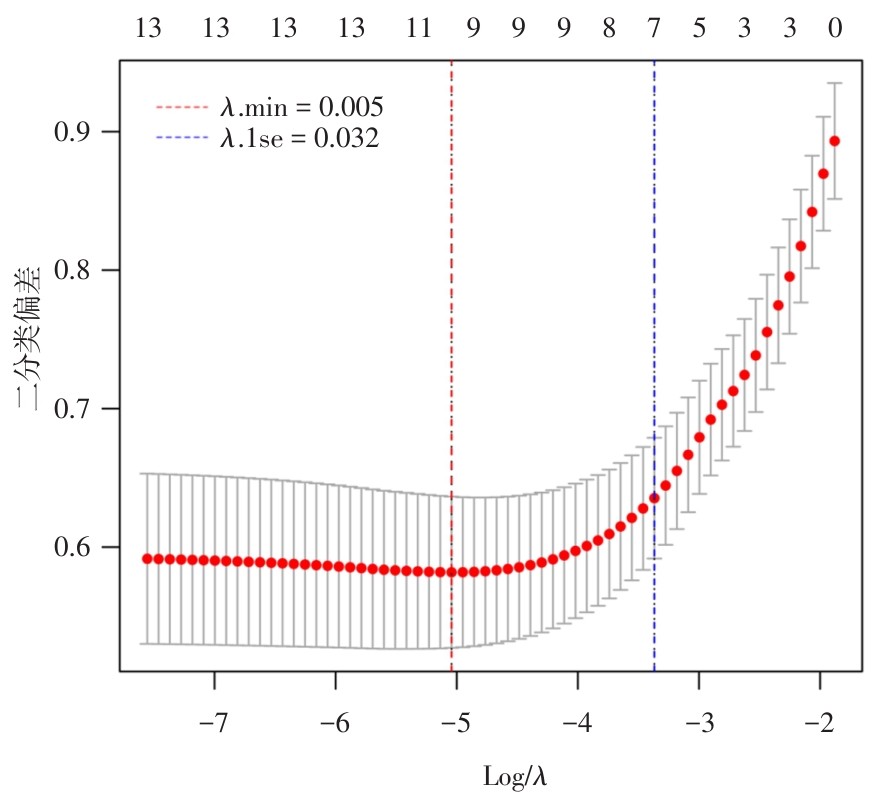
Fig.1
LASSO regression coefficient"
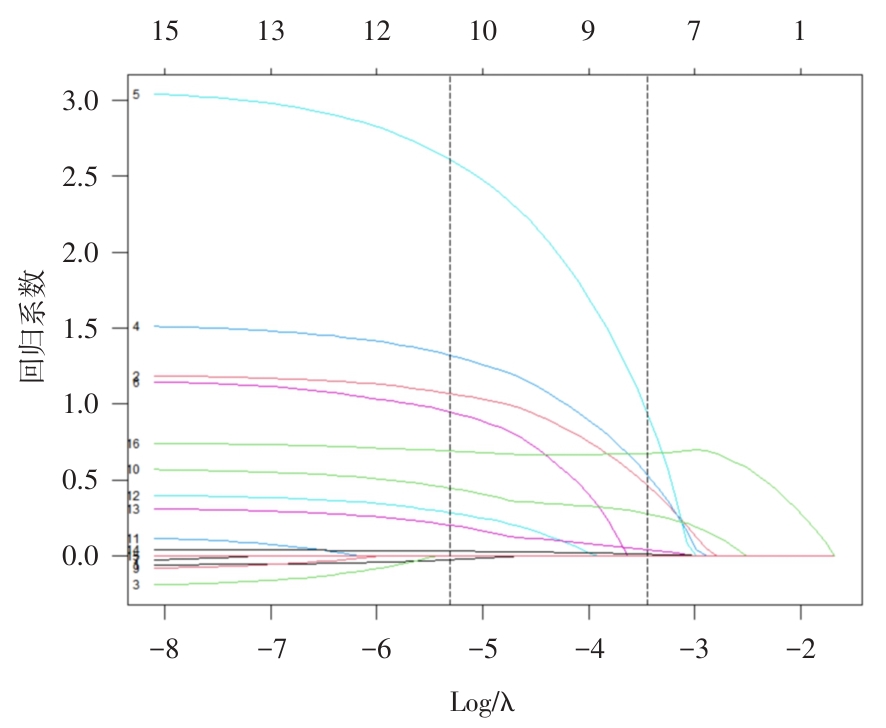
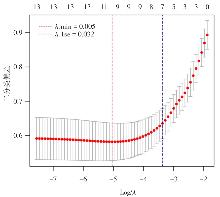
Fig.2
Ten-fold cross-validation curve"
Tab.3
Multivariate logistic regression analysis of PPCs in sICH patients"
| 变量 | OR | 95%CI | P值 |
|---|---|---|---|
| 年龄≥ 65岁 | 2.318 | 1.091 ~ 4.924 | 0.029 |
| 近1个月呼吸道感染史 | 1.432 | 0.499 ~ 4.112 | 0.504 |
| 术前低氧 | 1.987 | 1.116 ~ 3.536 | 0.020 |
| 吞咽困难 | 1.992 | 1.175 ~ 3.378 | 0.011 |
| GCS评分 | 0.767 | 0.654 ~ 0.899 | 0.001 |
| SII | 1.004 | 1.002 ~ 1.005 | < 0.001 |
| 研究中心 | 0.787 | 0.488 ~ 1.269 | 0.326 |
Fig.3
Nomogram for PPCs in sICH patients"
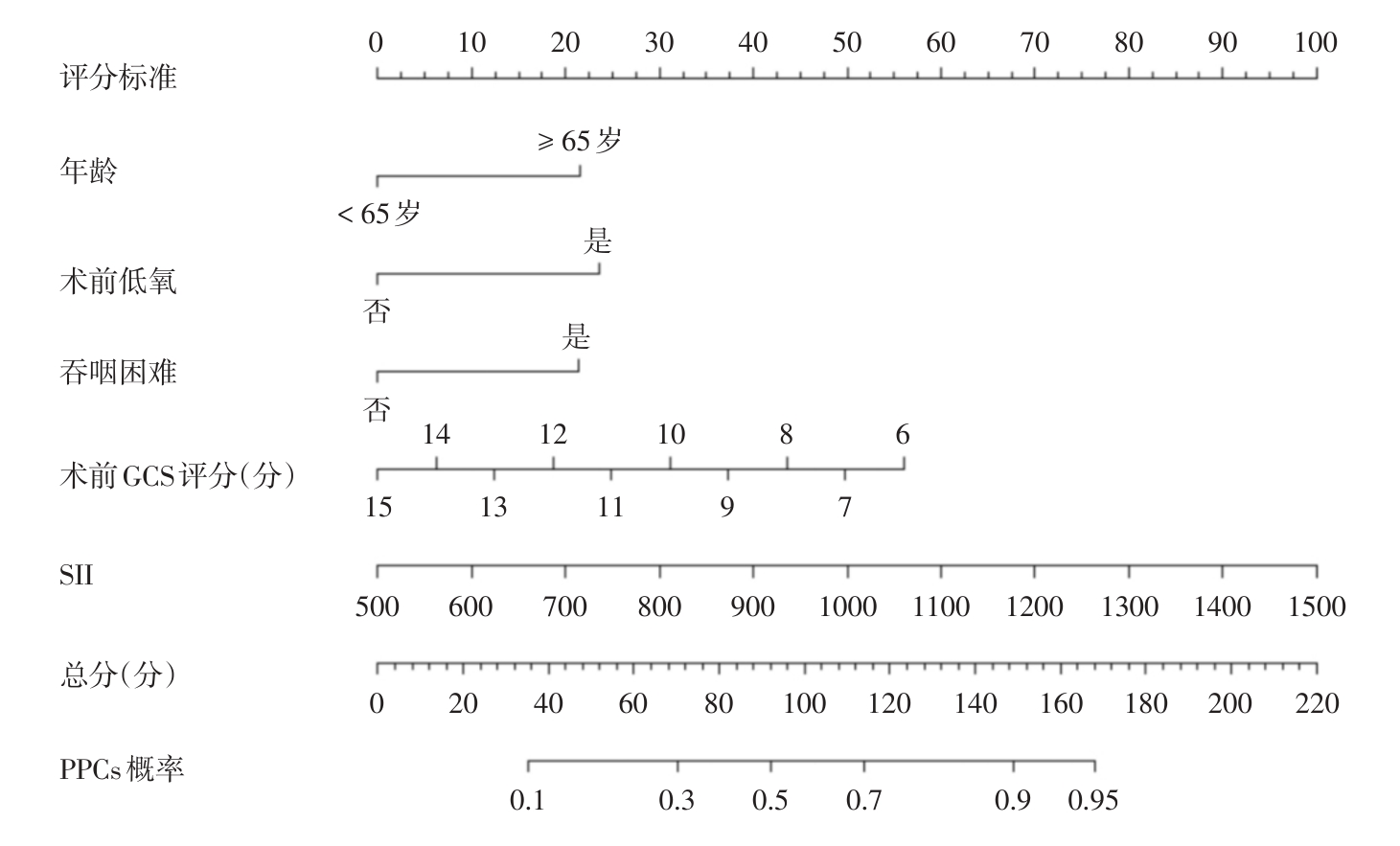
Fig.4
ROC curves of the prediction model for PPCs in sICH patients"
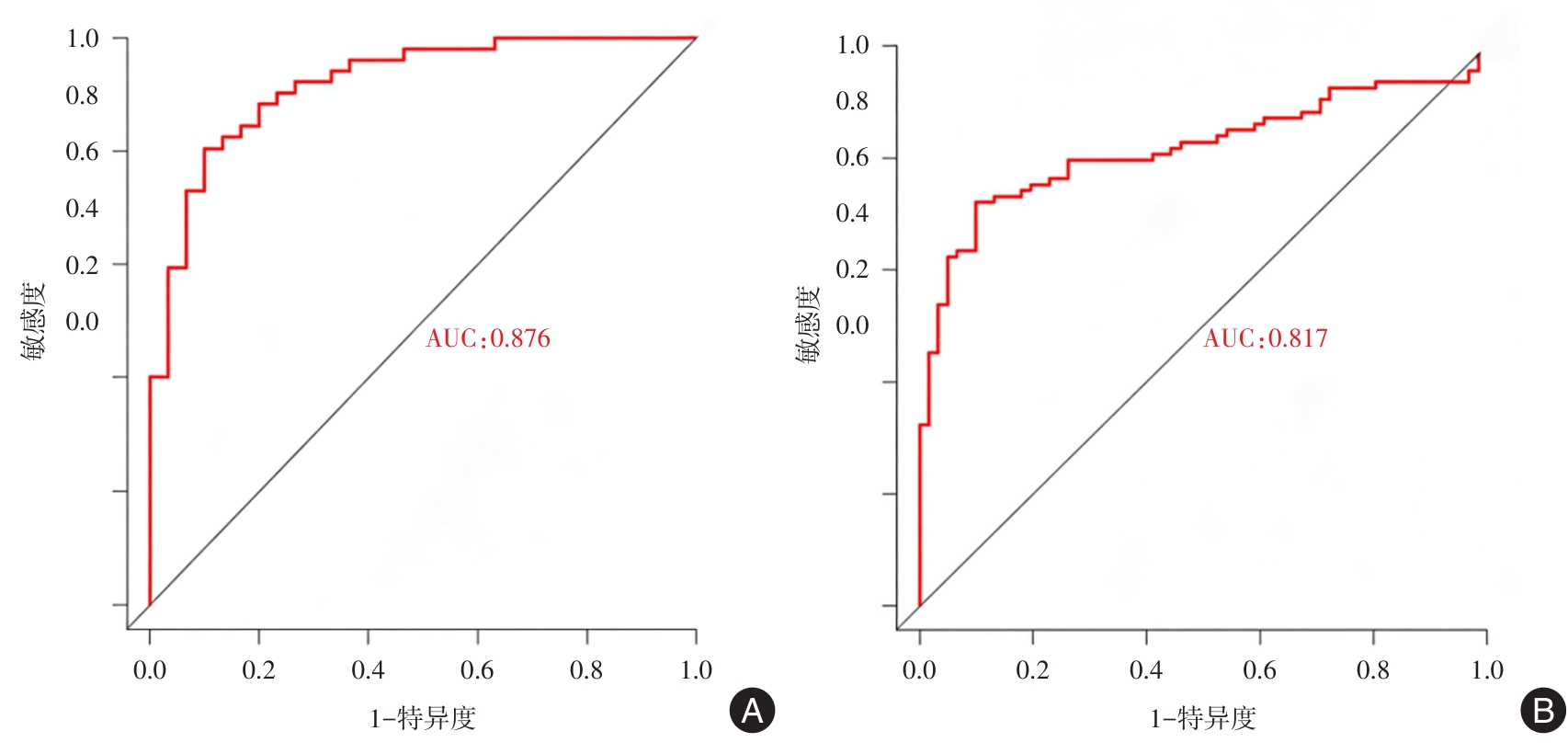
Fig.5
Calibration curves of the prediction model for PPCs in sICH patients"
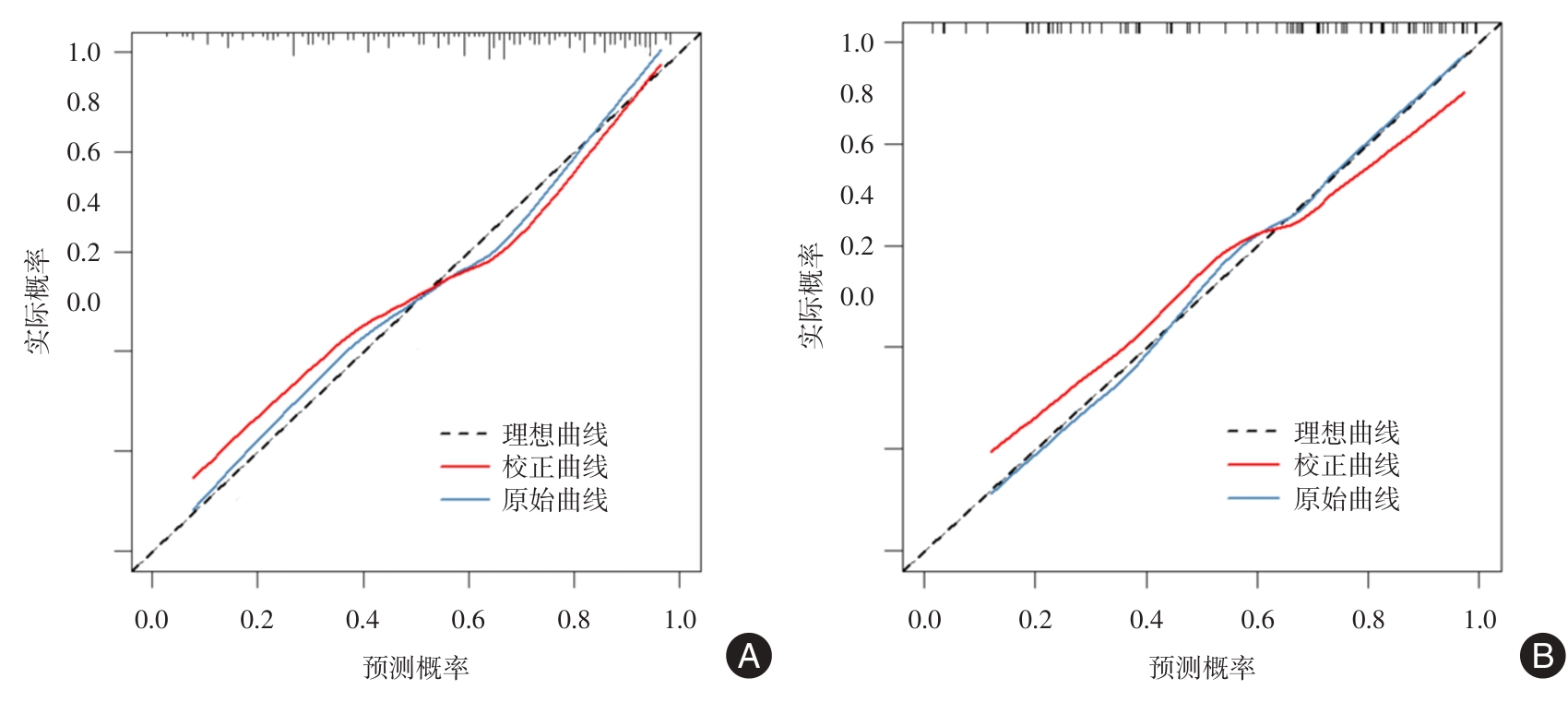
Fig.6
Clinical decision curves of the prediction model for PPCs in sICH patients"
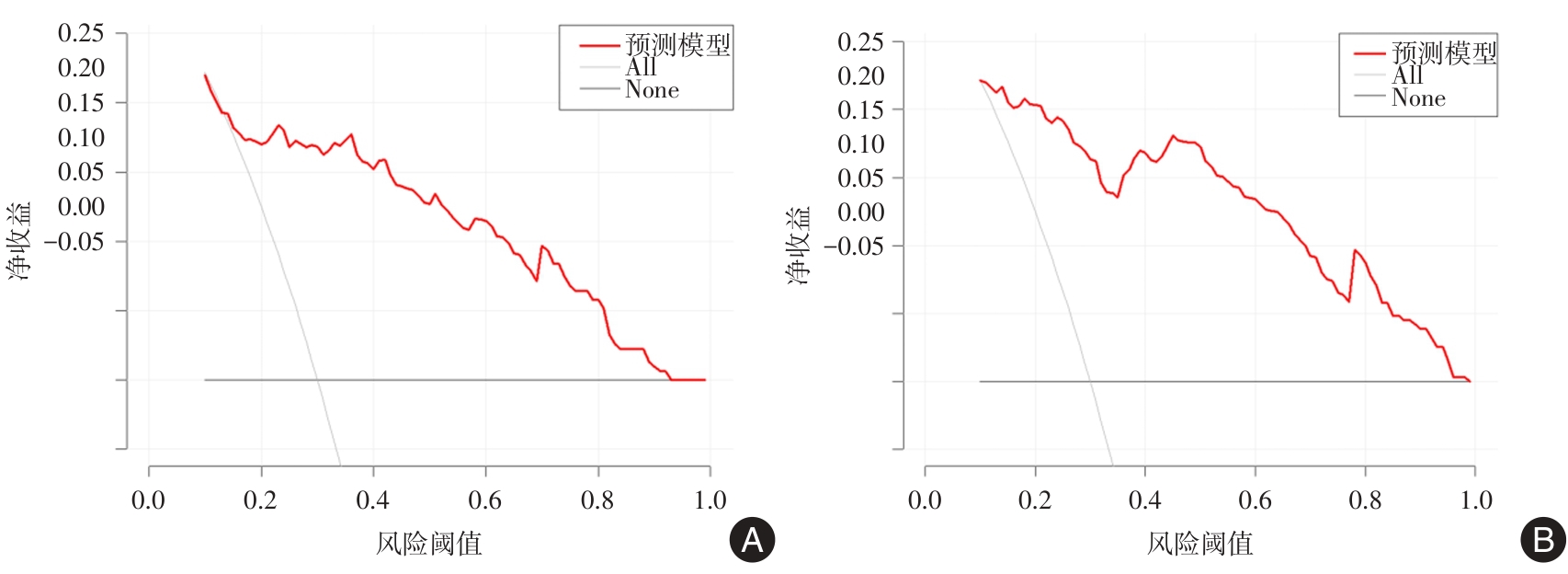
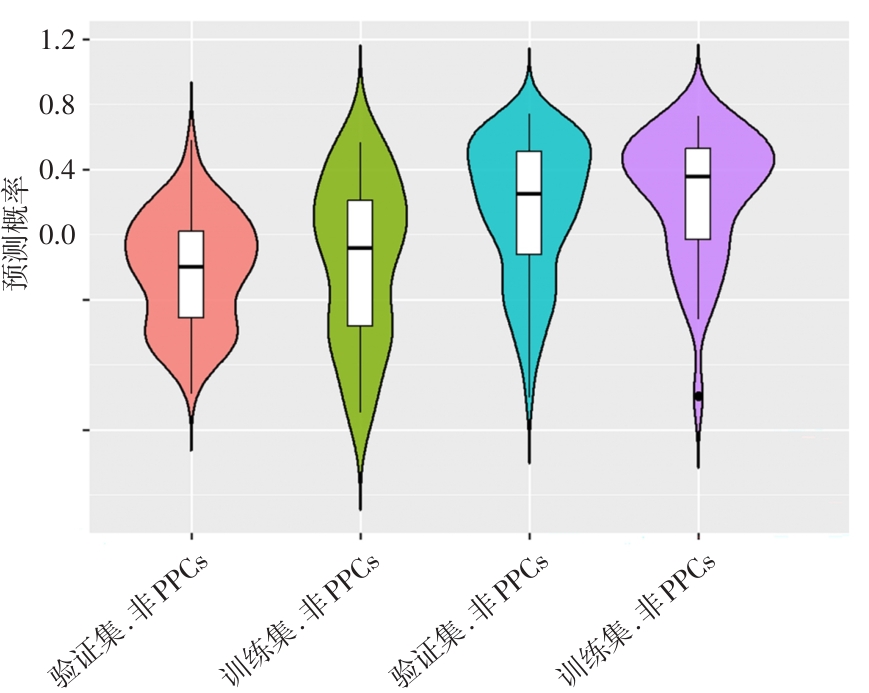
Fig.7
Violin plots of predicted probabilities in different subgroups"
| [1] |
李晨光, 陈晓鸣, 屠伟峰, 等. 肺部超声评分在颅脑损伤患者术后肺部并发症的预测价值[J]. 临床麻醉学杂志, 2025, 41(1): 46-50. doi:10.12089/jca.2025.01.009 .
|
| [2] |
|
| [3] |
|
| [4] |
|
| [5] |
|
| [6] |
|
| [7] |
于萍, 徐璐瑶, 王志红, 等. 脑卒中吞咽障碍患者误吸风险评估工具的Meta分析[J]. 神经病学与神经康复学杂志, 2025, 21(2): 131-142. doi:10.12022/jnnr.2024-0290 .
|
| [8] |
|
| [9] |
宋新杰, 王安心, 赵性泉. 急性脑出血患者合并吞咽障碍的危险因素分析[J]. 中国医刊, 2022, 57(7): 754-757. doi:10.3969/j.issn.1008-1070.2022.07.015 .
|
| [10] |
|
| [11] |
石娟, 刘荣. 神经外科老年昏迷患者鼻饲反流误吸调查及其危险因素分析[J]. 老年医学与保健, 2023, 29(6): 1253-1257. doi:10.3969/j.issn.1008-8296.2023.06.030 .
|
| [12] |
|
| [13] |
|
| [14] |
|
| [15] |
|
| [16] |
|
| [17] |
王玲玲, 吕磊, 周艳, 等. SAA、HBP、CRP对肺癌术后并发肺部感染的预测价值[J]. 湖北科技学院学报(医学版), 2024, 38(3): 230-233. doi:10.16751/j.cnki.2095-4646.2024.03.0230 .
|
| [18] |
|
| [19] |
郭高锋, 阮孝国, 王洋洋, 等. 床旁膈肌超声在预测胸腔镜肺叶切除术后肺部并发症中的应用价值[J]. 实用医学杂志, 2024, 40(2): 207-212. doi:10.3969/j.issn.1006-5725.2024. 02.014 .
|
| [20] |
杨鹏, 许伊蒙, 韩玮. 胰十二指肠切除术术后肺部感染的危险因素分析及预测模型构建[J]. 实用医学杂志, 2025, 41(11): 1705-1710. doi:10.3969/j.issn.1006-5725.2025.11.014 .
|
| Viewed | ||||||
|
Full text |
|
|||||
|
Abstract |
|
|||||
