

The Journal of Practical Medicine ›› 2026, Vol. 42 ›› Issue (13): 2396-2403.doi: 10.3969/j.issn.1006-5725.2026.13.016
• Chronic Disease Control • Previous Articles
Junge LOU,Haihong SHI,Li GUO,Xueqi ZHAO,Yuanyuan YAN( )
)
Received:2026-04-28
Online:2026-07-10
Published:2026-07-14
Contact:
Yuanyuan YAN
E-mail:yanyuanyuan1974@126.com
CLC Number:
Junge LOU,Haihong SHI,Li GUO,Xueqi ZHAO,Yuanyuan YAN. Construction and validation of a nomogram model for predicting bone erosion risk based on ultrasound-detected tophi[J]. The Journal of Practical Medicine, 2026, 42(13): 2396-2403.
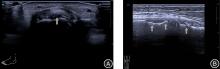
Fig.1
Typical ultrasonographic images of tophus and bone erosion"


Tab.1
Comparison of clinical characteristics and laboratory indices between the two groups"
| 项目 | 非骨侵蚀组(n = 104) | 骨侵蚀组(n = 122) | t/χ2/Z值 | P值 |
|---|---|---|---|---|
| 年龄(x ± s)/岁 | 37.87 ± 9.39 | 50.33 ± 9.49 | -9.896 | 0.001 |
| 男性/[例(%)] | 89(85.58) | 114(93.44) | 3.800 | 0.051 |
| 病程/个月 | 60.00(48.00,72.00) | 120.00(84.00,144.00) | -9.530 | 0.001 |
| BMI/(kg/m2) | 27.7(25.20,29.55) | 26.65(24.20,28.90) | 1.490 | 0.136 |
| 多关节受累/[例(%)] | 34(32.69) | 92(75.41) | 41.528 | 0.001 |
| 吸烟史/[例(%)] | 43(41.35) | 55(45.08) | 0.319 | 0.572 |
| 饮酒史/[例(%)] | 71(68.27) | 91(74.59) | 1.105 | 0.293 |
| 痛风家族史/[例(%)] | 11(10.57) | 19(15.57) | 1.218 | 0.270 |
| 高嘌呤饮食史/[例(%)] | 68(65.38) | 71(58.20) | 1.225 | 0.268 |
| 血清尿酸(x ± s)/(μmol/L) | 496.95 ± 122.27 | 530.66 ± 130.77 | -2.040 | 0.043 |
| 估算肾小球滤过率(x ± s)/[mL/(min·1.73 m2)] | 97.77 ± 22.38 | 83.87 ± 16.87 | 5.314 | 0.001 |
| 总胆固醇/(mmol/L) | 4.76(4.05,5.44) | 4.81(4.25,5.17) | -0.152 | 0.879 |
| 甘油三酯/(mmol/L) | 1.81(1.37,2.47) | 1.92(1.39,2.68) | -0.713 | 0.476 |
| C反应蛋白/(mg/L) | 8.55(1.92,25.38) | 7.79(2.86,29.55) | 0.190 | 0.849 |
| 红细胞沉降率/(mm/h) | 16.00(7.00,38.00) | 19.00(7.00,36.00) | 0.139 | 0.890 |
| 白蛋白/(g/L) | 42.25(38.50,44.73) | 40.90(38.83,43.40) | 2.004 | 0.045 |
Tab.2
Univariate and multivariate logistic regression analyses of factors associated with bone erosion in patients with tophi"
| 变量 | 单因素 | 多因素 | ||
|---|---|---|---|---|
| OR(95%CI) | P值 | OR(95%CI) | P值 | |
| 年龄 | 1.148(1.105 ~ 1.193) | 0.001 | 1.081(1.027 ~ 1.137) | 0.003 |
| 病程 | 1.045(1.031 ~ 1.059) | 0.001 | 1.036(1.020 ~ 1.052) | 0.001 |
| 估算肾小球滤过率 | 0.964(0.949 ~ 0.979) | 0.001 | 0.972(0.949 ~ 0.995) | 0.025 |
| 多关节受累 | 6.314(3.531 ~ 11.289) | 0.001 | 4.426(1.691 ~ 11.586) | 0.003 |
| 血清尿酸 | 1.003(1.001 ~ 1.006) | 0.015 | 1.004(1.000 ~ 1.008) | 0.017 |
| 男性 | 2.402(0.975 ~ 5.917) | 0.057 | ||
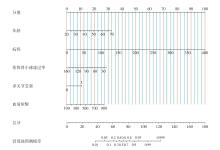
Fig.2
Nomogram for predicting the risk of bone erosion in patients with ultrasound-detected tophi"
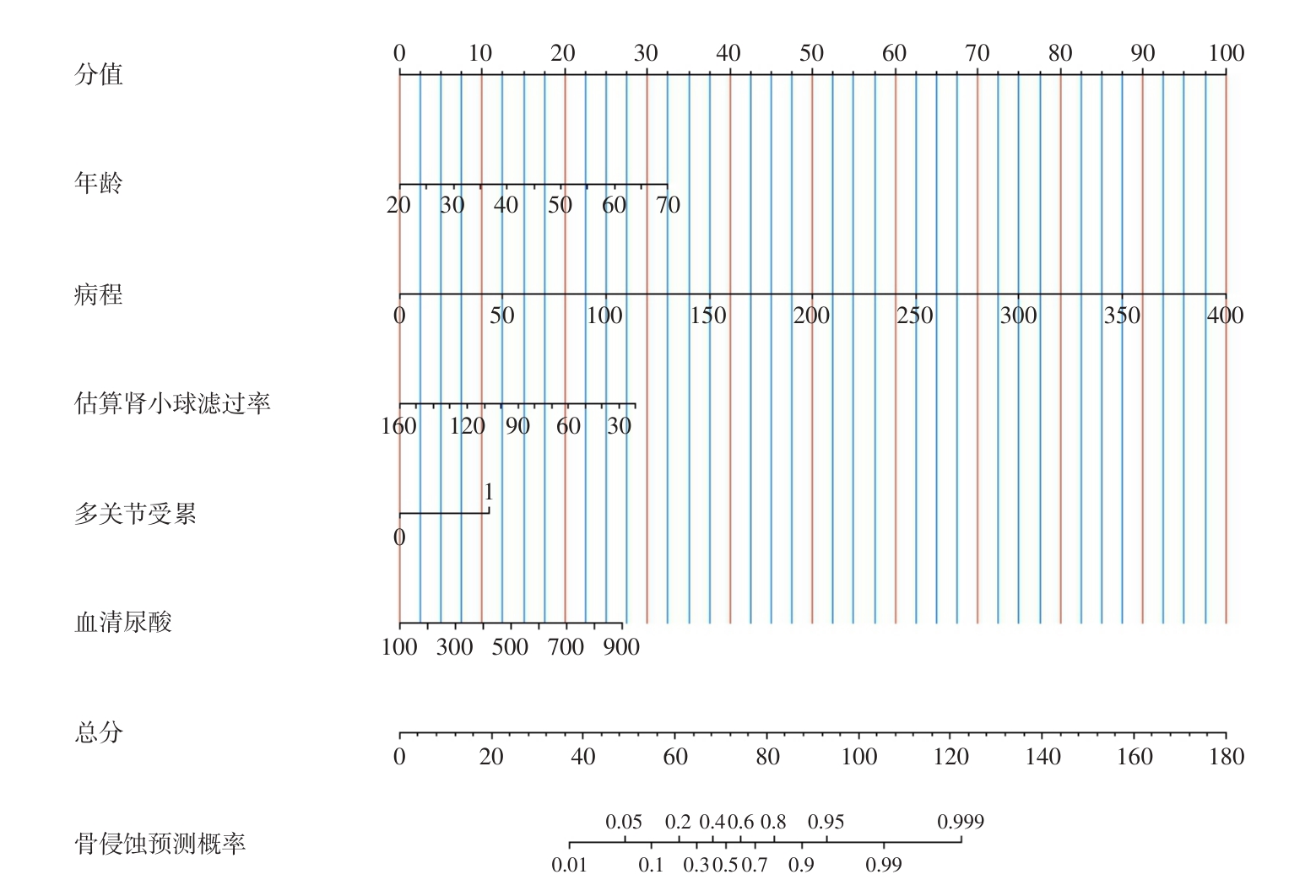
Fig.3
Discrimination and calibration evaluation of the nomogram model"
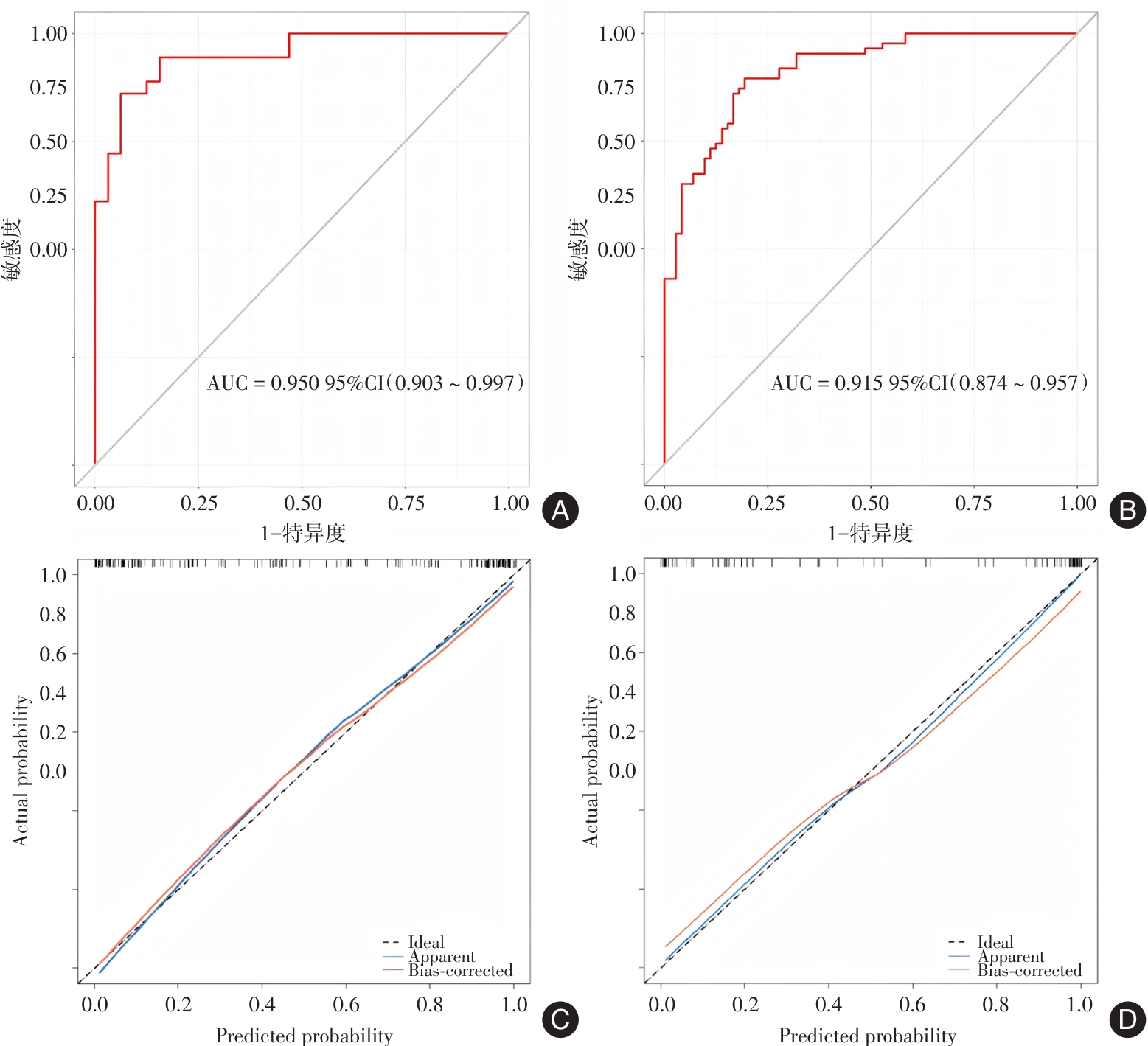
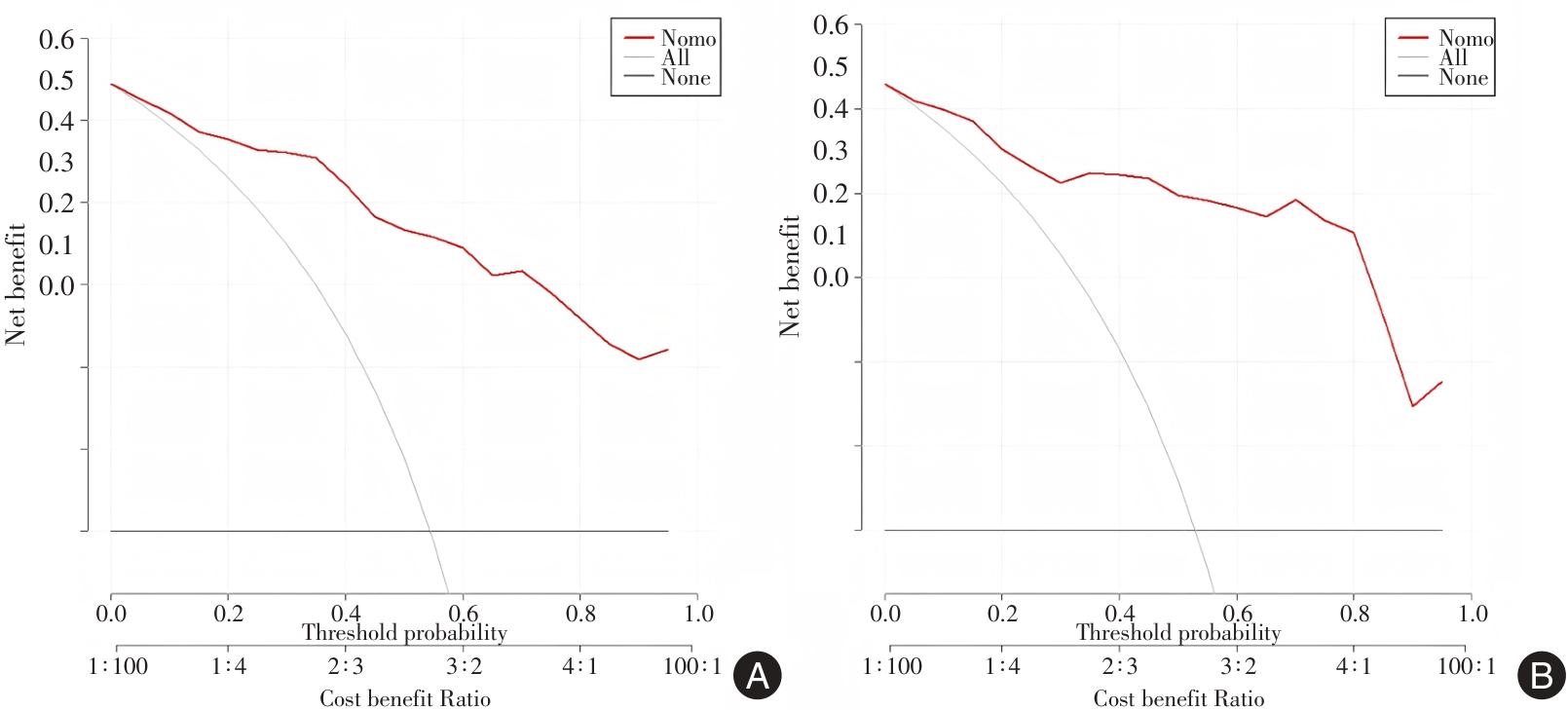
Fig.4
Decision curve analysis of the nomogram model"
| [1] |
徐东, 朱小霞, 邹和建, 等. 痛风诊疗规范[J]. 中华内科杂志, 2023, 62(9): 1068-1076. doi: 10.3760/cma.j.cn112138-20221027-00796 .
doi: 10.3760/cma.j.cn112138-20221027-00796 |
| [2] |
李长贵, 孙明姝, 刘振, 等. 中国高尿酸血症与痛风诊疗指南(2024) 第二部分: 常见合并症患者的治疗建议[J]. 中华内分泌代谢杂志, 2025, 41(11): 918-929. doi: 10.3760/cma.j.cn311282-20250903-00430 .
doi: 10.3760/cma.j.cn311282-20250903-00430 |
| [3] |
NEILSON J, BONNON A, DICKSON A, et al. Gout: Diagnosis and management-summary of NICE guidance[J]. BMJ, 2022, 378: o1754. doi: 10.1136/bmj.o1754 .
doi: 10.1136/bmj.o1754 |
| [4] |
GBD 2021 Gout Collaborators. Global, regional, and national burden of gout, 1990–2020, and projections to 2050: A systematic analysis of the Global Burden of Disease Study 2021[J]. Lancet Rheumatol, 2024, 6(8): e507-e517. doi: 10.1016/s2665-9913(24)00117-6 .
doi: 10.1016/s2665-9913(24)00117-6 |
| [5] |
方珈文, 冯天元, 周志衡, 等. 1990—2019年中国痛风疾病负担趋势及未来十年预测研究[J]. 中国全科医学, 2024, 27(2): 245-252. doi: 10.12114/j.issn.1007-9572.2023.0505 .
doi: 10.12114/j.issn.1007-9572.2023.0505 |
| [6] |
DALBETH N, GOSLING A L, GAFFO A, et al. Gout[J]. Lancet, 2021, 397(10287): 1843-1855. doi: 10.1016/S0140-6736(21)00569-9 .
doi: 10.1016/S0140-6736(21)00569-9 |
| [7] |
HU L, LI H, HUANG X, et al. Mechanisms of monosodium urate crystal-induced bone destruction in gouty arthritis (Review)[J]. Biomed Rep, 2026, 24(5): 61. doi: 10.3892/br.2026.2134 .
doi: 10.3892/br.2026.2134 |
| [8] |
LIU X, LI B, ZHANG X, et al. Factors associated with bone erosion in patients with gout: A dual-energy gemstone spectral imaging computed tomography study[J]. Mod Rheumatol, 2022, 32(6): 1170-1174. doi: 10.1093/mr/roab116 .
doi: 10.1093/mr/roab116 |
| [9] |
中国医师协会风湿免疫科医师分会影像学组, 海峡两岸医药卫生交流协会风湿免疫病学专业委员会影像学组. 影像学技术在痛风关节炎中应用的中国专家共识(2025版)[J]. 中华风湿病学杂志, 2025, 29(1): 1-7. doi: 10.3760/cma.j.cn141217-20240930-00282 .
doi: 10.3760/cma.j.cn141217-20240930-00282 |
| [10] |
MANDL P, D'AGOSTINO M A, NAVARRO-COMPÁN V, et al. 2023 EULAR recommendations on imaging in diagnosis and management of crystal-induced arthropathies in clinical practice[J]. Ann Rheum Dis, 2024, 83(6): 752-759. doi: 10.1136/ard-2023-224771 .
doi: 10.1136/ard-2023-224771 |
| [11] |
GUTIERREZ M, SCHMIDT W A, THIELE R G, et al. International Consensus for ultrasound lesions in gout: Results of Delphi process and web-reliability exercise[J]. Rheumatology (Oxford), 2015, 54(10): 1797-1805. doi: 10.1093/rheumatology/kev112 .
doi: 10.1093/rheumatology/kev112 |
| [12] |
JI Z, HUANG Y, LIANG L, et al. Clinical characteristics and risk factors associated with bone erosion in patients with tophi[J]. Adv Rheumatol, 2024, 64(1): 18. doi: 10.1186/s42358-023-00336-w .
doi: 10.1186/s42358-023-00336-w |
| [13] |
WU M, LIU F J, CHEN J, et al. Prevalence and factors associated with bone erosion in patients with gout[J]. Arthritis Care Res, 2019, 71(12): 1653-1659. doi: 10.1002/acr.23816 .
doi: 10.1002/acr.23816 |
| [14] |
杨绍汪. 经皮冠状动脉介入治疗急性心肌梗死患者术后发生对比剂肾病的风险模型的构建[J]. 实用医学杂志, 2023, 39(15): 1925-1931. doi: 10.3969/j.issn.1006-5725.2023.15.012 .
doi: 10.3969/j.issn.1006-5725.2023.15.012 |
| [15] |
NEOGI T, JANSEN T L, DALBETH N, et al. 2015 gout classification criteria: An American college of rheumatology/European league against rheumatism collaborative initiative[J]. Arthritis Rheumatol, 2015, 67(10): 2557-2568. doi: 10.1002/art.39254 .
doi: 10.1002/art.39254 |
| [16] |
DHIMAN P, MA J, QI C, et al. Sample size requirements are not being considered in studies developing prediction models for binary outcomes: A systematic review[J]. BMC Med Res Methodol, 2023, 23(1): 188. doi: 10.1186/s12874-023-02008-1 .
doi: 10.1186/s12874-023-02008-1 |
| [17] |
RILEY R D, ENSOR J, SNELL K I E, et al. Calculating the sample size required for developing a clinical prediction model[J]. BMJ, 2020, 368:m441. doi: 10.1136/bmj.m441 .
doi: 10.1136/bmj.m441 |
| [18] |
ZHENG W Y, ZHAN W F, WANG J Y, et al. Detailed analysis of the association between urate deposition and bone erosion in gout: A dual-energy computed tomography study[J]. Front Endocrinol, 2023, 14: 1167756. doi: 10.3389/fendo.2023.1167756 .
doi: 10.3389/fendo.2023.1167756 |
| [19] |
NAOT D, POOL B, CHHANA A, et al. Factors secreted by monosodium urate crystal-stimulated macrophages promote a proinflammatory state in osteoblasts: A potential indirect mechanism of bone erosion in gout[J]. Arthritis Res Ther, 2022, 24(1): 212. doi: 10.1186/s13075-022-02900-z .
doi: 10.1186/s13075-022-02900-z |
| [20] |
JIA E, LI Z, GENG H, et al. Neutrophil extracellular traps induce the bone erosion of gout[J]. BMC Musculoskelet Disord, 2022, 23(1): 1128. doi: 10.1186/s12891-022-06115-w .
doi: 10.1186/s12891-022-06115-w |
| [21] |
LI Z, HE L, JIAO J, et al. Musculoskeletal ultrasound evaluates renal injury and predicts renal outcome in patients with gout[J]. Kidney Dis (Basel), 2023, 9(2): 94-103. doi: 10.1159/000528200 .
doi: 10.1159/000528200 |
| [22] |
李禄伟, 黄倩, 施佳成, 等. 超重及肥胖人群高尿酸血症发病风险预测模型的构建及评价[J]. 实用医学杂志, 2021, 37(18): 2401-2406. doi: 10.3969/j.issn.1006-5725.2021.18.019 .
doi: 10.3969/j.issn.1006-5725.2021.18.019 |
| [1] | Chong HE,Yongyue ZHANG,Shumin WANG. Difficulties and research progress in ultrasonic diagnosis of follicular cell-derived thyroid neoplasms [J]. The Journal of Practical Medicine, 2026, 42(7): 1165-1170. |
| [2] | Fang LI,Xiaojuan ZHANG,Wenli YANG,Wen ZHONG. The relationship between SII, CAR, CALLY index and acute attack of gouty arthritis [J]. The Journal of Practical Medicine, 2026, 42(11): 1973-1980. |
| [3] | Danhui LAI,Yanhui JIANG,Siting YE,Shulian ZHUANG,Shuang YANG,Wen XUE,Jianxing ZHANG. Analysis of prediction of carotid in-stent restenosis based on ultrasonographic carotid plaque radiomics [J]. The Journal of Practical Medicine, 2025, 41(5): 742-750. |
| [4] | Qihong GUO,Baolin ZHENG,Ting LI,Yutong JIANG,Junli CHEN,Yuanyi LI,Haimei YANG,Junguang. LU. To investigate the association between gout⁃related gene polymorphisms and clinical phenotypic heterogeneity in gout patients from the Foshan region [J]. The Journal of Practical Medicine, 2025, 41(19): 3060-3064. |
| [5] | Hai QIU,Yifei GUI,Yuan. LIU. Predictors of sentinel lymph node metastasis in clinical T1⁃2 N0 breast cancer patients with preoperatively normal axillary ultrasound [J]. The Journal of Practical Medicine, 2025, 41(14): 2143-2151. |
| [6] | Gaofeng GUO,Xiaoguo RUAN,Yangyang WANG,Jiaqiang. ZHANG. Predictive value of bedside diaphragmatic ultrasound for pulmonary complications after thoracoscopic lobectomy [J]. The Journal of Practical Medicine, 2024, 40(2): 207-212. |
| [7] | Li′na LIU,Heming WU,Zhiyuan ZHENG,Shuxian HUANG,Lingna. SHE. Application of ultrasound evaluation of NT thickening and nasal bone dyscalcification combined with CMA in prenatal diagnosis of fetuses [J]. The Journal of Practical Medicine, 2024, 40(19): 2755-2759. |
| [8] | Wei ZHANG,Xiyang HU,Yunna ZHANG,Lingling SHEN,Minhui LI,Shasha SONG,Jian. ZHANG. The combination of dual⁃energy CT and musculoskeletal ultrasonography has shown promise in distinguishing between calcium pyrophosphate deposition disease and gouty arthritis [J]. The Journal of Practical Medicine, 2024, 40(17): 2477-2482. |
| [9] | Qicheng JIN,Jianghong LV,Lilong XU,Hongfen WEI,Tongfang TANG,Chuanju ZHANG,Shiyan. LI. Impacts of different ultrasound imaging parameters on the differential diagnosis of benign and malignant breast nodules with S⁃Detect technology [J]. The Journal of Practical Medicine, 2023, 39(22): 2891-2897. |
| [10] | YANG Shaowang.. Construction of a risk model of contrast⁃ induced nephropathy after percutaneous coronary intervention for acute myocardial infarction [J]. The Journal of Practical Medicine, 2023, 39(15): 1925-1931. |
| [11] |
WU Zhuangzhuang, ZHANG Xiaojuan, SHI Zehong, SHI Yao, YUAN Shaol⁃ing..
The diagnostic value of ultrasonography,mammography and their combination in high⁃grade and middle⁃ low⁃grade ductal carcinoma in situ [J]. The Journal of Practical Medicine, 2022, 38(5): 560-564. |
| [12] |
TANG Xianpeng, LI Xigui, XIAO Yaocheng, HUANG Shaobin, SHU Guoliang, ZHANG Yanfen.
A study on the diagnostic accuracy of transrectal ultrasonography versus magnetic resonance in locally advanced rectal cancer [J]. The Journal of Practical Medicine, 2022, 38(22): 2850-2854. |
| [13] | HE Luoyi, LIU Pinjing, LI Liping, TANG Zhanhong.. Clinical study of bedside ultrasound evaluation of blood volume status in sepsis patients with mechanical ventilation [J]. The Journal of Practical Medicine, 2021, 37(6): 722-725. |
| [14] |
CHENG Cheng, XU Rixin, ZHANG Qiang, CAO Tianqing, LIU Xiaodong, XIE Yong, MEI Hongbin..
Clinical features of patients with spontaneous coronary artery dissection and follow⁃up for different treat⁃ments
[J]. The Journal of Practical Medicine, 2021, 37(3): 348-352.
|
| [15] |
ZHANG Siting, CAI Yan, LI Bi, SUN Zhidan..
Detection of carotid artery elastic function with ultrafast ultrasound imaging technology in patients with gouty arthritis [J]. The Journal of Practical Medicine, 2021, 37(19): 2535-2539. |
| Viewed | ||||||
|
Full text |
|
|||||
|
Abstract |
|
|||||
