

The Journal of Practical Medicine ›› 2026, Vol. 42 ›› Issue (12): 2208-2215.doi: 10.3969/j.issn.1006-5725.2026.12.016
• Chronic Disease Control • Previous Articles
Hongyun WANG1,Chengcai ZHANG2,Weiwei WANG1( )
)
Received:2026-02-13
Online:2026-06-25
Published:2026-06-30
Contact:
Weiwei WANG
E-mail:77509293@qq.com
CLC Number:
Hongyun WANG,Chengcai ZHANG,Weiwei WANG. Exploring the mechanism of crocin in alleviating high glucose induced glomerular endothelial cell damage based on the IKKβ/NF⁃κB signaling pathway[J]. The Journal of Practical Medicine, 2026, 42(12): 2208-2215.
Tab.1
Effect of crocin at different concentrations on the activity of glomerular endothelial cells induced by high glucose and cultured normally (n = 6)"
| 藏红花素浓度 | 肾小球内皮细胞活性 | |
|---|---|---|
| 高糖诱导 | 正常培养 | |
| 0 μmol/L | 100.00 ± 0.00 | 100.00 ± 0.00 |
| 12.5 μmol/L | 140.98 ± 12.15* | 103.12 ± 11.45 |
| 25 μmol/L | 177.13 ± 13.64* | 105.47 ± 13.20 |
| 50 μmol/L | 221.86 ± 14.57* | 104.83 ± 14.04 |
| 100 μmol/L | 240.12 ± 15.38* | 102.94 ± 15.18 |
| F值 | 126.692 | 0.185 |
| P值 | < 0.001 | 0.944 |
Fig.1
Glomerular endothelial cell cytoskeleton in each group (immunofluorescence staining, ×1 000)"
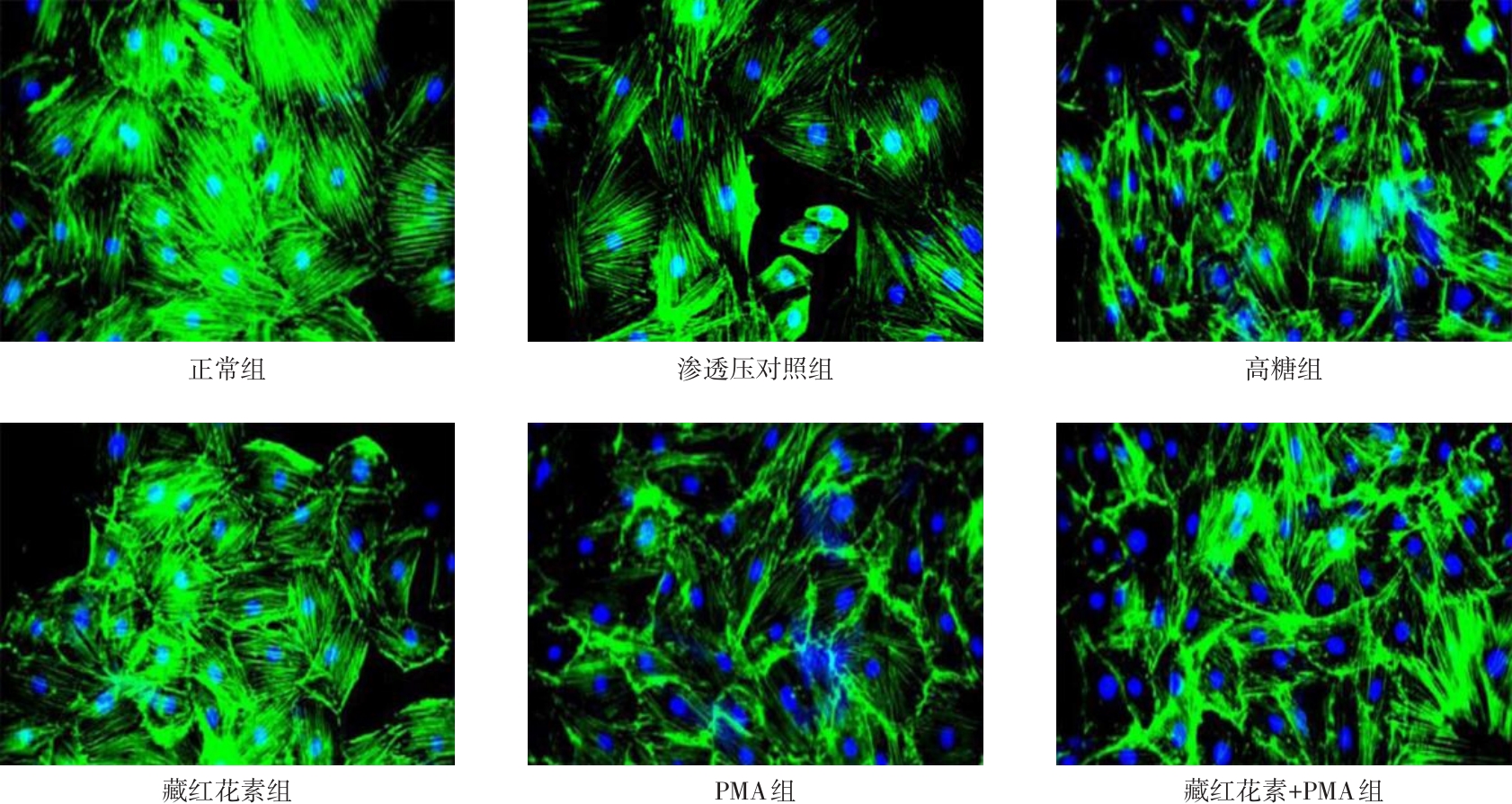
Fig.2
Apoptosis of glomerular endothelial cells in each group (TUNEL staining, ×400)"
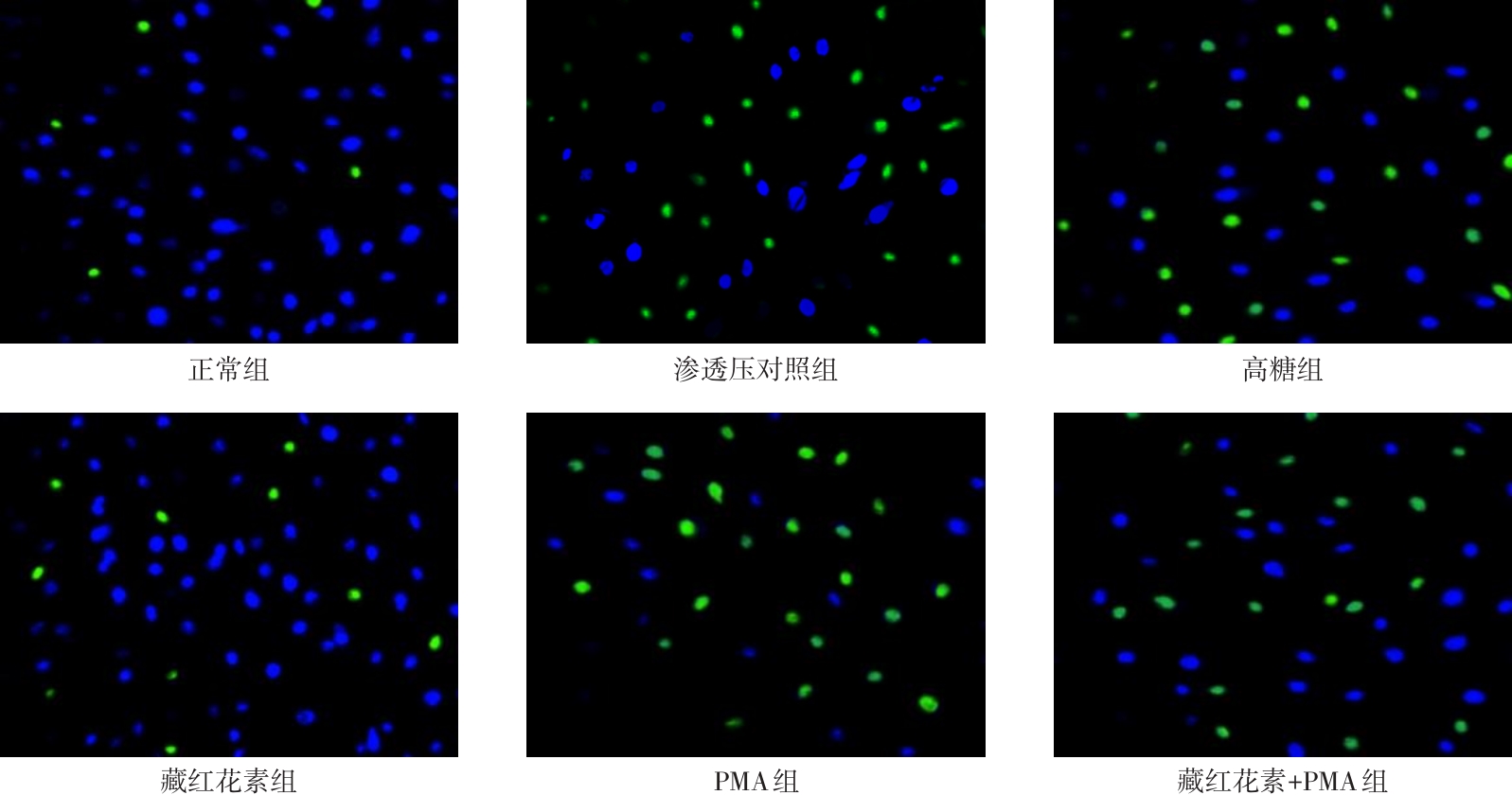
Tab.2
Glomerular endothelial cell activity, permeability and apoptosis rate in each group (n = 6)"
| 组别 | 细胞活性 | 通透性 | 凋亡率 |
|---|---|---|---|
| 正常组 | 100.00 ± 0.00 | 100.00 ± 0.00 | 4.02 ± 1.21 |
| 渗透压对照组 | 60.83 ± 6.15* | 238.03 ± 26.34* | 42.01 ± 3.64* |
| 高糖组 | 61.12 ± 6.31* | 237.12 ± 25.83* | 41.90 ± 3.53* |
| 藏红花素组 | 92.13 ± 4.76& | 129.35 ± 30.46& | 8.95 ± 2.43& |
| PMA组 | 31.05 ± 4.92& | 396.84 ± 29.12& | 70.76 ± 4.18& |
| 藏红花素+PMA组 | 64.01 ± 5.95# | 218.27 ± 27.05# | 38.65 ± 4.01# |
| F值 | 138.953 | 101.456 | 326.861 |
| P值 | < 0.001 | < 0.001 | < 0.001 |
Tab.3
The release levels of inflammatory factors and antioxidant enzyme activity of glomerular endothelial cells in each group (n = 6)"
| 组别 | SOD/(U/mg prot) | GSH-Px/(U/mg prot) | MDA/(nmol/mg prot) | IL-6/(pg/mL) | IL-1β/(pg/mL) |
|---|---|---|---|---|---|
| 正常组 | 74.31 ± 5.92 | 14.72 ± 1.38 | 7.28 ± 1.24 | 63.54 ± 11.16 | 95.43 ± 18.21 |
| 渗透压对照组 | 29.75 ± 4.87* | 6.92 ± 0.86* | 13.94 ± 2.52* | 245.12 ± 20.35 | 305.85 ± 26.42* |
| 高糖组 | 30.12 ± 4.53* | 6.81 ± 0.70* | 14.03 ± 2.07* | 242.83 ± 17.32* | 307.56 ± 23.14* |
| 藏红花素组 | 69.84 ± 5.47& | 13.04 ± 1.31& | 8.30 ± 1.52& | 73.60 ± 13.41& | 110.87 ± 17.53& |
| PMA组 | 8.45 ± 2.31& | 1.59 ± 0.47& | 20.74 ± 2.19& | 415.95 ± 19.15& | 512.35 ± 24.60& |
| 藏红花素+PMA组 | 33.67 ± 4.26# | 7.46 ± 0.71# | 12.86 ± 1.92# | 231.74 ± 20.23# | 291.20 ± 21.83# |
| F值 | 179.037 | 146.512 | 36.543 | 341.964 | 286.807 |
| P值 | < 0.001 | < 0.001 | < 0.001 | < 0.001 | < 0.001 |
Fig.3
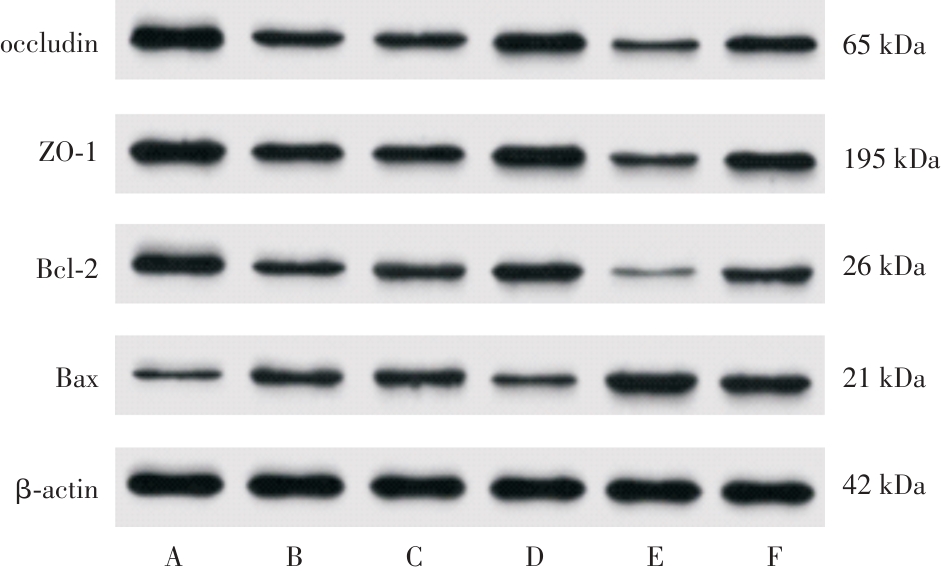
WB detection of apoptosis and relative expressionof tight junction proteins of glomerular endothelial cellsin each group"
Tab.4
Apoptosis and relative expression of tight junction proteins of glomerular endothelial cells in each group (n = 6)"
| 组别 | occludin | ZO-1 | Bcl-2 | Bax |
|---|---|---|---|---|
| 正常组 | 0.97 ± 0.12 | 1.10 ± 0.13 | 0.91 ± 0.09 | 0.23 ± 0.04 |
| 渗透压对照组 | 0.54 ± 0.10* | 0.70 ± 0.11* | 0.48 ± 0.07* | 0.64 ± 0.08* |
| 高糖组 | 0.56 ± 0.08* | 0.69 ± 0.10* | 0.49 ± 0.05* | 0.65 ± 0.06* |
| 藏红花素组 | 0.94 ± 0.10& | 1.07 ± 0.11& | 0.89 ± 0.07& | 0.24 ± 0.05& |
| PMA组 | 0.17 ± 0.05& | 0.29 ± 0.07& | 0.10 ± 0.03& | 1.09 ± 0.10& |
| 藏红花素+PMA组 | 0.58 ± 0.09# | 0.71 ± 0.12# | 0.51 ± 0.06# | 0.63 ± 0.08# |
| F值 | 61.457 | 45.368 | 132.067 | 120.205 |
| P值 | < 0.001 | < 0.001 | < 0.001 | < 0.001 |
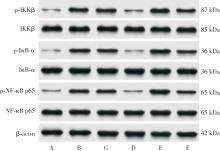
Fig.4
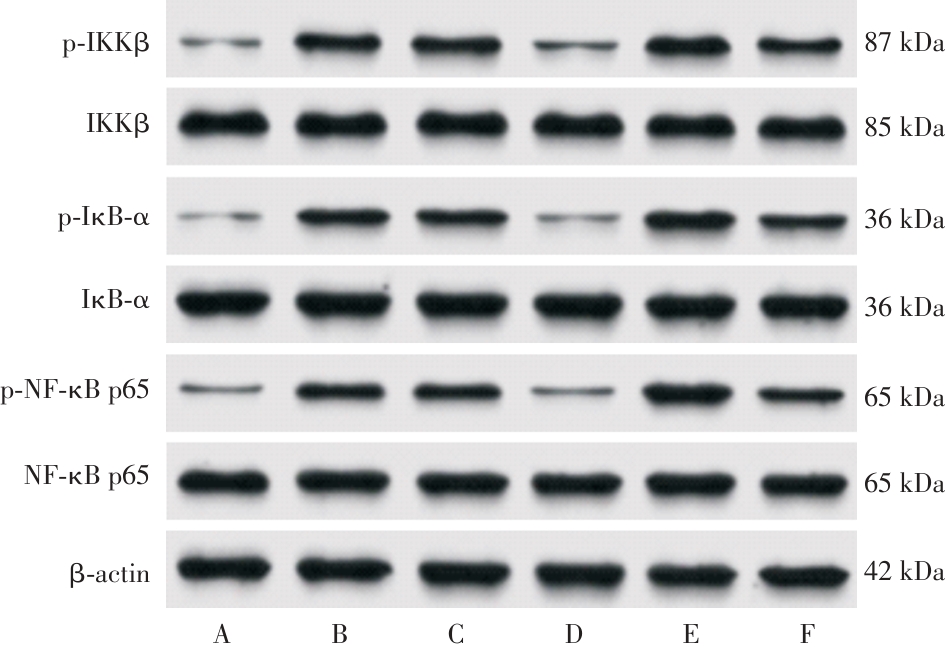
WB detection of IKKβ/NF-κB signaling pathway protein expression of glomerular endothelial cells in each group"
Tab.5
Relative expression of IKKβ/NF-κB signaling pathway proteins of glomerular endothelial cells in each group (n = 6)"
| 组别 | p-IKKβ/IKKβ | p-IκB-α/IκB-α | p-NF-κB p65/NF-κB p65 |
|---|---|---|---|
| 正常组 | 0.11 ± 0.02 | 0.09 ± 0.01 | 0.12 ± 0.02 |
| 渗透压对照组 | 0.52 ± 0.08* | 0.47 ± 0.06* | 0.51 ± 0.09* |
| 高糖组 | 0.51 ± 0.06* | 0.48 ± 0.05* | 0.50 ± 0.06* |
| 藏红花素组 | 0.12 ± 0.03& | 0.10 ± 0.02& | 0.13 ± 0.03& |
| PMA组 | 0.93 ± 0.05& | 0.91 ± 0.06& | 0.94 ± 0.04& |
| 藏红花素+PMA组 | 0.49 ± 0.07# | 0.47 ± 0.04# | 0.48 ± 0.07# |
| F值 | 179.012 | 280.678 | 169.231 |
| P值 | < 0.001 | < 0.001 | < 0.001 |
| [1] |
高晶,赵锦,王凡,等. 不同频率血液透析滤过联合高通量血液透析治疗对糖尿病肾病维持性血液透析患者肾功能,微炎症状态及左心功能的影响[J]. 实用医学杂志, 2025, 41(21): 3398-3404. doi: 10.3969/j.issn.1006-5725.2025.21.015 .
doi: 10.3969/j.issn.1006-5725.2025.21.015 |
| [2] |
LUO Y, ZHANG W, QIN G. Metabolomics in diabetic nephropathy: Unveiling novel biomarkers for diagnosis (Review)[J]. Mol Med Rep, 2024, 30(3): 156-168. doi: 10.3892/mmr.2024. 13280 .
doi: 10.3892/mmr.2024. 13280 |
| [3] |
WANG G, ZHAO J, ZHOU M,et al. Unveiling diabetic nephropathy: A novel diagnostic model through single-cell sequencing and co-expression analysis[J]. Aging (Albany NY), 2024, 16(13): 10972-10984. doi: 10.18632/aging.205982 .
doi: 10.18632/aging.205982 |
| [4] |
ZHOU J, FRANCESCHINI N, TOWNLEY-TILSON W H D, et al. Nutritional Strategies against Diabetic Nephropathy: Insights from Animal Studies and Human Trials[J]. Nutrients, 2024, 16(12): 1918-1932. doi: 10.3390/nu16121918 .
doi: 10.3390/nu16121918 |
| [5] |
LI Y, ZHANG J, ZHU Y. METTL14 derived from exosomes of M1 macrophages promotes high glucose-induced apoptosis, inflammation and oxidative stress in glomerular endothelial cells by mediating PAQR3 m6A modification[J]. Clin Exp Nephrol, 2024, 28(12): 1221-1231. doi: 10.1007/s10157-024-02536-0 .
doi: 10.1007/s10157-024-02536-0 |
| [6] |
XUE H Z, CHEN Y, WANG S D,et al. Radix Astragali and Its Representative Extracts for Diabetic Nephropathy: Efficacy and Molecular Mechanism[J]. J Diabetes Res, 2024, 2024: 5216113-5216138. doi: 10.1155/2024/5216113 .
doi: 10.1155/2024/5216113 |
| [7] |
WANG X, LIU M, LI X,et al. Utilizing molecular docking and cell validation to explore the potential mechanisms of lupenone attenuating the inflammatory response via NF-κB pathway[J]. Sci Rep, 2024, 14(1): 625-634. doi:10.1038/s41598-024- 51150-3 .
doi: 10.1038/s41598-024- 51150-3 |
| [8] |
WEI T T, YANG L T, GUO F,et al. Activation of GPR120 in podocytes ameliorates kidney fibrosis and inflammation in diabetic nephropathy[J]. Acta Pharmacol Sin, 2021, 42(2): 252-263. doi: 10.1038/s41401-020-00520-4 .
doi: 10.1038/s41401-020-00520-4 |
| [9] |
LOTFY M, KHALAF A, ALBARGHOUTHY F,et al. Effects of Conocarpus lancifolius and crocin on superoxide dismutase and protein kinase B genes and protein expressions in diabetic rats[J]. PLoS One, 2025, 20(6): e0326676-e0326694. doi: 10.1371/journal.pone.0326676 .
doi: 10.1371/journal.pone.0326676 |
| [10] |
MAFI A, MOKHTARI Z, HOSSEINI E,et al. Effect of Saffron (Crocus sativus) Supplementation on Oxidative Stress, Inflammatory Indices, and Renal and Liver Function Parameters in Patients With Type 2 Diabetes Mellitus: A GRADE-Assessed Systematic Review and Meta-analysis of Randomized Clinical Trials[J]. Nutr Rev, 2025, 83(6): 971-987. doi: 10.1093/nutrit/nuae121 .
doi: 10.1093/nutrit/nuae121 |
| [11] |
JAAFARINIA A, KAFAMI B, SAHEBNASAGH A,et al. Evaluation of therapeutic effects of crocin in attenuating the progression of diabetic nephropathy: A preliminary randomized triple-blind placebo-controlled trial[J]. BMC Complement Med Ther, 2022, 22(1): 262-270. doi: 10.1186/s12906-022-03744-5 .
doi: 10.1186/s12906-022-03744-5 |
| [12] |
ZHANG J, ZHAO X, ZHU H,et al. Crocin protects the renal tubular epithelial cells against high glucose-induced injury and oxidative stress via regulation of the SIRT1/Nrf2 pathway[J]. Iran J Basic Med Sci, 2022, 25(2): 193-197. doi: 10.22038/IJBMS.2022. 51597.11708 .
doi: 10.22038/IJBMS.2022. 51597.11708 |
| [13] |
HASSAN M H, SALAMA S A, ISMAIL R S. Targeting NF-kappa B/proinflammatory cytokines/TGF-β/TIMP-1 pathway by crocin enhances recovery from hepatic fibrosis in rats[J]. Sci Rep, 2025, 16(1): 2072-2081. doi: 10.1038/s41598-025-32672-w .
doi: 10.1038/s41598-025-32672-w |
| [14] |
王延海, 张雷明, 冯艳艳. 大黄素改善高糖条件中人肾小球血管内皮细胞炎症,氧化应激及凋亡作用的研究[J]. 中国临床药理学杂志, 2023, 39(10): 1422-1426. doi: 10.13699/j.cnki. 1001-6821.2023.10.012 .
doi: 10.13699/j.cnki. 1001-6821.2023.10.012 |
| [15] |
CHEN M, LIN X, ZHANG L,et al. Effects of nuclear factor-κB signaling pathway on periodontal ligament stem cells under lipopolysaccharide-induced inflammation[J]. Bioengineered, 2022, 13(3): 7951-7961. doi: 10.1080/21655979.2022. 2051690 .
doi: 10.1080/21655979.2022. 2051690 |
| [16] |
WU X Q, ZHAO L, ZHAO Y L,et al. Traditional Chinese medicine improved diabetic kidney disease through targeting gut microbiota[J]. Pharm Biol, 2024, 62(1): 423-435. doi: 10.1080/13880209.2024.2351946 .
doi: 10.1080/13880209.2024.2351946 |
| [17] |
HUSHMANDI K, KLIONSKY D J, FARAHANI N, et al. Regulation of pyroptosis in diabetic nephropathy by long non-coding and circular RNAs[J]. Clin Exp Med, 2025, 25(1): 208-239. doi: 10.1007/s10238-025-01740-w .
doi: 10.1007/s10238-025-01740-w |
| [18] |
MŁYNARSKA E, BUŁAWSKA D, CZARNIK W,et al. Novel Insights into Diabetic Kidney Disease[J]. Int J Mol Sci, 2024, 25(18): 10222-10245. doi: 10.3390/ijms251810222 .
doi: 10.3390/ijms251810222 |
| [19] |
HUANG M, CHANG J, LIU Y, et al. Apelin/APJ alleviates diabetic nephropathy by improving glomerular endothelial cells dysfunction via SIRT3‑KLF15[J]. Mol Med Rep, 2025, 31(5): 122-133. doi: 10.3892/mmr.2025.13487 .
doi: 10.3892/mmr.2025.13487 |
| [20] |
YANG Y, WANG Y, ZHOU Y,et al. Tirzepatide alleviates oxidative stress and inflammation in diabetic nephropathy via IL-17 signaling pathway[J]. Mol Cell Biochem,2025, 480(2): 1241-1254. doi: 10.1007/s11010-024-05066-1 .
doi: 10.1007/s11010-024-05066-1 |
| [21] |
GHAVIDEL F, AMIRI H, TABRIZI M H, et al. The Combinational Effect of Inulin and Resveratrol on the Oxidative Stress and Inflammation Level in a Rat Model of Diabetic Nephropathy[J]. Curr Dev Nutr, 2023, 8(1): 102059-102070. doi: 10.1016/j.cdnut.2023.102059 .
doi: 10.1016/j.cdnut.2023.102059 |
| [22] |
DASTAN M, RAJAEI Z, SHARIFI M, et al. Crocin Improves Cognitive Impairment in LPS-treated Rats through Anti-Apoptotic, Anti-Inflammatory, and Antioxidant Activities[J]. Mol Neurobiol, 2025, 62(5): 5804-5815. doi: 10.1007/s12035-024-04638-y .
doi: 10.1007/s12035-024-04638-y |
| [23] |
ZIANI A, BEKKOUCH O, OUAHHOUD S,et al. Phytochemistry, Biological Activities, Molecular Mechanisms, and Toxicity of Saffron (Crocus sativus L.): A Comprehensive Overview[J]. Antioxidants (Basel), 2025, 14(12): 1433-1478. doi: 10.3390/antiox14121433 .
doi: 10.3390/antiox14121433 |
| [24] |
CHEN W, SU J, LIU Y,et al. Crocin Ameliorates Diabetic Nephropathy through Regulating Metabolism, CYP4A11/PPARγ, and TGF-β/Smad Pathways in Mice[J]. Curr Drug Metab, 2023, 24(10): 709-722. doi: 10.2174/011389200225792823103111 3337 .
doi: 10.2174/011389200225792823103111 3337 |
| [25] |
MOHAMMADI Y, ZANGOOEI M, ZARDAST M, et al. The effect of crocin and losartan on TGF-β gene expression and histopathology of kidney tissue in a rat model of diabetic nephropathy[J]. Avicenna J Phytomed, 2023, 13(2): 189-199. doi: 10. 22038/AJP.2022.21414 .
doi: 10. 22038/AJP.2022.21414 |
| [26] |
ZHANG R, QIN L, SHI J. MicroRNA‑199a‑3p suppresses high glucose‑induced apoptosis and inflammation by regulating the IKKβ/NF‑κB signaling pathway in renal tubular epithelial cells[J]. Int J Mol Med, 2020, 46(6): 2161-2171. doi: 10.3892/ijmm.2020.4751 .
doi: 10.3892/ijmm.2020.4751 |
| [27] |
WANG Y, LI H, JIANG S,et al. The glycolytic enzyme PFKFB3 drives kidney fibrosis through promoting histone lactylation-mediated NF-κB family activation[J]. Kidney Int, 2024, 106(2): 226-240. doi: 10.1016/j.kint.2024.04.016 .
doi: 10.1016/j.kint.2024.04.016 |
| [1] | Jinqiu HU,Xiaoyan BI,Junyu MA,Mengyao LI,Rong LI,Fuli YA,Chunmei. ZHANG. Tetrahydrocurcumin attenuates high glucose⁃induced platelet aggregation and activation through down⁃regulating ROS/p53 signaling pathway [J]. The Journal of Practical Medicine, 2025, 41(3): 305-312. |
| [2] | Bin SUN,Ni LI,Lin YAN,Qizhao WANG,Min ZHANG,Yuehan YANG,Huan. QIN. Microglia mediate neuroinflammation and immune cell recruitment in blue light‑damaged retina [J]. The Journal of Practical Medicine, 2025, 41(23): 3666-3675. |
| [3] | Zhuangnian FANG,Ruonan ZHANG,Lili HUANG,Xiaodi SHEN,Qingzhu ZHENG,Yangdi WANG,Xuehua LI,Zhoulei LI,Shaochun LIN. Multimodal MRI⁃based neurophenotype correlated to structural bowel damage in Crohn′s disease [J]. The Journal of Practical Medicine, 2025, 41(15): 2398-2405. |
| [4] | Yaqiong XIA,Yue ZHU,Chengcheng JIANG,Hongping TAN,Yan ZHANG,Ling. LIU. The effect of LCN2⁃mediated EGFR phosphorylation on inflammatory injury in human fallopian tube epithelial cells [J]. The Journal of Practical Medicine, 2025, 41(14): 2174-2182. |
| [5] | Min CHEN,Yajun TUO. Research progress on renal injury associated with obstructive sleep apnea [J]. The Journal of Practical Medicine, 2025, 41(13): 1958-1963. |
| [6] | Binghui LI,Qiong MENG. Research progress on chorioamnionitis and related neonatal diseases [J]. The Journal of Practical Medicine, 2024, 40(23): 3411-3418. |
| [7] | Zhe SHI,Xialin ZUO,Linhui PENG,Zhiwei LU,Kongping. LI. Effect of M1 microglial polarization on secondary damage in the thalamus after cerebral cortical infarction [J]. The Journal of Practical Medicine, 2024, 40(22): 3138-3145. |
| [8] | Yangyang CHEN,Hongqi MA,Jing YANG,Zongyue WU,Ping. ZHU. Impact of Atractylodin on lung tissue damage in young asthma rats by regulating the CXCL12/CXCR4 signaling pathway [J]. The Journal of Practical Medicine, 2024, 40(19): 2672-2677. |
| [9] | Chunmei ZHANG,Xinhui HUANG,Jinqiu HU,Xiaoyan BI,Fuli. YA. Sulforaphane protects human platelets from high glucose⁃induced cellular apoptosis through down-regulating PI3K/Akt signaling pathway [J]. The Journal of Practical Medicine, 2024, 40(18): 2530-2536. |
| [10] | Juan LI,Lin. YANG. Clinical efficacy of Niaoduqing Granule combined with Febusta in treatment of hyperuricemia with renal damage [J]. The Journal of Practical Medicine, 2024, 40(10): 1418-1422. |
| [11] |
DUAN Dongkui, WANG Zheng, WANG Xin, ZHANG Gengrui..
Relationship between rs830083CG mutation of DDB2 single nucleotide polymorphism locus and lung can⁃ cer susceptibility of non⁃smokers [J]. The Journal of Practical Medicine, 2023, 39(7): 855-859. |
| [12] |
WANG Yun, SONG Shan, PENG Fei, HU Wenxia..
LncRNA SNHG15 regulates cisplatin sensitivity and epithelial ⁃ mesenchymal transition in non ⁃ small cell lung cancer cells through miR⁃483⁃3p/DDIT4 axis [J]. The Journal of Practical Medicine, 2023, 39(5): 557-563. |
| [13] | Hongtao WANG,Hui WANG,Yihan ZHANG,Xinwei. JIA. Effect comparison of lateral vascular chain flaps with dorsal branches of nerve and digital artery in different donor sites for repairing finger tip or finger abdomen defects [J]. The Journal of Practical Medicine, 2023, 39(20): 2638-2642. |
| [14] | YANG Xiao, ZHANG Huan, ZHANG Zhaohui, YANG Xifei. . Deflazacort improves locomotion and reduces muscle inflammatory damage in mice with duchenne muscu⁃ lar dystrophy [J]. The Journal of Practical Medicine, 2023, 39(13): 1614-1619. |
| [15] |
WANG Lexin , LIU Chao, MA Tianlong, YANG Anning, XIONG Jiantuan, WU Kai, JIAO Yun, BAI Zhigang, JIANG Yideng, MA Shengchao, ZHANG Xu, LU Guanjun.
Role of LncRNA H19 in pyrophosis of glomerular podocyte induced by high glucose [J]. The Journal of Practical Medicine, 2023, 39(1): 12-20. |
| Viewed | ||||||
|
Full text |
|
|||||
|
Abstract |
|
|||||
