

The Journal of Practical Medicine ›› 2026, Vol. 42 ›› Issue (15): 2786-2797.doi: 10.3969/j.issn.1006-5725.2026.15.015
• Treatise:Mechanism and Practice • Previous Articles
Xin ZHU1,2,Yangbiao LIANG2,Xiong XIAO1,2,Jialin XIE1,2,Junyan ZHU1,2,Yan CHEN2( )
)
Received:2026-04-15
Revised:2026-06-04
Accepted:2026-06-08
Online:2026-08-10
Published:2026-08-13
Contact:
Yan CHEN
E-mail:smu_chen@163.com
CLC Number:
Xin ZHU,Yangbiao LIANG,Xiong XIAO,Jialin XIE,Junyan ZHU,Yan CHEN. Development of a disease activity assessment model for rheumatoid arthritis using ultrasound radiomics and deep learning[J]. The Journal of Practical Medicine, 2026, 42(15): 2786-2797.
Tab.1
The ultrasound scoring criteria for rheumatoid arthritis"
| 评分 | 滑膜增厚程度 | 增生滑膜的彩色多普勒信号等级 | 关节积液情况 |
|---|---|---|---|
| 0 | 滑膜无增厚 | 没有彩色多普勒信号 | 无积液 |
| 1 | 增生的滑膜不超过骨嵴连线,且其上表面呈凹陷状 | 在增生的滑膜内检测到3个点状血流信号,或2个点状血流信号加1个融合血流信号,或2个融合血流信号 | 轻度——仅在关节一侧出现积液 |
| 2 | 增生的骨膜超出骨嵴连线,且上表面的增生滑膜呈凹陷状 | 血流信号大于评分1,但血流信号面积小于增生滑膜面积的50% | 中度——关节周围可见积液,但未完全充满关节腔 |
| 3 | 增生的滑膜超出骨嵴连线,且其上表面呈凸面形态 | 血流信号等级超过评分2,且血流信号面积超过增生滑膜面积的50% | 重度——关节积液充满整个关节腔 |
Tab.2
Baseline characteristics of the enrolled patients"
| 项目 | 总计 | RA活动度分级 | t/χ2 /Z值 | P值 | |
|---|---|---|---|---|---|
| 高活动度 | 中低活动度 | ||||
| 年龄( | 56.08 ± 12.80 | 59.58 ± 11.25 | 53.22 ± 13.38 | 2.390 | 0.019 |
| 性别/[例(%)] | 3.131 | 0.077 | |||
| 男 | 21(22.8) | 13(31.0) | 8(16.0) | ||
| 女 | 71(77.2) | 29(69.0) | 42(84.0) | ||
| 病程[M(P25,P75)]/年 | 5.25(0.81,10.00) | 7.00(0.92,12.50) | 4.00(0.63,10.00) | -1.477 | 0.140 |
Tab.3
Scoring characteristics of ultrasound sonograms for rheumatoid arthritis-affected joints"
| 变量 | RA活动度分级 | Z值 | P值 | 单因素分析 | ||
|---|---|---|---|---|---|---|
| 高活动度(n = 88) | 中低活动度(n = 96) | P值 | OR(95%CI) | |||
| 滑膜增厚程度 | -7.785 | < 0.001 | < 0.001 | 3.633(0.005 ~ 0.133) | ||
| 0分 | 0(0.0) | 2(2.0) | ||||
| 1分 | 1(1.1) | 36(37.5) | ||||
| 2分 | 2(69.5) | 57(59.3) | ||||
| 3分 | 29(32.9) | 1(1.0) | ||||
| 关节积液情况 | -6.319 | 0.04 | 0.062 | 0.489(0.367 ~ 1.025) | ||
| 0分 | 35(39.7) | 38(39.5) | ||||
| 1分 | 19(21.5) | 46(47.9) | ||||
| 2分 | 28(31.8) | 12(12.5) | ||||
| 3分 | 6(6.8) | 0(0.0) | ||||
| 增生滑膜血流情况 | -2.052 | < 0.001 | < 0.001 | 2.283(0.36 ~ 0.288) | ||
| 0分 | 0(0.0) | 27(28.1) | ||||
| 1分 | 60(68.1) | 63(65.6) | ||||
| 2分 | 25(28.4) | 6(6.2) | ||||
| 3分 | 3(3.4) | 0(0.0) | ||||
| 增生滑膜回声等级 | -3.887 | < 0.001 | 0.528 | 0.638(0.116 ~ 2.398) | ||
| 0分 | 0(0.0) | 2(2.0) | ||||
| 1分 | 70(79.5) | 91(94.7) | ||||
| 2分 | 18(20.4) | 3(3.1) | ||||
| 3分 | 0(0.0) | 0(0.0) | ||||
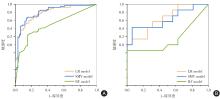
Fig.1
ROC curves of the radiomics feature pilot experiment"
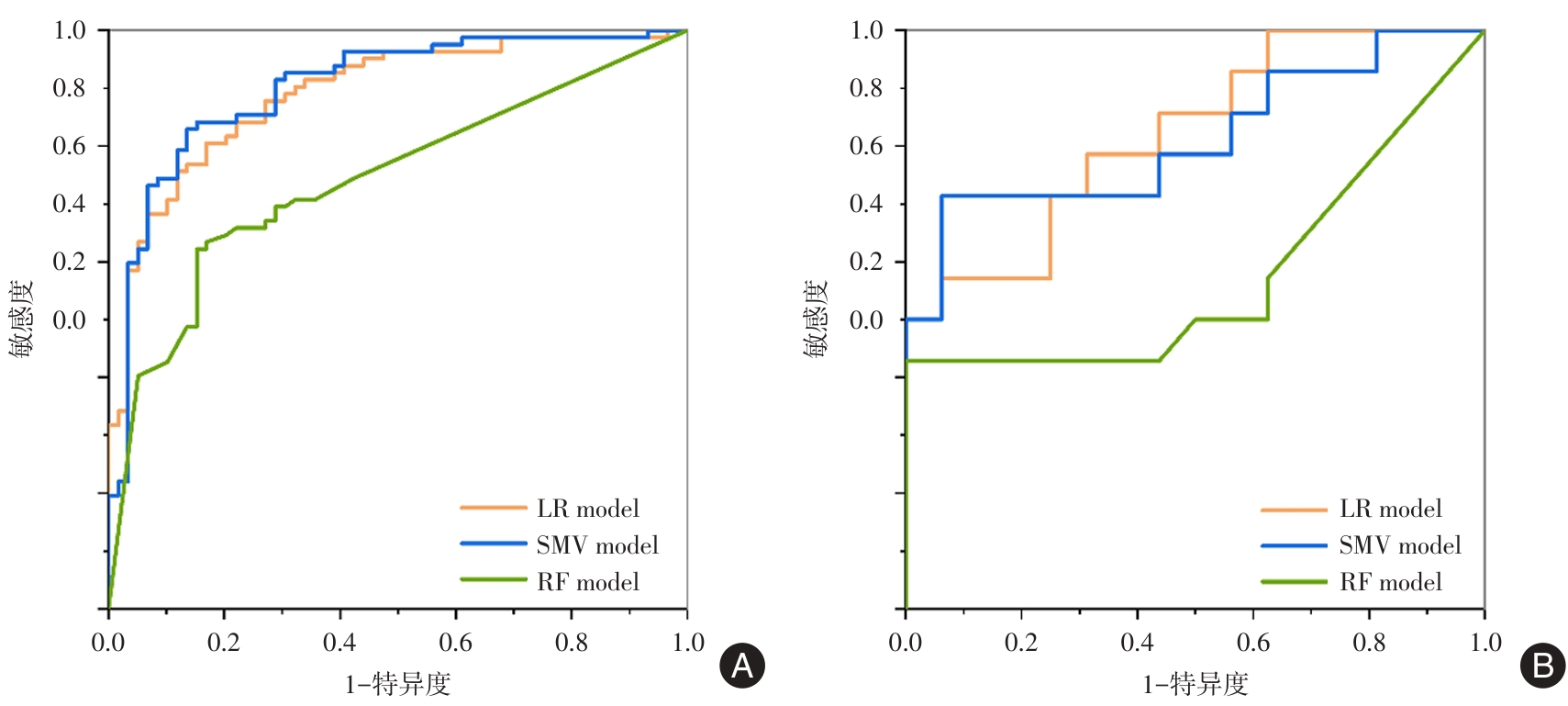
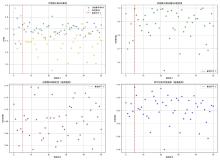
Fig.2
Process of random seed selection"
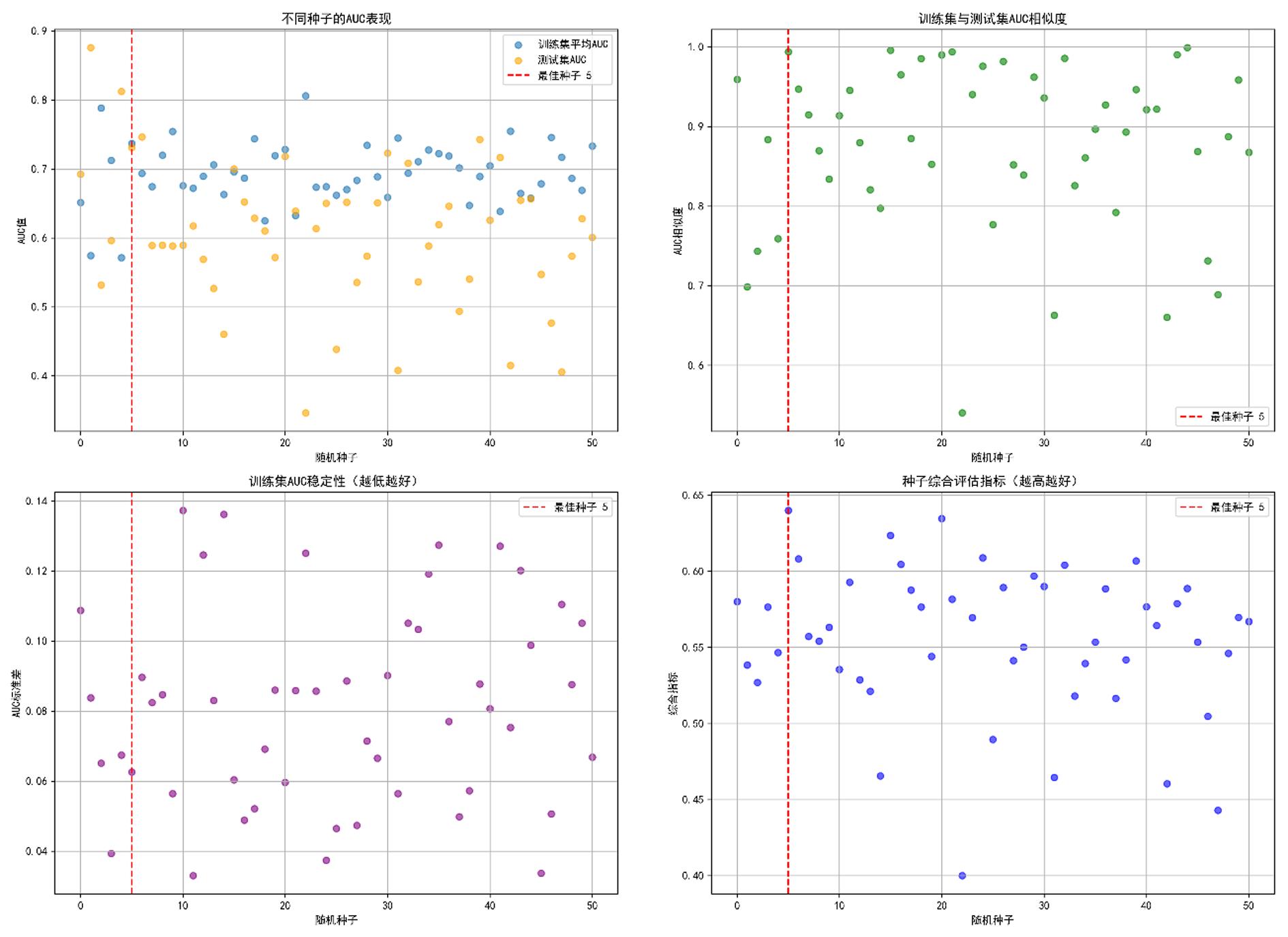
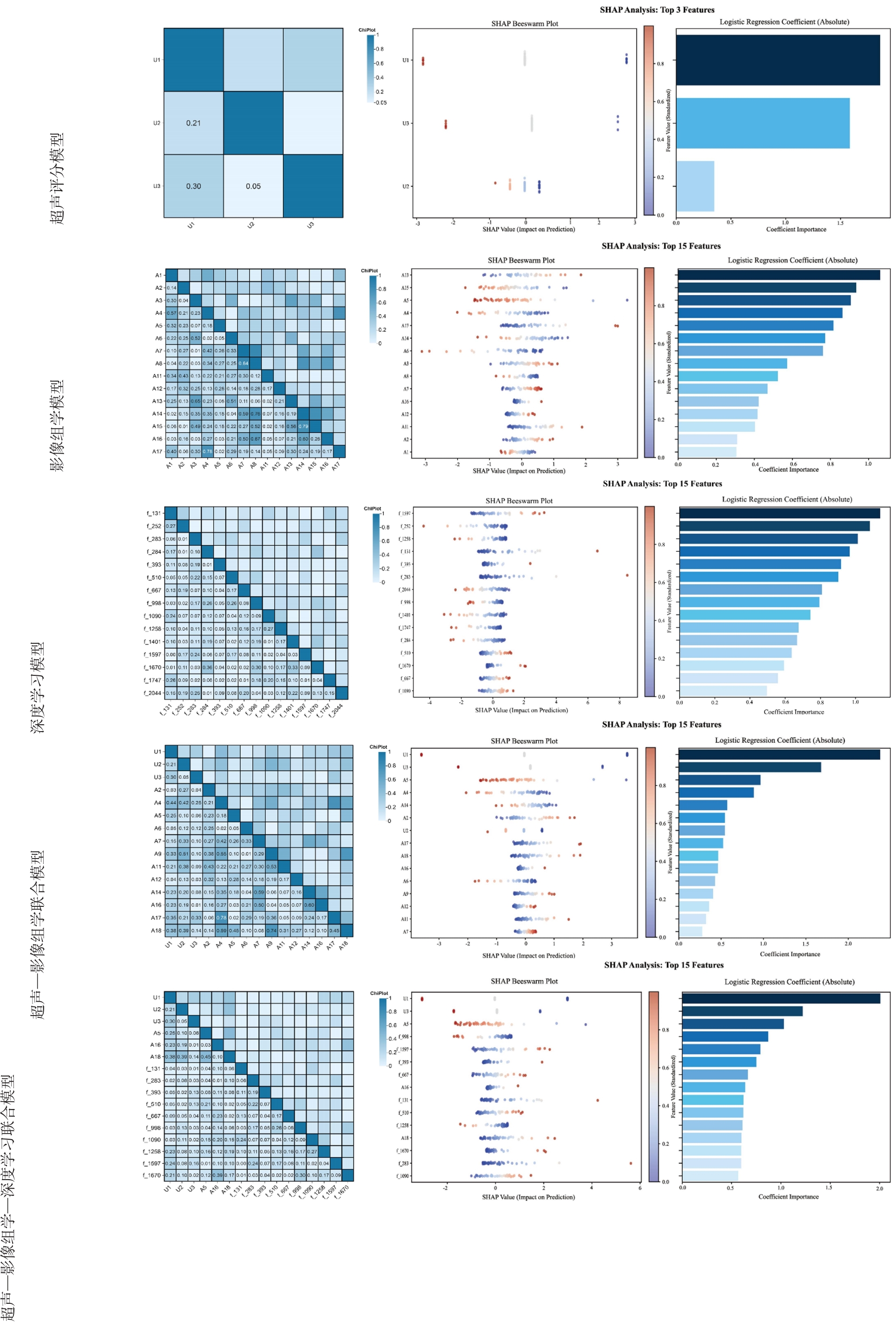
Fig.3
Feature visualization of each model"
Tab.4
Predictive performance of three rheumatoid arthritis disease activity assessment models"
| 模型 | 数据集 | AUC(95%CI) | 敏感度 | 特异度 | 精确度 | F1指数 | 准确度 |
|---|---|---|---|---|---|---|---|
| 超声评分模型 | 训练集 | 0.909(0.864 ~ 0.954) | 0.96 | 0.677 | 0.783 | 0.862 | 0.832 |
| 测试集 | 0.832(0.709 ~ 0.954) | 0.667 | 0.885 | 0.824 | 0.737 | 0.787 | |
| 影像组学模型 | 训练集 | 0.788(0.711 ~ 0.864) | 0.773 | 0.677 | 0.744 | 0.758 | 0.730 |
| 测试集 | 0.824(0.701 ~ 0.947) | 0.810 | 0.808 | 0.773 | 0.791 | 0.809 | |
| 深度学习模型 | 训练集 | 0.944(0.908 ~ 0.98) | 0.853 | 0.903 | 0.914 | 0.883 | 0.876 |
| 测试集 | 0.788(0.642 ~ 0.933) | 0.619 | 0.962 | 0.929 | 0.743 | 0.809 | |
| 超声-影像组学模型 | 训练集 | 0.968(0.954 ~ 0.992) | 0.867 | 0.968 | 0.970 | 0.915 | 0.912 |
| 测试集 | 0.852(0.743 ~ 0.96) | 0.714 | 0.846 | 0.789 | 0.750 | 0.787 | |
| 超声-影像组学-深度学习联合模型 | 训练集 | 0.995(0.985 ~ 1.000) | 0.987 | 0.984 | 0.810 | 0.987 | 0.985 |
| 测试集 | 0.901(0.815 ~ 0.988) | 0.810 | 0.846 | 0.810 | 0.810 | 0.830 |
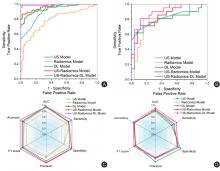
Fig.4
ROC curves and diagnostic performance radar charts for five models"
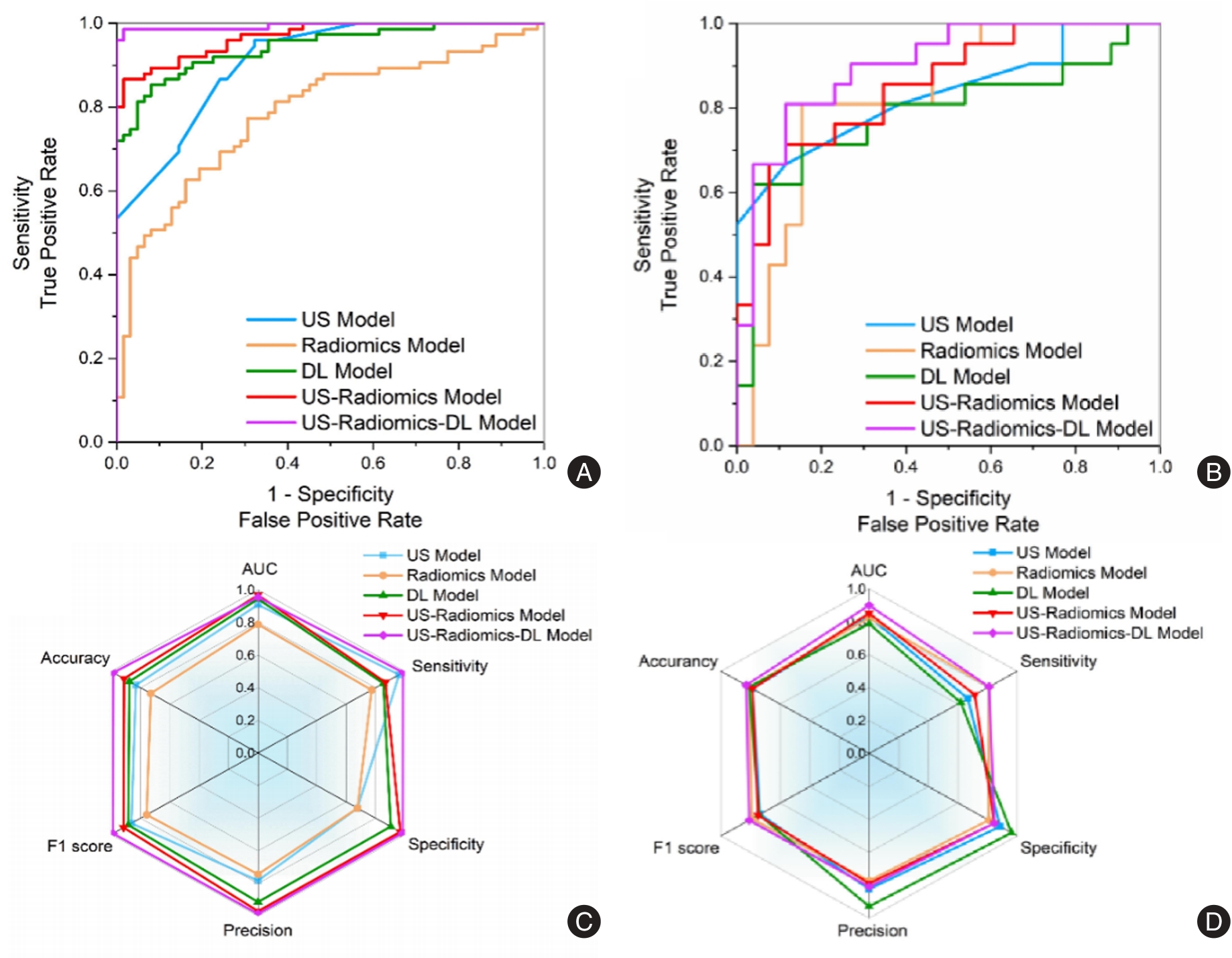
Fig.5
Calibration curves of the five models"
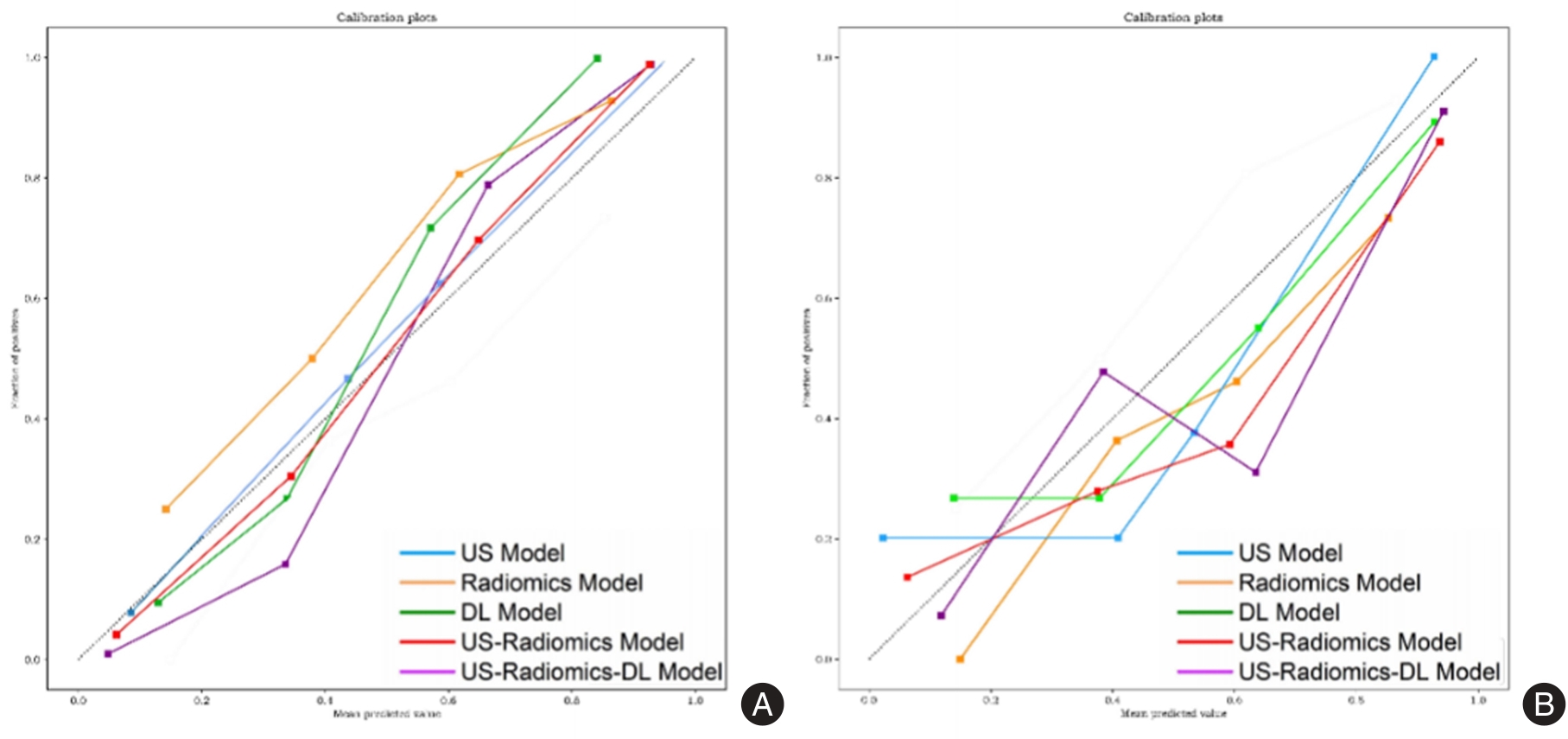
Fig.6
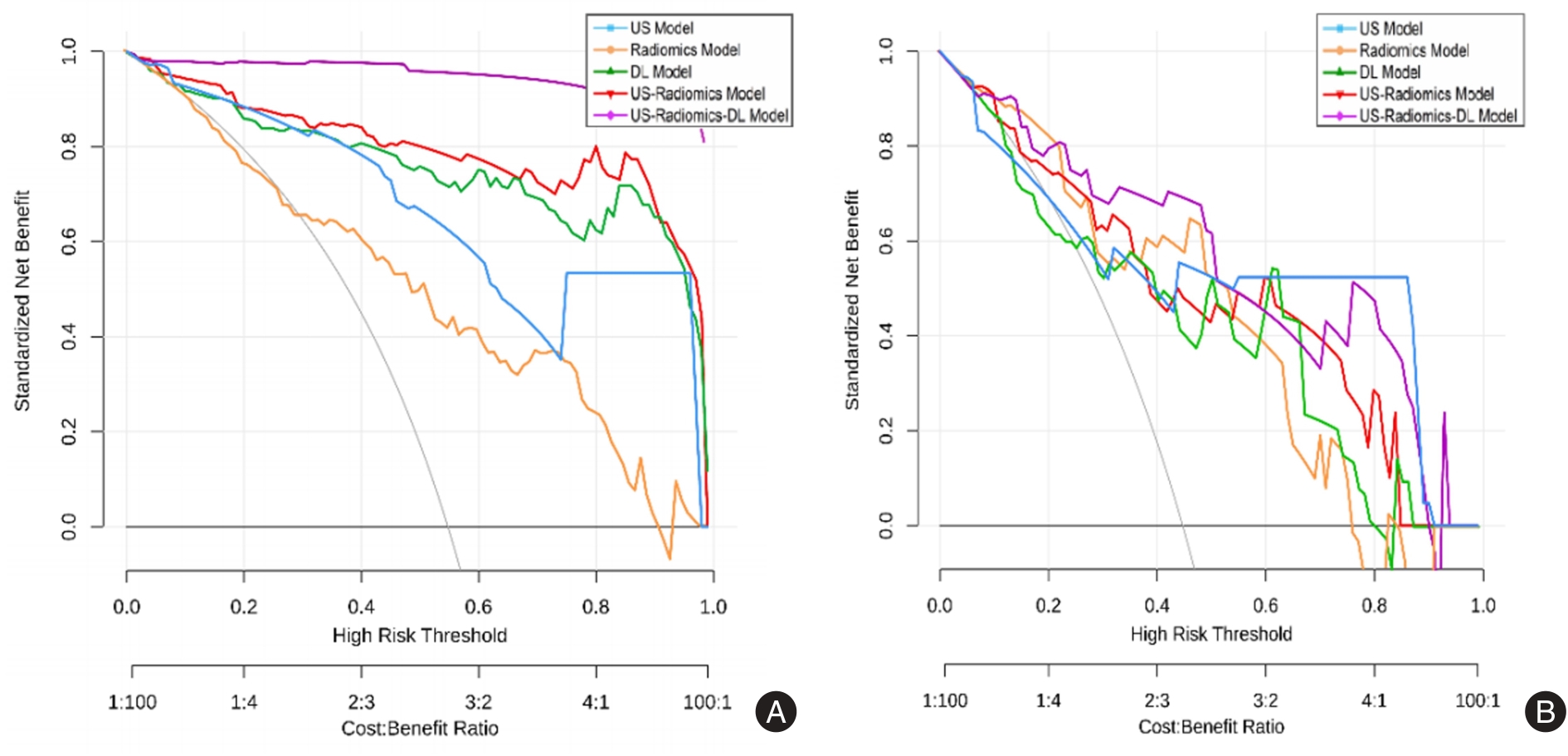
Decision curves for five rheumatoid arthritis activity assessment models"
| [1] |
KLARESKOG L, CATRINA A I, PAGET S. Rheumatoid arthritis[J]. Lancet, 2009, 373(9664): 659-672. doi:10.1016/S0140-6736(09)60008-8 .
doi: 10.1016/S0140-6736(09)60008-8 |
| [2] |
MCINNES I B, SCHETT G. The pathogenesis of rheumatoid arthritis[J]. N Engl J Med, 2011, 365(23): 2205-2219. doi:10.1056/nejmra1004965 .
doi: 10.1056/nejmra1004965 |
| [3] |
FINCKH A, GILBERT B, HODKINSON B, et al. Global epidemiology of rheumatoid arthritis[J]. Nat Rev Rheumatol, 2022, 18(10): 591-602. doi:10.1038/s41584-022-00827-y .
doi: 10.1038/s41584-022-00827-y |
| [4] |
VAN DER WOUDE D, VAN DER HELM-VAN MIL A H M. Update on the epidemiology, risk factors, and disease outcomes of rheumatoid arthritis[J]. Best Pract Res Clin Rheumatol, 2018, 32(2): 174-187. doi:10.1016/j.berh.2018.10.005 .
doi: 10.1016/j.berh.2018.10.005 |
| [5] |
ALETAHA D, SMOLEN J S. Diagnosis and management of rheumatoid arthritis: A review[J]. JAMA, 2018, 320(13): 1360-1372. doi:10.1001/jama.2018.13103 .
doi: 10.1001/jama.2018.13103 |
| [6] |
LI Z, WANG X Q. Clinical effect and biological mechanism of exercise for rheumatoid arthritis: A mini review[J]. Front Immunol, 2023, 13: 1089621. doi:10.3389/fimmu.2022.1089621 .
doi: 10.3389/fimmu.2022.1089621 |
| [7] |
FRAENKEL L, BATHON J M, ENGLAND B R, et al. 2021 American college of rheumatology guideline for the treatment of rheumatoid arthritis[J]. Arthritis Rheumatol, 2021, 73(7): 1108-1123. doi:10.1002/art.41752 .
doi: 10.1002/art.41752 |
| [8] |
BROWN P, PRATT A G, HYRICH K L. Therapeutic advances in rheumatoid arthritis[J]. Bmj, 2024, 384: e070856. doi:10.1136/bmj-2022-070856 .
doi: 10.1136/bmj-2022-070856 |
| [9] |
SMOLEN J S, BREEDVELD F C, BURMESTER G R, et al. Treating rheumatoid arthritis to target: 2014 update of the recommendations of an international task force[J]. Ann Rheum Dis, 2016, 75(1): 3-15. doi:10.1136/annrheumdis-2015-207524 .
doi: 10.1136/annrheumdis-2015-207524 |
| [10] |
ANDERSON J K, ZIMMERMAN L, CAPLAN L, et al. Measures of rheumatoid arthritis disease activity: Patient (PtGA) and Provider (PrGA) Global Assessment of Disease Activity, Disease Activity Score (DAS) and Disease Activity Score With 28-Joint Counts (DAS28), Simplified Disease Activity Index (SDAI), Clinical Disease Activity Index (CDAI), Patient Activity Score (PAS) and Patient Activity Score-II (PASII), Routine Assessment of Patient Index Data (RAPID), Rheumatoid Arthritis Disease Activity Index (RADAI) and Rheumatoid Arthritis Disease Activity Index-5 (RADAI-5), Chronic Arthritis Systemic Index (CASI), Patient-Based Disease Activity Score With ESR (PDAS1) and Patient-Based Disease Activity Score Without ESR (PDAS2), and Mean Overall Index for Rheumatoid Arthritis (MOI-RA)[J]. Arthritis Care Res, 2011, 63(S11): S14-S36. doi:10.1002/acr.20621 .
doi: 10.1002/acr.20621 |
| [11] |
ENGLAND B R, TIONG B K, BERGMAN M J, et al. 2019 update of the American college of rheumatology recommended rheumatoid arthritis disease activity measures[J]. Arthritis Care Res, 2019, 71(12): 1540-1555. doi:10.1002/acr.24042 .
doi: 10.1002/acr.24042 |
| [12] |
OHRNDORF S, BOER A C, BOETERS D M, et al. Do musculoskeletal ultrasound and magnetic resonance imaging identify synovitis and tenosynovitis at the same joints and tendons? A comparative study in early inflammatory arthritis and clinically suspect arthralgia[J]. Arthritis Res Ther, 2019, 21(1): 59. doi:10.1186/s13075-019-1824-z .
doi: 10.1186/s13075-019-1824-z |
| [13] |
KELLNER D A, MORRIS N T, LEE S M, et al. Clinical utility of ultrasound and MRI in rheumatoid arthritis: An expert review[J]. Best Pract Res Clin Rheumatol, 2025, 39(3): 102072. doi:10.1016/j.berh.2025.102072 .
doi: 10.1016/j.berh.2025.102072 |
| [14] |
耿研, 张卓莉. 影像学技术在类风湿关节炎诊治中的应用[J/OL]. 中国医学前沿杂志(电子版), 2020, 12(11): 13-18. doi:10.12037/YXQY.2020.11-04 .
doi: 10.12037/YXQY.2020.11-04 |
| [15] |
D’AGOSTINO M A, TERSLEV L, WAKEFIELD R, et al. Novel algorithms for the pragmatic use of ultrasound in the management of patients with rheumatoid arthritis: From diagnosis to remission[J]. Ann Rheum Dis, 2016, 75(11): 1902-1908. doi:10.1136/annrheumdis-2016-209646 .
doi: 10.1136/annrheumdis-2016-209646 |
| [16] |
YOSHIDA Y, HAMMER H B, SEXTON J, et al. How to score the wrist joint by ultrasound: Exploration of the most sensitive joint assessment during follow-up of early or established rheumatoid arthritis[J]. Arthritis Res Ther, 2025, 27(1): 200. doi:10.1186/s13075-025-03668-8 .
doi: 10.1186/s13075-025-03668-8 |
| [17] |
CATE D F TEN, LUIME J J, SWEN N, et al. Role of ultrasonography in diagnosing early rheumatoid arthritis and remission of rheumatoid arthritis - a systematic review of the literature[J]. Arthritis Res Ther, 2013, 15(1): R4. doi:10.1186/ar4132 .
doi: 10.1186/ar4132 |
| [18] |
马艳, 金莉, 李向培, 等. 高频超声在类风湿关节炎双手关节病变的应用价值[J]. 实用医学杂志, 2016, 32(11): 1810-1812. doi:10.3969/j.issn.1006-5725.2016.11.025 .
doi: 10.3969/j.issn.1006-5725.2016.11.025 |
| [19] |
COLEBATCH A N, EDWARDS C J, ØSTERGAARD M, et al. EULAR recommendations for the use of imaging of the joints in the clinical management of rheumatoid arthritis[J]. Ann Rheum Dis, 2013, 72(6): 804-814. doi:10.1136/annrheumdis-2012-203158 .
doi: 10.1136/annrheumdis-2012-203158 |
| [20] |
MÖLLER I, JANTA I, BACKHAUS M, et al. The 2017 EULAR standardised procedures for ultrasound imaging in rheumatology[J]. Ann Rheum Dis, 2017, 76(12): 1974-1979. doi:10.1136/annrheumdis-2017-211585 .
doi: 10.1136/annrheumdis-2017-211585 |
| [21] |
郭文静, 吕海霞, 彭锦锦, 等. 超声新型评分模型预测类风湿关节炎常规内科治疗短期疗效的临床价值[J]. 临床超声医学杂志, 2025, 27(7): 572-578. doi:10.3969/j.issn.1008-6978.2025. 07.009 .
doi: 10.3969/j.issn.1008-6978.2025. 07.009 |
| [22] |
TERSLEV L, ELLEGAARD K, CHRISTENSEN R, et al. Head-to-head comparison of quantitative and semi-quantitative ultrasound scoring systems for rheumatoid arthritis: Reliability, agreement and construct validity[J]. Rheumatology, 2012, 51(11): 2034-2038. doi:10.1093/rheumatology/kes124 .
doi: 10.1093/rheumatology/kes124 |
| [23] |
D′AGOSTINO M A, TERSLEV L, AEGERTER P, et al. Scoring ultrasound synovitis in rheumatoid arthritis: A EULAR-OMERACT ultrasound taskforce—Part 1: Definition and development of a standardised, consensus-based scoring system[J]. RMD Open, 2017, 3(1): e000428. doi:10.1136/rmdopen-2016-000428 .
doi: 10.1136/rmdopen-2016-000428 |
| [24] |
TERSLEV L, NAREDO E, AEGERTER P, et al. Scoring ultrasound synovitis in rheumatoid arthritis: A EULAR-OMERACT ultrasound taskforce-Part 2: Reliability and application to multiple joints of a standardised consensus-based scoring system[J]. RMD Open, 2017, 3(1): e000427. doi:10.1136/rmdopen-2016-000427 .
doi: 10.1136/rmdopen-2016-000427 |
| [25] |
GADEHOLT O. Forward to the past: Ultrasound might be necessary in some patients with rheumatoid arthritis[J]. Ann Rheum Dis, 2019, 78(6): e56. doi:10.1136/annrheumdis-2018-213278 .
doi: 10.1136/annrheumdis-2018-213278 |
| [26] |
LAMBIN P, RIOS-VELAZQUEZ E, LEIJENAAR R, et al. Radiomics: Extracting more information from medical images using advanced feature analysis[J]. Eur J Cancer, 2012, 48(4): 441-446. doi:10.1016/j.ejca.2011.11.036 .
doi: 10.1016/j.ejca.2011.11.036 |
| [27] |
LAMBIN P, LEIJENAAR R T H, DEIST T M, et al. Radiomics: The bridge between medical imaging and personalized medicine[J]. Nat Rev Clin Oncol, 2017, 14(12): 749-762. doi:10.1038/nrclinonc.2017.141 .
doi: 10.1038/nrclinonc.2017.141 |
| [28] |
GILLIES R J, KINAHAN P E, HRICAK H. Radiomics: Images are more than pictures, they are data[J]. Radiology, 2016, 278(2): 563-577. doi:10.1148/radiol.2015151169 .
doi: 10.1148/radiol.2015151169 |
| [29] |
TONG Y, ZHANG J, WEI Y, et al. Ultrasound-based radiomics analysis for preoperative prediction of central and lateral cervical lymph node metastasis in papillary thyroid carcinoma: A multi-institutional study[J]. BMC Med Imag, 2022, 22(1): 82. doi:10.1186/s12880-022-00809-2 .
doi: 10.1186/s12880-022-00809-2 |
| [30] |
MAO B, ZHANG L, NING P, et al. Preoperative prediction for pathological grade of hepatocellular carcinoma via machine learning-based radiomics[J]. Eur Radiol, 2020, 30(12): 6924-6932. doi:10.1007/s00330-020-07056-5 .
doi: 10.1007/s00330-020-07056-5 |
| [31] |
QI Y J, SU G H, YOU C, et al. Radiomics in breast cancer: Current advances and future directions[J]. Cell Rep Med, 2024, 5(9): 101719. doi:10.1016/j.xcrm.2024.101719 .
doi: 10.1016/j.xcrm.2024.101719 |
| [32] |
LITJENS G, KOOI T, BEJNORDI B E, et al. A survey on deep learning in medical image analysis[J]. Med Image Anal, 2017, 42: 60-88. doi:10.1016/j.media.2017.07.005 .
doi: 10.1016/j.media.2017.07.005 |
| [33] |
WANG H J, SU C P, LAI C C, et al. Deep learning-based computer-aided diagnosis of rheumatoid arthritis with hand X-ray images conforming to modified total sharp/van der heijde score[J]. Biomedicines, 2022, 10(6): 1355. doi:10.3390/biomedicines10061355 .
doi: 10.3390/biomedicines10061355 |
| [34] |
ANDERSEN J K H, PEDERSEN J S, LAURSEN M S, et al. Neural networks for automatic scoring of arthritis disease activity on ultrasound images[J]. RMD Open, 2019, 5(1): e000891. doi:10.1136/rmdopen-2018-000891 .
doi: 10.1136/rmdopen-2018-000891 |
| [35] |
YAN L, XU J, YE X, et al. Development and validation of ultrasound-based radiomics deep learning model to identify bone erosion in rheumatoid arthritis[J]. Clin Rheumatol, 2025, 44(7): 2635-2645. doi:10.1007/s10067-025-07481-1 .
doi: 10.1007/s10067-025-07481-1 |
| [36] |
HE X, WANG M, ZHAO C, et al. Deep learning-based automatic scoring models for the disease activity of rheumatoid arthritis based on multimodal ultrasound images[J]. Rheumatology, 2024, 63(3): 866-873. doi:10.1093/rheumatology/kead366 .
doi: 10.1093/rheumatology/kead366 |
| [37] |
VAN VOLLENHOVEN R. Treat-to-target in rheumatoid arthritis—are we there yet?[J]. Nat Rev Rheumatol, 2019, 15(3): 180-186. doi:10.1038/s41584-019-0170-5 .
doi: 10.1038/s41584-019-0170-5 |
| [38] |
CHIU Y M, CHEN D Y. Biological ageing: A promising target for prevention and management of rheumatoid arthritis[J]. Lancet Healthy Longev, 2024, 5(1): e6-e7. doi:10.1016/S2666-7568(23)00239-8 .
doi: 10.1016/S2666-7568(23)00239-8 |
| [39] |
GBD 2021 Rheumatoid Arthritis Collaborators.. Global, regional, and national burden of rheumatoid arthritis, 1990-2020, and projections to 2050: A systematic analysis of the Global Burden of Disease Study 2021[J]. Lancet Rheumatol, 2023, 5(10): e594-e610. doi:10.1016/S2665-9913(23)00211-4 .
doi: 10.1016/S2665-9913(23)00211-4 |
| [40] |
CASTRO A, DIAZ J, KUMAR S. FRI0007 Performance of musculoskeletal ultrasonography (MSUS) and optimal cutoff criteria for patients at risk for rheumatoid arthritis: A meta-analysis[J]. Ann Rheum Dis, 2018, 77: 550-551. doi:10.1136/annrheumdis-2018-eular.1752 .
doi: 10.1136/annrheumdis-2018-eular.1752 |
| [41] |
SILVAGNI E, ZANDONELLA CALLEGHER S, MAURIC E, et al. Musculoskeletal ultrasound for treating rheumatoid arthritis to target-a systematic literature review[J]. Rheumatology, 2022, 61(12): 4590-4602. doi:10.1093/rheumatology/keac261 .
doi: 10.1093/rheumatology/keac261 |
| [42] |
KONDO Y, SUZUKI K, INOUE Y, et al. Significant association between joint ultrasonographic parameters and synovial inflammatory factors in rheumatoid arthritis[J]. Arthritis Res Ther, 2019, 21(1): 14. doi:10.1186/s13075-018-1802-x .
doi: 10.1186/s13075-018-1802-x |
| [43] |
MCINNES I B, BUCKLEY C D, ISAACS J D. Cytokines in rheumatoid arthritis—shaping the immunological landscape[J]. Nat Rev Rheumatol, 2016, 12(1): 63-68. doi:10.1038/nrrheum. 2015.171 .
doi: 10.1038/nrrheum. 2015.171 |
| [44] |
WRIGHT H L, LYON M, CHAPMAN E A, et al. Rheumatoid arthritis synovial fluid neutrophils drive inflammation through production of chemokines, reactive oxygen species, and neutrophil extracellular traps[J]. Front Immunol, 2021, 11: 584116. doi:10.3389/fimmu.2020.584116 .
doi: 10.3389/fimmu.2020.584116 |
| [45] |
BURKE C J, ALIZAI H, BELTRAN L S, et al. MRI of synovitis and joint fluid[J]. J Magn Reson Imag, 2019, 49(6): 1512-1527. doi:10.1002/jmri.26618 .
doi: 10.1002/jmri.26618 |
| [46] |
KISO T, OKADA Y, KAWATA S, et al. Ultrasound-based radiomics and machine learning for enhanced diagnosis of knee osteoarthritis: Evaluation of diagnostic accuracy, sensitivity, specificity, and predictive value[J]. Eur J Radiol Open, 2025, 14: 100649. doi:10.1016/j.ejro.2025.100649 .
doi: 10.1016/j.ejro.2025.100649 |
| [47] |
LIN M, YAN L, HE M, et al. Development and validation of an ultrasound-based clinical radiomics nomogram for diagnosing gouty arthritis[J]. Ultrasound Med Biol, 2025, 51(4): 650-660. doi:10.1016/j.ultrasmedbio.2024.12.009 .
doi: 10.1016/j.ultrasmedbio.2024.12.009 |
| [48] |
BOESEN M, KUBASSOVA O, BOUERT R, et al. Correlation between computer-aided dynamic gadolinium-enhanced MRI assessment of inflammation and semi-quantitative synovitis and bone marrow oedema scores of the wrist in patients with rheumatoid arthritis—a cohort study[J]. Rheumatology (Oxford), 2012, 51(1): 134-143. doi:10.1093/rheumatology/ker220 .
doi: 10.1093/rheumatology/ker220 |
| [49] |
YU F H, MIAO S M, LI C Y, et al. Pretreatment ultrasound-based deep learning radiomics model for the early prediction of pathologic response to neoadjuvant chemotherapy in breast cancer[J]. Eur Radiol, 2023, 33(8): 5634-5644. doi:10.1007/s00330-023-09555-7 .
doi: 10.1007/s00330-023-09555-7 |
| [50] |
AGYEKUM E A, KONG W, AGYEKUM D N, et al. Ultrasound derived deep learning features for predicting axillary lymph node metastasis in breast cancer using graph convolutional networks in a multicenter study[J]. Sci Rep, 2025, 15: 27796. doi:10.1038/s41598-025-13086-0 .
doi: 10.1038/s41598-025-13086-0 |
| [51] |
罗为尧, 范誉铧, 黎一夫, 等. 基于深度学习超声模型对乳腺癌分子分型与新辅助治疗早期最佳疗效时机的预测[J]. 实用医学杂志, 2026, 42(9): 1501-1510. doi: 10.3969/j.issn.1006-5725.2026.09.003 .
doi: 10.3969/j.issn.1006-5725.2026.09.003 |
| [52] |
REYES M, MEIER R, PEREIRA S, et al. On the interpretability of artificial intelligence in radiology: Challenges and opportunities[J]. Radiol Artif Intell, 2020, 2(3): e190043. doi:10.1148/ryai.2020190043 .
doi: 10.1148/ryai.2020190043 |
| [53] |
WU L, LI S, WU C, et al. Ultrasound-based deep learning radiomics nomogram for differentiating mass mastitis from invasive breast cancer[J]. BMC Med Imag, 2024, 24(1): 189. doi:10.1186/s12880-024-01353-x .
doi: 10.1186/s12880-024-01353-x |
| [54] |
LIANG W, YU H, DUAN L, et al. MRI-based 2.5D deep learning radiomics nomogram for the differentiation of benign versus malignant vertebral compression fractures[J/OL]. Frontiers in Oncology, 2025, 15: 1603672[2025-08-11]. doi:10.3389/fonc. 2025.1603672 .
doi: 10.3389/fonc. 2025.1603672 |
| [55] |
杜阳春, 郑红雨, 陈海宁, 等. 深度学习超声影像组学列线图模型鉴别Ⅰ和Ⅱ型上皮性卵巢癌[J]. 实用医学杂志, 2025, 41(18): 2920-2927. doi:10.3969/j.issn.1006-5725.2025.18.020 .
doi: 10.3969/j.issn.1006-5725.2025.18.020 |
| Viewed | ||||||
|
Full text |
|
|||||
|
Abstract |
|
|||||
