

The Journal of Practical Medicine ›› 2026, Vol. 42 ›› Issue (14): 2542-2549.doi: 10.3969/j.issn.1006-5725.2026.14.007
• Oncology: Diagnosis, Treatment and Prevention • Previous Articles
Jing CHEN1,Xiuxiang YANG2,Xiaobin WANG3,Ke ZHANG4( )
)
Received:2026-03-24
Online:2026-07-25
Published:2026-08-05
Contact:
Ke ZHANG
E-mail:274084239@qq.com
CLC Number:
Jing CHEN,Xiuxiang YANG,Xiaobin WANG,Ke ZHANG. The effects of trigonelline on the proliferation and tumorigenicity of endometrial cancer cells by regulating the SPHK1/S1P/S1PR3 pathway[J]. The Journal of Practical Medicine, 2026, 42(14): 2542-2549.
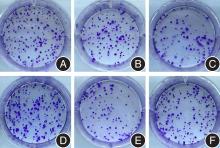
Fig.1
Observation of cell clone changes (crystal violet staining)"
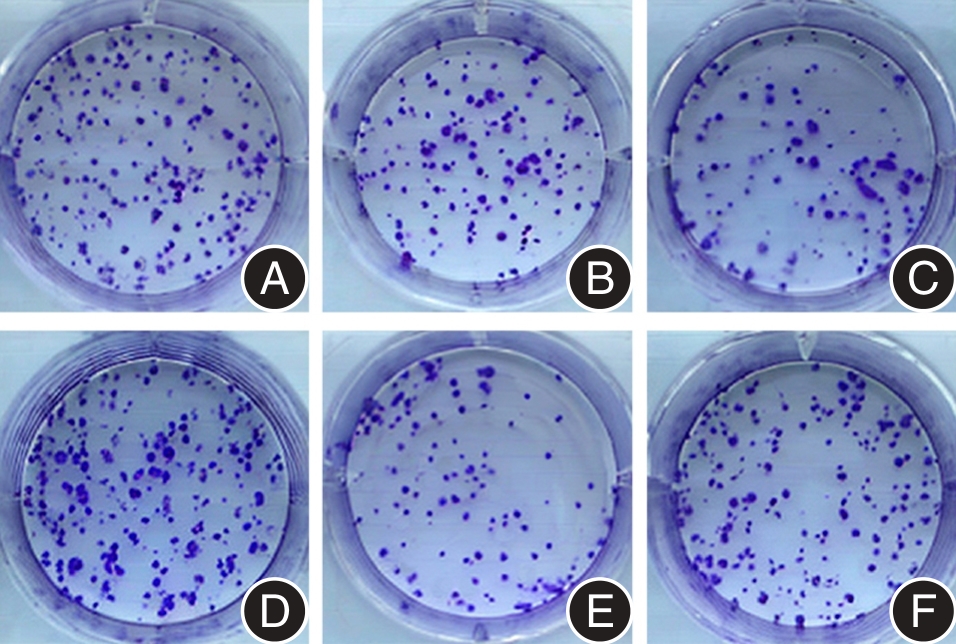
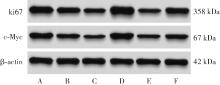
Fig.2
Expression diagrams of various proteins in each group of Ishikawa cells"
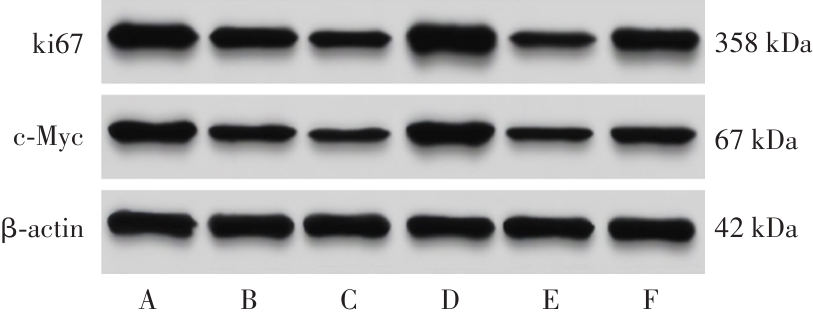
Tab.1
Changes in the number of cell clones, OD, ki67, and c-Myc expression in each group (n = 6)"
| 组别 | 克隆数/个 | OD | ki67/β-actin | c-Myc/β-actin |
|---|---|---|---|---|
| 空白组 | 124.08 ± 12.55 | 0.97 ± 0.10 | 1.18 ± 0.12 | 0.89 ± 0.09 |
| Trig-低组 | 95.34 ± 9.97* | 0.71 ± 0.08* | 0.83 ± 0.09* | 0.62 ± 0.07* |
| Trig-高组 | 65.37 ± 8.86*& | 0.49 ± 0.06*& | 0.64 ± 0.07*& | 0.45 ± 0.06*& |
| SPHK1组 | 186.34 ± 18.74* | 1.37 ± 0.14* | 1.55 ± 0.17* | 1.29 ± 0.13* |
| Trig-高 + 空载组 | 66.05 ± 8.94 | 0.51 ± 0.06 | 0.61 ± 0.07 | 0.47 ± 0.06 |
| Trig-高 + SPHK1组 | 95.44 ± 9.99#△ | 0.75 ± 0.08#△ | 0.86 ± 0.09#△ | 0.68 ± 0.08#△ |
| F值 | 96.469 | 79.055 | 67.216 | 82.714 |
| P值 | < 0.001 | < 0.001 | < 0.001 | < 0.001 |
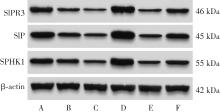
Fig.3
Expression diagrams of various proteins in each group of Ishikawa cells"
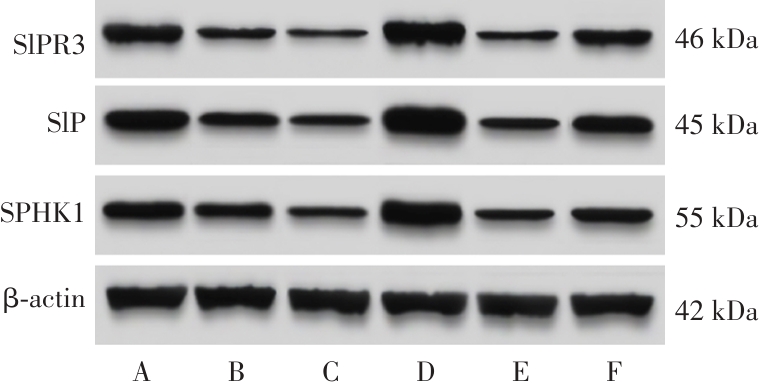
Tab.2
Changes in the expression levels of SPHK1 mRNA and protein, as well as S1P and S1PR3 protein in each group of cells (n = 6)"
| 组别 | S1PR3/β-actin | S1P/β-actin | SPHK1/β-actin | SPHK1 mRNA |
|---|---|---|---|---|
| 空白组 | 0.75 ± 0.08 | 0.83 ± 0.10 | 0.68 ± 0.07 | 1.02 ± 0.11 |
| Trig-低组 | 0.49 ± 0.05* | 0.55 ± 0.07* | 0.44 ± 0.05* | 0.72 ± 0.08* |
| Trig-高组 | 0.22 ± 0.03*& | 0.37 ± 0.04*& | 0.25 ± 0.03*& | 0.56 ± 0.06*& |
| SPHK1组 | 1.03 ± 0.11* | 1.25 ± 0.13* | 0.94 ± 0.10* | 1.52 ± 0.16* |
| Trig-高 + 空载组 | 0.28 ± 0.03 | 0.35 ± 0.04 | 0.29 ± 0.03 | 0.52 ± 0.06 |
| Trig-高 + SPHK1组 | 0.50 ± 0.05#△ | 0.59 ± 0.07#△ | 0.49 ± 0.05#△ | 0.74 ± 0.08#△ |
| F值 | 130.383 | 103.603 | 111.135 | 87.315 |
| P值 | < 0.001 | < 0.001 | < 0.001 | < 0.001 |
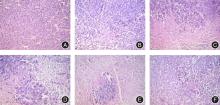
Fig.4
Observation of pathological changes of transplanted tumors(× 200)"
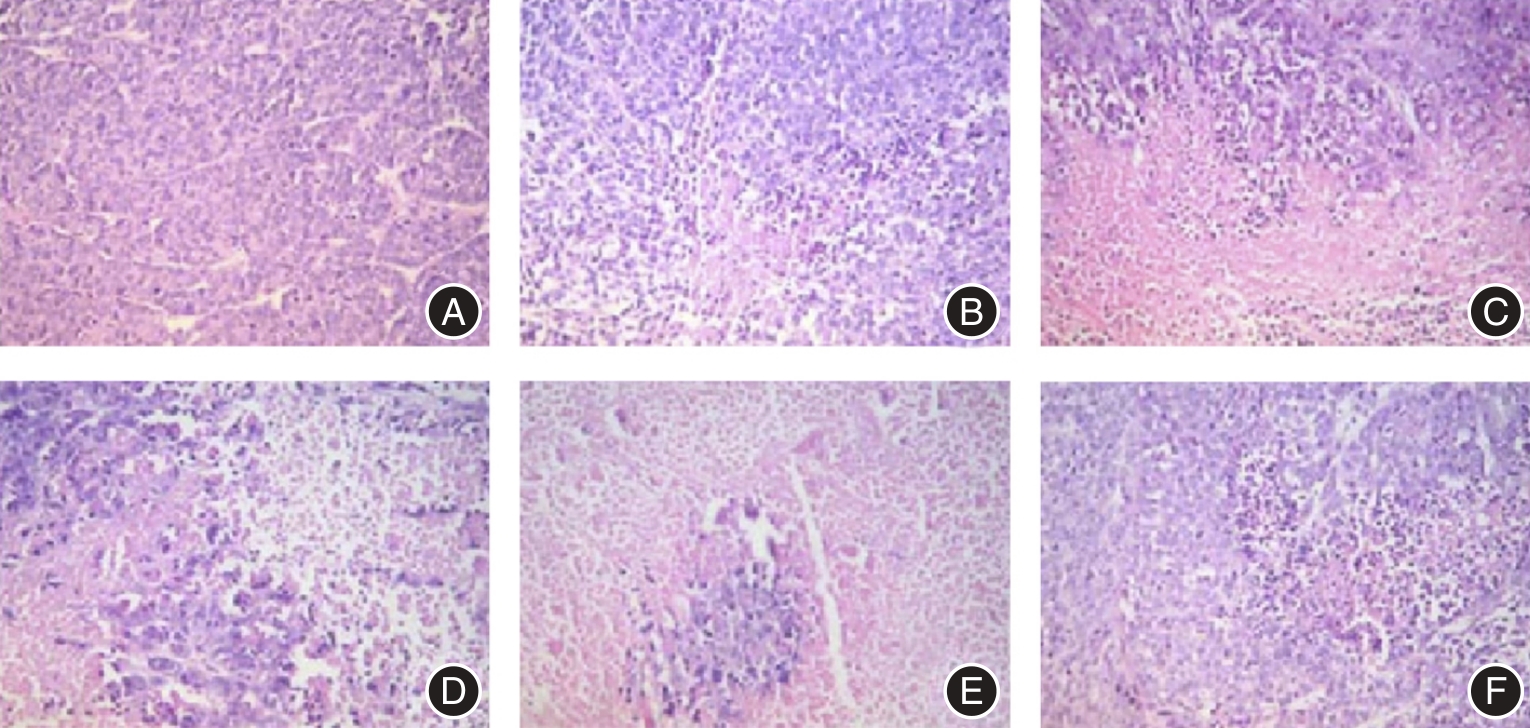
Fig.5
Observation of tumor growth and changes"
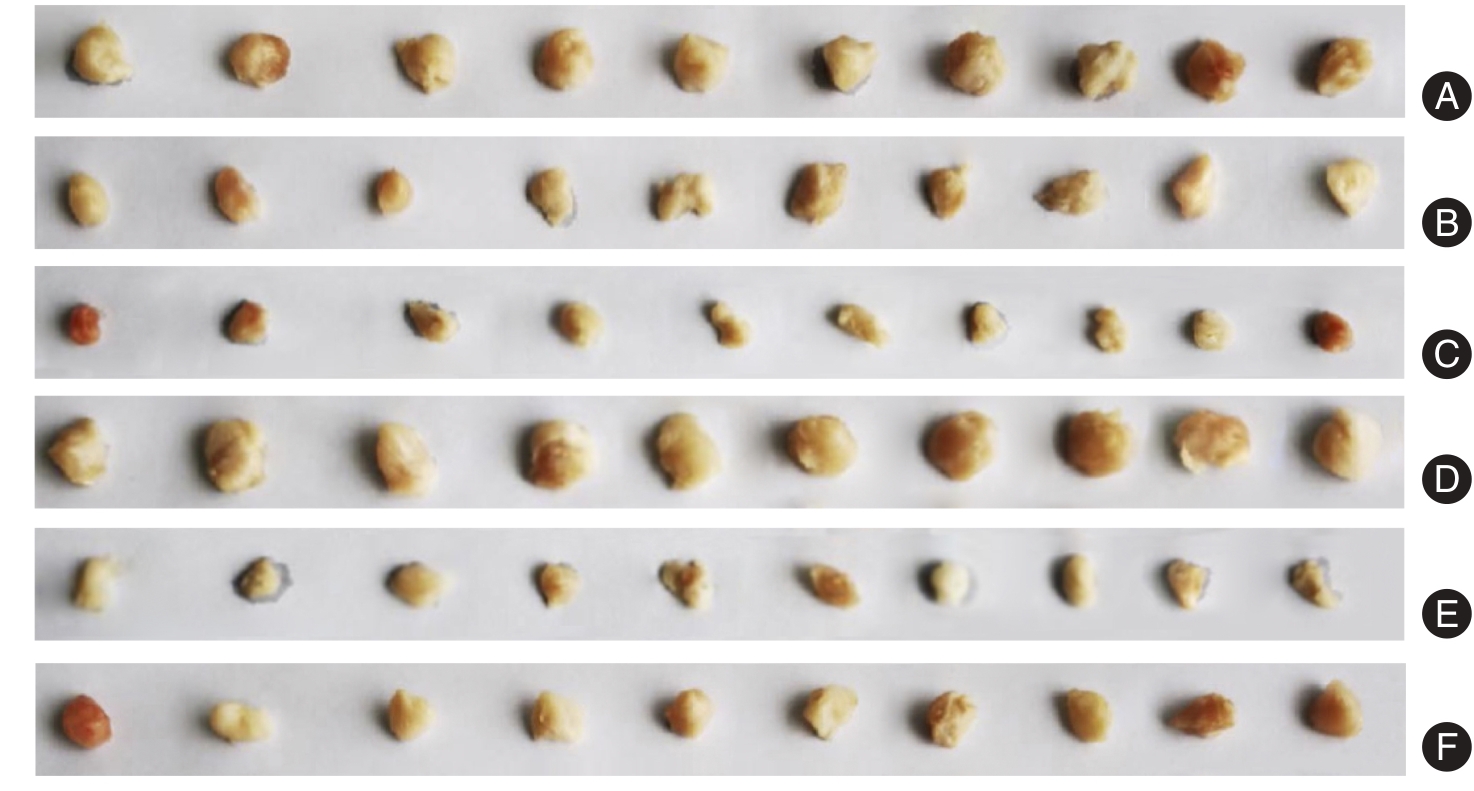
Fig.6
Observation of the change in ki67 positive expression of transplanted tumors (× 200)"
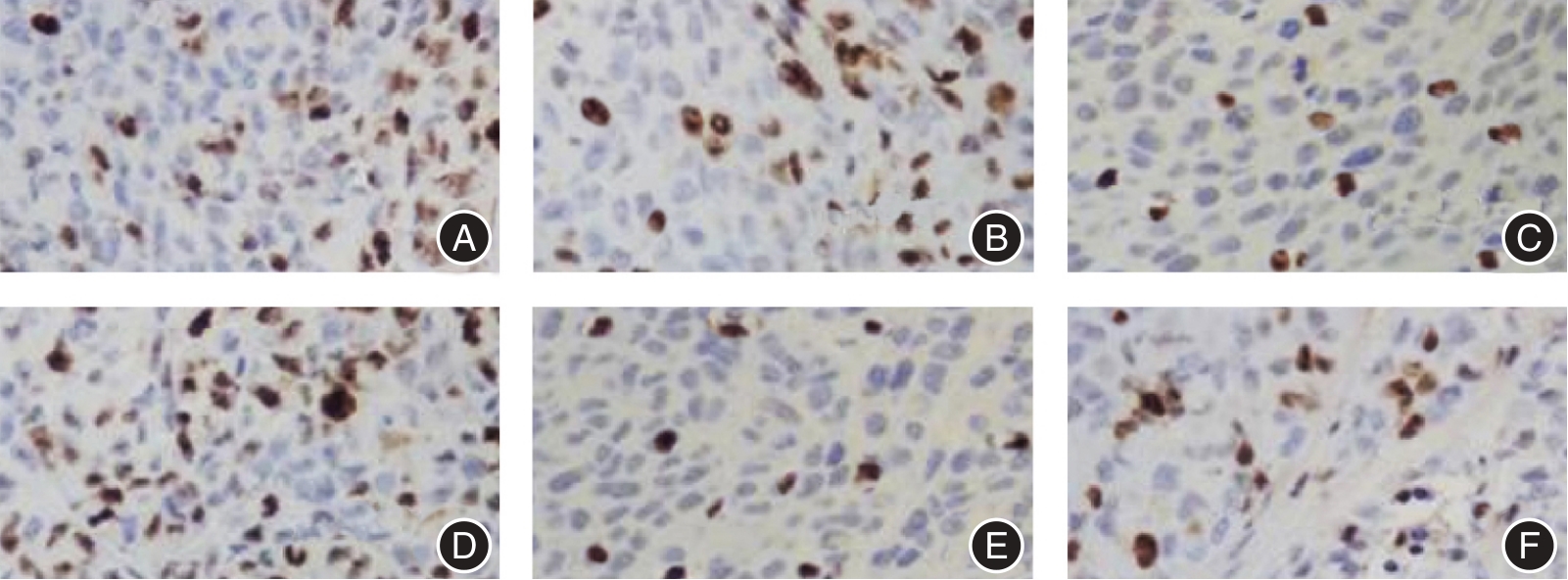
Fig.7
Observation of the changes in c-Myc positive expression in transplanted tumors (×200)"
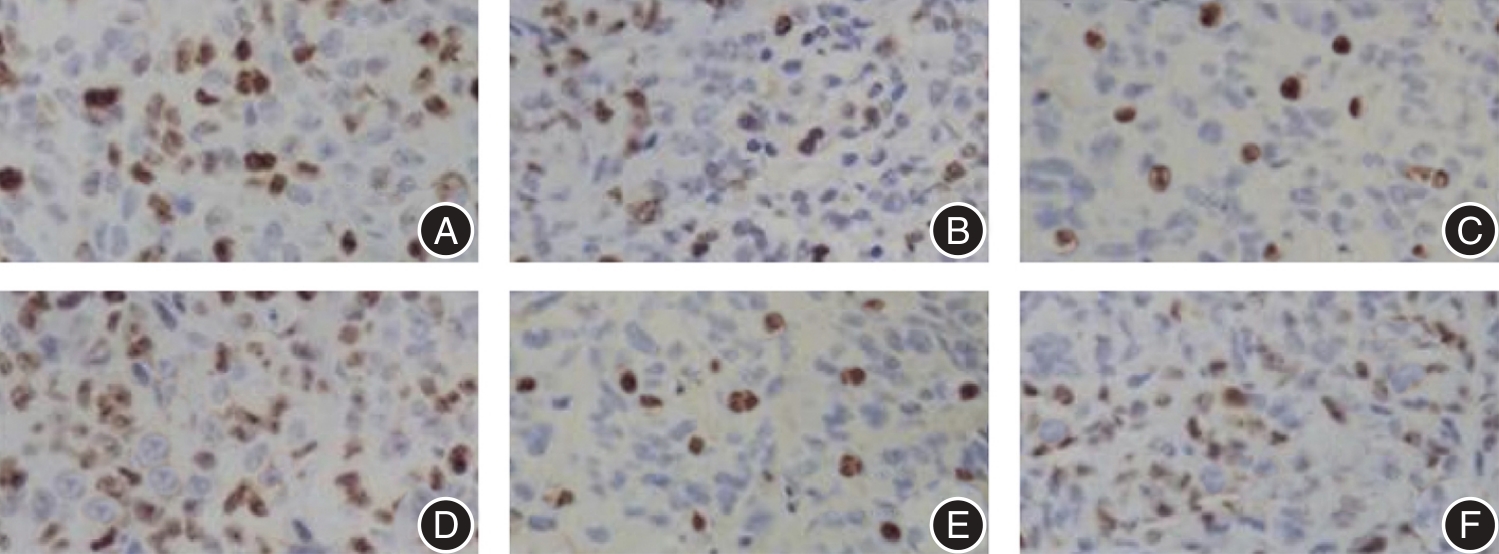
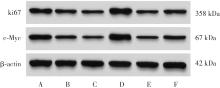
Fig.8
Expression maps of each protein in the transplanted tumor tissues of each group"
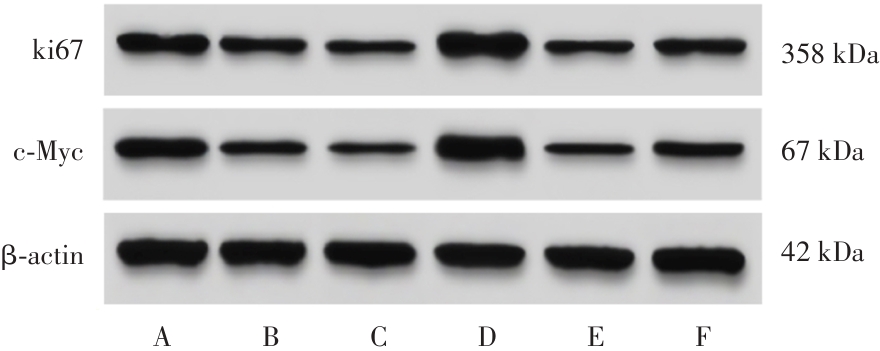
Tab.3
The tumor weights of nude mice in each group and the changes in the positive rate and protein expression of ki67 and c-Myc (n = 10)"
| 组别 | 瘤重/g | ki67阳性表达/% | c-Myc阳性表达/% | ki67/β-actin | c-Myc/β-actin |
|---|---|---|---|---|---|
| EC组 | 0.85 ± 0.10 | 15.34 ± 1.57 | 18.05 ± 1.91 | 0.77 ± 0.08 | 0.69 ± 0.08 |
| 低剂量Trig组 | 0.64 ± 0.07* | 9.05 ± 1.02* | 11.74 ± 1.21* | 0.52 ± 0.06* | 0.41 ± 0.05* |
| 高剂量Trig组 | 0.41 ± 0.05*& | 5.37 ± 0.71*& | 6.88 ± 0.81*& | 0.31 ± 0.04*& | 0.22 ± 0.03*& |
| SPHK1组 | 1.25 ± 0.13* | 24.13 ± 2.55* | 27.34 ± 2.88* | 1.05 ± 0.11* | 0.99 ± 0.10* |
| 高剂量Trig+空载组 | 0.42 ± 0.05 | 5.44 ± 0.72 | 6.92 ± 0.83 | 0.33 ± 0.04 | 0.27 ± 0.03 |
| 高剂量Trig+SPHK1组 | 0.68 ± 0.07#△ | 9.11 ± 1.04#△ | 11.89 ± 1.24#△ | 0.59 ± 0.06#△ | 0.46 ± 0.05#△ |
| F值 | 82.606 | 257.821 | 224.325 | 163.910 | 215.655 |
| P值 | < 0.001 | < 0.001 | < 0.001 | < 0.001 | < 0.001 |
Fig.9
Expression profiles of various proteins in transplanted tumor tissues of each group"
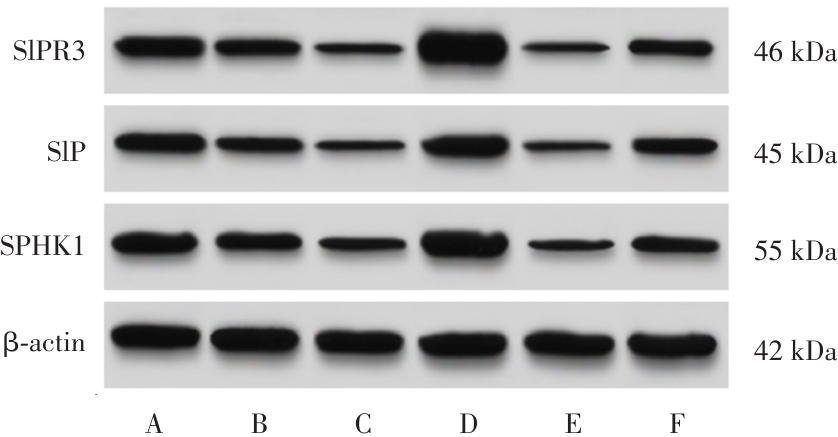
Tab.4
Changes in the protein expression of SPHK1, S1P, and S1PR3 in the transplanted tumor tissues of each group (n = 10)"
| 组别 | S1PR3/β-actin | S1P/β-actin | SPHK1/β-actin |
|---|---|---|---|
| EC组 | 0.88 ± 0.10 | 0.71 ± 0.08 | 0.91 ± 0.10 |
| 低剂量Trig组 | 0.59 ± 0.07* | 0.51 ± 0.06* | 0.68 ± 0.08* |
| 高剂量Trig组 | 0.37 ± 0.05*& | 0.31 ± 0.04*& | 0.42 ± 0.05*& |
| SPHK1组 | 1.18 ± 0.13* | 0.97 ± 0.10* | 1.37 ± 0.15* |
| 高剂量Trig+空载组 | 0.31 ± 0.04 | 0.34 ± 0.04 | 0.39 ± 0.05 |
| 高剂量Trig+SPHK1组 | 0.53 ± 0.06#△ | 0.57 ± 0.06#△ | 0.67 ± 0.08#△ |
| F值 | 165.732 | 135.978 | 157.264 |
| P值 | < 0.001 | < 0.001 | < 0.001 |
| [1] |
王发辉,邓青春,林佳佳,等. GATA3介导miR-21/PTEN轴对子宫内膜癌细胞增殖,侵袭的影响[J]. 实用医学杂志, 2024, 40(15): 2069-2074. doi:10.3969/j.issn.1006-5725.2024.15.005
doi: 10.3969/j.issn.1006-5725.2024.15.005 |
| [2] |
SHI M. The Efficacy of Ganoderma lucidum Extracts on Treating Endometrial Cancer: A Network Pharmacology Approach[J]. Reprod Sci, 2024, 31(7):1881-1894. doi:10.1007/s43032-024-01500-3 .
doi: 10.1007/s43032-024-01500-3 |
| [3] |
CHENG Z, WANG X, YU J, et al. Trigonelline Improves Metabolism and Cardiac Function of HFpEF Mice Via Gut Microbiome Alterations-Mediated AMPK Activation[J]. Adv Sci (Weinh), 2026, 13(5):e13956-e13970. doi: 10.1002/advs. 202513956 .
doi: 10.1002/advs. 202513956 |
| [4] |
NGUYEN V, TAINE E G, MENG D, et al. Pharmacological Activities, Therapeutic Effects, and Mechanistic Actions of Trigonelline[J]. Int J Mol Sci, 2024, 25(6):3385-3394. doi: 10.3390/ijms25063385 .
doi: 10.3390/ijms25063385 |
| [5] |
KAO C C, SHIH J W, HUYNH H T L K, et al. Nutraceutical Evaluation of Trigonelline's Therapeutic Potential by Targeting Bladder Cancer Stem Cells and Cancer-Associated Fibroblasts via Downregulation of TGFβ3/GLI2/YAP1 Signaling Hub[J]. Int J Med Sci, 2025, 22(5):1194-1207. doi: 10.7150/ijms.107228 .
doi: 10.7150/ijms.107228 |
| [6] |
SONG Z, ZHAO Z, LIU X, et al. Sphingosine kinase 1 promotes M2 macrophage infiltration and enhances glioma cell migration via the JAK2/STAT3 pathway[J]. Sci Rep, 2025, 15(1):4152-4167. doi: 10.1038/s41598-025-88328-2 .
doi: 10.1038/s41598-025-88328-2 |
| [7] |
LUCA A C, KURNAEVA M, JOHN D K, et al. Loss of SPHK1 fuels inflammation to drive KRAS-mutated lung adenocarcinoma[J]. Cancer Lett, 2025, 623(1):217733-217744. doi: 10.1016/j.canlet.2025. 217733 .
doi: 10.1016/j.canlet.2025. 217733 |
| [8] |
ZHANG J, WANG Z, WEI X, et al. The suppression of the SPHK1/S1P/S1PR3 signaling pathway diminishes EGFR activation and increases the sensitivity of non-small cell lung cancer to gefitinib[J]. Curr Res Pharmacol Drug Discov, 2025, 8(1):100212-100221. doi:10.1016/j.crphar.2024.100212 .
doi: 10.1016/j.crphar.2024.100212 |
| [9] |
钟明艳,杨帆,李海珍,等. 鸦胆子苦醇调节SPHK1/S1P/S1PR3信号通路对卵巢癌细胞恶性生物学行为的影响[J]. 中国药房, 2024, 35(16): 1991-1997. doi:10.6039/j.issn.1001-0408. 2024.16.09 .
doi: 10.6039/j.issn.1001-0408. 2024.16.09 |
| [10] |
翟润,厉冰,张海洋,等. 葫芦巴碱对荷胆囊癌小鼠抑制作用及其机制[J].中华实验外科杂志, 2021, 38(12): 2410-2413. doi:10.3760/cma.j.cn421213-20210428-01138 .
doi: 10.3760/cma.j.cn421213-20210428-01138 |
| [11] |
姜方清,秦丽. miR-552-3p通过PTEN/AKT途径促进子宫内膜癌细胞体外增殖和转移[J]. 生物技术, 2023, 33(6):738-744. doi: 10.16519/j.cnki.1004-311x. 2023.06.0112 .
doi: 10.16519/j.cnki.1004-311x. 2023.06.0112 |
| [12] |
HOOKS O, JHUMKHAWALA V, SIBSON K, et al. Diabetes, Obesity, and Endometrial Cancer: A Review [J]. Curr Oncol, 2025, 32(12):672. doi:10.3390/curroncol32120672 .
doi: 10.3390/curroncol32120672 |
| [13] |
NIU Z, ZHANG Y, WANG Y, et al. MTFR2 promotes endometrial carcinoma cell proliferation and growth via the miR-132-3p/PI3K/Akt signaling pathway[J]. Front Med (Lausanne), 2025, 11(1):1505071-1505080. doi: 10.3389/fmed.2024.1505071 .
doi: 10.3389/fmed.2024.1505071 |
| [14] |
陈晓乐,张勤生. 葫芦巴碱抑制食管癌细胞增殖,迁移,侵袭并诱导细胞凋亡及铁死亡[J].中药材, 2024, 47(8): 2039-2045. doi:10.13863/j.issn1001- 4454. 2024. 08.028 .
doi: 10.13863/j.issn1001- 4454. 2024. 08.028 |
| [15] |
ZHU Y, DING D, SHEN F, et al. Unveiling the Therapeutic Poten⁃tial of Trigonelline: A Promising Approach in Cancer Prevention and Treatment[J]. Anticancer Agents Med Chem, 2025, 25(16):1175-1187. doi: 10.2174/ 0118715206363456250226061713 .
doi: 10.2174/ 0118715206363456250226061713 |
| [16] |
WANG B, SHANGGUAN W, LI W, et al. Blautia coccoides and its metabolic products enhance the efficacy of bladder cancer immunotherapy by promoting CD8+ T cell infiltration[J]. J Transl Med, 2024, 22(1):964-973. doi:10.1186/s12967- 024-05762-y .
doi: 10.1186/s12967- 024-05762-y |
| [17] |
MANIVANNAN H P, VEERARAGHAVAN V P, FRANCIS A P. Identification of molecular targets of Trigonelline for treating breast cancer through network pharmacology and bioinformatics-based prediction[J]. Mol Divers, 2024, 28(6):3835-3857. doi: 10.1007/s11030-023-10780-x .
doi: 10.1007/s11030-023-10780-x |
| [18] |
ZHANG C, ZHANG H, YANG X, et al. MYO3B promotes cancer progression in endometrial cancer by mediating the calcium ion-RhoA/ROCK1 signaling pathway[J]. J Cancer Res Clin Oncol, 2024, 150(9):424. doi: 10.1007/s00432-024-05940-x .
doi: 10.1007/s00432-024-05940-x |
| [19] |
QI Y, MA N, ZHANG J. Tripartite motif containing 33 demonstrated anticancer effect by degrading c-Myc: Limitation of glutamine metabolism and proliferation in endometrial carcinoma cells[J]. Int J Oncol, 2023, 63(6):133-142. doi: 10.3892/ijo.2023.5581 .
doi: 10.3892/ijo.2023.5581 |
| [20] |
TANIMOTO S, SONE K, JONOUCHI Y, et al. BET inhibitor JQ1 induces apoptosis of ovarian and endometrial endometrioid carcinoma cells by downregulating c-Myc[J]. Oncol Lett, 2024, 29(3):106-115. doi:10.3892/ol.2024. 14852 .
doi: 10.3892/ol.2024. 14852 |
| [21] |
WU Y, ZHAO J, ZHAO S, et al. PFKFB4 promotes endometrial cancer by regulating glycolysis through SRC-3 phosphorylation[J]. Oncol Rep, 2025, 53(5):53-62. doi:10.3892/or.2025.8886 .
doi: 10.3892/or.2025.8886 |
| [22] |
LIN Z, LI Y, HAN X, et al. Targeting SPHK1/PBX1 Axis Induced Cell Cycle Arrest in Non-Small Cell Lung Cancer[J]. Int J Mol Sci, 2022, 23(21):12741-12750. doi:10.3390/ijms232112741 .
doi: 10.3390/ijms232112741 |
| [23] |
PRICE Z K, LOKMAN N A, MORRISON J, et al. Identification of Sphingosine Kinase 1 as a Novel Protein Regulated by High Molecular Weight Hyaluronan in Ovarian Cancer[J]. J Cell Mol Med, 2025, 29(9):e70574-e70586. doi: 10.1111/jcmm.70574 .
doi: 10.1111/jcmm.70574 |
| [24] |
LIU X T, HUANG Y, LIU D, et al. Targeting the SphK1/S1P/PFKFB3 axis suppresses hepatocellular carcinoma progression by disrupting glycolytic energy supply that drives tumor angiogenesis[J]. J Transl Med, 2024, 22(1):43-52. doi: 10.1186/s12967-023-04830-z .
doi: 10.1186/s12967-023-04830-z |
| Viewed | ||||||
|
Full text |
|
|||||
|
Abstract |
|
|||||
