

The Journal of Practical Medicine ›› 2026, Vol. 42 ›› Issue (13): 2317-2330.doi: 10.3969/j.issn.1006-5725.2026.13.007
• Oncology: Diagnosis, Treatment and Prevention • Previous Articles
Zhenya MA1,3,Yanlei GE2,4,5,Junqing GAN1,4,Ye JIN3,4,Xuan ZHENG,Guogui SUN1,4( )
)
Received:2026-03-26
Online:2026-07-10
Published:2026-07-14
Contact:
Guogui SUN
E-mail:guogui_sun2021@sina.com
CLC Number:
Zhenya MA,Yanlei GE,Junqing GAN,Ye JIN,Xuan ZHENG,Guogui SUN. Mechanism study of long non-coding RNA GASAL1 targeting EIF2AK2 to regulate malignant phenotype in esophageal squamous cell carcinoma[J]. The Journal of Practical Medicine, 2026, 42(13): 2317-2330.

Tab.1
List of primer sequences"
| 名称 | 引物序列(5′→3′) |
|---|---|
| GASAL1 | 上游引物:GCCTTGCCACTCCTCACTCA |
| 下游引物:CTCCTTGGTAACCGATGTCATT | |
| EIF2AK2 | 上游引物:TCTGACTACCTGTCCTCTGGTTC |
| 下游引物:CTGCTGAGAAGTCACCTTCAGAT | |
| GAPDH | 上游引物:ACCCACTCCTCCACCTTTGA |
| 下游引物:CCACCCTGTTGCTGTAGCCA | |
| U6 | 上游引物:CTCGCTTCGGCAGCACA |
| 下游引物:AACGCTTCACGAATTTGCGT |
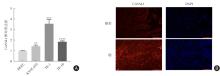
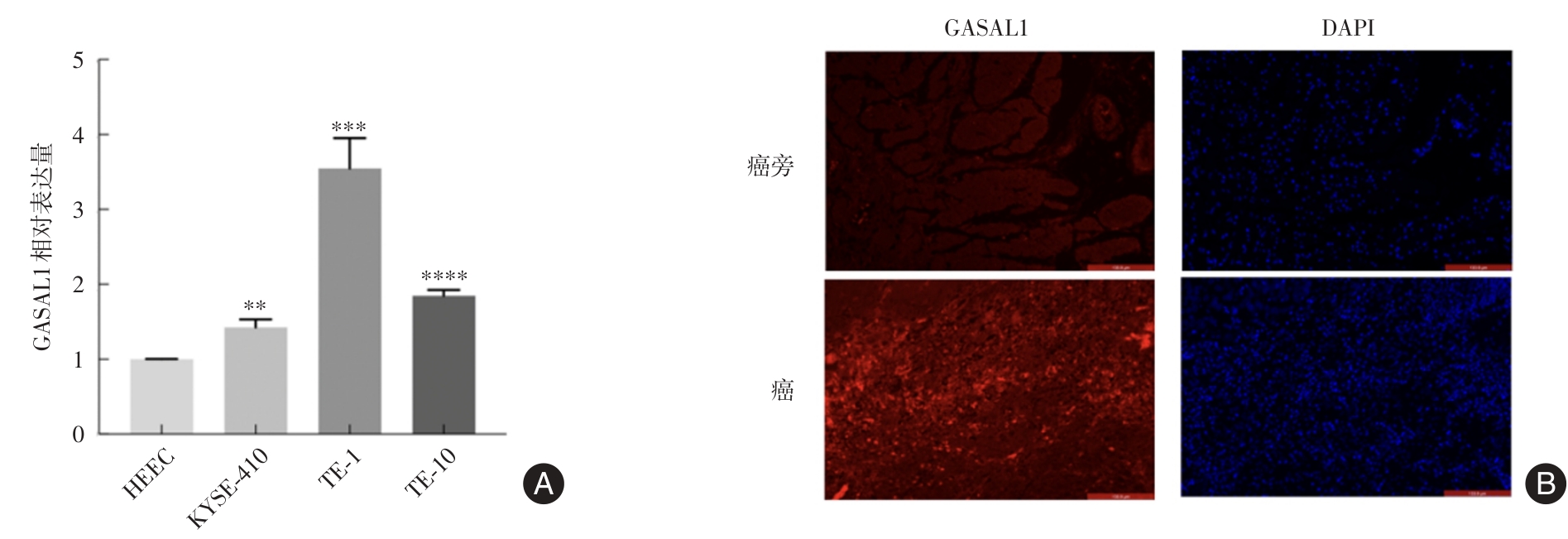
Fig.1
High expression of GASAL1 in esophageal squamous cell carcinoma(n = 3)"
Tab.2
RT-qPCR analysis of GASAL1 expression in esophageal epithelial normal and ESCC cell lines(n = 3) x ± s"
| 细胞 | GASAL1表达水平 | t值 | P值 |
|---|---|---|---|
| HEEC | 1.00 ± 0.00 | ||
| KYSE-410 | 1.42 ± 0.11 | 6.78 | 0.003 |
| TE-1 | 3.55 ± 0.41 | 10.82 | 0.001 |
| TE-10 | 1.85 ± 0.08 | 18.80 | 0.001 |
Tab.3
Expression of GASAL1 in ESCC tissues and its association with clinicopathological features"
| 临床病理特征 | 例数 | GASAL1表达水平 | P值 | ||
|---|---|---|---|---|---|
| 低表达(n = 40) | 高表达(n = 40) | ||||
| 性别 | 2.143 | 0.143 | |||
| 男 | 56 | 25 | 31 | ||
| 女 | 24 | 15 | 9 | ||
| 年龄 | 1.528 | 0.216 | |||
| ≤ 60岁 | 33 | 19 | 14 | ||
| 60岁 | 46 | 20 | 26 | ||
| 肿瘤最大径# | 3.337 | 0.068 | |||
| 5 cm | 44 | 26 | 18 | ||
| ≥ 5 cm | 34 | 13 | 21 | ||
| 淋巴结转移 | 4.053 | 0.044 | |||
| 无 | 41 | 25 | 16 | ||
| 有 | 39 | 15 | 24 | ||
| 临床分期# | 7.204 | 0.007 | |||
| Ⅰ期 + Ⅱ期 | 19 | 15 | 4 | ||
| Ⅲ期 + Ⅳ期 | 28 | 11 | 17 | ||
Tab.4
Subcellular localization of GASAL1 determined by RT-qPCR(n = 3)"
| 组别 | GAPDH | U6 | GASAL1 |
|---|---|---|---|
| TE-1 | |||
| 细胞质 | 0.87 ± 0.01 | 0.27 ± 0.02 | 0.61 ± 0.01 |
| 细胞核 | 0.13 ± 0.01 | 0.73 ± 0.02 | 0.39 ± 0.01 |
| TE-10 | |||
| 细胞质 | 1.00 ± 0.00 | 0.22 ± 0.04 | 0.77 ± 0.02 |
| 细胞核 | 0.00 ± 0.00 | 0.76 ± 0.04 | 0.23 ± 0.02 |
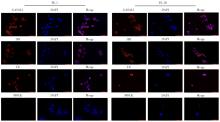
Fig.2
Detection of GASAL1 localization in ESCC cells by FISH experiment(400 ×)"
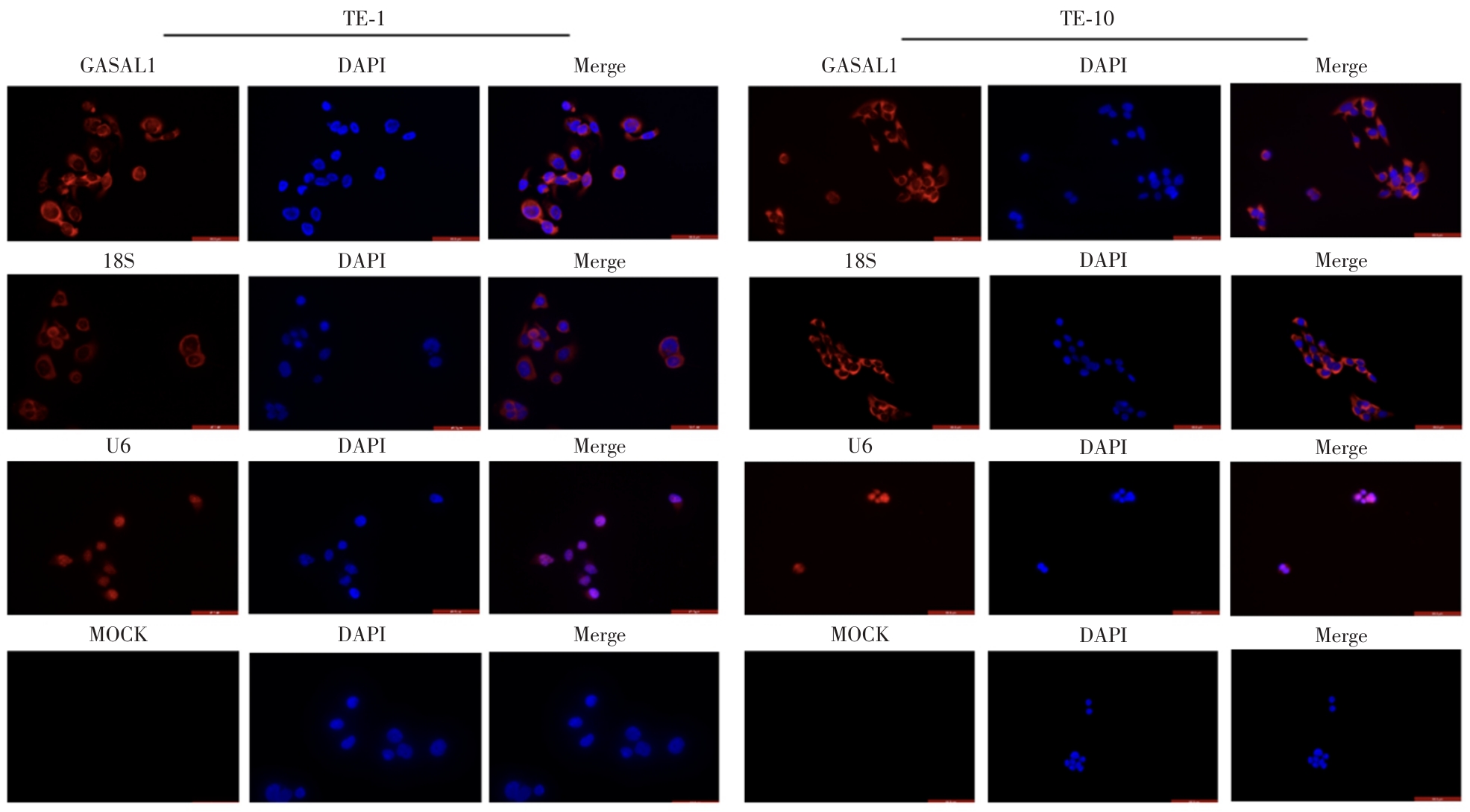
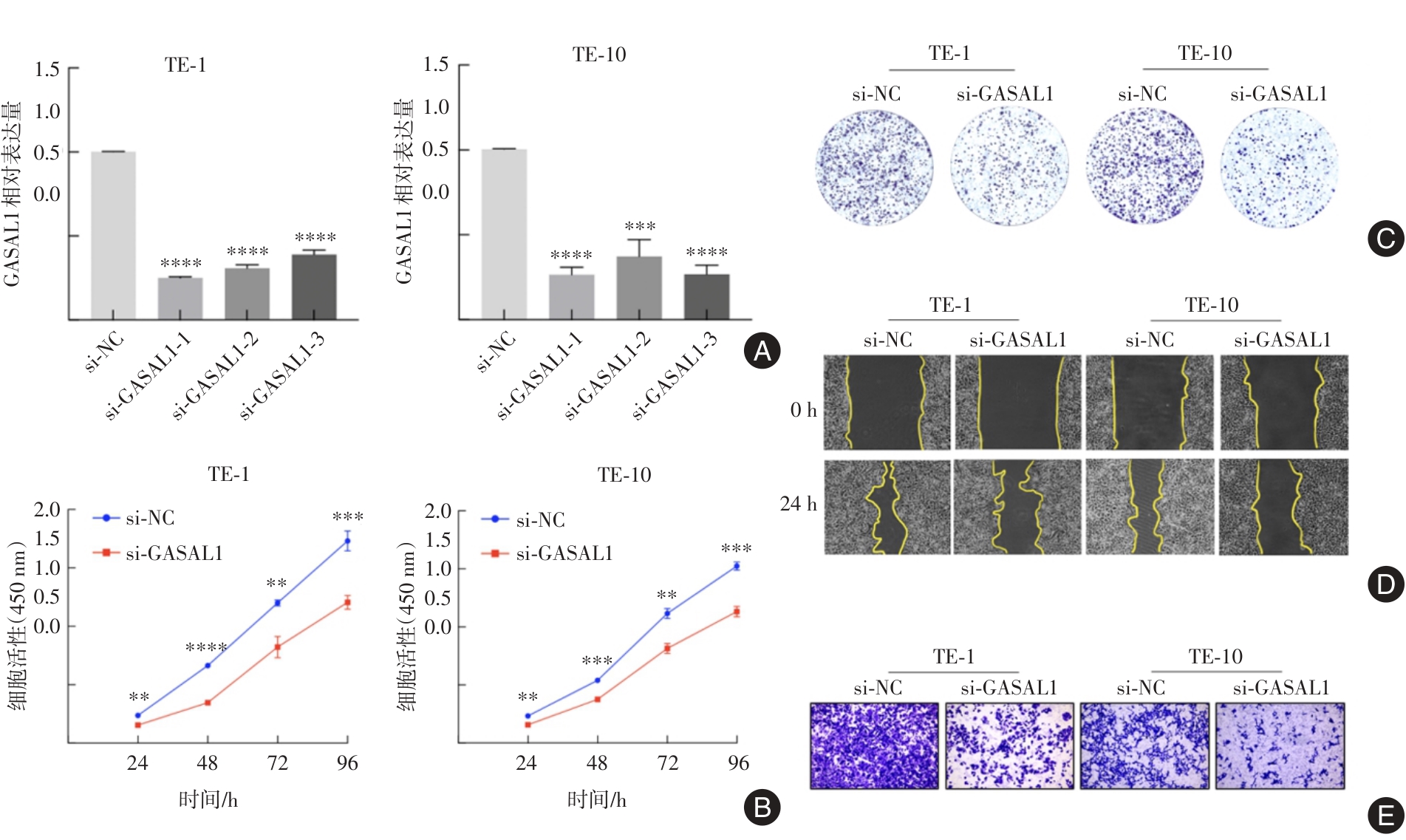
Fig.3
The GASAL1 knockdown inhibited malignant phenotype of ESCC cells (n = 3)"
Tab.5
Evaluation of si-GASAL1 transfection efficiency by RT-qPCR (n = 3)"
| 细胞 | 组别 | GASAL1表达水平 | t值 | P值 |
|---|---|---|---|---|
| TE-1 | si-NC | 1.00 ± 0.00 | ||
| si-GASAL1-1 | 0.26 ± 0.00 | 440.20 | 0.001 | |
| si-GASAL1-2 | 0.31 ± 0.02 | 47.81 | 0.001 | |
| si-GASAL1-3 | 0.39 ± 0.02 | 39.82 | 0.001 | |
| TE-10 | si-NC | 1.00 ± 0.00 | ||
| si-GASAL1-1 | 0.27 ± 0.04 | 29.62 | 0.001 | |
| si-GASAL1-2 | 0.37 ± 0.10 | 11.08 | 0.001 | |
| si-GASAL1-3 | 0.27 ± 0.06 | 23.16 | 0.001 |
Tab.6
Effect of GASAL1 knockdown on the proliferative capacity of ESCC cells (n = 3)"
| 组别 | 吸光度值(450 nm) | 细胞克隆数 | |||
|---|---|---|---|---|---|
| 24 h | 48 h | 72 h | 96 h | ||
| TE-1 | |||||
| si-NC | 0.24 ± 0.01 | 0.66 ± 0.01 | 1.20 ± 0.02 | 1.73 ± 0.07 | 431.00 ± 27.07 |
| si-GASAL1 | 0.15 ± 0.01 | 0.35 ± 0.02 | 0.82 ± 0.07 | 1.21 ± 0.05 | 220.30 ± 45.50 |
| t值 | 8.413 | 23.39 | 6.872 | 8.829 | 6.892 |
| P值 | 0.001 | 0.001 | 0.002 | 0.001 | 0.002 |
| TE-10 | |||||
| si-NC | 0.23 ± 0.02 | 0.54 ± 0.02 | 1.12 ± 0.04 | 1.52 ± 0.03 | 525.30 ± 20.40 |
| si-GASAL1 | 0.16 ± 0.01 | 0.38 ± 0.01 | 0.82 ± 0.04 | 1.13 ± 0.04 | 277.70 ± 5.67 |
| t值 | 5.325 | 11.850 | 8.510 | 11.850 | 20.250 |
| P值 | 0.006 | 0.001 | 0.001 | 0.001 | 0.001 |
Tab.7
Effect of GASAL1 knockdown on the invasion and migration abilities of ESCC cells(n = 3)"
| 组别 | 细胞迁移率/% | 细胞侵袭数量/个 |
|---|---|---|
| TE-1 | ||
| si-NC | 68.68 ± 0.99 | 888.70 ± 15.63 |
| si-GASAL1 | 46.19 ± 0.37 | 349.70 ± 40.38 |
| t值 | 30.08 | 21.56 |
| P值 | 0.001 | 0.001 |
| TE-10 | ||
| si-NC | 51.27 ± 0.73 | 668.70 ± 14.01 |
| si-GASAL1 | 31.05 ± 1.18 | 321.00 ± 55.43 |
| t值 | 20.60 | 10.53 |
| P值 | 0.001 | 0.001 |
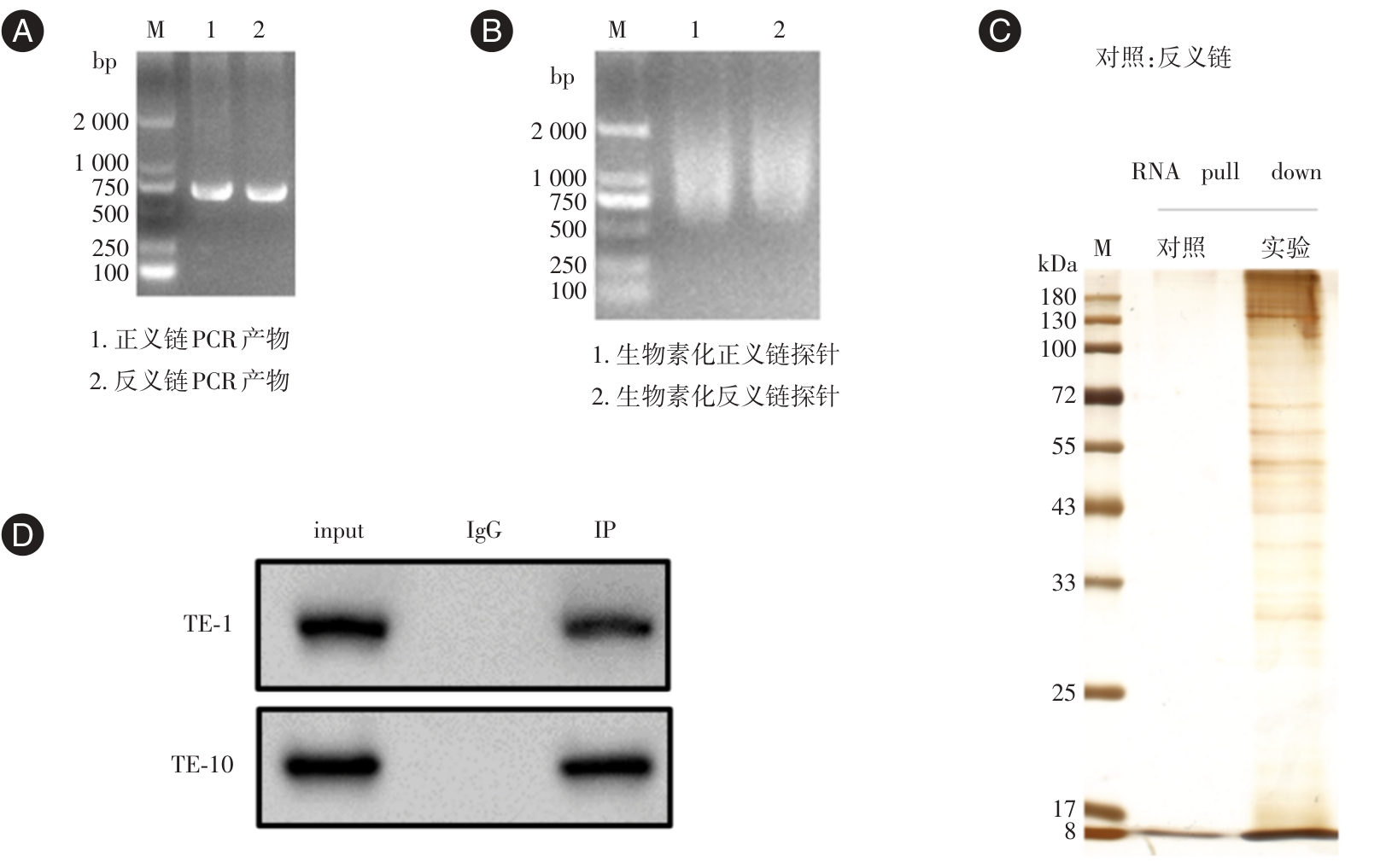
Fig.4
RNA Pull Down-MS combined with RIP experiment for screening of interacting proteins"
Tab.8
Excerpt of mass spectrometry findings"
| 编号 | 总分 | 肽段覆盖度 | 基因名 | 种属 | 高置信度肽段 |
|---|---|---|---|---|---|
| 1 | 85.96 | 36.54 | MTCL1 | 人 | 54 |
| 3 | 77.26 | 34.98 | MTCL2 | 人 | 46 |
| 4 | 75.96 | 43.25 | DHX36 | 人 | 58 |
| 10 | 60.71 | 74.69 | YBX1 | 人 | 76 |
| 13 | 51.18 | 31.38 | PRPF4B | 人 | 34 |
| 14 | 50.15 | 52.45 | EIF2AK2 | 人 | 48 |
| 17 | 47.2 | 27.57 | HNRNPUL1 | 人 | 51 |
| 18 | 45.97 | 16.85 | SNRNP200 | 人 | 24 |
| 22 | 44.65 | 29.67 | EIF5B | 人 | 29 |
Tab.9
RT-qPCR analysis of relative expression in the IP group versus the IgG group(n = 3)"
| 细胞 | 组别 | GASAL1表达水平 | t值 | P值 |
|---|---|---|---|---|
| TE-1 | IP组 | 29.49 ± 3.03 | 16.31 | 0.001 |
| IgG组 | 1.00 ± 0.00 | |||
| TE-10 | IP组 | 31.05 ± 2.85 | 18.26 | 0.001 |
| IgG组 | 1.00 ± 0.00 |
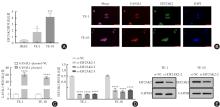
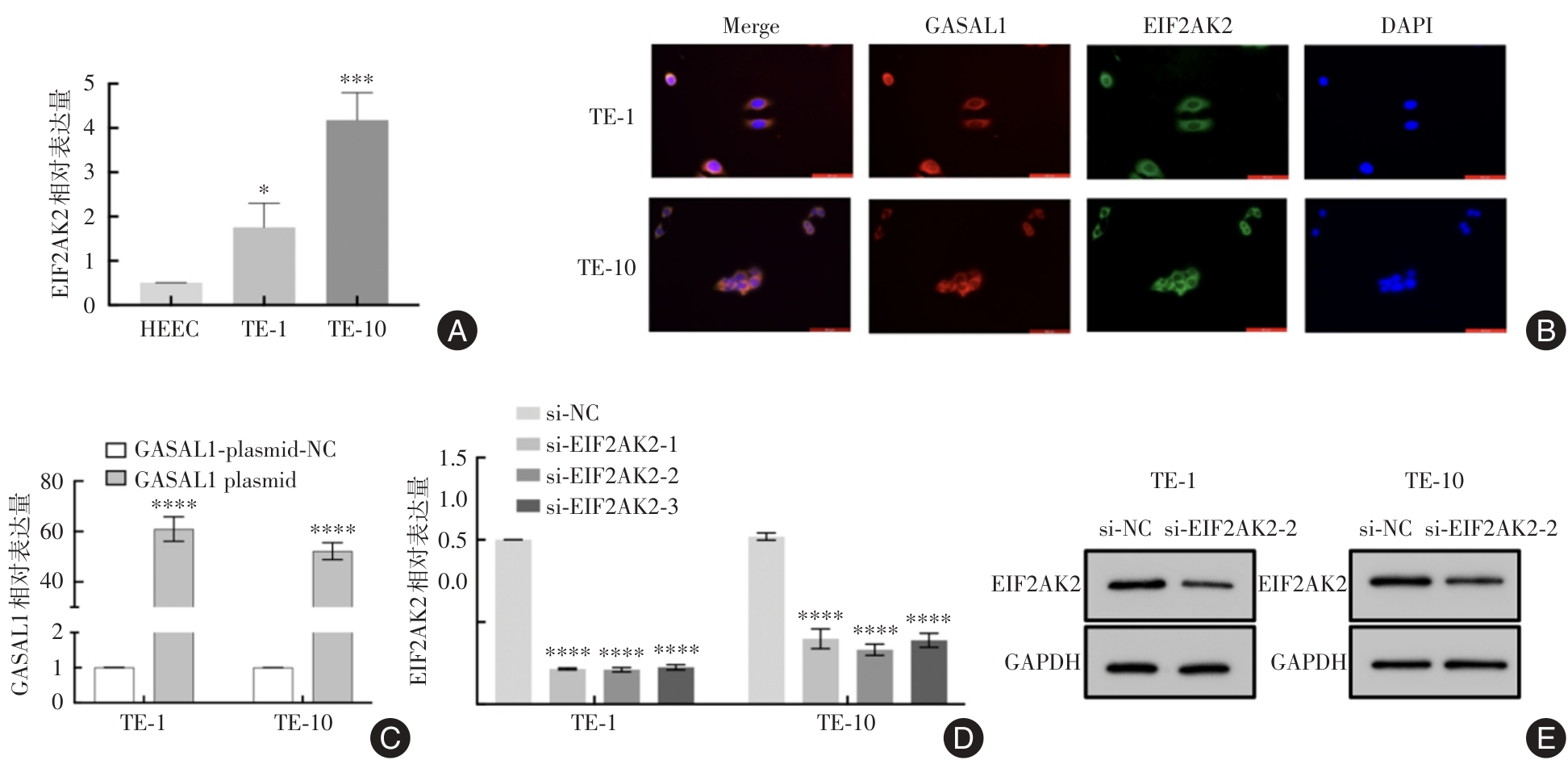
Fig.5
Targeted regulation of EIF2AK2 expression by GASAL1(n = 3)"
Tab.10
Expression levels of EIF2AK2 in normal esophageal cells and ESCC Cell lines detected by RT-qPCR (n = 3)"
| 细胞 | EIF2AK2表达水平 | t值 | P值 |
|---|---|---|---|
| HEEC | 1.01 ± 0.00 | ||
| TE-1 | 3.51 ± 1.09 | 3.98 | 0.016 |
| TE-10 | 8.36 ± 1.24 | 10.29 | 0.001 |
Tab.11
Validation of GASAL1 overexpression efficiency"
| 细胞 | 组别 | GASAL1表达水平 | t值 | P值 |
|---|---|---|---|---|
| TE-1 | GASAL1-plasmid-NC | 1.00 ± 0.00 | 21.45 | 0.001 |
| GASAL1-plasmid | 61.00 ± 4.84 | |||
| TE-10 | GASAL1-plasmid-NC | 1.00 ± 0.00 | 26.38 | 0.001 |
| GASAL1-plasmid | 52.20 ± 3.36 |
Tab.12
Assessment of EIF2AK2 transfection efficiency by RT-qPCR(n = 3)"
| 细胞 | 组别 | EIF2AK2表达水平 | t值 | P值 |
|---|---|---|---|---|
| TE-1 | si-NC | 1.00 ± 0.00 | ||
| si-EIF2AK2-1 | 0.21 ± 0.01 | 231.20 | 0.001 | |
| si-EIF2AK2-2 | 0.21 ± 0.01 | 104.60 | 0.001 | |
| si-EIF2AK2-3 | 0.22 ± 0.02 | 82.86 | 0.001 | |
| TE-10 | si-NC | 1.02 ± 0.02 | ||
| si-EIF2AK2-1 | 0.40 ± 0.06 | 16.86 | 0.001 | |
| si-EIF2AK2-2 | 0.33 ± 0.03 | 29.35 | 0.001 | |
| si-EIF2AK2-3 | 0.39 ± 0.04 | 22.86 | 0.001 |
Tab.13
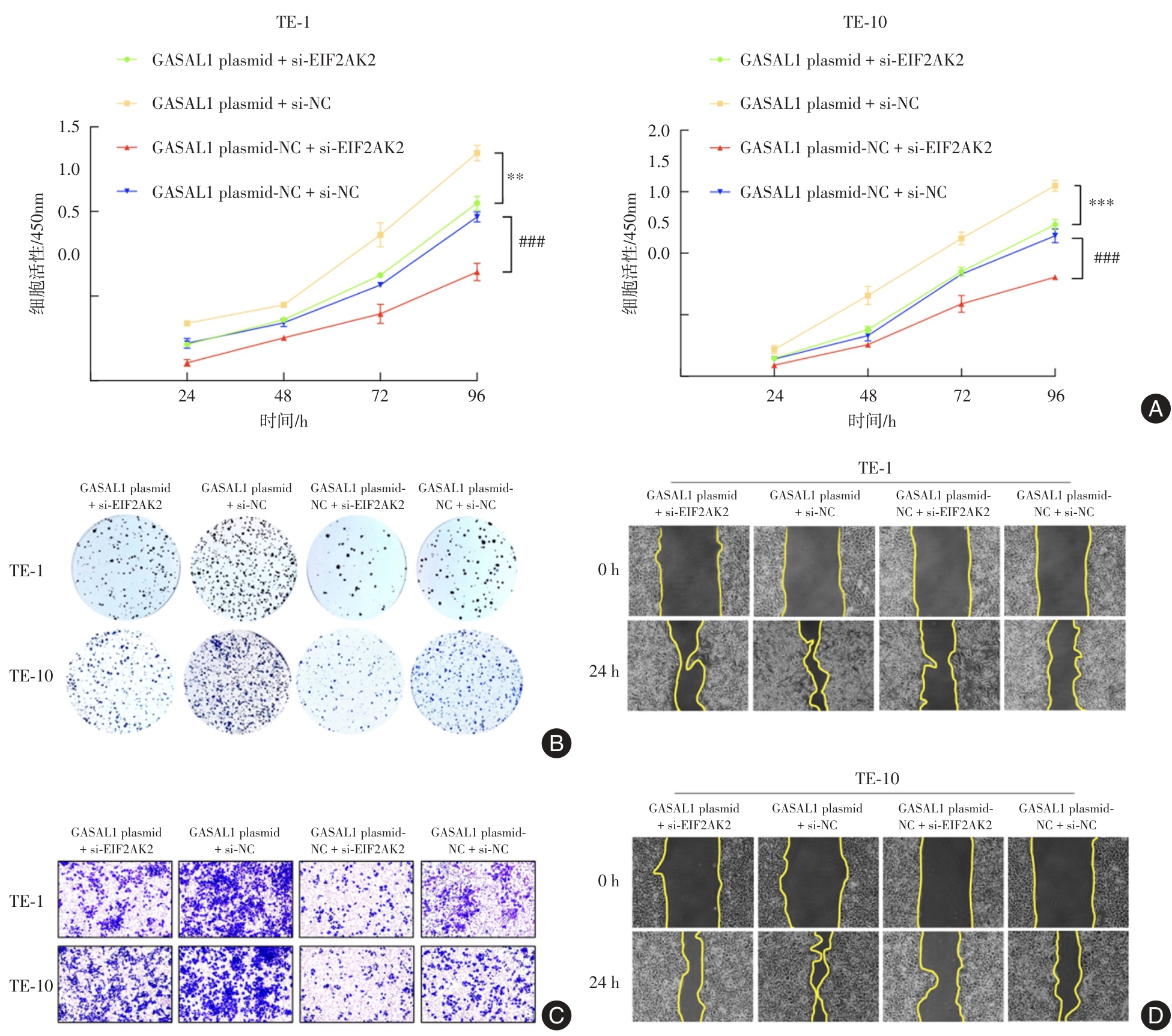
Targeting of EIF2AK2 by GASAL1 regulates ESCC cell proliferation(n = 3)"
| 细胞 | 组别 | 吸光度值(450nm) | 细胞克隆数 | |||
|---|---|---|---|---|---|---|
| 24 h | 48 h | 72 h | 96 h | |||
| TE-1 | GASAL1 plasmid+si-EIF2AK2 | 0.21 ± 0.01*# | 0.36 ± 0.01*# | 0.62 ± 0.00*# | 1.05 ± 0.03*# | 119.33 ± 12.04*# |
| GASAL1 plasmid+si-NC | 0.34 ± 0.01# | 0.45 ± 0.00# | 0.86 ± 0.06# | 1.35 ± 0.04# | 289.67 ± 20.43# | |
| GASAL1 plasmid-NC+si-EIF2AK2 | 0.11 ± 0.02* | 0.25 ± 0.00* | 0.40 ± 0.05* | 0.64 ± 0.04* | 47.33 ± 2.05* | |
| GASAL1 plasmid-NC+si-NC | 0.22 ± 0.02*# | 0.34 ± 0.02*# | 0.57 ± 0.00*# | 0.97 ± 0.02*# | 111.33 ± 8.58*# | |
| F值 | 73.602 | 128.300 | 53.316 | 138.46 | 134.210 | |
| P值 | 0.000 | 0.000 | 0.000 | 0.000 | 0.000 | |
| TE-10 | GASAL1 plasmid+si-EIF2AK2 | 015 ± 0.02*# | 0.38 ± 0.02*# | 0.85 ± 0.03*# | 1.23 ± 0.03*# | 158.00 ± 8.60*# |
| GASAL1 plasmid+si-NC | 0.22 ± 0.03# | 0.66 ± 0.06# | 1.12 ± 0.04# | 1.55 ± 0.04# | 252.67 ± 37.61# | |
| GASAL1 plasmid-NC+si-EIF2AK2 | 0.09 ± 0.01* | 0.26 ± 0.01* | 0.59 ± 0.06* | 0.81 ± 0.02* | 52.33 ± 19.77* | |
| GASAL1 plasmid-NC+si-NC | 0.14 ± 0.01*# | 0.33 ± 0.04*# | 0.83 ± 0.01*# | 1.14 ± 0.05*# | 157.33 ± 33.77*# | |
| F值 | 17.563 | 43.592 | 65.289 | 24.676 | 17.747 | |
| P值 | 0.001 | 0.000 | 0.000 | 0.000 | 0.001 | |
Tab.14
GASAL1 Facilitates ESCC Cell Migration and Invasion by Targeting EIF2AK2 (n = 3)"
| 细胞 | 组别 | 细胞迁移率/% | 细胞侵袭数量/个 |
|---|---|---|---|
| TE-1 | GASAL1 plasmid+si-EIF2AK2 | 58.04 ± 0.23*# | 352.33 ± 34.41*# |
| GASAL1 plasmid+si-NC | 78.64 ± 0.05# | 752.00 ± 54.55# | |
| GASAL1 plasmid-NC+si-EIF2AK2 | 35.67 ± 0.54* | 162.33 ± 9.84* | |
| GASAL1 plasmid-NC+si-NC | 54.45 ± 0.10*# | 322.67 ± 31.48*# | |
| F值 | 6918.00 | 95.84 | |
| P值 | 0.000 | 0.000 | |
| TE-10 | GASAL1 plasmid+si-EIF2AK2 | 61.79 ± 0.34*# | 406.67 ± 39.88*# |
| GASAL1 plasmid+si-NC | 72.11 ± 0.70# | 627.00 ± 25.31# | |
| GASAL1 plasmid-NC+si-EIF2AK2 | 36.09 ± 1.88* | 140.33 ± 25.04* | |
| GASAL1 plasmid-NC+si-NC | 54.59 ± 1.66*# | 325.33 ± 19.22*# | |
| F值 | 267.94 | 100.84 | |
| P值 | 0.000 | 0.000 |
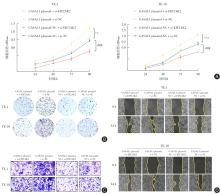
Fig.6
GASAL1 targeting EIF2AK2 affects themalignant phenotype of ESCC cells (n = 3)"
| [1] | 徐睿锋, 王泓睿, 车云, 等. 《癌症统计数据2025》解读: 中美癌症流行病学特征及长期趋势对比研究[J]. 中国胸心血管外科临床杂志, 2025, 32(4): 442-452. |
| [2] |
XIAO H, ZHOU T, YANG Y, et al. LncRNA-DANCR promotes ESCC progression and function as CeRNA to regulate DDIT3 expression by sponging microRNA-3193[J]. Cancer Sci, 2025, 116(5): 1324-1338. doi:10.1111/cas.70035 .
doi: 10.1111/cas.70035 |
| [3] |
WEI S, FAN X, LI X, et al. Hypoxia induced Lnc191 upregulation dictates the progression of esophageal squamous cell carcinoma by activating GRP78/ERK pathway[J]. Adv Sci, 2025, 12(4): 2406674. doi:10.1002/advs.202406674 .
doi: 10.1002/advs.202406674 |
| [4] |
SHEN C, LI J, ZHANG Q, et al. LncRNA GASAL1 promotes hepatocellular carcinoma progression by up-regulating USP10-stabilized PCNA[J]. Exp Cell Res, 2022, 415(1): 112973. doi:10.1016/j.yexcr.2021.112973 .
doi: 10.1016/j.yexcr.2021.112973 |
| [5] |
王立东, 李留玉, 宋昕, 等. 272 437例原发食管恶性肿瘤患者的组织病理学类型和临床病理特征分析[J]. 中华内科杂志, 2022, 61(9): 1023-1030. doi:10.3760/cma.j.cn112138-20210929-00668 .
doi: 10.3760/cma.j.cn112138-20210929-00668 |
| [6] |
LIU Q, LI M, XIE S, et al. MYOD induced lnc-MEG3 promotes porcine satellite cell differentiation via interacting with DLST[J]. Epigenetics, 2023, 18(1): 2237789. doi:10.1080/15592294. 2023.2237789 .
doi: 10.1080/15592294. 2023.2237789 |
| [7] |
DODANGEH F, SADEGHI Z, MALEKI P, et al. Long non-coding RNA SOX2-OT enhances cancer biological traits via sponging to tumor suppressor miR-122-3p and miR-194-5p in non-small cell lung carcinoma[J]. Sci Rep, 2023, 13: 12371. doi:10.1038/s41598-023-39000-0 .
doi: 10.1038/s41598-023-39000-0 |
| [8] |
GONG Y, ZHONG Q, XIA Y, et al. Long non-coding RNA MALAT1 sponges miR-30c to promote the calcification of human vascular smooth muscle cells by regulating Runx2[J]. Ren Fail, 2023, 45(1): 2204953. doi:10.1080/0886022X.2023.2204953 .
doi: 10.1080/0886022X.2023.2204953 |
| [9] |
MADKOUR M M, RAMADAN W S, SALEH E, et al. Epigenetic modulations in cancer: Predictive biomarkers and potential targets for overcoming the resistance to topoisomerase I inhibitors[J]. Ann Med, 2023, 55(1): 2203946. doi:10.1080/07853890. 2023.2203946 .
doi: 10.1080/07853890. 2023.2203946 |
| [10] |
UTTAM V, RANA M K, SHARMA U, et al. Circulating long non-coding RNA EWSAT1 acts as a liquid biopsy marker for esophageal squamous cell carcinoma: A pilot study[J]. Non Coding RNA Res, 2024, 9(1): 1-11. doi:10.1016/j.ncrna.2023. 10.009 .
doi: 10.1016/j.ncrna.2023. 10.009 |
| [11] |
YANG L, SUN K, CHU J, et al. Long non-coding RNA FTH1P3 regulated metastasis and invasion of esophageal squamous cell carcinoma through SP1/NF-kB pathway[J]. Biomed Pharmacother, 2018, 106: 1570-1577. doi:10.1016/j.biopha.2018.07.129 .
doi: 10.1016/j.biopha.2018.07.129 |
| [12] |
谢剑君. 食管鳞癌发生发展相关长链非编码RNA的研究进展[J]. 广东医科大学学报, 2023, 41(4): 361-366. doi:10.3969/j.issn.1005-4057.2023.04.001 .
doi: 10.3969/j.issn.1005-4057.2023.04.001 |
| [13] | 李秀帅, 王清. 长非编码RNA和RNA结合蛋白在胶质瘤中的作用[J]. 生命的化学, 2024, 44(1): 9-20. |
| [14] |
XIE Y, CHENG Y. LINC01198 facilitates gliomagenesis through activating PI3K/AKT pathway[J]. RNA Biol, 2020, 17(7): 1040-1052. doi:10.1080/15476286.2020.1755112 .
doi: 10.1080/15476286.2020.1755112 |
| [15] |
SHENG J, HE X, YU W, et al. p53-targeted lncRNA ST7-AS1 acts as a tumour suppressor by interacting with PTBP1 to suppress the Wnt/β-catenin signalling pathway in glioma[J]. Cancer Lett, 2021, 503: 54-68. doi:10.1016/j.canlet.2020.12.039 .
doi: 10.1016/j.canlet.2020.12.039 |
| [16] |
杨涌, 黄光武. lncRNA SNHG1在癌症发生与发展中的作用及其研究进展[J]. 广西医学, 2023, 45(15): 1879-1885. doi:10.11675/j.issn.0253-4304.2023.15.16 .
doi: 10.11675/j.issn.0253-4304.2023.15.16 |
| [17] |
LI Z, LU Q, ZHU D, et al. Lnc-SNHG1 may promote the progression of non-small cell lung cancer by acting as a sponge of miR-497[J]. Biochem Biophys Res Commun, 2018, 506(3): 632-640. doi:10.1016/j.bbrc.2018.10.086 .
doi: 10.1016/j.bbrc.2018.10.086 |
| [18] |
CHEN W, ZHANG K, YANG Y, et al. MEF2A-mediated lncRNA HCP5 inhibits gastric cancer progression via miR-106b-5p/p21 axis[J]. Int J Biol Sci, 2021, 17(2): 623-634. doi:10.7150/ijbs.55020 .
doi: 10.7150/ijbs.55020 |
| [19] |
WU Y, HU L, LIANG Y, et al. Up-regulation of lncRNA CASC9 promotes esophageal squamous cell carcinoma growth by negatively regulating PDCD4 expression through EZH2[J]. Mol Cancer, 2017, 16(1): 150. doi:10.1186/s12943-017-0715-7 .
doi: 10.1186/s12943-017-0715-7 |
| [20] |
LIANG Y, CHEN X, WU Y, et al. LncRNA CASC9 promotes esophageal squamous cell carcinoma metastasis through upregulating LAMC2 expression by interacting with the CREB-binding protein[J]. Cell Death Differ, 2018, 25(11): 1980-1995. doi:10.1038/s41418-018-0084-9 .
doi: 10.1038/s41418-018-0084-9 |
| [21] |
LU J T, YAN Z Y, XU T X, et al. Reciprocal regulation of LINC00941 and SOX2 promotes progression of esophageal squamous cell carcinoma[J]. Cell Death Dis, 2023, 14: 72. doi:10.1038/s41419-023-05605-6 .
doi: 10.1038/s41419-023-05605-6 |
| [22] |
XUE S T, ZHENG B, CAO S Q, et al. Long non-coding RNA LINC00680 functions as a CeRNA to promote esophageal squamous cell carcinoma progression through the miR-423-5p/PAK6 axis[J]. Mol Cancer, 2022, 21(1): 69. doi:10.1186/s12943-022-01539-3 .
doi: 10.1186/s12943-022-01539-3 |
| [23] |
HE Y, JIANG X, DUAN L, et al. LncRNA PKMYT1AR promotes cancer stem cell maintenance in non-small cell lung cancer via activating Wnt signaling pathway[J]. Mol Cancer, 2021, 20(1): 156. doi:10.1186/s12943-021-01469-6 .
doi: 10.1186/s12943-021-01469-6 |
| [24] |
SUR S, RAY R B. Emerging role of lncRNA ELDR in development and cancer[J]. FEBS J, 2022, 289(11): 3011-3023. doi:10.1111/febs.15876 .
doi: 10.1111/febs.15876 |
| [25] |
HOU M, WU N, YAO L. LncRNA CBR3-AS1 potentiates Wnt/β-catenin signaling to regulate lung adenocarcinoma cells proliferation, migration and invasion[J]. Cancer Cell Int, 2021, 21(1): 36. doi:10.1186/s12935-020-01685-y .
doi: 10.1186/s12935-020-01685-y |
| [26] |
LI Q, ZHAO Y H, XU C, et al. Chemotherapy-induced senescence reprogramming promotes nasopharyngeal carcinoma metastasis by circRNA-mediated PKR activation[J]. Adv Sci, 2023, 10(8): 2205668. doi:10.1002/advs.202205668 .
doi: 10.1002/advs.202205668 |
| [27] |
LIANG L, WANG J, GUO T, et al. Calreticulin regulates the expression of MMP14 and ADAR1 through EIF2AK2 signaling to promote the proliferation and progression of malignant melanoma cells[J]. Neoplasma, 2024, 71(2): 180-192. doi:10.4149/neo_2024_240116n24 .
doi: 10.4149/neo_2024_240116n24 |
| [28] |
LAI Y, WANG X, MA J, et al. Knockdown of EIF2AK2-OAS1 axis reduces ATP production inducing AMPK phosphorylation to inhibit the malignant behavior of gastric cancer cells[J]. J Bioenerg Biomembr, 2024, 56(4): 433-449. doi:10.1007/s10863-024-10023-0 .
doi: 10.1007/s10863-024-10023-0 |
| [29] |
DING J, ZHAO J, HUAN L, et al. Inflammation-induced long intergenic noncoding RNA (LINC00665) increases malignancy through activating the double-stranded RNA-activated protein kinase/nuclear factor kappa B pathway in hepatocellular carcinoma[J]. Hepatology, 2020, 72(5): 1666-1681. doi:10.1002/hep. 31195 .
doi: 10.1002/hep. 31195 |
| [30] |
CHEN M, QI Y, ZHANG S, et al. Molecular insights into programmed cell death in esophageal squamous cell carcinoma[J]. PeerJ, 2024, 12: e17690. doi:10.7717/peerj.17690 .
doi: 10.7717/peerj.17690 |
| [1] | Rui KE,Wei ZHANG,Ping HE,Wenhua SHI,Yonghong ZHANG. AMPK activation inhibits pulmonary arterial smooth muscle cells proliferation via YAP/PKM2/glycolysis signaling pathway [J]. The Journal of Practical Medicine, 2026, 42(7): 1208-1214. |
| [2] | Chen NI,Shaokai WANG,Yu SONG,Chenjie TAO,Jian JIANG,Zhipeng CHEN,Huiping ZHU. Sintilimab combined with chemotherapy for unresectable locally advanced ESCC: An analysis of efficacy and prognosis [J]. The Journal of Practical Medicine, 2026, 42(6): 981-990. |
| [3] | Huanhui LI,Xiaofu QIU,Gaoyuan LI,Yu FU. TFAM overexpression promotes the proliferation and invasion of renal cancer cells [J]. The Journal of Practical Medicine, 2026, 42(5): 759-767. |
| [4] | Feifan LUAN,Jiayi CHEN,Chenxiao ZHENG,Yuzhong ZHENG,Feng HUANG. Effect of Shangke Jiuwei Jiangu Tablet on osteogenic differentiation and distraction osteogenesis of bone marrow mesenchymal stem cells by regulating stromal cell-derived factor-1 α/C-X-C chemokine receptor type 4 axis [J]. The Journal of Practical Medicine, 2026, 42(2): 285-294. |
| [5] | Tao YANG,Hao TANG,Ling CAI,Qiuxia WEI,Gang WANG,Hongbi QIN,Chunxiao LIAO,Honglin LUO. A study on the role of dehydrocavidine in inhibiting the invasion and metastasis of hepatocellular carcinoma [J]. The Journal of Practical Medicine, 2026, 42(12): 2144-2152. |
| [6] | Zhicong LIU,Daiyin LIU,Juntian LONG,Chixing CHENG,Jian HUANG. Exosomal lncRNA CIAT1 promotes collective invasion of bladder cancer [J]. The Journal of Practical Medicine, 2025, 41(9): 1299-1308. |
| [7] | Daiyin LIU,Qiuyan LI,Changhao. CHEN. CircMYCBP2 enhances the formation of lymphovascular invasion of bladder cancer [J]. The Journal of Practical Medicine, 2025, 41(8): 1139-1148. |
| [8] | Yin GUO,Haiqing REN,Xiaoyang GUO,Jianghua ZUO,Ting. WANG. Study on the correlation between serum APRIL, PLA2R⁃Ab, and 25⁃(OH) D3 levels and the severity and prognosis of primary membranous nephropathy [J]. The Journal of Practical Medicine, 2025, 41(8): 1199-1204. |
| [9] | Meiyu GAN,Chunjiao WU,Jingyi QIN,Zuojie. LUO. The effect of vanadyl bis(acetylacetonato) on the proliferation and invasion of human adrenocortical carcinoma cells [J]. The Journal of Practical Medicine, 2025, 41(6): 781-789. |
| [10] | Hongyan BIAN,Shu ZHANG,Shanshan MENG,Ying WEI. Effect of pomegranate peel polyphenols on the malignant biological behavior of colon cancer cells by regulating the miR⁃138⁃5p/HIF⁃1α pathway [J]. The Journal of Practical Medicine, 2025, 41(5): 676-682. |
| [11] | Yutang HUANG,Weiqin DU,Dong YUAN,Tiantian LEI,Chunjie WEN,Lanxiang. WU. The mechanism of JUP promoting the malignant progression of high⁃grade serous ovarian cancer [J]. The Journal of Practical Medicine, 2025, 41(24): 3848-3859. |
| [12] | Tian TIAN,Ping CAO,Xuhong ZHANG,Xiaohong MA,Jingrui LI,Xueqin DING,Xiaoming. YANG. The role of GPNMB in hypoxia induced epithelial-mesenchymal transition in human chorionic trophoblast cells [J]. The Journal of Practical Medicine, 2025, 41(20): 3135-3144. |
| [13] | Dongmei FANG,Yuanyuan QI,Chunjing CAO,Fang WANG,Mingze. LI. Clinical significance of circular RNA circ-PHC3 expression in cervical cancer tissues and its effects on the proliferation, migration and invasion of cervical cancer cells [J]. The Journal of Practical Medicine, 2025, 41(20): 3145-3154. |
| [14] | Wei YANG,Xiahai LIANG,Huidong XIA,Ru. BAI. The expression of TUBB2A in HCC and its effect on malignant biological behaviors of HCC cells under hypoxia [J]. The Journal of Practical Medicine, 2025, 41(20): 3175-3184. |
| [15] | Huiling CAO,Jie ZHANG,Xiaofei ZHU,Shining QIAN,Yunfeng. CHEN. Study on the mechanism of tetramethylpyrazine pretreatment umbilical cord mesenchymal stem cell transplantation in the treatment of ischemic stroke [J]. The Journal of Practical Medicine, 2025, 41(2): 178-185. |
| Viewed | ||||||
|
Full text |
|
|||||
|
Abstract |
|
|||||
