实用医学杂志 ›› 2026, Vol. 42 ›› Issue (12): 2098-2104.doi: 10.3969/j.issn.1006-5725.2026.12.002

• 围术期管理与重症支持专栏 • 上一篇    

神经重症患者肠内营养喂养不耐受风险预测模型构建及验证

邬燕,肖益红,冯学锋,曾涛()   

  1. 南方医科大学珠江医院神经内科中心二病区 (广东 广州 510282 )
  • 收稿日期:2026-03-13 出版日期:2026-06-25 发布日期:2026-06-30
  • 通讯作者: 曾涛 E-mail:zeng_tao518@163.com
  • 基金资助:
    吴阶平医学基金会临床科研专项资助基金项目(320.6750.2022-2-43);广东省医学科学技术研究基金项目(B2023244)

Development and validation of a prediction model for risk of enteral nutrition intolerance in patients with severe neurological impairment

Yan WU,Yihong XIAO,Xuefeng FENG,Tao ZENG()   

  1. Department of Neurology,Second Ward,Zhujiang Hospital,Southern Medical University,Guangzhou 510282,Guangdong,China
  • Received:2026-03-13 Online:2026-06-25 Published:2026-06-30
  • Contact: Tao ZENG E-mail:zeng_tao518@163.com

摘要:

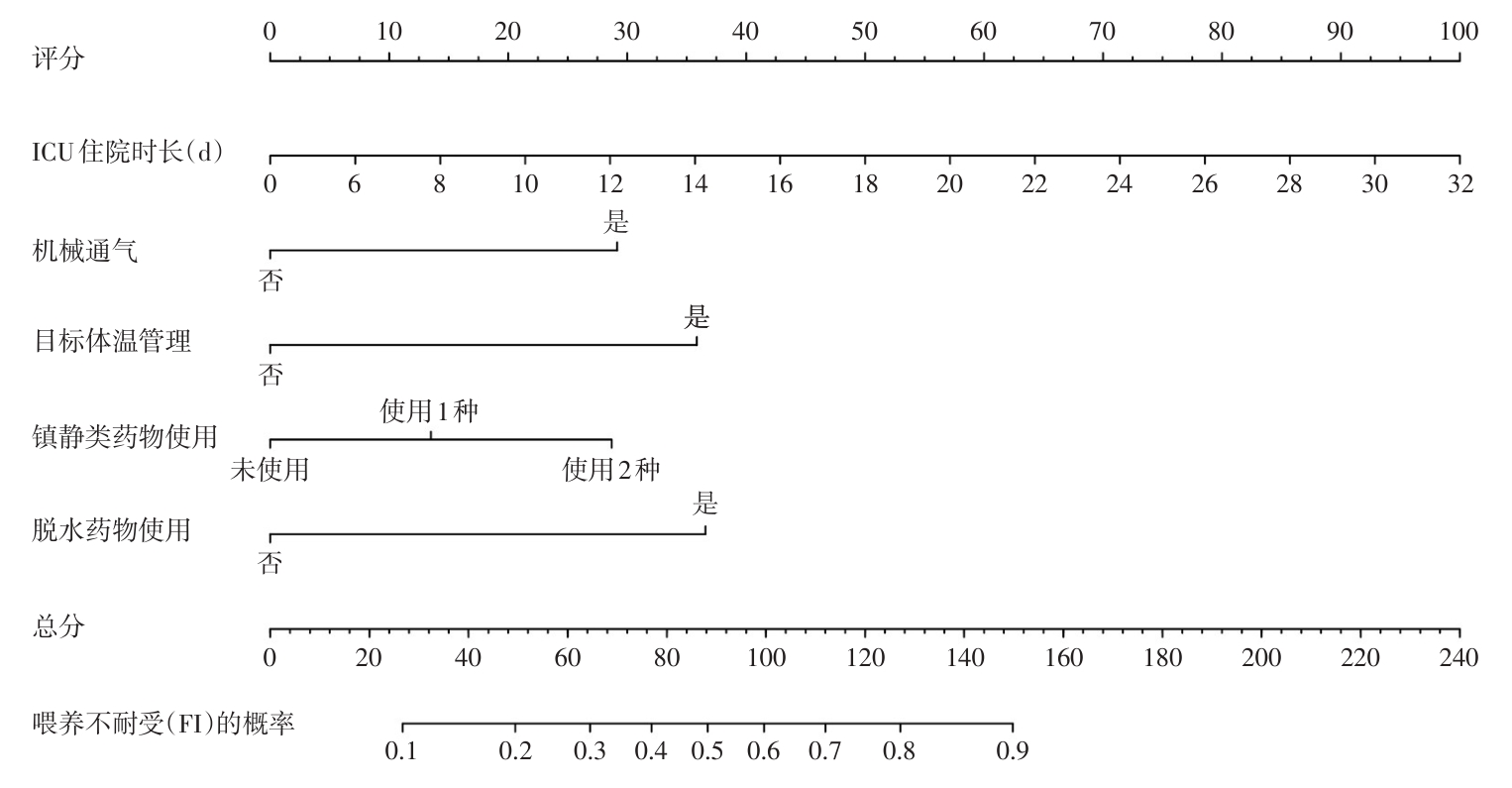
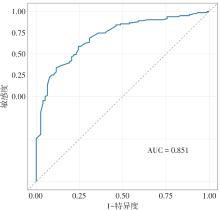
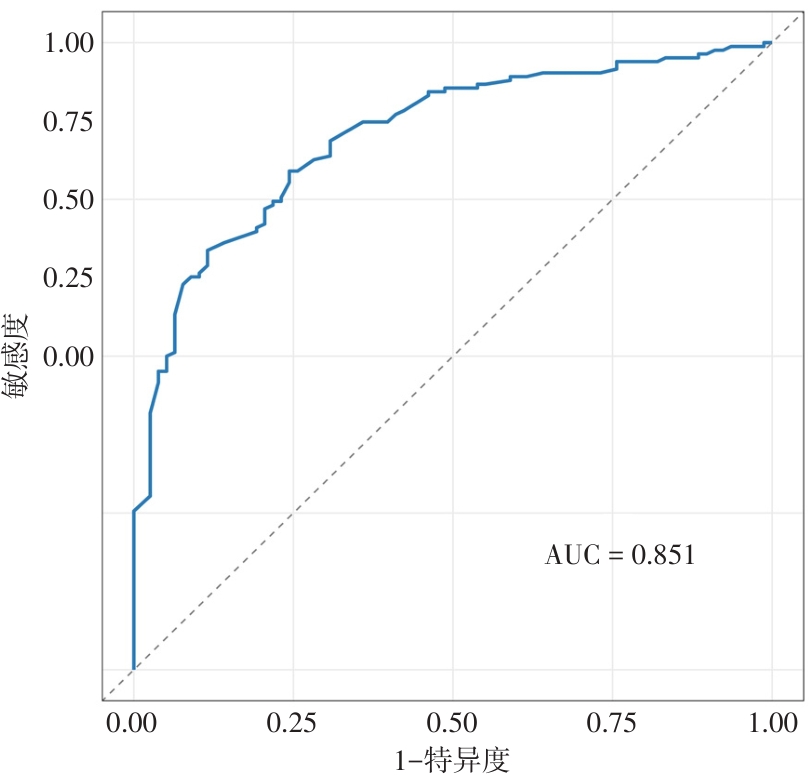
目的 分析神经重症患者肠内营养喂养不耐受(enteral nutrition feeding intolerance,ENFI)的独立危险因素,构建风险预测模型并验证,为临床早期识别ENFI高风险患者提供参考。 方法 采用前瞻性队列研究,选取医院2023年7月至2025年7月神经重症的248例行肠内营养治疗的患者为研究对象。通过单、多因素logistic回归分析,确立独立危险因素,基于独立危险因素构建预测模型,通过受试者工作特征(ROC)曲线及决策曲线分析(DCA)验证模型性能。 结果 神经重症患者ENFI的发生率为67.3%,多因素分析显示,ICU住院时长(OR = 1.136,95%CI:1.043 ~ 1.238)、机械通气(OR = 2.831,95%CI:1.168 ~ 6.858)、目标温度管理(OR = 3.595,95%CI:1.709 ~ 7.565)、联用多种(2种以上)镇静剂(OR = 2.786,95%CI:1.102 ~ 7.045)、使用利尿剂(OR = 3.692,95%CI:1.535 ~ 8.876)是发生ENFI的独立危险因素。ROC曲线下面积为0.851(95%CI:0.802 ~ 0.900,P < 0.001),灵敏度与特异度均衡分别为90.4%和57.6%,DCA曲线进一步证实该模型具有临床实用性。 结论 本研究纳入目标温度管理、多种镇静药物联用等神经重症专科变量,构建的风险预测模型性能良好,可作为预测神经重症患者ENFI风险的工具。

关键词: 神经重症, 肠内营养, 喂养不耐受, 危险因素, 预测模型

Abstract:

Objective To analyze the independent risk factors for enteral nutrition feeding intolerance (ENFI) in neurocritical patients, construct a risk prediction model, and validate its performance so as to provide a reference for the early clinical identification of high-risk patients. Methods A prospective cohort study was carried out on 248 neurocritical patients who were receiving enteral nutrition therapy at a tertiary hospital in Guangzhou from July 2023 to July 2025. Univariate and multivariate logistic regression analyses were conducted to identify independent risk factors. A prediction model was developed based on these factors, and its performance was assessed using the receiver operating characteristic (ROC) curve and decision curve analysis (DCA). Results The incidence of FI was 67.3%. Multivariate analysis identified the following independent risk factors: the length of ICU stay (OR = 1.136, 95%CI: 1.043 - 1.238), mechanical ventilation (OR = 2.831, 95%CI: 1.168 - 6.858), targeted temperature management (OR = 3.595, 95%CI: 1.709 - 7.565), the concomitant use of multiple sedatives (≥ 2 types) (OR = 2.786, 95%CI: 1.102 - 7.045), and the use of dehydrating agents (OR = 3.692, 95%CI: 1.535 - 8.876). The area under the ROC curve was 0.851 (95%CI: 0.802 - 0.900, P < 0.001), with a sensitivity of 90.4% and a specificity of 57.6%, respectively. DCA confirmed the clinical utility of the model. Conclusions By incorporating variables specific to neurocritical care, such as targeted temperature management and combined sedative use, the constructed risk prediction model exhibits excellent performance. This model can function as an effective instrument for predicting the risk of enteral nutrition FI in neurocritical patients.

Key words: neurosurgical critical care, enteral nutrition, feeding intolerance, risk factors, prediction model

中图分类号: