

The Journal of Practical Medicine ›› 2025, Vol. 41 ›› Issue (24): 3815-3823.doi: 10.3969/j.issn.1006-5725.2025.24.004
• Brain Science and Psychosomatic Medicine • Previous Articles
Ling QI1,Chuan HE1,Yao WANG2,Xiaolei ZHANG3,Jun. MA1( )
)
Received:2025-07-10
Online:2025-12-25
Published:2025-12-25
Contact:
Jun. MA
E-mail:760237205@qq.com
CLC Number:
Ling QI,Chuan HE,Yao WANG,Xiaolei ZHANG,Jun. MA. The effect of electroacupuncture on the SIRT3/FOXO3/SOD2 signaling pathway in the substantia nigra of mice with Parkinson′s disease[J]. The Journal of Practical Medicine, 2025, 41(24): 3815-3823.
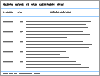
Tab.1
Comparison of behavioral manifestations and TH content in the substantia nigra of mice in each group"
| 项目 | Ctrl组 | MPTP组 | EA组 | 3-TYP组 | 3-TYP+EA组 | F值 | P值 |
|---|---|---|---|---|---|---|---|
| 爬杆试验/s | 6.85 ± 0.71 | 16.85 ± 0.80* | 9.73 ± 0.97# | 16.83 ± 1.03& | 13.64 ± 1.70 | 192.732 | 0.000 1 |
| 悬挂试验/分 | 5.92 ± 0.29 | 1.08 ± 0.90* | 5.00 ± 0.74# | 1.08 ± 0.79& | 3.17 ± 0.84 | 122.055 | 0.000 1 |
| TH/% | 0.18 ± 0.01 | 0.07 ± 0.01* | 0.14 ± 0.01# | 0.07 ± 0.01& | 0.09 ± 0.10 | 99.681 | 0.000 1 |
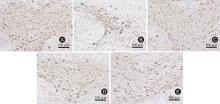
Fig.1
Immunohistochemical images of TH in the substantia nigra of mice in each group (× 200)"
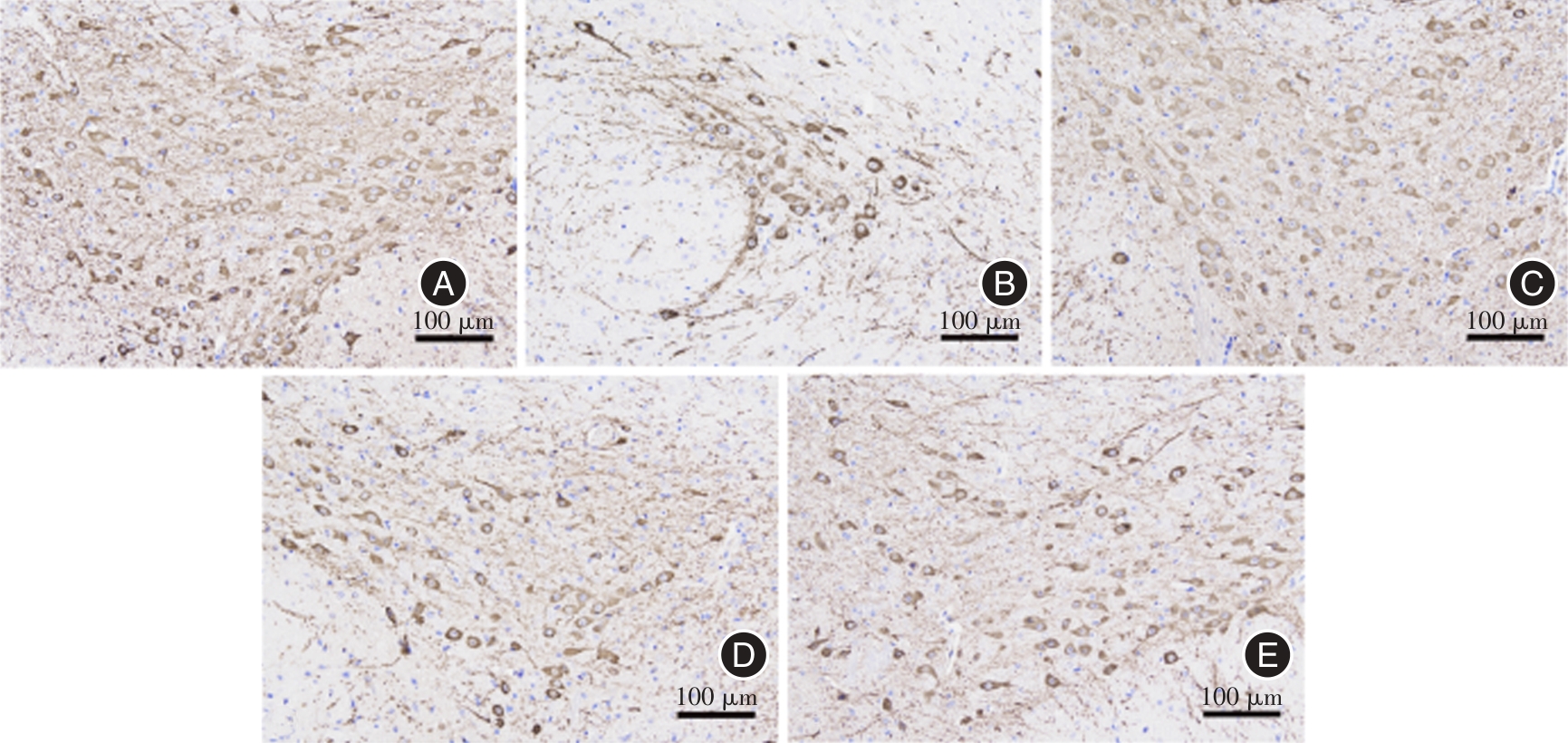
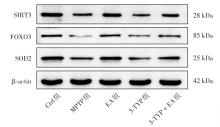
Fig.2
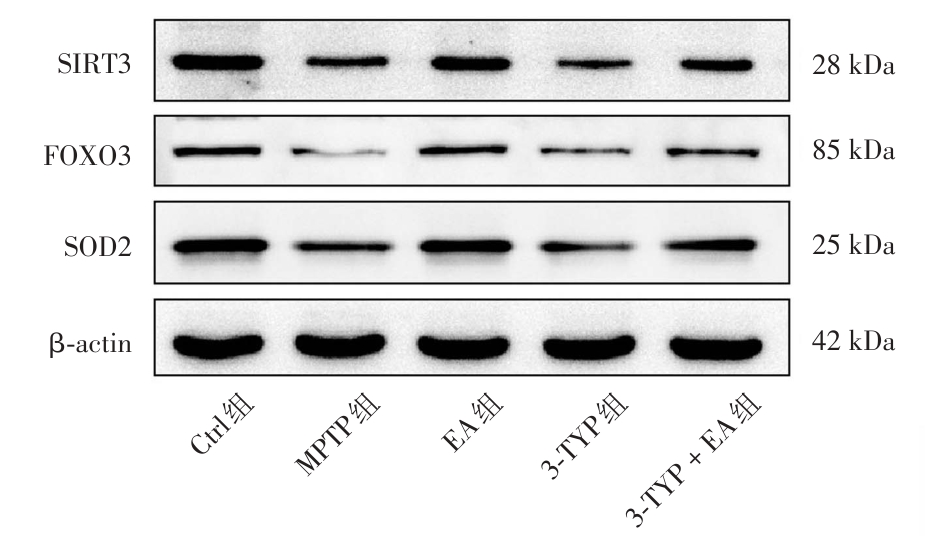
Comparison of SIRT3, FOXO3 and SOD2 protein bands in the substantia nigra of mice in each group"
Tab.2
Comparison of the relative expression levels of SIRT3, FOXO3 and SOD2 proteins in the substantia nigra of mice in each group"
| 项目 | Ctrl组 | MPTP组 | EA组 | 3-TYP组 | 3-TYP + EA组 | F值 | P值 |
|---|---|---|---|---|---|---|---|
| SIRT3 | 0.75 ± 0.05 | 0.32 ± 0.06** | 0.58 ± 0.02## | 0.25 ± 0.05&& | 0.44 ± 0.07△ | 62.283 | 0.000 1 |
| FOXO3 | 0.42 ± 0.01 | 0.13 ± 0.07** | 0.28 ± 0.07# | 0.12 ± 0.03& | 0.21 ± 0.01 | 20.733 | 0.000 3 |
| SOD2 | 0.77 ± 0.04 | 0.36 ± 0.03** | 0.66 ± 0.02## | 0.25 ± 0.07&& | 0.38 ± 0.07△ | 57.575 | 0.000 1 |
Fig.3
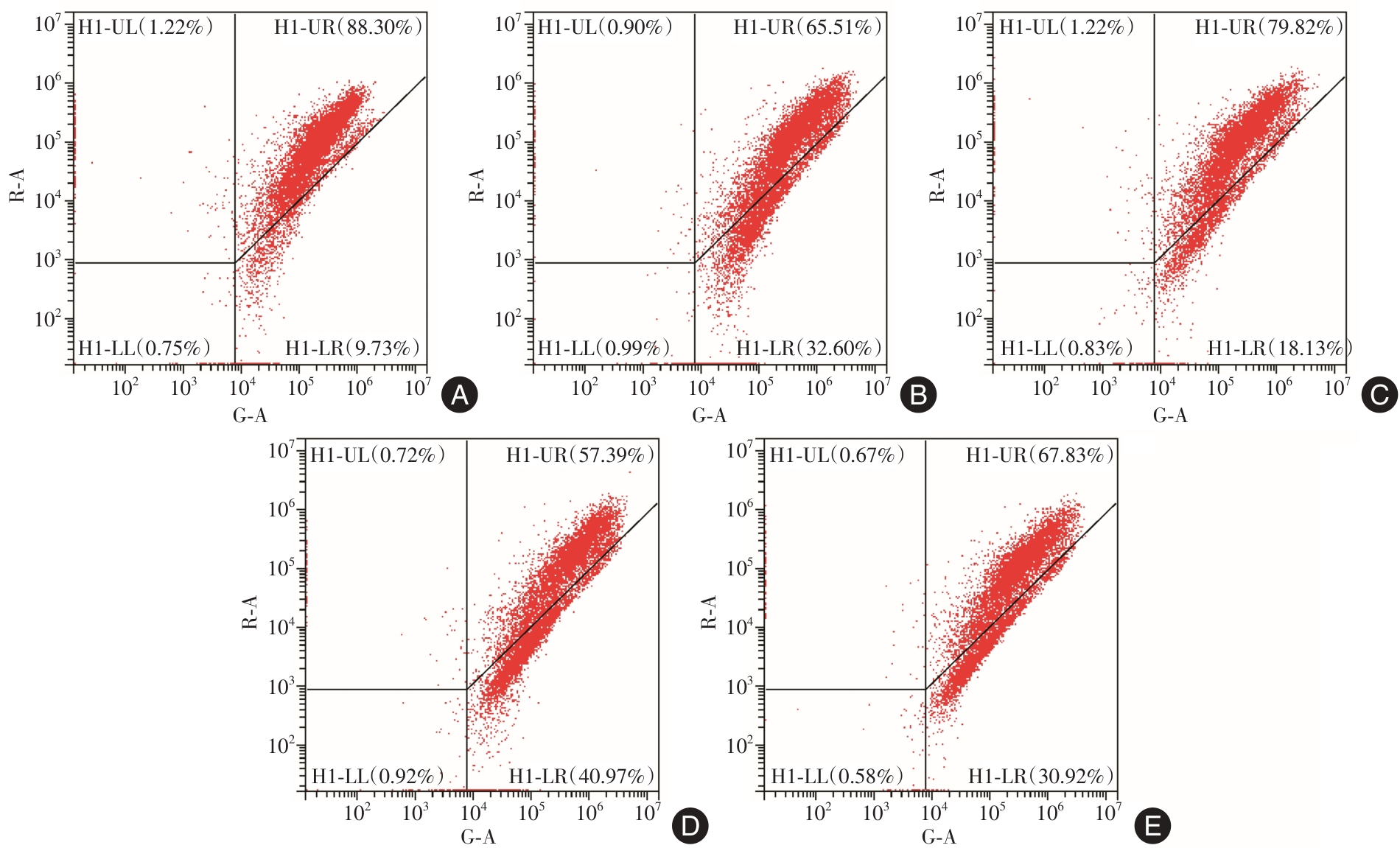
Comparison of mitochondrial membrane potential in the substantia nigra of mice in each group"
Tab.3
Comparison of mitochondrial membrane potential and reactive oxygen species content in the substantia nigra of mice in each group"
| 项目 | Ctrl组 | MPTP组 | EA组 | 3-TYP组 | 3-TYP+EA组 | F值 | P值 |
|---|---|---|---|---|---|---|---|
| MMP | 0.10 ± 0.01 | 0.31 ± 0.02* | 0.20 ± 0.01# | 0.37 ± 0.05& | 0.30 ± 0.01 | 48.095 | 0.000 1 |
| ROS | 6 102.00 ± 803.20 | 17 438.00 ± 1 241.00* | 9 052.00 ± 967.70# | 15 654.00 ± 1 073.00& | 12 841.00 ± 1 301.00 | 54.601 | 0.000 1 |
| [1] |
GU Y Y, ZHAO X R, ZHANG N, et al. Mitochondrial dysfunction as a therapeutic strategy for neurodegenerative diseases: Current insights and future directions[J]. Ageing Res Rev,2024,102:102577. doi:10.1016/j.arr.2024.102577
doi: 10.1016/j.arr.2024.102577 |
| [2] |
DING X S, GAO L, HAN Z, et al. Ferroptosis in Parkinson′s disease: Molecular mechanisms and therapeutic potential[J]. Ageing Res Rev, 2023, 91: 102077. doi:10.1016/j.arr.2023.102077
doi: 10.1016/j.arr.2023.102077 |
| [3] |
ZHOU Z D, TAN E K. Oxidized nicotinamide adenine dinucleotide-dependent mitochondrial deacetylase sirtuin-3 as a potential therapeutic target of Parkinson's disease[J]. Ageing Res Rev,2020,62:101107. doi:10.1016/j.arr.2020.101107
doi: 10.1016/j.arr.2020.101107 |
| [4] |
PISSADAKI E K, BOLAM J P. The energy cost of action potential propagation in dopamine neurons: Clues to susceptibility in Parkinson's disease[J]. Front Comput Neurosci,2013,7:13. doi:10.3389/fncom.2013.00013
doi: 10.3389/fncom.2013.00013 |
| [5] |
XI Y, TAO K, WEN X, et al. SIRT3-Mediated Deacetylation of DRP1K711 Prevents Mitochondrial Dysfunction in Parkinson's Disease[J]. Adv Sci (Weinh),2025,e2411235. doi:10.1002/advs.202570126
doi: 10.1002/advs.202570126 |
| [6] |
CHEN Y, ZHAO A, LI Y,et al. Roles of SIRT3 in cardiovascular and neurodegenerative diseases[J]. Ageing Res Rev,2025,104:102654. doi:10.1016/j.arr.2024.102654
doi: 10.1016/j.arr.2024.102654 |
| [7] |
RANGARAJAN P, KARTHIKEYAN A, LU J, et al.Dheen ST. Sirtuin 3 regulates Foxo3a-mediated antioxidant pathway in microglia[J]. Neuroscience, 2015,311:398-414. doi:10.1016/j.neuroscience.2015.10.048
doi: 10.1016/j.neuroscience.2015.10.048 |
| [8] |
WANG J, YUE H, DONG Y, et al. Effective compound combination of Bufei Yishen formula ameliorates PM2.5-induced COPD by inhibiting mitochondrial oxidative stress through SIRT3-mediated FOXO3 deacetylation[J]. Phytomedicine,2025,140:156568. doi:10.1016/j.phymed.2025.156568
doi: 10.1016/j.phymed.2025.156568 |
| [9] |
FABBRI M, FERREIRA J J, RASCOL O. COMT Inhibitors in the Management of Parkinson's Disease[J]. CNS Drugs,2022,36(3):261-282. doi:10.1007/s40263-021-00888-9
doi: 10.1007/s40263-021-00888-9 |
| [10] | 高崚,陈王璐,王照钦,等. 针灸对帕金森病小鼠外周血Th17/Treg平衡的调节作用[J]. 中华中医药杂志,2022,37(12):7033-7038. |
| [11] | 李亚楠,汪瑶,张小蕾,等. 电针对帕金森病小鼠便秘症状的影响[J]. 北京中医药大学学报,2022,45(1):102-108. |
| [12] | 汪瑶,王彦春,马骏. 电针对帕金森病大鼠中脑黑质Sirt3/NLRP3/GSDMD信号通路的影响[J]. 针刺研究,2024,49(4):384-390. |
| [13] | 张小蕾,胡梦妮,荣臻,等. 电针对帕金森病小鼠Nrf2/NLRP3/Caspase-1通路介导的细胞焦亡的影响[J]. 针刺研究,2024,49(1):15-22. |
| [14] | 李含章,李亚楠,郭磊,等. 电针对帕金森病小鼠肠道NEK7/NLRP3炎症信号通路的影响[J]. 北京中医药大学学报,2024,47(10):1466-1473. |
| [15] |
JEON H, RYU S, KIM D, et al. Acupuncture stimulation at GB34 restores MPTP-induced neurogenesis impairment in the subventricular zone of mice[J]. Evid Based Complement Alternat Med, 2017, 2017: 3971675. doi:10.1155/2017/3971675
doi: 10.1155/2017/3971675 |
| [16] | 中国针灸学会. 实验动物常用穴位名称与定位第3部分: 小鼠[J]. 针刺研究, 2021, 46(5): 445-446. |
| [17] |
LUO H, PENG C, XU X, et al. The Protective Effects of Mogroside V Against Neuronal Damages by Attenuating Mitochondrial Dysfunction via Upregulating Sirtuin3[J]. Mol Neurobiol,2022,59(4):2068-2084. doi:10.1007/s12035-021-02689-z
doi: 10.1007/s12035-021-02689-z |
| [18] |
ZHANG Q S, HENG Y, MOU Z, et al. Reassessment of subacute MPTP-treated mice as animal model of Parkinson′s disease[J]. Acta Pharmacol Sin, 2017, 38(10): 1317-1328. doi:10.1038/aps.2017.49
doi: 10.1038/aps.2017.49 |
| [19] | 张家瑞,陆瑾,王玥,等. 针灸治疗帕金森病作用机制的研究进展[J]. 中医药导报,2025,31(6):150-153,174. |
| [20] |
NAMASHIRI A, ABBASADEH M, GHAZIZADEH A. The effects of 1-methyl-4-phenyl-1,2,3,6-tetrahydropyridine (MPTP) on the cognitive and motor functions in rodents: A systematic review and meta-analysis[J]. Neurosci Biobehav Rev,2022,140:104792. doi:10.1016/j.neubiorev.2022.104792
doi: 10.1016/j.neubiorev.2022.104792 |
| [21] |
HSU W T, CHEN Y H, YANG H B, et al. Electroacupuncture Improves Motor Symptoms of Parkinson's Disease and Promotes Neuronal Autophagy Activity in Mouse Brain[J]. Am J Chin Med,2020,48(7):1651-1669. doi:10.1142/s0192415x20500822
doi: 10.1142/s0192415x20500822 |
| [22] |
胡梦妮,张小蕾,荣臻,等. 电针对MPTP诱导帕金森病小鼠FoXO1/NLRP3通路介导神经炎症的影响[J]. 实用医学杂志,2024,40(11):1494-1499. doi:10.3969/j.issn.1006-5725.2024.11.005
doi: 10.3969/j.issn.1006-5725.2024.11.005 |
| [23] |
SONG L K, MA K L, YUAN Y H, et al. Targeted Overexpression of α-Synuclein by rAAV2/1 Vectors Induces Progressive Nigrostriatal Degeneration and Increases Vulnerability to MPTP in Mouse[J]. PLoS One, 2015, 10(6):e0131281. doi:10.1371/journal.pone.0131281
doi: 10.1371/journal.pone.0131281 |
| [24] |
BIOSA A, ARDUINI I, SORIANO M E, et al. Dopamine Oxidation Products as Mitochondrial Endotoxins, a Potential Molecular Mechanism for Preferential Neurodegeneration in Parkinson's Disease[J]. ACS Chem Neurosci, 2018,9(11):2849-2858. doi:10.1021/acschemneuro.8b00276
doi: 10.1021/acschemneuro.8b00276 |
| [25] | 熊薇,柴星星,李莉莉. 虾青素对帕金森病黑质多巴胺能神经元保护作用机制的研究进展[J]. 生理科学进展,1-13. |
| [26] |
JIMENEZ-DELHADO A, ORTIZ G G, DELGADO-LARA D L, et al. Effect of Melatonin Administration on Mitochondrial Activity and Oxidative Stress Markers in Patients with Parkinson's Disease[J]. Oxid Med Cell Longev, 2021,2021:5577541. doi:10.1155/2021/5577541
doi: 10.1155/2021/5577541 |
| [27] |
LA VITOLA P, SZEGO E M, PINTO-COSTA R, et al. Mitochondrial oxidant stress promotes α-synuclein aggregation and spreading in mice with mutated glucocerebrosidase[J]. NPJ Parkinsons Dis, 2024,10(1):233. doi:10.1038/s41531-024-00842-8
doi: 10.1038/s41531-024-00842-8 |
| [28] |
ZOROVA L D, POPKOV V A, PLOTNIKOV E Y, et al. Mitochondrial membrane potential[J]. Anal Biochem, 2018, 552: 50-59. doi:10.1016/j.ab.2017.07.009
doi: 10.1016/j.ab.2017.07.009 |
| [29] |
GONCALVES A M, PEREIR-SANTOS A R, ESTEVES A R, et al. The Mitochondrial Ribosome: A World of Opportunities for Mitochondrial Dysfunction Toward Parkinson's Disease[J]. Antioxid Redox Signal,2021,34(8):694-711. doi:10.1089/ars.2019.7997
doi: 10.1089/ars.2019.7997 |
| [30] |
PILLAI V B, SUNDARESAN N R, JEEVANANDAM V, et al. Mitochondrial SIRT3 and heart disease[J]. Cardiovasc Res,2010,88(2):250-256. doi:10.1093/cvr/cvq250
doi: 10.1093/cvr/cvq250 |
| [31] |
PARK J H, BURGESS J D, FAROQI A H, et al. Alpha-synuclein-induced mitochondrial dysfunction is mediated via a sirtuin 3-dependent pathway[J]. Mol Neurodegener, 2020,15(1):5. doi:10.1186/s13024-019-0349-x
doi: 10.1186/s13024-019-0349-x |
| [32] |
ZHOU Y, ZHAO Q, ZHANG Y, et al. A new andrographolide derivative ADA targeting SIRT3-FOXO3a signaling mitigates cognitive impairment by activating mitophagy and inhibiting neuroinflammation in Apoe4 mice[J]. Phytomedicine,2024, 124: 155298. doi:10.1016/j.phymed.2023.155298
doi: 10.1016/j.phymed.2023.155298 |
| [33] |
ZHU X, MA E, GE Y, et al. Resveratrol protects against myocardial ischemic injury in obese mice via activating SIRT3/FOXO3a signaling pathway and restoring redox homeostasis[J]. Biomed Pharmacother,2024,174:116476. doi:10.1016/j.biopha.2024.116476
doi: 10.1016/j.biopha.2024.116476 |
| [34] | 张贵君,王彦春,汪瑶,等. 电针调节帕金森病小鼠黑质脑区SIRT3/AMPK/PGC-1α通路的作用研究[J]. 中国中医基础医学杂志,2025,31(1):99-106. |
| [1] | Rongxin LI,Li HUANG,Yueyang ZENG,Shuhui ZHANG,Yiran CHEN,Yuli LIU,Tieming. MA. Exploring the mechanism of electroacupuncture to improve cognitiveimpairment in alzheimer′s disease model rats based on NF⁃κB/NLRP3/Caspase⁃1 signaling pathway [J]. The Journal of Practical Medicine, 2025, 41(3): 322-329. |
| [2] | Haiyan LI,Mengzhu LI,Mengxuan CHEN,Da GAO,Kexin DUAN,Lijun ZHAO,Meiling ZHU. The comparison of ferroptosis characteristics and motor deficits in Parkinson′s disease mouse models [J]. The Journal of Practical Medicine, 2025, 41(22): 3501-3509. |
| [3] | Jingshuo LI,Shoushi LIU,Hongwei. GUO. Advances in the mechanism and therapeutic potential of Erianin⁃induced apoptosis in breast cancer cells [J]. The Journal of Practical Medicine, 2025, 41(14): 2132-2137. |
| [4] | Liangxi LU,Haiwang LU,Wenjie WANG,Jun SHI,Zhimin HUANG,Bin BIN. To investigate the mechanism of mitochondrial autophagy regulating the expression of NLRP3 inflammasome in prostate tissue in rats with experimental autoimmune prostatitis [J]. The Journal of Practical Medicine, 2025, 41(12): 1816-1824. |
| [5] | Linghui DAI,Weifeng LI. Research progress on mitochondrial homeostasis in vascular cognitive impairment [J]. The Journal of Practical Medicine, 2025, 41(12): 1936-1944. |
| [6] | Bao WANG,Shulin MA,Xinhua YAO,Fan YANG,Kai WEN,Sijing LUO,Ying GAN,Yi. LU. Effect of intraoperative electroacupuncture analgesia on stress response to tracheal intubation in patients undergoing thyroid surgery under general anesthesia [J]. The Journal of Practical Medicine, 2024, 40(8): 1132-1136. |
| [7] | Lulu CHEN,Meng LUO,Kaiqi SU,Jing GAO,Xiaodong. FENG. Research progress of the endoplasmic reticulum⁃mitochondrial interactions in post⁃stroke cognitive impairment [J]. The Journal of Practical Medicine, 2024, 40(7): 1023-1028. |
| [8] | Jiadong WANG,Fangzhou HUANG,Yan HUANG,Guanxiong CHEN,Jun LIU,Peiqi. HUANG. Role of eupatilin in protection of mitochondrial function through Sesn2⁃Nrf2 in septic brain injury [J]. The Journal of Practical Medicine, 2024, 40(5): 601-607. |
| [9] | Sha LI,Chun′ai CUI. Progress in targeted research of forkhead box protein O3a in degenerative disease [J]. The Journal of Practical Medicine, 2024, 40(3): 423-427. |
| [10] | Ruojin SHI,Yuying XIONG,Xueling ZHANG,Long JIN,Haiying. ZHU. The effect of melatonin on the maturation level of oocytes and mitochondrial dynamics in mice exposed to benzophenone⁃3 [J]. The Journal of Practical Medicine, 2024, 40(23): 3275-3283. |
| [11] | Haiyan WU,Baoyu WANG,Baohui JIA. Predictive efficacy of free mitochondrial DNA and miR⁃146a expression in peripheral blood in assessing short term prognosis of sepsis [J]. The Journal of Practical Medicine, 2024, 40(23): 3356-3361. |
| [12] | Jieqiong LIU,Yali YAO,Qian SUI,Ke LI,Fang HUANG,Yongqing. CAO. Based on the novel anti-heart failure drug ARNI, the mechanism of prevention of cardiotoxicity caused by anthracycline antitumor drugs was discussed [J]. The Journal of Practical Medicine, 2024, 40(2): 188-194. |
| [13] | Yingjun TAO,Tengzhu REN,Feng WEI,Xintong. LIU. Effects of agatroban combined with mitochondrial transplantation on endothelial function and hemorheology in mice with cerebral ischemia⁃reperfusion injury [J]. The Journal of Practical Medicine, 2024, 40(19): 2665-2671. |
| [14] | Lun ZHAO,Xin ZHAO,Chenchen LIN,Qi FU,Mohan SHI,Haoran. ZHANG. Effect of miR⁃217 targeting FOXO3 on the resistance of non⁃small cell lung cancer to gefitinib and its related mechanisms [J]. The Journal of Practical Medicine, 2024, 40(16): 2277-2283. |
| [15] | Zhu LI,Yan WANG,Wenjing ZHOU,Haiying. WANG. Advances in the role of mitochondrial respiratory chain enzyme complexes in myocardial ischemia-reperfusion injury [J]. The Journal of Practical Medicine, 2024, 40(15): 2172-2176. |
| Viewed | ||||||
|
Full text |
|
|||||
|
Abstract |
|
|||||
