

The Journal of Practical Medicine ›› 2025, Vol. 41 ›› Issue (22): 3501-3509.doi: 10.3969/j.issn.1006-5725.2025.22.006
• Basic Research • Previous Articles
Haiyan LI1,2,Mengzhu LI1,2,Mengxuan CHEN1,2,Da GAO3,Kexin DUAN1,2,Lijun ZHAO3,Meiling ZHU1,2( )
)
Received:2025-07-04
Online:2025-11-25
Published:2025-11-26
Contact:
Meiling ZHU
E-mail:meilingzhu2020@126.com
CLC Number:
Haiyan LI,Mengzhu LI,Mengxuan CHEN,Da GAO,Kexin DUAN,Lijun ZHAO,Meiling ZHU. The comparison of ferroptosis characteristics and motor deficits in Parkinson′s disease mouse models[J]. The Journal of Practical Medicine, 2025, 41(22): 3501-3509.

Tab.1
Rotation turns in mice"
| 组别 | 每分钟旋转圈数 |
|---|---|
| Control组 | 1.44 ± 1.13 |
| Sham-6-OHDA组 | 1.11 ± 0.78 |
| 6-OHDA组 | 8.89 ± 1.83?# |
| F值 | 99.45 |
| P值 | < 0.001 |
Tab.2
Behavioral alterations in mice"
| 组别 | 转棒停留时间/s | 旷场运动总路程/cm | 旷场运动速度/(cm/s) |
|---|---|---|---|
| Control组 | 300.00(184.50,300.00) | 583.10 ± 156.30 | 1.63 ± 0.40 |
| Sham-6-OHDA组 | 277.00(243.00,300.00) | 469.40 ± 67.19 | 1.57 ± 0.23 |
| 6-OHDA组 | 23.00(14.50,68.50)be | 326.80 ± 85.54cf | 1.08 ± 0.29adf |
| Sham-MPTP组 | 278.00(216.00,300.00) | 521.90 ± 98.63 | 1.76 ± 0.34 |
| MPTP组 | 27.00(8.50,56.50)be | 475.40 ± 93.15 | 1.57 ± 0.31fg |
| Sham-LPS组 | 262.00(233.00,299.00) | 495.60 ± 70.02 | 1.67 ± 0.24 |
| LPS组 | 15.00(5.50,52.50)be | 582.60 ± 152.50 | 2.26 ± 0.39be |
| F/H值 | 44.47 | 5.77 | 10.73 |
| P值 | < 0.001 | < 0.001 | < 0.001 |
Fig.1
TH immunofluorescence in the substantia nigra of mice"
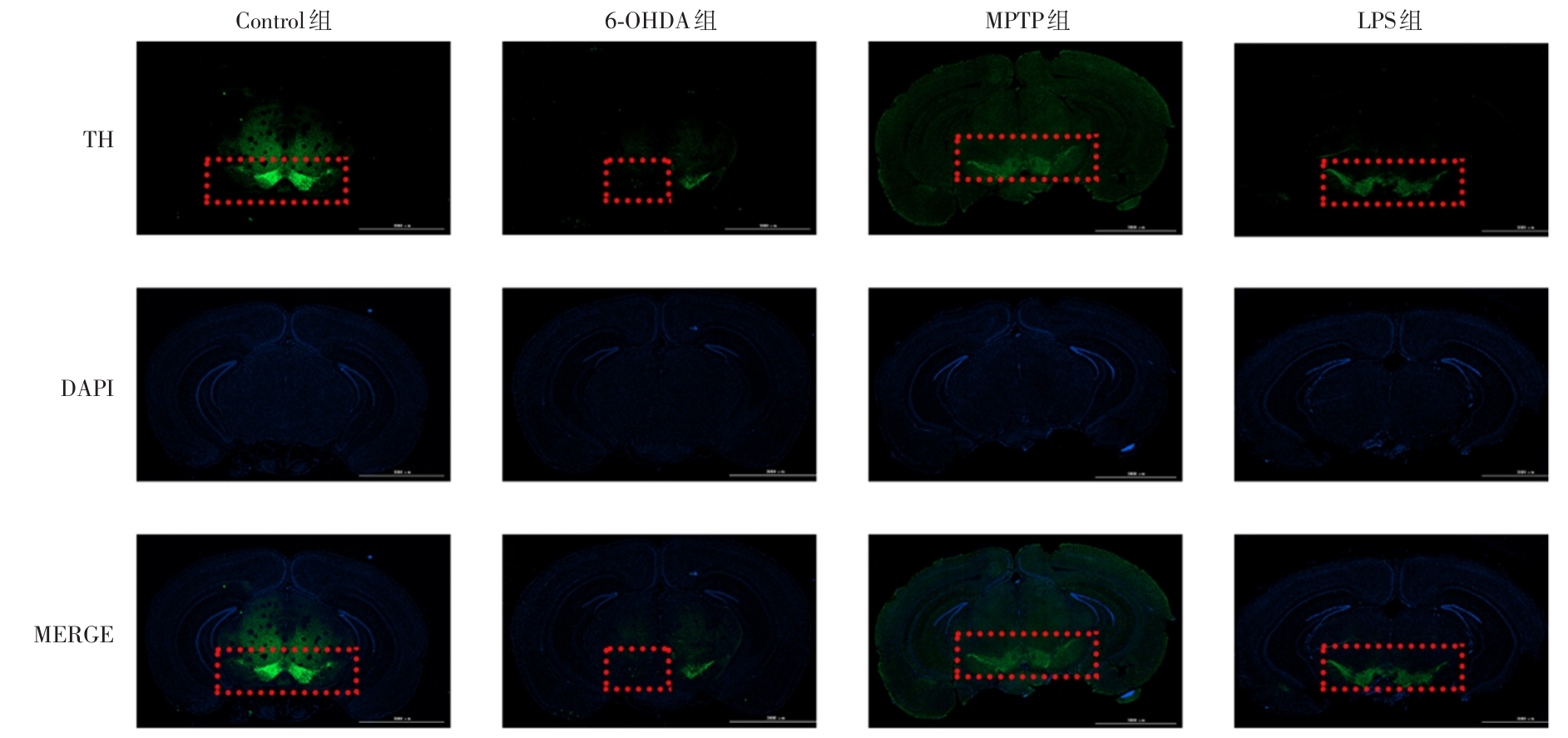
Fig.2
Mice substantia nigra HE staining in different groups"
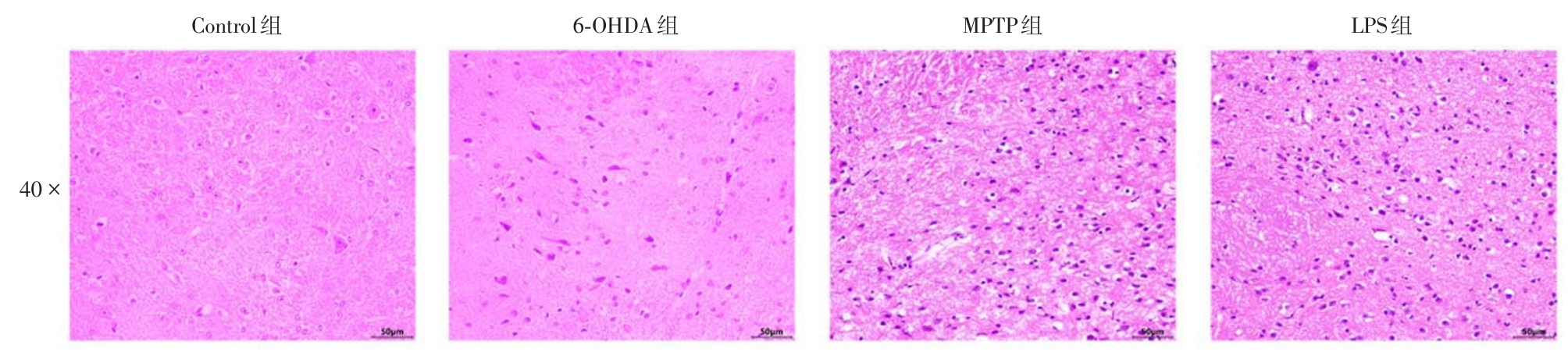
Fig.3
Mice substantia nigra nissl staining in different groups"
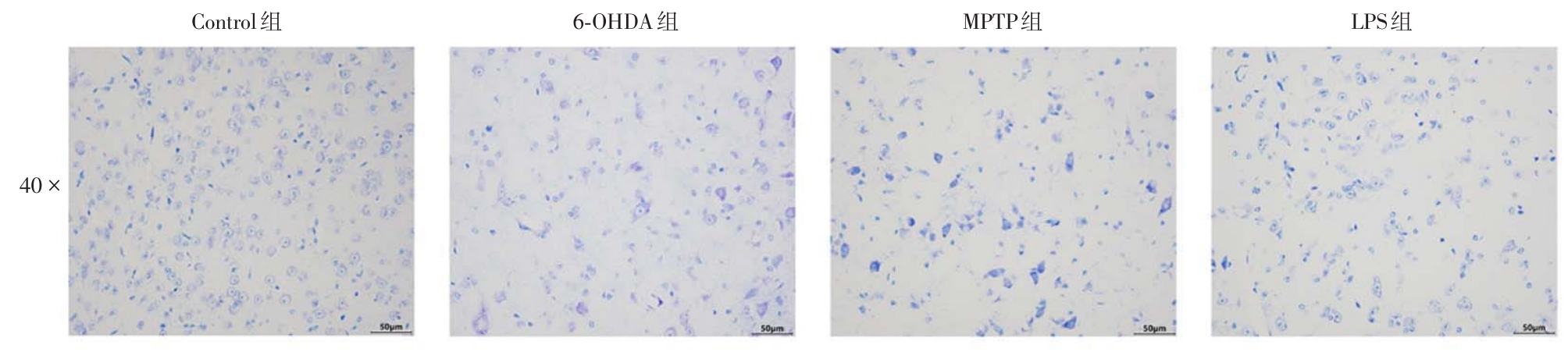
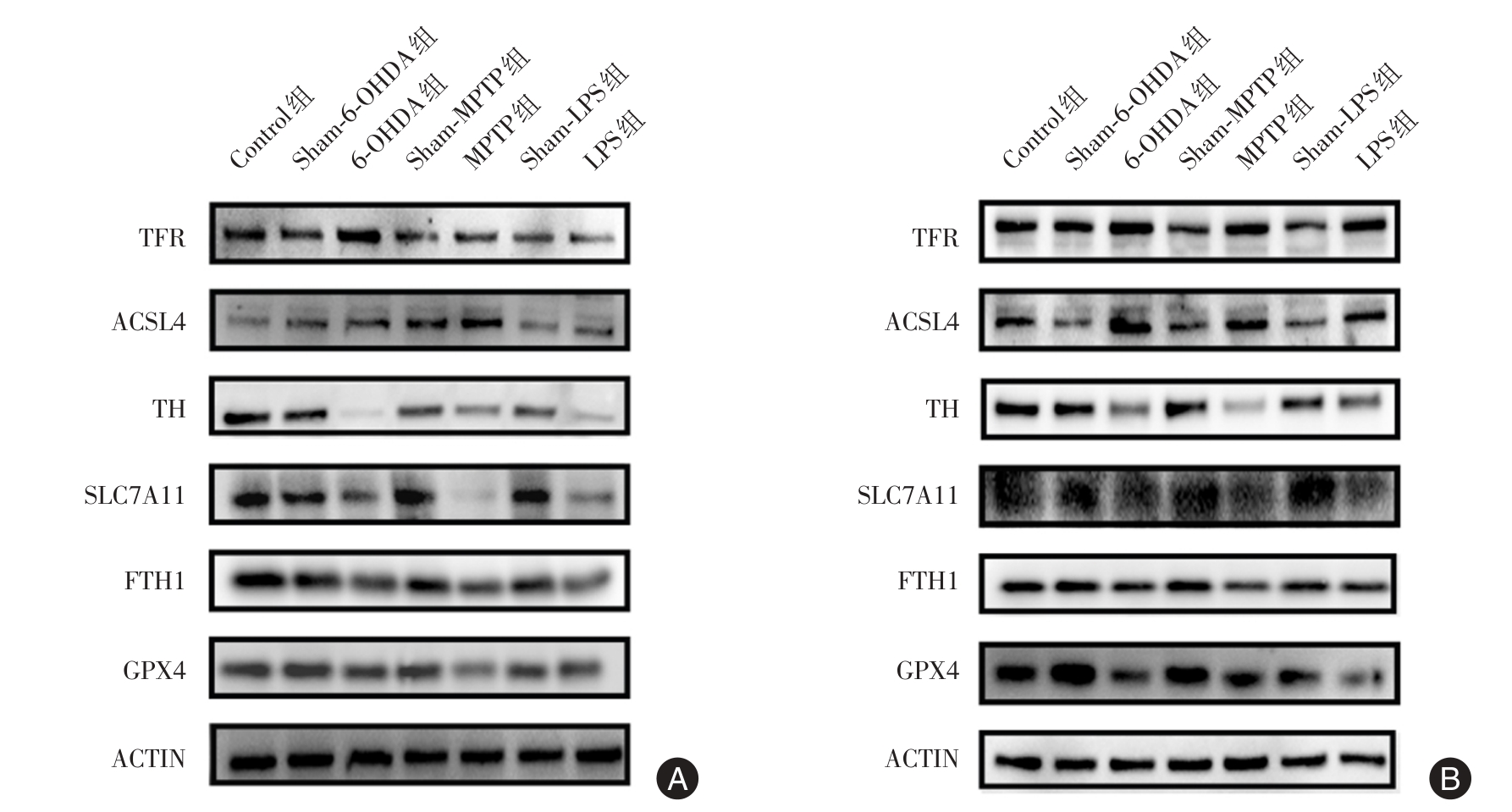
Fig.4
Western blot of mouse substantia nigra and striatum across groups"
Tab.3
Western blot of substantia nigra in mice"
| 组别 | TFR | ACSL4 | TH | SLC7A11 | FTH1 | GPX4 |
|---|---|---|---|---|---|---|
| Control组 | 1.00 | 1.00 | 1.00 | 1.00 | 1.00 | 1.00 |
| Sham-6-OHDA组 | 0.87 ± 0.17 | 1.07 ± 0.09 | 0.89 ± 0.06 | 1.03 ± 0.09 | 1.00 ± 0.05 | 1.06 ± 0.05 |
| 6-OHDA组 | 1.63 ± 0.19ac | 1.23 ± 0.39 | 0.15 ± 0.03be | 0.69 ± 0.03c | 0.71 ± 0.12ad | 0.76 ± 0.01be |
| Sham-MPTP组 | 0.97 ± 0.19 | 1.10 ± 0.06 | 0.84 ± 0.02 | 1.01 ± 0.13 | 0.98 ± 0.13 | 0.90 ± 0.07 |
| MPTP组 | 1.50 ± 0.20 | 1.71 ± 0.38ac | 0.50 ± 0.05bd | 0.64 ± 0.23ac | 0.74 ± 0.11ac | 0.61 ± 0.02bef |
| Sham-LPS组 | 1.14 ± 0.21 | 0.89 ± 0.04 | 0.91 ± 0.18 | 1.12 ± 0.07 | 1.07 ± 0.03 | 0.88 ± 0.06 |
| LPS组 | 1.13 ± 0.37 | 1.57 ± 0.06c | 0.41 ± 0.13be | 0.81 ± 0.02 | 0.72 ± 0.05ad | 0.71 ± 0.04bd |
| F值 | 5.13 | 6.22 | 37.73 | 8.52 | 10.75 | 41.33 |
| P值 | < 0.01 | < 0.01 | < 0.001 | < 0.001 | < 0.001 | < 0.001 |
Tab.4
Western blot of striatum in mice"
| 组别 | TFR | ACSL4 | TH | SLC7A11 | FTH1 | GPX4 |
|---|---|---|---|---|---|---|
| Control组 | 1.00 | 1.00 | 1.00 | 1.00 | 1.00 | 1.00 |
| Sham-6-OHDA组 | 1.00 ± 0.07 | 0.82 ± 0.06 | 0.96 ± 0.03 | 0.94 ± 0.07 | 0.98 ± 0.20 | 0.95 ± 0.04 |
| 6-OHDA组 | 1.42 ± 0.10ad | 1.71 ± 0.12cf | 0.71 ± 0.05ce | 0.69 ± 0.08bd | 0.55 ± 0.03ce | 0.62 ± 0.03cf |
| Sham-MPTP组 | 1.09 ± 0.07 | 1.30 ± 0.90 | 1.12 ± 0.12 | 1.00 ± 0.14 | 0.92 ± 0.05 | 1.05 ± 0.06 |
| MPTP组 | 1.44 ± 0.90bd | 1.85 ± 0.12ce | 0.56 ± 0.02cfh | 0.74 ± 0.01aeg | 0.54 ± 0.13ce | 0.75 ± 0.12be |
| Sham-LPS组 | 1.02 ± 0.18 | 1.05 ± 0.18 | 1.05 ± 0.07 | 0.86 ± 0.09 | 0.96 ± 0.01 | 1.05 ± 0.07 |
| LPS组 | 1.53 ± 0.22be | 1.78 ± 0.25cf | 0.81 ± 0.05ae | 0.49 ± 0.04cf | 0.61 ± 0.01be | 0.76 ± 0.10ae |
| F值 | 11.07 | 26.87 | 33.52 | 19.66 | 16.15 | 18.01 |
| P值 | < 0.001 | < 0.001 | < 0.001 | < 0.001 | < 0.001 | < 0.001 |
Tab.5
MDA and GSH levels in the substantia nigra of different groups"
| 组别 | MDA/(nmol/g) | GSH/(μmol/L) |
|---|---|---|
| Control组 | 503.10 ± 111.40 | 0.92 ± 0.06 |
| 6-OHDA组 | 747.60 ± 37.64a | 0.45 ± 0.11b |
| MPTP组 | 759.20 ± 64.98a | 0.07 ± 0.07cd |
| LPS组 | 600.20 ± 96.67 | 0.21 ± 0.14c |
| F值 | 6.64 | 42.12 |
| P值 | < 0.05 | < 0.001 |
Tab.6
ROS levels in the substantia nigra of different groups (x ± s)/(RFU·mg/mL)"
| 指标 | Control组 | 6-OHDA组 | MPTP组 | LPS组 | F值 | P值 |
|---|---|---|---|---|---|---|
| ROS | 10.58 ± 2.82 | 28.97 ± 5.91 | 86.01 ± 15.33? | 102.30 ± 54.07? | 7.29 | < 0.05 |
| [1] |
LI G, MA J, CUI S, et al. Parkinson′s disease in China: A forty-year growing track of bedside work [J]. Transl Neurodegener, 2019, 8(1): 22. doi:10.1186/s40035-019-0162-z
doi: 10.1186/s40035-019-0162-z |
| [2] |
SIMOLA N, MORELLI M, CARTA A R. The 6-hydroxydopamine model of Parkinson′s disease [J]. Neurotox Res, 2007, 11(3/4): 151-167. doi:10.1007/bf03033565
doi: 10.1007/bf03033565 |
| [3] |
LIN Z H, LIU Y, XUE N J, et al. Quercetin protects against MPP+/MPTP-induced dopaminergic neuron death in Parkinson′s disease by inhibiting ferroptosis [J]. Oxid Med Cell Longev, 2022, 2022: 1-17. doi:10.1155/2022/7769355
doi: 10.1155/2022/7769355 |
| [4] | 周旭, 逯冉冉, 任芳丽, 等. 表没食子儿茶素没食子酸酯通过自噬-溶酶体途径对MPTP诱导帕金森病模型小鼠的作用 [J]. 实用医学杂志, 2025, 41(8): 1097-1104. |
| [5] |
GU C, WANG F, ZHANG Y, et al. Microglial MT1 activation inhibits LPS-induced neuroinflammation via regulation of metabolic reprogramming [J]. Aging Cell, 2021, 20(6): e13375. doi:10.1111/acel.13375
doi: 10.1111/acel.13375 |
| [6] |
OLIYNYK Z, RUDYK M, DOVBYNCHUK T, et al. Inflammatory hallmarks in 6-OHDA- and LPS-induced Parkinson′s disease in rats [J]. Brain Behav Immun Health, 2023, 30: 100616. doi:10.1016/j.bbih.2023.100616
doi: 10.1016/j.bbih.2023.100616 |
| [7] |
TATTON N A, KISH S J. In situ detection of apoptotic nuclei in the substantia nigra compacta of 1-methyl-4-phenyl-1,2,3,6-tetrahydropyridine-treated mice using terminal deoxynucleotidyl transferase labelling and acridine orange staining [J]. Neuroscience, 1997, 77(4): 1037-1048. doi:10.1016/s0306-4522(96)00545-3
doi: 10.1016/s0306-4522(96)00545-3 |
| [8] |
LI S, WANG Z, LIU G, et al. Neurodegenerative diseases and catechins: (-)-epigallocatechin-3-gallate is a modulator of chronic neuroinflammation and oxidative stress [J]. Front Nutr, 2024, 11: 1425839. doi:10.3389/fnut.2024.1425839
doi: 10.3389/fnut.2024.1425839 |
| [9] |
胡梦妮, 张小蕾, 荣臻, 等. 电针对MPTP诱导帕金森病小鼠FoXO1/NLRP3通路介导神经炎症的影响 [J]. 实用医学杂志, 2024, 40(11): 1494-1499. doi:10.3969/j.issn.1006-5725.2024.11.005
doi: 10.3969/j.issn.1006-5725.2024.11.005 |
| [10] |
DENG I, CORRIGAN F, ZHAI G, et al. Lipopolysaccharide animal models of Parkinson′s disease: Recent progress and relevance to clinical disease [J]. Brain Behav Immun Health, 2020, 4: 100060. doi:10.1016/j.bbih.2020.100060
doi: 10.1016/j.bbih.2020.100060 |
| [11] |
PRASAD E M, HUNG S Y. Behavioral tests in neurotoxin-induced animal models of Parkinson′s disease [J]. Antioxidants, 2020, 9(10): 1007. doi:10.3390/antiox9101007
doi: 10.3390/antiox9101007 |
| [12] |
BEN-SHLOMO Y, DARWEESH S, LLIBRE-GUERRA J, et al. The epidemiology of Parkinson′s disease [J]. Lancet, 2024, 403(10423): 283-292. doi:10.1016/s0140-6736(23)01419-8
doi: 10.1016/s0140-6736(23)01419-8 |
| [13] |
TAGUCHI T, IKUNO M, YAMAKADO H, et al. Animal model for prodromal Parkinson′s disease [J]. Int J Mol Sci, 2020, 21(6): 1961. doi:10.3390/ijms21061961
doi: 10.3390/ijms21061961 |
| [14] |
BHATTACHARYYA D, BHUNIA A. Gut-Brain axis in Parkinson′s disease etiology: The role of lipopolysaccharide [J]. Chem Phys Lipids, 2021, 235: 105029. doi:10.1016/j.chemphyslip.2020.105029
doi: 10.1016/j.chemphyslip.2020.105029 |
| [15] |
JACKSON-LEWIS V, PRZEDBORSKI S. Protocol for the MPTP mouse model of Parkinson′s disease [J]. Nat Protoc, 2007, 2(1): 141-151. doi:10.1038/nprot.2006.342
doi: 10.1038/nprot.2006.342 |
| [16] |
HEO E J, LEE Y, HYUNG SEO M, et al. Association between SGK1 and α-synuclein in skeletal muscle in an MPTP-induced Parkinson′s disease model [J]. Neurosci Lett, 2023, 814: 137464. doi:10.1016/j.neulet.2023.137464
doi: 10.1016/j.neulet.2023.137464 |
| [17] |
SONG S, JIANG L, OYARZABAL E A, et al. Loss of brain norepinephrine elicits neuroinflammation-mediated oxidative injury and selective caudo-rostral neurodegeneration [J]. Mol Neurobiol, 2019, 56(4): 2653-2669. doi:10.1007/s12035-018-1235-1
doi: 10.1007/s12035-018-1235-1 |
| [18] |
MATSUMOTO M, LIU J, IWATA K, et al. NOX1/NADPH oxidase is involved in the LPS-induced exacerbation of collagen-induced arthritis [J]. J Pharmacol Sci, 2021, 146(2): 88-97. doi:10.1016/j.jphs.2021.01.009
doi: 10.1016/j.jphs.2021.01.009 |
| [19] |
ISENBRANDT A, COULOMBE K, MORISSETTE M, et al. Three-dimensional analysis of sex- and gonadal status- dependent microglial activation in a mouse model of Parkinson′s disease [J]. Pharmaceuticals, 2023, 16(2): 152. doi:10.3390/ph16020152
doi: 10.3390/ph16020152 |
| [20] |
ZHOU X, GAO Y, WEI J, et al. The intestinal microbiota exerts a sex-specific influence on neuroinflammation in a Parkinson′s disease mouse model [J]. Neurochem Int, 2024, 173: 105661. doi:10.1016/j.neuint.2023.105661
doi: 10.1016/j.neuint.2023.105661 |
| [21] |
SUN J, LIN X M, LU D H, et al. Midbrain dopamine oxidation links ubiquitination of glutathione peroxidase 4 to ferroptosis of dopaminergic neurons [J]. J Clin Invest, 2023, 133(13): e173110. doi:10.1172/jci173110
doi: 10.1172/jci173110 |
| [22] |
WARD R J, ZUCCA F A, DUYN J H, et al. The role of iron in brain ageing and neurodegenerative disorders [J]. Lancet Neurol, 2014, 13(10): 1045-1060. doi:10.1016/s1474-4422(14)70117-6
doi: 10.1016/s1474-4422(14)70117-6 |
| [23] |
JIANG H, WANG J, ROGERS J, et al. Brain iron metabolism dysfunction in Parkinson′s disease [J]. Mol Neurobiol, 2017, 54(4): 3078-3101. doi:10.1007/s12035-016-9879-1
doi: 10.1007/s12035-016-9879-1 |
| [24] |
THAKKAR H, CHATTERJEE S, VERMA A, et al. Malondialdehyde mediated alpha-synuclein aggregation: A plausible etiology of Parkinson′s disease in oxidative stress [J]. Chem Res Toxicol, 2025, 38(4): 573-582. doi:10.1021/acs.chemrestox.4c00348
doi: 10.1021/acs.chemrestox.4c00348 |
| [25] |
BJØRKLUND G, PEANA M, MAES M, et al. The glutathione system in Parkinson′s disease and its progression [J]. Neurosci Biobehav Rev, 2021, 120: 470-478. doi:10.1016/j.neubiorev.2020.10.004
doi: 10.1016/j.neubiorev.2020.10.004 |
| [26] |
PAJARES M, ROJO A I, MANDA G, et al. Inflammation in Parkinson′s disease: Mechanisms and therapeutic implications [J]. Cells, 2020, 9(7): 1687. doi:10.3390/cells9071687
doi: 10.3390/cells9071687 |
| [27] |
AGRAWAL S, KUMARI R, SOPHRONEA T, et al. Design and synthesis of benzo[d]thiazol-2-yl-methyl-4-(substituted)-piperazine-1-carbothioamide as novel neuronal nitric oxide inhibitors and evaluation of their neuroprotecting effect in 6-OHDA-induced unilateral lesioned rat model of Parkinson′s disease [J]. Biomed Pharmacother, 2022, 156: 113838. doi:10.1016/j.biopha.2022.113838
doi: 10.1016/j.biopha.2022.113838 |
| [28] |
WANG A, ZHONG G, YING M, et al. Inhibition of NLRP3 inflammasome ameliorates LPS-induced neuroinflammatory injury in mice via PINK1/Parkin pathway [J]. Neuropharmacology, 2024, 257: 110063. doi:10.1016/j.neuropharm.2024.110063
doi: 10.1016/j.neuropharm.2024.110063 |
| [29] |
LI Y, JIANG J, LI J, et al. Exosome‐derived CDC42 from hypoxia‐pretreated neural stem cells inhibits ACSL4‐related ferroptosis to alleviate vascular injury in Parkinson′s disease mice models [J]. J Neurochem, 2025, 169(3): e70027. doi:10.1111/jnc.70027
doi: 10.1111/jnc.70027 |
| [1] | Hui FANG,Yiting YUAN,Yongchun ZHANG,Shanshan REN,Lulu CHEN,Wei LIAO,Ai. TIAN. Regulation of PU.1 on apoptosis resistance of aging macrophages stimulated by Porphyromonas gingivalis lipopolysaccharide [J]. The Journal of Practical Medicine, 2025, 41(4): 471-477. |
| [2] | Junjie ZHAI,Shaoying WEN,Xinru LI,Rui SUN,Ning QI,Qifan ZHANG,Li YANG,Hui HUANG,Lingju MA,Yinju HAO,Yideng JIANG,Guizhong LI,Shengchao. MA. Role of Toll⁃like receptor 4 in regulation of homocysteine⁃induced ferroptosis in macrophages [J]. The Journal of Practical Medicine, 2025, 41(3): 313-321. |
| [3] | Yuancheng LI,Li. LI. Androgen‑mediated DGAT2 upregulation promotes ferroptosis in granulosa cells in polycystic ovary syndrome [J]. The Journal of Practical Medicine, 2025, 41(16): 2498-2506. |
| [4] | Shan LUO,Ying FENG,Dandan FAN,Wenxin ZHENG,Xingrong GUO,Xuzhi. RUAN. ANGPTL8 knockout reduces lipopolysaccharide⁃induced hepatic lipid deposition [J]. The Journal of Practical Medicine, 2024, 40(9): 1197-1203. |
| [5] | Ganggang LU,Shenglong LI,Yongqiang ZHAO,Yunpeng JIA,Yonglin LIANG,Yuanbo. ZHAO. Research progress on the correlation between oxidative stress and ferroptosis in diabetic impotence [J]. The Journal of Practical Medicine, 2024, 40(16): 2229-2235. |
| [6] |
LU Tian⁃ long, YANG Qiying, YANG Shiwen, SONG Xiaolong..
Molecular mechanism of CARM1 regulating ferroptosis in malignant biology of lung cancer cells [J]. The Journal of Practical Medicine, 2023, 39(9): 1098-1104. |
| [7] |
ZHANG Zhuoer, GAO Xiaoya, YU Juan, WANG Yuli..
Experimental study of lncRNA KCNQ1OT1 targeting miR⁃129⁃5p to regulate inflammation and apoptosis in a Parkinson′s disease cell model [J]. The Journal of Practical Medicine, 2023, 39(6): 672-678. |
| [8] | Zhijian OU,Xiwen LI,Huayao QIU,Sicong HUANG,Shuo LIN,Yiqun. LI. Effect of TCM⁃based prescription for “Bringing Blood Downward” on osseous metabolism in steroid⁃induced osteonecrosis of the femoral head through OPG/RANKL/RANK signaling pathway [J]. The Journal of Practical Medicine, 2023, 39(23): 3058-3064. |
| [9] | ZHANG Peng, GE Liang, KONG Lingguo, HAN Xudong. . The effect and mechanism of midazolam on ferroptosis in cervical cancer cells by regulating the Nrf2/HO⁃1 signaling pathway [J]. The Journal of Practical Medicine, 2023, 39(14): 1740-1745. |
| [10] | LI Xianghui, HOU Yanhong, WU Kai, YANG Mi, ZHANG Lin. . Antitumor effect of TXNDC5 siRNA targeted nanoparticles on animal model of gastric cancer:An experi⁃ mental study [J]. The Journal of Practical Medicine, 2023, 39(13): 1634-1640. |
| [11] | WANG Sai, GAO Jing. . Effects of dimethyl fumarate on ferroptosis of cardiac microvascular endothelial cells induced by hydrogen peroxide and its mechanism [J]. The Journal of Practical Medicine, 2023, 39(12): 1494-1499. |
| [12] | LI Xiang, TIAN Guofeng, XIAO Wanru, HAO Liang. . Research progress of ferroptosis in gemcitabine resistance in pancreatic cancer [J]. The Journal of Practical Medicine, 2023, 39(12): 1571-1576. |
| [13] | YANG Jinlan, QU Tianyin, DAI Qing, MA Jingjing, YU Huangfei, LI Yajun. . Ferroptotic cell death in colorectal cancer regulated by SERT inhibition combined with erastin [J]. The Journal of Practical Medicine, 2023, 39(10): 1206-1211. |
| [14] |
XU Xiaofeng, LUO Hanjiang, MO Qiong, ZUO Lisi, HUANG Xiuxian, CHEN Min.
Effect of abnormally increased α⁃ synuclein on the expression of dopamine receptor D1 in the substantia nigra and colon of Parkinson′ s disease model mice [J]. The Journal of Practical Medicine, 2021, 37(9): 1106-1116. |
| [15] |
LIU Yang, SUN Yue, YANG Anning, LIU Zige, LIU Taiyang, HAO Wei, LIU Yaoyang, WANG Qiushi, LIU Zhihong.
Involvement of ferroptosis in atherosclerosis induced by high⁃fat diet in ApoE-/- mouse and formation of ox ⁃LDL ⁃induced foam cell [J]. The Journal of Practical Medicine, 2021, 37(5): 585-590. |
| Viewed | ||||||
|
Full text |
|
|||||
|
Abstract |
|
|||||
