

The Journal of Practical Medicine ›› 2026, Vol. 42 ›› Issue (15): 2770-2778.doi: 10.3969/j.issn.1006-5725.2026.15.013
• Treatise:Mechanism and Practice • Previous Articles
Qin LI,Wei CHEN,Renhua WU,Jing YUAN,Yanping HU( )
)
Received:2026-05-18
Revised:2026-06-15
Accepted:2026-06-17
Online:2026-08-10
Published:2026-08-13
Contact:
Yanping? HU
E-mail:yfy1012206@fy.ahmu.edu.cn
CLC Number:
Qin LI,Wei CHEN,Renhua WU,Jing YUAN,Yanping HU. Factors influencing the characteristics of amniotic fluid sediment during mid-trimester amniocentesis and their impact on cell culture and pregnancy outcomes[J]. The Journal of Practical Medicine, 2026, 42(15): 2770-2778.
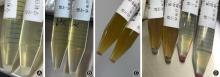
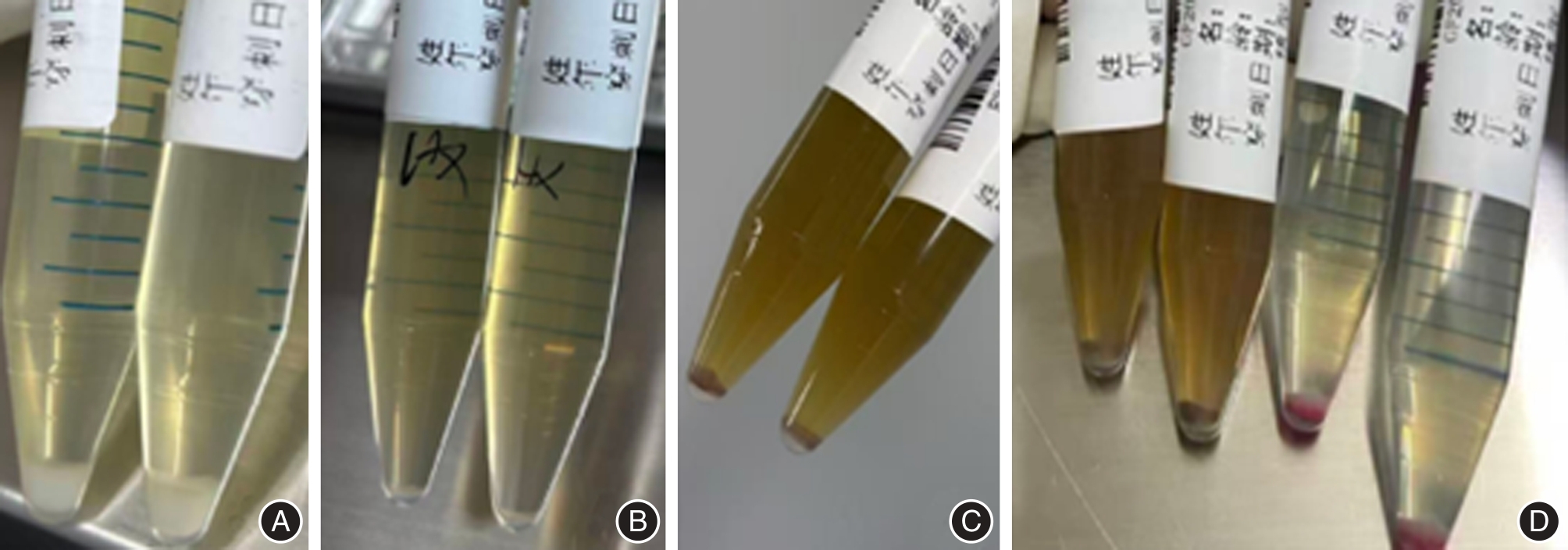
Fig.1
Representative diagram of amniotic fluid precipitation with different characteristics during second trimester"
Tab.1
Comparison of differences in clinical data and culture-related indicators between groups with different precipitation types"
| 变量 | 总人数(n = 96) | A组(n = 20) | B组(n = 24) | C组(n = 29) | D组(n = 23) | F/χ2值 | P值 |
|---|---|---|---|---|---|---|---|
| 年龄/岁 | 31.75 ± 5.42 | 30.55 ± 4.98 | 30.54 ± 4.40 | 32.55 ± 5.65 | 33.00 ± 6.23 | 1.38 | 0.255 |
| 孕周/周 | 19.62 ± 2.62 | 19.33 ± 2.08 | 19.98 ± 1.79 | 19.98 ± 2.06 | 19.65 ± 2.11 | 1.66 | 0.311 |
| BMI/(kg/m2) | 25.73 ± 2.21 | 25.38 ± 2.50 | 25.73 ± 1.86 | 25.36 ± 1.95 | 26.47 ± 2.52 | 1.34 | 0.266 |
| WBC/(×109/L) | 10.70 ± 2.45 | 9.97 ± 2.71 | 10.69 ± 2.20 | 10.63 ± 2.34 | 11.42 ± 2.54 | 1.27 | 0.289 |
| NEUT/% | 70.08 ± 7.69 | 69.39 ± 9.24 | 70.30 ± 5.77 | 69.17 ± 7.37 | 71.60 ± 8.57 | 0.49 | 0.690 |
| M/% | 6.93 ± 1.84 | 6.40 ± 1.86 | 6.53 ± 1.89 | 7.50 ± 1.72 | 7.08 ± 1.81 | 1.95 | 0.127 |
| RBC/(× 1012/L) | 4.26 ± 1.04 | 3.94 ± 0.87 | 3.93 ± 0.71 | 4.22 ± 0.59 | 4.93 ± 1.55 | 5.20 | 0.002 |
| PLT/(× 109/L) | 263.29 ± 74.51 | 265.35 ± 78.00 | 266.54 ± 81.02 | 251.34 ± 77.41 | 273.17 ± 62.65 | 0.40 | 0.756 |
| CRP/(mg/L) | 7.77 ± 2.94 | 6.62 ± 3.12 | 9.63 ± 2.87 | 6.96 ± 2.13 | 7.86 ± 2.95 | 5.69 | 0.001 |
| 空腹GLU/(mmol/L) | 4.75 ± 0.51 | 4.83 ± 0.61 | 4.74 ± 0.37 | 4.65 ± 0.56 | 4.83 ± 0.49 | 0.69 | 0.558 |
| 培养周期/d | 11.34 ± 1.86 | 10.37 ± 0.87 | 9.17 ± 0.82 | 12.00 ± 0.96 | 13.52 ± 0.88 | 109.30 | < 0.001 |
| 换液次数/次 | 4.34 ± 1.28 | 3.11 ± 0.31 | 3.00 ± 0.29 | 5.28 ± 0.59 | 5.57 ± 0.65 | 180.13 | < 0.001 |
| 细胞计数/(× 105/mL) | 3.02 ± 1.86 | 3.63 ± 0.60 | 5.45 ± 1.48 | 2.19 ± 0.59 | 1.09 ± 0.56 | 107.35 | < 0.001 |
| 受孕方式/[例(%)] | 1.12 | 0.771 | |||||
| 试管 | 53(55.21) | 13(65.00) | 12(50.00) | 16(55.17) | 12(52.17) | ||
| 自然受孕 | 43(44.79) | 7(35.00) | 12(50.00) | 13(44.83) | 11(47.83) | ||
| 抗凝剂使用史/[例(%)] | 7.58 | 0.056 | |||||
| 有 | 65(67.71) | 17(85.00) | 19(79.17) | 16(55.17) | 13(56.52) | ||
| 无 | 31(32.29) | 3(15.00) | 5(20.83) | 13(44.83) | 10(43.48) | ||
| 孕期出血史/[例(%)] | 14.04 | 0.003 | |||||
| 无 | 47(48.96) | 14(70.00) | 16(66.67) | 12(41.38) | 5(21.74) | ||
| 有 | 49(51.04) | 6(30.00) | 8(33.33) | 17(58.62) | 18(78.26) | ||
| 双胎之一自减/[例(%)] | 2.77 | 0.429 | |||||
| 有 | 44(45.83) | 8(40.00) | 10(41.67) | 12(41.38) | 14(60.87) | ||
| 无 | 52(54.17) | 12(60.00) | 14(58.33) | 17(58.62) | 9(39.13) | ||
| 胎盘位置/[例(%)] | 13.76 | 0.131 | |||||
| 前壁 | 24(25.00) | 4(20.00) | 5(20.83) | 6(20.69) | 9(39.13) | ||
| 侧壁 | 25(26.04) | 6(30.00) | 3(12.50) | 7(24.14) | 9(39.13) | ||
| 后壁 | 30(31.25) | 5(25.00) | 12(50.00) | 9(31.03) | 4(17.39) | ||
| 胎盘低置 | 17(17.71) | 5(25.00) | 4(16.67) | 7(24.14) | 1(4.35) |
Tab.2
Pairwise comparison results of samples with different sedimentation types with statistically significant differences in RBC, CRP, culture period, number of medium changes and cell count"
| 前者组别 | 后者组别 | 前者平均值 | 后者平均值 | 差值 | 标准误 | P值 | Cohen's d值 | |
|---|---|---|---|---|---|---|---|---|
| RBC/(× 1012/L) | B组 | A组 | 3.929 | 3.935 | -0.006 | 0.297 | 0.984 | -0.007 |
| B组 | D组 | 3.929 | 4.926 | -0.997 | 0.286 | < 0.001 | -0.834 | |
| B组 | C组 | 3.929 | 4.225 | -0.296 | 0.270 | 0.277 | -0.456 | |
| A组 | D组 | 3.935 | 4.926 | -0.991 | 0.299 | 0.001 | -0.776 | |
| A组 | C组 | 3.935 | 4.225 | -0.290 | 0.285 | 0.311 | -0.405 | |
| D组 | C组 | 4.926 | 4.225 | 0.701 | 0.274 | 0.012 | 0.628 | |
| CRP/(mg/L) | B组 | A组 | 9.629 | 6.625 | 3.004 | 0.831 | < 0.001 | 1.006 |
| B组 | D组 | 9.629 | 7.857 | 1.773 | 0.801 | 0.029 | 0.610 | |
| B组 | C组 | 9.629 | 6.959 | 2.671 | 0.757 | < 0.001 | 1.073 | |
| A组 | D组 | 6.625 | 7.857 | -1.232 | 0.839 | 0.145 | -0.406 | |
| A组 | C组 | 6.625 | 6.959 | -0.334 | 0.797 | 0.677 | -0.129 | |
| D组 | C组 | 7.857 | 6.959 | 0.898 | 0.766 | 0.244 | 0.356 | |
| 培养周期/d | B组 | A组 | 9.167 | 10.368 | -1.202 | 0.269 | < 0.001 | -1.428 |
| B组 | D组 | 9.167 | 13.522 | -4.355 | 0.257 | < 0.001 | -5.136 | |
| B组 | C组 | 9.167 | 12 | -2.833 | 0.245 | < 0.001 | -3.147 | |
| A组 | D组 | 10.368 | 13.522 | -3.153 | 0.269 | < 0.001 | -3.604 | |
| A组 | C组 | 10.368 | 12 | -1.632 | 0.258 | < 0.001 | -1.759 | |
| D组 | C组 | 13.522 | 12 | 1.522 | 0.245 | < 0.001 | 1.643 | |
| 换液次数/次 | B组 | A组 | 3 | 3.105 | -0.105 | 0.151 | 0.488 | -0.350 |
| B组 | D组 | 3 | 5.565 | -2.565 | 0.144 | < 0.001 | -5.097 | |
| B组 | C组 | 3 | 5.276 | -2.276 | 0.138 | < 0.001 | -4.733 | |
| A组 | D组 | 3.105 | 5.565 | -2.460 | 0.151 | < 0.001 | -4.713 | |
| A组 | C组 | 3.105 | 5.276 | -2.171 | 0.145 | < 0.001 | -4.372 | |
| D组 | C组 | 5.565 | 5.276 | 0.289 | 0.138 | 0.039 | 0.469 | |
| 细胞计数/(×105/L) | B组 | A组 | 5.450 | 3.626 | 1.824 | 0.271 | < 0.001 | 1.559 |
| B组 | D组 | 5.450 | 1.091 | 4.359 | 0.259 | < 0.001 | 3.888 | |
| B组 | C组 | 5.450 | 2.190 | 3.260 | 0.247 | < 0.001 | 2.993 | |
| A组 | C组 | 3.626 | 1.091 | 2.535 | 0.271 | < 0.001 | 4.379 | |
| A组 | C组 | 3.626 | 2.190 | 1.437 | 0.260 | < 0.001 | 2.404 | |
| D组 | C组 | 1.091 | 2.190 | -1.098 | 0.247 | < 0.001 | -1.897 |
Tab.3
Binary logistic regression analysis of influencing factors related to group D"
| 变量 | OR(95%CI) | P值 |
|---|---|---|
| 年龄 | 1.06(0.97 ~ 1.15) | 0.196 |
| 孕周 | 0.92(0.73 ~ 1.18) | 0.516 |
| BMI | 1.23(0.99 ~ 1.53) | 0.064 |
| WBC | 1.18(0.97 ~ 1.44) | 0.107 |
| NEUT | 1.04(0.97 ~ 1.11) | 0.277 |
| M | 1.06(0.82 ~ 1.37) | 0.648 |
| RBC | 2.27(1.37 ~ 3.76) | 0.002 |
| PLT | 1.00(1.00 ~ 1.01) | 0.465 |
| CRP | 1.01(0.86 ~ 1.19) | 0.874 |
| 空腹GLU | 1.48(0.57 ~ 3.82) | 0.418 |
| 培养周期 | 6.89(2.84 ~ 16.67) | < 0.001 |
| 换液次数 | 4.25(2.18 ~ 8.26) | < 0.001 |
| 细胞计数 | 0.06(0.01 ~ 0.23) | < 0.001 |
| 受孕方式 | ||
| 自然 | (Reference) | |
| 试管 | 1.17(0.46 ~ 3.01) | 0.737 |
| 抗凝剂使用史 | ||
| 无 | (Reference) | |
| 有 | 1.90(0.72 ~ 5.01) | 0.192 |
| 孕期出血史 | ||
| 无 | (Reference) | |
| 有 | 4.88(1.63 ~ 14.57) | 0.005 |
| 双胎之一自减 | ||
| 无 | (Reference) | |
| 有 | 0.45(0.17 ~ 1.17) | 0.101 |
| 胎盘位置 | ||
| 前壁 | (Reference) | |
| 侧壁 | 0.94(0.29 ~ 3.00) | 0.913 |
| 后壁 | 0.26(0.07 ~ 0.98) | 0.046 |
| 胎盘低置 | 0.10(0.01 ~ 0.92) | 0.042 |
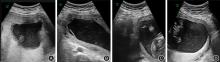
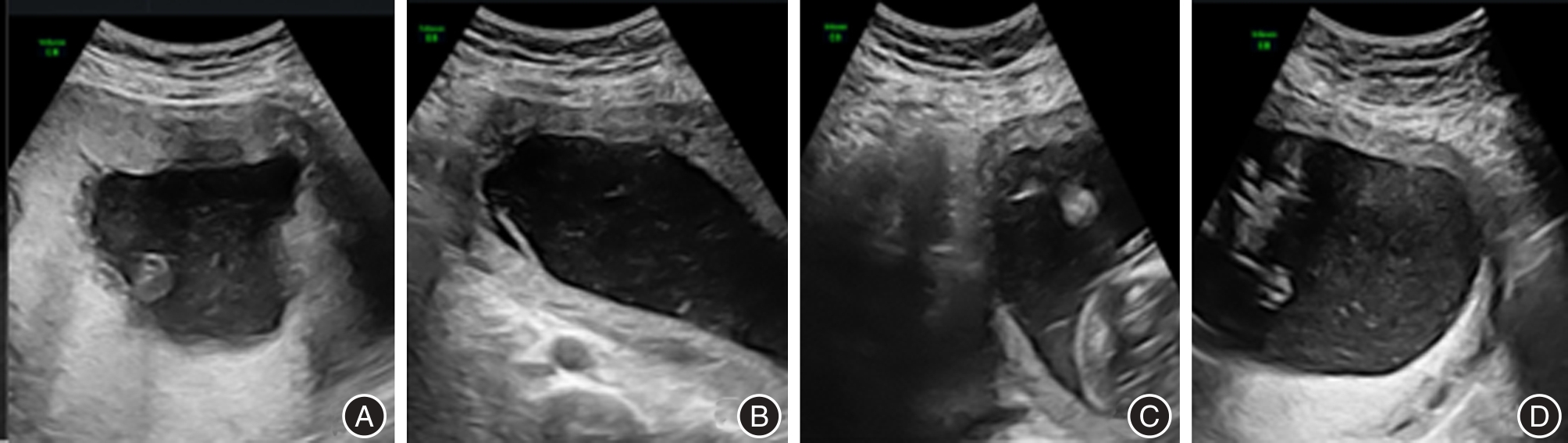
Fig.2
Visual ultrasound of amniotic fluid during amniocentesis in second trimester"
| [1] |
KIM N, JOO E H, KIM S, et al. Comparative analysis of obstetric, perinatal, and neurodevelopmental outcomes following chorionic villus sampling and amniocentesis[J]. Front Med, 2024, 11:1407710. doi: 10.3389/fmed.2024.1407710 .
doi: 10.3389/fmed.2024.1407710 |
| [2] |
GOTO S, SUZUMORI N, KUMAGAI K, et al. Trends of fetal chromosome analysis by amniocentesis before and after beginning of noninvasive prenatal testing: A single-center experience in Japan[J]. J Obstet Gynaecol Res, 2021, 47(11): 3807-3812. doi: 10. 1111/jog.14965 .
doi: 10. 1111/jog.14965 |
| [3] |
方玉琴, 张苗苗, 李景然, 等. 基于毛细管电泳平台的单基因病携带者筛查应用[J]. 实用医学杂志, 2022, 38(23): 2973-2979. doi: 10.3969/j.issn.1006-5725.2022.23.015 .
doi: 10.3969/j.issn.1006-5725.2022.23.015 |
| [4] | REZAGHOLI P, RASOULI M A, ZARE , S. Indications of Amniocentesis and its Early and Late Complications[J]. Adv Biomed Res, 2024, 13: 103. doi: 10.4103/abr.abr40823. |
| [5] |
BETA J, LESMES-HEREDIA C, BEDETTI C, et al. Risk of miscarriage following amniocentesis and chorionic villus sampling: A systematic review of the literature[J]. Minerva Ginecol, 2018, 70(2): 215-219. doi: 10.23736/S0026-4784.17.04178-8 .
doi: 10.23736/S0026-4784.17.04178-8 |
| [6] |
邓国生, 何才通, 赖玉青. 改良同步化G显带及染色体微阵列分析在脐血产前诊断中的应用[J]. 实用医学杂志, 2021, 37(24): 3168-3173. doi: 10.3969/j.issn.1006-5725.2021.24. 014 .
doi: 10.3969/j.issn.1006-5725.2021.24. 014 |
| [7] |
SHORT D, SHETH S, KELLEHER M, et al. The safety, acceptability, and success rates of amniocentesis in the context of preterm prelabor rupture of membranes and threatened preterm labor: a systematic review and meta-analysis[J]. J Matern Fetal Neonatal Med, 2024, 37(1): 2332784. doi: 10.1080/14767058.2024. 2332784 .
doi: 10.1080/14767058.2024. 2332784 |
| [8] |
冯艺帆, 王云梦, 马婵婵. 全自动滴片在羊水细胞染色体制备中的应用价值[J]. 实用医学杂志. 2023, 39(6): 667-671. doi: 10.3969/j.issn.1006-5725.2023.06.003 .
doi: 10.3969/j.issn.1006-5725.2023.06.003 |
| [9] |
SIMMONS P M, WHITTINGTON J R, ESTRADA S M, et al. What is the Impact of Abnormal Amniotic Fluid Volumes on Perinatal Outcomes in Normal Compared with At-Risk Pregnancies?[J]. Int J Womens Health, 2020, 12: 805-812. doi: 10.2147/IJWH.S263329 .
doi: 10.2147/IJWH.S263329 |
| [10] |
DAMMANN A N, CHAMBY A B, CATOMERIS A J, et al. Genome-Wide fitness analysis of group B Streptococcus in human amniotic fluid reveals a transcription factor that controls multiple virulence traits[J]. PLoS Pathog, 2021, 17(3): e1009116. doi: 10.1371/ journal.ppat.1009116 .
doi: 10.1371/ journal.ppat.1009116 |
| [11] |
曾艳, 范佳鸣, 张丽芳. 产前诊断中羊水性状对羊水细胞培养的影响[J]. 中华妇产科杂志, 2016, 51(10): 779-782. doi: 10.3760/cma.j.issn.0529-567x.2016.10.014 .
doi: 10.3760/cma.j.issn.0529-567x.2016.10.014 |
| [12] |
RAHMAWATI A, WULANDARI R C L, ARISANTI A Z, et al. The Effect of Date Juice and Honey OnIncreasing Hemoglobin in Pregnant Women with Anemia[J]. Int J Islamic Complemen Med, 2022, 3(2): 57-64. doi: 10.55116/ijicm.v3i2.43 .
doi: 10.55116/ijicm.v3i2.43 |
| [13] |
LOUKAS N, VRACHNIS D, ANTONAKOPOULOS N, et al. Prenatal Exposure to Bisphenol A: Is There an Association between Bisphenol A in Second Trimester Amniotic Fluid and Fetal Growth?[J]. Medicina. 2023, 59(5): 882. doi: 10.3390/medicina59050882 .
doi: 10.3390/medicina59050882 |
| [14] |
WU J, LU Y, ZHENG Z, et al. A primary study: high-throughput sequencing analysis of amniotic fluid microbiota in 50 high-risk pregnant women during the second trimester[J]. Front Cell Infect Microbiol, 2026, 16: 1748232. doi: 10.3389/fcimb.2026. 1748232 .
doi: 10.3389/fcimb.2026. 1748232 |
| [15] |
陈晓玲,黄向贵,周泳宜,等. 宫内高血糖对新生儿炎症因子水平及婴儿过敏性疾病发生的影响[J]. 新医学,2024,55(6):437-442.doi:10.3969/j.issn.0253-9802.2024.06.006 .
doi: 10.3969/j.issn.0253-9802.2024.06.006 |
| [16] |
ROMERO R, GERVASI M T, DIGIULIO D B, et al. Are bacteria, fungi, and archaea present in the midtrimester amniotic fluid?[J]. J Perinat Med, 2023,51 (7): 886-890. doi: 10.1515/jpm-2022-0604 .
doi: 10.1515/jpm-2022-0604 |
| [17] |
CAMPESI I, CAPOBIANCO G, CANO A, et al. Stratification of Amniotic Fluid Cells and Amniotic Fluid by Sex Opens Up New Perspectives on Fetal Health[J]. Bio medicines, 2023, 11(10): 2830. doi: 10.3390/biomedicines11102830 .
doi: 10.3390/biomedicines11102830 |
| [18] |
ZEMBALA-SZCZERBA M, JAWOROWSKI A, HURAS H, et al. Low-Grade Metabolically-Induced Inflammation Mediators Interleukin-6, Adiponectin, and TNF-α Serum Levels in Obese Pregnant Patients in the Perinatal Period[J]. Med Sci Monit Basic Res, 2017, 23: 1-7. doi: 10.12659/msmbr.902273 .
doi: 10.12659/msmbr.902273 |
| [19] |
WARINTAKSA P, ROMERO R, LERTRAT W, et al. Quantitative cervicovaginal fluid fetal fibronectin: A liquid biopsy for intra-amniotic inflammation[J]. Acta Obstet Gynecol, 2024, 103(11): 2252-2263. doi: 10.1111/aogs.14899 .
doi: 10.1111/aogs.14899 |
| [20] |
GOMEZ-LOPEZ N, ROMERO R, XU Y, et al. The immunophenotype of amniotic fluid leukocytes in normal and complicated pregnancies[J]. Am J Reprod Immunol, 2018, 79(4): e12827. doi: 10. 1111/aji.12827 .
doi: 10. 1111/aji.12827 |
| [21] |
JUNG E J, ROMERO R, GOMEZ-LOPEZ N, et al. Cervical insufficiency, amniotic fluid sludge, intra-amniotic infection, and maternal bacteremia: the need for a point-of-care test to assess inflammation and bacteria in amniotic fluid[J]. J Matern Fetal Neonatal Med, 2022, 35(24): 4775-4781. doi: 10.1080/14767058.2020. 1863369 .
doi: 10.1080/14767058.2020. 1863369 |
| [22] |
GOTO M, NAKAMURA M, TAKITA H, et al. Study for risks of amniocentesis in anterior placenta compared to placenta of other locations[J]. Taiwan J Obstet Gynecol, 2021, 60(4): 690-694. doi: 10.1016/j.tjog.2021.05.018 .
doi: 10.1016/j.tjog.2021.05.018 |
| [1] | Xueqin ZHENG,Ying HU. Prediction of pregnancy outcomes by PAPP-A combined with TPO-Ab in patients with subclinical hypothyroidism complicated with gestational hypertension [J]. The Journal of Practical Medicine, 2026, 42(8): 1444-1449. |
| [2] | Yiming HOU,Huafang WEI,Jiayang TANG,Ziyang WANG,Ying CHEN,Ling YUE. Study on the relationship between serum Metrnl levels and pregnancy outcomes in patients with hypertriglyceridemia in late pregnancy [J]. The Journal of Practical Medicine, 2026, 42(5): 785-791. |
| [3] | Wenjun GENG,Bei ZHAO,Huili YAN,Hongjiao KONG,Yu TAN,Li ZHANG. Different endometrial preparation protocols for frozen-thawed embryo transfer in elderly patientscomparison of pregnancy outcomes [J]. The Journal of Practical Medicine, 2026, 42(5): 878-883. |
| [4] | Liuhua HUANG,Ning ZHOU,Zicong ZHOU,Qinghua WU,Weiwei XIAO,Chenguang SHEN,Li ZHU,Wei ZHAO. A study on the association between gestational diabetes mellitus and group B streptococcus infection [J]. The Journal of Practical Medicine, 2026, 42(2): 342-347. |
| [5] | Zhixia WEI,Li FENG,Hailan. YANG. Analysis of the application effects of modified cesarean section techniques on the pregnancy outcomes with the placenta accreta spectrum [J]. The Journal of Practical Medicine, 2025, 41(22): 3467-3473. |
| [6] | Hongzhen SHI,Tongli WANG,Qian WANG,Lijuan SUN,Lin WANG,Lin LIN. Effect of granulocyte colony⁃stimulating factor combined with tadalafil on endometrial receptivity and pregnancy outcomes in thin endometrium [J]. The Journal of Practical Medicine, 2025, 41(22): 3490-3495. |
| [7] | Haihong WANG,Cui ZHAO,Yishan LI,Shuying. CHEN. Expression of serum miR-15a, miR-195-5p, miR-33 in patients with gestational diabetes and their relationship with maternal and infant outcomes [J]. The Journal of Practical Medicine, 2025, 41(16): 2533-2540. |
| [8] | Yanping JIANG,Wei YUAN,Shuqiong WANG,Yongli YAO,Wei LUO,Kang SONG,Xiaoxia FAN,Lijun LIN,Ya'nan LI,Yanling XIE,Lingling ZHAO,Beibei WANG,Fang DANG,Jingyuan WANG,Wenyan MA,Peiyun. FAN. Exploration of factors influencing abnormal iodine nutrition and pregnancy outcome in pregnant women during pregnancy based on thyroid function and thyroid autoantibody analysis [J]. The Journal of Practical Medicine, 2025, 41(16): 2549-2555. |
| [9] | Jun LIU,Fulin TIAN,Lin CHEN,Jian. LI. The relationship between normal high blood pressure and grade 1 hypertension in early pregnancy and maternal preeclampsia and adverse pregnancy outcomes [J]. The Journal of Practical Medicine, 2025, 41(10): 1555-1562. |
| [10] | Wenjing ZHENG,Xiangling CHU,Yuqiong WU,Min ZHANG,Xiaohong CHU,Nan ZHANG,Honglin HU. Changes in serum NOV/CCN3 levels in mid⁃ to late⁃term pregnant women and their association with gestational diabetes mellitus and pregnancy outcome [J]. The Journal of Practical Medicine, 2025, 41(1): 71-77. |
| [11] | Wenqing XU,Yishan LI,Qiuyu HAN,Fangjing SONG,Lin. MENG. Expression levels of HIF⁃3α methylation and DDIT4 in gestational diabetes mellitus and its relationship with pregnancy outcomes [J]. The Journal of Practical Medicine, 2024, 40(24): 3497-3502. |
| [12] | Cheng LIU,Meiying SANG,Qunying FANG,Shun BAI,Meihong HU,Shengxia. ZHENG. Strategy for frozen⁃thawed cycle blastocyst transfer after hysteroscopic adhesiolysis [J]. The Journal of Practical Medicine, 2024, 40(17): 2390-2394. |
| [13] | Yaling LI,Gang NIU,Wei. WANG. Impact of high⁃risk HPV infections on pregnancy outcomes and vaginal microenvironment [J]. The Journal of Practical Medicine, 2024, 40(15): 2138-2141. |
| [14] | JIA Junlong, CHENG Yaoping, WANG Ling, YU Yan, SUN Yang, LÜ Aixia, MA Xiaoyan.. Clinical application value of embryo densification during frozen ⁃ thawed embryo transfer cycle [J]. The Journal of Practical Medicine, 2023, 39(9): 1118-1122. |
| [15] |
JIN Chunyan, LIU Liying, GUO Yi, SHI Chunxiao..
Assisted reproduction outcomes:direct singleton pregnancy vs. singleton pregnancy after reduction of mul⁃ tiple pregnancies [J]. The Journal of Practical Medicine, 2023, 39(5): 625-630. |
| Viewed | ||||||
|
Full text |
|
|||||
|
Abstract |
|
|||||
