

The Journal of Practical Medicine ›› 2026, Vol. 42 ›› Issue (16): 2891-2897.doi: 10.3969/j.issn.1006-5725.2026.16.004
• Cardiovascular and Cerebrovascular Diseases Column • Previous Articles
Xiaowen Li1, Haifeng He2( )
Received:2026-05-22
Revised:2026-06-12
Accepted:2026-06-18
Online:2026-08-20
Published:2026-09-20
Contact:
Haifeng He
About author:Li Xiaowen performed the experiments and wrote the article. He Haifeng performed the experiments. Li Xiaowen revised the article. He Haifeng designed the study and reviewed the article. All authors read and approved the final manuscript as submitted.
CLC Number:
Xiaowen Li, Haifeng He. The effect of tenecteplase intravenous thrombolysis combined with mechanical thrombectomy on serum IL-6, IFN-γ and neurological function in patients with acute large vessel occlusion stroke[J]. The Journal of Practical Medicine, 2026, 42(16): 2891-2897.
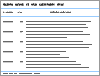
Tab.1
Comparison of baseline characteristics among the three groups"
| 特征 | A组(n = 44) | B组(n = 44) | C组(n = 44) | χ 2/F值 | P值 |
|---|---|---|---|---|---|
| 年龄/岁 | 66.21 ± 9.87 | 65.76 ± 10.32 | 67.11 ± 9.54 | 0.211 | 0.810 |
| 性别/[例(%)] | 0.188 | 0.910 | |||
| 男 | 26(59.09) | 25(56.82) | 27(61.36) | ||
| 女 | 18(40.91) | 19(43.18) | 17(38.64) | ||
| 体质量指数/(kg/m2) | 24.10 ± 3.21 | 23.86 ± 3.54 | 24.32 ± 3.02 | 0.219 | 0.804 |
| ASPECTS评分/分 | 7.56 ± 1.32 | 7.34 ± 1.44 | 7.65 ± 1.23 | 0.630 | 0.534 |
| 发病至就诊时间/min | 140.54 ± 36.76 | 136.98 ± 40.12 | 143.32 ± 37.65 | 0.304 | 0.738 |
| 高血压/[例(%)] | 30(68.18) | 32(72.73) | 28(63.64) | 0.838 | 0.658 |
| 糖尿病/[例(%)] | 16(36.36) | 15(34.09) | 18(40.91) | 0.454 | 0.797 |
| 心房颤动/[例(%)] | 20(45.45) | 19(43.18) | 22(50.00) | 0.427 | 0.808 |
| 吸烟史/[例(%)] | 19(43.18) | 17(38.64) | 20(45.45) | 0.434 | 0.805 |
| 既往卒中史/[例(%)] | 11(25.00) | 10(22.73) | 12(27.27) | 0.242 | 0.886 |
| 闭塞部位/[例(%)] | 0.532 | 0.991 | |||
| 颈内动脉颅内段 | 13(29.55) | 12(27.27) | 14(31.82) | ||
| 大脑中动脉M1段 | 23(52.27) | 24(54.55) | 22(50.00) | ||
| 大脑中动脉M2段 | 8(18.18) | 8(18.18) | 8(18.18) |
Tab.2
Comparison of treatment-related indicators among the three groups"
| 组别 | 取栓前血管再通/[例(%)] | 取栓后血管再通/[例(%)] | 穿刺至再通时间/min | 发病至再通时间/min | 住院时间/d |
|---|---|---|---|---|---|
| A组(n = 44) | 4(9.09) | 40(90.91) | 36.28 ± 9.46 | 242.67 ± 50.33 | 14.21 ± 3.86 |
| B组(n = 44) | 1(2.27) | 39(88.64) | 44.33 ± 7.54* | 250.89 ± 56.73 | 15.63 ± 4.01 |
| C组(n = 44) | 0(0.00) | 41(93.18) | 41.31 ± 5.41* | 246.32 ± 52.98 | 15.02 ± 3.95 |
| χ 2/F值 | 5.405 | 0.550 | 12.430 | 0.262 | 1.438 |
| P值 | 0.067 | 0.760 | < 0.001 | 0.770 | 0.241 |
Tab.3
Comparison of serum IL-6 and IFN-γ levels among the three groups"
| 组别 | IL-6 | IFN-γ | ||||||
|---|---|---|---|---|---|---|---|---|
| 治疗前 | 治疗后24 h | 治疗后7 d | 治疗后14 d | 治疗前 | 治疗后24 h | 治疗后7 d | 治疗后14 d | |
| A组(n = 44) | 84.65 ± 14.87 | 41.33 ± 8.21 | 24.87 ± 6.13 | 17.32 ± 4.96 | 28.87 ± 6.53 | 21.35 ± 4.98 | 14.87 ± 2.56 | 12.01 ± 3.03 |
| B组(n = 44) | 86.21 ± 15.11 | 57.65 ± 9.88* | 35.76 ± 7.54* | 23.64 ± 5.87* | 29.31 ± 6.98 | 23.36 ± 4.65* | 18.10 ± 3.97* | 15.34 ± 3.65* |
| C组(n = 44) | 85.43 ± 14.32 | 64.43 ± 10.96*# | 41.53 ± 8.32*# | 27.76 ± 6.55*# | 28.54 ± 6.21 | 25.32 ± 4.01*# | 19.86 ± 4.32*# | 16.87 ± 3.97*# |
| F值 | 0.123 | 65.267 | 57.731 | 35.798 | 0.152 | 8.322 | 20.633 | 21.301 |
| P值 | 0.885 | < 0.001 | < 0.001 | < 0.001 | 0.859 | < 0.001 | < 0.001 | < 0.001 |
Tab.4
Comparison of NIHSS scores among the three groups"
| 组别 | 治疗前 | 治疗后24 h | 治疗后3 d | 治疗后7 d | 治疗后14 d |
|---|---|---|---|---|---|
| A组(n = 44) | 15.54 ± 4.11 | 10.21 ± 3.55 | 8.10 ± 3.21 | 6.87 ± 2.95 | 5.98 ± 2.73 |
| B组(n = 44) | 16.02 ± 4.53 | 12.87 ± 3.98* | 10.65 ± 3.66* | 8.76 ± 3.31* | 7.86 ± 3.11* |
| C组(n = 44) | 15.78 ± 4.32 | 13.56 ± 4.21* | 11.23 ± 3.87* | 9.53 ± 3.51* | 8.65 ± 3.44* |
| F值 | 0.136 | 8.946 | 9.463 | 7.733 | 8.575 |
| P值 | 0.873 | < 0.001 | < 0.001 | 0.001 | < 0.001 |
Tab.5
Comparison of prognosis among three groups of patients"
| 组别 | mRS ≤ 2分/[例(%)] | mRS评分[M(P25, P75 )]/分 | Barthel指数(x ± s)/分 | 全因死亡/[例(%)] |
|---|---|---|---|---|
| A组(n = 44) | 25(56.81) | 1(0,5) | 76.54 ± 17.85 | 9(20.45) |
| B组(n = 44) | 20(45.45) | 3(1,5) | 69.87 ± 16.56* | 10(22.73) |
| C组(n = 44) | 19(43.18) | 3(2,5) | 66.32 ± 16.98* | 8(18.18) |
| χ 2/H/F值 | 1.881 | 3.343 | 4.033 | 0.279 |
| P值 | 0.391 | 0.188 | 0.020 | 0.870 |
Tab.6
Comparison of safety indicators among the three groups"
| 组别 | sICH | 任何颅内出血 | 肺炎 | 深静脉血栓 | 癫痫发作 | 其他 | 总发生 |
|---|---|---|---|---|---|---|---|
| A组(n = 44) | 4(9.09) | 7(15.91) | 11(25.00) | 5(11.36) | 3(6.82) | 2(4.55) | 32(72.73) |
| B组(n = 44) | 3(6.82) | 6(13.64) | 10(22.73) | 4(9.09) | 2(4.55) | 1(2.27) | 26(59.09) |
| C组(n = 44) | 2(4.55) | 5(11.36) | 10(22.73) | 4(9.09) | 2(4.55) | 1(2.27) | 24(54.55) |
| χ 2值 | 3.348 | ||||||
| P值 | 0.187 |
Tab.7
Comparison of health economic indicators among the three groups"
| 组别 | 溶栓药物费用 | 取栓手术费用 | 住院费用 | 检查费用 | 总费用 |
|---|---|---|---|---|---|
| A组(n = 44) | 0.85 ± 0.04 | 4.52 ± 0.35 | 3.22 ± 0.41 | 1.51 ± 0.22 | 12.85 ± 1.53 |
| B组(n = 44) | 0.68 ± 0.03 | 4.50 ± 0.36 | 3.36 ± 0.44 | 1.54 ± 0.24 | 13.58 ± 1.69* |
| C组(n = 44) | - | 4.54 ± 0.33 | 3.14 ± 0.40# | 1.49 ± 0.22 | 12.46 ± 1.50# |
| F值 | 22.553 | 0.146 | 3.137 | 0.541 | 5.729 |
| P值 | < 0.001 | 0.864 | 0.047 | 0.583 | 0.004 |
| [1] |
中华医学会神经病学分会, 中华医学会神经病学分会脑血管病学组. 中国急性缺血性卒中诊治指南2023[J]. 中华神经科杂志, 2024, 57(6): 523-559. doi:10.3760/cma.j.cn113694-20240410-00221 .
|
| [2] |
|
| [3] |
赵耀, 钟海龙. 替奈普酶在急性缺血性卒中再灌注治疗中的研究进展[J]. 中华神经医学杂志, 2024, 23(10): 1050-1054. doi:10.3760/cma.j.cn115354-20240624-00375 .
|
| [4] |
白永莉, 王文君, 焦海娟. 急性缺血性脑卒中患者PTH、IL-6表达水平及其与神经功能和近期预后的关系[J]. 海南医学, 2024, 35(1): 18-23. doi:10.3969/j.issn.1003-6350.2024. 01.005 .
|
| [5] |
|
| [6] |
杜冉冉, 王月古, 陈莹, 等. VAN与NIHSS评分对前后循环急性大血管闭塞性缺血性脑卒中急诊识别效能的比较[J]. 实用医学杂志, 2026, 42(7): 1257-1264. doi:10.3969/j.issn.1006-5725.2026.07.019 .
|
| [7] |
Gbd 2021 Stroke Risk Factor Collaborators. Global, regional, and national burden of stroke and its risk factors, 1990-2021: A systematic analysis for the Global Burden of Disease Study 2021[J]. Lancet Neurol, 2024, 23(10): 973-1003. doi:10.1016/S1474-4422(24)00369-7 .
|
| [8] |
黄旭阳, 李润辉. 替奈普酶与阿替普酶治疗急性缺血性卒中短期神经功能恢复比较: 线性混合效应模型分析[J]. 中国卒中杂志, 2026, 21(1): 30-37. doi:10.3969/j.issn.1673-5765. 2026.01.003 .
|
| [9] |
|
| [10] |
|
| [11] |
|
| [12] |
杨细平, 石罡, 王慧敏, 等. 替奈普酶静脉溶栓联合丁苯酞注射液治疗急性脑梗死的临床疗效[J]. 武警医学, 2026, 37(3): 230-234. doi:10.3969/j.issn.1004-3594.2026.03.009 .
|
| [13] |
苑兵舰, 徐晨阳, 郭双磊, 等. 颅内大动脉闭塞患者急性期细胞因子水平及其与脑梗死体积和功能预后的相关性研究[J]. 中华老年心脑血管病杂志, 2025, 27(3): 322-326. doi:10.3969/j.issn.1009-0126.2025.03.015 .
|
| [14] |
何丹丹, 李姝雅. 急性缺血性卒中静脉溶栓中外周血炎症指标与预后的研究进展[J]. 中国卒中杂志, 2026, 21(1): 55-64. doi:10.3969/j.issn.1673-5765.2026.01.006 .
|
| [15] |
施政浩, 杨建生, 卢振产, 等. 替奈普酶与阿替普酶静脉溶栓桥接机械取栓治疗合并大血管闭塞急性缺血性脑卒中患者效果比较[J]. 浙江大学学报(医学版), 2026, 55(2): 121-128. doi:10.3724/zdxbyxb-2025-0639 .
|
| [16] |
牛犇, 李星, 马涛, 等. 替奈普酶静脉溶栓桥接血管内取栓治疗发病< 4.5 h伴大血管闭塞AIS对病情转归的影响[J]. 海南医学, 2024, 35(24): 3519-3523. doi:10.3969/j.issn.1003-6350.2024.24.005 .
|
| [17] |
丁宏举, 叶福苹, 张璟, 等. 替奈普酶桥接治疗与阿替普酶桥接治疗对急性缺血性脑卒中的疗效比较[J]. 实用临床医药杂志, 2024, 28(19): 84-88, 94. doi:10.7619/jcmp.20242138 .
|
| [18] |
姚惠敏, 陈峒何, 智文虹, 等. 替奈普酶与阿替普酶在急性缺血性卒中患者桥接治疗中的疗效比较[J]. 神经损伤与功能重建, 2025, 20(10): 575-579, 604. doi:10.16780/j.cnki.sjssgncj.20250277 .
|
| [19] |
孟燕, 庞玉明, 王玮玮, 等. 替奈普酶与阿替普酶静脉溶栓治疗高龄急性缺血性脑卒中患者的对比研究[J]. 中国实用神经疾病杂志, 2026, 29(1): 68-73. doi:10.12083/SYSJ.250912 .
|
| [20] |
|
| [21] |
|
| [22] |
|
| [23] |
熊云云, 路正钊, 马瑛, 等. 卒中: 回眸2025[J]. 中国卒中杂志, 2026, 21(1): 1-23. doi:10.3969/j.issn.1673-5765.2026. 01.001 .
|
| [24] |
邓晓媚, 李会婷, 门鹏, 等. 替奈普酶治疗急性缺血性脑卒中的快速卫生技术评估[J]. 中国药房, 2024, 35(20): 2541-2547. doi:10.6039/j.issn.1001-0408.2024.20.17 .
|
| [25] |
|
| [26] |
|
| Viewed | ||||||
|
Full text |
|
|||||
|
Abstract |
|
|||||
