

The Journal of Practical Medicine ›› 2026, Vol. 42 ›› Issue (13): 2331-2339.doi: 10.3969/j.issn.1006-5725.2026.13.008
• Oncology: Diagnosis, Treatment and Prevention • Previous Articles
Tai XIE1,Junzhao WAN1,Min ZHANG1,Dan MA1,2( )
)
Received:2026-03-12
Online:2026-07-10
Published:2026-07-14
Contact:
Dan MA
E-mail:md_hust_gmu@163.com
CLC Number:
Tai XIE,Junzhao WAN,Min ZHANG,Dan MA. Evaluation value of the proportion of S100A9-high-expressing cells in the malignant cell population for chemotherapy response and prognosis in patients with acute myeloid leukemia[J]. The Journal of Practical Medicine, 2026, 42(13): 2331-2339.
Fig.1
Survival analysis based on overall S100A9 mRNA expression levels in BeatAML and TCGA-LAML cohorts"
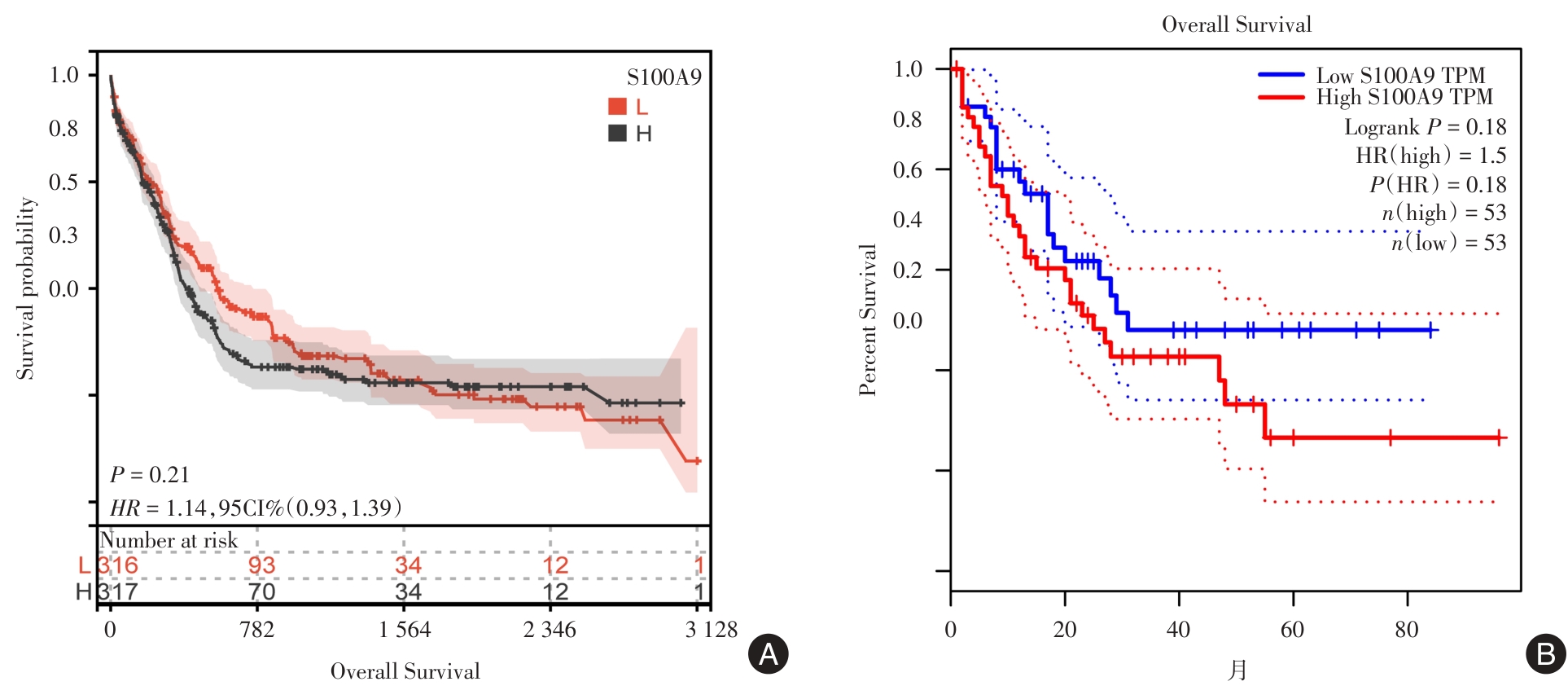
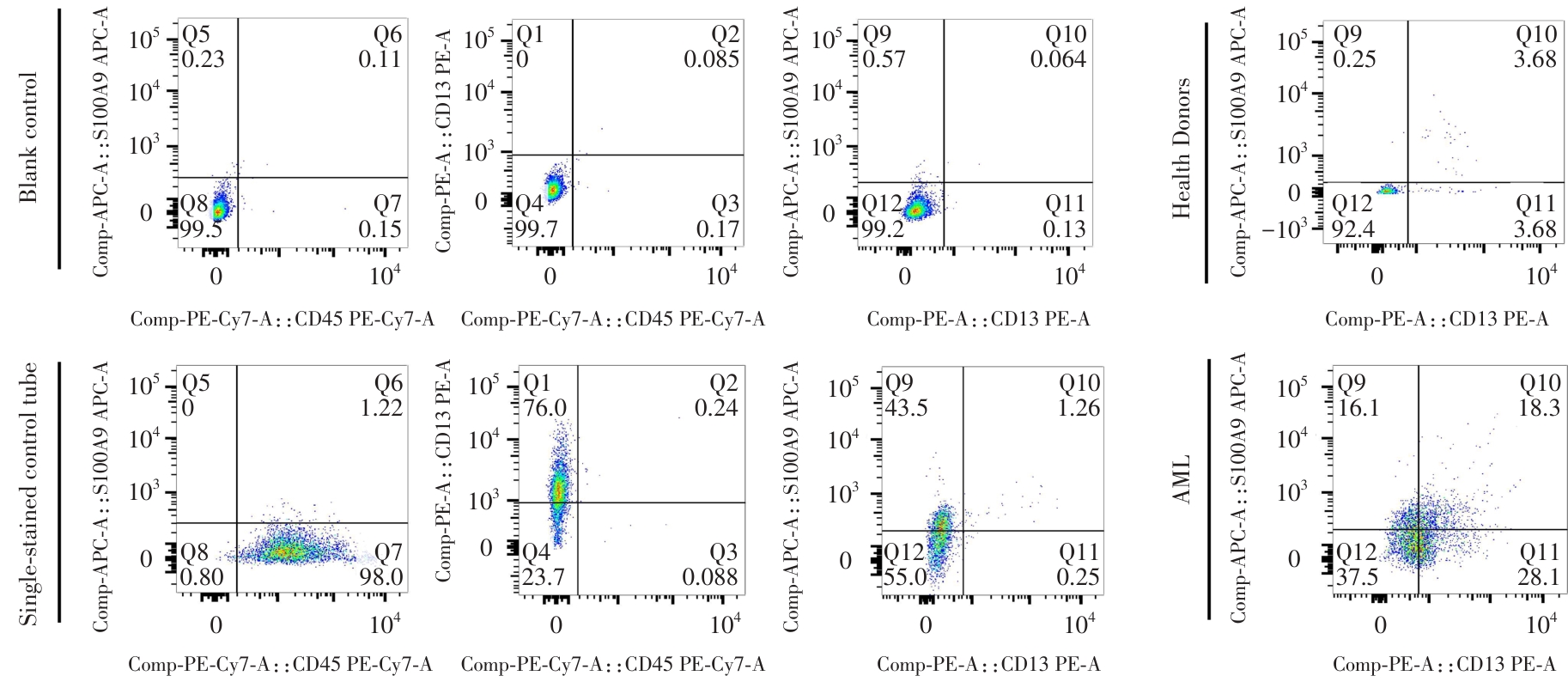
Fig.2
Gating strategy for identifying S100A9-high expressing cells by flow cytometry"

Tab.1
Baseline clinical characteristics of patients with AML"
| 特征 | 完全缓解组CR(n = 44) | 未缓解组NR(n = 36) | χ2/Z值 | P值 |
|---|---|---|---|---|
| 年龄/岁 | 52(36,64) | 43(31,59) | 1.74 | 0.082 |
| 年龄分组/[例(%)] | 1.85 | 0.174 | ||
| ≤ 65岁 | 34(77.27) | 32(88.89) | ||
| 65岁 | 10(22.73) | 4(11.11) | ||
| 性别/[例(%)] | 0.02 | 0.875 | ||
| 男 | 24(54.55) | 19(52.78) | ||
| 女 | 20(45.45) | 17(47.22) | ||
| 骨髓原始细胞比例 | 34.15(15.62,61.8) | 31.89(14.75,55.42) | 0.86 | 0.390 |
| 白细胞计数/×109/L | 4.52(1.68,27.35) | 3.61(0.94,9.86) | 1.99 | 0.047 |
| 白细胞计数分组/[例(%)] | 6.50 | 0.011 | ||
| ≤ 50 × 109/L | 32(72.73) | 27(96.43) | ||
| 50 × 109/L | 12(27.27) | 1(3.57) | ||
| 细胞遗传学风险/[例(%)] | 5.57 | 0.018 | ||
| 正常核型 | 33(82.50) | 12(54.55) | ||
| 复杂核型 | 7(17.50) | 10(45.45) | ||
| 分子遗传学 | ||||
| FLT3?ITD/[例(%)] | 3.91 | 0.048 | ||
| 阴性 | 29(72.50) | 24(92.31) | ||
| 阳性 | 11(27.50) | 2(7.69) | ||
| NPM1/[例(%)] | 6.74 | 0.009 | ||
| 阴性 | 27(69.23) | 24(96.00) | ||
| 阳性 | 12(30.77) | 1(4.00) |
Fig.3
Association analysis of the proportion of S100A9high malignant cells with chemotherapy response in AML"
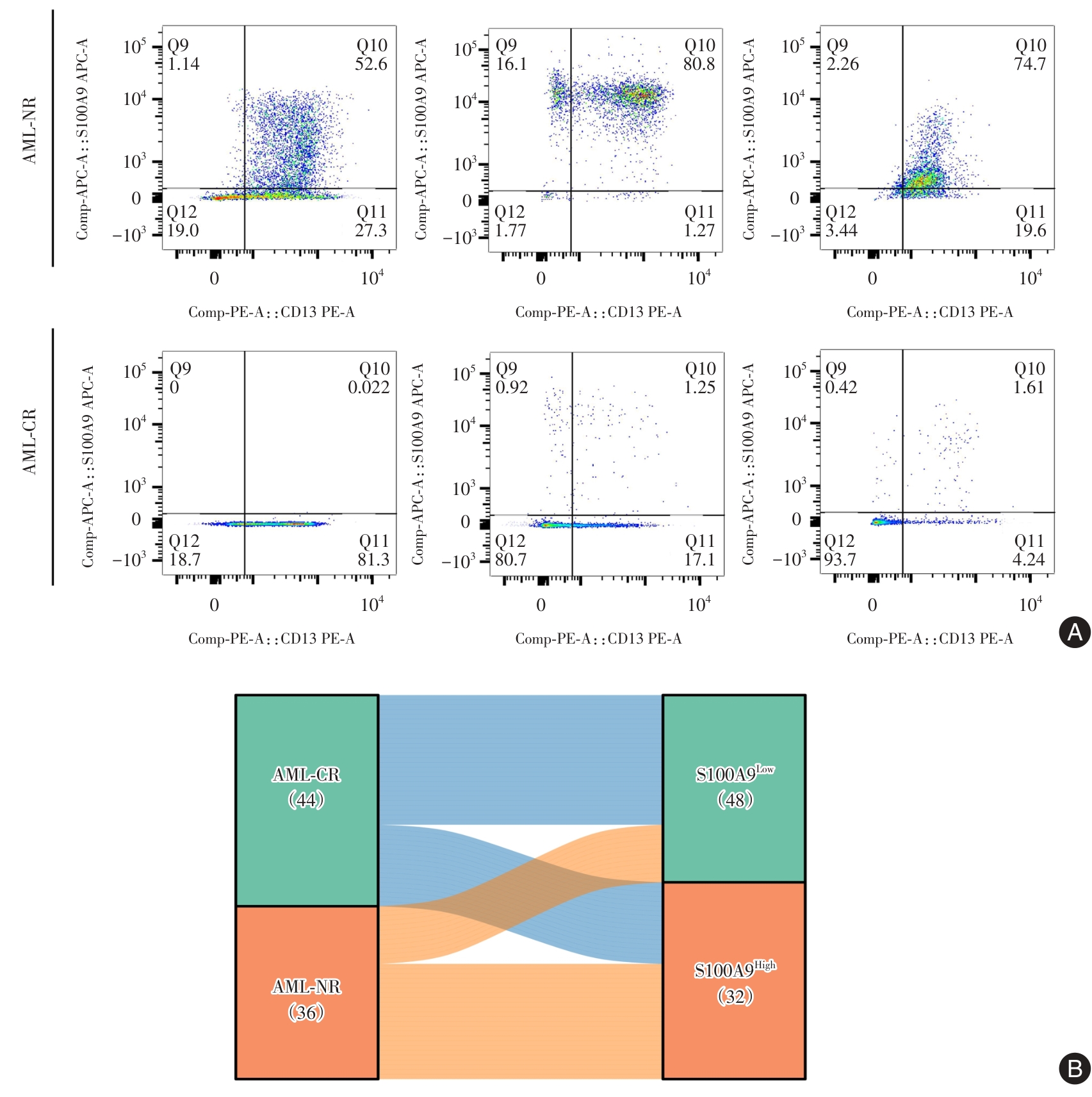
Fig.4
Prognostic value of the proportion of S100A9high malignant cells in AML"
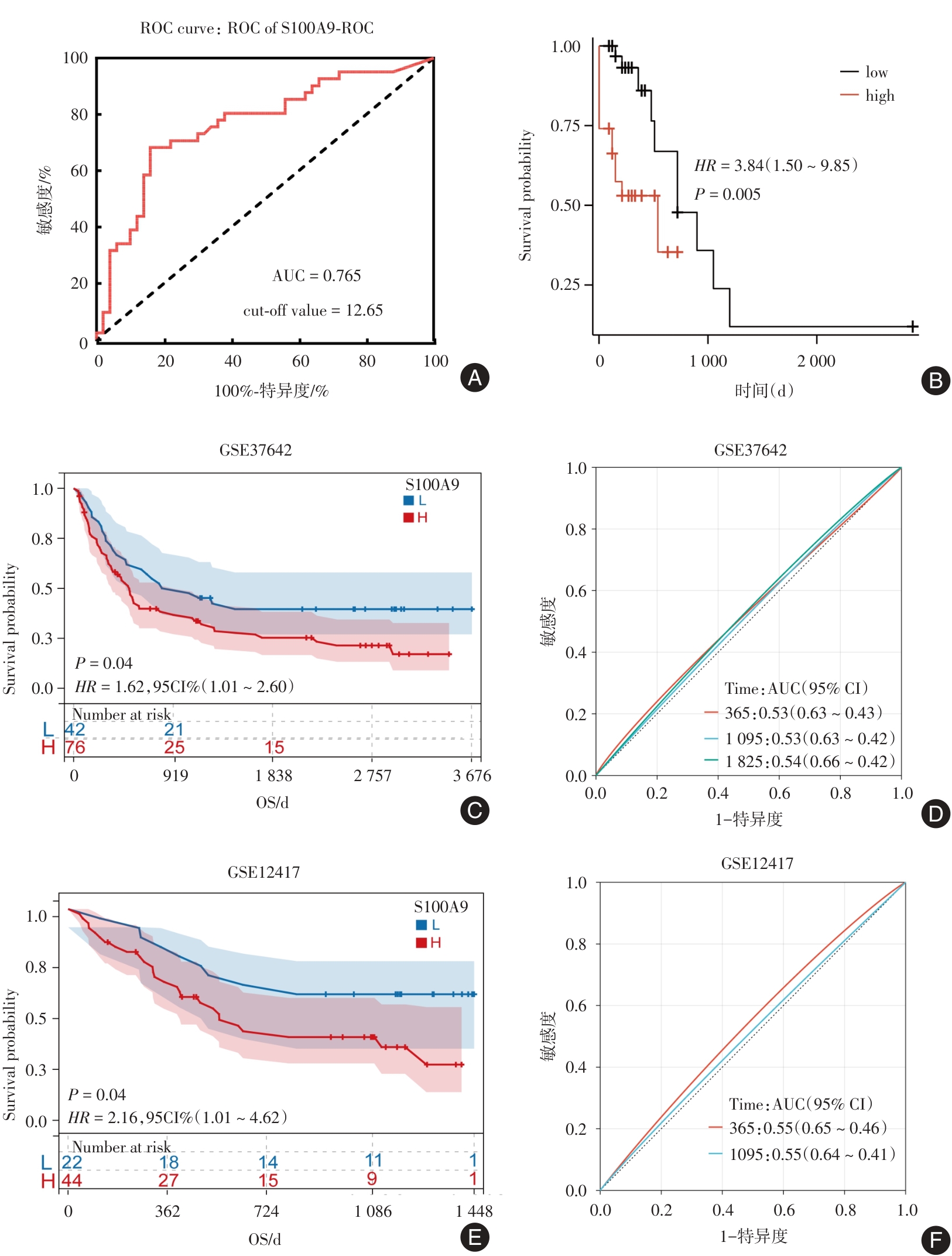
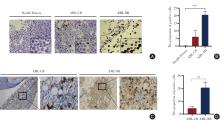
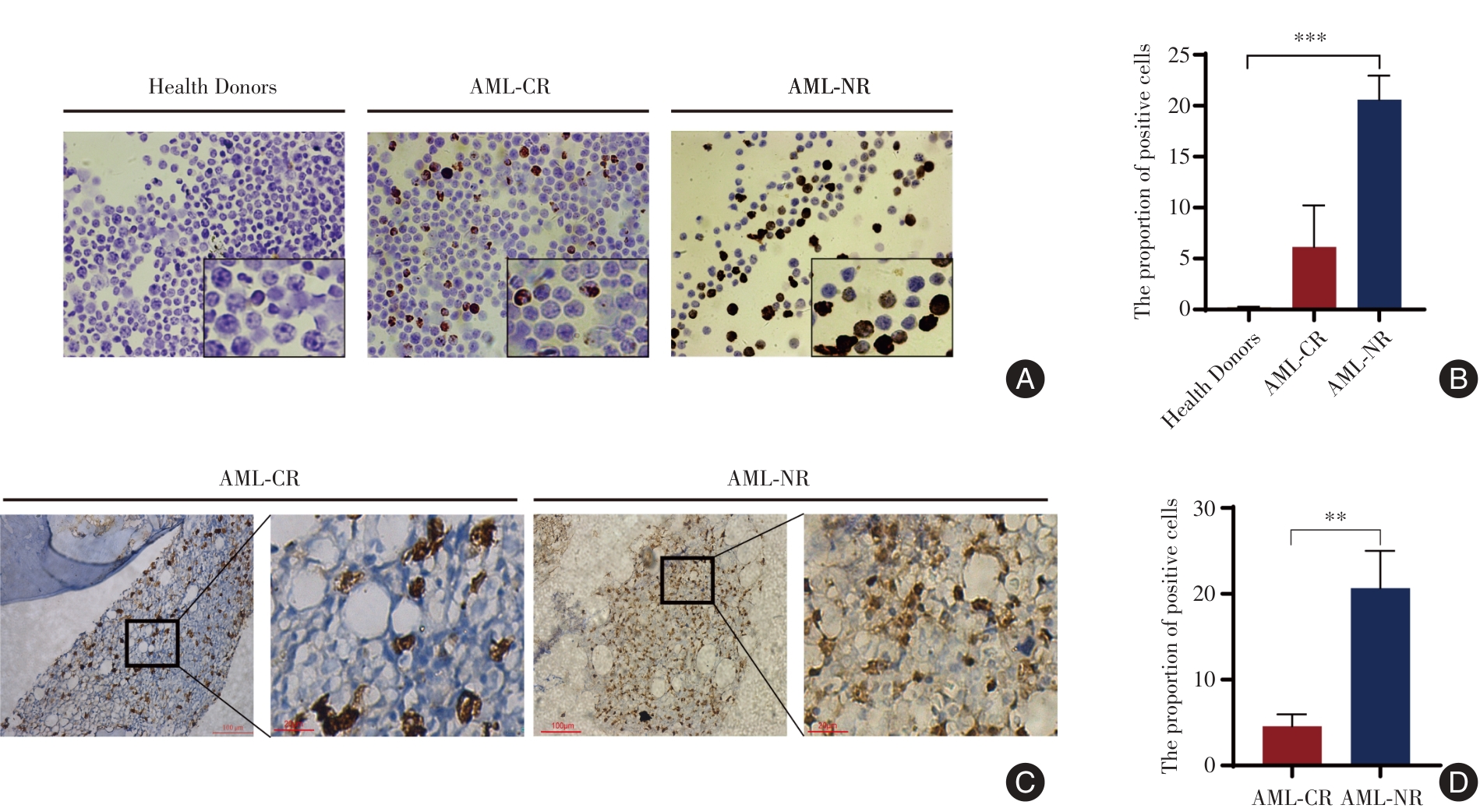
Fig.5
Validation of the association between the proportion of S100A9-high cells and chemotherapy response in AML patients"
| [1] |
强晓, 耿贝贝, 刘四喜, 等. 转录组学技术在急性白血病诊治中的应用研究进展[J]. 实用医学杂志, 2023, 39(22): 3010-3014. doi:10.3969/j.issn.1006-5725.2023.22.027 .
doi: 10.3969/j.issn.1006-5725.2023.22.027 |
| [2] |
DART A. Energizing leukaemia[J]. Nat Rev Cancer, 2025, 25(7): 491. doi:10.1038/s41568-025-00842-7 .
doi: 10.1038/s41568-025-00842-7 |
| [3] |
KANTARJIAN H, CHIFOTIDES H T, HADDAD F G, et al. The care and cure of the leukemias in 2026[J]. Am J Hematol, 2026, 101(4): 807-831. doi:10.1002/ajh.70247 .
doi: 10.1002/ajh.70247 |
| [4] |
NEWELL L F, COOK R J. Advances in acute myeloid leukemia[J]. BMJ, 2021: n2026. doi:10.1136/bmj.n2026 .
doi: 10.1136/bmj.n2026 |
| [5] |
CHEN Y, OUYANG Y, LI Z, et al. S100A8 and S100A9 in cancer[J]. Biochim Biophys Acta BBA Rev Cancer, 2023, 1878(3): 188891. doi:10.1016/j.bbcan.2023.188891 .
doi: 10.1016/j.bbcan.2023.188891 |
| [6] |
MONDET J, CHEVALIER S, MOSSUZ P. Pathogenic roles of S100A8 and S100A9 proteins in acute myeloid and lymphoid leukemia: Clinical and therapeutic impacts[J]. Molecules, 2021, 26(5): 1323. doi:10.3390/molecules26051323 .
doi: 10.3390/molecules26051323 |
| [7] |
BOUSSI L, CAI S F, STEIN E M. Advances in menin inhibition in acute myeloid leukemia[J]. Trends Cancer, 2025, 11(9): 889-900. doi:10.1016/j.trecan.2025.06.002 .
doi: 10.1016/j.trecan.2025.06.002 |
| [8] |
CAO S, PAN C, HU X, et al. SLC44A1 promotes AML progression and chemoresistance by regulating the Notch signaling pathway[J]. Neoplasma, 2026, 73(1): 26-36. doi:10.4149/neo_2025_250518n209 .
doi: 10.4149/neo_2025_250518n209 |
| [9] |
FAN R, SATILMIS H, VANDEWALLE N, et al. Targeting S100A9 protein affects mTOR-ER stress signaling and increases venetoclax sensitivity in Acute Myeloid Leukemia[J]. Blood Cancer J, 2023, 13: 188. doi:10.1038/s41408-023-00962-z .
doi: 10.1038/s41408-023-00962-z |
| [10] | 曾凤. BCL-2抑制剂维奈克拉联合PI3K抑制剂林普利塞对急性T淋巴细胞白血病Jurkat细胞的作用及机制研究[D]. 泸州: 西南医科大学, 2025. |
| [11] |
黄坤源, 江克华, 王庆. S100A9在肾脏疾病中的研究进展[J]. 实用医学杂志, 2024, 40(22): 3251-3255. doi:10.3969/j.issn. 1006-5725.2024.22.022 .
doi: 10.3969/j.issn. 1006-5725.2024.22.022 |
| [12] |
ZAVORKA THOMAS M E, JEON J Y, TALEBI Z, et al. Gilteritinib-induced upregulation of S100A9 is mediated through BCL6 in acute myeloid leukemia[J]. Blood Adv, 2021, 5(23): 5041-5046. doi:10.1182/bloodadvances.2021005614 .
doi: 10.1182/bloodadvances.2021005614 |
| [13] |
BÖTTCHER M, PANAGIOTIDIS K, BRUNS H, et al. Bone marrow stroma cells promote induction of a chemoresistant and prognostic unfavorable S100A8/A9high AML cell subset[J]. Blood Adv, 2022, 6(21): 5685-5697. doi:10.1182/bloodadvances. 2021005938 .
doi: 10.1182/bloodadvances. 2021005938 |
| [14] |
DE VEIRMAN K, DE BEULE N, MAES K, et al. Extracellular S100A9 protein in bone marrow supports multiple myeloma survival by stimulating angiogenesis and cytokine secretion[J]. Cancer Immunol Res, 2017, 5(10): 839-846. doi:10.1158/2326-6066.cir-17-0192 .
doi: 10.1158/2326-6066.cir-17-0192 |
| [15] |
LI X, LI Q, XIANG X, et al. The diagnostic value and clinical correlations of bone marrow supernatant S100A8 and S100A9 in myelodysplastic neoplasms[J]. Cytokine, 2025, 187: 156856. doi:10.1016/j.cyto.2025.156856 .
doi: 10.1016/j.cyto.2025.156856 |
| [16] |
SREBOTNIK KIRBIS I. State of the art and science of immunocytochemistry[J]. Acta Cytol, 2025, 69(1): 51-59. doi:10.1159/000539634 .
doi: 10.1159/000539634 |
| [17] |
LORETO C, CALTABIANO R. Immunohistochemical expression[J]. Appl Sci, 2021, 11(1): 360. doi:10.3390/app11010360 .
doi: 10.3390/app11010360 |
| [18] |
BOSCARO E, URBINO I, CATANIA F M, et al. Modern risk stratification of acute myeloid leukemia in 2023: Integrating established and emerging prognostic factors[J]. Cancers, 2023, 15(13): 3512. doi:10.3390/cancers15133512 .
doi: 10.3390/cancers15133512 |
| [19] |
CAO S, WANG Q, ZHU G. From chemotherapy to targeted therapy: Unraveling resistance in acute myeloid leukemia through genetic and non-genetic insights[J]. Int J Mol Sci, 2025, 26(9): 4005. doi:10.3390/ijms26094005 .
doi: 10.3390/ijms26094005 |
| [20] |
潘树耀, 崔丽娟. 维奈克拉治疗急性髓系白血病的研究进展[J]. 宁夏医学杂志, 2025, 47(6): 541-545. doi:10.13621/j.1001-5949.2025.06.0541 .
doi: 10.13621/j.1001-5949.2025.06.0541 |
| [21] |
RAZMKHAH F, KIM S, LIM S, et al. S100A8 and S100A9 in hematologic malignancies: From development to therapy[J]. Int J Mol Sci, 2023, 24(17): 13382. doi:10.3390/ijms241713382 .
doi: 10.3390/ijms241713382 |
| [22] |
ZHOU H, ZHAO C, SHAO R, et al. The functions and regulatory pathways of S100A8/A9 and its receptors in cancers[J]. Front Pharmacol, 2023, 14: 1187741. doi:10.3389/fphar.2023. 1187741 .
doi: 10.3389/fphar.2023. 1187741 |
| [23] |
ALLY F, CHEN X. Acute myeloid leukemia: Diagnosis and evaluation by flow cytometry[J]. Cancers, 2024, 16(22): 3855. doi:10.3390/cancers16223855 .
doi: 10.3390/cancers16223855 |
| Viewed | ||||||
|
Full text |
|
|||||
|
Abstract |
|
|||||
