

The Journal of Practical Medicine ›› 2026, Vol. 42 ›› Issue (6): 944-951.doi: 10.3969/j.issn.1006-5725.2026.06.006
• Oncology: Diagnosis, Treatment and Prevention • Previous Articles Next Articles
Lifang ZHANG,Hui ZHANG,Kai LI,Hua BIAN( )
)
Received:2025-10-24
Online:2026-03-25
Published:2026-03-26
Contact:
Hua BIAN
E-mail:biancrown@163.com
CLC Number:
Lifang ZHANG,Hui ZHANG,Kai LI,Hua BIAN. Heterogeneity of the immune microenvironment in esophageal squamous cell carcinoma and combination immunotherapy strategies[J]. The Journal of Practical Medicine, 2026, 42(6): 944-951.
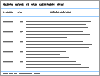
Tab.1
Comparison of immune characteristics in different regions of ESCC"
| 肿瘤区域 | 主要免疫细胞类型 | 特征性分子表达 | 免疫功能状态 |
|---|---|---|---|
| 侵袭前沿 | CAFs,SPP1?巨噬细胞, Tregs | JAG1,NOTCH1,TGF-β,VEGFA | 免疫抑制 (“冷”微环境) |
| 肿瘤核心 | 耗竭CD8? T细胞,TAMs | PD-1,TIM-3,LAG-3,IL-10 | T细胞功能障碍 |
| TLS | B细胞,Tfh,DCs | CXCL13,CD21,CD23 | 免疫激活 (“热”微环境) |
Tab.2
TIME dynamics in ESCC progression"
| 阶段 | 细胞特征 | TIME特征 | 关键数据/机制 |
|---|---|---|---|
癌前病变 (LGIN) | 增殖性上皮细胞扩展(7.2%→22.2%);激活细胞周期/DNA修复通路 | CD8? T细胞、NK细胞浸润;表型:“免疫清除” | P = 9.7e-?(上皮细胞扩增显著性) |
高级别瘤变 (HGIN) | 侵袭性上皮细胞出现;表达EMT基因(MMP2/11)、血管生成因子(VEGFA/C);CAF转化启动 | Tregs、SPP1+巨噬细胞扩增;表型:早期免疫抑制 | 通过EMT和血管生成驱动微环境重塑 |
侵袭性癌 (ESCC) | CAF-Epi生态位成熟;ECM屏障形成; | CD8? T细胞下降;Tregs、M2-TAMs主导;表型:“免疫逃逸” | ECM屏障导致T细胞排斥 |
Tab.3
TIME changes before and after ESCC neoadjuvant therapy"
| 响应类型 | 治疗前标志 | 治疗后变化 | 机制 |
|---|---|---|---|
| 应答者 | CD8?Tex-CXCL13细胞富集 | 终末耗竭T细胞分化;M1-TAMs↑、成熟DCs↑;微环境类型:“炎症型”; | 免疫激活通路增强(如IFN-γ信号) |
| 非应答者 | LRRC15?CAFs、SPP1?巨噬细胞富集[ | Tregs↑、MDSCs↑;持续免疫抑制; | LRRC15?CAFs分泌IL-6、 TGF-β;SPP1?巨噬细胞通过VEGFA促血管生成和T细胞排斥 |
| [1] |
BRAY F, LAVERSANNE M, SUNG H, et al. Global cancer statistics 2022: GLOBOCAN estimates of incidence and mortality worldwide for 36 cancers in 185 countries[J]. CA Cancer J Clin, 2024,74(3):229-263. doi:10.3322/caac.21834 .
doi: 10.3322/caac.21834 |
| [2] |
DIAO X, GUO C, JIN Y, et al. Cancer situation in China: An analysis based on the global epidemiological data released in 2024[J]. Cancer Commun, 2025,45(2):178-197. doi:10.1002/cac2. 12627 .
doi: 10.1002/cac2. 12627 |
| [3] |
YANG H, WANG F, HALLEMEIER C L, et al. Oesophageal cancer[J]. Lancet, 2024,404(10466):1991-2005. doi:10.1016/S0140-6736(24)02226-8 .
doi: 10.1016/S0140-6736(24)02226-8 |
| [4] |
YANG F, DAN M, SHI J, et al. Efficacy and safety of PD-1 inhibitors as second-line treatment for advanced squamous esophageal cancer: A systematic review and network meta-analysis with a focus on PD-L1 expression levels[J]. Front Immunol, 2025,15:1510145. doi:10.3389/fimmu.2024.1510145 .
doi: 10.3389/fimmu.2024.1510145 |
| [5] |
PANG K, SHI Z D, WEI L Y, et al. Research progress of therapeutic effects and drug resistance of immunotherapy based on PD-1/PD-L1 blockade[J]. Drug Resist Updat, 2023,66:100907. doi:10.1016/j.drup.2022.100907 .
doi: 10.1016/j.drup.2022.100907 |
| [6] |
MYLOD E, O'CONNELL F, DONLONO N E, et al. Real-time ex vivo monitoring of NK cell migration toward obesity-associated oesophageal adenocarcinoma following modulation of CX3CR1[J]. Sci Rep, 2024,14(1):4017. doi:10.1038/s41598-024-54390-5 .
doi: 10.1038/s41598-024-54390-5 |
| [7] |
MOONC Y, BELABED M, PARK M D, et al. Dendritic cell maturation in cancer[J]. Nat Rev Cancer, 2025,25(4):225-248. doi:10.1038/s41568-024-00787-3 .
doi: 10.1038/s41568-024-00787-3 |
| [8] |
ZHOU Y, MO S, CUI H, et al. Immune-tumor interaction dictates spatially directed evolution of esophageal squamous cell carcinoma[J]. Natl Sci Rev, 2024,11(5):nwae150. doi:10.1093/nsr/nwae150 .
doi: 10.1093/nsr/nwae150 |
| [9] |
CHANG J, LU J, LIU Q, et al. Single-cell multi-stage spatial evolutional map of esophageal carcinogenesis[J]. Cancer Cell, 2025,43(3):380-397. doi:10.1016/j.ccell.2025.02.009 .
doi: 10.1016/j.ccell.2025.02.009 |
| [10] |
CHEN Z, ZHAO M, LIANG J, et al. Dissecting the single-cell transcriptome network underlying esophagus non-malignant tissues and esophageal squamous cell carcinoma[J]. EBioMedicine, 2021,69:103459. doi:10.1016/j.ebiom.2021.103459 .
doi: 10.1016/j.ebiom.2021.103459 |
| [11] |
DINH H Q, PAN F, WANG G, et al. Integrated single-cell transcriptome analysis reveals heterogeneity of esophageal squamous cell carcinoma microenvironment[J]. Nat Commun, 2021,12(1):7335. doi:10.1038/s41467-021-27599-5 .
doi: 10.1038/s41467-021-27599-5 |
| [12] |
BEN K M, GODET Y, ABDELJAOUED S, et al. Harnessing Antitumor CD4(+) T Cells for Cancer Immunotherapy[J]. Cancers (Basel), 2022,14(1):260. doi:10.3390/cancers14010260 .
doi: 10.3390/cancers14010260 |
| [13] |
PENA-ROMERO A C, ORENES-PINERO E. Dual Effect of Immune Cells within Tumour Microenvironment: Pro- and Anti-Tumour Effects and Their Triggers[J]. Cancers (Basel), 2022,14(7):1681. doi:10.3390/cancers14071681 .
doi: 10.3390/cancers14071681 |
| [14] |
MA M, LI L, YANG S H. Lymphatic endothelial cell-mediated accumulation of CD177(+)Treg cells suppresses antitumor immunity in human esophageal squamous cell carcinoma[J]. Oncoimmunology, 2024,13(1):2327692. doi:10.1080/2162402X.2024.2327692 .
doi: 10.1080/2162402X.2024.2327692 |
| [15] |
WANG P, LEI M, WENG G, et al. High-dose chemotherapy sensitizes locally advanced esophageal squamous cell carcinoma to PD-1 blockade for a higher pathological complete response rate and survival[J]. Transl Oncol, 2023,36:101736. doi:10.1016/j.tranon.2023.101736 .
doi: 10.1016/j.tranon.2023.101736 |
| [16] |
JI G, YANG Q, WANG S, et al. Single-cell profiling of response to neoadjuvant chemo-immunotherapy in surgically resectable esophageal squamous cell carcinoma[J]. Genome Med, 2024,16(1):49. doi:10.1186/s13073-024-01320-9 .
doi: 10.1186/s13073-024-01320-9 |
| [17] |
YANG Z, TIAN H, CHEN X, et al. Single-cell sequencing reveals immune features of treatment response to neoadjuvant immunochemotherapy in esophageal squamous cell carcinoma[J]. Nat Commun, 2024,15(1):9097. doi:10.1038/s41467-024-52977-0 .
doi: 10.1038/s41467-024-52977-0 |
| [18] |
GENG Z, LI F, YANG Z, et al. Integrative analyses of bulk and single-cell RNA-seq reveals the correlation between SPP1(+) macrophages and resistance to neoadjuvant chemoimmunotherapy in esophageal squamous cell carcinoma[J]. Cancer Immunol Immunother, 2024,73(12):257. doi:10.1007/s00262-024-03848-6 .
doi: 10.1007/s00262-024-03848-6 |
| [19] |
HUANG R, KANG T, CHEN S. The role of tumor-associated macrophages in tumor immune evasion[J]. J Cancer Res Clin Oncol, 2024,150(5):238. doi:10.1007/s00432-024-05777-4 .
doi: 10.1007/s00432-024-05777-4 |
| [20] |
TOLEDO B, ZHU C L, PANIAGUA-SANCHO M, et al. Deciphering the performance of macrophages in tumour microenvironment: A call for precision immunotherapy[J]. J Hematol Oncol, 2024,17(1):44. doi:10.1186/s13045-024-01559-0 .
doi: 10.1186/s13045-024-01559-0 |
| [21] |
CUI C, LAN P, FU L. The role of myeloid-derived suppressor cells in gastrointestinal cancer[J]. Cancer Commun (Lond), 2021,41(6):442-471. doi:10.1002/cac2.12156 .
doi: 10.1002/cac2.12156 |
| [22] |
KO K P, ZHANG S, HUANG Y, et al. Tumor niche network-defined subtypes predict immunotherapy response of esophageal squamous cell cancer[J]. iScience, 2024,27(5):109795. doi:10.1016/j.isci. 2024.109795 .
doi: 10.1016/j.isci. 2024.109795 |
| [23] |
LI M, HE L, ZHU J, et al. Targeting tumor-associated macrophages for cancer treatment[J]. Cell Biosci, 2022,12(1):85. doi:10.1186/s13578-022-00823-5 .
doi: 10.1186/s13578-022-00823-5 |
| [24] |
WANG P, CHEN Y, LONG Q, et al. Increased coexpression of PD-L1 and TIM3/TIGIT is associated with poor overall survival of patients with esophageal squamous cell carcinoma[J]. J Immunother Cancer, 2021,9(10):e002836. doi:10.1136/jitc-2021-002836 .
doi: 10.1136/jitc-2021-002836 |
| [25] |
FABIAN K P, KOWALCZYK J T, REYNOLDS S T, et al. Dying of Stress: Chemotherapy, Radiotherapy, and Small- Molecule Inhibitors in Immunogenic Cell Death and Immunogenic Modulation[J]. Cells, 2022,11(23):3826. doi:10.3390/cells11233826 .
doi: 10.3390/cells11233826 |
| [26] |
李敬国,刘艳,汪超,等.信迪利单抗联合TP化疗方案对晚期食管癌患者免疫功能和预后生存的影响[J].实用医学杂志,2025,41(18):2906-2912. doi:10.3969/j.issn.1006-5725. 2025. 18.018 .
doi: 10.3969/j.issn.1006-5725. 2025. 18.018 |
| [27] |
HE M, WANG Z, LU J, et al. Final analysis of camrelizumab plus chemotherapy for untreated advanced or metastatic esophageal squamous cell carcinoma: The ESCORT-1st trial[J]. Med, 2024,5(9): 1137-1149. doi:10.1016/j.medj.2024.05.008 .
doi: 10.1016/j.medj.2024.05.008 |
| [28] |
LU Z, WANG J, SHU Y, et al. Sintilimab versus placebo in combination with chemotherapy as first line treatment for locally advanced or metastatic oesophageal squamous cell carcinoma (ORIENT-15): Multicentre, randomised, double blind, phase 3 trial[J]. BMJ, 2022,377:e068714. doi:10.1136/ bmj-2021-068714 .
doi: 10.1136/ bmj-2021-068714 |
| [29] |
GAO L, TANG L, PENG J, et al. PD-1 inhibitor combined with chemotherapy for first-line treatment of esophageal squamous cell carcinoma patients with distant metastasis: A real-world retrospective study[J]. Front Immunol, 2024,15: 1353445. doi:10.3389/fimmu.2024.1353445 .
doi: 10.3389/fimmu.2024.1353445 |
| [30] |
GUO X, CHEN C, ZHAO J, et al. Neoadjuvant Chemoradiotherapy vs Chemoimmunotherapy for Esophageal Squamous Cell Carcinoma[J]. JAMA Surg, 2025,160(5):565-574. doi:10.1001/jamasurg. 2025.0220 .
doi: 10.1001/jamasurg. 2025.0220 |
| [31] |
XIE L, ZHANG Z. Survival benefit of combined immunotherapy and chemoradiotherapy in locally advanced unresectable esophageal cancer: An analysis based on the SEER database[J]. Front Immunol, 2024,15:1334992. doi:10.3389/fimmu. 2024. 1334992 .
doi: 10.3389/fimmu. 2024. 1334992 |
| [32] |
LIAN H M, WU J L, LIUFU W J, et al. Induction immunotherapy plus chemotherapy followed by definitive chemoradiation therapy in locally advanced esophageal squamous cell carcinoma: A propensity-score matched study[J]. Cancer Immunol Immunother, 2024,73(3):55. doi:10.1007/s00262 -024-03649-x .
doi: 10.1007/s00262 -024-03649-x |
| [33] |
ZHAI D, AN D, WAN C, et al. Radiotherapy: Brightness and darkness in the era of immunotherapy[J]. Transl Oncol, 2022,19:101366. doi:10.1016/j.tranon.2022.101366 .
doi: 10.1016/j.tranon.2022.101366 |
| [34] |
王豪,陆筱祎,王文杰.老年局部晚期食管癌同步放化疗序贯信迪利单抗免疫治疗的疗效[J].实用医学杂志,2025,41(3):365-370. doi:10.3969/j.issn.1006-5725.2025.03.009 .
doi: 10.3969/j.issn.1006-5725.2025.03.009 |
| [35] |
SHAH M A, BENNOUNA J, DOI T, et al. KEYNOTE-975 study design: A Phase Ⅲ study of definitive chemoradiotherapy plus pembrolizumab in patients with esophageal carcinoma[J]. Future Oncol, 2021,17(10):1143-1153. doi:10.2217/fon-2020-0969 .
doi: 10.2217/fon-2020-0969 |
| [36] |
YU R, WANG W, LI T, et al. RATIONALE 311: tislelizumab plus concurrent chemoradiotherapy for localized esophageal squamous cell carcinoma[J]. Future Oncol, 2021,17(31):4081-4089. doi:10.2217/fon-2021-0632 .
doi: 10.2217/fon-2021-0632 |
| [37] |
KABIR A U, SUBRAMANIAN M, KWON Y, et al. Linking tumour angiogenesis and tumour immunity[J]. Nat Rev Immunol, 2026,26(1):35-51. doi: 10.1038/s41577-025-01211-z .
doi: 10.1038/s41577-025-01211-z |
| [38] |
LI N, XIA J, GAO X, et al. First-line benmelstobart plus anlotinib and chemotherapy in advanced or metastatic/recurrent esophageal squamous cell carcinoma: A multi-center phase 2 study[J]. Signal Transduct Target Ther, 2024,9(1):303. doi:10.1038/s41392-024-02008-7 .
doi: 10.1038/s41392-024-02008-7 |
| [39] |
MENG X, YANG X, HONG Y, et al. Anlotinib combined with benmelstobart as a chemo-free first-line treatment in advanced esophageal squamous cell carcinoma: An exploratory multicenter, single-arm phase II clinical trial[J]. Mol Cancer, 2025,24(1):175. doi:10.1186/s12943-025-02376-w .
doi: 10.1186/s12943-025-02376-w |
| [40] |
KATO K, DOKI Y, CHAU I, et al. Nivolumab plus chemotherapy or ipilimumab versus chemotherapy in patients with advanced esophageal squamous cell carcinoma (CheckMate 648): 29-month follow-up from a randomized, open-label, phase Ⅲtrial[J]. Cancer Med, 2024,13(9):e7235. doi:10.1002/cam4.7235 .
doi: 10.1002/cam4.7235 |
| [41] |
TAWBI H A, SCHADENDORF D, LIPSON E J, et al. Relatlimab and Nivolumab versus Nivolumab in Untreated Advanced Melanoma[J]. N Engl J Med, 2022,386(1):24-34. doi:10.1056/NEJMoa2109970 .
doi: 10.1056/NEJMoa2109970 |
| [42] |
KATO K, DOI T, BENNOUNA J, et al.KEYMAKER-U06 substudy 06A trial in progress: A phase 1/2 study of investigational agents with pembrolizumab (pembro) plus chemotherapy (chemo) or lenvatinib in PD-1/L1 treatment-naïve advanced esophageal cancer[J]. J Clin Oncol, 2023,41: p. TPS487-TPS487. doi:10.1200/jco.2023.41.4_suppl.tps487 .
doi: 10.1200/jco.2023.41.4_suppl.tps487 |
| [43] |
ZHAO K, MA L, FENG L, et al. CD155 Overexpression Correlates With Poor Prognosis in Primary Small Cell Carcinoma of the Esophagus[J]. Front Mol Biosci, 2021,7:608404. doi:10.3389/fmolb.2020.608404 .
doi: 10.3389/fmolb.2020.608404 |
| [44] |
HUANG M, YU X, WANG Q, et al. The immune checkpoint TIGIT/CD155 promotes the exhaustion of CD8 + T cells in TNBC through glucose metabolic reprogramming mediated by PI3K/AKT/mTOR signaling[J].Cell Commun Signal, 2024,22(1):35. doi:10.1186/s12964-023-01455-z .
doi: 10.1186/s12964-023-01455-z |
| [45] |
HSU C, LU Z, GAO S, et al. SKYSCRAPER-08: A phase III, randomized, double-blind, placebo-controlled study of first-line (1L) tiragolumab (tira) plus atezolizumab (atezo) and chemotherapy (CT) in patients (pts) with esophageal squamous cell carcinoma ( ESCC)[J]. J Clin Oncol, 2024,42:245. doi:10.1200/JCO.2024.42.3_suppl.245 .
doi: 10.1200/JCO.2024.42.3_suppl.245 |
| [46] |
ZHOU H, WANG W, XU H, et al. Metabolic reprograming mediated by tumor cell-intrinsic type I IFN signaling is required for CD47-SIRPα blockade efficacy[J]. Nat Commun, 2024,15(1):5759. doi:10.1038/s41467-024-50136-z .
doi: 10.1038/s41467-024-50136-z |
| [47] |
ZHAO P, XIE L, YU L, et al. Targeting CD47-SIRPalpha axis for Hodgkin and non-Hodgkin lymphoma immunotherapy[J]. Genes Dis, 2024,11(1):205-217. doi:10.1016/j.gendis. 2022.12.008 .
doi: 10.1016/j.gendis. 2022.12.008 |
| [48] |
DRAKAKI A, POWLES T, BAMIAS A, et al. Atezolizumab plus Magrolimab, Niraparib, or Tocilizumab versus Atezolizumab Monotherapy in Platinum-Refractory Metastatic Urothelial Carcinoma: A Phase Ib/II Open-Label, Multicenter, Randomized Umbrella Study (MORPHEUS Urothelial Carcinoma)[J]. Clin Cancer Res,2023,29(21):4373-4384. doi:10.1158/1078-0432. CCR-23-0798 .
doi: 10.1158/1078-0432. CCR-23-0798 |
| [49] |
PADRON L J, MAURER D M, O'HARA M H, et al. Sotigalimab and/or nivolumab with chemotherapy in first-line metastatic pancreatic cancer: Clinical and immunologic analyses from the randomized phase 2 PRINCE trial[J]. Nat Med, 2022,28(6):1167-1177. doi:10.1038/s41591-022-01829-9 .
doi: 10.1038/s41591-022-01829-9 |
| [50] |
WEISS S A, SZNOL M, SHAHEEN M, et al. A Phase II Trial of the CD40 Agonistic Antibody Sotigalimab (APX005M) in Combination with Nivolumab in Subjects with Metastatic Melanoma with Confirmed Disease Progression on Anti-PD-1 Therapy[J]. Clin Cancer Res, 2024,30(1):74-81. doi:10.1158/1078-0432.CCR-23-0475 .
doi: 10.1158/1078-0432.CCR-23-0475 |
| [51] |
ZHONG F, LIN Y, ZHAO L, et al. Reshaping the tumour immune microenvironment in solid tumours via tumour cell and immune cell DNA methylation: From mechanisms to therapeutics[J]. Br J Cancer, 2023,129(1):24-37. doi:10.1038/s41416-023-02292-0 .
doi: 10.1038/s41416-023-02292-0 |
| [52] |
QIN T, MATTOX A K, CAMPBELL J S, et al. Epigenetic therapy sensitizes anti-PD-1 refractory head and neck cancers to immunotherapy rechallenge[J]. J Clin Invest, 2025,135(6):e181671. doi:10.1172/JCI181671 .
doi: 10.1172/JCI181671 |
| [53] |
LU Z, DU W, JIAO X, et al. NOTCH1 Mutation and Survival Analysis of Tislelizumab in Advanced or Metastatic Esophageal Squamous Cell Carcinoma: A Biomarker Analysis From the Randomized, Phase III, RATIONALE-302 Trial[J]. J Clin Oncol, 2025,43(16):1898-1909. doi:10.1200/JCO-24-01818 .
doi: 10.1200/JCO-24-01818 |
| [1] | Yunhong JIAO,Weiliang ZHANG,Wei SONG. The diagnostic value of serum chemerin/visfatin ratio for insulin resistance in PCOS patients [J]. The Journal of Practical Medicine, 2026, 42(4): 564-570. |
| [2] | Tingzheng XUE,Fengxia LIANG,Liuyang HUANG,Yayuan WANG,Yanjuan SONG. Research progress and targeted therapeutic strategies of the SIRT1 pathway in adipose tissue for improving obesity and insulin resistance [J]. The Journal of Practical Medicine, 2026, 42(3): 455-462. |
| [3] | Bo DENG,Caoxia PENG,Qilian XIONG,Weiqi NIAN,Ying LIU. Predictive model for unplanned 30-day readmission in stage Ⅲ—Ⅳ lung cancer patients receiving immune checkpoint inhibitors [J]. The Journal of Practical Medicine, 2026, 42(1): 1-11. |
| [4] | Li WEI,Ziyi LIN,Zhen CHEN,Hejing SUN,Min DONG. Risk stratification value of TyG-BMI for immune-related adverse events in cancer patients treated with immune checkpoint inhibitors [J]. The Journal of Practical Medicine, 2026, 42(1): 12-20. |
| [5] | Lina XU,Xiaoshuang HE,Dong LIU,Chao WU. The study on the function and mechanism of bone marrow mesenchymal stem cell exosomes in alleviating the mouse asthma model [J]. The Journal of Practical Medicine, 2026, 42(1): 72-78. |
| [6] | Qian NIE,Xuemei ZHANG,Zhihua HAO,Ruolin XIE,Huanxin LIU,Xiaoqian WU,Luping. REN. The comparative study of TyG and TyG⁃BMI index with occurrence of hyperuricemia in physical examination population [J]. The Journal of Practical Medicine, 2025, 41(8): 1192-1198. |
| [7] | Lu ZHANG,Fen HE,Xiaoyi LIANG,Xiaoxia LIU,Maoying LAN,Wenwei XU,Wei MO,Jiancong SUN,Juntao. ZOU. Impact of hypofractionated radiotherapy combined with immunotherapy on the prognosis of patients with lung metastases [J]. The Journal of Practical Medicine, 2025, 41(24): 3883-3890. |
| [8] | Rong LIN,Gang. LIU. The effect of resistance exercise regulation of Piezo1 on myoblasts in skeletal muscles in elderly mice [J]. The Journal of Practical Medicine, 2025, 41(23): 3638-3644. |
| [9] | Xin LIU,Yutao HE,Fangming TIAN,Haocheng TANG,Zhitian SHI,Lin. WANG. Exploration and challenges of neoadjuvant therapy in the management of resectable hepatocellular carcinoma [J]. The Journal of Practical Medicine, 2025, 41(23): 3780-3785. |
| [10] | Zongjian HU,Shun WAN,Jianwei YANG,Li WANG,Siyu CHEN,Li YANG. Research progress of CAR⁃T cell therapy in bladder cancer [J]. The Journal of Practical Medicine, 2025, 41(22): 3496-3500. |
| [11] | Huiling XIAO,Weichun. HE. Clinical pathological types and pathogenesis of immune checkpoint inhibitor-related kidney injury [J]. The Journal of Practical Medicine, 2025, 41(21): 3315-3321. |
| [12] | Xiaomeng YU,Ning. WANG. Association between novel insulin resistance indices and lower extremity atherosclerotic disease in patients with type 2 diabetes mellitus [J]. The Journal of Practical Medicine, 2025, 41(21): 3371-3377. |
| [13] | Hang LI,Xiaomei YANG,Wen LYU,Huimin CHEN,Rui. XU. Three⁃year evaluation of the efficacy and safety of chronotherapy in dual⁃allergen subcutaneous immunotherapy [J]. The Journal of Practical Medicine, 2025, 41(21): 3405-3411. |
| [14] | Qiang FU,Zhongqi LU,Ying CHANG,Tiefeng JIN,Meihua. ZHANG. Research progress on the antitumor effects of immune checkpoint inhibitors [J]. The Journal of Practical Medicine, 2025, 41(2): 288-293. |
| [15] | Muying HUANG,Chu LIU,Jiaman LIU,Zhicong. WANG. Early identification of high⁃risk children who develop systemic adverse reactions related to dust mite allergy subcutaneous immunotherapy [J]. The Journal of Practical Medicine, 2025, 41(19): 3065-3071. |
| Viewed | ||||||
|
Full text |
|
|||||
|
Abstract |
|
|||||
