实用医学杂志 ›› 2026, Vol. 42 ›› Issue (18): 3256-3262.doi: 10.3969/j.issn.1006-5725.2026.18.003

• 肿瘤诊治与预后专栏 • 上一篇    

常规超声联合影像组学的分层可视化模型预测乳腺癌Luminal分子分型及Ki-67表达

牛若晨1, 刘灿2, 孙芳1, 徐星宇1, 高岩冰1()   

  1. 1. 山东医药大学附属医院超声医学科 (山东 滨州 256603 )
    2. 山东医药大学烟台附属医院超声医学科 ;(山东 烟台 264100 )
  • 收稿日期:2026-07-16 修回日期:2026-08-17 接受日期:2026-08-20 出版日期:2026-09-25 发布日期:2026-10-19
  • 通讯作者: 高岩冰
  • 基金资助:
    山东省自然科学基金项目(ZR2023MH348); 山东省自然科学基金项目(ZR2023QH231); 山东省医药卫生科技重点项目(202509020999); 山东省医药卫生科技重点项目(202409021312)

A stratified visual model based on conventional ultrasound combined with radiomics for predicting Luminal molecular subtype and Ki-67 expression status in breast cancer

Ruochen Niu1, Can Liu2, Fang Sun1, Xingyu Xu1, Yanbing Gao1()   

  1. 1. Department of Ultrasound Medicine,Shandong Medical and Pharmaceutical University Hospital,Binzhou 256603,Shandong,China
    2. Department of Ultrasound Medicine,Yantai Affiliated Hospital of Shandong Medical and Pharmaceutical University,Yantai 264100,Shandong,China
  • Received:2026-07-16 Revised:2026-08-17 Accepted:2026-08-20 Online:2026-09-25 Published:2026-10-19
  • Contact: Yanbing Gao
  • About author:

    Niu Ruochen performed the experiments and wrote the article. Xu Xingyu performed the experiments. Sun Fang and Gao Yanbing revised the article. Liu Can designed the study and reviewed the article. All authors read and approved the final manuscript as submitted.

摘要:

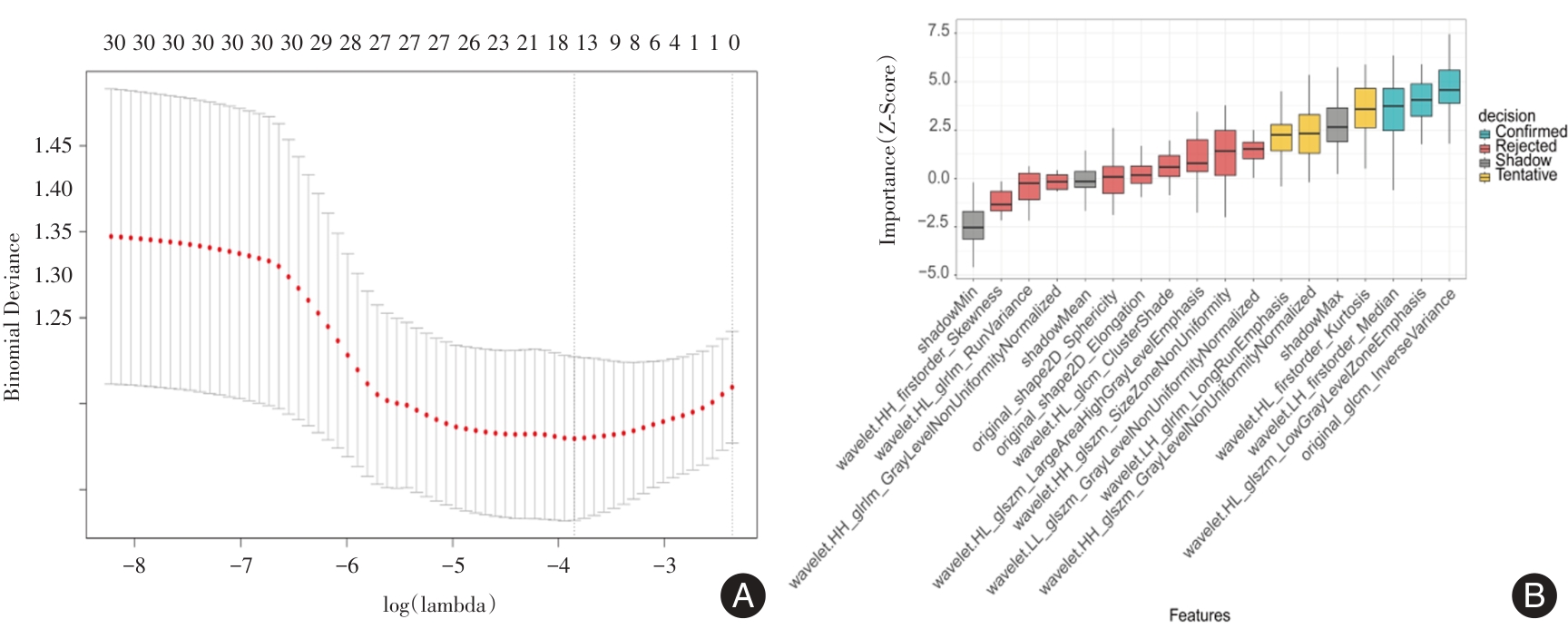
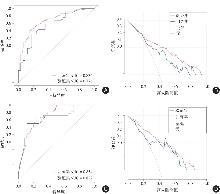
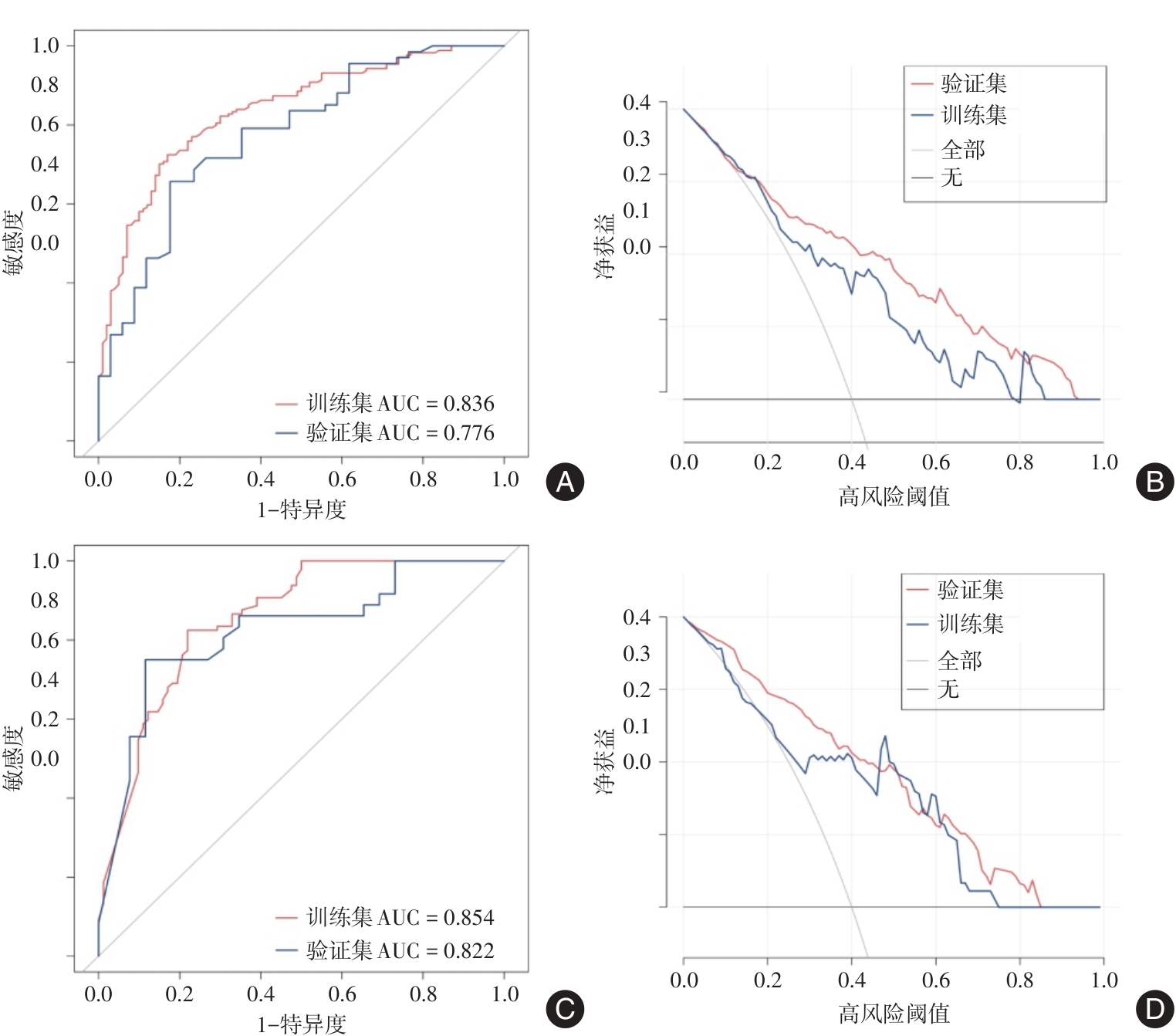
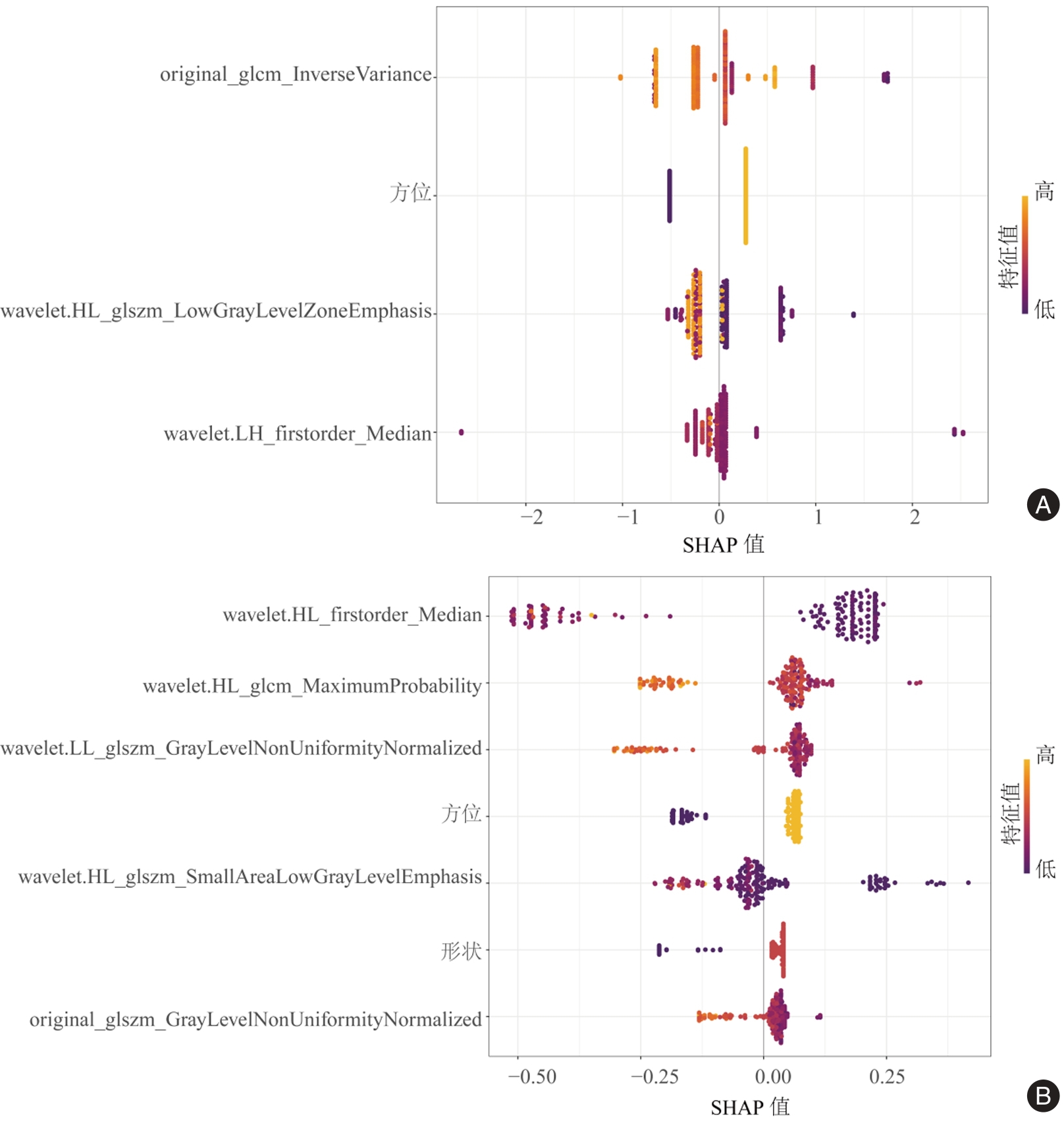
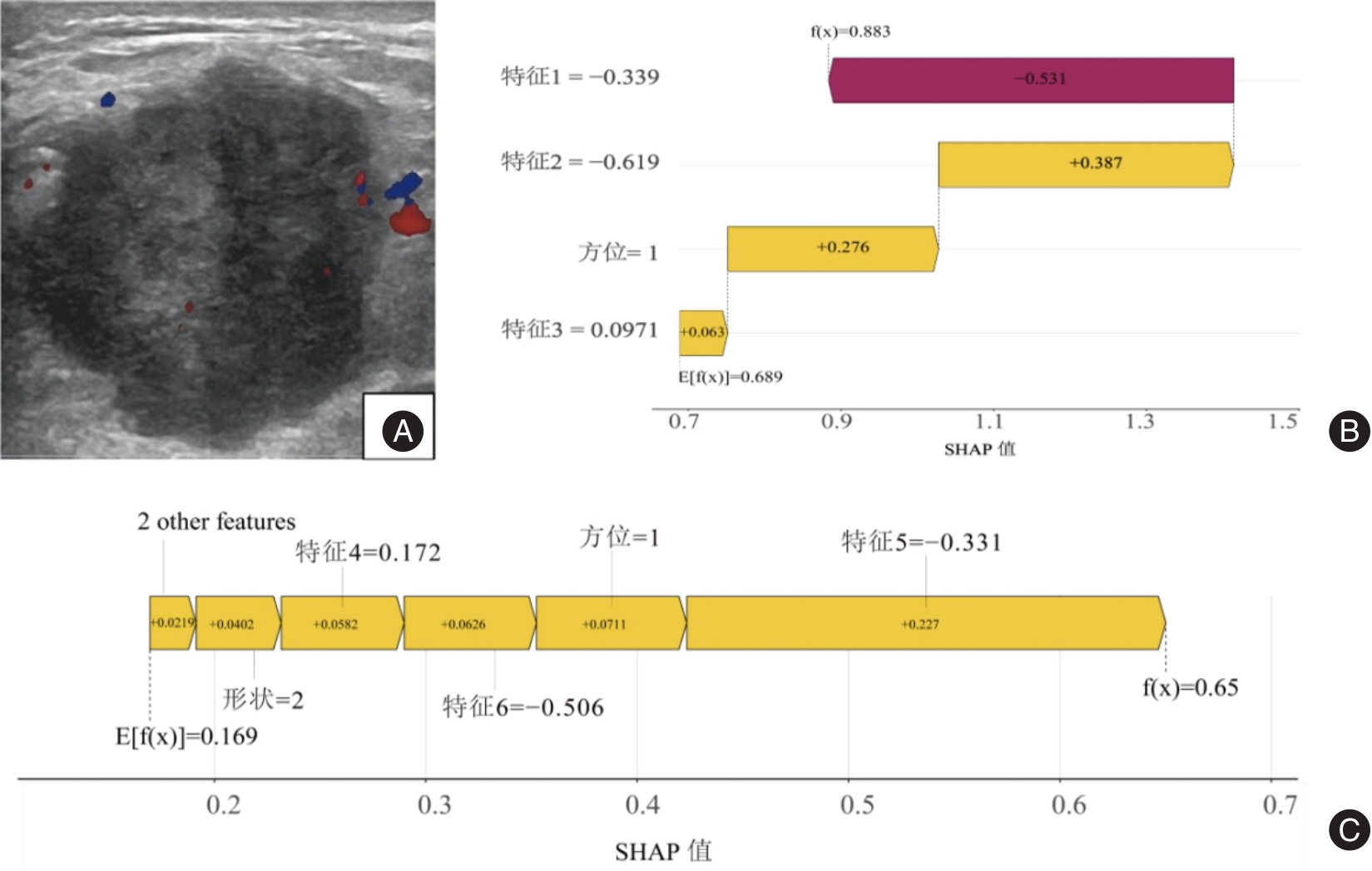
目的 探讨常规超声联合影像组学构建的联合模型在术前预测乳腺癌Luminal分子分型及Luminal型乳腺癌Ki-67表达状态中的价值。 方法 回顾性分析375例乳腺癌患者的超声图像,首先通过单因素及多因素分析筛选独立预测因素,同时对影像组学特征进行筛选,随后采用LightGBM算法基于两者构建联合预测模型,用于鉴别乳腺癌Luminal分子分型并预测Luminal型乳腺癌Ki-67表达状态。采用ROC曲线及DCA曲线评价模型性能,并应用SHAP方法分析特征对模型预测结果的贡献。 结果 构建的Luminal分子分型鉴别模型在训练集和验证集中的AUC分别为0.836和0.776;基于Luminal型乳腺癌患者中建立Ki-67表达状态预测模型,其AUC分别为0.854和0.822,两个模型均表现出良好的预测效能。DCA结果表明两模型在较宽阈值范围内具有较高净收益。SHAP分析显示,original_glcm_InverseVariance及wavelet.LH_firstorder_Median分别为两模型中贡献度最高的特征,对预测结果具有重要影响。 结论 基于常规超声联合影像组学的分层可视化模型鉴别乳腺癌Luminal分子分型及Luminal型乳腺癌Ki-67表达预测的研究,具有潜在的临床应用价值。

关键词: Luminal乳腺癌, Ki-67, 影像组学, Shapley加性解释方法

Abstract:

Objective This study aims to investigate the value of a combined model integrating conventional ultrasound and radiomics for the preoperative prediction of the Luminal molecular subtype and Ki-67 expression status in patients with Luminal breast cancer. Methods A retrospective analysis was performed on ultrasound imaging data obtained from 375 patients diagnosed with breast cancer. Univariate and multivariate regression analyses were implemented first to identify independent predictive factors, and radiomic features were screened independently. Next, an integrated prediction model based on LightGBM was constructed by combining clinical ultrasound characteristics and radiomic features, to differentiate the Luminal molecular subtype of breast cancer and predict the Ki-67 expression status in patients with Luminal breast cancer. The performance of the established model was evaluated via receiver operating characteristic (ROC) curves and decision curve analysis (DCA), and the SHapley Additive exPlanations (SHAP) method was applied to interpret the contribution of individual features to the model's prediction output. Results The combined model for Luminal molecular subtype discrimination achieved areas under the receiver operating characteristic curve (AUCs) of 0.836 and 0.776 in the training set and validation set, respectively. For the Ki-67 expression status prediction model constructed for patients with Luminal breast cancer, the AUC values reached 0.854 and 0.822 in the training cohort and validation cohort, respectively. Both models exhibited satisfactory predictive performance. Decision curve analysis demonstrated that the two models delivered substantial net clinical benefits across a broad range of threshold probabilities. SHAP (SHapley Additive exPlanation) analysis revealed that original_glcm_InverseVariance and wavelet.LH_firstorder_Median were the most impactful features for the two models respectively, confirming their critical contributions to the predictive performance of the models. Conclusion The stratified visualization model based on conventional ultrasound combined with radiomics shows potential clinical value for differentiating the Luminal molecular subtype and predicting Ki-67 expression status in breast cancer.

Key words: Luminal breast cancer, Ki-67, radiomics, shapley additive explanations

中图分类号: