

实用医学杂志 ›› 2026, Vol. 42 ›› Issue (15): 2786-2797.doi: 10.3969/j.issn.1006-5725.2026.15.015
• 论著·机制与实践 • 上一篇
朱欣1,2,梁杨标2,肖雄1,2,谢佳霖1,2,朱俊燕1,2,陈彦2( )
)
收稿日期:2026-04-15
修回日期:2026-06-04
接受日期:2026-06-08
出版日期:2026-08-10
发布日期:2026-08-13
通讯作者:
陈彦
E-mail:smu_chen@163.com
基金资助:
Xin ZHU1,2,Yangbiao LIANG2,Xiong XIAO1,2,Jialin XIE1,2,Junyan ZHU1,2,Yan CHEN2()
Received:2026-04-15
Revised:2026-06-04
Accepted:2026-06-08
Online:2026-08-10
Published:2026-08-13
Contact:
Yan CHEN
E-mail:smu_chen@163.com
摘要:
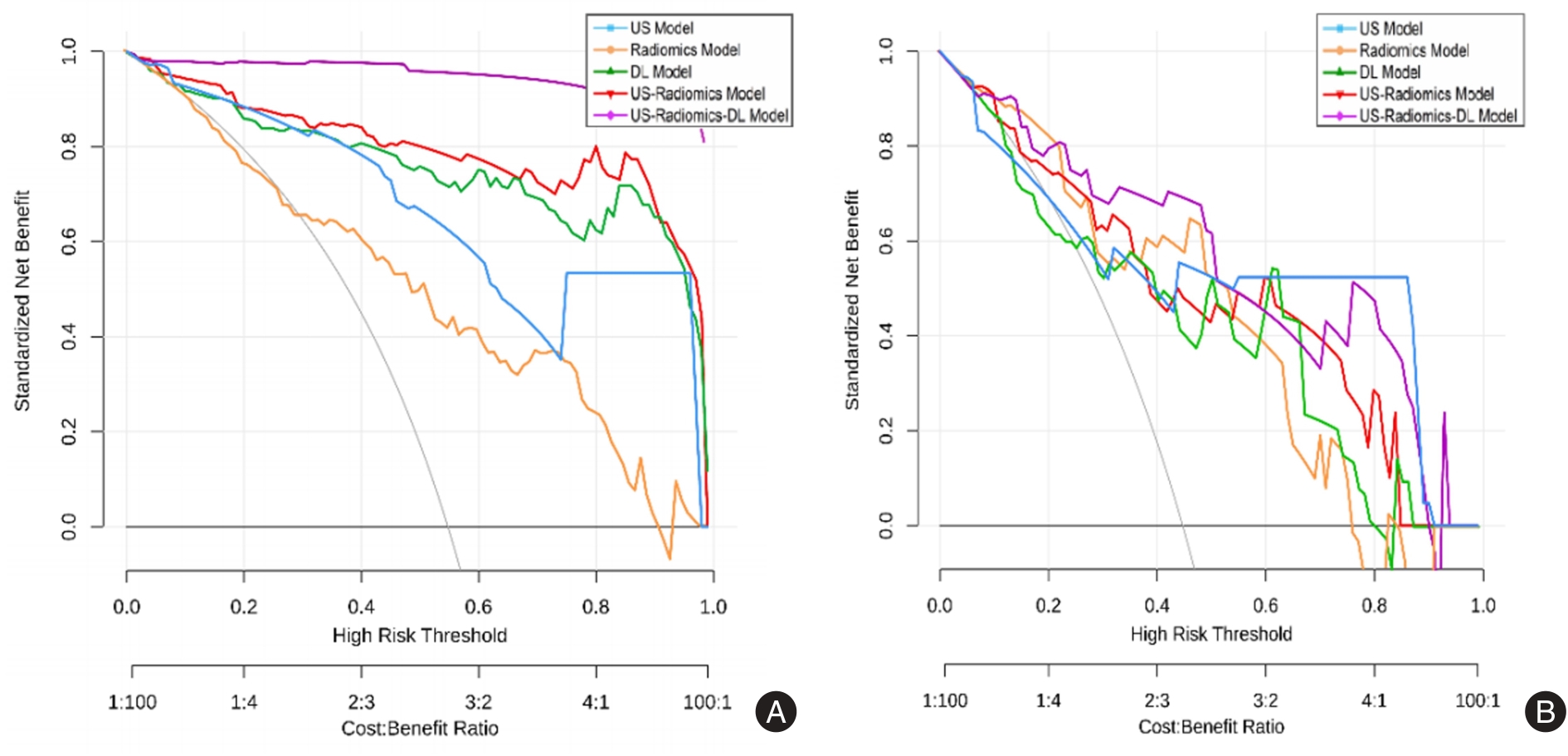
目的 构建并初步评价融合影像组学和深度学习特征的超声整合模型在类风湿关节炎(RA)疾病活动度客观评估的应用价值。 方法 纳入92例RA患者的184个受累关节,按8∶2分为训练集和测试集。经感兴趣区域勾画、特征提取筛选及关节切面声像图裁剪后,构建超声评分、影像组学、深度学习3个单一模型,及超声-影像组学、超声-影像组学-深度学习2个联合模型,应用受试者工作特征(ROC)曲线、曲线下面积(AUC)及临床决策(DCA)曲线评估模型性能。 结果 测试集中,相比单一特征的超声评分模型(AUC = 0.832,95%CI:0.709 ~ 0.954)、影像组学模型(AUC = 0.824,95%CI:0.701 ~ 0.947)或深度学习特征模型(AUC = 0.788,95%CI:0.642 ~ 0.933),超声-影像组学-深度学习联合模型(AUC = 0.901,95%CI:0.815 ~ 0.988)的性能最佳,拟合度较好(拟合度检验P > 0.05),DCA曲线分析表明在一定阈值内具有更大临床净收益。 结论 该多模态融合量化模型对RA疾病活动度评估效果较好,为未来RA的分层治疗策略制定与动态疗效监测奠定方法学基础。
中图分类号:
朱欣,梁杨标,肖雄,谢佳霖,朱俊燕,陈彦. 基于超声影像组学与深度学习的类风湿关节炎疾病活动度评估模型构建[J]. 实用医学杂志, 2026, 42(15): 2786-2797.
Xin ZHU,Yangbiao LIANG,Xiong XIAO,Jialin XIE,Junyan ZHU,Yan CHEN. Development of a disease activity assessment model for rheumatoid arthritis using ultrasound radiomics and deep learning[J]. The Journal of Practical Medicine, 2026, 42(15): 2786-2797.
表1
类风湿性关节炎评分表"
| 评分 | 滑膜增厚程度 | 增生滑膜的彩色多普勒信号等级 | 关节积液情况 |
|---|---|---|---|
| 0 | 滑膜无增厚 | 没有彩色多普勒信号 | 无积液 |
| 1 | 增生的滑膜不超过骨嵴连线,且其上表面呈凹陷状 | 在增生的滑膜内检测到3个点状血流信号,或2个点状血流信号加1个融合血流信号,或2个融合血流信号 | 轻度——仅在关节一侧出现积液 |
| 2 | 增生的骨膜超出骨嵴连线,且上表面的增生滑膜呈凹陷状 | 血流信号大于评分1,但血流信号面积小于增生滑膜面积的50% | 中度——关节周围可见积液,但未完全充满关节腔 |
| 3 | 增生的滑膜超出骨嵴连线,且其上表面呈凸面形态 | 血流信号等级超过评分2,且血流信号面积超过增生滑膜面积的50% | 重度——关节积液充满整个关节腔 |
表2
纳入患者的基线特征对比"
| 项目 | 总计 | RA活动度分级 | t/χ2 /Z值 | P值 | |
|---|---|---|---|---|---|
| 高活动度 | 中低活动度 | ||||
| 年龄( | 56.08 ± 12.80 | 59.58 ± 11.25 | 53.22 ± 13.38 | 2.390 | 0.019 |
| 性别/[例(%)] | 3.131 | 0.077 | |||
| 男 | 21(22.8) | 13(31.0) | 8(16.0) | ||
| 女 | 71(77.2) | 29(69.0) | 42(84.0) | ||
| 病程[M(P25,P75)]/年 | 5.25(0.81,10.00) | 7.00(0.92,12.50) | 4.00(0.63,10.00) | -1.477 | 0.140 |
表3
RA病变关节的超声声像图的评分特征 (例(%))"
| 变量 | RA活动度分级 | Z值 | P值 | 单因素分析 | ||
|---|---|---|---|---|---|---|
| 高活动度(n = 88) | 中低活动度(n = 96) | P值 | OR(95%CI) | |||
| 滑膜增厚程度 | -7.785 | < 0.001 | < 0.001 | 3.633(0.005 ~ 0.133) | ||
| 0分 | 0(0.0) | 2(2.0) | ||||
| 1分 | 1(1.1) | 36(37.5) | ||||
| 2分 | 2(69.5) | 57(59.3) | ||||
| 3分 | 29(32.9) | 1(1.0) | ||||
| 关节积液情况 | -6.319 | 0.04 | 0.062 | 0.489(0.367 ~ 1.025) | ||
| 0分 | 35(39.7) | 38(39.5) | ||||
| 1分 | 19(21.5) | 46(47.9) | ||||
| 2分 | 28(31.8) | 12(12.5) | ||||
| 3分 | 6(6.8) | 0(0.0) | ||||
| 增生滑膜血流情况 | -2.052 | < 0.001 | < 0.001 | 2.283(0.36 ~ 0.288) | ||
| 0分 | 0(0.0) | 27(28.1) | ||||
| 1分 | 60(68.1) | 63(65.6) | ||||
| 2分 | 25(28.4) | 6(6.2) | ||||
| 3分 | 3(3.4) | 0(0.0) | ||||
| 增生滑膜回声等级 | -3.887 | < 0.001 | 0.528 | 0.638(0.116 ~ 2.398) | ||
| 0分 | 0(0.0) | 2(2.0) | ||||
| 1分 | 70(79.5) | 91(94.7) | ||||
| 2分 | 18(20.4) | 3(3.1) | ||||
| 3分 | 0(0.0) | 0(0.0) | ||||
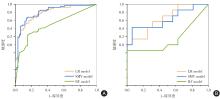
图1
预实验的ROC曲线注:A,测试集;B,训练集"
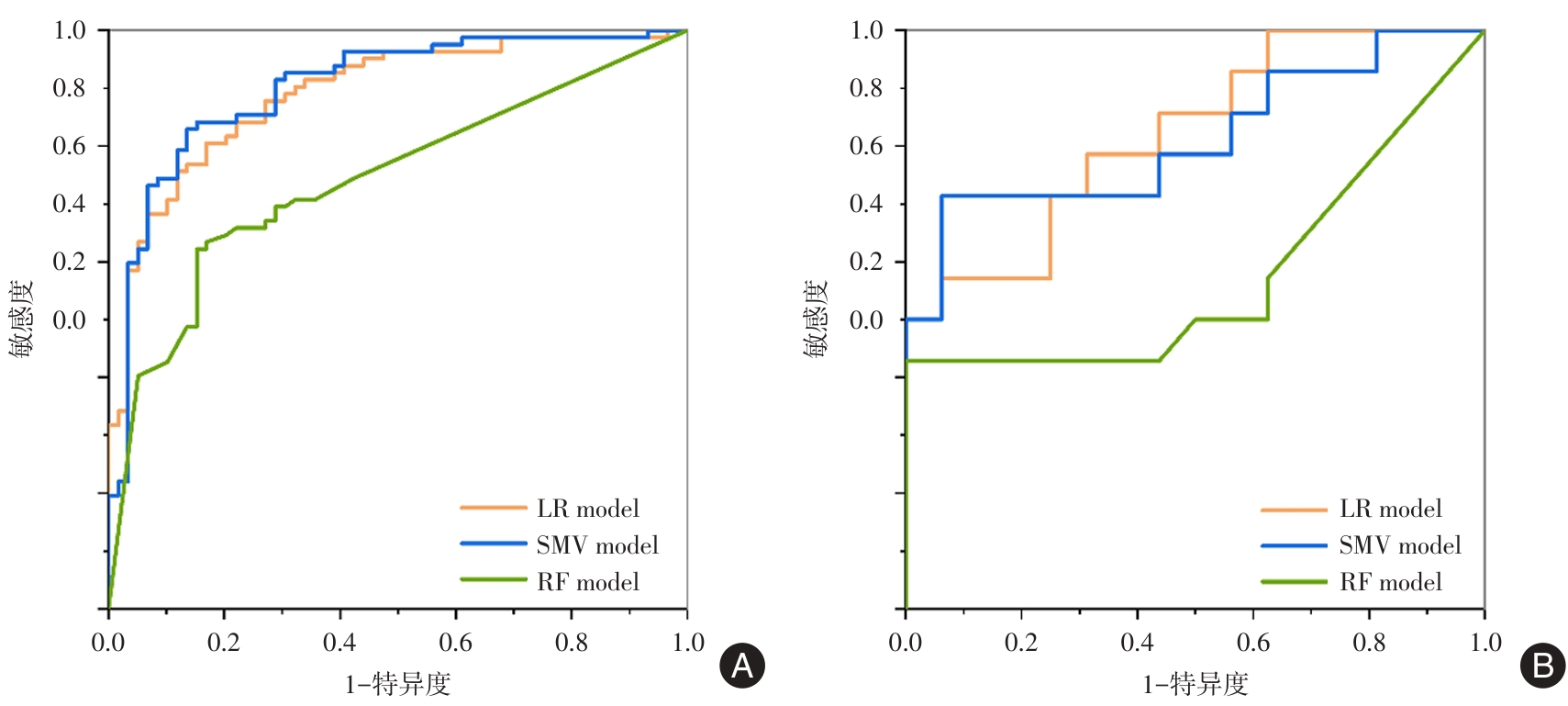
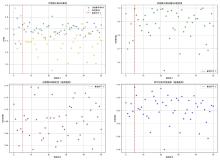
图2
随机种子的筛选过程"
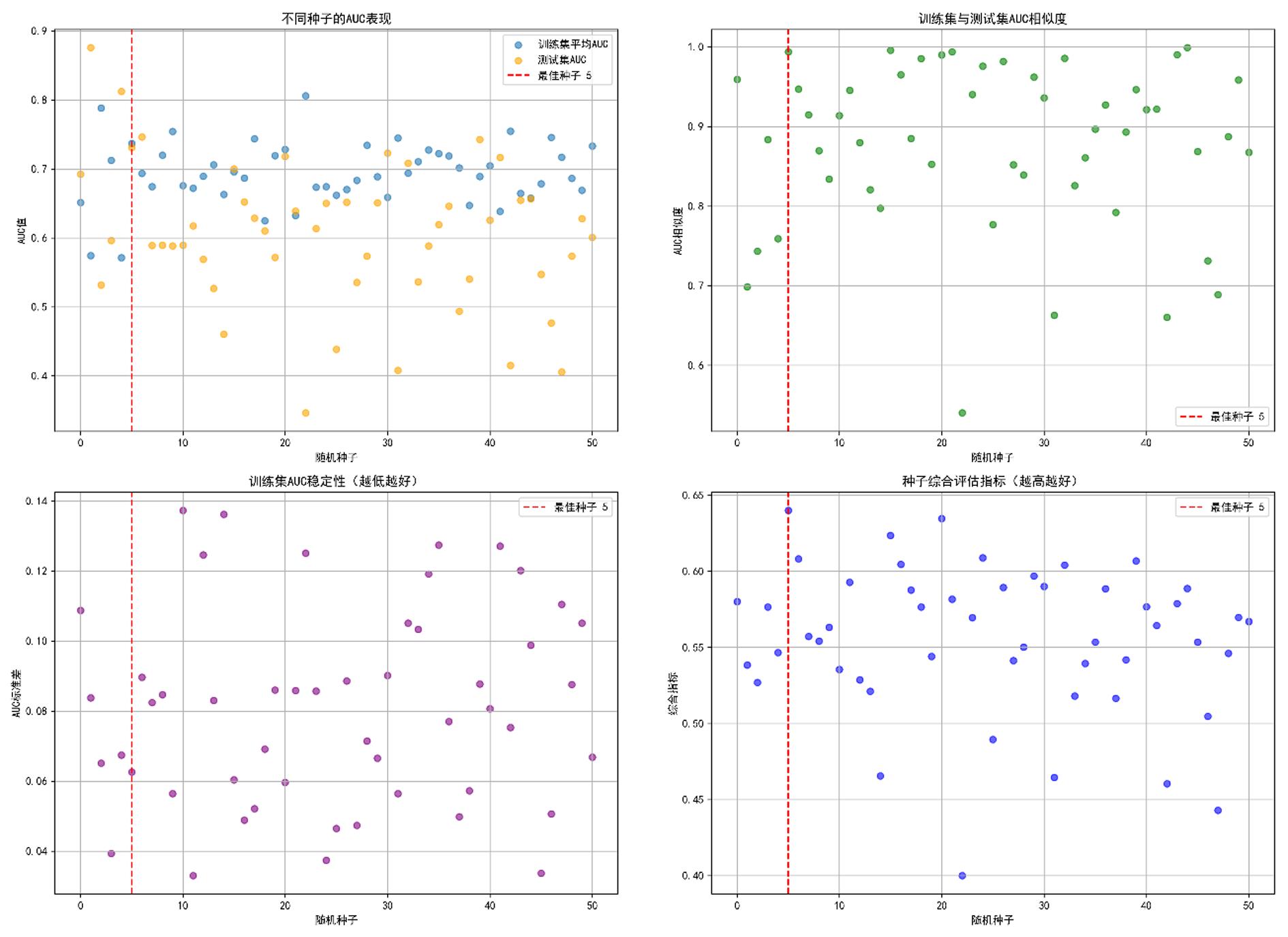
图3
各个模型的特征可视化"
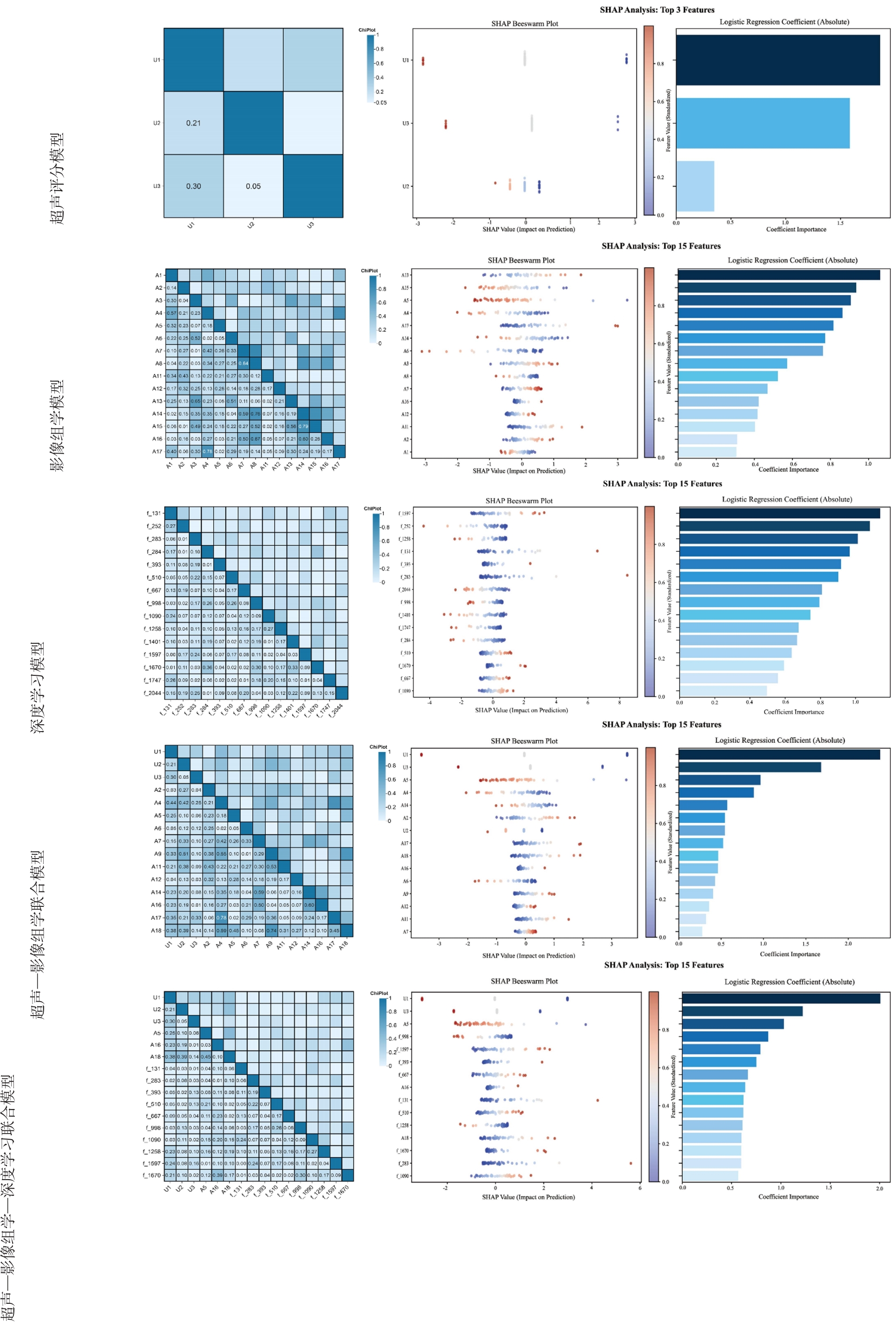
表4
RA活动度评价模型的诊断性能"
| 模型 | 数据集 | AUC(95%CI) | 敏感度 | 特异度 | 精确度 | F1指数 | 准确度 |
|---|---|---|---|---|---|---|---|
| 超声评分模型 | 训练集 | 0.909(0.864 ~ 0.954) | 0.96 | 0.677 | 0.783 | 0.862 | 0.832 |
| 测试集 | 0.832(0.709 ~ 0.954) | 0.667 | 0.885 | 0.824 | 0.737 | 0.787 | |
| 影像组学模型 | 训练集 | 0.788(0.711 ~ 0.864) | 0.773 | 0.677 | 0.744 | 0.758 | 0.730 |
| 测试集 | 0.824(0.701 ~ 0.947) | 0.810 | 0.808 | 0.773 | 0.791 | 0.809 | |
| 深度学习模型 | 训练集 | 0.944(0.908 ~ 0.98) | 0.853 | 0.903 | 0.914 | 0.883 | 0.876 |
| 测试集 | 0.788(0.642 ~ 0.933) | 0.619 | 0.962 | 0.929 | 0.743 | 0.809 | |
| 超声-影像组学模型 | 训练集 | 0.968(0.954 ~ 0.992) | 0.867 | 0.968 | 0.970 | 0.915 | 0.912 |
| 测试集 | 0.852(0.743 ~ 0.96) | 0.714 | 0.846 | 0.789 | 0.750 | 0.787 | |
| 超声-影像组学-深度学习联合模型 | 训练集 | 0.995(0.985 ~ 1.000) | 0.987 | 0.984 | 0.810 | 0.987 | 0.985 |
| 测试集 | 0.901(0.815 ~ 0.988) | 0.810 | 0.846 | 0.810 | 0.810 | 0.830 |
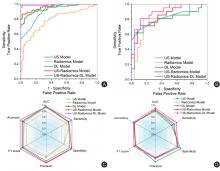
图4
5个模型的ROC曲线及诊断性能的雷达图注:A,训练集的ROC曲线图;B,测试集的ROC曲线图;C,训练集的诊断性能雷达图;D,测试集的诊断性能雷达图"
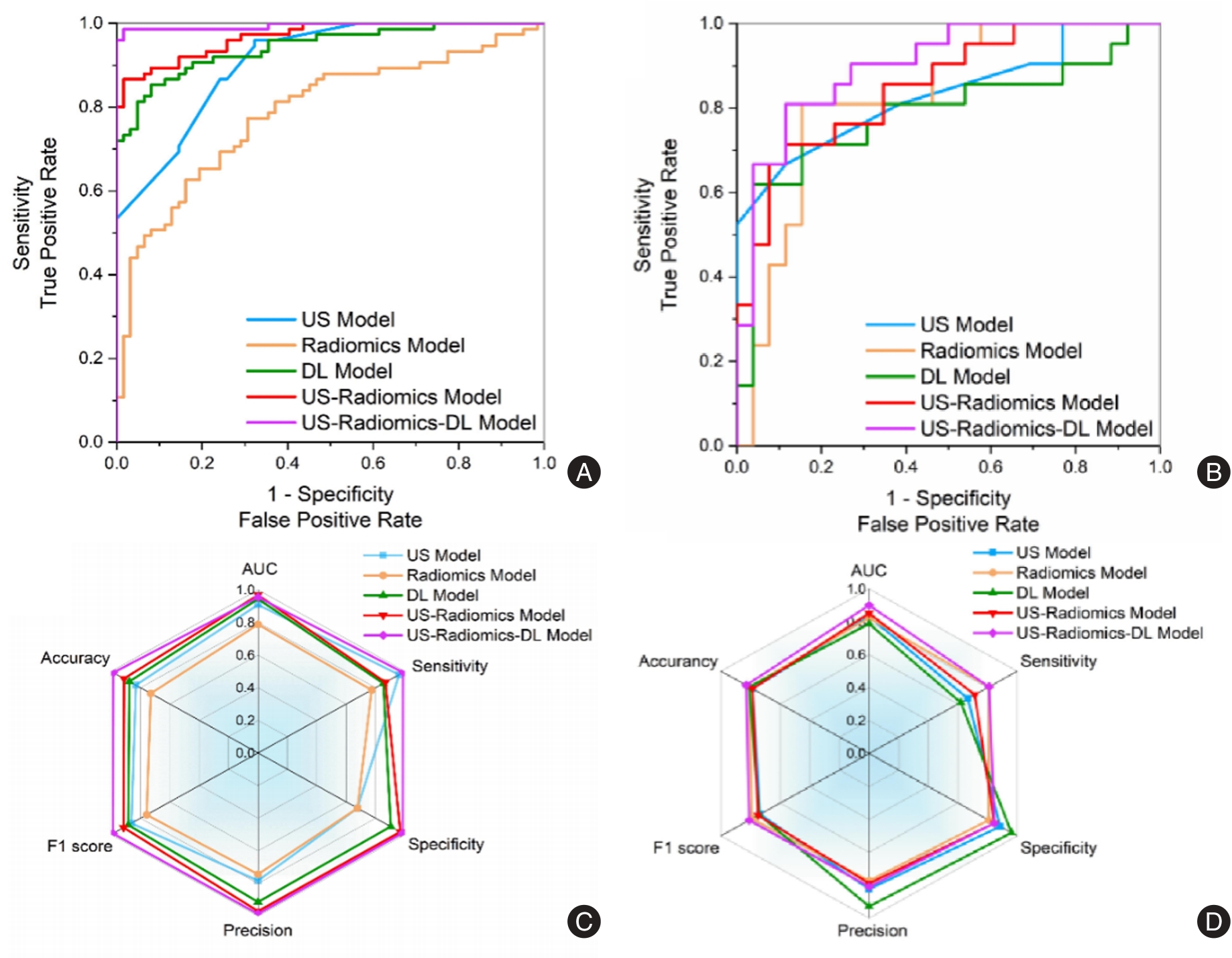
图5
5个模型的校准曲线注:A,测试集;B,训练集"
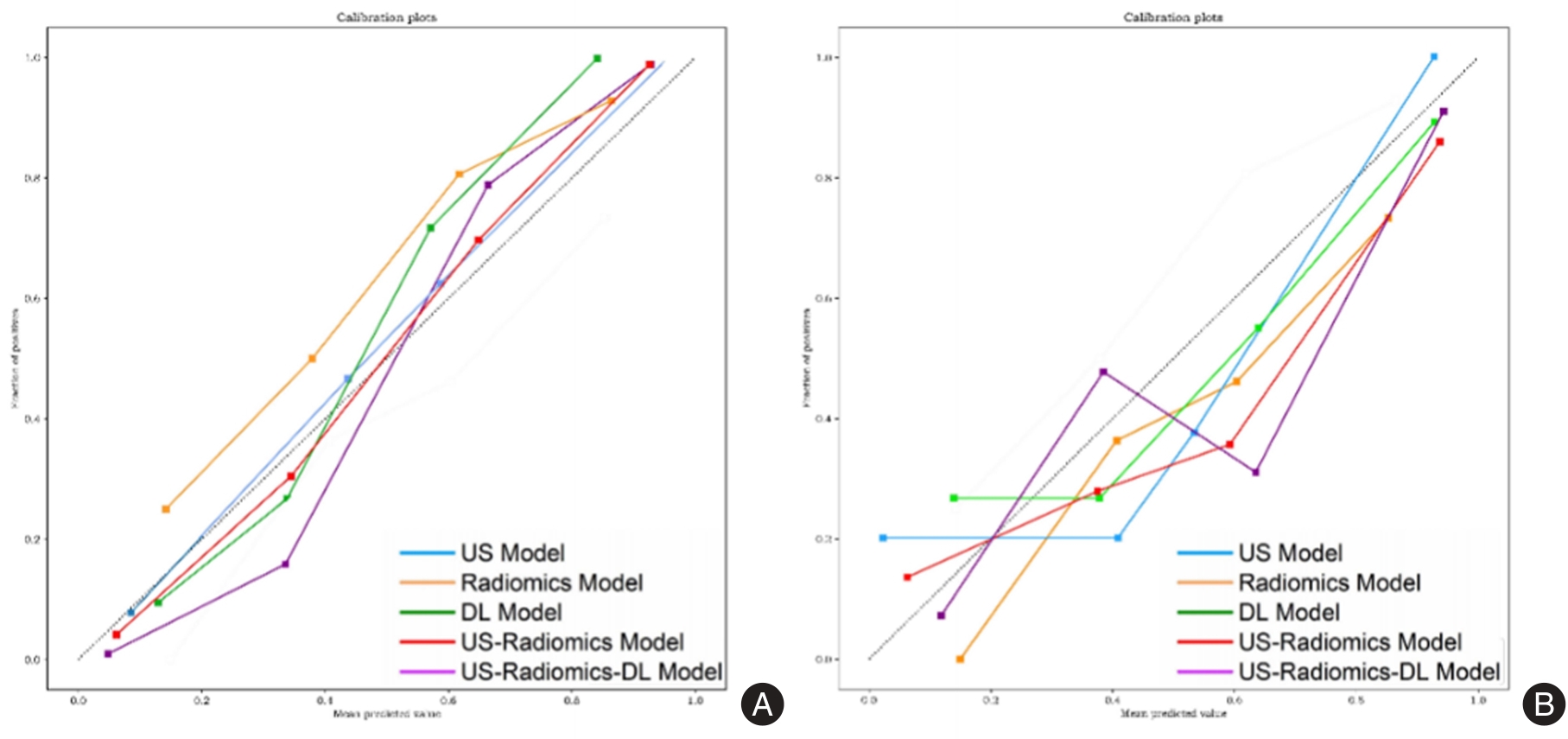
图6
5个RA活动度评价模型的决策曲线注:A,测试集;B,训练集"
| [1] |
KLARESKOG L, CATRINA A I, PAGET S. Rheumatoid arthritis[J]. Lancet, 2009, 373(9664): 659-672. doi:10.1016/S0140-6736(09)60008-8 .
doi: 10.1016/S0140-6736(09)60008-8 |
| [2] |
MCINNES I B, SCHETT G. The pathogenesis of rheumatoid arthritis[J]. N Engl J Med, 2011, 365(23): 2205-2219. doi:10.1056/nejmra1004965 .
doi: 10.1056/nejmra1004965 |
| [3] |
FINCKH A, GILBERT B, HODKINSON B, et al. Global epidemiology of rheumatoid arthritis[J]. Nat Rev Rheumatol, 2022, 18(10): 591-602. doi:10.1038/s41584-022-00827-y .
doi: 10.1038/s41584-022-00827-y |
| [4] |
VAN DER WOUDE D, VAN DER HELM-VAN MIL A H M. Update on the epidemiology, risk factors, and disease outcomes of rheumatoid arthritis[J]. Best Pract Res Clin Rheumatol, 2018, 32(2): 174-187. doi:10.1016/j.berh.2018.10.005 .
doi: 10.1016/j.berh.2018.10.005 |
| [5] |
ALETAHA D, SMOLEN J S. Diagnosis and management of rheumatoid arthritis: A review[J]. JAMA, 2018, 320(13): 1360-1372. doi:10.1001/jama.2018.13103 .
doi: 10.1001/jama.2018.13103 |
| [6] |
LI Z, WANG X Q. Clinical effect and biological mechanism of exercise for rheumatoid arthritis: A mini review[J]. Front Immunol, 2023, 13: 1089621. doi:10.3389/fimmu.2022.1089621 .
doi: 10.3389/fimmu.2022.1089621 |
| [7] |
FRAENKEL L, BATHON J M, ENGLAND B R, et al. 2021 American college of rheumatology guideline for the treatment of rheumatoid arthritis[J]. Arthritis Rheumatol, 2021, 73(7): 1108-1123. doi:10.1002/art.41752 .
doi: 10.1002/art.41752 |
| [8] |
BROWN P, PRATT A G, HYRICH K L. Therapeutic advances in rheumatoid arthritis[J]. Bmj, 2024, 384: e070856. doi:10.1136/bmj-2022-070856 .
doi: 10.1136/bmj-2022-070856 |
| [9] |
SMOLEN J S, BREEDVELD F C, BURMESTER G R, et al. Treating rheumatoid arthritis to target: 2014 update of the recommendations of an international task force[J]. Ann Rheum Dis, 2016, 75(1): 3-15. doi:10.1136/annrheumdis-2015-207524 .
doi: 10.1136/annrheumdis-2015-207524 |
| [10] |
ANDERSON J K, ZIMMERMAN L, CAPLAN L, et al. Measures of rheumatoid arthritis disease activity: Patient (PtGA) and Provider (PrGA) Global Assessment of Disease Activity, Disease Activity Score (DAS) and Disease Activity Score With 28-Joint Counts (DAS28), Simplified Disease Activity Index (SDAI), Clinical Disease Activity Index (CDAI), Patient Activity Score (PAS) and Patient Activity Score-II (PASII), Routine Assessment of Patient Index Data (RAPID), Rheumatoid Arthritis Disease Activity Index (RADAI) and Rheumatoid Arthritis Disease Activity Index-5 (RADAI-5), Chronic Arthritis Systemic Index (CASI), Patient-Based Disease Activity Score With ESR (PDAS1) and Patient-Based Disease Activity Score Without ESR (PDAS2), and Mean Overall Index for Rheumatoid Arthritis (MOI-RA)[J]. Arthritis Care Res, 2011, 63(S11): S14-S36. doi:10.1002/acr.20621 .
doi: 10.1002/acr.20621 |
| [11] |
ENGLAND B R, TIONG B K, BERGMAN M J, et al. 2019 update of the American college of rheumatology recommended rheumatoid arthritis disease activity measures[J]. Arthritis Care Res, 2019, 71(12): 1540-1555. doi:10.1002/acr.24042 .
doi: 10.1002/acr.24042 |
| [12] |
OHRNDORF S, BOER A C, BOETERS D M, et al. Do musculoskeletal ultrasound and magnetic resonance imaging identify synovitis and tenosynovitis at the same joints and tendons? A comparative study in early inflammatory arthritis and clinically suspect arthralgia[J]. Arthritis Res Ther, 2019, 21(1): 59. doi:10.1186/s13075-019-1824-z .
doi: 10.1186/s13075-019-1824-z |
| [13] |
KELLNER D A, MORRIS N T, LEE S M, et al. Clinical utility of ultrasound and MRI in rheumatoid arthritis: An expert review[J]. Best Pract Res Clin Rheumatol, 2025, 39(3): 102072. doi:10.1016/j.berh.2025.102072 .
doi: 10.1016/j.berh.2025.102072 |
| [14] |
耿研, 张卓莉. 影像学技术在类风湿关节炎诊治中的应用[J/OL]. 中国医学前沿杂志(电子版), 2020, 12(11): 13-18. doi:10.12037/YXQY.2020.11-04 .
doi: 10.12037/YXQY.2020.11-04 |
| [15] |
D’AGOSTINO M A, TERSLEV L, WAKEFIELD R, et al. Novel algorithms for the pragmatic use of ultrasound in the management of patients with rheumatoid arthritis: From diagnosis to remission[J]. Ann Rheum Dis, 2016, 75(11): 1902-1908. doi:10.1136/annrheumdis-2016-209646 .
doi: 10.1136/annrheumdis-2016-209646 |
| [16] |
YOSHIDA Y, HAMMER H B, SEXTON J, et al. How to score the wrist joint by ultrasound: Exploration of the most sensitive joint assessment during follow-up of early or established rheumatoid arthritis[J]. Arthritis Res Ther, 2025, 27(1): 200. doi:10.1186/s13075-025-03668-8 .
doi: 10.1186/s13075-025-03668-8 |
| [17] |
CATE D F TEN, LUIME J J, SWEN N, et al. Role of ultrasonography in diagnosing early rheumatoid arthritis and remission of rheumatoid arthritis - a systematic review of the literature[J]. Arthritis Res Ther, 2013, 15(1): R4. doi:10.1186/ar4132 .
doi: 10.1186/ar4132 |
| [18] |
马艳, 金莉, 李向培, 等. 高频超声在类风湿关节炎双手关节病变的应用价值[J]. 实用医学杂志, 2016, 32(11): 1810-1812. doi:10.3969/j.issn.1006-5725.2016.11.025 .
doi: 10.3969/j.issn.1006-5725.2016.11.025 |
| [19] |
COLEBATCH A N, EDWARDS C J, ØSTERGAARD M, et al. EULAR recommendations for the use of imaging of the joints in the clinical management of rheumatoid arthritis[J]. Ann Rheum Dis, 2013, 72(6): 804-814. doi:10.1136/annrheumdis-2012-203158 .
doi: 10.1136/annrheumdis-2012-203158 |
| [20] |
MÖLLER I, JANTA I, BACKHAUS M, et al. The 2017 EULAR standardised procedures for ultrasound imaging in rheumatology[J]. Ann Rheum Dis, 2017, 76(12): 1974-1979. doi:10.1136/annrheumdis-2017-211585 .
doi: 10.1136/annrheumdis-2017-211585 |
| [21] |
郭文静, 吕海霞, 彭锦锦, 等. 超声新型评分模型预测类风湿关节炎常规内科治疗短期疗效的临床价值[J]. 临床超声医学杂志, 2025, 27(7): 572-578. doi:10.3969/j.issn.1008-6978.2025. 07.009 .
doi: 10.3969/j.issn.1008-6978.2025. 07.009 |
| [22] |
TERSLEV L, ELLEGAARD K, CHRISTENSEN R, et al. Head-to-head comparison of quantitative and semi-quantitative ultrasound scoring systems for rheumatoid arthritis: Reliability, agreement and construct validity[J]. Rheumatology, 2012, 51(11): 2034-2038. doi:10.1093/rheumatology/kes124 .
doi: 10.1093/rheumatology/kes124 |
| [23] |
D′AGOSTINO M A, TERSLEV L, AEGERTER P, et al. Scoring ultrasound synovitis in rheumatoid arthritis: A EULAR-OMERACT ultrasound taskforce—Part 1: Definition and development of a standardised, consensus-based scoring system[J]. RMD Open, 2017, 3(1): e000428. doi:10.1136/rmdopen-2016-000428 .
doi: 10.1136/rmdopen-2016-000428 |
| [24] |
TERSLEV L, NAREDO E, AEGERTER P, et al. Scoring ultrasound synovitis in rheumatoid arthritis: A EULAR-OMERACT ultrasound taskforce-Part 2: Reliability and application to multiple joints of a standardised consensus-based scoring system[J]. RMD Open, 2017, 3(1): e000427. doi:10.1136/rmdopen-2016-000427 .
doi: 10.1136/rmdopen-2016-000427 |
| [25] |
GADEHOLT O. Forward to the past: Ultrasound might be necessary in some patients with rheumatoid arthritis[J]. Ann Rheum Dis, 2019, 78(6): e56. doi:10.1136/annrheumdis-2018-213278 .
doi: 10.1136/annrheumdis-2018-213278 |
| [26] |
LAMBIN P, RIOS-VELAZQUEZ E, LEIJENAAR R, et al. Radiomics: Extracting more information from medical images using advanced feature analysis[J]. Eur J Cancer, 2012, 48(4): 441-446. doi:10.1016/j.ejca.2011.11.036 .
doi: 10.1016/j.ejca.2011.11.036 |
| [27] |
LAMBIN P, LEIJENAAR R T H, DEIST T M, et al. Radiomics: The bridge between medical imaging and personalized medicine[J]. Nat Rev Clin Oncol, 2017, 14(12): 749-762. doi:10.1038/nrclinonc.2017.141 .
doi: 10.1038/nrclinonc.2017.141 |
| [28] |
GILLIES R J, KINAHAN P E, HRICAK H. Radiomics: Images are more than pictures, they are data[J]. Radiology, 2016, 278(2): 563-577. doi:10.1148/radiol.2015151169 .
doi: 10.1148/radiol.2015151169 |
| [29] |
TONG Y, ZHANG J, WEI Y, et al. Ultrasound-based radiomics analysis for preoperative prediction of central and lateral cervical lymph node metastasis in papillary thyroid carcinoma: A multi-institutional study[J]. BMC Med Imag, 2022, 22(1): 82. doi:10.1186/s12880-022-00809-2 .
doi: 10.1186/s12880-022-00809-2 |
| [30] |
MAO B, ZHANG L, NING P, et al. Preoperative prediction for pathological grade of hepatocellular carcinoma via machine learning-based radiomics[J]. Eur Radiol, 2020, 30(12): 6924-6932. doi:10.1007/s00330-020-07056-5 .
doi: 10.1007/s00330-020-07056-5 |
| [31] |
QI Y J, SU G H, YOU C, et al. Radiomics in breast cancer: Current advances and future directions[J]. Cell Rep Med, 2024, 5(9): 101719. doi:10.1016/j.xcrm.2024.101719 .
doi: 10.1016/j.xcrm.2024.101719 |
| [32] |
LITJENS G, KOOI T, BEJNORDI B E, et al. A survey on deep learning in medical image analysis[J]. Med Image Anal, 2017, 42: 60-88. doi:10.1016/j.media.2017.07.005 .
doi: 10.1016/j.media.2017.07.005 |
| [33] |
WANG H J, SU C P, LAI C C, et al. Deep learning-based computer-aided diagnosis of rheumatoid arthritis with hand X-ray images conforming to modified total sharp/van der heijde score[J]. Biomedicines, 2022, 10(6): 1355. doi:10.3390/biomedicines10061355 .
doi: 10.3390/biomedicines10061355 |
| [34] |
ANDERSEN J K H, PEDERSEN J S, LAURSEN M S, et al. Neural networks for automatic scoring of arthritis disease activity on ultrasound images[J]. RMD Open, 2019, 5(1): e000891. doi:10.1136/rmdopen-2018-000891 .
doi: 10.1136/rmdopen-2018-000891 |
| [35] |
YAN L, XU J, YE X, et al. Development and validation of ultrasound-based radiomics deep learning model to identify bone erosion in rheumatoid arthritis[J]. Clin Rheumatol, 2025, 44(7): 2635-2645. doi:10.1007/s10067-025-07481-1 .
doi: 10.1007/s10067-025-07481-1 |
| [36] |
HE X, WANG M, ZHAO C, et al. Deep learning-based automatic scoring models for the disease activity of rheumatoid arthritis based on multimodal ultrasound images[J]. Rheumatology, 2024, 63(3): 866-873. doi:10.1093/rheumatology/kead366 .
doi: 10.1093/rheumatology/kead366 |
| [37] |
VAN VOLLENHOVEN R. Treat-to-target in rheumatoid arthritis—are we there yet?[J]. Nat Rev Rheumatol, 2019, 15(3): 180-186. doi:10.1038/s41584-019-0170-5 .
doi: 10.1038/s41584-019-0170-5 |
| [38] |
CHIU Y M, CHEN D Y. Biological ageing: A promising target for prevention and management of rheumatoid arthritis[J]. Lancet Healthy Longev, 2024, 5(1): e6-e7. doi:10.1016/S2666-7568(23)00239-8 .
doi: 10.1016/S2666-7568(23)00239-8 |
| [39] |
GBD 2021 Rheumatoid Arthritis Collaborators.. Global, regional, and national burden of rheumatoid arthritis, 1990-2020, and projections to 2050: A systematic analysis of the Global Burden of Disease Study 2021[J]. Lancet Rheumatol, 2023, 5(10): e594-e610. doi:10.1016/S2665-9913(23)00211-4 .
doi: 10.1016/S2665-9913(23)00211-4 |
| [40] |
CASTRO A, DIAZ J, KUMAR S. FRI0007 Performance of musculoskeletal ultrasonography (MSUS) and optimal cutoff criteria for patients at risk for rheumatoid arthritis: A meta-analysis[J]. Ann Rheum Dis, 2018, 77: 550-551. doi:10.1136/annrheumdis-2018-eular.1752 .
doi: 10.1136/annrheumdis-2018-eular.1752 |
| [41] |
SILVAGNI E, ZANDONELLA CALLEGHER S, MAURIC E, et al. Musculoskeletal ultrasound for treating rheumatoid arthritis to target-a systematic literature review[J]. Rheumatology, 2022, 61(12): 4590-4602. doi:10.1093/rheumatology/keac261 .
doi: 10.1093/rheumatology/keac261 |
| [42] |
KONDO Y, SUZUKI K, INOUE Y, et al. Significant association between joint ultrasonographic parameters and synovial inflammatory factors in rheumatoid arthritis[J]. Arthritis Res Ther, 2019, 21(1): 14. doi:10.1186/s13075-018-1802-x .
doi: 10.1186/s13075-018-1802-x |
| [43] |
MCINNES I B, BUCKLEY C D, ISAACS J D. Cytokines in rheumatoid arthritis—shaping the immunological landscape[J]. Nat Rev Rheumatol, 2016, 12(1): 63-68. doi:10.1038/nrrheum. 2015.171 .
doi: 10.1038/nrrheum. 2015.171 |
| [44] |
WRIGHT H L, LYON M, CHAPMAN E A, et al. Rheumatoid arthritis synovial fluid neutrophils drive inflammation through production of chemokines, reactive oxygen species, and neutrophil extracellular traps[J]. Front Immunol, 2021, 11: 584116. doi:10.3389/fimmu.2020.584116 .
doi: 10.3389/fimmu.2020.584116 |
| [45] |
BURKE C J, ALIZAI H, BELTRAN L S, et al. MRI of synovitis and joint fluid[J]. J Magn Reson Imag, 2019, 49(6): 1512-1527. doi:10.1002/jmri.26618 .
doi: 10.1002/jmri.26618 |
| [46] |
KISO T, OKADA Y, KAWATA S, et al. Ultrasound-based radiomics and machine learning for enhanced diagnosis of knee osteoarthritis: Evaluation of diagnostic accuracy, sensitivity, specificity, and predictive value[J]. Eur J Radiol Open, 2025, 14: 100649. doi:10.1016/j.ejro.2025.100649 .
doi: 10.1016/j.ejro.2025.100649 |
| [47] |
LIN M, YAN L, HE M, et al. Development and validation of an ultrasound-based clinical radiomics nomogram for diagnosing gouty arthritis[J]. Ultrasound Med Biol, 2025, 51(4): 650-660. doi:10.1016/j.ultrasmedbio.2024.12.009 .
doi: 10.1016/j.ultrasmedbio.2024.12.009 |
| [48] |
BOESEN M, KUBASSOVA O, BOUERT R, et al. Correlation between computer-aided dynamic gadolinium-enhanced MRI assessment of inflammation and semi-quantitative synovitis and bone marrow oedema scores of the wrist in patients with rheumatoid arthritis—a cohort study[J]. Rheumatology (Oxford), 2012, 51(1): 134-143. doi:10.1093/rheumatology/ker220 .
doi: 10.1093/rheumatology/ker220 |
| [49] |
YU F H, MIAO S M, LI C Y, et al. Pretreatment ultrasound-based deep learning radiomics model for the early prediction of pathologic response to neoadjuvant chemotherapy in breast cancer[J]. Eur Radiol, 2023, 33(8): 5634-5644. doi:10.1007/s00330-023-09555-7 .
doi: 10.1007/s00330-023-09555-7 |
| [50] |
AGYEKUM E A, KONG W, AGYEKUM D N, et al. Ultrasound derived deep learning features for predicting axillary lymph node metastasis in breast cancer using graph convolutional networks in a multicenter study[J]. Sci Rep, 2025, 15: 27796. doi:10.1038/s41598-025-13086-0 .
doi: 10.1038/s41598-025-13086-0 |
| [51] |
罗为尧, 范誉铧, 黎一夫, 等. 基于深度学习超声模型对乳腺癌分子分型与新辅助治疗早期最佳疗效时机的预测[J]. 实用医学杂志, 2026, 42(9): 1501-1510. doi: 10.3969/j.issn.1006-5725.2026.09.003 .
doi: 10.3969/j.issn.1006-5725.2026.09.003 |
| [52] |
REYES M, MEIER R, PEREIRA S, et al. On the interpretability of artificial intelligence in radiology: Challenges and opportunities[J]. Radiol Artif Intell, 2020, 2(3): e190043. doi:10.1148/ryai.2020190043 .
doi: 10.1148/ryai.2020190043 |
| [53] |
WU L, LI S, WU C, et al. Ultrasound-based deep learning radiomics nomogram for differentiating mass mastitis from invasive breast cancer[J]. BMC Med Imag, 2024, 24(1): 189. doi:10.1186/s12880-024-01353-x .
doi: 10.1186/s12880-024-01353-x |
| [54] |
LIANG W, YU H, DUAN L, et al. MRI-based 2.5D deep learning radiomics nomogram for the differentiation of benign versus malignant vertebral compression fractures[J/OL]. Frontiers in Oncology, 2025, 15: 1603672[2025-08-11]. doi:10.3389/fonc. 2025.1603672 .
doi: 10.3389/fonc. 2025.1603672 |
| [55] |
杜阳春, 郑红雨, 陈海宁, 等. 深度学习超声影像组学列线图模型鉴别Ⅰ和Ⅱ型上皮性卵巢癌[J]. 实用医学杂志, 2025, 41(18): 2920-2927. doi:10.3969/j.issn.1006-5725.2025.18.020 .
doi: 10.3969/j.issn.1006-5725.2025.18.020 |
| [1] | 钟佳倩,谢晓燕,郑艳玲. 多模态超声与人工智能在乳腺癌早期诊断与预后预测中的应用进展[J]. 实用医学杂志, 2026, 42(9): 1491-1500. |
| [2] | 罗为尧,范誉铧,黎一夫,陈娟,邓勇杰,柳建华,胡志文,马穗红. 基于深度学习超声模型对乳腺癌分子分型与新辅助治疗早期最佳疗效时机的预测[J]. 实用医学杂志, 2026, 42(9): 1501-1510. |
| [3] | 彭雄强,汤盼,黄炜贤,张建兴. 基于瘤内及瘤周超声特征预测甲状腺微小乳头状癌中央区淋巴结转移模型构建及验证[J]. 实用医学杂志, 2026, 42(9): 1570-1578. |
| [4] | 仇晓蕊,张译丹,杨国锋. 多模态人工智能在阿尔茨海默病早期诊断中的应用:现状、挑战与临床转化路径[J]. 实用医学杂志, 2026, 42(9): 1579-1585. |
| [5] | 陈钢彬,郑海生,马贵洲,倪楚民,何新界,蔡典煜,蔡志雄. 超声两点预定位辅助腋静脉穿刺在心脏起搏器植入中应用的有效性和安全性[J]. 实用医学杂志, 2026, 42(9): 1635-1641. |
| [6] | 贺崇,张勇跃,王淑敏. 甲状腺滤泡源性肿瘤超声诊断的难点及研究进展[J]. 实用医学杂志, 2026, 42(7): 1165-1170. |
| [7] | 陈丽红,陈惠春,冯斯奕. 超声造影肝脏影像报告与数据系统调整分类在≤ 5 cm肝细胞癌中的诊断价值[J]. 实用医学杂志, 2026, 42(7): 1177-1182. |
| [8] | 尹晶,张平洋,汪珺莉,尹薇薇,储小爱,赵文燕. 基于超声影像组学、O-RADS分类与临床因素的卵巢肿瘤诊断模型[J]. 实用医学杂志, 2026, 42(7): 1192-1200. |
| [9] | 王君,李强,郑业英,周媛,缪娟,刘琳. 超声引导下肌筋膜触发点针刺联合常规西医治疗原发性痛经的临床疗效观察[J]. 实用医学杂志, 2026, 42(7): 1280-1285. |
| [10] | 赵碧晴,朱宇莉,刘海荣,殷培培,刘菲菲,刘灿,王坤. 超声衰减分析技术定量评估代谢相关脂肪性肝病脂肪变性的价值[J]. 实用医学杂志, 2026, 42(6): 1008-1017. |
| [11] | 吴胜利,谢爱霞,雒肖艳,赵岩,王福刚,伊力哈木·吐尼亚孜null. 促甲状腺激素受体抗体滴度动态变化联合甲状腺超声弹性成像对Graves病复发风险的预警价值[J]. 实用医学杂志, 2026, 42(6): 991-998. |
| [12] | 相佳宁,钟华,任嘉毅,刘珂如,李文睿,曹志斌. 门诊应用负压微引流联合超声清创治疗糖尿病足溃疡的疗效[J]. 实用医学杂志, 2026, 42(5): 824-830. |
| [13] | 胡能,申江华,姚美,赵欣黔. 肺超声及临床指标的列线图模型对儿童重症支原体肺炎预后的评估[J]. 实用医学杂志, 2026, 42(5): 869-877. |
| [14] | 殷国江,黄维,桂交交,王文杰,王思佳,宋晓阳,黎笔熙. 超声引导前路胸膜外间隙阻滞在机器人辅助胸腔镜肺手术中的应用[J]. 实用医学杂志, 2026, 42(4): 626-632. |
| [15] | 吴婷,夏明忠,余相地. 静脉输注利多卡因治疗类风湿关节炎疼痛的机制与临床前景[J]. 实用医学杂志, 2026, 42(3): 355-362. |
| 阅读次数 | ||||||
|
全文 |
|
|||||
|
摘要 |
|
|||||
