实用医学杂志 ›› 2026, Vol. 42 ›› Issue (13): 2396-2403.doi: 10.3969/j.issn.1006-5725.2026.13.016

• 慢性病防治专栏 • 上一篇    

基于超声检出痛风石的骨侵蚀风险预测列线图模型的构建与验证

娄君鸽,史海宏,郭丽,赵雪琪,闫媛媛()   

  1. 郑州大学附属郑州中心医院超声医学科 (河南 郑州 450007 )
  • 收稿日期:2026-04-28 出版日期:2026-07-10 发布日期:2026-07-14
  • 通讯作者: 闫媛媛 E-mail:yanyuanyuan1974@126.com
  • 基金资助:
    郑州市医学科研项目(ZZYK2024038)

Construction and validation of a nomogram model for predicting bone erosion risk based on ultrasound-detected tophi

Junge LOU,Haihong SHI,Li GUO,Xueqi ZHAO,Yuanyuan YAN()   

  1. Department of Ultrasound Medicine,Zhengzhou Central Hospital Affiliated to Zhengzhou University,Zhengzhou 450007,Henan,China
  • Received:2026-04-28 Online:2026-07-10 Published:2026-07-14
  • Contact: Yuanyuan YAN E-mail:yanyuanyuan1974@126.com

摘要:

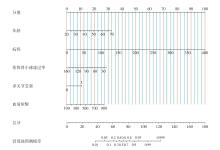
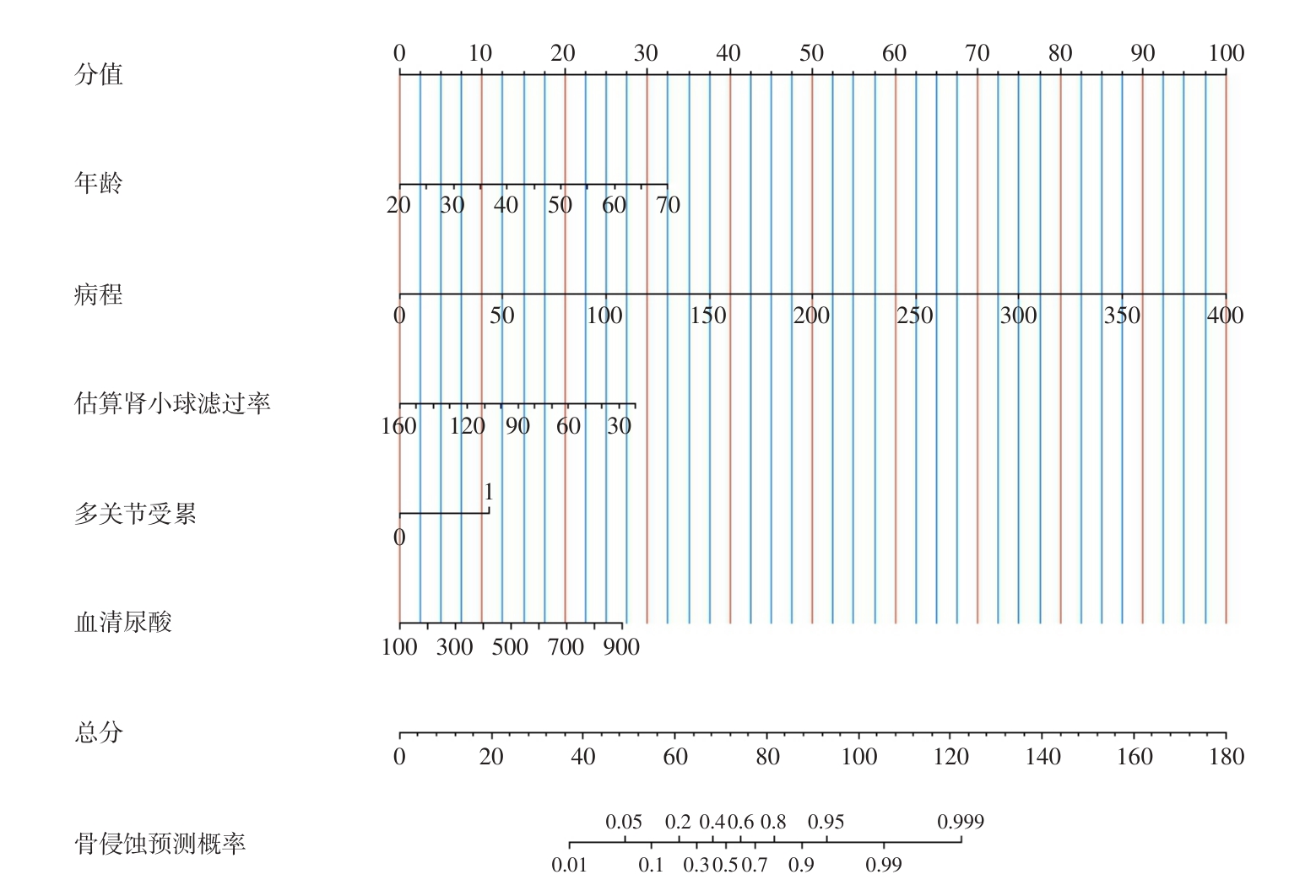
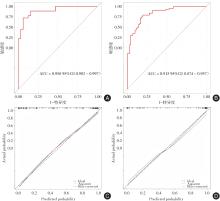
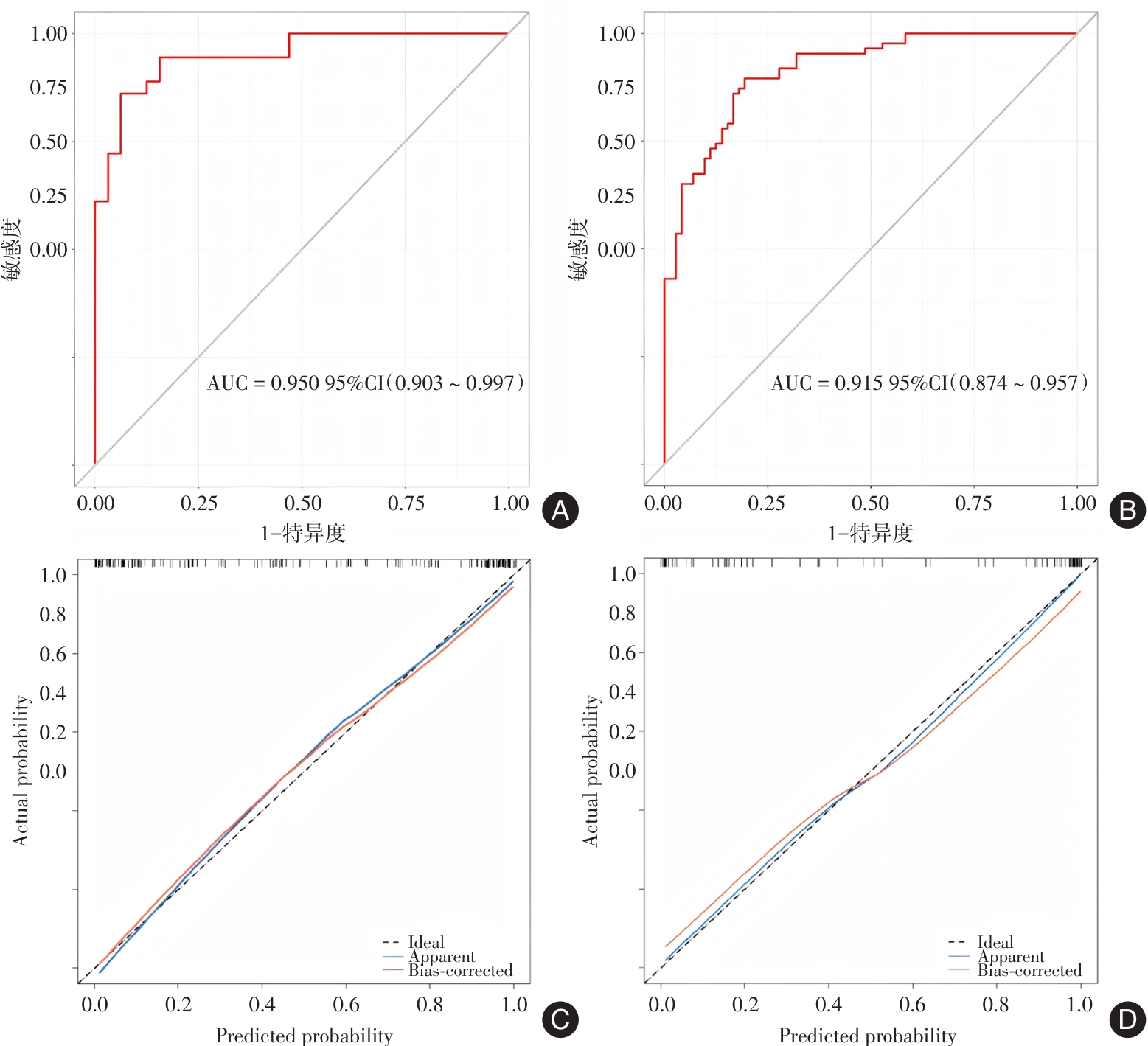
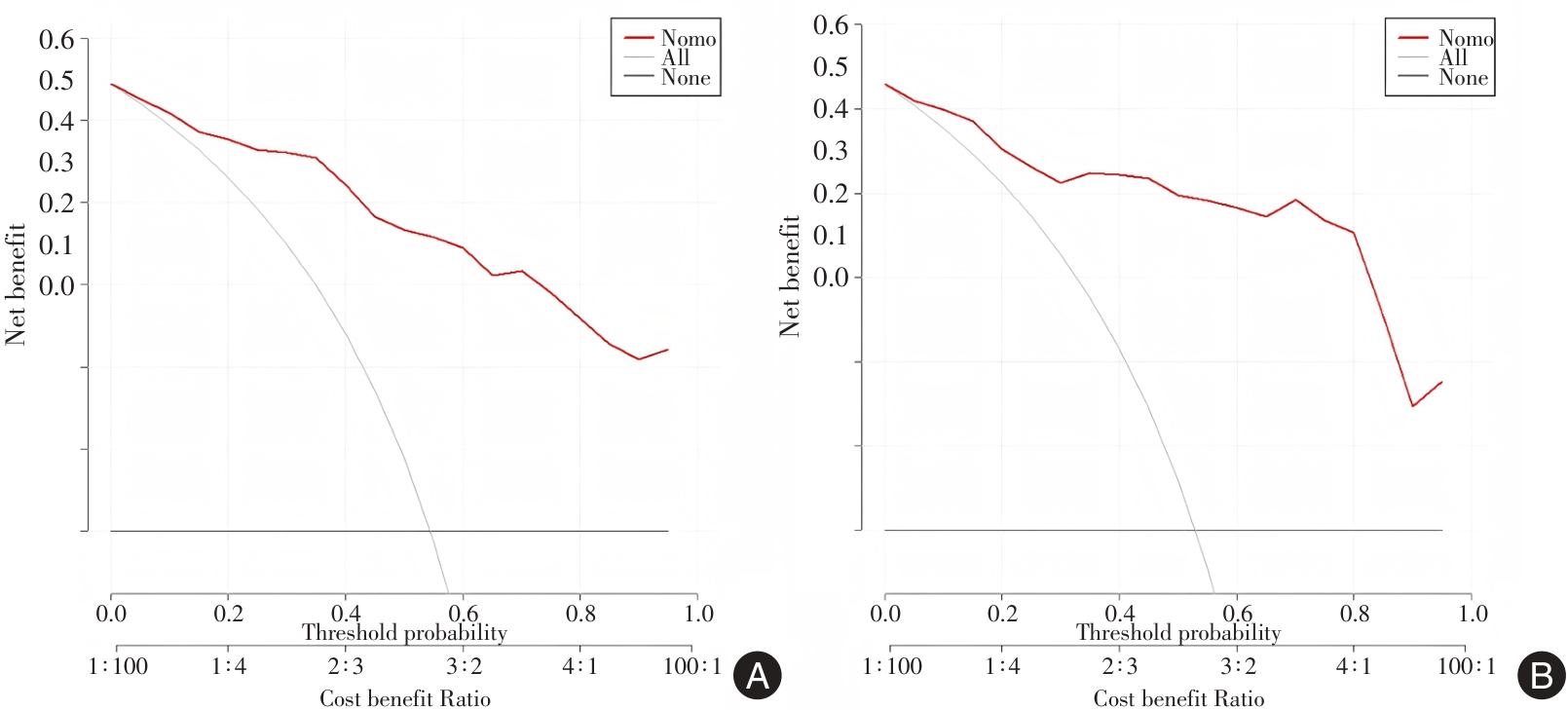
目的 探讨超声检出痛风石患者合并骨侵蚀的临床相关因素,并构建及内部验证列线图风险评估模型。 方法 回顾性收集2022年1月至2025年10月郑州大学附属郑州中心医院接受肌骨超声检查并检出痛风石的226例痛风患者临床资料,以是否合并骨侵蚀为结局指标,收集患者一般资料、病史资料及实验室指标。按7∶3比例将患者随机分为训练集和内部验证集。采用单因素分析筛选候选变量,多因素logistic回归分析超声检出痛风石患者合并骨侵蚀的独立相关因素,并据此构建列线图模型;采用受试者工作特征(ROC)曲线评价模型区分度,采用校准曲线及Hosmer-Lemeshow检验评价模型校准度和拟合度,采用决策曲线分析(DCA)评价模型临床应用价值。 结果 骨侵蚀组年龄更大、病程更长、血清尿酸水平更高、多关节受累比例更高,估算肾小球滤过率(eGFR)及白蛋白水平均更低(均P 0.05)。多因素logistic回归分析显示,年龄、病程、多关节受累、血清尿酸水平是痛风石患者合并骨侵蚀的独立危险因素,eGFR则是保护因素。基于上述因素构建列线图模型,ROC曲线显示,该模型在训练集和内部验证集中的AUC分别为0.950(95%CI:0.903 ~ 0.997)、0.915(95%CI:0.874 ~ 0.957)。校准曲线显示模型预测概率与实际发生概率一致性尚可;Hosmer-Lemeshow拟合优度检验显示,训练集和内部验证集模型拟合可接受(χ2 = 5.164、3.353,P = 0.740、0.910)。DCA显示,该模型在一定阈值概率范围内具有一定临床净获益。 结论 年龄增大、病程延长、多关节受累、血清尿酸水平较高及估算肾小球滤过率降低与超声检出痛风石患者合并骨侵蚀独立相关。基于上述因素构建的列线图模型具有一定的预测效能,可为临床风险评估和分层管理提供参考。

关键词: 痛风, 痛风石, 骨侵蚀, 超声检查, 列线图

Abstract:

Objective To investigate the clinical factors associated with bone erosion in patients with tophi detected by ultrasound and to construct and internally validate a nomogram-based risk assessment model. Methods Clinical data of 226 gout patients who underwent musculoskeletal ultrasonography and were diagnosed with tophi at Zhengzhou Central Hospital Affiliated to Zhengzhou University from January 2022 to October 2025 were retrospectively collected. The presence of bone erosion was set as the outcome variable. General characteristics, medical history, and laboratory indicators of these patients were collected. Subsequently, the patients were randomly divided into a training set and an internal validation set at a ratio of 7∶3. Univariate analysis was carried out to screen candidate variables, and multivariate logistic regression analysis was employed to identify independent factors associated with bone erosion in patients with ultrasound-detected tophi. Based on these factors, a nomogram model was constructed. The discriminatory ability of the model was evaluated through receiver operating characteristic (ROC) curve analysis. Calibration and goodness of fit were respectively assessed by using calibration curves and the Hosmer-Lemeshow test. Decision curve analysis (DCA) was utilized to evaluate the clinical utility of the model. Results The bone erosion group was characterized by an older age, a longer disease duration, higher serum uric acid levels, a higher proportion of polyarticular involvement, and lower estimated glomerular filtration rate and albumin levels compared to the non-bone erosion group; all these differences were statistically significant (all P 0.05). Multivariate logistic regression analysis revealed that an older age, a longer disease duration, polyarticular involvement, higher serum uric acid levels, and a lower estimated glomerular filtration rate were independently associated with bone erosion in patients with ultrasound-detected tophi. A nomogram model was constructed based on these factors. Receiver operating characteristic curve analysis demonstrated that the areas under the curve of the model were 0.950 (95%CI: 0.903 - 0.997) in the training set and 0.915 (95%CI: 0.874 - 0.957) in the internal validation set, indicating that the model had a certain discriminative ability within this cohort. The calibration curve showed an acceptable agreement between the predicted and observed probabilities. The Hosmer-Lemeshow goodness-of-fit test indicated an acceptable model fit in both the training and internal validation sets (χ2 = 5.164 and 3.353, respectively; P = 0.740 and 0.910, respectively). Decision curve analysis showed that the model had a certain clinical net benefit within a range of threshold probabilities. Conclusions Advanced age, extended disease duration, polyarticular involvement, elevated serum uric acid levels, and reduced estimated glomerular filtration rate were independently associated with bone erosion in patients with ultrasound-detected tophi. The nomogram model constructed based on these factors exhibited a certain degree of predictive value and could offer a reference for clinical risk assessment and stratified management.

Key words: gout, tophi, bone erosion, ultrasonography, nomograms

中图分类号: