

The Journal of Practical Medicine ›› 2026, Vol. 42 ›› Issue (3): 416-424.doi: 10.3969/j.issn.1006-5725.2026.03.008
• Chronic Disease Control • Previous Articles
Lili FAN,Hongmin LI,Kan ZHOU,Bo XU( )
)
Received:2025-09-05
Online:2026-02-10
Published:2026-02-09
Contact:
Bo XU
E-mail:xubo2010@outlook.com
CLC Number:
Lili FAN,Hongmin LI,Kan ZHOU,Bo XU. Analysis of the diagnostic efficacy of fat liver index in the screening of metabolic dysfunction-related fatty liver diseases[J]. The Journal of Practical Medicine, 2026, 42(3): 416-424.

Tab.1
Comparison of baseline data and FLI between MASLD and Non-MASLD groups"
| 项目 | MASLD组(n = 109) | 非MASLD组(n = 109) | t/χ2值 | P值 |
|---|---|---|---|---|
| 年龄/岁 | 49.20 ± 9.98 | 47.15 ± 9.74 | 1.539 | 0.125 |
| 性别/[例(%)] | 3.604 | 0.058 | ||
| 男 | 64(58.72) | 50(45.87) | ||
| 女 | 45(41.28) | 59(54.13) | ||
| 受教育程度/[例(%)] | 1.009 | 0.604 | ||
| 小学及以下 | 18(16.51) | 15(13.76) | ||
| 高中及初中 | 52(47.71) | 48(44.04) | ||
| 大专及以上 | 39(35.78) | 46(42.20) | ||
| 吸烟史/[例(%)] | 5.887 | 0.015 | ||
| 是 | 38(34.86) | 22(20.18) | ||
| 否 | 71(65.14) | 87(79.82) | ||
| 饮酒史/[例(%)] | 2.755 | 0.097 | ||
| 是 | 28(25.69) | 18(16.51) | ||
| 否 | 81(74.31) | 91(83.49) | ||
| 高血压/[例(%)] | 9.920 | 0.002 | ||
| 是 | 58(53.21) | 35(32.11) | ||
| 否 | 51(46.79) | 74(67.89) | ||
| T2DM/[例(%)] | 13.246 | 0.000 | ||
| 是 | 42(38.53) | 18(16.51) | ||
| 否 | 67(61.47) | 91(83.49) | ||
| 高脂血症/[例(%)] | 3.328 | 0.068 | ||
| 是 | 67(61.47) | 51(46.79) | ||
| 否 | 42(38.53) | 58(53.21) | ||
| 收缩压/mmHg | 134.12 ± 19.4 | 125.03 ± 18.19 | 3.568 | < 0.001 |
| 舒张压/mmHg | 83.22 ± 10.05 | 75.96 ± 10.21 | 5.289 | < 0.001 |
| WC/cm | 88.35 ± 10.28 | 75.00 ± 7.94 | 10.730 | < 0.001 |
| BMI/(kg/m2) | 26.8 ± 3.04 | 23.41 ± 2.53 | 8.944 | < 0.001 |
| FPG/(mmol/L) | 6.18 ± 1.90 | 5.07 ± 0.83 | 5.602 | < 0.001 |
| HbA1c/% | 6.51 ± 1.56 | 5.57 ± 0.86 | 5.546 | < 0.001 |
| FINS(mU/L) | 16.43 ± 8.64 | 14.16 ± 4.34 | 2.456 | < 0.001 |
| TG/(mg/dL) | 191.12 ± 85.72 | 94.31 ± 43.11 | 10.535 | < 0.001 |
| TC/(mmol/L) | 5.27 ± 0.96 | 4.76 ± 1.00 | 3.826 | < 0.001 |
| HDL-C/(mmol/L) | 1.10 ± 0.28 | 1.04 ± 0.22 | 1.596 | 0.112 |
| LDL-C/(mmol/L) | 3.24 ± 0.85 | 3.54 ± 0.82 | 2.698 | 0.008 |
| hs-CRP/(mg/L) | 3.77 ± 2.27 | 1.89 ± 1.12 | 7.789 | < 0.001 |
| GGT/(U/L) | 53.06 ± 25.26 | 26.35 ± 15.34 | 9.439 | < 0.001 |
| ALT/(U/L) | 43.53 ± 27.38 | 24.28 ± 9.77 | 6.913 | < 0.001 |
| AST/(U/L) | 36.56 ± 17.99 | 25.95 ± 9.05 | 5.503 | < 0.001 |
| TBIL/(μmol/L) | 16.33 ± 6.03 | 10.84 ± 4.69 | 7.502 | < 0.001 |
| DBIL/(μmol/L) | 4.26 ± 1.83 | 4.58 ± 1.60 | 1.370 | 0.172 |
| ALB/(g/L) | 42.80 ± 3.74 | 44.72 ± 3.44 | 3.949 | < 0.001 |
| PA/(mg/L) | 265.48 ± 48.20 | 297.08 ± 29.73 | 5.827 | < 0.001 |
| FLI | 65.13 ± 23.61 | 29.00 ± 16.95 | 12.977 | < 0.001 |
Tab.2
Comparison of baseline data and FLI between MASLD patients with and without T2DM"
| 项目 | T2DM组(n = 42) | 非T2DM组(n = 67) | t/χ2值 | P值 |
|---|---|---|---|---|
| 年龄/岁 | 52.33 ± 8.63 | 47.24 ± 10.32 | 2.667 | 0.009 |
| 性别/[例(%)] | 0.287 | 0.592 | ||
| 男 | 26(61.90) | 38(56.72) | ||
| 女 | 16(38.10) | 29(43.28) | ||
| 受教育程度/[例(%)] | 1.201 | 0.549 | ||
| 小学及以下 | 9(21.40) | 9(13.40) | ||
| 高中及初中 | 19(45.20) | 33(49.30) | ||
| 大专及以上 | 14(33.30) | 25(37.30) | ||
| 吸烟史/[例(%)] | 0.314 | 0.575 | ||
| 是 | 16(38.10) | 22(32.84) | ||
| 否 | 26(61.90) | 45(67.16) | ||
| 饮酒史/[例(%)] | 0.992 | 0.319 | ||
| 是 | 13(30.95) | 15(22.39) | ||
| 否 | 29(69.05) | 52(77.61) | ||
| 高血压/[例(%)] | 4.969 | 0.026 | ||
| 是 | 28(66.67) | 30(44.78) | ||
| 否 | 14(33.33) | 37(55.22) | ||
| 高脂血症/[例(%)] | 2.862 | 0.091 | ||
| 是 | 30(71.43) | 37(55.22) | ||
| 否 | 12(28.57) | 30(44.78) | ||
| 收缩压/mmHg | 139.01 ± 18.38 | 131.05 ± 19.52 | 2.117 | 0.037 |
| 舒张压/mmHg | 84.98 ± 10.97 | 82.11 ± 9.35 | 1.459 | 0.147 |
| WC/cm | 90.92 ± 10.04 | 86.74 ± 10.17 | 2.095 | 0.039 |
| BMI/(kg/m2) | 27.75 ± 3.11 | 26.20 ± 2.85 | 2.656 | 0.009 |
| FPG/(mmol/L) | 7.87 ± 1.97 | 5.12 ± 0.72 | 10.367 | 0.000 |
| HbA1c/% | 8.13 ± 1.23 | 5.49 ± 0.54 | 15.435 | 0.000 |
| FINS/(mU/L) | 19.50 ± 10.25 | 14.51 ± 6.87 | 3.042 | 0.003 |
| TG/(mg/dL) | 212.22 ± 97.19 | 177.90 ± 75.46 | 2.065 | 0.041 |
| TC/(mmol/L) | 5.14 ± 1.08 | 5.34 ± 0.87 | 1.062 | 0.291 |
| HDL-C/(mmol/L) | 1.05 ± 0.28 | 1.12 ± 0.29 | 1.184 | 0.239 |
| LDL-C/(mmol/L) | 3.44 ± 0.79 | 3.11 ± 0.87 | 1.979 | 0.050 |
| hs-CRP/(mg/L) | 4.22 ± 2.09 | 3.5 ± 2.35 | 1.631 | 0.106 |
| GGT/(U/L) | 56.74 ± 28.82 | 50.76 ± 22.67 | 1.205 | 0.231 |
| ALT/(U/L) | 42.60 ± 29.59 | 44.12 ± 26.11 | 0.282 | 0.779 |
| AST/(U/L) | 38.64 ± 18.04 | 35.25 ± 17.97 | 0.957 | 0.341 |
| TBIL/(μmol/L) | 15.52 ± 6.45 | 16.83 ± 5.73 | 1.102 | 0.273 |
| DBIL/(μmol/L) | 5.00 ± 2.02 | 3.79 ± 1.55 | 3.500 | 0.001 |
| ALB/(g/L) | 42.52 ± 4.27 | 42.98 ± 3.39 | 0.619 | 0.537 |
| PA/(mg/L) | 259.60 ± 53.03 | 269.16 ± 44.93 | 1.009 | 0.315 |
| FLI | 76.61 ± 20.94 | 57.88 ± 22.56 | 4.335 | 0.000 |
Tab.3
Multivariate logistic regression analysis for MASLD screening"
| 指标 | β | 标准误 | Wald χ2 | P值 | OR(95%CI) |
|---|---|---|---|---|---|
| T2DM | 0.891 | 0.342 | 6.785 | 0.009 | 2.437(1.248 ~ 4.761) |
| HbA1c | 0.367 | 0.156 | 5.532 | 0.019 | 1.444(1.064 ~ 1.960) |
| hs-CRP | 0.168 | 0.076 | 4.879 | 0.027 | 1.183(1.019 ~ 1.373) |
| FLI | 0.682 | 0.089 | 58.763 | < 0.001 | 1.978(1.661 ~ 2.355) |
Tab.4
Multivariate logistic regression analysis for MASLD screening in patients with T2DM"
| 指标 | β | 标准误 | Wald χ2 | P值 | OR(95%CI) |
|---|---|---|---|---|---|
| 高血压 | 1.134 | 0.498 | 5.183 | 0.023 | 3.107(1.170 ~ 8.247) |
| HbA1c | 0.485 | 0.198 | 6.014 | 0.014 | 1.624(1.101 ~ 2.396) |
| FINS | 0.076 | 0.032 | 5.625 | 0.018 | 1.079(1.013 ~ 1.149) |
| FLI | 0.523 | 0.145 | 13.016 | < 0.001 | 1.687(1.270 ~ 2.240) |
Tab.5
Screening efficacy of FLI alone and in combination for MASLD"
| 指标 | AUC | 特异度 | 敏感度 | 约登指数 | 最佳截断值 | P值 | 95%CI |
|---|---|---|---|---|---|---|---|
| FINS | 0.589 | 0.945 | 0.624 | 0.569 | 14.800 mU/L | 0.023 | 0.510 ~ 0.668 |
| hs-CRP | 0.755 | 0.874 | 0.578 | 0.452 | 2.350 mg/L | < 0.001 | 0.688 ~ 0.822 |
| FLI | 0.886 | 0.946 | 0.587 | 0.533 | 50.200 | < 0.001 | 0.842 ~ 0.930 |
| 联合 | 0.916 | 0.817 | 0.881 | 0.698 | 0.433 | < 0.001 | 0.878 ~ 0.955 |
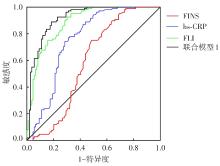
Fig.1
ROC curves of FLI alone and in combination for screening MASLD"
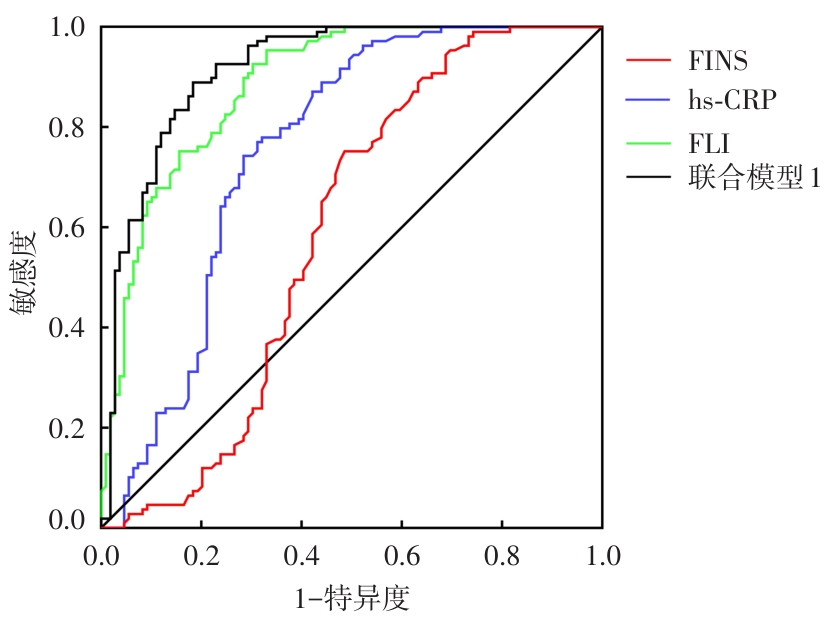
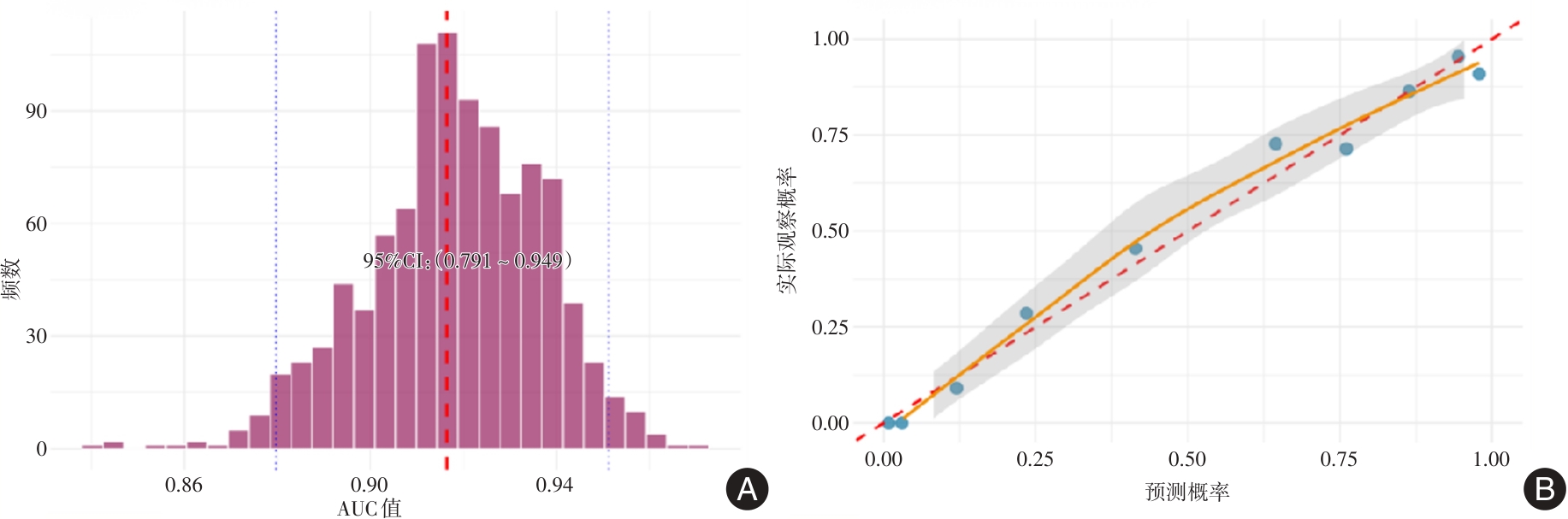
Fig.2
Bootstrap distribution and calibration curve"
Tab.6
Screening efficacy of FLI alone and in combination for T2DM patients with MASLD"
| 指标 | AUC | 特异度 | 敏感度 | 约登指数 | 最佳截断值 | P值 | 95%CI |
|---|---|---|---|---|---|---|---|
| HbA1c | 0.802 | 1.000 | 0.762 | 0.762 | 6.000% | < 0.001 | 0.689 ~ 0.916 |
| FINS | 0.655 | 1.000 | 0.238 | 0.238 | 15.000 mU/L | 0.007 | 0.541 ~ 0.768 |
| FLI | 0.724 | 0.970 | 0.357 | 0.357 | 60.000 | < 0.001 | 0.626 ~ 0.822 |
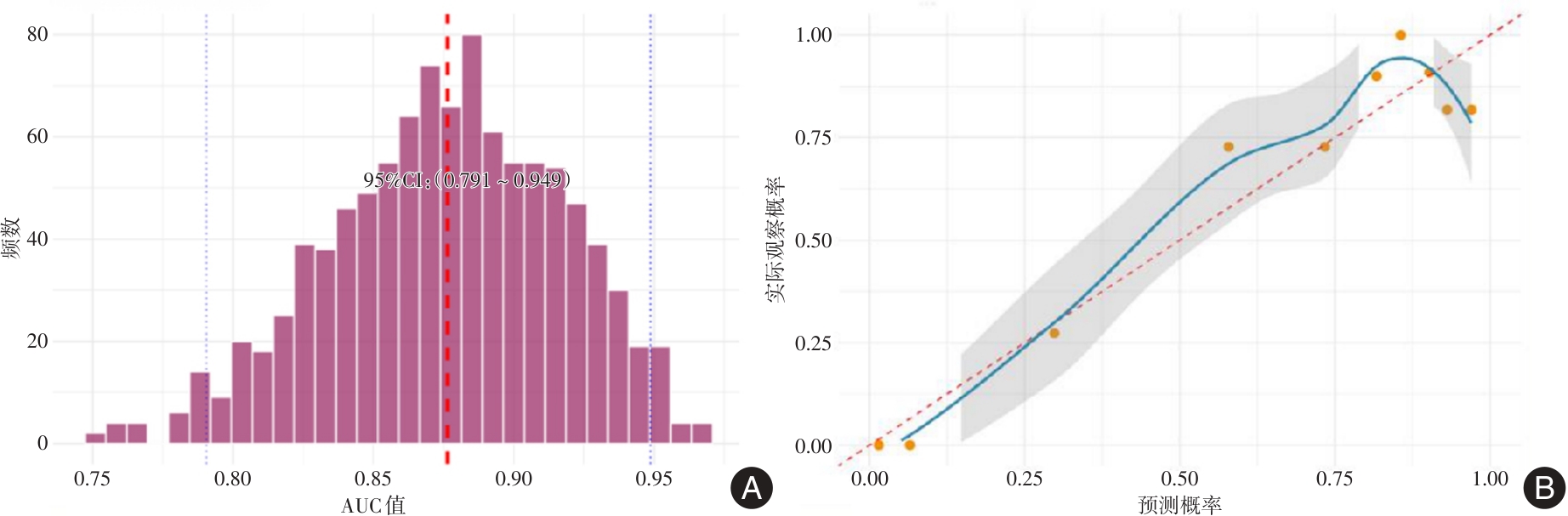
| 联合 | 0.876 | 0.771 | 0.955 | 0.726 | 0.480 | < 0.001 | 0.794 ~ 0.958 |
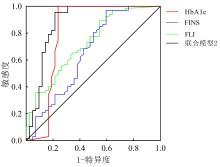
Fig.3
ROC curves of FLI alone and in combination for screening T2DM patients with MASLD"
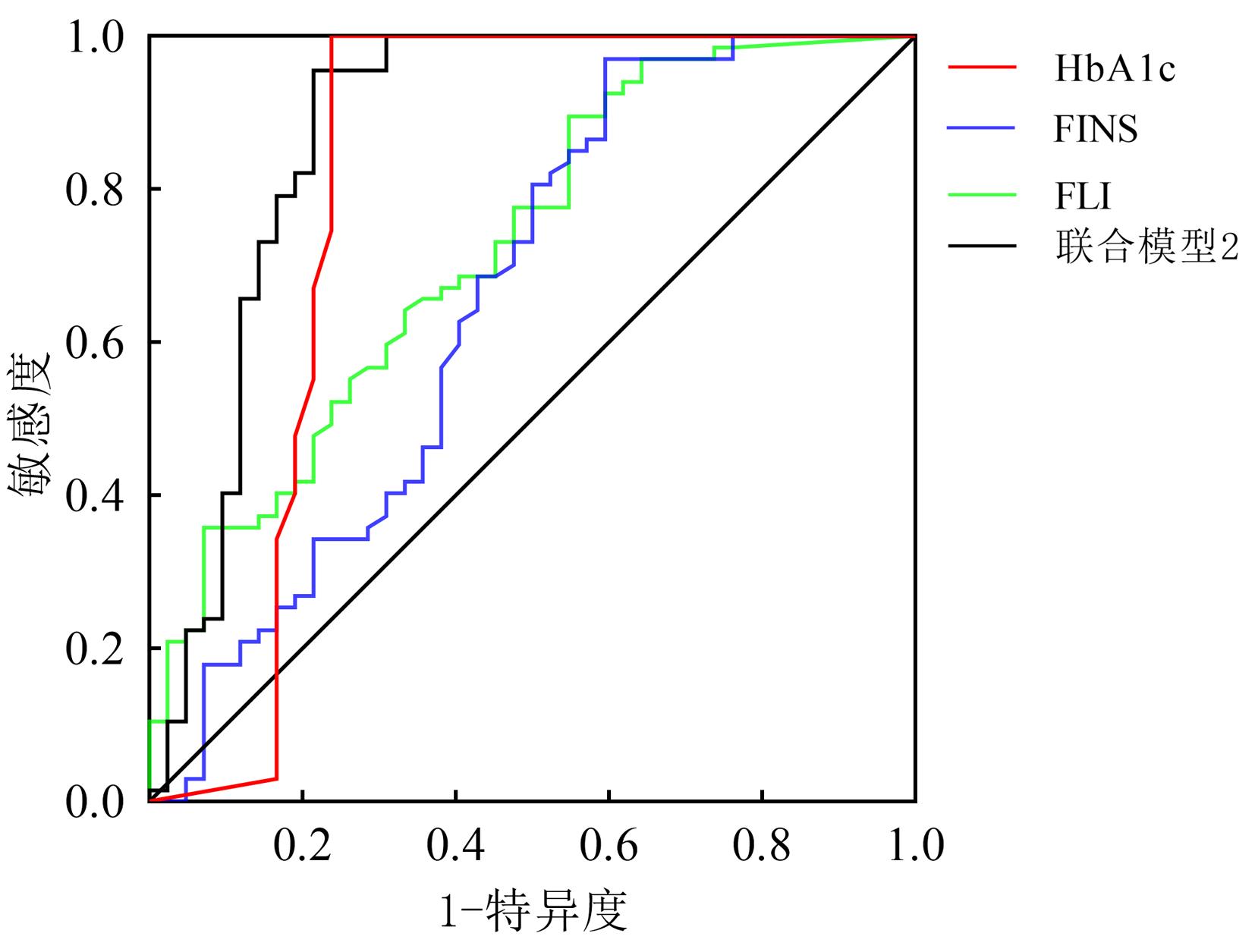
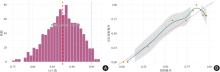
Fig.4
Bootstrap distribution and calibration curve"
| [1] |
LEKAKIS V, PAPATHEODORIDIS G V. Natural history of metabolic dysfunction-associated steatotic liver disease[J]. Eur J Intern Med, 2024, 122: 3-10. doi: 10.1016/j.ejim.2023.11.005 .
doi: 10.1016/j.ejim.2023.11.005 |
| [2] |
PORTINCASA P, KHALIL M, MAHDI L, et al. Metabolic Dysfunction-Associated Steatotic Liver Disease: From Pathogenesis to Current Therapeutic Options[J]. Int J Mol Sci, 2024, 25(11): 5640. doi: 10.3390/ijms25115640 .
doi: 10.3390/ijms25115640 |
| [3] |
ISRAELSEN M, FRANCQUE S, TSOCHATZIS E A, et al. Steatotic liver disease[J]. Lancet, 2024, 404(10464): 1761-1778. doi: 10.1016/S0140-6736(24)01382-7 .
doi: 10.1016/S0140-6736(24)01382-7 |
| [4] |
庄颖洁, 刘文徽, 刘正一, 等. 代谢相关脂肪性肝病的流行病学现状及诊治研究进展[J]. 解放军医学杂志, 2023, 48(12): 1457-1466. doi: 10.11855/j.issn.0577-7402.2023.12.1457 .
doi: 10.11855/j.issn.0577-7402.2023.12.1457 |
| [5] |
FERDOUS S E, FERRELL J M. Pathophysiological Relationship between Type 2 Diabetes Mellitus and Metabolic Dysfunction-Associated Steatotic Liver Disease: Novel Therapeutic Approaches[J]. Int J Mol Sci, 2024, 25(16): 8731. doi: 10.3390/ijms25168731 .
doi: 10.3390/ijms25168731 |
| [6] |
RINELLA M E, HARTMAN M L, SHINDE S, et al. Variance Between Clinical Guidance and Real-World Management of Metabolic Dysfunction-associated Steatotic Liver Disease in the United States[J]. Clin Gastroenterol Hepatol, 2025, 23(2): 374-376.e3. doi: 10.1016/j.cgh.2024.07.039 .
doi: 10.1016/j.cgh.2024.07.039 |
| [7] |
WATTACHERIL J J, ABDELMALEK M F, LIM J K, et al. AGA Clinical Practice Update on the Role of Noninvasive Biomarkers in the Evaluation and Management of Nonalcoholic Fatty Liver Disease: Expert Review[J]. Gastroenterology, 2023, 165(4): 1080-1088. doi: 10.1053/j.gastro.2023.06.013 .
doi: 10.1053/j.gastro.2023.06.013 |
| [8] |
LEE C H, HAN K D, KIM D H, et al. The Repeatedly Elevated Fatty Liver Index Is Associated With Increased Mortality: A Population-Based Cohort Study[J]. Front Endocrinol (Lausanne), 2021, 12: 638615. doi: 10.3389/fendo.2021.638615 .
doi: 10.3389/fendo.2021.638615 |
| [9] |
SERDAR C C, CIHAN M, YÜCEL D, et al. Sample size, power and effect size revisited: Simplified and practical approaches in pre-clinical, clinical and laboratory studies[J]. Biochem Med (Zagreb), 2021, 31(1): 010502. doi: 10.11613/BM. 2021. 010502 .
doi: 10.11613/BM. 2021. 010502 |
| [10] |
余静雯, 胡天赤, 周艺, 等. 代谢相关脂肪性肝病管理临床实践指南: 要点与评述[J]. 中华糖尿病杂志, 2024, 16(11): 1163-1170. doi: 10.3760/cma.j.cn115791-20240820-00261 .
doi: 10.3760/cma.j.cn115791-20240820-00261 |
| [11] |
KANEVA A M, BOJKO E R. Fatty liver index (FLI): More than a marker of hepatic steatosis[J]. J Physiol Biochem, 2024, 80(1): 11-26. doi: 10.1007/s13105-023-00979-9 .
doi: 10.1007/s13105-023-00979-9 |
| [12] |
YOUNOSSI Z M, KALLIGEROS M, HENRY L. Epidemiology of metabolic dysfunction-associated steatotic liver disease[J]. Clin Mol Hepatol, 2025, 31(): S32-50. doi: 10.3350/cmh. 2024.0659 .
doi: 10.3350/cmh. 2024.0659 |
| [13] |
HUANG D Q, WONG V W S, RINELLA M E, et al. Metabolic dysfunction-associated steatotic liver disease in adults[J]. Nat Rev Dis Primers, 2025, 11(1): 14. doi: 10.1038/s41572-025-00587-x .
doi: 10.1038/s41572-025-00587-x |
| [14] |
MIAO L, TARGHER G, BYRNE C D, et al. Current status and future trends of the global burden of MASLD[J]. Trends Endocrinol Metab, 2024, 35(8): 697-707. doi: 10.1016/j.tem. 2024. 04.009 .
doi: 10.1016/j.tem. 2024. 04.009 |
| [15] |
SYED-ABDUL M M. Lipid Metabolism in Metabolic-Associated Steatotic Liver Disease (MASLD)[J]. Metabolites, 2023, 14(1): 12. doi: 10.3390/metabo14010012 .
doi: 10.3390/metabo14010012 |
| [16] |
ZONCAPÈ M, LIGUORI A, TSOCHATZIS E A. Non-invasive testing and risk-stratification in patients with MASLD[J]. Eur J Intern Med, 2024, 122: 11-19. doi: 10.1016/j.ejim.2023.10.023 .
doi: 10.1016/j.ejim.2023.10.023 |
| [17] |
JIANG M, PAN Z, GEORGE J, et al. Clinical features and mortality outcomes of patients with MASLD only compared to those with MAFLD and MASLD[J]. Hepatol Int, 2024, 18(6): 1731-1739. doi: 10.1007/s12072-024-10740-z .
doi: 10.1007/s12072-024-10740-z |
| [18] |
ZOU B, YEO Y H, CHEUNG R, et al. Fatty Liver Index and Development of Cardiovascular Disease: Findings from the UK Biobank[J]. Dig Dis Sci, 2021, 66(6): 2092-2100. doi: 10.1007/s10620-020-06448-3 .
doi: 10.1007/s10620-020-06448-3 |
| [19] |
KORALEGEDARA I S, WARNASEKARA J N, RATHNAYAKE A, et al. Fatty Liver Index is a valid predictor of non-alcoholic fatty liver disease (NAFLD) in pregnancy[J]. BMJ Open Gastroenterol, 2022, 9(1): e000913. doi: 10.1136/bmjgast-2021-000913 .
doi: 10.1136/bmjgast-2021-000913 |
| [20] |
CRUDELE L, DE MATTEIS C, NOVIELLI F, et al. Fatty Liver Index (FLI) is the best score to predict MASLD with 50% lower cut-off value in women than in men[J]. Biol Sex Differ, 2024, 15(1): 43. doi: 10.1186/s13293-024-00617-z .
doi: 10.1186/s13293-024-00617-z |
| [21] |
LEE Y H, HAN K D, LEE Y H, et al. Association of temporal MASLD with type 2 diabetes, cardiovascular disease and mortality[J]. Cardiovasc Diabetol, 2025, 24(1): 289. doi: 10.1186/s12933-025-02760-4 .
doi: 10.1186/s12933-025-02760-4 |
| [22] |
牛春燕, 陈跃, 宋用强. 初级保健和内分泌临床中非酒精性脂肪肝诊断和治疗的临床实践指南要点与解读[J]. 实用医学杂志, 2023, 39(3): 267-272. doi: 10.3969/j.issn.1006-5725. 2023. 03.001 .
doi: 10.3969/j.issn.1006-5725. 2023. 03.001 |
| [23] |
JIANG M, PAN Z, GEORGE J, et al. Clinical features and mortality outcomes of patients with MASLD only compared to those with MAFLD and MASLD[J]. Hepatol Int, 2024, 18(6): 1731-1739. doi: 10.1007/s12072-024-10740-z .
doi: 10.1007/s12072-024-10740-z |
| [24] |
HU M, YANG J, GAO B, et al. Prediction of MASLD using different screening indexes in Chinese type 2 diabetes mellitus[J]. Diabetol Metab Syndr, 2025, 17(1): 10. doi: 10.1186/s13098-024-01489-4 .
doi: 10.1186/s13098-024-01489-4 |
| [25] |
FERDOUS S E, FERRELL J M. Pathophysiological Relationship between Type 2 Diabetes Mellitus and Metabolic Dysfunction-Associated Steatotic Liver Disease: Novel Therapeutic Approaches[J]. Int J Mol Sci, 2024, 25(16): 8731. doi: 10.3390/ijms25168731 .
doi: 10.3390/ijms25168731 |
| [26] |
OH R, KIM G, LEE K N, et al. Metabolic dysfunction-associated steatotic liver disease in patients with type 2 diabetes: Risk of heart failure[J]. Cardiovasc Diabetol, 2024, 23(1): 391. doi: 10.1186/s12933-024-02497-4 .
doi: 10.1186/s12933-024-02497-4 |
| [27] |
LI B, LIU Y, MA X, et al. The association between non-high-density lipoprotein cholesterol to high-density lipoprotein cholesterol ratio and hepatic steatosis and liver fibrosis among US adults based on NHANES[J]. Sci Rep, 2025, 15(1): 6527. doi: 10.1038/s41598-025-97283-1 .
doi: 10.1038/s41598-025-97283-1 |
| [1] | Junpeng LI,Wei FENG,Yan CHEN,Tingting WU. Efficacy of gestrinone combined with leuprolide in the treatment of EMs and its effects on sex hormones, inflammatory indicators and peripheral blood CA125, EMAb and AMH [J]. The Journal of Practical Medicine, 2026, 42(2): 230-235. |
| [2] | Hanqi YANG,Lingna. HE. The therapeutic effect of acupuncture combined with moxibustion on insomnia related to cerebral infarction based on the "Yuan⁃Luo Point Pairing" and its impact on serum Hcrt⁃1, 5⁃HT, and slow wave EEG [J]. The Journal of Practical Medicine, 2025, 41(8): 1253-1258. |
| [3] | Youqiang ZHANG,Ling YAN,Wei LIAO,Guang WANG,Xiaoheng CHEN,Rui FAN,Zuwei. LIU. Study of modified anteromedial approach and preserves the superior extensor retinaculum for clinical effect of Pilon fracture [J]. The Journal of Practical Medicine, 2025, 41(3): 358-364. |
| [4] | Jiahao CHEN,Yong HUANG,Ruibing FENG,Xiaofeng DUAN,Gang WU,Yizheng HUANG,Haitao ZHANG,Chao LI,Yinshuai DING,Hao. HU. Treatment effect and safety analysis of intraspinal tumor under 3D microscope [J]. The Journal of Practical Medicine, 2025, 41(3): 371-378. |
| [5] | Mei HUA,Xiaolu ZHAI,Chong TANG,Ying CHEN,Dian YIN. Expression of serum microRNA⁃497 in patients with colorectal cancer and its diagnostic and prognostic values [J]. The Journal of Practical Medicine, 2025, 41(22): 3579-3584. |
| [6] | Hang LI,Xiaomei YANG,Wen LYU,Huimin CHEN,Rui. XU. Three⁃year evaluation of the efficacy and safety of chronotherapy in dual⁃allergen subcutaneous immunotherapy [J]. The Journal of Practical Medicine, 2025, 41(21): 3405-3411. |
| [7] | Yuchen ZHAO,Manting XU,Jing BAO,Liang XIA. Clinical evaluation of daratumumab in combination with lenalidomide and bortezomib and with daratumumab, bortezomib, and dexamethasone for the treatment of relapsed and refractory multiple myeloma [J]. The Journal of Practical Medicine, 2025, 41(18): 2913-2919. |
| [8] | Fan WU,Hongni QIN,Yuzhen XIE,Baoyong REN,Dongsheng DAI. Study on the preparation of high immunogenicity RBD antigen and antibody development of COVID⁃19 BA.5 [J]. The Journal of Practical Medicine, 2025, 41(17): 2653-2660. |
| [9] | Hecheng SUN,Haiyang WANG. Radiofrequency ablation for lower extremity varicose veins: A comprehensive review [J]. The Journal of Practical Medicine, 2025, 41(17): 2761-2766. |
| [10] | Daojun BAO,Gomei ZHU,Gehong PENG. New directions in treatment for lower extremity varicose veins: Advances in ultrasound⁃guided microwave ablation applications [J]. The Journal of Practical Medicine, 2025, 41(15): 2435-2440. |
| [11] | Yuling DUAN,Xuezhi ZHOU,Yongyi LI,Lixia MA,Desheng YANG,Jiao CHENG,Yan WU,Tao LIU,Guoyuan JIANG,Mei. WANG. Clinical value analysis of different MRI measurement methods in evaluating the efficacy of neoadjuvant therapy for breast cancer [J]. The Journal of Practical Medicine, 2025, 41(14): 2152-2159. |
| [12] | Rouzi REBOTE,Hanshuo ZHANG,Guangnan YANG,Jie BAI,Qiang JIANG,Zhengcao LU,Wen LI,Yu DING. Clinical observation of Endo⁃LOVE combined with NR⁃PRF in the treatment of LDD:Focusing on the improvement of postoperative residual symptoms [J]. The Journal of Practical Medicine, 2025, 41(12): 1800-1807. |
| [13] | Xiao YANG,Tao WANG,Wei WANG,Yaohui PENG,Yan CHEN,Haiping ZENG,Bao YANG. Lipidomic profile of serum in colorectal cancer patients and its diagnostic significance [J]. The Journal of Practical Medicine, 2025, 41(11): 1742-1750. |
| [14] | Linyu ZENG,Ziming CHEN,Junqing ZENG,Yi YAN,Daying ZHANG,Lili GU. Ultrasound measurement of sciatic nerve cross⁃sectional area in early outcome assessment after endoscopic surgery for unilateral lumbar disc herniation [J]. The Journal of Practical Medicine, 2025, 41(1): 35-40. |
| [15] | Xi LIU,Xiaona LIU,Chao LI,Rui XIAN,Lihong CUI. Efficacy analysis of different regimens for treatment of Helicobacter pylori infection combined with small intestinal bacterial overgrowth [J]. The Journal of Practical Medicine, 2024, 40(9): 1303-1308. |
| Viewed | ||||||
|
Full text |
|
|||||
|
Abstract |
|
|||||
