

The Journal of Practical Medicine ›› 2026, Vol. 42 ›› Issue (1): 139-145.doi: 10.3969/j.issn.1006-5725.2026.01.018
• Treatise: Mechanism and Practice • Previous Articles
Pao YU,Feng ZHU( ),Zi WANG,Yin ZHANG,Zheng GE,Bi ZHOU
Received:2025-09-26
Online:2026-01-10
Published:2026-01-14
Contact:
Feng ZHU
E-mail:zhufeng166@yeah.net
CLC Number:
Pao YU,Feng ZHU,Zi WANG,Yin ZHANG,Zheng GE,Bi ZHOU. Exploration of the application value of urinary ACE2 and PAX2 in early kidney injury of congenital kidney and urinary tract malformations[J]. The Journal of Practical Medicine, 2026, 42(1): 139-145.
Tab.1
Comparison of three groups of general data"
| 指标 | CAKUT合并AKI组(n = 68) | CAKUT无AKI组(n = 198) | 健康对照组 (n = 45) | F/χ2/H值 | P值 |
|---|---|---|---|---|---|
| 人口学特征 | |||||
| 年龄/岁 | 8.43 ± 2.7 | 8.04 ± 2.67 | 9.1 ± 3.51 | 2.787 | 0.063 |
| 性别/例 | 0.030 | 0.985 | |||
| 男 | 40 | 116 | 27 | ||
| 女 | 28 | 82 | 18 | ||
| 身高/cm | 135.83 ± 10.25 | 134.99 ± 11.39 | 136.7 ± 8.34 | 0.524 | 0.592 |
| 体质量/kg | 29.53 ± 8.6 | 32.06 ± 9.3 | 29.83 ± 9.06 | 2.540 | 0.081 |
| BMI/(kg/m2) | 16.53 ± 1.57 | 16.78 ± 1.97 | 16.69 ± 1.65 | 0.456 | 0.634 |
| 临床特征/[例(%)] | |||||
| 合并高血压 | 10(15) | 13(7) | 0(0) | < 0.01* | |
| 当前使用ACEI/ARB药物 | 11(16) | 10(5) | 0(0) | 0.03* | |
| 肾功能及尿蛋白定量 | |||||
| 尿素氮/(mmol/L) | 8.44 ± 1.4 | 5.22 ± 1.36 | 4.99 ± 1.15 | 158.368 | < 0.01 |
| 尿酸/(μmol/L) | 403.56 ± 59.22 | 333.6 ± 66.6 | 287.48 ± 63.47 | 48.548 | < 0.01 |
| eGFR/[mL/(min·1.73 m2)] | 44.58 ± 11.31 | 85.09 ± 10.87 | 109.03 ± 11.5 | 524.785 | < 0.01 |
| 血肌酐(μmol/L) | 91.74 ± 14.97 | 53.02 ± 11.79 | 54.99 ± 9.12 | 261.933 | < 0.01 |
| 尿蛋白定量/(mg/24 h) | 318.53 ± 173.07 | 78.96 ± 35.77 | 22.33 ± 8.35 | 234.172 | < 0.01 |
| 其他实验室参数 | |||||
| 白蛋白[M(P25,P75)]/(g/L) | 34.45(31.74,36.78) | 35.55(31.78,38.75) | 35.96(33.48,37.43) | 3.988 | 0.136 |
| 血红蛋白/(g/dL) | 11.25 ± 1.18 | 12.9 ± 1.05 | 13.54 ± 0.72 | 83.882 | < 0.01 |
| 血钠/(mmol/L) | 137.95 ± 2.25 | 140.18 ± 1.8 | 140.75 ± 1.24 | 44.675 | < 0.01 |
| NLR | 2.44 ± 0.71 | 1.84 ± 0.46 | 1.53 ± 0.27 | 52.205 | < 0.01 |
Tab.2
Comparison of urinary ACE2 and PAX2 levels among the three groups"
| 组别 | 例数 | 尿液ACE2/(ng/mg Cr) | 尿液PAX2/(pg/mg Cr) |
|---|---|---|---|
| CAKUT合并AKI组 | 68 | 211.47 ± 37.53?# | 13.41 ± 3.16?# |
| CAKUT无AKI组 | 198 | 151.17 ± 24.68? | 9.33 ± 2.34? |
| 健康对照组 | 45 | 136.02 ± 23.28 | 7.58 ± 2.14 |
| F值 | 142.198 | 90.25 | |
| P值 | < 0.01 | < 0.01 |
Tab.3
Comparison of urinary ACE2 and PAX2 levels across different stages of CAKUT+AKI"
| AKI分期 | 例数 | 尿液ACE2/(ng/mg Cr) | 尿液PAX2/(pg/mg Cr) |
|---|---|---|---|
| Ⅰ期 | 39 | 207.15 ± 40.42 | 13.74 ± 3.49 |
| Ⅱ期 | 20 | 241.07 ± 31.61? | 20.24 ± 7.11? |
| Ⅲ期 | 9 | 284.80 ± 56.29?# | 27.79 ± 5.26?# |
| F值 | 15.075 | 32.678 | |
| P值 | < 0.01 | < 0.01 |
Tab.4
The area under the ROC curve and cutoff points for ACE2 and PAX2 indicators"
| 检验指标 | AUC | cut-off值 | 特异度/% | 敏感度/% | P值 | 95%CI |
|---|---|---|---|---|---|---|
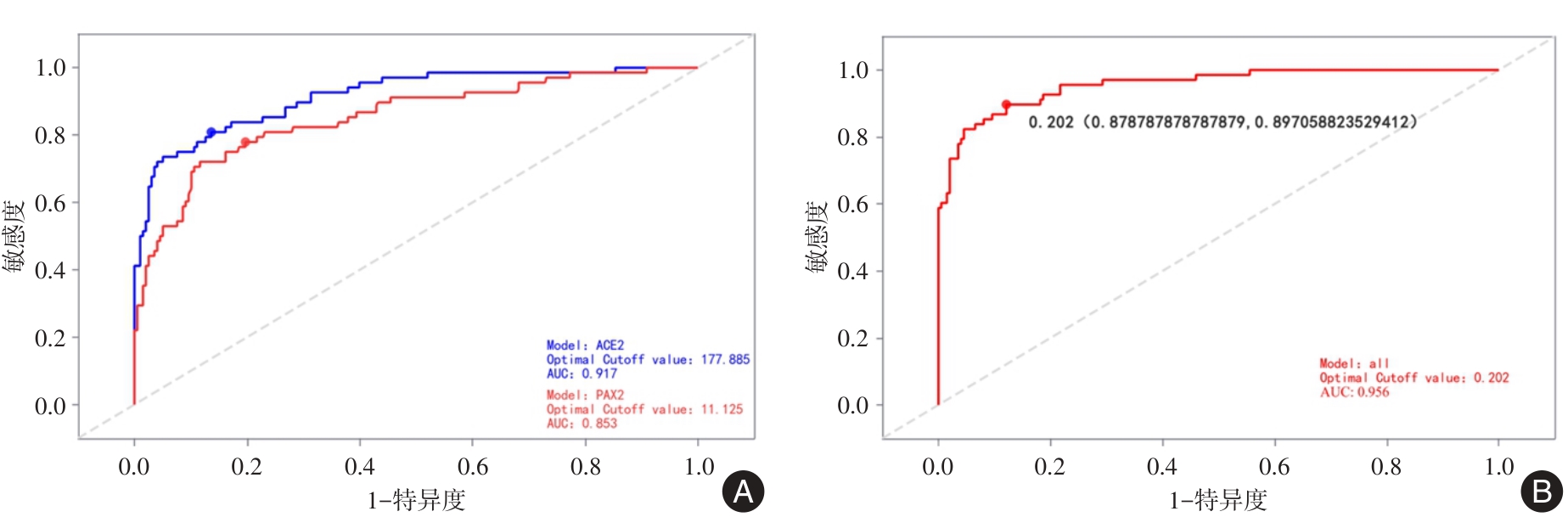
| ACE2 | 0.917 | 177.8 | 86.4 | 80.9 | < 0.001 | 0.877 ~ 0.957 |
| PAX2 | 0.853 | 11.1 | 76.09 | 80.3 | < 0.001 | 0.797 ~ 0.910 |
| ACE2 + PAX2联合 | 0.956 | 0.2 | 87.9 | 88.2 | < 0.001 | 0.929 ~ 0.982 |
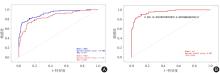
Fig.1
ROC curves of urinary ACE2, PAX2 and their combination for diagnosing CAKUT-AKI"
| [1] |
RIEDHAMMER K M, NGUYEN T T, KOSUKCU C, et al. Implication of transcription factor FOXD2 dysfunction in syndromic congenital anomalies of the kidney and urinary tract (CAKUT)[J]. Kidney Int,2024,105(4):844-864.doi:10.1016/j.kint. 2023. 11.032 .
doi: 10.1016/j.kint. 2023. 11.032 |
| [2] |
MUNTEAN C, CHIRTES C, BACZONI B, et al. PAX2 Gene Mutation in Pediatric Renal Disorders-A Narrative Review[J]. Int J Mol Sci,2023,24(16).doi:10.3390/ijms241612737 .
doi: 10.3390/ijms241612737 |
| [3] |
SCHIERBAUM L M, SCHNEIDER S, BUERGER F, et al. Prioritization of Monogenic Congenital Anomalies of the Kidney and Urinary Tract Candidate Genes with Existing Single-Cell Transcriptomics Data of the Human Fetal Kidney[J]. Nephron Clin Pract,2023,147(11):685-692.doi:10.1159/000531770 .
doi: 10.1159/000531770 |
| [4] |
LASZCZYK A M, HIGASHI A Y, PATEL S R, et al. Pax2 and Pax8 Proteins Regulate Urea Transporters and Aquaporins to Control Urine Concentration in the Adult Kidney[J]. J Am Soc Nephrol,2020,31(6):1212-1225.doi:10.1681/ASN. 2019090962 .
doi: 10.1681/ASN. 2019090962 |
| [5] |
LIU J L, WANG X W, LIU C H, et al. Genetic spectrum of CAKUT and risk factors for kidney failure: A pediatric multicenter cohort study[J]. Nephrol Dial Transplant,2022,38(9):1981-1991.doi:10.1093/ndt/gfac338 .
doi: 10.1093/ndt/gfac338 |
| [6] |
BINGUL I, KALAYCI R, TEKKESIN M S, et al. Chenodeoxycholic acid alleviated the cyclosporine-induced nephrotoxicity by decreasing oxidative stress and suppressing renin-angiotensin system through AT2R and ACE2 mRNA upregulation in rats[J]. J Mol Histol,2024,56(1):23.doi:10.1007/s10735-024-10308-z .
doi: 10.1007/s10735-024-10308-z |
| [7] |
PALEVSKY P M, LIU K D, BROPHY P D, et al. KDOQI US commentary on the 2012 KDIGO clinical practice guideline for acute kidney injury[J]. Am J Kidney Dis,2013,61(5):649-672.doi:10.1053/j.ajkd.2013.02.349 .
doi: 10.1053/j.ajkd.2013.02.349 |
| [8] |
TV L, DL H, BL G, et al. Applicability of the Schwartz Equation and the Chronic Kidney Disease in Children Bedside Equation for Estimating Glomerular Filtration Rate in Overweight Children[J].Pharmacotherapy,2016,36(6):598-606.doi:10.1002/phar.1763 .
doi: 10.1002/phar.1763 |
| [9] |
SOLIMAN N A, ALI R I, GHOBRIAL E E, et al. Pattern of clinical presentation of congenital anomalies of the kidney and urinary tract among infants and children[J]. Nephrology (Carlton),2015,20(6):413-418.doi:10.1111/nep.12414 .
doi: 10.1111/nep.12414 |
| [10] |
CHEVALIER R L. CAKUT: A Pediatric and Evolutionary Perspective on the Leading Cause of CKD in Childhood[J]. Pediatr Rep,2023,15(1):143-153.doi:10.3390/pediatric15010012 .
doi: 10.3390/pediatric15010012 |
| [11] |
MATSELL D G, CATAPANG M, BECKNELL B. Predicting outcomes in children with congenital anomalies of the kidney and urinary tract[J]. Pediatr Nephrol,2023,38(10):3407-3415.doi:10.1007/s00467-023-05992-0 .
doi: 10.1007/s00467-023-05992-0 |
| [12] |
VASCONCELOS M A, E S A, GOMES I R, et al. A clinical predictive model of chronic kidney disease in children with posterior urethral valves[J]. Pediatr Nephrol,2019,34(2):283-294.doi:10.1007/s00467-018-4078-0 .
doi: 10.1007/s00467-018-4078-0 |
| [13] |
SHIRAZI M, CIANFARINI C, ISMAIL A, et al. Altered kidney distribution and loss of ACE2 into the urine in acute kidney injury[J]. Am J Physiol Renal Physiol,2024,327(3):F412-F425. doi:10.1152/ajprenal.00237.2023 .
doi: 10.1152/ajprenal.00237.2023 |
| [14] |
ZHENG J, HAO H. Targeting renal damage: The ACE2/Ang-(1-7)/mas axis in chronic kidney disease[J]. Cell Signal,2024,124:111413.doi:10.1016/j.cellsig.2024.111413 .
doi: 10.1016/j.cellsig.2024.111413 |
| [15] |
DANIEL B, LUISE H, JAN W. ACE2, From the Kidney to SARS-CoV-2: Donald Seldin Award Lecture 2023[J]. Hypertension (Dallas, Tex. : 1979),2025,82(2):166-180. doi:10.1161/HYPERTENSIONAHA.124.22064 .
doi: 10.1161/HYPERTENSIONAHA.124.22064 |
| [16] |
马雪晴, 何永华, 杨静, 等. 中国儿童PAX2基因突变的临床表型和基因型分析[J]. 中华肾脏病杂志,2024,40(1):24-35.doi:10.3760/cma.j.cn441217-20230518-00520 .
doi: 10.3760/cma.j.cn441217-20230518-00520 |
| [17] | KLOMP L S, LEVTCHENKO E, WESTLAND R. Developmental Causes of Focal Segmental Glomerulosclerosis[J]. Glomerular Dis,2024,4(1):95-104. |
| [18] |
马江磊, 张慧杰, 王光明. PAX2基因变异所致慢性肾脏病一个家系的遗传学分析[J]. 中华医学遗传学杂志,2023,40(8):973-978.doi:10.3760/cma.j.cn511374-20220801-00527 .
doi: 10.3760/cma.j.cn511374-20220801-00527 |
| [19] |
YAMAMURA Y, FURUICHI K, MURAKAWA Y, et al. Identification of candidate PAX2-regulated genes implicated in human kidney development[J]. Sci Rep,2021,11(1):9123.doi:10.1038/s41598-021-88743-1 .
doi: 10.1038/s41598-021-88743-1 |
| [20] |
李丽, 王长山. PAX2和 Ecadherin/a SMA在肾间质纤维化大鼠肾小管上皮共表达的作用及意义[J]. 国际免疫学杂志,2020,43(6):634-641.doi:10.3760/cma.j.issn.1673-4394.2020.06.006 .
doi: 10.3760/cma.j.issn.1673-4394.2020.06.006 |
| [21] |
李丽, 吴玉斌, 康晓明, 等. PAX2-siRNA在梗阻性肾病大鼠体内的作用研究[J]. 国际免疫学杂志,2016,39(4):348-353.doi:10.3760/cma.j.issn.1673-4394.2016.04.008 .
doi: 10.3760/cma.j.issn.1673-4394.2016.04.008 |
| [22] |
BEAMISH J A, TELANG A C, Mcelliott M C, et al. Pax protein depletion in proximal tubules triggers conserved mechanisms of resistance to acute ischemic kidney injury preventing transition to chronic kidney disease[J]. Kidney Int,2024,105(2):312-327.doi:10.1016/j.kint.2023.10.022 .
doi: 10.1016/j.kint.2023.10.022 |
| [23] |
UENO A, ONISHI Y, MISE K, et al. Plasma angiotensin-converting enzyme 2 (ACE2) is a marker for renal outcome of diabetic kidney disease (DKD) (U-CARE study 3)[J]. BMJ Open Diabetes Res Care,2024,12(3):e004237.doi:10.1136/bmjdrc-2024-004237 .
doi: 10.1136/bmjdrc-2024-004237 |
| [24] |
ANAND S, BAJPAI M, KHANNA T, et al. Urinary biomarkers as point-of-care tests for predicting progressive deterioration of kidney function in congenital anomalies of kidney and urinary tract: Trefoil family factors (TFFs) as the emerging biomarkers[J]. Pediatr Nephrol,2021,36(6):1465-1472.doi:10.1007/s00467-020-04841-8 .
doi: 10.1007/s00467-020-04841-8 |
| [1] | Lu ZHAO,Huiwen ZHI,Yafeng LI. The role of biomarkers in the diagnosis and prediction of disease progression of IgA nephropathy [J]. The Journal of Practical Medicine, 2025, 41(9): 1267-1272. |
| [2] | Huimin HUANG,Chenxin LIU,Yanting FANG,Peiyan. ZHENG. Diagnostic value of KL⁃6 detection in children diagnostic value of KL⁃6 detection in children with idiopathic pulmonary hemosiderosis [J]. The Journal of Practical Medicine, 2025, 41(4): 594-599. |
| [3] | Huiling XIAO,Weichun. HE. Clinical pathological types and pathogenesis of immune checkpoint inhibitor-related kidney injury [J]. The Journal of Practical Medicine, 2025, 41(21): 3315-3321. |
| [4] | Yujian CUI,Yuke LI,Sainan ZHU,Shuangling LI,Nan. LI. The association between early peripheral perfusion and acute kidney injury in patients admitted to the intensive care unit following major noncardiac surgery [J]. The Journal of Practical Medicine, 2025, 41(2): 195-201. |
| [5] | Zhao WANG,Jiepeng ZUO,Hang CHE,Lingyun REN,Zhe XU,Lei. WANG. Evaluation of plasma PPARγ as a potential diagnostic marker for female interstitial cystitis/painful bladder syndrome and its predictive model [J]. The Journal of Practical Medicine, 2025, 41(2): 258-263. |
| [6] | Yunfang ZHANG,Zheng LI,Xiaogai NIE,Yun GUAN,Qi CHEN,Yong YUAN. D⁃dimer/Alb ratio, IL⁃6 and FDP jointly predict poor outcomes post type A dissection [J]. The Journal of Practical Medicine, 2025, 41(17): 2755-2760. |
| [7] | Zhiwei ZHOU,Jing CAI,Lei ZHENG,Zhao XU,Yaping YU. Mechanism of dauricine in reducing ischemia⁃reperfusion acute kidney injury [J]. The Journal of Practical Medicine, 2025, 41(15): 2336-2341. |
| [8] | Jingwen LAI,Yuchuan ZHAO,Zhuhua WU,Xunxun CHEN,Kehao PENG,Yuhui CHEN,Ran WEI,Xiaoyu LAI,Jingyu. WANG. Research advances and challenges in tuberculosis⁃associated extracellular vesicle biomarkers [J]. The Journal of Practical Medicine, 2025, 41(14): 2278-2284. |
| [9] | Cheng WU,Hongyi JIN,Xiaomei ZHONG. Dynamic monitoring of serum brain natriuretic peptide, urinary kidney injury molecule 1 and serum cystatin C levels in the evaluation of acute kidney injury in children after cardiac surgery [J]. The Journal of Practical Medicine, 2025, 41(13): 1964-1970. |
| [10] | Shouping LIU,Yinlin TANG,Yanfang CHENG,Qian ZHOU. Analysis of coagulation and fibrinolysis biomarkers for prognostic assessment and clinical efficacy evaluation in patients with intracerebral hemorrhage [J]. The Journal of Practical Medicine, 2025, 41(12): 1846-1852. |
| [11] | Yuexian LYU,Xiu BI,Ying LIU,Shujing CUI,Lixin ZHAO,Ge GAO,Jianxia WANG,Juan LI,Jun LI. The efficacy of plasma gasdermin D C⁃terminal fragment in the early diagnosis of sepsis [J]. The Journal of Practical Medicine, 2025, 41(12): 1899-1906. |
| [12] | Xiao YANG,Tao WANG,Wei WANG,Yaohui PENG,Yan CHEN,Haiping ZENG,Bao YANG. Lipidomic profile of serum in colorectal cancer patients and its diagnostic significance [J]. The Journal of Practical Medicine, 2025, 41(11): 1742-1750. |
| [13] | Jiahui WANG,Ke ZHENG,Xuemei LI. Applications and advances of lipidomics in kidney disease [J]. The Journal of Practical Medicine, 2025, 41(1): 1-6. |
| [14] | Ting HUANG,Rongcheng XIE,Yuting WANG,Xiaoming LIN,Jiefei. MA. Values of renal resistance index combined with blood and urinary biomarkers in early prediction of contrast⁃induced acute kidney injury after interventional surgery [J]. The Journal of Practical Medicine, 2024, 40(7): 1011-1016. |
| [15] | Chengcai DAI,Zhenxing CHENG,Qianqian TU. The prognostic value of serum cystatin C combined with bedside renal ultrasound in patients with sepsis⁃induced acute kidney injury [J]. The Journal of Practical Medicine, 2024, 40(22): 3226-3231. |
| Viewed | ||||||
|
Full text |
|
|||||
|
Abstract |
|
|||||
