

The Journal of Practical Medicine ›› 2025, Vol. 41 ›› Issue (21): 3405-3411.doi: 10.3969/j.issn.1006-5725.2025.21.016
• Clinical Research • Previous Articles
Hang LI1,2,Xiaomei YANG1,2,Wen LYU1,2,Huimin CHEN1,2,Rui. XU1,2( )
)
Received:2025-09-07
Online:2025-11-10
Published:2025-11-13
Contact:
Rui. XU
E-mail:xurui@mail.sysu.edu.cn
CLC Number:
Hang LI,Xiaomei YANG,Wen LYU,Huimin CHEN,Rui. XU. Three⁃year evaluation of the efficacy and safety of chronotherapy in dual⁃allergen subcutaneous immunotherapy[J]. The Journal of Practical Medicine, 2025, 41(21): 3405-3411.
Tab.1
Baseline characteristics of study participants"
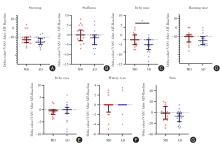
Fig.1
Comparison of nasal and ocular symptom changes following SCIT between morning and afternoon dosing groups"
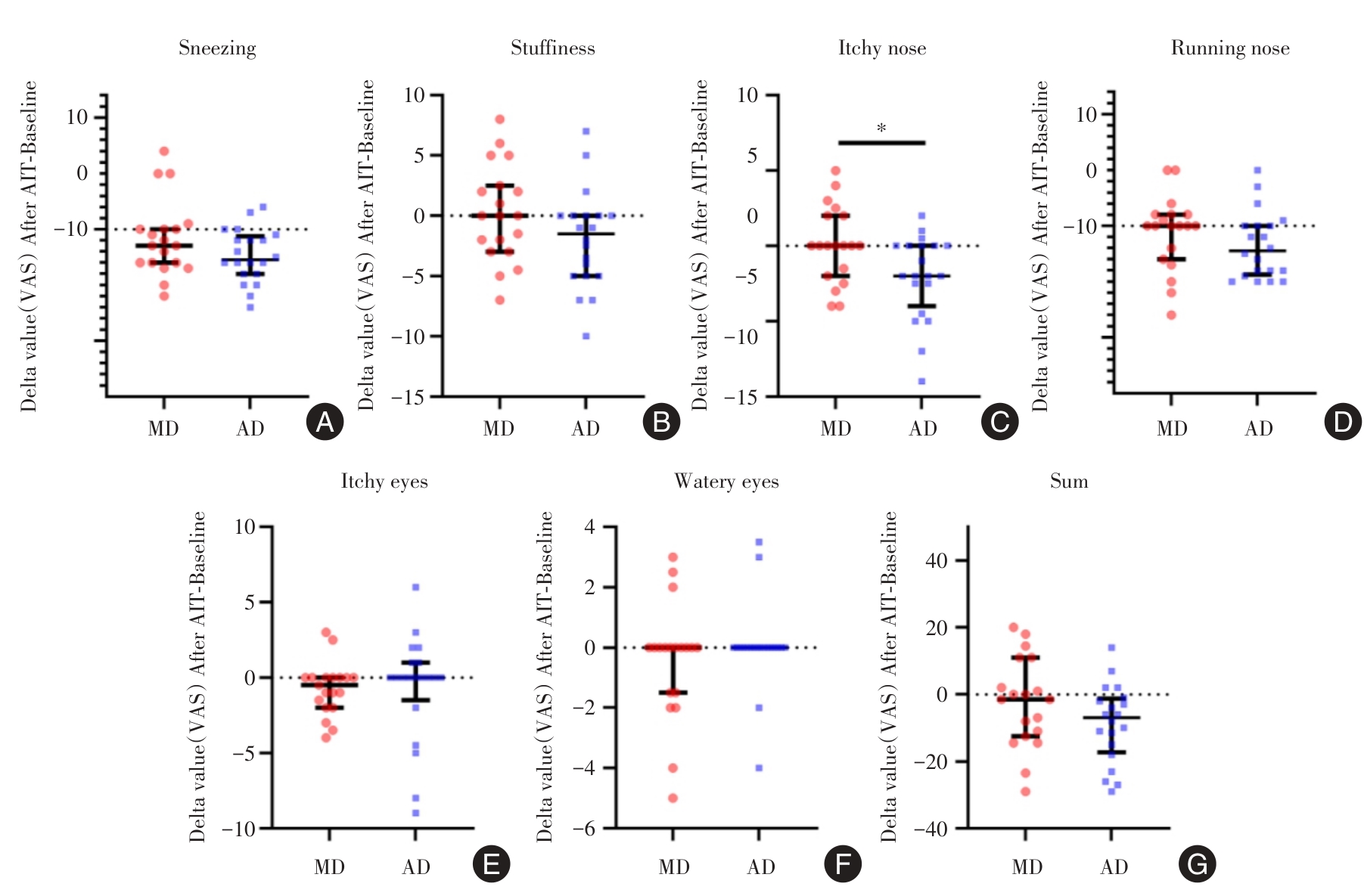
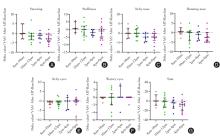
Fig. 2
Symptom improvement following SCIT across different administration time windows"
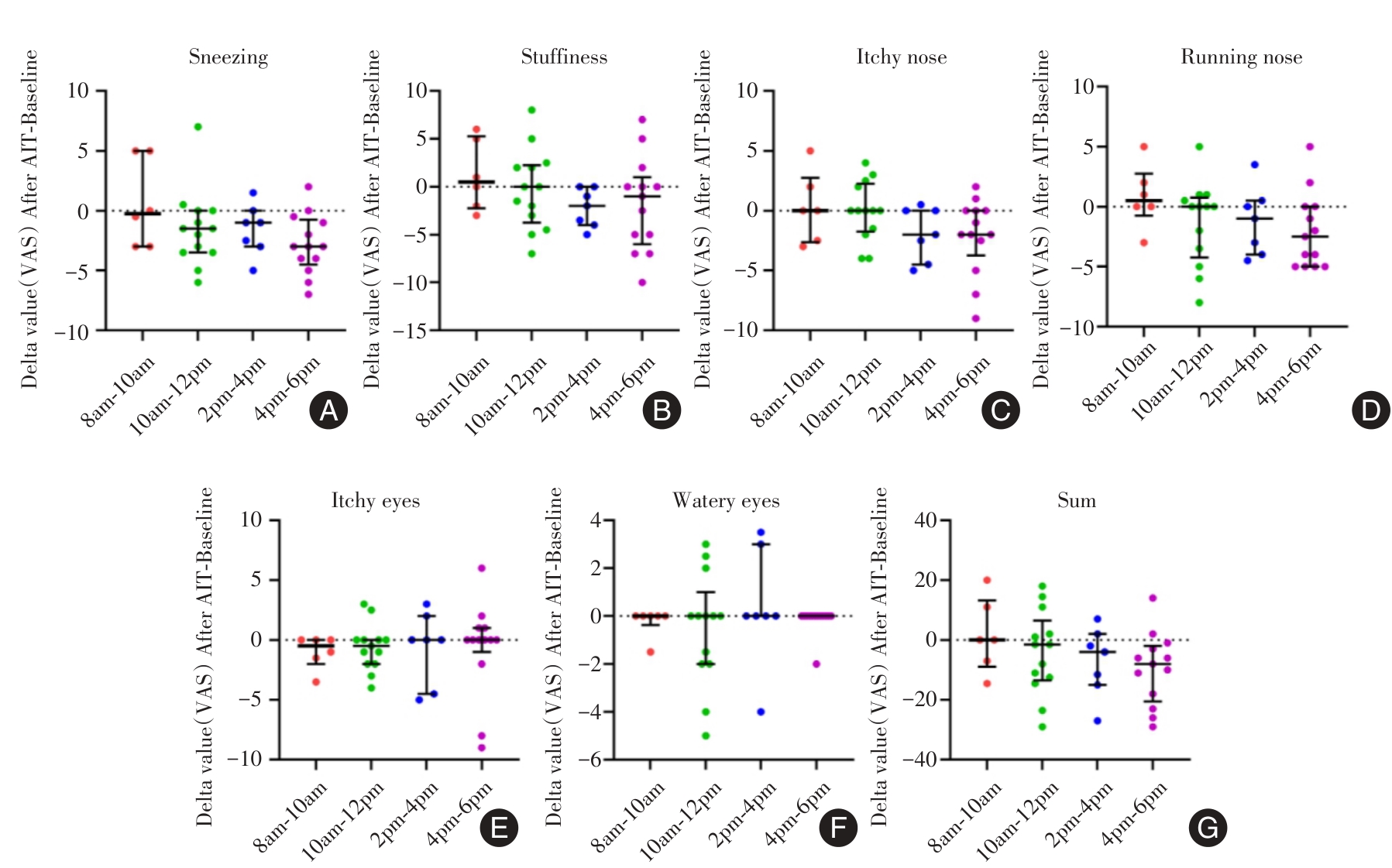
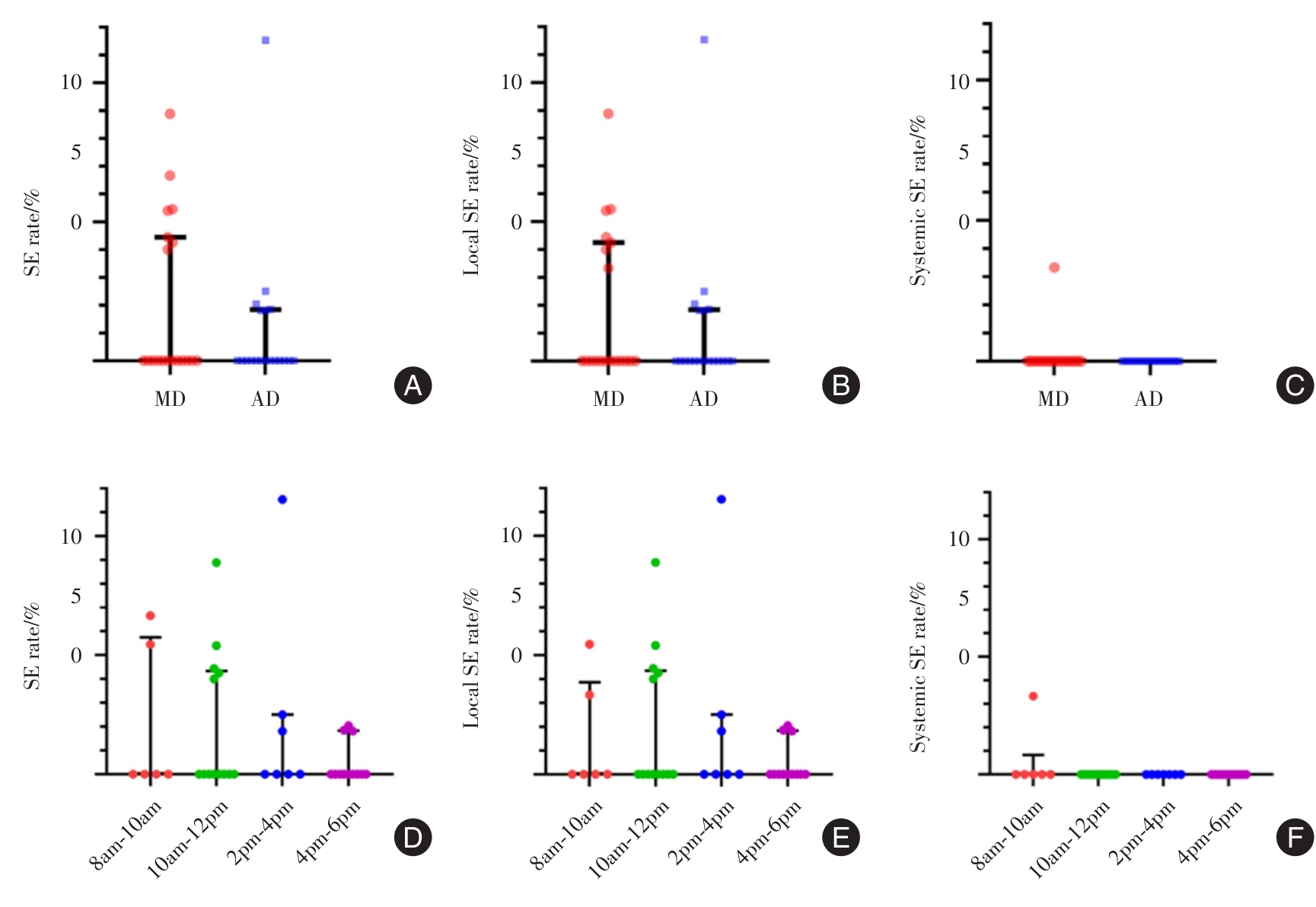
Fig.3
Comparison of treatment-related side effects between morning and afternoon dosing groups and across different time intervals"
| [1] |
BOUSQUET J, ANTO J M, BACHERT C, et al. Allergic rhinitis[J]. Nat Rev Dis Primers, 2020, 6(1): 95. doi:10.1038/s41572-020-00227-0
doi: 10.1038/s41572-020-00227-0 |
| [2] | 胡泽功,白燕. 过敏原特异性免疫治疗的研究进展[J]. 实用医学杂志,2025,41(11):1760-1766. |
| [3] |
PENAGOS M, DURHAM S R. Duration of allergen immunotherapy for inhalant allergy[J]. Curr Opin Allergy Clin Immunol, 2019, 19(6): 594. doi:10.1097/aci.0000000000000585
doi: 10.1097/aci.0000000000000585 |
| [4] |
CHU D K, WOOD R A, FRENCH S, et al. Oral immunotherapy for peanut allergy (PACE): A systematic review and meta-analysis of efficacy and safety[J]. Lancet, 2019, 393(10187): 2222-2232. doi:10.1016/s0140-6736(19)30420-9
doi: 10.1016/s0140-6736(19)30420-9 |
| [5] |
NELSON H S, SOWERS T, PLUNKETT G, et al. The Art of Dosing for Subcutaneous Immunotherapy in North America[J]. J Allergy Clin Immunol Pract, 2024, 12(1): 13-22. doi:10.1016/j.jaip.2023.06.036
doi: 10.1016/j.jaip.2023.06.036 |
| [6] |
SOHN M H. Efficacy and Safety of Subcutaneous Allergen Immunotherapy for Allergic Rhinitis[J]. Allergy Asthma Immunol Res, 2018, 10(1): 1-3. doi:10.4168/aair.2018.10.1.1
doi: 10.4168/aair.2018.10.1.1 |
| [7] |
CONTOLI M, PORSBJERG C, BUCHS S, et al. Real-world, long-term effectiveness of allergy immunotherapy in allergic rhinitis: Subgroup analyses of the REACT study[J]. J Allergy Clin Immunol, 2023, 152(2): 445-452.e4. doi:10.1016/j.jaci.2023.02.024
doi: 10.1016/j.jaci.2023.02.024 |
| [8] |
BINDER E, HOLOPAINEN E, MALMBERG H, et al. Anamnestic data in allergic rhinitis[J]. Allergy, 1982, 37(6): 389-396. doi:10.1111/j.1398-9995.1982.tb02317.x
doi: 10.1111/j.1398-9995.1982.tb02317.x |
| [9] |
SMOLENSKY M H, REINBERG A, LABRECQUE G. Twenty-four hour pattern in symptom intensity of viral and allergic rhinitis: Treatment implications[J]. J Allergy Clin Immunol, 1995, 95(5): 1084-1096. doi:10.1016/s0091-6749(95)70212-1
doi: 10.1016/s0091-6749(95)70212-1 |
| [10] |
REINBERG A, GERVAIS P, LEVI F, et al. Circadian and circannual rhythms of allergic rhinitis: An epidemiologic study involving chronobiologic methods[J]. J Allergy Clin Immunol, 1988, 81(1): 51-62. doi:10.1016/0091-6749(88)90220-5
doi: 10.1016/0091-6749(88)90220-5 |
| [11] |
NAHMIAS Y, ANDROULAKIS I P. Circadian Effects of Drug Responses[J]. Annu Rev Biomed Eng, 2021, 23: 203-224. doi:10.1146/annurev-bioeng-082120-034725
doi: 10.1146/annurev-bioeng-082120-034725 |
| [12] |
TUREK F W. Circadian clocks: Not your grandfather′s clock[J]. Science, 2016, 354(6315): 992-993. doi:10.1126/science.aal2613
doi: 10.1126/science.aal2613 |
| [13] |
DRUZD D, MATVEEVA O, INCE L, et al. Lymphocyte Circadian Clocks Control Lymph Node Trafficking and Adaptive Immune Responses[J]. Immunity, 2017, 46(1): 120-132. doi:10.1016/j.immuni.2016.12.011
doi: 10.1016/j.immuni.2016.12.011 |
| [14] |
BALLESTA A, INNOMINATO P F, DALLMANN R, et al. Systems Chronotherapeutics[J]. Pharmacol Rev, 2017, 69(2): 161-199. doi:10.1124/pr.116.013441
doi: 10.1124/pr.116.013441 |
| [15] |
STORMS W W. Pharmacologic approaches to daytime and nighttime symptoms of allergic rhinitis[J]. J Allergy Clin Immunol, 2004, 114(5): S146-S153. doi:10.1016/j.jaci.2004.08.045
doi: 10.1016/j.jaci.2004.08.045 |
| [16] |
SMOLENSKY M H, LEMMER B, REINBERG A E. Chronobiology and chronotherapy of allergic rhinitis and bronchial asthma[J]. Adv Drug Deliv Rev, 2007, 59(9-10): 852-882. doi:10.1016/j.addr.2007.08.016
doi: 10.1016/j.addr.2007.08.016 |
| [17] |
IGARASHI S, SUZUKI K, NAKAMURA Y, et al. The Efficacy of Sublingual Immunotherapy for Allergic Rhinitis May Vary with the Time of Day[J]. Int Arch Allergy Immunol, 2016, 171(2): 111-118. doi:10.1159/000450954
doi: 10.1159/000450954 |
| [18] |
LIAO F, CHEN S, WANG L, et al. Morning Versus Evening Dosing of Sublingual Immunotherapy in Allergic Asthma: A Prospective Study[J]. Front Pediatr, 2022, 10: 892572. doi:10.3389/fped.2022.892572
doi: 10.3389/fped.2022.892572 |
| [19] |
LI H, YANG X, WEN Y, et al. Three‐Year Longitudinal Evaluation of Timing Effects on Subcutaneous Immunotherapy Efficacy and Safety in Allergic Rhinitis[J]. Clin Exp Allergy, 2025: cea.70075. doi:10.1111/cea.70075
doi: 10.1111/cea.70075 |
| [20] |
LÓPEZ-SANZ C, JIMÉNEZ-SAIZ R, ESTEBAN V, et al. Mast Cell Desensitization in Allergen Immunotherapy[J]. Front Allergy, 2022, 3: 898494. doi:10.3389/falgy.2022.898494
doi: 10.3389/falgy.2022.898494 |
| [21] |
COX L, LARENAS-LINNEMANN D, LOCKEY R F, et al. Speaking the same language: The World Allergy Organization Subcutaneous Immunotherapy Systemic Reaction Grading System[J]. J Allergy Clin Immunol, 2010, 125(3): 569-574.e7. doi:10.1016/j.jaci.2009.10.060
doi: 10.1016/j.jaci.2009.10.060 |
| [22] |
FREW A J. Allergen immunotherapy[J]. J Allergy Clin Immunol, 2010, 125(2): S306-S313. doi:10.1016/j.jaci.2009.10.064
doi: 10.1016/j.jaci.2009.10.064 |
| [23] |
WANG L, WANG C, LOU H, et al. Antihistamine premedication improves safety and efficacy of allergen immunotherapy[J/OL]. Ann Allergy Asthma Immunol, 2021, 127(3): 363-371.e1. doi:10.1016/j.anai.2021.05.023
doi: 10.1016/j.anai.2021.05.023 |
| [24] |
HERMIDA R C, AYALA D E, SMOLENSKY M H, et al. Chronotherapy improves blood pressure control and reduces vascular risk in CKD[J]. Nat Rev Nephrol, 2013, 9(6): 358-368. doi:10.1038/nrneph.2013.79
doi: 10.1038/nrneph.2013.79 |
| [25] |
SHAMJI M H, LJØRRING C, FRANCIS J N, et al. Functional rather than immunoreactive levels of IgG4 correlate closely with clinical response to grass pollen immunotherapy.[J]. Allergy, 2012, 67(2): 217-226. doi:10.1111/j.1398-9995.2011.02745.x
doi: 10.1111/j.1398-9995.2011.02745.x |
| [26] |
NAKAO A. Circadian Regulation of the Biology of Allergic Disease: Clock Disruption Can Promote Allergy[J]. Front Immunol, 2020, 11: 1237. doi:10.3389/fimmu.2020.01237
doi: 10.3389/fimmu.2020.01237 |
| [27] |
LIN Y, HE L, CAI Y, et al. The role of circadian clock in regulating cell functions: Implications for diseases[J]. MedComm (2020), 2024, 5(3): e504. doi:10.1002/mco2.504
doi: 10.1002/mco2.504 |
| [28] |
FIDAN V, ALP H H, GOZELER M, et al. Variance of melatonin and cortisol rhythm in patients with allergic rhinitis[J]. Am J Otolaryngol, 2013, 34(5): 416-419. doi:10.1016/j.amjoto.2013.03.004
doi: 10.1016/j.amjoto.2013.03.004 |
| [29] |
ANDO N, NAKAMURA Y, ISHIMARU K, et al. Allergen-specific basophil reactivity exhibits daily variations in seasonal allergic rhinitis[J]. Allergy, 2015, 70(3): 319-322. doi:10.1111/all.12552
doi: 10.1111/all.12552 |
| [30] |
LONG J E, DRAYSON M T, TAYLOR A E, et al. Morning vaccination enhances antibody response over afternoon vaccination: A cluster-randomised trial[J]. Vaccine, 2016, 34(24): 2679-2685. doi:10.1016/j.vaccine.2016.04.032
doi: 10.1016/j.vaccine.2016.04.032 |
| [31] |
ZHANG H, LIU Y, LIU D, et al. Time of day influences immune response to an inactivated vaccine against SARS-CoV-2[J]. Cell Res, 2021, 31(11): 1215-1217. doi:10.1038/s41422-021-00541-6
doi: 10.1038/s41422-021-00541-6 |
| [1] | Hanqi YANG,Lingna. HE. The therapeutic effect of acupuncture combined with moxibustion on insomnia related to cerebral infarction based on the "Yuan⁃Luo Point Pairing" and its impact on serum Hcrt⁃1, 5⁃HT, and slow wave EEG [J]. The Journal of Practical Medicine, 2025, 41(8): 1253-1258. |
| [2] | Youqiang ZHANG,Ling YAN,Wei LIAO,Guang WANG,Xiaoheng CHEN,Rui FAN,Zuwei. LIU. Study of modified anteromedial approach and preserves the superior extensor retinaculum for clinical effect of Pilon fracture [J]. The Journal of Practical Medicine, 2025, 41(3): 358-364. |
| [3] | Jiahao CHEN,Yong HUANG,Ruibing FENG,Xiaofeng DUAN,Gang WU,Yizheng HUANG,Haitao ZHANG,Chao LI,Yinshuai DING,Hao. HU. Treatment effect and safety analysis of intraspinal tumor under 3D microscope [J]. The Journal of Practical Medicine, 2025, 41(3): 371-378. |
| [4] | Muying HUANG,Chu LIU,Jiaman LIU,Zhicong. WANG. Early identification of high⁃risk children who develop systemic adverse reactions related to dust mite allergy subcutaneous immunotherapy [J]. The Journal of Practical Medicine, 2025, 41(19): 3065-3071. |
| [5] | Yuchen ZHAO,Manting XU,Jing BAO,Liang XIA. Clinical evaluation of daratumumab in combination with lenalidomide and bortezomib and with daratumumab, bortezomib, and dexamethasone for the treatment of relapsed and refractory multiple myeloma [J]. The Journal of Practical Medicine, 2025, 41(18): 2913-2919. |
| [6] | Hecheng SUN,Haiyang WANG. Radiofrequency ablation for lower extremity varicose veins: A comprehensive review [J]. The Journal of Practical Medicine, 2025, 41(17): 2761-2766. |
| [7] | Daojun BAO,Gomei ZHU,Gehong PENG. New directions in treatment for lower extremity varicose veins: Advances in ultrasound⁃guided microwave ablation applications [J]. The Journal of Practical Medicine, 2025, 41(15): 2435-2440. |
| [8] | Yuling DUAN,Xuezhi ZHOU,Yongyi LI,Lixia MA,Desheng YANG,Jiao CHENG,Yan WU,Tao LIU,Guoyuan JIANG,Mei. WANG. Clinical value analysis of different MRI measurement methods in evaluating the efficacy of neoadjuvant therapy for breast cancer [J]. The Journal of Practical Medicine, 2025, 41(14): 2152-2159. |
| [9] | Rouzi REBOTE,Hanshuo ZHANG,Guangnan YANG,Jie BAI,Qiang JIANG,Zhengcao LU,Wen LI,Yu DING. Clinical observation of Endo⁃LOVE combined with NR⁃PRF in the treatment of LDD:Focusing on the improvement of postoperative residual symptoms [J]. The Journal of Practical Medicine, 2025, 41(12): 1800-1807. |
| [10] | Linyu ZENG,Ziming CHEN,Junqing ZENG,Yi YAN,Daying ZHANG,Lili GU. Ultrasound measurement of sciatic nerve cross⁃sectional area in early outcome assessment after endoscopic surgery for unilateral lumbar disc herniation [J]. The Journal of Practical Medicine, 2025, 41(1): 35-40. |
| [11] | Xi LIU,Xiaona LIU,Chao LI,Rui XIAN,Lihong CUI. Efficacy analysis of different regimens for treatment of Helicobacter pylori infection combined with small intestinal bacterial overgrowth [J]. The Journal of Practical Medicine, 2024, 40(9): 1303-1308. |
| [12] | Yuan LIU,Jing LAI,Danying MA,Lingzi WU,Wei. WANG. Analysis of fatigue status and influencing factors of adult patients at home after cardiac surgery [J]. The Journal of Practical Medicine, 2024, 40(24): 3547-3553. |
| [13] | Yingyuan ZHANG,Chunyan MOU,Danqing XU,Yuanzhen WANG,Lixian CHANG,Chunyun LIU,Weikun LI,Hongyan WEI,Li LIU. Comparison of clinical efficacy of TMF and TDF in the treatment of hepatitis B liver fibrosis [J]. The Journal of Practical Medicine, 2024, 40(22): 3215-3220. |
| [14] | Fangmin GENG,Yuandan HE,Wenjuan LI,Qianqian LIU,Hongwei ZHANG,Zhangping LU,Lianhua WEI. Values of different DIC scoring systems in early diagnosis and prognosis prediction of coagulation dysfunction in sepsis patients [J]. The Journal of Practical Medicine, 2024, 40(2): 248-252. |
| [15] | Yanping WANG,Wenhui GAO,Yanting WU,Jun YANG,Yi ZHOU,Xiaoshun. JIAN. Analysis of influencing factors on clinical efficacy of neutropenia with febrile neutropenia in tumor patients [J]. The Journal of Practical Medicine, 2024, 40(18): 2597-2601. |
| Viewed | ||||||
|
Full text |
|
|||||
|
Abstract |
|
|||||
