

The Journal of Practical Medicine ›› 2025, Vol. 41 ›› Issue (20): 3175-3184.doi: 10.3969/j.issn.1006-5725.2025.20.005
• Basic Research • Previous Articles
Wei YANG1,Xiahai LIANG2,Huidong XIA2,Ru. BAI2( )
)
Received:2025-07-09
Online:2025-10-25
Published:2025-11-05
Contact:
Ru. BAI
E-mail:bairu@nxmu.edu.cn
CLC Number:
Wei YANG,Xiahai LIANG,Huidong XIA,Ru. BAI. The expression of TUBB2A in HCC and its effect on malignant biological behaviors of HCC cells under hypoxia[J]. The Journal of Practical Medicine, 2025, 41(20): 3175-3184.
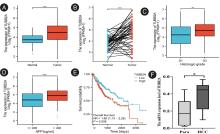
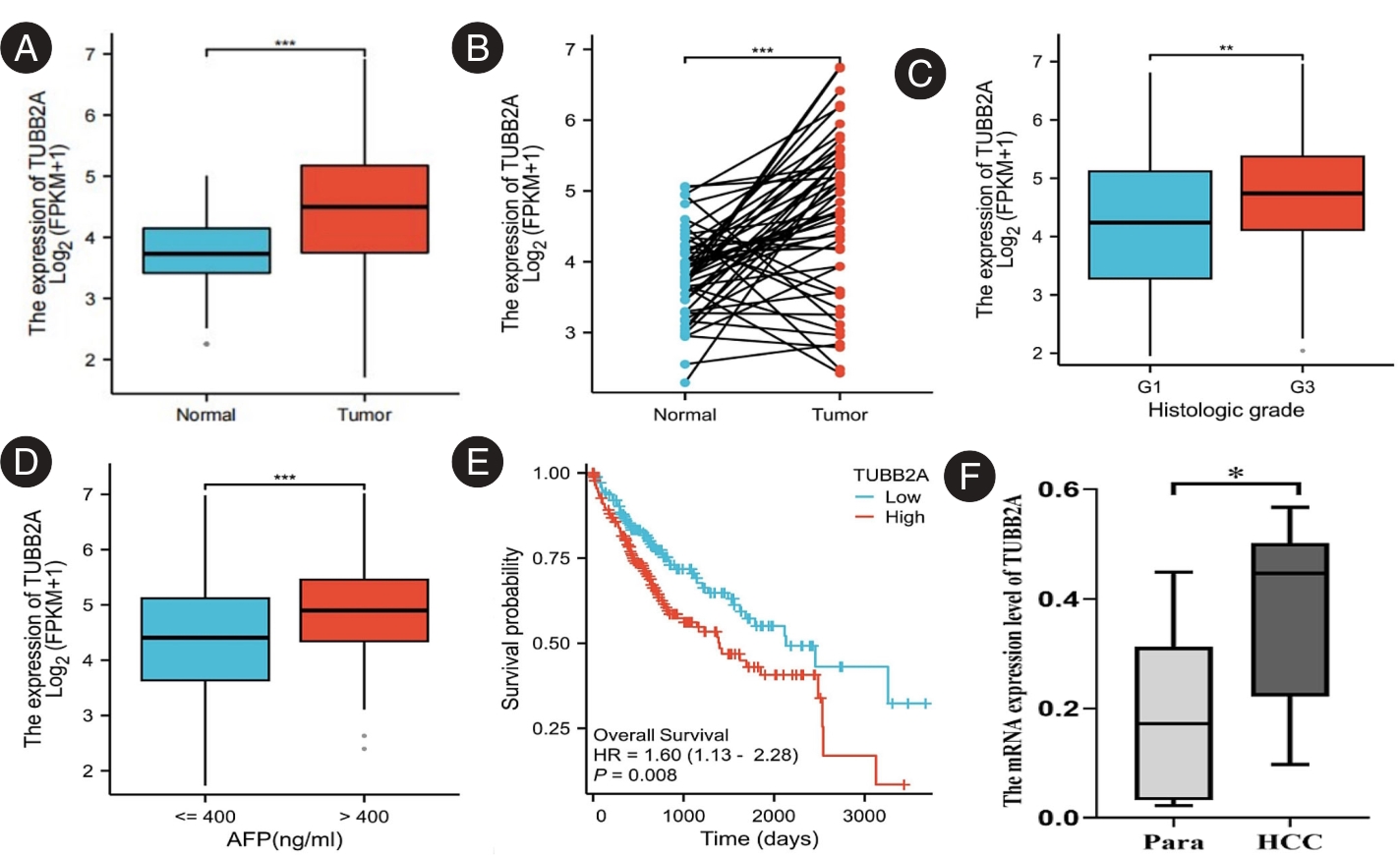
Fig.1
The expression of TUBB2A in HCC and its relationship with clinicopathological characteristics"

Tab.1
TUBB2A expression and their clinicopathological correlations in a series of 30 HCC cases"
| 临床特征 | 例数 | TUBB2A表达 | P值 | |
|---|---|---|---|---|
| 低 | 高 | |||
| 年龄 | 0.313 | |||
| ≥ 60岁 | 13 | 4 | 9 | |
| ≤ 60岁 | 17 | 9 | 8 | |
| 性别 | 0.502 | |||
| 男 | 23 | 11 | 12 | |
| 女 | 7 | 4 | 3 | |
| 临床分期 | 0.025 | |||
| Ⅰ期 | 25 | 4 | 21 | |
| Ⅳ期 | 5 | 1 | 4 | |
| HBV感染 | 0.158 | |||
| 是 | 24 | 12 | 12 | |
| 否 | 6 | 2 | 4 | |
| AFP | 0.012 | |||
| > 400 ng/mL | 10 | 2 | 8 | |
| < 400 ng/mL | 20 | 5 | 15 | |
| 肝硬化 | 1.359 | |||
| 是 | 19 | 9 | 10 | |
| 否 | 11 | 7 | 4 | |
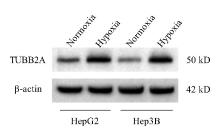
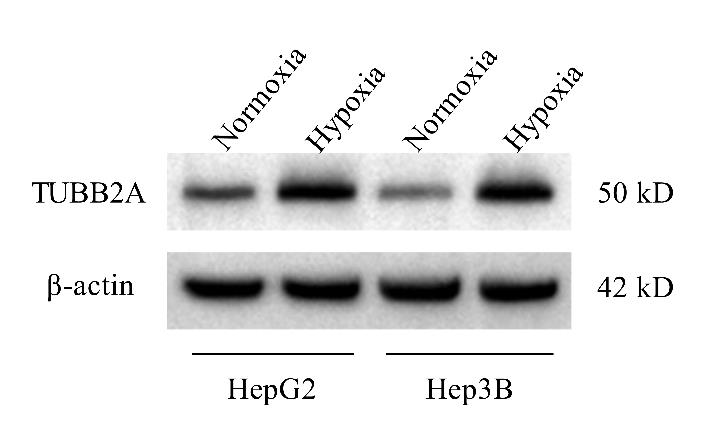
Fig.2
Protein expression of TUBB2A in HCC cells under normoxia and hypoxia"
Tab.2
The mRNA and protein expression of TUBB2A in HCC cells under normoxia and hypoxia(n = 3)"
| 细胞系 | TUBB2A mRNA | TUBB2A 蛋白 |
|---|---|---|
| HepG2常氧 | 1.17 ± 0.21 | 1.01 ± 0.00 |
| HepG2缺氧 | 5.94 ± 0.45** | 1.97 ± 0.31* |
| t值 | 4.42 | 1.54 |
| P值 | < 0.01 | < 0.05 |
| Hep3B常氧 | 0.90 ± 0.15 | 0.99 ± 0.00 |
| Hep3B缺氧 | 4.05 ± 0.36** | 2.06 ± 0.31** |
| t值 | 3.17 | 1.70 |
| P值 | < 0.01 | < 0.01 |
Fig.3
Establishment and characterization of stable TUBB2A-overexpressing and knockout in HCC cells"
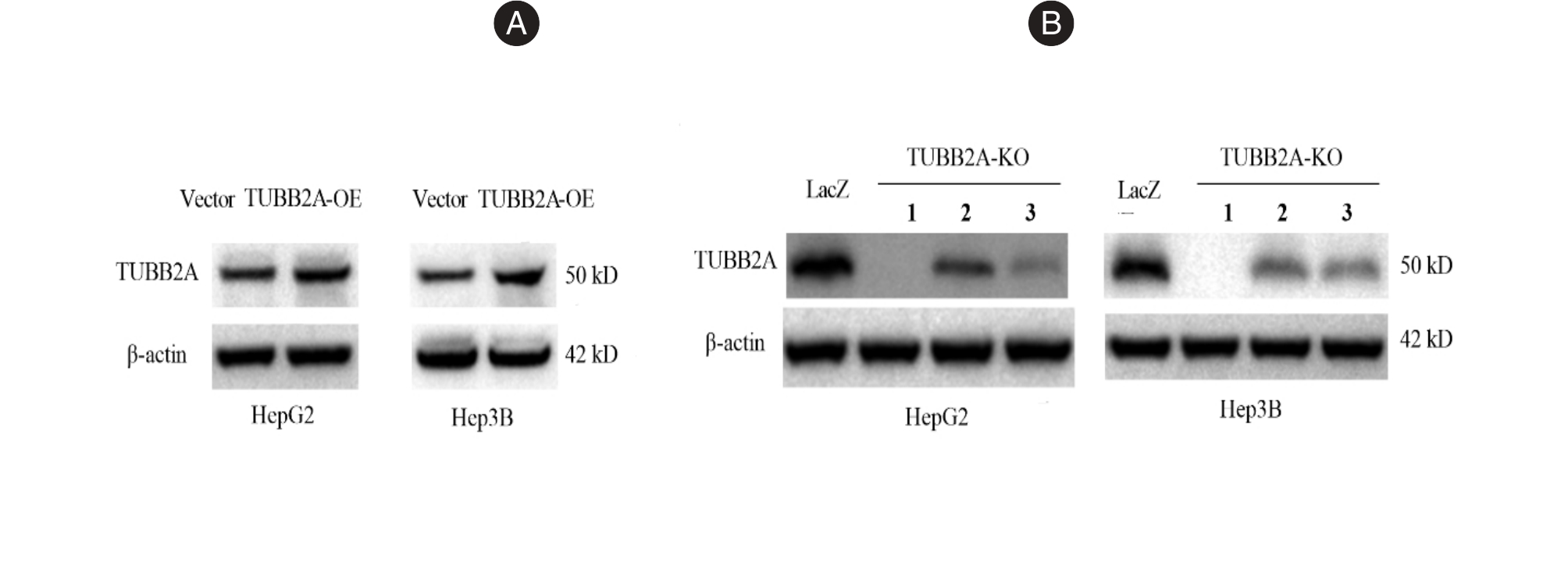
Tab.3
TUBB2A protein expression in TUBB2A-overexpressing and knockout HCC cell lines(n = 3)"
| 组别 | HepG2 | Hep3B |
|---|---|---|
| Vector | 1.17 ± 0.21 | 1.01 ± 0.00 |
| TUBB2A-OE | 5.94 ± 0.45** | 1.97 ± 0.31** |
| t值 | -28.77 | -11.93 |
| P值 | < 0.01 | < 0.01 |
| LacZ | 0.96 ± 0.15 | 0.92 ± 0.04 |
| TUBB2A-KO1 | 0.06 ± 0.03*** | 0.03 ± 0.02*** |
| t值 | 10.54 | 33.32 |
| P值 | < 0.001 | < 0.001 |
| TUBB2A-KO2 | 0.59 ± 0.08* | 0.48 ± 0.04*** |
| t值 | 3.90 | 13.09 |
| P值 | < 0.05 | < 0.001 |
| TUBB2A-KO3 | 0.52 ± 0.04* | 0.31 ± 0.14*** |
| t值 | 5.00 | 7.26 |
| P值 | < 0.05 | < 0.001 |
Fig.4
Effects of TUBB2A overexpression and knockout on colony formation in HCC cells under hypoxia"
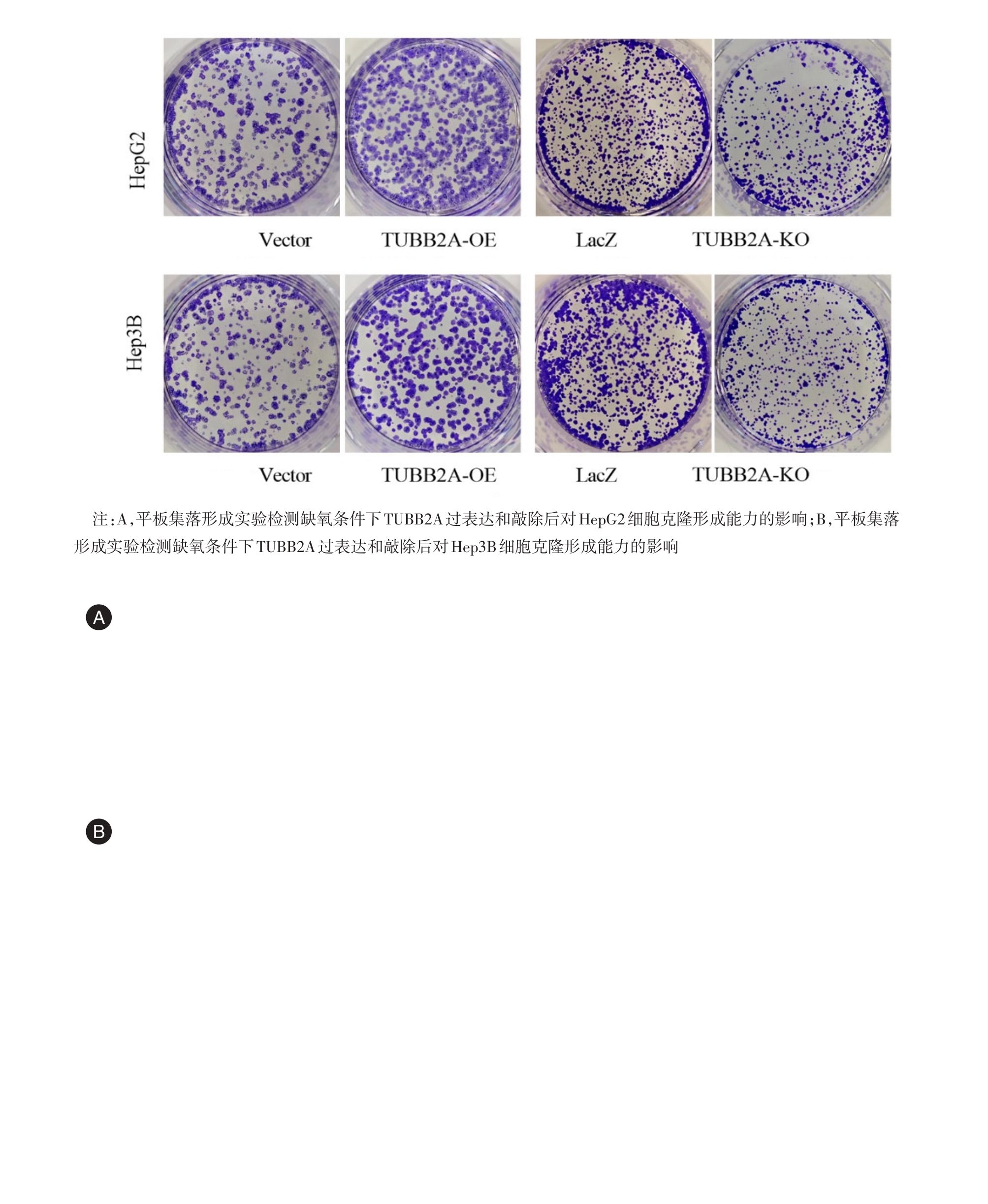
Tab.4
Effects of TUBB2A overexpression and knockout on proliferation viability and colony formation in HCC cells under hypoxia(n = 3)"
| 组别 | HepG2细胞活力 | Hep3B细胞活力 | 集落形成数量 | |||
|---|---|---|---|---|---|---|
| 24 h | 48 h | 24 h | 48 h | HepG2 | Hep3B | |
| Vector | 0.72 ± 0.01 | 0.86 ± 0.02 | 0.56 ± 0.01 | 0.70 ± 0.02 | 35.00 ± 8.89 | 30.67 ± 4.16 |
| TUBB2A-OE | 0.81 ± 0.03** | 0.91 ± 0.01* | 0.63 ± 0.04* | 0.73 ± 0.03* | 74.67 ± 7.02** | 76.00 ± 4.00** |
| t值 | -3.72 | -3.15 | -2.89 | -5.00 | -6.12 | -14.221 |
| P值 | < 0.01 | < 0.05 | < 0.05 | < 0.05 | < 0.01 | < 0.01 |
| LacZ | 0.83 ± 0.02 | 1.13 ± 0.03 | 0.58 ± 0.02 | 0.77 ± 0.01 | 79.10 ± 4.45 | 64.90 ± 1.61 |
| TUBB2A-KO1 | 0.76 ± 0.02* | 0.97 ± 0.02** | 0.53 ± 0.02* | 0.72 ± 0.01* | 68.08 ± 1.31* | 61.05 ± 2.08* |
| t值 | 3.39 | 4.21 | 3.05 | 2.98 | 2.15 | 1.12 |
| P值 | < 0.05 | < 0.01 | < 0.01 | < 0.05 | < 0.05 | < 0.05 |
Tab.5
Effects of TUBB2A overexpression and knockout on migration and invasion in HCC cells under hypoxia(n = 3)"
| 组别 | 迁移细胞数 | 侵袭细胞数 | ||
|---|---|---|---|---|
| HepG2 | Hep3B | HepG2 | Hep3B | |
| Vector | 117.33 ± 15.01 | 20.33 ± 4.73 | 202.33 ± 34.85 | 56.33 ± 16.80 |
| LV-TUBB2A | 366.00 ± 28.69** | 38.67 ± 5.03** | 382.33 ± 16.50** | 119.67 ± 17.95** |
| t值 | -12.89 | -5.67 | -7.23 | -4.56 |
| P值 | < 0.01 | < 0.01 | < 0.01 | < 0.01 |
| LacZ | 872.67 ± 25.66 | 526.00 ± 33.51 | 32.00 ± 3.61 | 45.00 ± 4.36 |
| TUBB2A-KO1 | 655.00 ± 9.85** | 322.00 ± 41.07** | 20.67 ± 2.52* | 26.67 ± 4.73* |
| t值 | 4.67 | 5.02 | 3.41 | 3.89 |
| P值 | < 0.01 | < 0.01 | < 0.05 | < 0.05 |
Fig.5
Effects of TUBB2A overexpression and knockout on migration and invasion in HCC cells under hypoxia"
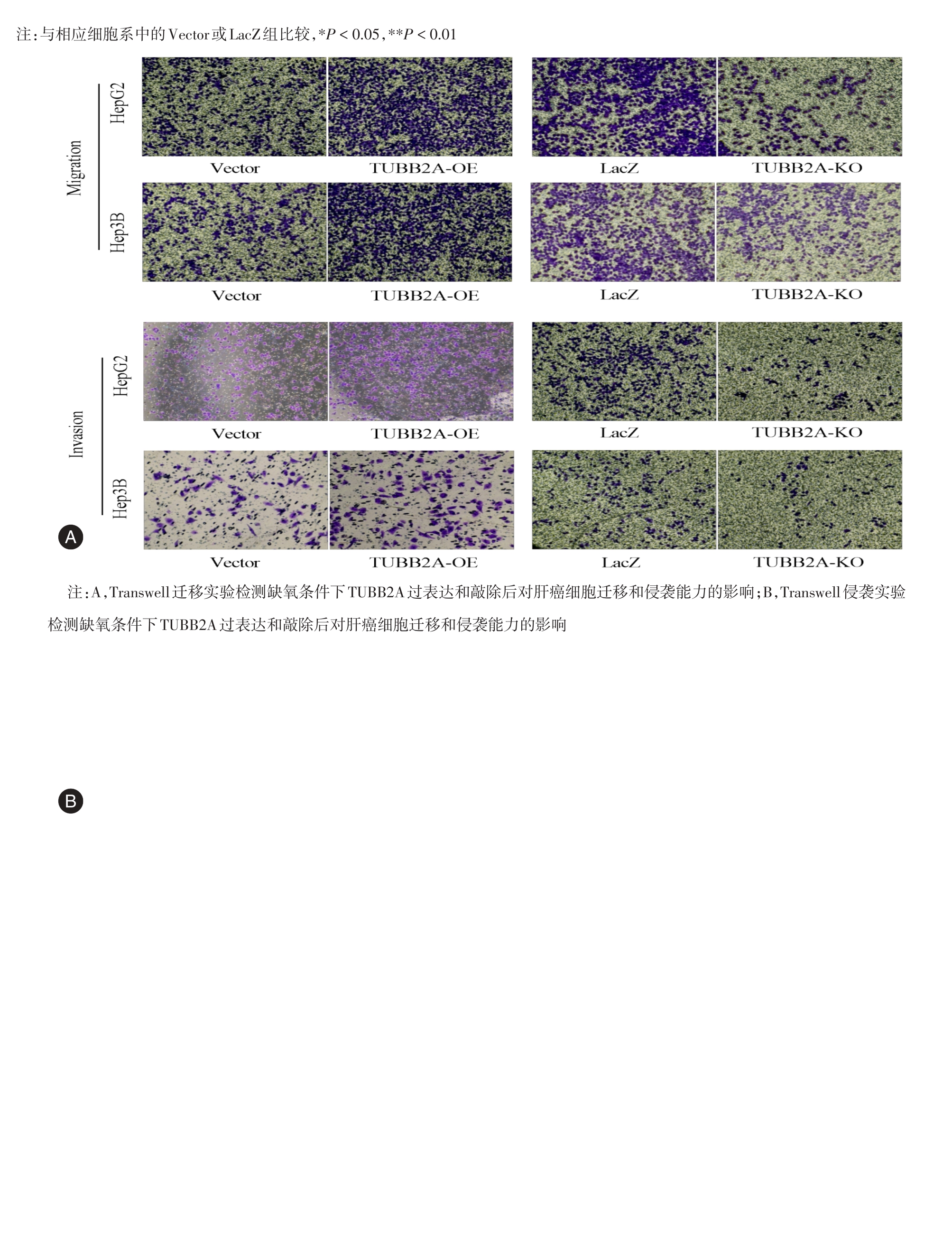
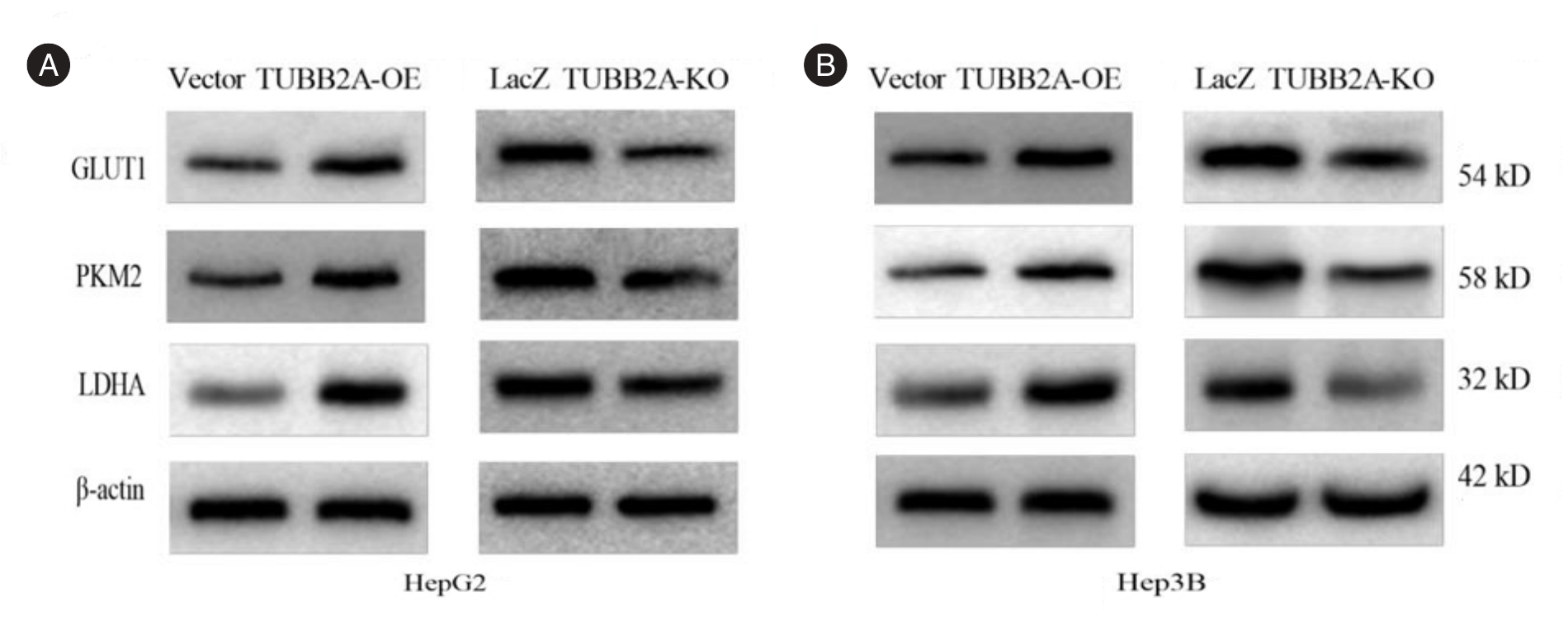
Fig.6
Effects of TUBB2A overexpression and knockout on key glycolysis protein in HCC cells under hypoxia"
Tab. 6
Effects of TUBB2A overexpression and knockout on key glycolysis protein in HepG2 cells under hypoxia(n = 3)"
| 组别 | 相对表达量 | ||
|---|---|---|---|
| GLUT1 | PKM2 | LDHA | |
| Vector | 0.58 ± 0.01 | 0.76 ± 0.01 | 0.46 ± 0.01 |
| TUBB2A-OE | 0.82 ± 0.01* | 0.86 ± 0.00* | 0.90 ± 0.02** |
| t值 | -18.95 | -4.48 | -23.07 |
| P值 | < 0.05 | < 0.05 | < 0.01 |
| LacZ | 0.94 ± 0.01 | 1.21 ± 0.02 | 0.90 ± 0.01 |
| TUBB2A-KO1 | 0.61 ± 0.01*** | 0.96 ± 0.02** | 0.58 ± 0.02*** |
| t值 | 70.20 | 14.59 | 43.42 |
| P值 | < 0.001 | < 0.01 | < 0.001 |
Tab. 7
Effects of TUBB2A overexpression and knockout on key glycolysis protein in Hep3B cells under hypoxia(n = 3)"
| 组别 | 相对表达量 | ||
|---|---|---|---|
| GLUT1 | PKM2 | LDHA | |
| Vector | 0.57 ± 0.01 | 0.63 ± 0.00 | 0.75 ± 0.02 |
| TUBB2A-OE | 0.84 ± 0.01** | 0.96 ± 0.01** | 1.21 ± 0.03** |
| t值 | -27.53 | -6.86 | -17.55 |
| P值 | < 0.051 | < 0.05 | < 0.01 |
| LacZ | 0.99 ± 0.03 | 0.83 ± 0.02 | 0.70 ± 0.03 |
| TUBB2A-KO1 | 0.63 ± 0.01** | 0.59 ± 0.01** | 0.44 ± 0.00** |
| t值 | 11.75 | 3.68 | 11.01 |
| P值 | < 0.01 | < 0.05 | < 0.01 |
| [1] |
ZOU H, LI M, LEI Q, et al. Economic Burden and Quality of Life of Hepatocellular Carcinoma in Greater China: A Systematic Review[J]. Front Public Health, 2022, 10: 801981. doi:10.3389/fpubh.2022.801981
doi: 10.3389/fpubh.2022.801981 |
| [2] | 李文锋,李建华,王正昕.肝癌肝移植术前应用免疫检查点抑制剂治疗的进展[J].器官移植,2025,16(3):329-337. |
| [3] |
TOH M, WONG E, WONG S, et al. Global Epidemiology and Genetics of Hepatocellular Carcinoma[J]. Gastroenterology, 2023, 164(5): 766-782. doi:10.1053/j.gastro.2023.01.033
doi: 10.1053/j.gastro.2023.01.033 |
| [4] |
CHEN Z, HAN F, DU Y, et al. Hypoxic microenvironment in cancer: Molecular mechanisms and therapeutic interventions[J]. Signal Transduct Target Ther, 2023, 8(1): 70. doi:10.1038/s41392-023-01332-8
doi: 10.1038/s41392-023-01332-8 |
| [5] |
KOSHY A. Evolving Global Etiology of Hepatocellular Carcinoma (HCC): Insights and Trends for 2024[J]. J Clin Exp Hepatol, 2025, 15(1):102406. doi:10.1016/j.jceh.2024.102406
doi: 10.1016/j.jceh.2024.102406 |
| [6] |
BAO M H, WONG C C. Hypoxia, Metabolic Reprogramming, and Drug Resistance in Liver Cancer[J]. Cells, 2021, 10(7): 1715. doi:10.3390/cells10071715
doi: 10.3390/cells10071715 |
| [7] |
LIU T, TANG J, LI X, et al. The Key Network of mRNAs and miRNAs Regulated by HIF1A in Hypoxic Hepatocellular Carcinoma Cells[J]. Front Genet, 2022, 13: 857507. doi:10.3389/fgene.2022.857507
doi: 10.3389/fgene.2022.857507 |
| [8] |
LI J, YAO J, QI L. Identification of TUBB2A as a Cancer-Immunity Cycle-Related Therapeutic Target in Triple-Negative Breast Cancer[J]. Mol Biotechnol, 2024, 66(9): 2467-2480. doi:10.1007/s12033-023-00880-2
doi: 10.1007/s12033-023-00880-2 |
| [9] |
SONG Q, LIU S, WU D, et al. Multiple programmed cell death patterns predict the prognosis and drug sensitivity in gastric cancer[J]. Front Immunol, 2025, 16: 1511453. doi:10.3389/fimmu.2025.1511453
doi: 10.3389/fimmu.2025.1511453 |
| [10] |
LEE Y Q, RAJADURAI P, ABAS F, et al. Proteomic Analysis on Anti-Proliferative and Apoptosis Effects of Curcumin Analog, 1,5-bis(4-Hydroxy-3-Methyoxyphenyl)-1,4-Pentadiene-3-One-Treated Human Glioblastoma and Neuroblastoma Cells[J]. Front Mol Biosci, 2021, 8: 645856. doi:10.3389/fmolb.2021.645856
doi: 10.3389/fmolb.2021.645856 |
| [11] | 刘晴晴,李丹青,李艳宏,等.基于微管蛋白的双靶点抑制剂抗肿瘤研究进展[J/OL].吉林医药学院学报,1-6[2025-09-15].. |
| [12] |
LOPES D, MAIATO H. The Tubulin Code in Mitosis and Cancer[J]. Cells, 2020, 9(11): 2356. doi:10.3390/cells9112356
doi: 10.3390/cells9112356 |
| [13] |
MCKENNA E D, SARBANES S L, CUMMINGS S W, et al. The Tubulin Code, from Molecules to Health and Disease[J]. Annu Rev Cell Dev Biol, 2023, 39: 331-361. doi:10.1146/annurev-cellbio-030123-032748
doi: 10.1146/annurev-cellbio-030123-032748 |
| [14] |
SHIN D, PARK J, HAN D, et al. Identification of TUBB2A by quantitative proteomic analysis as a novel biomarker for the prediction of distant metastatic breast cancer[J]. Clin Proteomics, 2020, 17: 16. doi:10.1186/s12014-020-09280-z
doi: 10.1186/s12014-020-09280-z |
| [15] |
VISHNUBALAJI R, ALAJEZ N M. Single-Cell Transcriptome Analysis Revealed Heterogeneity and Identified Novel Therapeutic Targets for Breast Cancer Subtypes[J]. Cells, 2023, 12(8): 1182. doi:10.3390/cells12081182
doi: 10.3390/cells12081182 |
| [16] |
CRAMERT, VAUPEL P. Severe hypoxia is a typical characteristic of human hepatocellular carcinoma: Scientific fact or fallacy?[J]. J Hepatol, 2022, 76(4): 975-980. doi:10.1016/j.jhep.2021.12.028
doi: 10.1016/j.jhep.2021.12.028 |
| [17] |
SIN S Q, MOHAN C D, MIGUEL R, et al. Hypoxia signaling in hepatocellular carcinoma: Challenges and therapeutic opportunities[J]. Cancer Metastasis Rev, 2023, 42(3): 741-764. doi:10.1007/s10555-022-10071-1
doi: 10.1007/s10555-022-10071-1 |
| [18] |
WANG Y, DENG B. Hepatocellular carcinoma: Molecular mechanism, targeted therapy, and biomarkers[J]. Cancer Metastasis Rev, 2023, 42(3): 629-652. doi:10.1007/s10555-023-10084-4
doi: 10.1007/s10555-023-10084-4 |
| [19] | 王毅, 何硕, 杨斯昀, 等. 5-氟尿嘧啶联合重组人细胞珠蛋白治疗缺氧诱导化疗耐受肝细胞癌的体外实验[J]. 实用医学杂志, 2024, 40(22): 3146-3154. |
| [20] |
RUAN W, YANGY, YU Q, et al. FUT11 is a target gene of HIF1α that promotes the progression of hepatocellular carcinoma[J]. Cell Biol Int, 2021, 45(11): 2275-2286. doi:10.1002/cbin.11675
doi: 10.1002/cbin.11675 |
| [21] |
ZHANG Q, WEI T, JIN W, et al. Deficiency in SLC25A15, a hypoxia-responsive gene, promotes hepatocellular carcinoma by reprogramming glutamine metabolism[J]. J Hepatol, 2024, 80(2): 293-308. doi:10.1016/j.jhep.2023.10.024
doi: 10.1016/j.jhep.2023.10.024 |
| [22] |
CHAITHANYA C, CHELAKKOT VS, SHIN K, et al. Modulating Glycolysis to Improve Cancer Therapy[J]. Int J Mol Sci, 2023, 24(3): 2606. doi:10.3390/ijms24032606
doi: 10.3390/ijms24032606 |
| [23] |
DU D, LIU C, QIN M, et al. Metabolic dysregulation and emerging therapeutical targets for hepatocellular carcinoma[J]. Acta Pharm Sin B, 2022, 12(2): 558-580. doi:10.1016/j.apsb.2021.09.019
doi: 10.1016/j.apsb.2021.09.019 |
| [24] |
FENG J, LI J, WU L, et al. Emerging roles and the regulation of aerobic glycolysis in hepatocellular carcinoma[J]. J Exp Clin Cancer Res, 2020, 39(1): 126. doi:10.1186/s13046-020-01629-4
doi: 10.1186/s13046-020-01629-4 |
| [25] |
WU Y, WANG Y, YAO H, et al. MNX1-AS1, a c-Myc induced lncRNA, promotes the Warburg effect by regulating PKM2 nuclear translocation[J]. J Exp Clin Cancer Res, 2022, 41(1): 337. doi:10.1186/s13046-022-02547-3
doi: 10.1186/s13046-022-02547-3 |
| [26] |
ZHOU Q, YIN Y, YU M, et al. GTPBP4 promotes hepatocellular carcinoma progression and metastasis via the PKM2 dependent glucose metabolism[J]. Redox Biol, 2022, 56: 102458. doi:10.1016/j.redox.2022.102458
doi: 10.1016/j.redox.2022.102458 |
| [27] |
QIN X, SUN H, HU S, et al. A hypoxia-glycolysis-lactate-related gene signature for prognosis prediction in hepatocellular carcinoma[J]. BMC Med Genomics, 2024, 17(1): 88. doi:10.1186/s12920-024-01867-x
doi: 10.1186/s12920-024-01867-x |
| Viewed | ||||||
|
Full text |
|
|||||
|
Abstract |
|
|||||
