

The Journal of Practical Medicine ›› 2026, Vol. 42 ›› Issue (18): 3248-3255.doi: 10.3969/j.issn.1006-5725.2026.18.002
• Oncology: Diagnosis, Treatment and Prevention • Previous Articles
Wenxin Zhang, Pingjiao Wang, Lai Wu, Yu'e Yang, Fang Sun( )
Received:2026-01-10
Revised:2026-03-09
Accepted:2026-03-24
Online:2026-09-25
Published:2026-10-19
Contact:
Fang Sun
About author:Zhang Wenxin organized the data and wrote the article. Wang Pingjiao, Wu Lai and Yang Yu'e collected the data and revised the article. Sun Fang designed the study and reviewed the article. All authors read and approved the final manuscript as submitted.
CLC Number:
Wenxin Zhang, Pingjiao Wang, Lai Wu, Yu'e Yang, Fang Sun. Construction and analysis of an individualized prediction model for cervical lymph node metastasis in patients with medullary thyroid carcinoma based on ensemble learning algorithms[J]. The Journal of Practical Medicine, 2026, 42(18): 3248-3255.
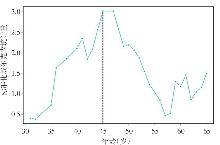
Fig.1
Schematic diagram of calculating the optimal cut-off value of age"
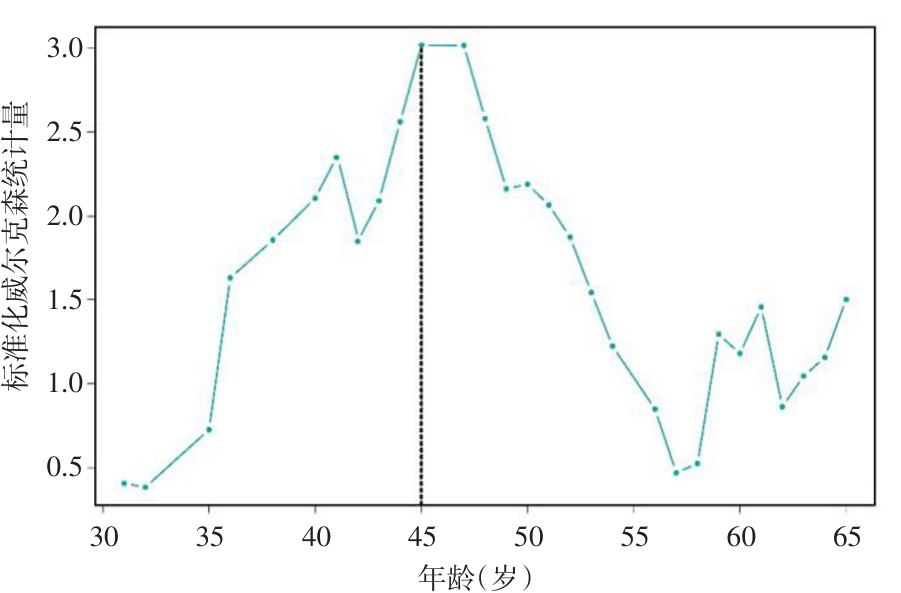
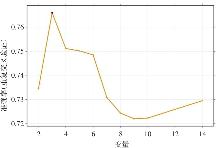
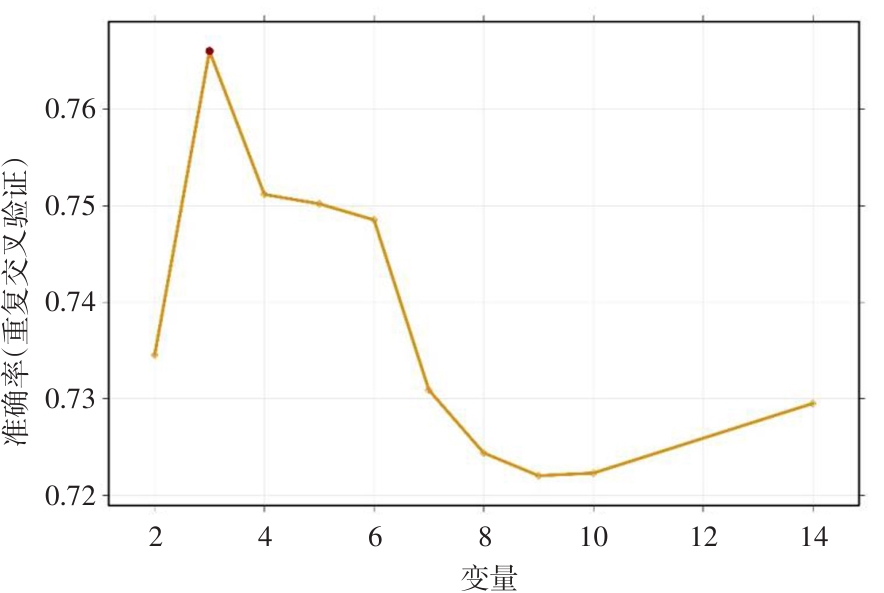
Fig.2
Combined cross-validation graph of random forest and recursive feature elimination"
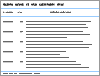
Tab.1
Baseline data of MTC patients with positive and negative cervical lymph node metastasis"
| 变量 | CLNM阴性组(n = 39) | CLNM阳性组(n = 49) | 总计 | P值 |
|---|---|---|---|---|
| 肿瘤大小[M(P25,P75 )]/cm | 1.3(1.0,2.5) | 2.0(1.2,3.2) | - | 0.057 |
| 年龄[M(P25,P75 )]/岁 | 47(38.0,60.0) | 54.0(48.5,63.5) | - | 0.048 |
| 性别 | 0.189 | |||
| 男 | 16(41.03) | 27(55.10) | 43(48.86) | |
| 女 | 23(58.97) | 22(44.90) | 45(51.14) | |
| 多灶/单灶 | 0.219 | |||
| 否 | 28(71.79) | 29(59.18) | 57(64.77) | |
| 是 | 11(28.21) | 20(40.82) | 31(35.23) | |
| 位置 | 0.094 | |||
| 上 | 4(10.26) | 14(28.57) | 18(20.45) | |
| 中 | 24(61.54) | 22(44.90) | 46(52.27) | |
| 下 | 11(28.21) | 13(26.53) | 24(27.27) | |
| 结构 | 0.427 | |||
| 实性 | 35(89.74) | 39(79.59) | 74(84.09) | |
| 囊性 | 1(2.56) | 3(6.12) | 4(4.55) | |
| 囊实性 | 3(7.69) | 7(14.29) | 10(11.36) | |
| 回声水平 | 0.284 | |||
| 低回声 | 36(92.31) | 43(87.76) | 79(89.77) | |
| 等回声 | 1(2.56) | 0(0.00) | 1(1.14) | |
| 混合性回声 | 2(5.13) | 6(12.24) | 8(9.09) | |
| 纵横比 | 0.976 | |||
| < 1 | 24(61.54) | 30(61.22) | 54(61.36) | |
| ≥ 1 | 15(38.46) | 19(38.78) | 34(38.64) | |
| 形态 | 0.099 | |||
| 圆形/椭圆 | 22(56.41) | 19(38.78) | 41(46.59) | |
| 不规则 | 17(43.59) | 30(61.22) | 47(53.41) | |
| 边界 | 0.224 | |||
| 清晰 | 21(53.85) | 20(40.82) | 41(46.59) | |
| 不清晰 | 18(46.15) | 29(59.18) | 47(53.41) | |
| 钙化 | 0.915 | |||
| 无 | 10(25.64) | 13(26.53) | 23(26.14) | |
| 微小钙化 | 23(58.97) | 27(55.10) | 50(56.82) | |
| 粗大钙化 | 6(15.38) | 9(18.37) | 15(17.05) | |
| 血流 | 0.287 | |||
| 无 | 4(10.26) | 9(18.37) | 13(14.77) | |
| 有 | 35(89.74) | 40(81.63) | 75(85.23) | |
| 被膜侵犯 | < 0.001 | |||
| 否 | 34(87.18) | 25(51.02) | 59(67.05) | |
| 是 | 5(12.82) | 24(48.98) | 29(32.95) | |
| 降钙素 | < 0.001 | |||
| < 100 pg/mL | 19(48.72) | 4(8.16) | 23(26.14) | |
| 100 ~ 1 000 pg/mL | 12(30.77) | 17(34.69) | 29(32.95) | |
| > 1 000 pg/mL | 8(20.51) | 28(57.14) | 36(40.91) |
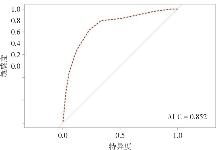
Fig.3
The ROC of the LightGBM model on the training set"
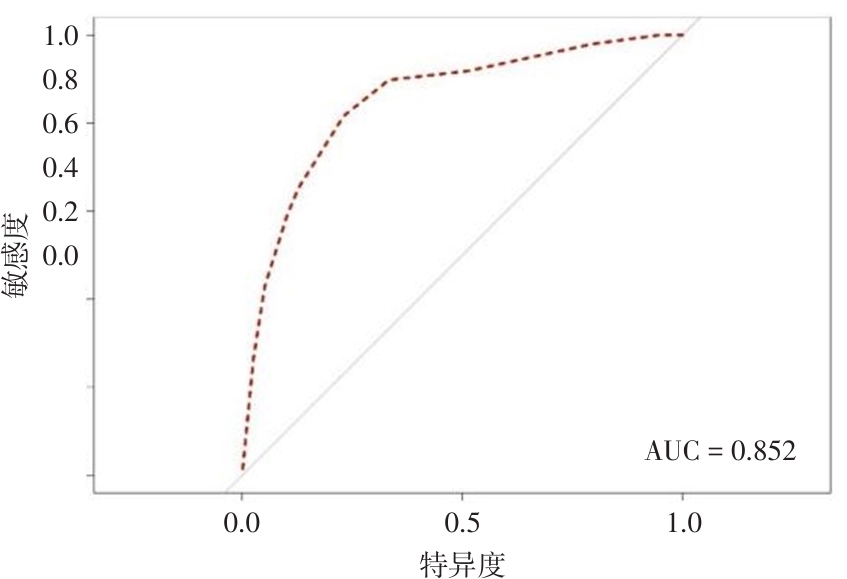
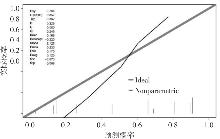
Fig.4
Calibration curve of the LightGBM model on the training set"
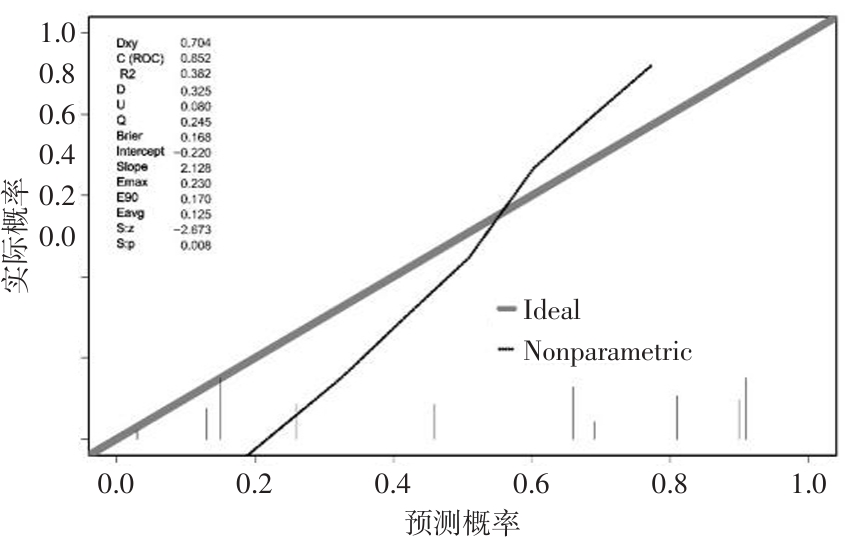
Fig.5
DCA curve of the LightGBM model on the training set"
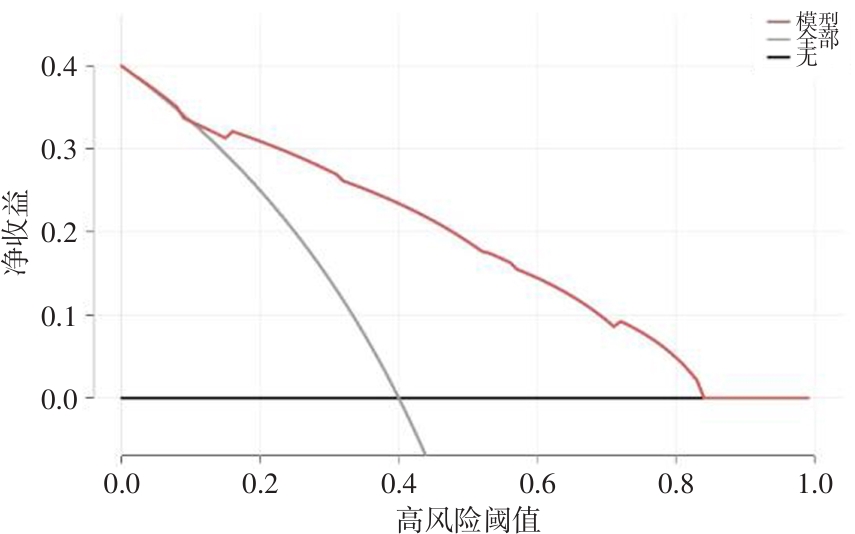
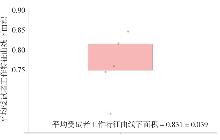
Fig.6
ROC box plot of the LightGBM model in five-fold cross-validation"
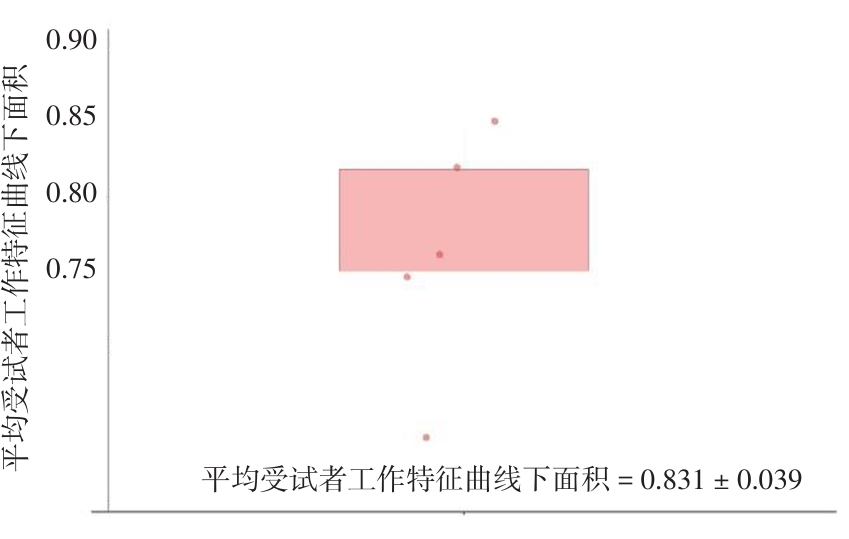
Fig.7
SHAP feature importance plot"
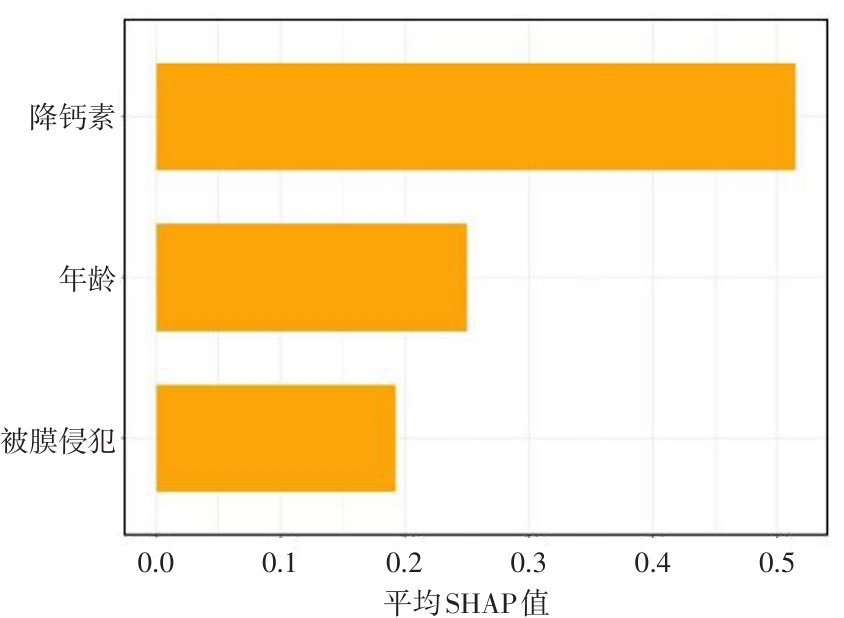
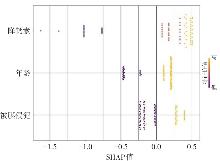
Fig.8
SHAP scatter plot"
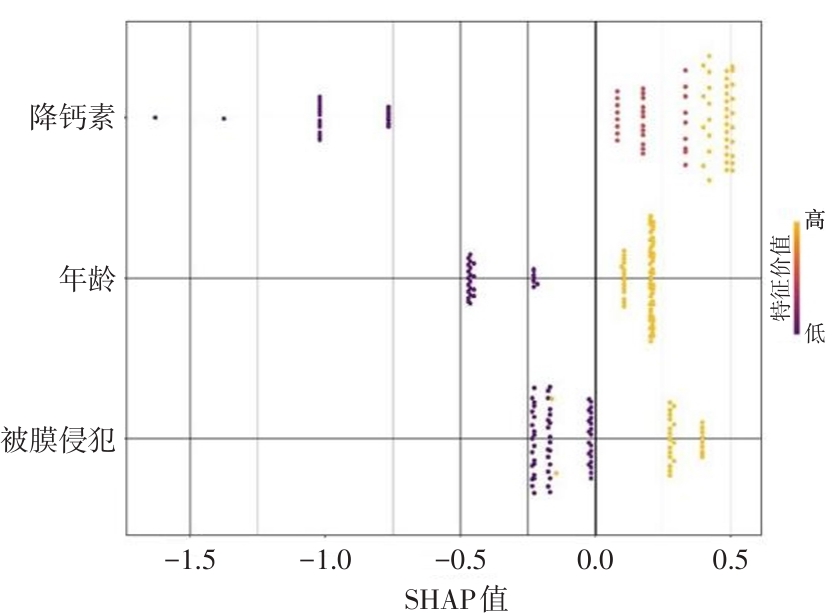
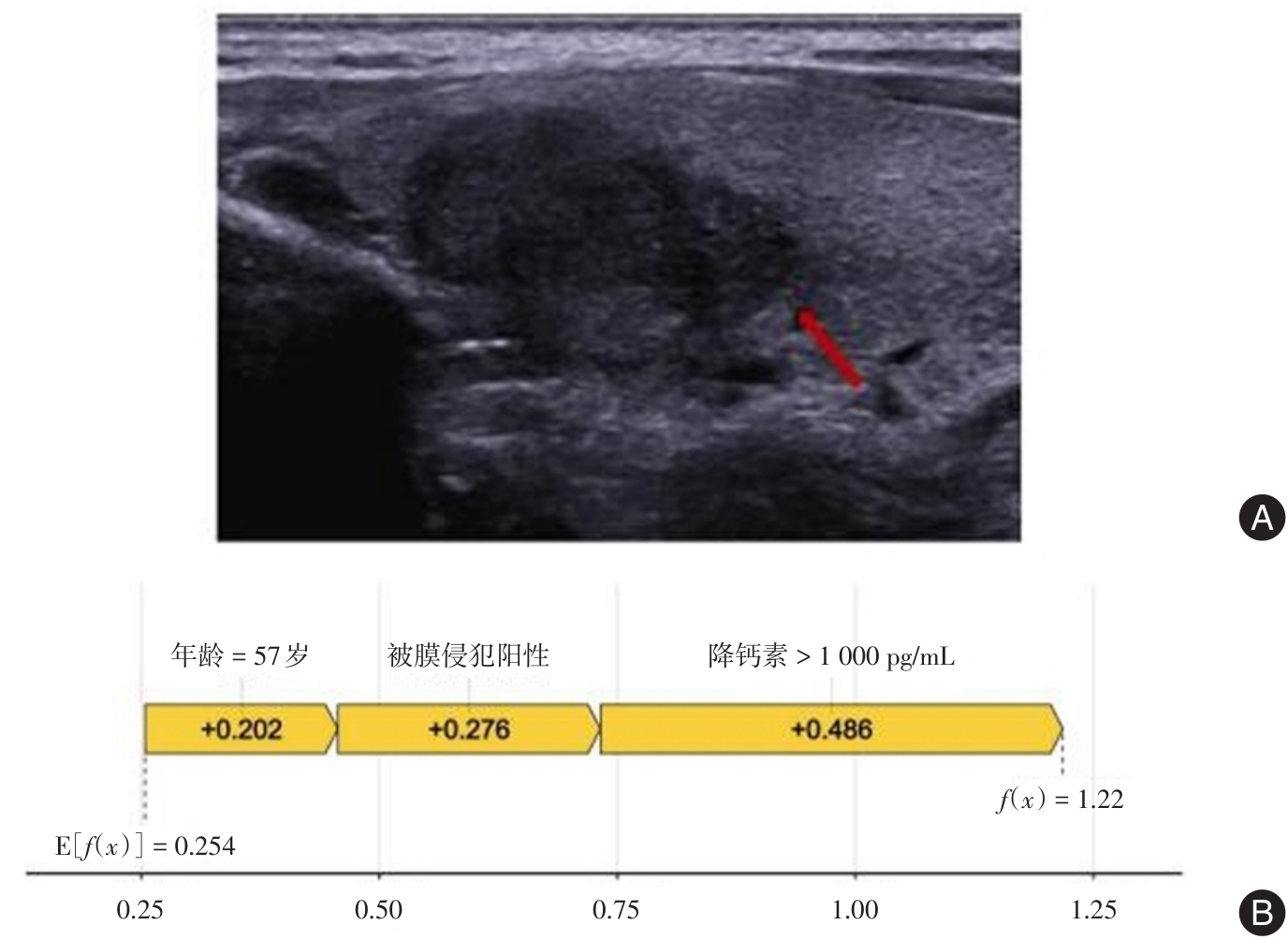
Fig.9
Application example of SHAP for visual interpretation of individual case predictions"
| [1] |
谭美娟, 杨诗婕, 徐协群. 2000—2022年甲状腺髓样癌文献计量学分析 [J]. 协和医学杂志, 2025, 16(1): 133-142. doi: 10.12290/xhyxzz.2024-0146 .
|
| [2] |
|
| [3] |
|
| [4] |
|
| [5] |
江柳, 陈蕾, 张晓婷, 等. 超声人工智能辅助诊断系统用于甲状腺髓样癌 [J]. 中国医学影像技术, 2024, 40(2): 208-211. doi: 10.13929/j.issn.1003-3289.2024.02.011 .
|
| [6] |
中华人民共和国国家卫生健康委员会医政医管局. 甲状腺癌诊疗指南(2022年版) [J]. 中国实用外科杂志, 2022, 42(12): 1343-1357,1363. doi: 10.19538/j.cjps.issn1005-2208. 2022.12.02 .
|
| [7] |
汤珈嘉, 张波, 朱沈玲, 等. 基于超声特征构建甲状腺髓样癌颈部淋巴结转移的预测模型[J]. 中国超声医学杂志, 2021, 37(6): 604-606. doi: 10.3969/j.issn.1002-0101.2021.06.002 .
|
| [8] |
|
| [9] |
闫闻晓, 黄春旺, 尚诗瑶, 等. 术前超声联合降钙素水平预测甲状腺髓样癌颈侧区淋巴结转移 [J]. 中国医学影像技术, 2022, 38(3): 353-357. doi: 10.13929/j.issn.1003-3289.2022. 03.008 .
|
| [10] |
|
| [11] |
|
| [12] |
|
| [13] |
|
| [14] |
|
| [15] |
|
| [16] |
|
| [17] |
|
| [18] |
王立坤, 郝琦, 金炜涵, 等. 多组学与人工智能在预测和诊断结直肠癌肝转移中的应用 [J]. 实用医学杂志, 2025, 41(7): 1070-1078. doi: 10.3969/j.issn.1006-5725.2025.07.021 .
|
| [19] |
中国抗癌协会甲状腺癌专业委员会(CATO). 甲状腺癌血清标志物临床应用专家共识(2017版) [J]. 中国肿瘤临床, 2018, 45(1): 7-13. doi: 10.3969/j.issn.1000-8179.2018.01.265 .
|
| [20] |
|
| [21] |
|
| [22] |
|
| [23] |
吴兰英, 杨敏, 徐平, 等. 不同超声评估方法对甲状腺癌被膜侵犯诊断效能对比分析 [J]. 中国超声医学杂志, 2023, 39(6): 626-629. doi: 10.3969/j.issn.1002-0101.2023.06.007 .
|
| [24] |
|
| [25] |
钱佳红, 王盼, 谢亚羽, 等. 沙普利值在XGBoost超声模型中预测甲状腺微小乳头状癌的价值 [J]. 中国超声医学杂志, 2024, 40(2): 124-127. doi: 10.3969/j.issn.1002-0101.2024. 02.002 .
|
| Viewed | ||||||
|
Full text |
|
|||||
|
Abstract |
|
|||||
