

The Journal of Practical Medicine ›› 2026, Vol. 42 ›› Issue (8): 1397-1406.doi: 10.3969/j.issn.1006-5725.2026.08.013
• Treatise:Mechanism Exploration • Previous Articles
Shuo HE1,Jun ZHANG1,2( )
)
Received:2025-11-05
Online:2026-04-25
Published:2026-04-28
Contact:
Jun ZHANG
E-mail:junzhang1216@sina.com
CLC Number:
Shuo HE,Jun ZHANG. Regorafenib synergy with irinotecan targets the proliferation, apoptosis and migration of hepatocellular carcinoma cells under hypoxia[J]. The Journal of Practical Medicine, 2026, 42(8): 1397-1406.
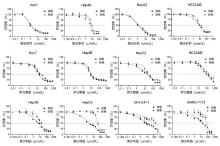
Fig.1
Dose-response curves of regorafenib irinotecan and oxaliplatin in HCC cell lines"
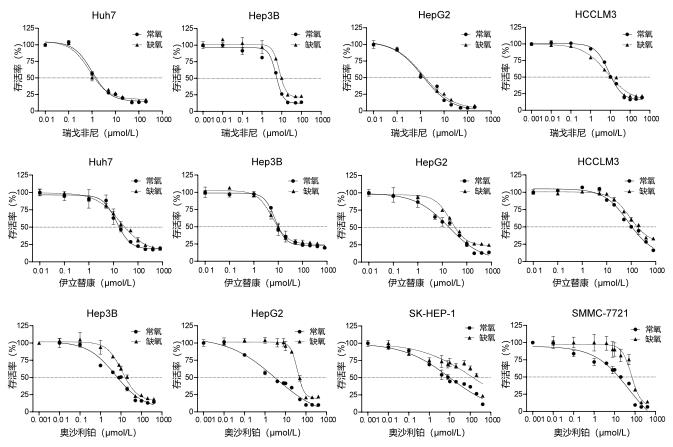
Tab.1
IC?? values of regorafenib and irinotecan in different HCC cell lines (xˉ ± s)/(μmol/L)"
| 细胞株 | BRAF状态 | TP53状态 | HBV感染 | 瑞戈非尼 IC50 | 伊立替康 IC50 | ||||
|---|---|---|---|---|---|---|---|---|---|
| 常氧 | 缺氧 | 耐药比值 | 常氧 | 缺氧 | 耐药比值 | ||||
| Huh7 | V600E突变 | Y220C突变 | - | 1.01 ± 0.08 | 0.79 ± 0.08 | 0.78 | 13.86 ± 1.75 | 20.03 ± 2.60 | 1.45 |
| Hep3B | 野生型 | 缺失 | + | 4.97 ± 1.03 | 7.65 ± 0.58 | 1.54 | 7.47 ± 0.64 | 5.67 ± 0.54 | 0.76 |
| HepG2 | 野生型 | 野生型 | - | 1.27 ± 0.17 | 1.33 ± 0.14 | 1.05 | 21.03 ± 5.41 | 21.96 ± 2.67 | 1.04 |
| HCCLM3 | 野生型 | 突变型 | + | 8.28 ± 0.52 | 7.09 ± 1.30 | 0.86 | 86.35 ± 24.25 | 91.85 ± 13.89 | 1.06 |
Tab.2
IC?? values of oxaliplatin in different HCC cell lines (xˉ ± s)/(μmol/L)"
| 细胞株 | BRAF状态 | TP53状态 | HBV感染 | 奥沙利铂 IC50 | ||
|---|---|---|---|---|---|---|
| 常氧 | 缺氧 | 耐药比值 | ||||
| Hep3B | 野生型 | 缺失 | + | 7.03 ± 0.72 | 20.26 ± 2.50 | 2.88 |
| HepG2 | 野生型 | 野生型 | - | 3.13 ± 0.41 | 56.42 ± 5.46 | 18.00 |
| SK-HEP-1 | 野生型 | 野生型 | - | 10.19 ± 1.62 | 182.02 ± 64.04 | 17.86 |
| SMMC-7721 | 野生型 | 野生型 | - | 13.82 ± 2.32 | 70.51 ± 8.93 | 5.10 |
Tab.3
CI values of combined effects of regorafenib with irinotecan under hypoxic condition"
| 瑞戈非尼/(μmol/L) | 伊立替康/(μmol/L) | CI值 | |||
|---|---|---|---|---|---|
| Huh7 | Hep3B | HepG2 | HCCLM3 | ||
| 0.25 | 1.25 | 0.66 ± 0.15 | 0.55 ± 0.24 | 0.32 ± 0.02 | 0.56 ± 0.31 |
| 0.25 | 2.5 | 0.72 ± 0.47 | 0.61 ± 0.14 | 0.43 ± 0.01 | 0.34 ± 0.09 |
| 0.25 | 5 | 0.55 ± 0.07 | 0.87 ± 0.07 | 0.52 ± 0.03 | 0.22 ± 0.06 |
| 0.5 | 1.25 | 2.29 ± 0.19 | 0.85 ± 0.44 | 0.23 ± 0.00 | 0.32 ± 0.02 |
| 0.5 | 2.5 | 2.53 ± 0.25 | 0.78 ± 0.08 | 0.27 ± 0.02 | 0.25 ± 0.03 |
| 0.5 | 5 | 1.26 ± 0.24 | 0.83 ± 0.06 | 0.54 ± 0.02 | 0.19 ± 0.01 |
| 1 | 1.25 | 0.83 ± 0.14 | 0.91 ± 0.00 | 0.22 ± 0.33 | 0.37 ± 0.05 |
| 1 | 2.5 | 0.80 ± 0.25 | 1.73 ± 0.39 | 0.33 ± 0.01 | 0.33 ± 0.01 |
| 1 | 5 | 0.69 ± 0.16 | 1.08 ± 0.19 | 0.22 ± 0.03 | 0.22 ± 0.01 |
| 2 | 1.25 | 0.65 ± 0.09 | 0.97 ± 0.30 | 0.27 ± 0.02 | 0.76 ± 0.02 |
| 2 | 2.5 | 0.67 ± 0.03 | 1.33 ± 0.10 | 0.32 ± 0.03 | 0.74 ± 0.04 |
| 2 | 5 | 0.74 ± 0.05 | 1.61 ± 0.14 | 0.42 ± 0.04 | 0.69 ± 0.02 |
| 4 | 1.25 | 0.77 ± 0.06 | 0.72 ± 0.08 | 0.39 ± 0.00 | 0.96 ± 0.08 |
| 4 | 2.5 | 0.81 ± 0.00 | 0.87 ± 0.12 | 0.37 ± 0.00 | 0.94 ± 0.04 |
| 4 | 5 | 0.98 ± 0.05 | 0.97 ± 0.30 | 0.48 ± 0.00 | 0.93 ± 0.03 |
| 8 | 1.25 | 1.26 ± 0.09 | 0.27 ± 0.25 | 0.62 ± 0.07 | 1.19 ± 0.02 |
| 8 | 2.5 | 1.27 ± 0.26 | 0.25 ± 0.16 | 0.60 ± 0.04 | 1.11 ± 0.03 |
| 8 | 5 | 1.62 ± 0.18 | 0.57 ± 0.23 | 0.78 ± 0.01 | 1.09 ± 0.07 |
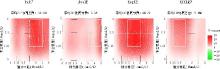
Fig.2
ZIP model scores for the combined effects of regorafenib with irinotecan"
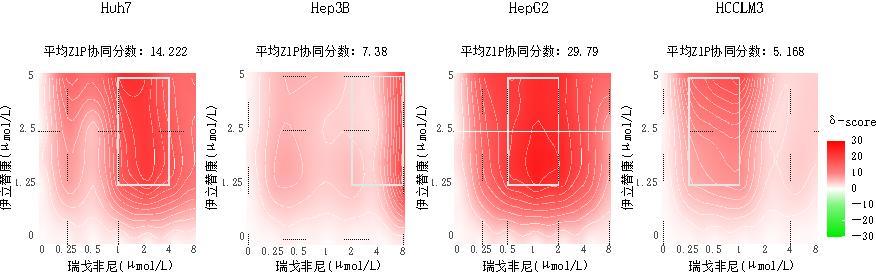
Fig.3
SubG1 levels treated by combined therapy with regorafenib and irinotecan in HCC cells"
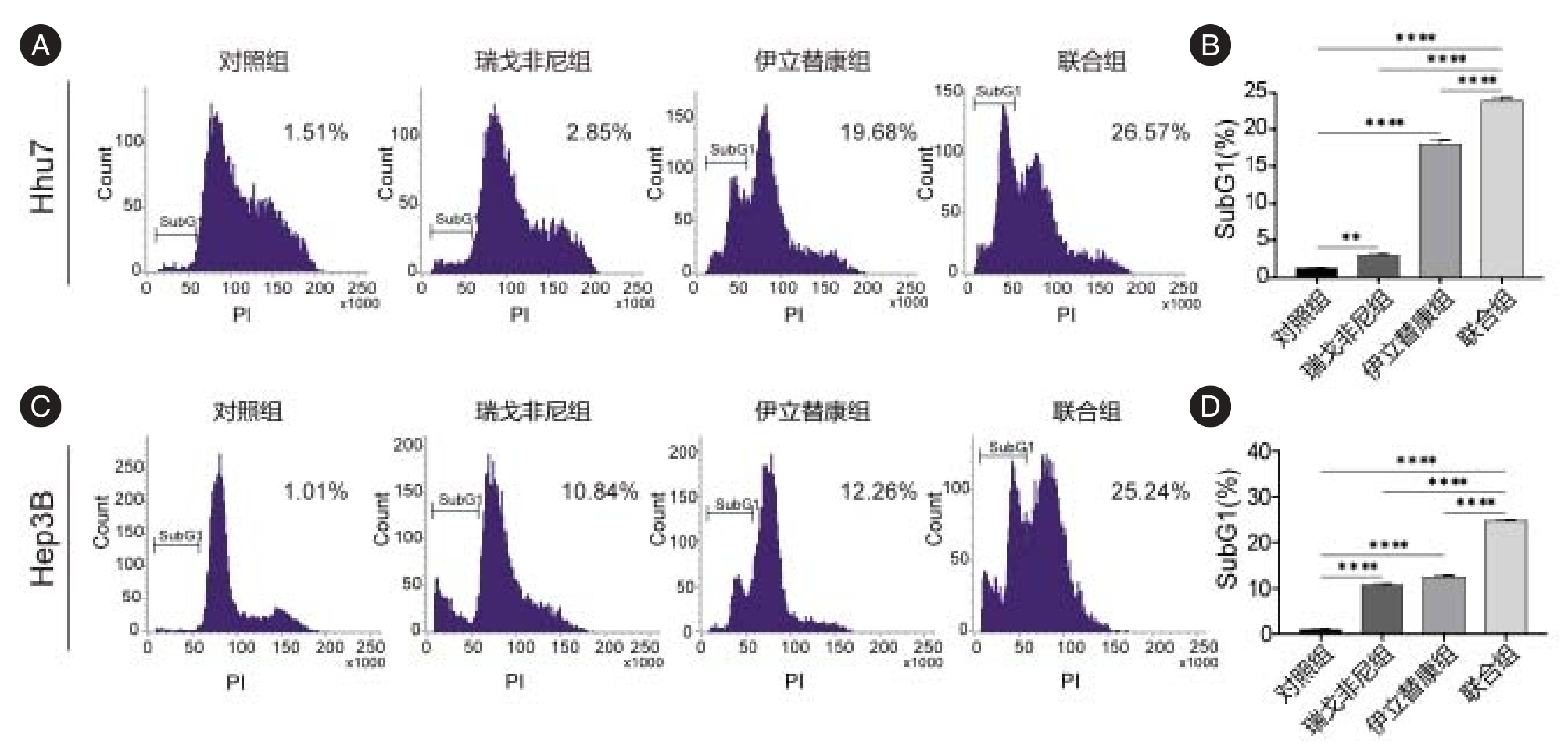
Fig.4
EdU assay and WB results of combined therapy with regorafenib and irinotecan"
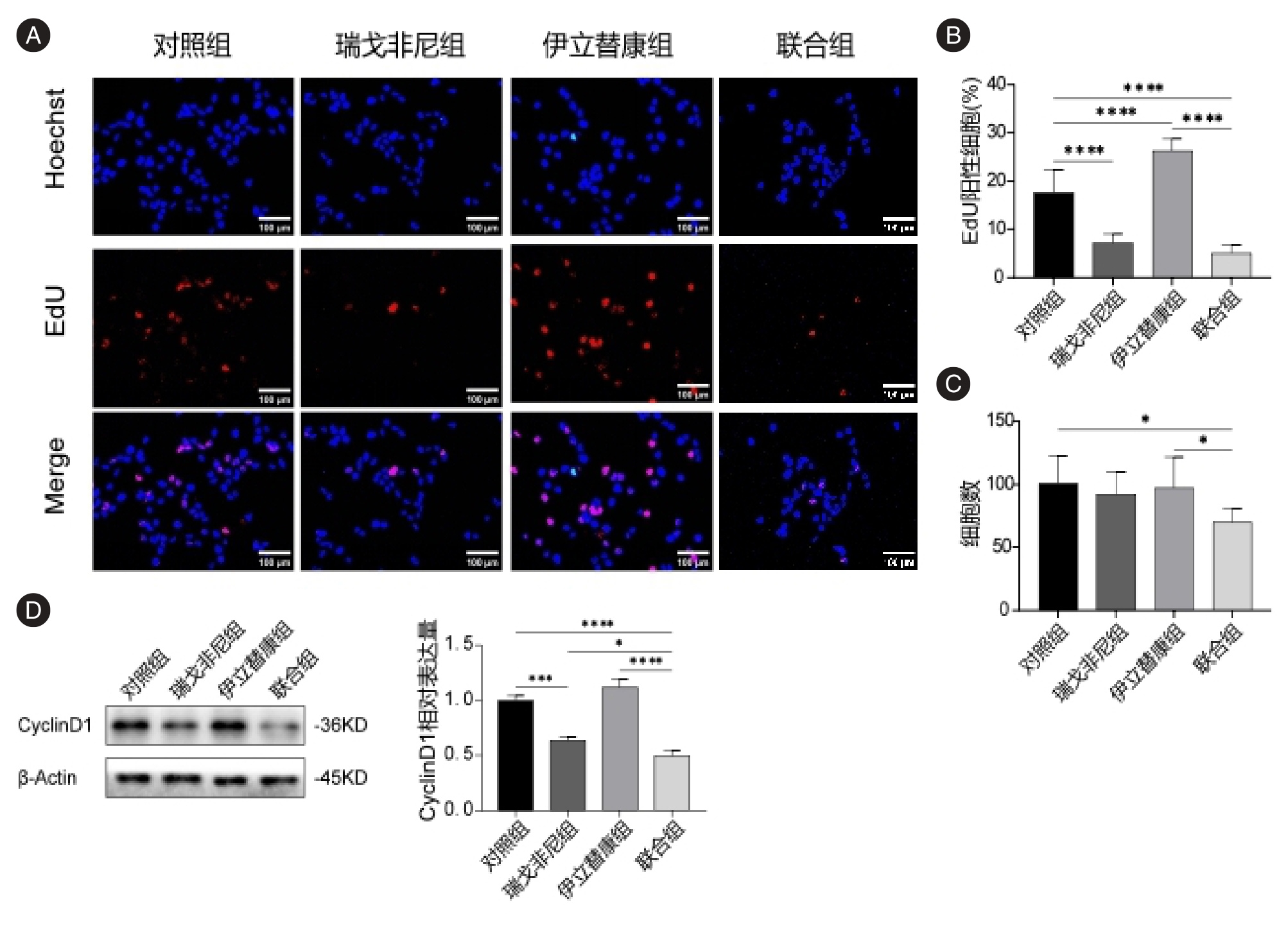
Fig.5
Transwell migration results of the combined therapy with regorafenib and irinotecan in HCC cells"
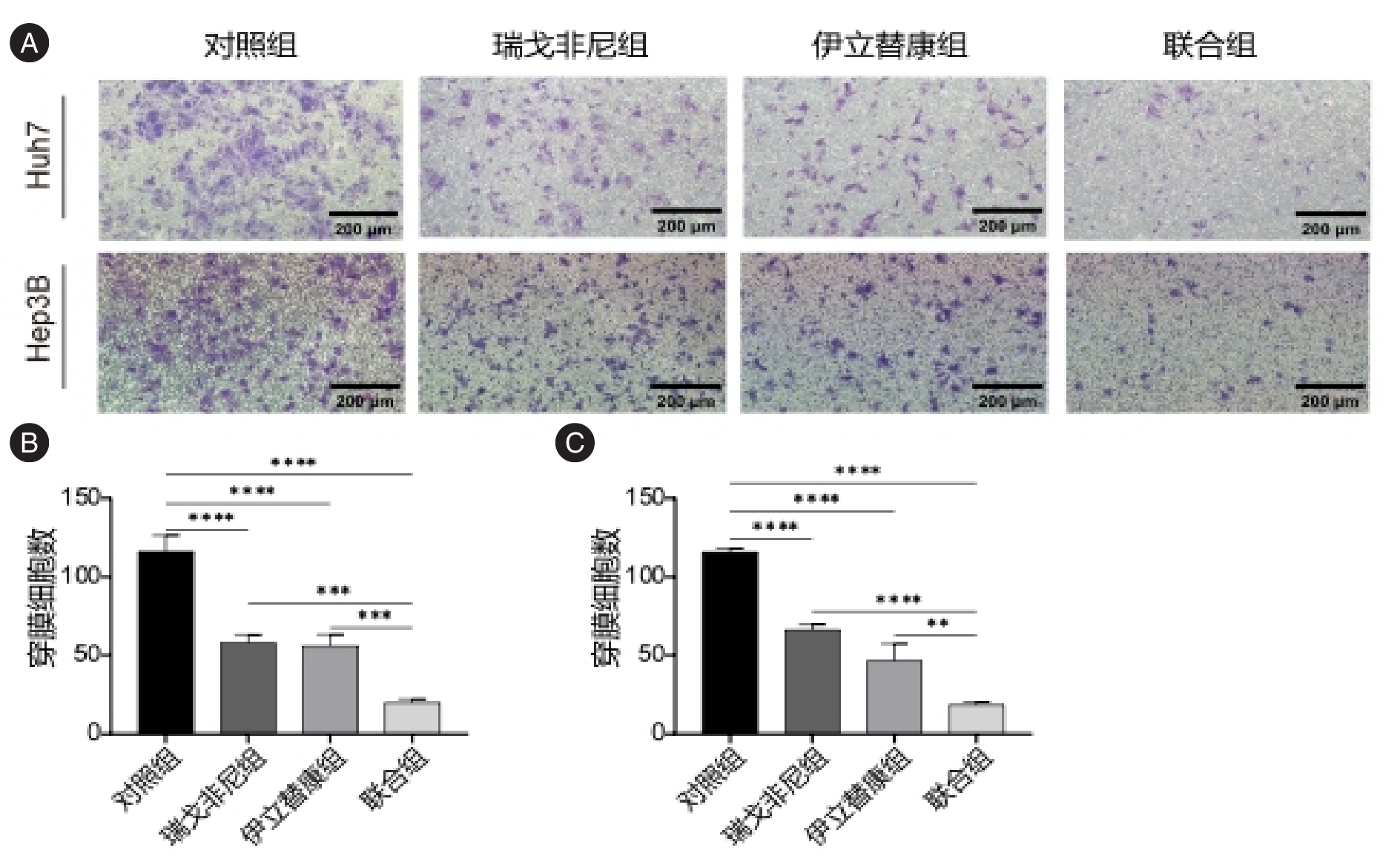
Fig.6
Wound healing results of combined therapy with regorafenib and irinotecan in Huh7 cell line****P < 0.000 1"
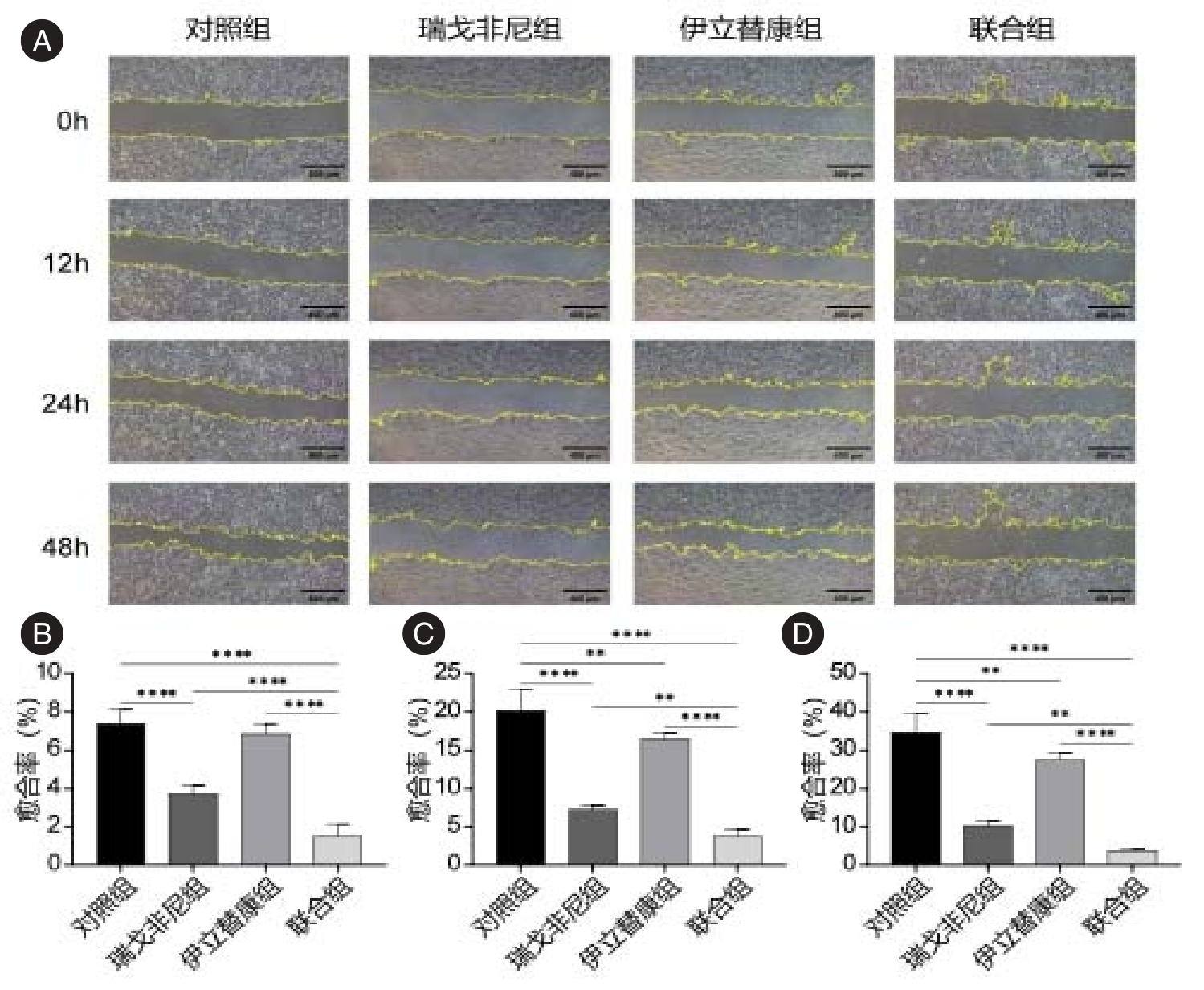
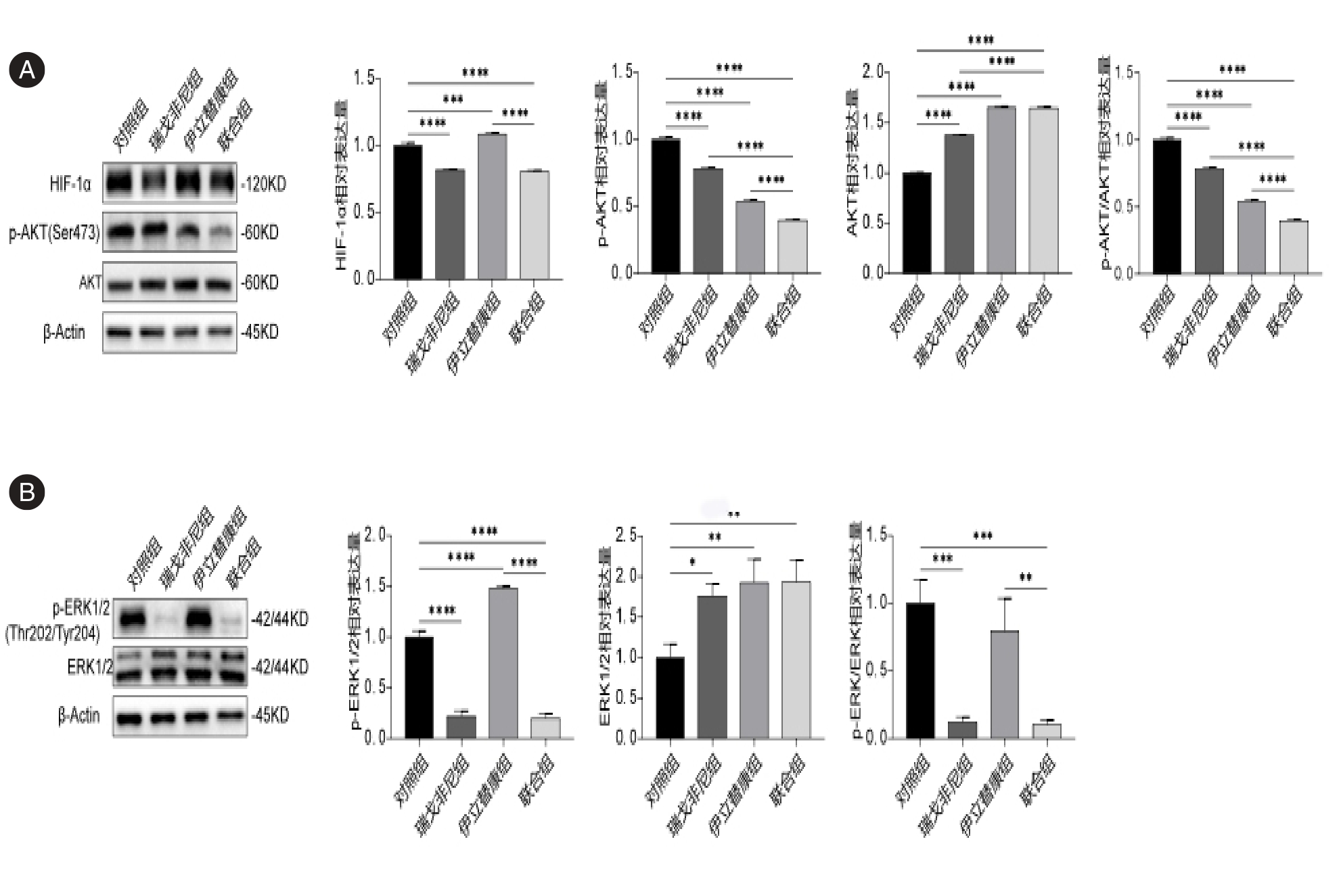
Fig.7
Signaling pathway protein alterations in Hep3B cells with the combination of regorafenib and irinotecan"
| [1] |
HAN B, ZHENG R, ZENG H, et al. Cancer incidence and mortality in China, 2022[J]. J Natl Cancer Cent, 2024, 4(1): 47-53. doi:10.1016/j.jncc.2024.01.006 .
doi: 10.1016/j.jncc.2024.01.006 |
| [2] |
LI Y, ZHAO L, LI X F. Targeting hypoxia: Hypoxia-activated prodrugs in cancer therapy[J]. Front Oncol, 2021, 11: 700407. doi:10.3389/fonc.2021.700407 .
doi: 10.3389/fonc.2021.700407 |
| [3] |
CHEN Z, HAN F, DU Y, et al. Hypoxic microenvironment in cancer: Molecular mechanisms and therapeutic interventions[J]. Signal Transduct Target Ther, 2023, 8(1): 70. doi:10.1038/s41392-023-01332-8 .
doi: 10.1038/s41392-023-01332-8 |
| [4] |
中华人民共和国国家卫生健康委员会医政司. 原发性肝癌诊疗指南(2024年版)[J]. 协和医学杂志, 2024, 15(3): 532-558. doi:10.12290/xhyxzz.2024-0304 .
doi: 10.12290/xhyxzz.2024-0304 |
| [5] |
HUANG W L, HSU Y C, LUO C W, et al. Targeting the CDK7-MDK axis to suppresses irinotecan resistance in colorectal cancer[J]. Life Sci, 2024, 353: 122914. doi:10.1016/j.lfs.2024.122914 .
doi: 10.1016/j.lfs.2024.122914 |
| [6] |
LLOVET J M, KELLEY R K, VILLANUEVA A, et al. Hepatocellular carcinoma[J]. Nat Rev Dis Primers, 2021, 7(1): 6. doi:10.1038/s41572-020-00240-3 .
doi: 10.1038/s41572-020-00240-3 |
| [7] |
ADEBAYO A S, AGBAJE K, ADESINA S K, et al. Colorectal cancer: Disease process, current treatment options, and future perspectives[J]. Pharmaceutics, 2023, 15(11): 2620. doi:10.3390/pharmaceutics15112620 .
doi: 10.3390/pharmaceutics15112620 |
| [8] |
FONDEVILA F, MÉNDEZ-BLANCO C, FERNÁNDEZ-PALANCA P, et al. Anti-tumoral activity of single and combined regorafenib treatments in preclinical models of liver and gastrointestinal cancers[J]. Exp Mol Med, 2019, 51(9): 1-15. doi:10.1038/s12276-019-0308-1 .
doi: 10.1038/s12276-019-0308-1 |
| [9] |
ZHANG C, WU L W, LI Z D, et al. DYRK1A suppression attenuates HIF-1α accumulation and enhances the anti-liver cancer effects of regorafenib and sorafenib under hypoxic conditions[J]. Int J Oncol, 2022, 60(4): 45. doi:10.3892/ijo.2022.5335 .
doi: 10.3892/ijo.2022.5335 |
| [10] |
ZHANG J, ZHOU L, ZHAO S, et al. The CDK4/6 inhibitor palbociclib synergizes with irinotecan to promote colorectal cancer cell death under hypoxia[J]. Cell Cycle, 2017, 16(12): 1193-1200. doi:10.1080/15384101.2017.1320005 .
doi: 10.1080/15384101.2017.1320005 |
| [11] |
IANEVSKI A, GIRI A K, AITTOKALLIO T. SynergyFinder 3.0: An interactive analysis and consensus interpretation of multi-drug synergies across multiple samples[J]. Nucleic Acids Res, 2022, 50(W1): W739-W743. doi:10.1093/nar/gkac382 .
doi: 10.1093/nar/gkac382 |
| [12] |
杨伟, 梁念孩, 夏会东, 等. 微管蛋白2A在肝细胞癌中的表达及其在缺氧条件下对肝癌细胞恶性生物学行为的影响[J]. 实用医学杂志, 2025, 41(20): 3175-3184. doi:10.3969/j.issn.1006-5725.2025.20.005 .
doi: 10.3969/j.issn.1006-5725.2025.20.005 |
| [13] |
LADD A D, DUARTE S, SAHIN I, et al. Mechanisms of drug resistance in HCC[J]. Hepatology, 2024, 79(4): 926-940. doi:10.1097/HEP.0000000000000237 .
doi: 10.1097/HEP.0000000000000237 |
| [14] |
CHEN Z X, MU M Y, YANG G, et al. Hypoxia-induced DTL promotes the proliferation, metastasis, and sorafenib resistance of hepatocellular carcinoma through ubiquitin-mediated degradation of SLTM and subsequent Notch pathway activation[J]. Cell Death Dis, 2024, 15(10): 734. doi:10.1038/s41419-024-07089-4 .
doi: 10.1038/s41419-024-07089-4 |
| [15] |
LIANG C, DONG Z, CAI X, et al. Hypoxia induces sorafenib resistance mediated by autophagy via activating FOXO3a in hepatocellular carcinoma[J]. Cell Death Dis, 2020, 11(11): 1017. doi:10.1038/s41419-020-03233-y .
doi: 10.1038/s41419-020-03233-y |
| [16] |
王毅, 何硕, 杨斯昀, 等. 5-氟尿嘧啶联合重组人细胞珠蛋白治疗缺氧诱导化疗耐受肝细胞癌的体外实验[J]. 实用医学杂志, 2024, 40(22): 3146-3154. doi:10.3969/j.issn.1006-5725.2024.22.005 .
doi: 10.3969/j.issn.1006-5725.2024.22.005 |
| [17] |
CHEN Z Y, LI J, ZHU S D, et al. Harmine reinforces the effects of regorafenib on suppressing cell proliferation and inducing apoptosis in liver cancer cells[J]. Exp Ther Med, 2022, 23(3): 209. doi:10.3892/etm.2022.11132 .
doi: 10.3892/etm.2022.11132 |
| [18] |
YUAN T, WU R, WANG W, et al. Synergistic antitumor activity of regorafenib and rosuvastatin in colorectal cancer[J]. Front Pharmacol, 2023, 14: 1136114. doi:10.3389/fphar.2023.1136114 .
doi: 10.3389/fphar.2023.1136114 |
| [19] |
JASSI C, KUO W W, CHANG Y C, et al. Aloin and CPT-11 combination activates miRNA-133b and downregulates IGF1R- PI3K/AKT/mTOR and MEK/ERK pathways to inhibit colorectal cancer progression[J]. Biomed Pharmacother, 2023, 169: 115911. doi:10.1016/j.biopha.2023.115911 .
doi: 10.1016/j.biopha.2023.115911 |
| [20] |
WU M M, ZHANG Z, TONG C W S, et al. Repurposing of niclosamide as a STAT3 inhibitor to enhance the anticancer effect of chemotherapeutic drugs in treating colorectal cancer[J]. Life Sci, 2020, 262: 118522. doi:10.1016/j.lfs.2020.118522 .
doi: 10.1016/j.lfs.2020.118522 |
| [21] |
YANG T, HUO J, XU R, et al. Synergistic effect of toosendanin and regorafenib against cell proliferation and migration by regulating WWOX signaling pathway in hepatocellular carcinoma[J]. Phytother Res, 2021, 35(8): 4567-4578. doi:10.1002/ptr.7174 .
doi: 10.1002/ptr.7174 |
| [22] |
WU W, DONG J, GOU H, et al. EGCG synergizes the therapeutic effect of irinotecan through enhanced DNA damage in human colorectal cancer cells[J]. J Cell Mol Med, 2021, 25(16): 7913-7921. doi:10.1111/jcmm.16718 .
doi: 10.1111/jcmm.16718 |
| [23] |
朱磊, 李政委, 盛利平, 等. HIF-1α/BNIP3介导的线粒体自噬对创伤性脑损伤后神经元凋亡的影响[J]. 中华神经医学杂志, 2023, 22(9): 865-874. doi:10.3760/cma.j.cn115354-20230712-00385 .
doi: 10.3760/cma.j.cn115354-20230712-00385 |
| [24] |
MU M, ZHANG Q, LI J, et al. USP51 facilitates colorectal cancer stemness and chemoresistance by forming a positive feed-forward loop with HIF1A[J]. Cell Death Differ, 2023, 30(11): 2393-2407. doi:10.1038/s41418-023-01228-8 .
doi: 10.1038/s41418-023-01228-8 |
| [25] |
SHIGETA K, HASEGAWA M, HISHIKI T, et al. IDH2 stabilizes HIF-1α-induced metabolic reprogramming and promotes chemoresistance in urothelial cancer[J]. EMBO J, 2023, 42(4): e110620. doi:10.15252/embj.2022110620 .
doi: 10.15252/embj.2022110620 |
| [26] |
MAMO M, YE I C, DIGIACOMO J W, et al. Hypoxia alters the response to anti-EGFR therapy by regulating EGFR expression and downstream signaling in a DNA methylation-specific and HIF-dependent manner[J]. Cancer Res, 2020, 80(22): 4998-5010. doi:10.1158/0008-5472.CAN-20-1232 .
doi: 10.1158/0008-5472.CAN-20-1232 |
| [27] |
SHI Y, GILKES D M. HIF-1 and HIF-2 in cancer: Structure, regulation, and therapeutic prospects[J]. Cell Mol Life Sci, 2025, 82(1): 44. doi:10.1007/s00018-024-05537-0 .
doi: 10.1007/s00018-024-05537-0 |
| [28] |
LI Q, LI Z, LUO T, et al. Targeting the PI3K/AKT/mTOR and RAF/MEK/ERK pathways for cancer therapy[J]. Mol Biomed, 2022, 3(1): 47. doi:10.1186/s43556-022-00110-2 .
doi: 10.1186/s43556-022-00110-2 |
| Viewed | ||||||
|
Full text |
|
|||||
|
Abstract |
|
|||||
