

The Journal of Practical Medicine ›› 2025, Vol. 41 ›› Issue (23): 3659-3665.doi: 10.3969/j.issn.1006-5725.2025.23.005
• Basic Research • Previous Articles
Yu LI1,Yulan CHEN2,Sinian LIAN1,Hong. WANG1( )
)
Received:2025-04-25
Online:2025-12-10
Published:2025-12-18
Contact:
Hong. WANG
E-mail:sheliachen@sina.com;hong001w@163.com
CLC Number:
Yu LI,Yulan CHEN,Sinian LIAN,Hong. WANG. Chronic intermittent hypoxia induces hippocampal neuronal apoptosis by activating endoplasmic reticulum stress via calcium overload[J]. The Journal of Practical Medicine, 2025, 41(23): 3659-3665.
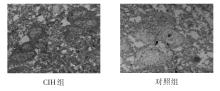
Fig.2
Observation of the ultrastructure of hippocampal neuron cells in two groups of rats under electron microscopy (fluoroscopic electron microscopy,× 1 000)"
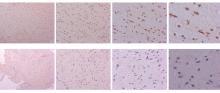
Fig.3
TUNEL staining assessment of neuronal apoptosis in hippocampal tissues from the two rat groups"
Fig.4
Quantitative assessment of neuronal apoptosis rates in hippocampal tissues from the two rat groups"
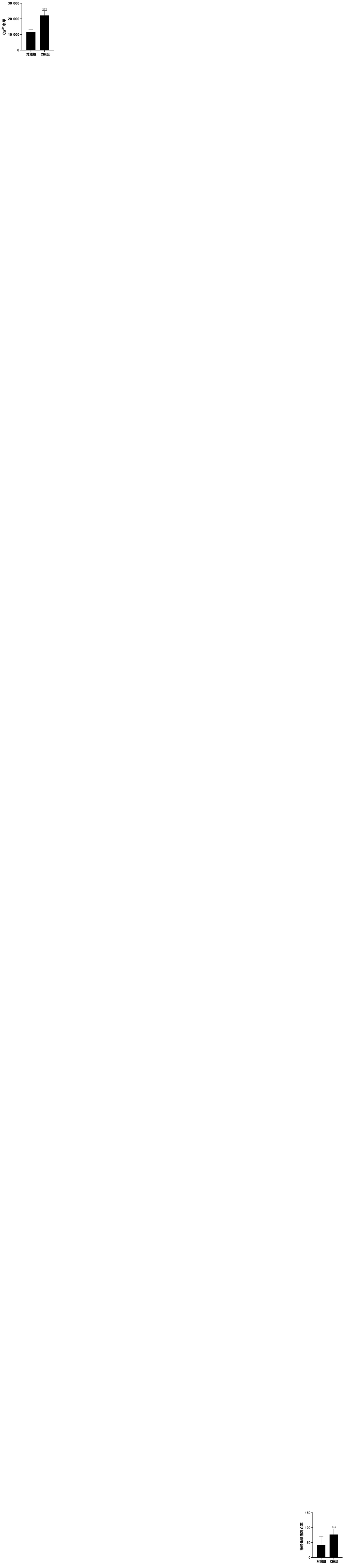
Fig.5
Quantitative comparison of intracellular Ca2? levels in hippocampal tissues from the two rat groups"
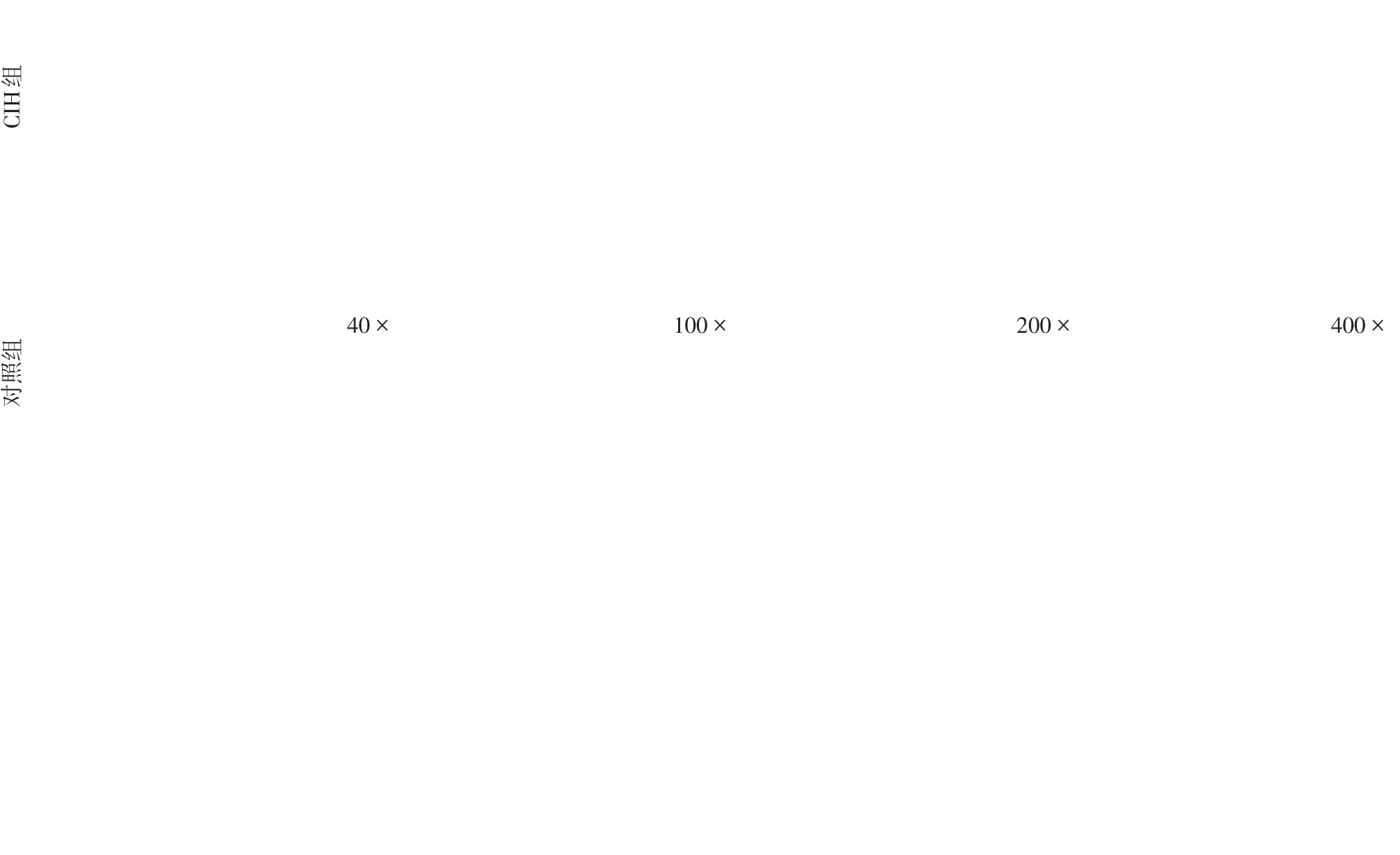
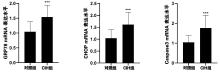
Fig.6
qRT-PCR analysis of mRNA expression levels for endoplasmic reticulum stress-related factors in hippocampal tissues from the two rat groups"
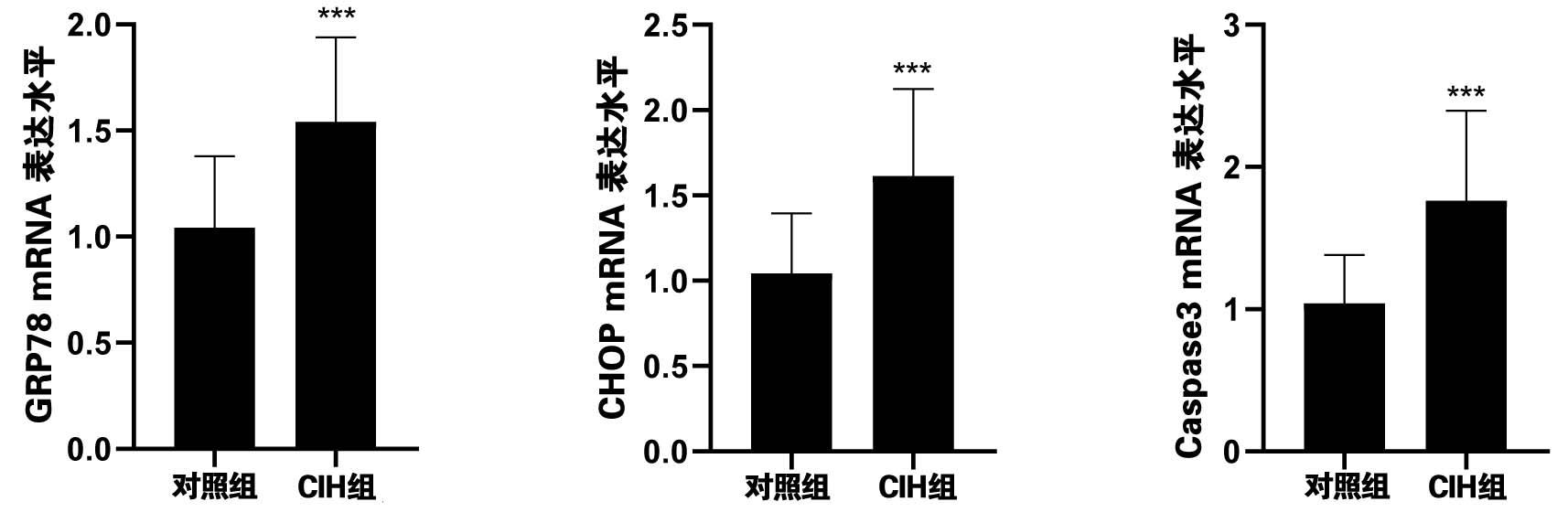
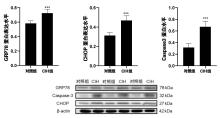
Fig.7
Western blot analysis of endoplasmic reticulum stress-associated protein expression in hippocampal tissues from the two rat groups"
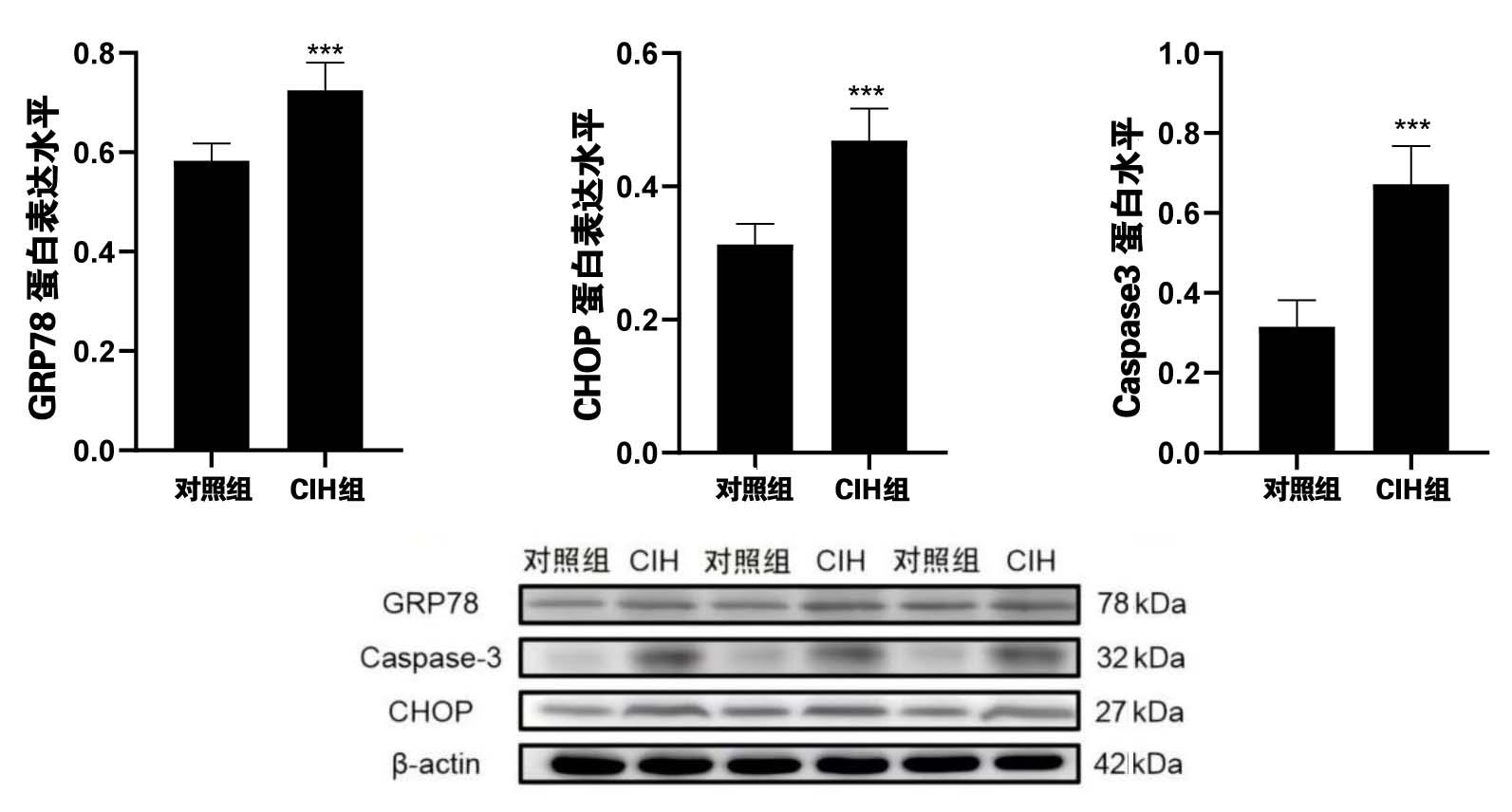
Tab.1
Relative expression levels of ER stress-related proteins in rat hippocampal tissues"
| 指标 | 对照组 | CIH | t值 | P值 |
|---|---|---|---|---|
| GRP78 | 0.583 ± 0.035 | 0.725 ± 0.055 | -4.341 | 0.005 |
| CHOP | 0.313 ± 0.031 | 0.469 ± 0.048 | -5.489 | 0.002 |
| caspase-3 | 0.315 ± 0.067 | 0.672 ± 0.096 | -6.083 | 0.001 |
| [1] | KORKALAINEN H, LEPPANEN T, LEINO A, et al. Review and perspective on sleep-disordered breathing assessment in adults: Advances and clinical translation[J]. Sleep Med Rev, 2024, 72: 101874. |
| [2] |
OGBU I, OGBU D, NWACHUKWU D, et al. Sleep-disordered breathing and neurocognitive disorders: Mechanisms and management[J]. J Clin Med, 2024, 13(17): 5001. doi:10.3390/jcm13175001
doi: 10.3390/jcm13175001 |
| [3] |
UNGVARI Z, FEKETE M, LEHOCZKI A, et al. Sleep disorders increase the risk of dementia, Alzheimer’s disease, and cognitive decline: A meta-analysis[J]. Gero Sci, 2025, 47: 4899-4920. doi:10.1007/s11357-025-01637-2
doi: 10.1007/s11357-025-01637-2 |
| [4] |
El AMINE B, ARNAUD C, KHOURI C, et al. Cerebral oxidative stress, inflammation and apoptosis induced by intermittent hypoxia: Systematic review and meta-analysis of rodent data[J]. Eur Respir Rev, 2024, 33(173): 240163. doi:10.1183/16000617.0162-2024
doi: 10.1183/16000617.0162-2024 |
| [5] |
MARTNEAU-DUSSAULT M-É, ANDRE C, DANEAULT V, et al. Medial temporal lobe and obstructive sleep apnea: Effects of sex, age, cognitive status, and free-water[J]. NeuroImage Clin, 2022, 36: 103235. doi:10.1016/j.nicl.2022.103235
doi: 10.1016/j.nicl.2022.103235 |
| [6] |
MARCHI NA, DANEAULT V, ANDRE C, et al. Altered fornix integrity is associated with sleep apnea-related hypoxemia in mild cognitive impairment[J]. Alzheimers Dement, 2024, 20(6): 4092-4105. doi:10.1002/alz.13833
doi: 10.1002/alz.13833 |
| [7] | LIN S, LIU Q, LIU S, et al. MRI-Indexed Perivascular Space Network Differences Between Obstructive and Central Sleep Apnea[J]. Radiology, 2024, 312(2):e232274. |
| [8] |
LAVALLE S, MASIELLO E, IANNELLA G, et al. Oxidative stress and inflammation biomarkers in OSA: A comprehensive review[J]. Life, 2024, 14(4): 425. doi:10.3390/life14040425
doi: 10.3390/life14040425 |
| [9] |
CHEN X, ZHANG L, HE Z, et al. Endoplasmic reticulum stress: Molecular mechanism and therapeutic potential[J]. Signal Transduct Target Ther, 2023, 8: 326. doi:10.1038/s41392-023-01570-w
doi: 10.1038/s41392-023-01570-w |
| [10] | MARTINEZ-VILLAR C, CALVO-GARCIA M, EULATE-BERAMENDI A, et al. Functional connectivity patterns in late-middle-aged men with obstructive sleep apnea[J]. Front Neurol, 2023, 14: 1215882. |
| [11] |
MAKIO T, CHEN J, SIMMEN T. ER stress as a sentinel mechanism for ER Ca²⁺ homeostasis[J]. Cell Calcium, 2024, 124: 102961. doi:10.1016/j.ceca.2024.102961
doi: 10.1016/j.ceca.2024.102961 |
| [12] |
YOU C, ZHANG Z, YING H,, et al. Blockage of calcium‑sensing receptor ameliorates chronic intermittent hypoxia‑induced cognitive impairment via the PERK‑ATF4‑CHOP pathway[J]. Exp Neurol, 2023, 368: 114500. doi:10.1016/j.expneurol.2023.114500
doi: 10.1016/j.expneurol.2023.114500 |
| [13] |
WEN W, YAO Q, CHEN Y, et al. Transient receptor potential canonical 5 channel is involved in the cardiac damage related to obstructive sleep apnea-hypopnea syndrome in rats [J]. Ann Palliat Med, 2020, 9(3): 895-902. doi:10.21037/apm.2020.04.08
doi: 10.21037/apm.2020.04.08 |
| [14] | 邱璇, 沙热扎提·依沙江, 陈玉岚, 等. 瞬时受体电位通道5对间歇性低氧致心肌焦亡的影响[J]. 实用医学杂志, 2024, 40(12): 1637-1642. |
| [15] |
ZHONG P, LI L, FENG X, et al. Neuronal ferroptosis and ferroptosis-mediated ER stress: Implications in cognitive dysfunction induced by chronic intermittent hypoxia in mice[J]. Int Immunopharmacol, 2024, 138: 112579. doi:10.1016/j.intimp.2024.112579
doi: 10.1016/j.intimp.2024.112579 |
| [16] |
QIU X, LI L, WEI J, et al. The protective role of Nrf2 on cognitive impairment in chronic intermittent hypoxia and sleep fragmentation mice[J]. Int Immunopharmacol, 2023, 116: 109813. doi:10.1016/j.intimp.2023.109813
doi: 10.1016/j.intimp.2023.109813 |
| [17] |
VARDANIAN M, RAVDIN L. Cognitive Complaints and Comorbidities in Obstructive Sleep Apnea[J]. leep Med Clin, 2022, 17(4): 647-656. doi:10.1016/j.jsmc.2022.07.009
doi: 10.1016/j.jsmc.2022.07.009 |
| [18] |
ZHANG K, MA D, WU Y, et al. Impact of Chronic Intermittent Hypoxia on Cognitive Function and Hippocampal Neurons in Mice: A Study of Inflammatory and Oxidative Stress Pathways[J]. Nat Sci Sleep, 2024, 16: 2029-2043. doi:10.2147/nss.s489232
doi: 10.2147/nss.s489232 |
| [19] |
MIYO K, UCHIDA Y, NAKANO R, et al. Intermittent Hypoxia Induces Cognitive Dysfunction and Hippocampal Gene Expression Changes in a Mouse Model of Obstructive Sleep Apnea[J]. Int J Mol Sci, 2025, 26(15): 7495. doi:10.3390/ijms26157495
doi: 10.3390/ijms26157495 |
| [20] | JIA N N, GUO J, FENG J, et al. Chronic intermittent hypoxia–induced neural injury: Mechanisms and interventions[J]. CNS Neurosci Ther, 2025, 31(4): e70384. |
| [21] |
YANG H, YUAN Y, YANG K, et al. ELK4 ameliorates cognitive impairment and neuroinflammation induced by obstructive sleep apnea[J]. Brain Res Bull, 2024, 216: 111054. doi:10.1016/j.brainresbull.2024.111054
doi: 10.1016/j.brainresbull.2024.111054 |
| [22] |
YANG X, ZHANG Y, LIU H, et al. CaMKIIγ advances chronic intermittent hypoxia-induced cardiomyocyte apoptosis via HIF-1 signaling pathway[J]. Sleep Breath, 2025, 29(1): 85. doi:10.1007/s11325-024-03225-8
doi: 10.1007/s11325-024-03225-8 |
| [23] |
YOU Z, WANG X, SUN Q, et al. Blockage of calcium-sensing receptor improves chronic intermittent hypoxia-induced cognitive impairment by PERK-ATF4-CHOP pathway[J]. Exp Neurol, 2023, 370: 114518. doi:10.1016/j.expneurol.2023.114500
doi: 10.1016/j.expneurol.2023.114500 |
| [24] |
YOU C, SUN Y, HE Z, et al. Blockage of calcium-sensing receptor improves chronic intermittent hypoxia-induced cognitive impairment by PERK–ATF4–CHOP pathway[J]. Exp Neurol, 2023, 367: 114489. doi:10.1016/j.expneurol.2023.114500
doi: 10.1016/j.expneurol.2023.114500 |
| [25] |
MA N, LU H, LI N, et al. CHOP-mediated Gasdermin E expression promotes pyroptosis, inflammation, and mitochondrial damage in renal ischemia-reperfusion injury[J]. Cell Death Dis, 2024, 15(2): 163. doi:10.1038/s41419-024-06525-9
doi: 10.1038/s41419-024-06525-9 |
| [1] | Linsha KONG,Gaigai HE,Ting LI,Kun FANG,Wei HE,Li WEI. Experimental study of doxorubicin coated by magnetic drug⁃carrying gel beads in the treatment of colorectal cancer [J]. The Journal of Practical Medicine, 2025, 41(7): 953-959. |
| [2] | Meiyu GAN,Chunjiao WU,Jingyi QIN,Zuojie. LUO. The effect of vanadyl bis(acetylacetonato) on the proliferation and invasion of human adrenocortical carcinoma cells [J]. The Journal of Practical Medicine, 2025, 41(6): 781-789. |
| [3] | Wei WANG,Min WANG,Minmin CHENG,Tingting. ZHANG. Impacts of safflower polysaccharide on tumor growth and PI3K/Akt/mTOR signal pathway in mice with colorectal cancer [J]. The Journal of Practical Medicine, 2025, 41(5): 670-675. |
| [4] | Hongyan BIAN,Shu ZHANG,Shanshan MENG,Ying WEI. Effect of pomegranate peel polyphenols on the malignant biological behavior of colon cancer cells by regulating the miR⁃138⁃5p/HIF⁃1α pathway [J]. The Journal of Practical Medicine, 2025, 41(5): 676-682. |
| [5] | Huixia YANG,Ning DING,Runqiu MA,Guizhong LI,Yinju HAO,Shengchao MA,Yideng JIANG,Zhigang. BAI. Role and mechanism of circular RNA mmu_circ_0000818 in dexamethasone⁃induced apoptosis of MC3T3⁃E1 cells [J]. The Journal of Practical Medicine, 2025, 41(4): 478-489. |
| [6] | Zonglin LI,Chunlin FENG,Xin LIU,Xingming SHU,Min. SONG. CCCTC⁃binding factors promote the formation of oxaliplatin related gastric cancer drug-tolerant cells by resisting apoptosis [J]. The Journal of Practical Medicine, 2025, 41(4): 490-499. |
| [7] | Zhizhou XIAO,Ying HUANG,Huawei. BIAN. To investigate the effect of aloperine on bone metabolism in osteoporotic mice based on autophagy and apoptosis mediated by Wnt/β⁃catenin signaling pathway [J]. The Journal of Practical Medicine, 2025, 41(4): 500-508. |
| [8] | Yufen LU,Xiaoming ZHENG,Shaojuan WEI,Liqin CHEN,Tongtong XU,Xiangwei. LÜ. Effects of miR⁃483⁃3p on hypoxia/reoxygenation⁃induced apoptosis and pyroptosis in cardiomyocytes [J]. The Journal of Practical Medicine, 2025, 41(3): 339-346. |
| [9] | Jingyu LIU,Chenlu DAI,Min JI,Liping SU,Min LIANG,Ming CHENG,Xuanming LIU,Linlin ZHANG,Yujie GAO,Shaoshuai CHEN,Hongwei PU. Role of SPP1 and MYD88 in diacetylmorphine⁃induced apoptosis in cardiomyocytes [J]. The Journal of Practical Medicine, 2025, 41(22): 3510-3519. |
| [10] | Li MAI,Yongting PAN,Wenkai HE,Xiaoqian WU,Mingyan LI. Effect of Ad⁃HIF⁃1α⁃Trip on apoptosis of H9c2 cardiomyocytes under high glucose and hypoxic conditions [J]. The Journal of Practical Medicine, 2025, 41(17): 2617-2623. |
| [11] | Shinan ZHOU,Lu LIANG,Wenyan ZHONG,Jingjing CHEN,Li. XIAO. Mechanism of kaempferol ameliorating hepatic lipid deposition induced by high fat diet based on endoplasmic reticulum stress-FXR pathway [J]. The Journal of Practical Medicine, 2025, 41(16): 2481-2488. |
| [12] | Jingshuo LI,Shoushi LIU,Hongwei. GUO. Advances in the mechanism and therapeutic potential of Erianin⁃induced apoptosis in breast cancer cells [J]. The Journal of Practical Medicine, 2025, 41(14): 2132-2137. |
| [13] | Chang ZHANG,Chunshan LIU,Huaying LIAO,Yuchao WU,Yunhong TIAN. The effect of pseudouracil modifying enzyme 3 activating AKT pathway on malignant progression of glioblastoma [J]. The Journal of Practical Medicine, 2025, 41(12): 1825-1834. |
| [14] | Shan LUO,Ying FENG,Dandan FAN,Wenxin ZHENG,Xingrong GUO,Xuzhi. RUAN. ANGPTL8 knockout reduces lipopolysaccharide⁃induced hepatic lipid deposition [J]. The Journal of Practical Medicine, 2024, 40(9): 1197-1203. |
| [15] | Wei HE,Liping LIU,Jingwei ZHUO,Xiaodong ZHANG,Tong YANG,Jubin. FENG. CCR5 blockade reduces tumor growth by inducing apoptosis and impairing immunosuppression of tumor microenvironment [J]. The Journal of Practical Medicine, 2024, 40(9): 1204-1210. |
| Viewed | ||||||
|
Full text |
|
|||||
|
Abstract |
|
|||||
