实用医学杂志 ›› 2026, Vol. 42 ›› Issue (11): 2064-2069.doi: 10.3969/j.issn.1006-5725.2026.11.022

• 论著·机制与实践 • 上一篇    

肝细胞癌肝动脉化疗栓塞术后发生急性肝损伤的危险因素分析

庄步强1,吕墩涛1,蒋明明1,王美德2,周锡昌2()   

  1. 1.徐州医科大学附属医院介入放射科 (江苏 徐州 221006 )
    2.徐州市中心医院介入科 (江苏 徐州 221000 )
  • 收稿日期:2026-03-13 出版日期:2026-06-10 发布日期:2026-06-15
  • 通讯作者: 周锡昌 E-mail:zxc873232@163.com
  • 基金资助:
    江苏省自然科学基金项目(BK20241146)

Analysis of risk factors for acute liver injury after cTACE in hepatocellular carcinoma patients

Buqiang ZHUANG1,Duntao LÜ1,Mingming JIANG1,Meide WANG2,Xichang ZHOU2()   

  1. 1.Department of Interventional Radiology,the Affiliated Hospital of Xuzhou Medical University,Xuzhou 221006,Jiangsu,China
    2.Department of Interventional Radiology,Xuzhou Central Hospital,Xuzhou 221000,Jiangsu,China
  • Received:2026-03-13 Online:2026-06-10 Published:2026-06-15
  • Contact: Xichang ZHOU E-mail:zxc873232@163.com

摘要:

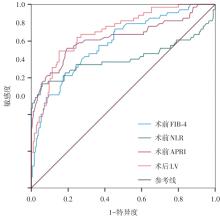
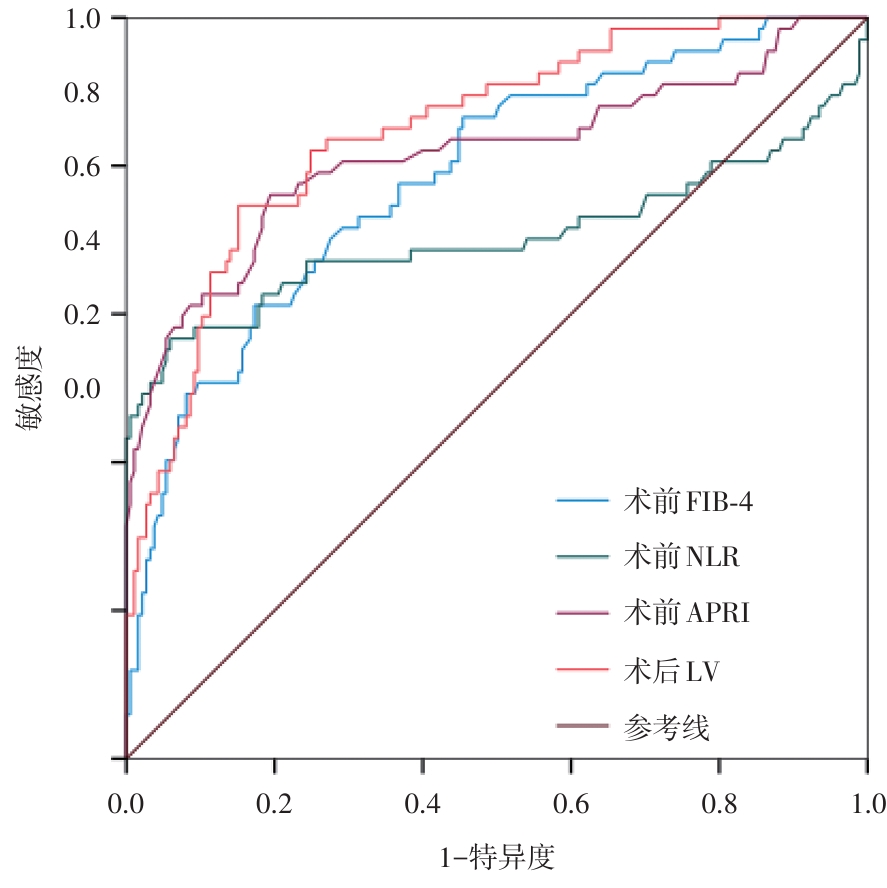
目的 探讨肝细胞癌(hepatocellular carcinoma, HCC)患者肝动脉化疗栓塞术(cTACE)后发生急性肝损伤的危险因素。 方法 回顾性分析2024年1月至2025年7月于徐州医科大学附属医院和徐州市中心医院接受cTACE治疗的252例HCC患者临床资料,根据术后是否发生急性肝损伤分为急性肝损伤组和非急性肝损伤组。通过多因素logistic回归分析筛选独立危险因素。 结果 252例患者术后发生急性肝损伤67例。多因素分析显示,巨块型HCC、Child-Pugh B级、合并肝硬化、TACE次数> 2次、术前白蛋白(ALB)< 30 g/L、术前肝纤维化4因子指数(FIB-4)升高、术前中性粒细胞/淋巴细胞比值(NLR)升高、术前血小板计数指数(APRI)升高、术后肝脏体积(LV)降低均为HCC患者cTACE术后发生急性肝损伤的独立危险因素(均P < 0.05)。ROC曲线分析显示,术前FIB-4、NLR、APRI及术后LV预测cTACE术后发生急性肝损伤的AUC分别为0.786、0.704、0.816、0.847;敏感度分别为0.716、0.672、0.761、0.821;特异度分别为0.708、0.701、0.805、0.836。 结论 HCC患者cTACE术后发生急性肝损伤受巨块型HCC、Child-Pugh B级、合并肝硬化、TACE次数> 2次、术前ALB < 30 g/L、术前FIB-4、术前NLR、术前APRI、术后LV等因素的影响。

关键词: 肝细胞癌, 肝动脉化疗栓塞术, 急性肝损伤

Abstract:

Objective To explore the risk factors associated with acute liver injury in patients with hepatocellular carcinoma (HCC) following hepatic artery chemoembolization (cTACE). Methods A retrospective analysis was conducted on the clinical data of 252 HCC patients who received cTACE treatment at the Affiliated Hospital of Xuzhou Medical University and Xuzhou Central Hospital from January 2024 to July 2025. The patients were divided into an acute liver injury group and a non-acute liver injury group based on whether acute liver injury occurred after surgery. Independent risk factors were screened through multiple logistic regression analysis. Results Multivariate analysis indicated that giant hepatocellular carcinoma, Child-Pugh B grade, combined cirrhosis, TACE frequency greater than 2 times, preoperative albumin (ALB) less than 30 g/L, an increase in the preoperative fibrosis factor 4 index (FIB-4), an increase in the preoperative neutrophil/lymphocyte ratio (NLR), an increase in the preoperative platelet count index (APRI), and a decrease in the postoperative liver volume (LV) were all independent risk factors for acute liver injury in HCC patients undergoing cTACE (all P < 0.05). ROC curve analysis demonstrated that the areas under the curve (AUC) for predicting acute liver injury after cTACE by preoperative FIB-4, NLR, APRI, and postoperative LV were 0.786, 0.704, 0.816, and 0.847, respectively; The sensitivities were 0.716, 0.672, 0.761, and 0.821, respectively; The specificities were 0.708, 0.701, 0.805, and 0.836, respectively. Conclusions The occurrence of acute liver injury after cTACE in HCC patients is influenced by factors including massive HCC, Child-Pugh class B, concurrent liver cirrhosis, more than 2 TACE sessions, preoperative ALB < 30 g/L, preoperative FIB-4, preoperative NLR, preoperative APRI, and postoperative LV.

Key words: hepatocellular carcinoma, transcatheter arterial chemoembolization, acute liver injury

中图分类号: