实用医学杂志 ›› 2025, Vol. 41 ›› Issue (24): 3897-3903.doi: 10.3969/j.issn.1006-5725.2025.24.014

• 临床研究 • 上一篇    

肛周脓肿多重耐药菌感染的危险因素分析以及列线图预测模型的构建

王大伟1,郑正2,盛钰翔1,李知然3,皇甫少华1,江滨1()   

  1. 1.南京中医药大学附属南京中医院肛肠中心 (江苏 南京 210006 )
    2.徐州市中医院肛肠科 (江苏 徐州 221000 )
    3.中国中医科学院广安门医院妇科 (北京 100053 )
  • 收稿日期:2025-09-25 出版日期:2025-12-25 发布日期:2025-12-25
  • 通讯作者: 江滨 E-mail:jbfirsth@aliyun.com
  • 基金资助:
    国家自然科学基金项目(82004365);江苏省科技计划专项资金重点研发计划社会发展面上项目(BE2022674)

Risk factors for multidrug⁃resistant bacterial infections in perianal abscesses and the construction of a nomogram prediction model

Dawei WANG1,Zheng ZHENG2,Yuxiang SHENG1,Zhiran LI3,Shaohua HUANGFU1,Bin. JIANG1()   

  1. *.The Anorectal Center,Nanjing Hospital of Chinese Medicine Affiliated to Nanjing University of Chinese Medicine,Nanjing 210022,Jiangsu,China
  • Received:2025-09-25 Online:2025-12-25 Published:2025-12-25
  • Contact: Bin. JIANG E-mail:jbfirsth@aliyun.com

摘要:

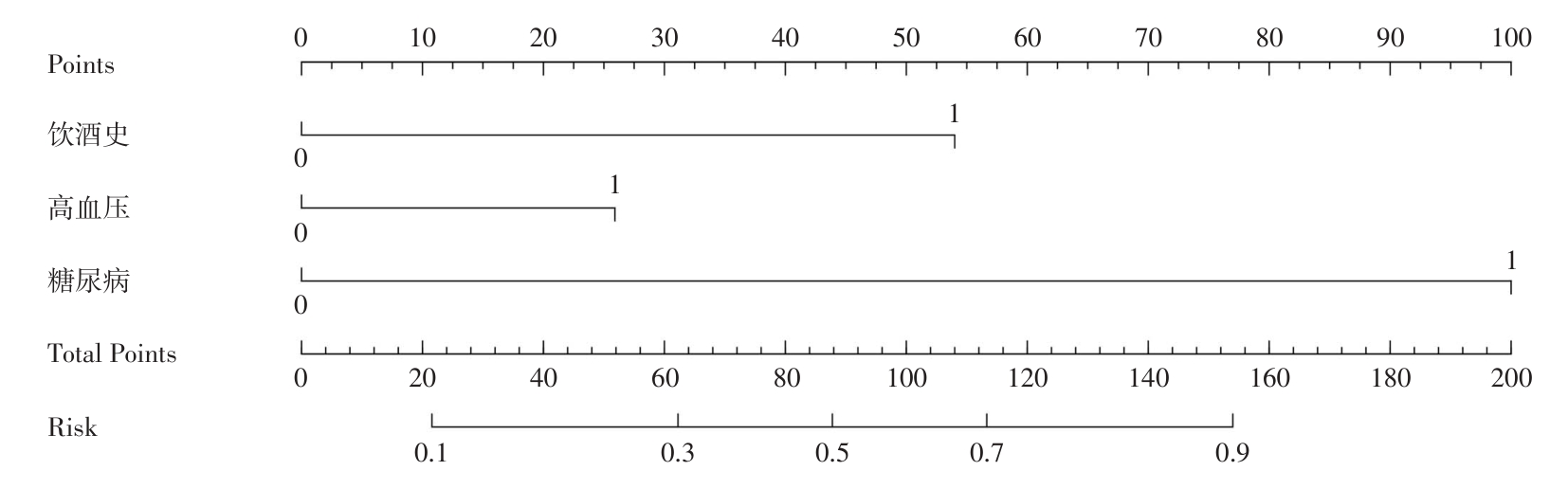
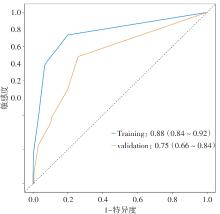
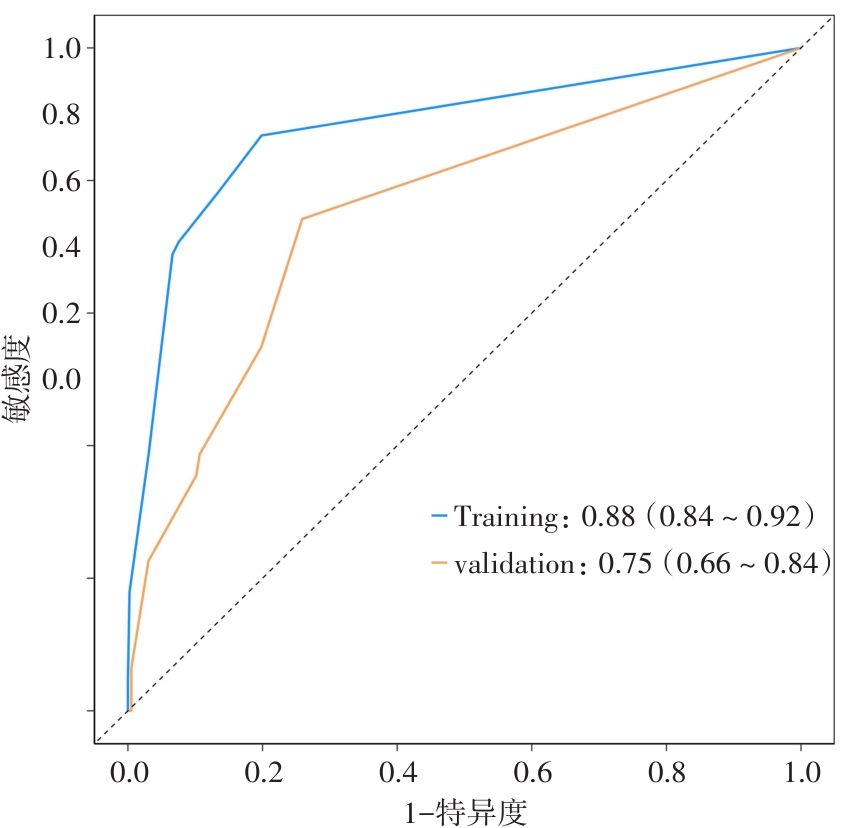
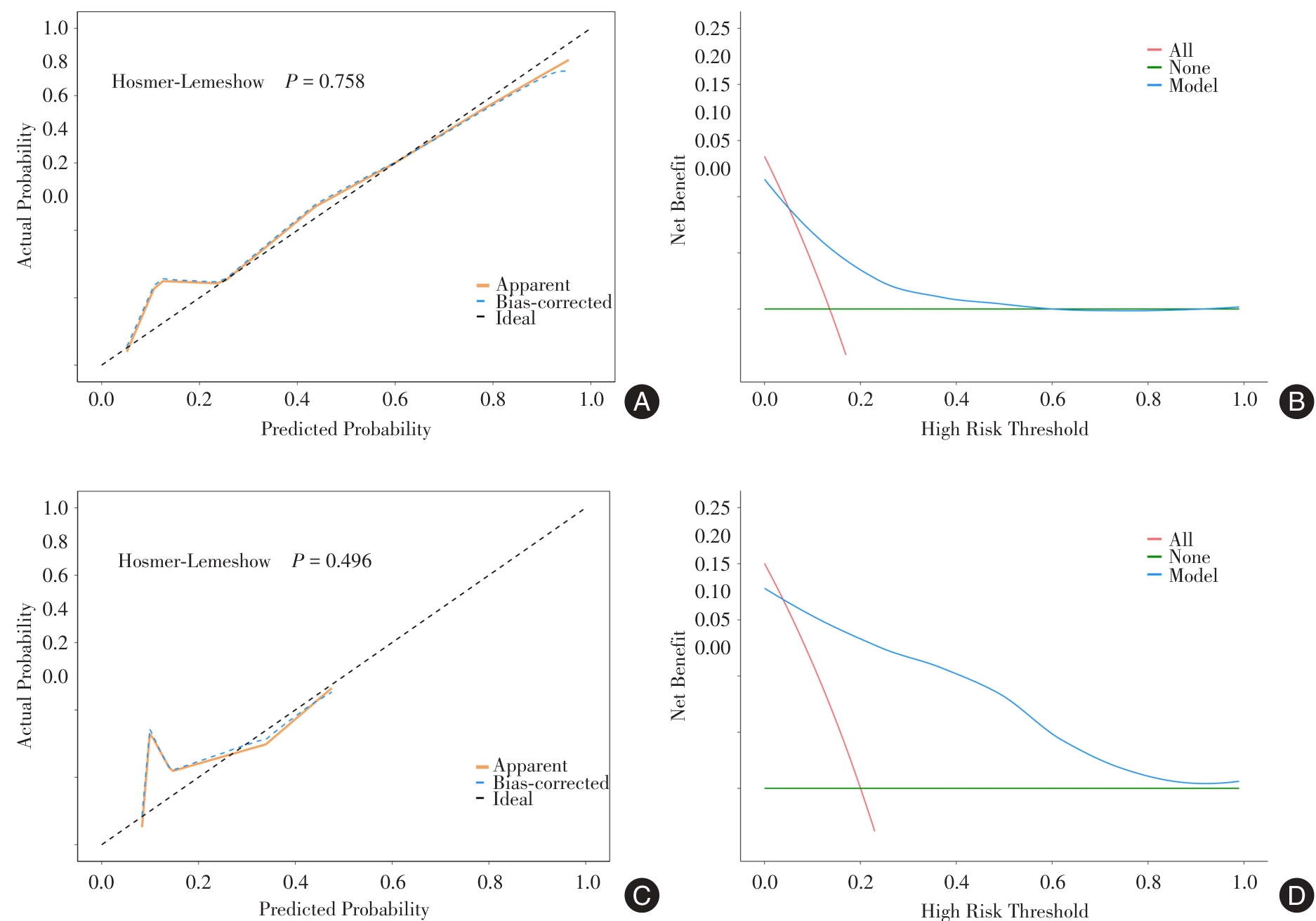
目的 分析肛周脓肿患者多重耐药菌(multidrug?resistant organisms,MDRO)感染的危险因素并构建列线图预测模型,为临床个体化治疗提供依据。 方法 选取 2022年1月至2023年12月于南京市中医院收治的757例肛周脓肿患者,收集患者临床资料,采用单、多因素logistic回归分析对纳入的变量进行分析,筛选潜在危险影响因素,按7:3比例随机分为训练集(n = 530)和验证集(n = 227)进行列线图预测模型的构建与验证。 结果 757例肛周脓肿患者中,有137例患者为MDRO感染,非MDRO感染为620例;共分离病原菌927株,MDRO为298株,占比32.15%,以大肠埃希菌(149株,50.00%)、产超广谱β-内酰胺酶肠杆菌(68株,22.82%)和中间链球菌(27株,9.06%)为主;单因素、多因素logistic回归分析均显示饮酒史、高血压及糖尿病与MDRO感染显著相关(P < 0.05)。列线图模型表现出良好的区分度,校准曲线显示预测值与实际观察值吻合良好。 结论 肛周脓肿患者中MDRO占比较高,以革兰阴性菌感染为主。此外,本研究所构建的列线图模型,整合了饮酒史、高血压与糖尿病等临床指标,能够精准识别肛周脓肿患者中的MDRO感染风险。该模型性能良好,可为抗菌药物的合理使用提供量化工具,辅助临床决策。

关键词: 肛周脓肿, 多重耐药菌, logistic回归, 列线图

Abstract:

Objective To identify risk factors for multidrug-resistant organism (MDRO) infections in patients with perianal abscesses and develop a nomogram-based predictive model to guide individualized clinical management.. Methods A total of 757 patients with perianal abscesses admitted to the Nanjing Hospital of Traditional Chinese Medicine between January 2022 and December 2023 were included in this study. Clinical data were systematically collected, and potential risk factors were identified through univariate and multivariate logistic regression analyses. Patients were randomly assigned to a training set (n = 530, 70%) or a validation set (n = 227, 30%) to develop and validate the nomogram prediction model. Results Among the 757 patients, 137 (18.1%) had MDRO infections, while 620 (81.9%) had non-MDRO infections. A total of 927 pathogenic strains were isolated, of which 298 (32.15%) were classified as MDROs. The predominant MDROs included Escherichia coli (149 strains, 50.00%), extended-spectrum β-lactamase (ESBL)-producing organisms (68 strains, 22.82%), and Streptococcus intermedius (27 strains, 9.06%). Both univariate and multivariate logistic regression analyses revealed that a history of alcohol consumption, hypertension, and diabetes was significantly associated with MDRO infections (P < 0.05). The nomogram model exhibited good discriminative ability, and the calibration curve demonstrated strong agreement between predicted probabilities and observed outcomes. Conclusions MDRO infections are commonly observed in patients with perianal abscess and are primarily attributed to Gram-negative bacteria. By incorporating key clinical indicators?such as a history of alcohol use, hypertension, and diabetes?the nomogram model developed in this study demonstrates strong predictive accuracy for identifying the risk of multidrug-resistant organism infection in these patients. This robust model can serve as a reliable quantitative tool to guide antimicrobial therapy and support clinical decision-making.

Key words: perianal abscess, multidrug-resistant organisms, logistic regression analyses, nomogram

中图分类号: