实用医学杂志 ›› 2026, Vol. 42 ›› Issue (15): 2770-2778.doi: 10.3969/j.issn.1006-5725.2026.15.013

• 论著·机制与实践 • 上一篇    

中孕期羊膜腔穿刺羊水沉淀性状的影响因素及对妊娠结局的影响

李琴,陈薇,吴仁花,袁静,胡艳平()   

  1. 安徽医科大学第一附属医院妇产科产前诊断中心 (安徽 合肥 230022 )
  • 收稿日期:2026-05-18 修回日期:2026-06-15 接受日期:2026-06-17 出版日期:2026-08-10 发布日期:2026-08-13
  • 通讯作者: 胡艳平 E-mail:yfy1012206@fy.ahmu.edu.cn
  • 基金资助:
    国家重点研发计划(2021YFC1005303)

Factors influencing the characteristics of amniotic fluid sediment during mid-trimester amniocentesis and their impact on cell culture and pregnancy outcomes

Qin LI,Wei CHEN,Renhua WU,Jing YUAN,Yanping​ HU()   

  1. Prenatal Diagnosis Center,Department of Obstetrics and Gynecology,the First Affiliated Hospital of Anhui Medical University,Hefei 230022,Anhui,China
  • Received:2026-05-18 Revised:2026-06-15 Accepted:2026-06-17 Online:2026-08-10 Published:2026-08-13
  • Contact: Yanping? HU E-mail:yfy1012206@fy.ahmu.edu.cn

摘要:

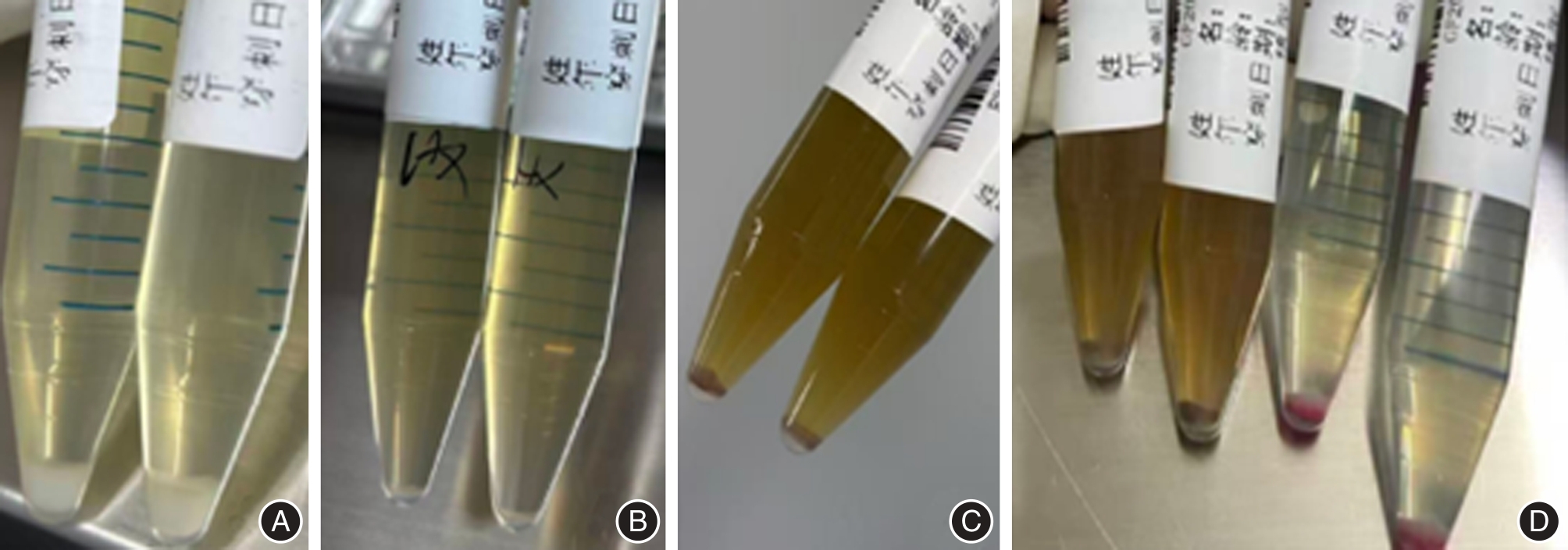
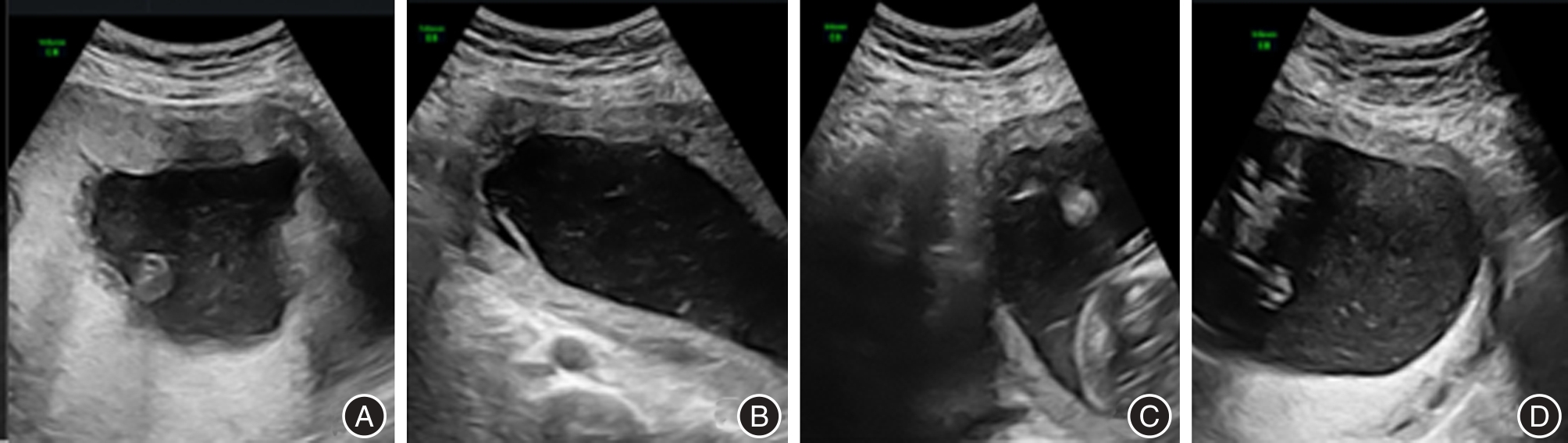
目的 分析中孕期产前诊断羊膜腔穿刺术后羊水性状及沉淀差异性的可能原因、可能影响因素及其对羊水细胞培养与妊娠结局的影响,为临床标本处理、风险评估与咨询提供依据。 方法 回顾性选取2025年1—12月于安徽医科大学第一附属医院产前诊断中心行中孕期(18 ~ 24周)单胎羊膜腔穿刺的孕妇共2 489例,最终纳入96例作为研究对象。抽取20 mL羊水经离心后按羊水沉淀性状与沉淀量分为4组:少量乳白色沉淀组(A组,n = 20)、多量乳白色沉淀组(B组,n = 24)、少量血性沉淀组(C组,n = 29)、少量茶褐色沉淀组(D组,n = 23)。收集各组基线资料、实验室指标,采用原位细胞培养法记录培养周期、换液次数、细胞计数,随访妊娠结局;采用单因素方差分析、χ2检验及二元logistic回归模型分析进行统计学分析。 结果 4组在RBC、CRP、培养周期、换液次数、细胞计数及孕期出血史等方面差异有统计学意义(均P < 0.05)。其中D组母体RBC水平最高,为(4.93 ± 1.55)×1012/L,显著高于其他组(F = 5.20,P = 0.002);B组CRP水平最高为(9.63 ± 2.87)mg/L,4组间差异有统计学意义(F = 5.69,P = 0.001)。培养相关指标方面,4组在培养周期、换液次数及细胞计数方面差异均有统计学意义(均P < 0.001)。D组培养周期最长,为(13.52 ± 0.88)d;换液次数最多(5.57 ± 0.650)次;细胞计数最少,为(1.09 ± 0.56)×105/mL。4组间受孕方式、抗凝剂使用史、双胎之一自减及胎盘位置比较差异均无统计学意义(均P > 0.05)。孕期出血史在4组间分布差异有统计学意义(χ2 = 14.04,P = 0.003)。通过二元logistic回归模型分析提示RBC、培养周期、换液次数、孕期出血史及与D组发生可能性显著相关(OR = 2.27、6.89、4.25、4.88)。妊娠结局显示D组出现流产、羊水渗漏、早产等不良事件,其余3组均未发生不良事件。 结论 中孕期羊水性状及沉淀差异性较大,茶褐色羊水可能会降低体外细胞培养效率同时增加不良妊娠结局风险,临床需结合高危因素提前评估,实施标本分层处理与孕期个体化管理。?

关键词: 羊膜腔穿刺术, 羊水性状, 羊水沉淀, 原位培养, 妊娠结局

Abstract:

Objective To investigate the factors influencing the characteristics of amniotic fluid sediment following second-trimester amniocentesis for prenatal diagnosis, and to evaluate their impact on amniotic fluid cell culture and pregnancy outcomes, thereby providing a basis for clinical specimen processing, risk assessment, and genetic counseling. Methods A total of 2 489 pregnant women who underwent mid-trimester (18 - 24 weeks) amniocentesis for singleton pregnancies at the Prenatal Diagnosis Center of the First Affiliated Hospital of Anhui Medical University from January 2025 to December 2025 were retrospectively reviewed. Among them, 96 cases with distinct sediment characteristics were ultimately included. Based on the visual characteristics and volume of the sediment from 20 mL centrifuged amniotic fluid aliquots, patients were categorized into four groups: small-volume milky-white sediment (Group A, n = 20), large-volume milky-white sediment (Group B, n = 24), small-volume bloody sediment (Group C, n = 29), and small-volume dark-brown sediment (Group D, n = 23). Baseline demographics and laboratory parameters were collected. Using the in situ amniotic fluid cell culture method, we recorded the culture duration, number of media changes, and total cell yield. Pregnancy outcomes were subsequently tracked. Statistical analyses were performed using one-way analysis of variance, chi-square tests, and binary logistic regression. Results There were statistically significant differences between the four groups in terms of RBC, CRP, culture cycle, number of fluid changes, cell count, and history of bleeding during pregnancy (all P < 0.05). Among them, RBC and CRP levels were significantly different among the four groups. Group D had the highest RBC level, which was (4.93 ± 1.55)× 1012/L, which was significantly higher than other groups (F = 5.20, P = 0.002); group B had the highest CRP level, which was (9.63 ± 2.87) mg/L, and the difference between the four groups was statistically significant (F = 5.69, P = 0.001). In terms of culture-related indicators, there were significant differences among the four groups in terms of culture cycle, number of medium changes, and cell count (all P < 0.001). Group D had the longest culture period, (13.52 ± 0.88) days; the most number of medium changes, (5.57 ± 0.650) times; and the lowest cell count, (1.09 ± 0.56)× 105/mL. There were no statistically significant differences in conception methods, history of anticoagulant use, twin reduction, and placental position among the four groups (all P > 0.05). The distribution of history of bleeding during pregnancy was significantly different among the four groups (χ2 = 14.04, P = 0.003). Binary logistic regression model analysis showed that RBC, culture cycle, number of fluid changes, history of bleeding during pregnancy were significantly related to the occurrence of group D (OR = 2.27, 6.89, 4.25, 4.88 respectively). Pregnancy outcomes showed that adverse events such as miscarriage, amniotic fluid leakage, and premature birth occurred in group D, while no adverse events occurred in the other three groups. Conclusions Amniotic fluid sediment characteristics exhibit significant variations during the second trimester. Specifically, dark-brown sediment is associated with impaired in vitro cell culture efficiency and an increased risk of adverse pregnancy outcomes. These findings underscore the necessity for early risk assessment, stratified specimen processing, and individualized prenatal management in clinical practice.

Key words: amniocentesis, amniotic fluid characteristics, amniotic fluid precipitation, in situ culture, pregnancy outcome

中图分类号: