实用医学杂志 ›› 2025, Vol. 41 ›› Issue (23): 3723-3729.doi: 10.3969/j.issn.1006-5725.2025.23.014

• 临床研究 • 上一篇    

临床-炎症-影像组学联合预测模型对Ⅱ期结直肠癌未辅助治疗患者转移复发风险的预测价值

魏义1,饶春晖1,刘慧泽1,陈文2   

  1. 1.杭州市中医院,肛肠科,(浙江 杭州 310007 )
    2.杭州市中医院,放射科,(浙江 杭州 310007 )
  • 收稿日期:2025-09-04 出版日期:2025-12-10 发布日期:2025-12-18
  • 基金资助:
    浙江省医药卫生科技计划项目(2024KY1394);浙江省中医药科技计划项目(2024ZL679)

Predictive value of multimodal nomogram on the risk of metastasis and recurrence in patients with stage Ⅱ colorectal cancer without adjuvant treatment

Yi WEI1,Chunhui RAO1,Huize LIU1,Wen. CHEN2   

  1. *.Department of Anorectal Surgery,Hangzhou Hospital of Traditional Chinese Medicine,Hanzhou 310007,Zhejiang,China
  • Received:2025-09-04 Online:2025-12-10 Published:2025-12-18

摘要:

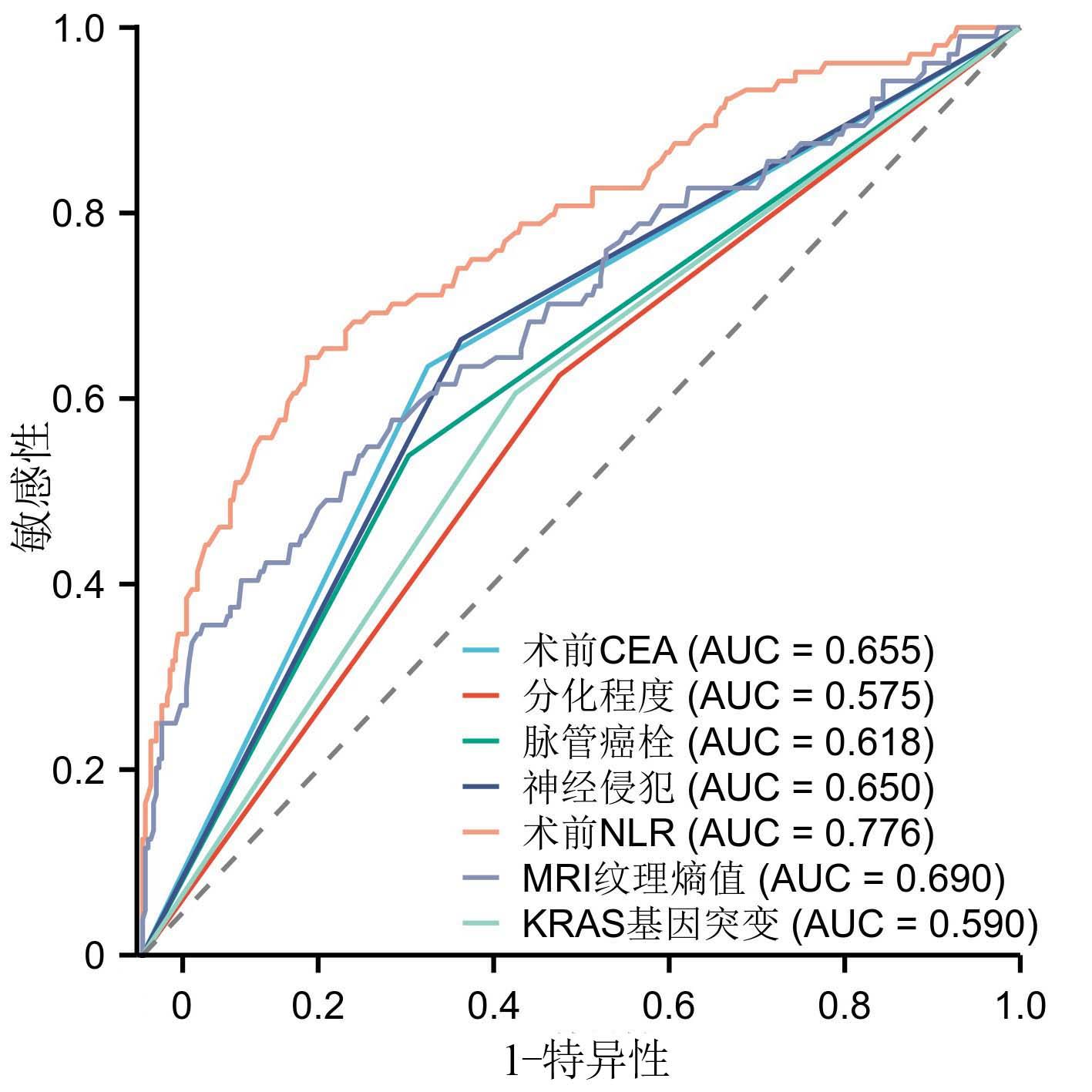
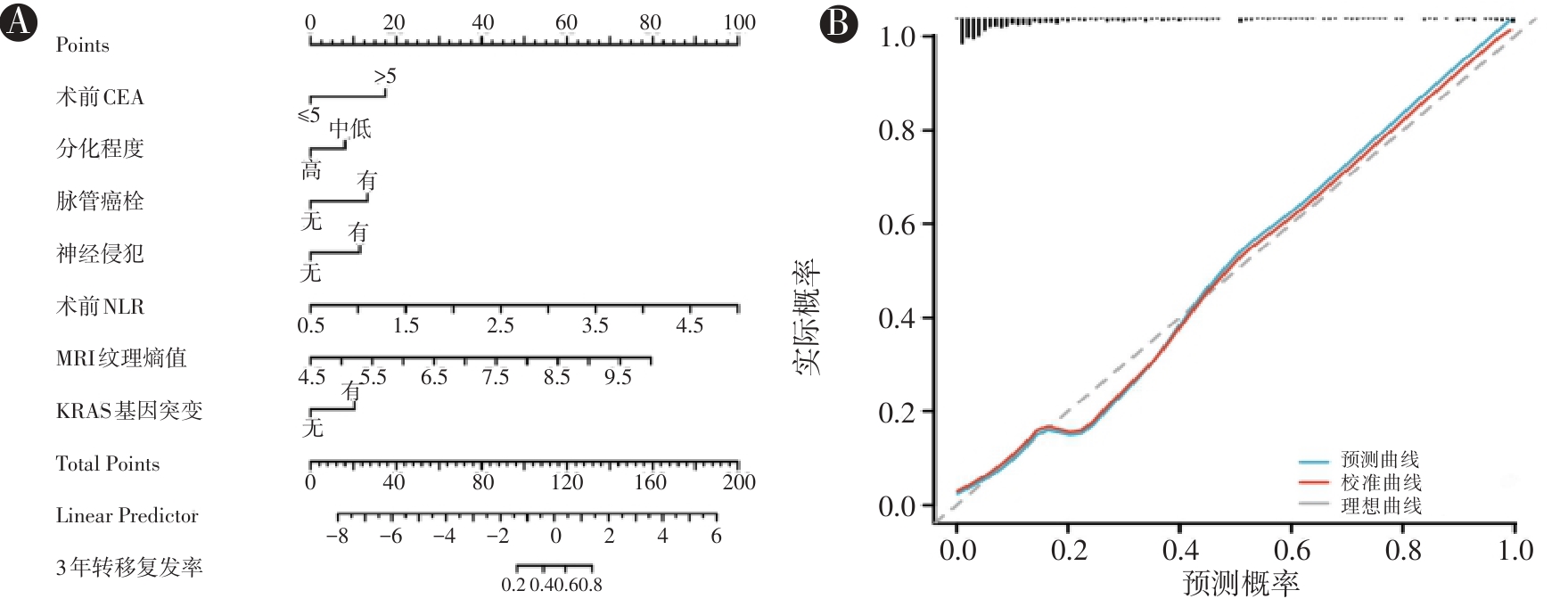
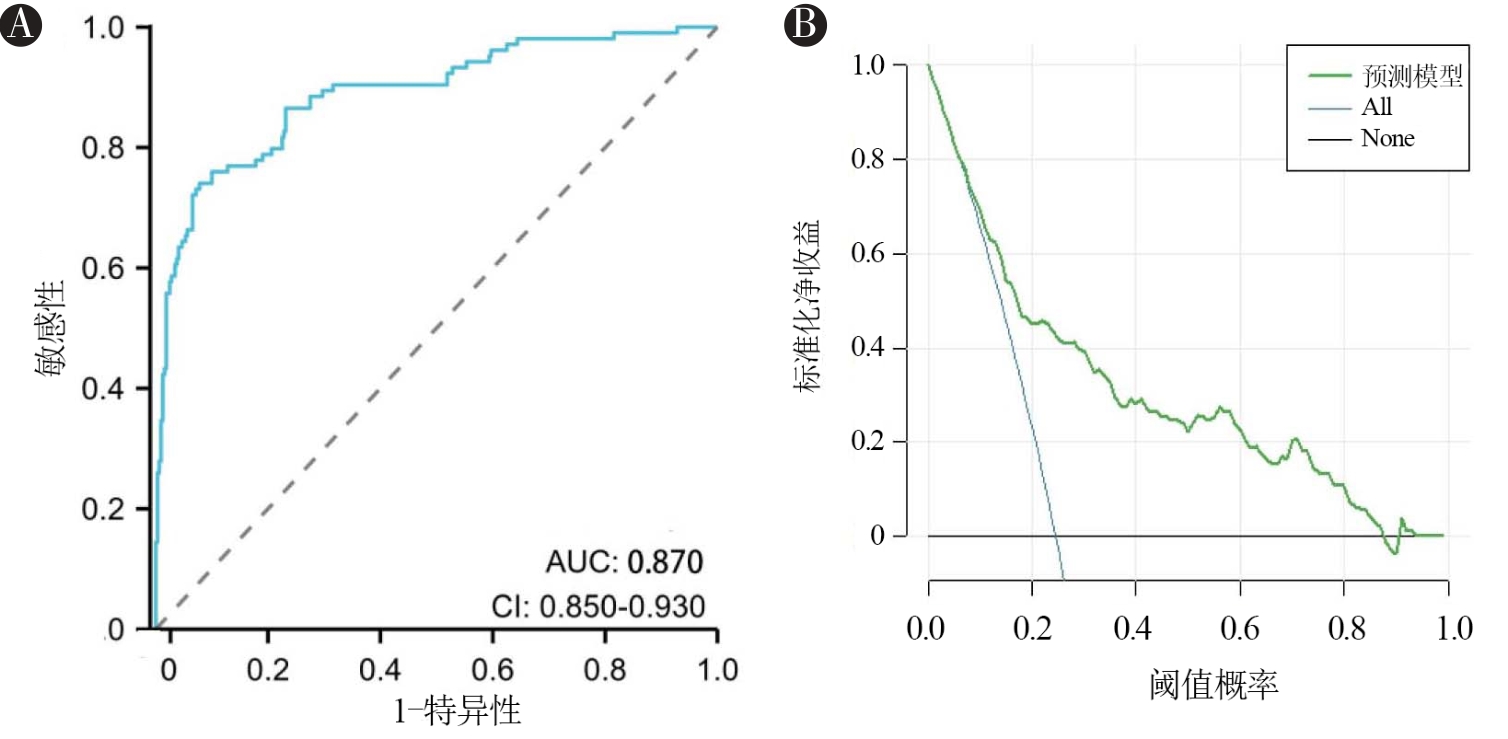
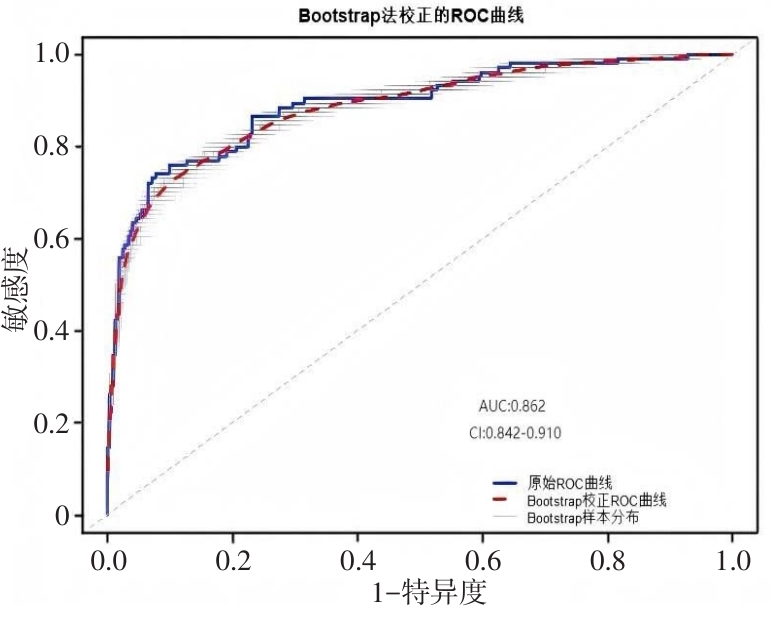
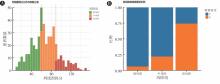
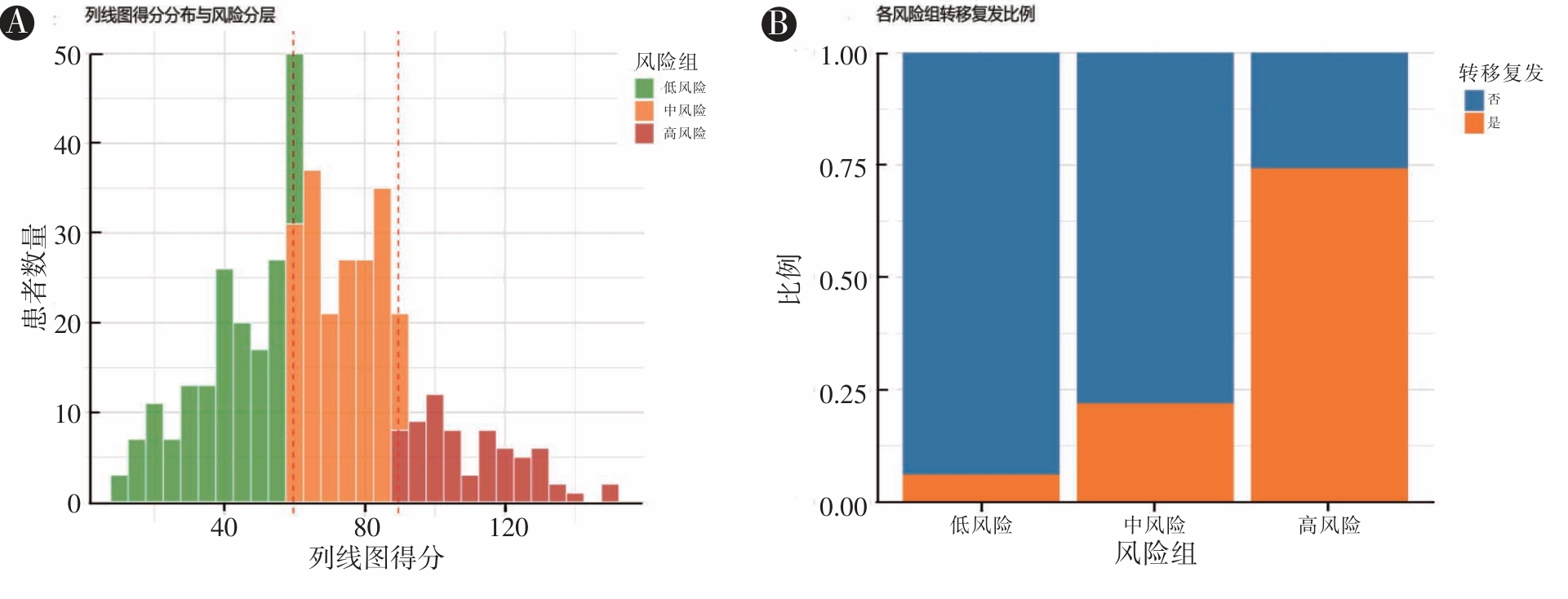
目的 构建多模态列线图预测未辅助治疗的Ⅱ期结直肠癌(CRC)患者术后转移复发风险。 方法 回顾性纳入2016年1月至2021年12月于本院行根治性手术的Ⅱ期CRC未辅助治疗患者424例。提取患者临床病理特征(T分期、CEA、分化程度等)、炎症指标(术前中性粒细胞计数与淋巴细胞计数比值、术前淋巴细胞计数与单核细胞计数比值)、影像组学参数(MRI纹理熵值)及分子标志物(KRAS突变状态)。以影像学证实的转移复发为主要终点,通过单因素及多因素logistic回归分析筛选独立危险因素,构建列线图模型,ROC曲线分析模型的预测价值,Bootstrap法进行内部验证,Hosmer-Lemeshow拟合优度检验评价模型的校准度,绘制决策曲线分析,检验模型获益,并进行风险分层。 结果 104例(24.53%)患者术后3年内发生转移复发。多因素分析显示:CEA > 5 μg/L、中低分化、有脉管癌栓、有神经侵犯、NLR升高、熵值升高、有KRAS基因突变为独立危险因素(P < 0.05)。基于上述因素构建的列线图预测效能显著(AUC = 0.870,95%CI: 0.850 ~ 0.930),校准曲线显示模型拟合良好。风险分层后:低危组复发率仅6.1%,而高危组达74.2%(P < 0.05)。 结论 在未辅助治疗Ⅱ期CRC人群中构建的临床-炎症-影像组学联合预测模型,可用于识别该类患者术后转移复发风险。

关键词: 结直肠癌, 未辅助治疗, 多模态, 转移复发, 列线图

Abstract:

Objective To develop a multimodal nomogram for predicting the risk of postoperative metastasis and recurrence in patients with stage Ⅱ colorectal cancer (CRC) who do not receive adjuvant therapy. Methods A total of 424 patients with stage Ⅱ CRC who underwent radical resection without adjuvant therapy at our institution between January 2016 and December 2021 were retrospectively enrolled. Clinicopathological characteristics [including T stage, carcinoembryonic antigen (CEA) levels, and tumor differentiation], inflammatory markers (preoperative neutrophil-to-lymphocyte ratio and lymphocyte-to-monocyte ratio), radiomic features (MRI texture entropy), and molecular biomarkers (KRAS mutation status) were collected. Radiologically confirmed metastasis or recurrence was defined as the primary endpoint. Univariate and multivariate logistic regression analyses were performed to identify independent prognostic factors and construct a predictive nomogram. The model’s discriminatory performance was assessed using receiver operating characteristic (ROC) curve analysis. Internal validation was conducted via bootstrapping, and model calibration was evaluated using the Hosmer?Lemeshow goodness-of-fit test. Decision curve analysis was applied to assess the clinical utility of the nomogram, and risk stratification was subsequently performed. Results Among the patients, 104 (24.53%) developed metastasis or recurrence within three years after surgery. Multivariate analysis revealed the following independent risk factors (all P < 0.05): CEA > 5 μg/L, moderate to poor differentiation, presence of lymphovascular invasion, perineural invasion, elevated neutrophil-to-lymphocyte ratio (NLR), increased radiomic entropy, and KRAS mutation. The nomogram demonstrated strong predictive accuracy (AUC = 0.870, 95%CI: 0.850 ~ 0.930), and the calibration curve indicated excellent agreement between predicted and observed outcomes. Following risk stratification, the recurrence rate was only 6.1% in the low-risk group, compared to 74.2% in the high-risk group (P < 0.05). Conclusions This study develops a clinical-inflammatory-radiomic integrated prediction model specifically for stage Ⅱ colorectal cancer patients who do not receive adjuvant therapy. The model effectively identifies the risk of postoperative metastasis and recurrence, enabling the establishment of a risk stratification system to guide subsequent treatment decisions.

Key words: colorectal cancer, without adjuvant therapy, multimodal, metastasis recurrence, nomogram

中图分类号: