

实用医学杂志 ›› 2025, Vol. 41 ›› Issue (22): 3598-3608.doi: 10.3969/j.issn.1006-5725.2025.22.019
• 医学检查与临床诊断 • 上一篇
朱丹1,卢万俊1( ),朱颖1,曹金璐1,陈英姿2
收稿日期:2025-08-01
出版日期:2025-11-25
发布日期:2025-11-26
通讯作者:
卢万俊
E-mail:xue1203@sina.com
基金资助:
Dan ZHU1,Wanjun LU1(),Ying ZHU1,Jinlu CAO1,Yingzi CHEN2
Received:2025-08-01
Online:2025-11-25
Published:2025-11-26
Contact:
Wanjun LU
E-mail:xue1203@sina.com
摘要:
目的 探讨基于“无标注”早期眼底病变的全景视网膜图像深度学习(deep learning,DL)模型对糖尿病肾病(DKD)预测的可行性,并评估不同双眼融合策略的增效作用。 方法 回顾性收集2022年12月至2024年3月在扬州大学附属江都人民医院内分泌科住院的353例2型糖尿病(T2DM)患者的眼底视网膜图像及临床资料。根据是否有DKD,分为DKD组(114例)和糖尿病无肾病(NDKD)组(239例)。首先,基于“U型网络”(UNet)的预训练自动勾画眼底全景视网膜图像模型,并应用此“自动勾画模型”批量处理所有患者眼底全景视网膜图像。然后,按五折交叉验证(70%:30%),基于ResNet152分别构建左、右眼DL模型。并采取不同融合策略整合双眼信息构建融合模型,包括双眼结果融合、双眼特征融合、双眼图像融合模型。最后,采用受试者工作特征(ROC)曲线的曲线下面积(AUC)对模型进行评估。通过DeLong检验比较各模型之间AUC值的差异,采用净重新分类指数(NRI)和决策曲线分析(DCA)评估不同模型之间的优越性。 结果 本研究共构建6个预测模型:临床参数模型、左眼底模型、右眼底模型、双眼图像融合模型、双眼结果融合模型和双眼特征融合模型。在训练集和验证集中,基于Transformer的双眼特征融合模型AUC最高(分别为0.864和0.658)。DeLong检验显示,在训练集中,双眼特征融合模型AUC值显著高于其余5个模型(均P < 0.001);在验证集中,各模型AUC值之间差异无统计学意义(均P > 0.05)。NRI显示,在训练集和验证集中,与双眼特征融合模型比较,其余5个模型NRI(分别为-0.255、-0.244、-0.289、-0.426、-0.163和-0.060、-0.016、-0.028、-0.105、-0.033)均为负值,显示基于Transformer的双眼特征融合模型预测DKD性能最优。DCA显示,双眼特征融合模型净获益大于其余5个模型。 结论 基于“无标注”早期眼底病变的全景视网膜图像构建的DL模型可预测DKD。而基于Transformer融合策略性能最优,为未来进一步优化开发预测DKD工具,提供了一种新的思路。
中图分类号:
朱丹,卢万俊,朱颖,曹金璐,陈英姿. 构建基于“无标注”眼底全景视网膜图像深度学习模型预测糖尿病肾病[J]. 实用医学杂志, 2025, 41(22): 3598-3608.
Dan ZHU,Wanjun LU,Ying ZHU,Jinlu CAO,Yingzi CHEN. Developing an unsupervised deep learning model for diabetic nephropathy prediction using panoramic fundus retinal images[J]. The Journal of Practical Medicine, 2025, 41(22): 3598-3608.
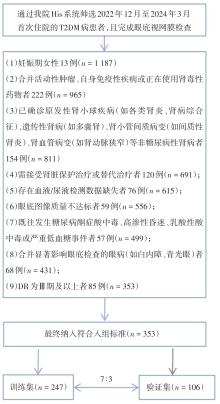
图1
研究对象筛选流程图"
表1
训练集与验证集基线临床特征 (M[(P25,P75)])"
| 项目 | 训练集 | t/Z/χ2值 | P值 | 验证集 | t/Z/χ2值 | P值 | ||
|---|---|---|---|---|---|---|---|---|
| NDKD组 | DKD组 | NDKD组 | DKD组 | |||||
| 例数 | 167 | 80 | 72 | 34 | ||||
| 年龄/岁 | 57.00(53.00,64.00) | 60.05(56.00,69.00) | -2.994 | 0.003 | 60.08 ± 10.79* | 61.82 ± 11.59* | -0.757 | 0.451 |
| 性别/[例(%)] | 0.095 | 0.758 | 0.027 | 0.868 | ||||
| 男 | 80(47.9) | 40(50.0) | 33(45.8) | 15(44.1) | ||||
| 女 | 87(52.1) | 40(50.0) | 39(54.2) | 19(55.9) | ||||
| 糖尿病病程/年 | 10(6.00,17.00) | 12(8.25,20.00) | -2.282 | 0.022 | 10(6.25,15.00) | 12(6.75,20.00) | -1.305 | 0.192 |
| BMI/(kg/m2) | 23.78(21.63,25.40) | 23.59(22.20,25.67) | -0.249 | 0.803 | 23.79(21.39,25.15) | 25.25(22.97,28.15) | -2.670 | 0.008 |
| BF/% | 29.19(24.03,36.13) | 30.34(24.45,37.41) | -0.939 | 0.348 | 28.46 ± 10.81* | 33.33 ± 8.65* | -2.295 | 0.024 |
| 吸烟史(有)/[例(%)] | 26(15.6) | 38(47.5) | 28.728 | 0.000 | 14(19.4) | 18(52.9) | 12.295 | < 0.001 |
| 高血压病史(有)/[例(%)] | 80(47.9) | 56(70.0) | 10.672 | 0.001 | 33(45.8) | 21(61.8) | 2.345 | 0.126 |
| 冠心病病史(有)/[例(%)] | 34(20.4) | 26(32.5) | 4.335 | 0.037 | 16(22.2) | 13(38.2) | 2.980 | 0.084 |
| 主动脉弓钙化(有)/[例(%)] | 78(46.7) | 46(57.5) | 2.521 | 0.112 | 33(45.8) | 19(55.9) | 0.933 | 0.334 |
| 冠状动脉钙化(有)/[例(%)] | 68(40.7) | 40(50.0) | 1.894 | 0.169 | 26(36.1) | 16(47.1) | 1.157 | 0.282 |
糖尿病周围神经病变(有) /[例(%)] | 66(39.5) | 33(41.3) | 0.067 | 0.795 | 44(61.1) | 13(38.2) | 4.862 | 0.027 |
| 糖化血红蛋白 /% | 9.70(8.40,11.00) | 9.70(8.00,11.00) | -0.469 | 0.639 | 9.83 ± 1.78* | 9.63 ± 2.72* | 0.451 | 0.653 |
| 尿酸/(mg/dL) | 281.90(229.60,329.90) | 340.85(278.53,401.33) | -4.702 | 0.000 | 261.5(207.93,335.25) | 305.75(259.78,382.40) | -2.156 | 0.031 |
| 总胆红素/(mg/dL) | 9.90(7.30,12.80) | 8.75(5.20,11.75) | -2.180 | 0.029 | 9.20(6.90,11.98) | 8.75(6.45,15.80) | -0.108 | 0.914 |
| 直接胆红素/(mg/dL) | 4.00(3.10,4.80) | 3.90(2.43,4.60) | -2.060 | 0.039 | 3.80(2.93,4.48) | 4.00(3.05,5.30) | -0.928 | 0.353 |
| 总胆汁酸/(μmol/L) | 3.25(2.69,4.07) | 3.25(2.63,3.92) | -0.354 | 0.723 | 3.45(2.85.4.23) | 3.74(2.74,4.52) | -0.798 | 0.430 |
| 白细胞计数/(109·L -1) | 6.15(5.21,7.38) | 6.68(5.44,7.70) | -1.336 | 0.182 | 6.45(5.57,7.54) | 6.11(5.19,7.92) | -0.690 | 0.490 |
| 血红蛋白/(g/dL) | 137.00(126.00,147.00) | 131.00(115.25,139.50) | -3.165 | 0.002 | 135.50(122.76,146.50) | 132.35(119.50,140.00) | -1.107 | 0.268 |
| 中性粒细胞计数/(109·L -1) | 3.89(3.08,4.92) | 4.29(3.23,5.37) | -1.400 | 0.162 | 4.23(3.27,5.14) | 3.82(2.90,5.74) | -0.042 | 0.675 |
| 淋巴细胞计数(x ± s)/(109·L -1) | 1.64 ± 0.61 | 1.63 ± 0.69 | 0.061 | 0.951 | 1.67(1.27,2.10) | 1.50(1.12,1.84) | -1.570 | 0.116 |
| 中性粒细胞/淋巴细胞比值 | 2.43(1.75,3.55) | 2.65(1.97,4.15) | -1.358 | 0.174 | 2.31(1.70,3.49) | 2.51(1.80,4.44) | -0.745 | 0.457 |
| 总胆固醇/(mg/dL) | 4.15(3.62,4,79) | 4.23(3.74,5.10) | -1.071 | 0.284 | 4.43(3.59,5.13) | 4.64(4.05,5.19) | -0.755 | 0.450 |
| 甘油三酯/(mg/dL) | 1.43(1.04,2.04) | 1.74(1.08,2.22) | -1.285 | 0.199 | 1.36(0.86,2.14) | 1.99(1.08,3.25) | -2.342 | 0.019 |
| 低密度脂蛋白/(mg/dL) | 2.27(1.79,2.81) | 2.40(1.85,3.04) | -0.914 | 0.361 | 2.42(1.91,3.08) | 2.46(1.81,3.19) | -0.203 | 0.839 |
| 高密度脂蛋白/(mg/dL) | 1.18(1.04,1.33) | 1.19(1.01,1.37) | -0.088 | 0.930 | 1.24(1.08,1.47) | 1.26(1.03,1.46) | -0.328 | 0.743 |
| LDL/HDL比值 | 1.92(1.42,2.46) | 1.94(1.46,2.50) | -0.482 | 0.629 | 1.92(1.51,2.70) | 1.89(1.30,2.32) | -0.647 | 0.518 |
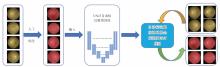
图2
眼底全景视网膜图像自动勾画流程图注:UNet,U型网络"
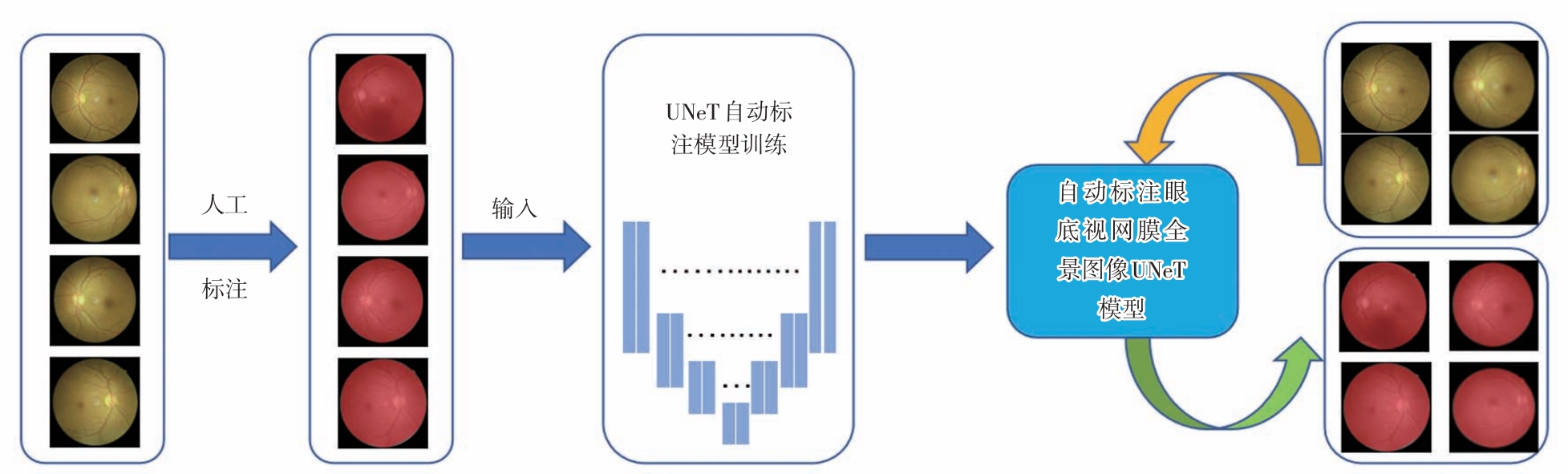
图3
单眼DL模型和双眼DL结果融合及双眼DL特征融合模型的构建流程图注:ResNet152,深度残差网络152"
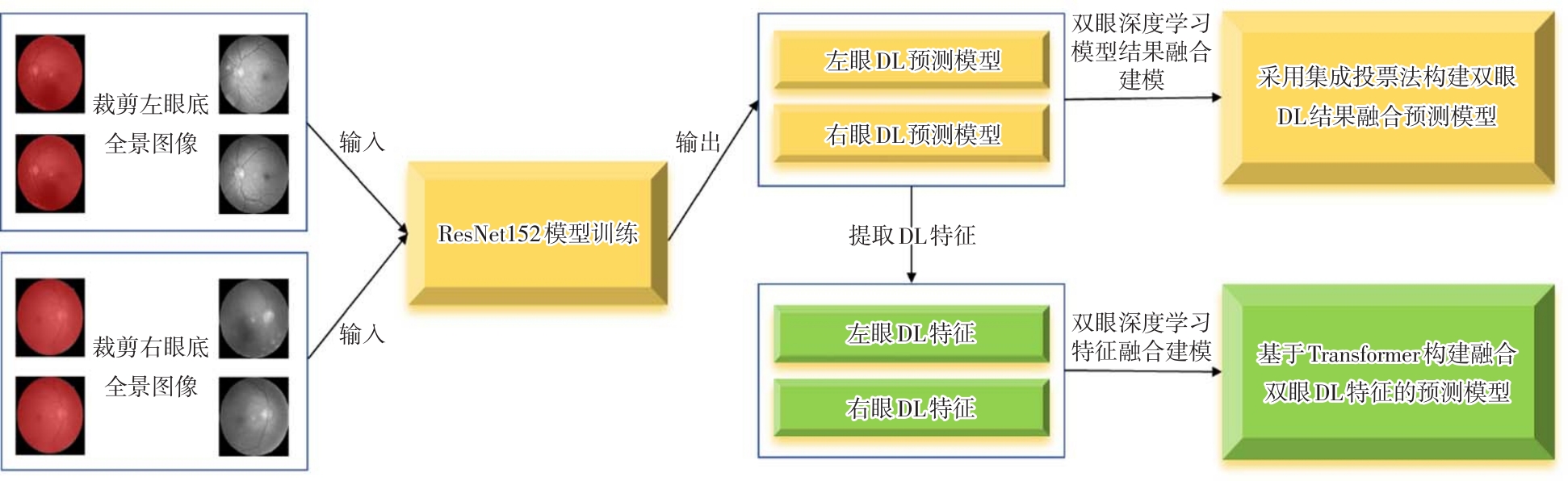

图4
双眼底图像融合模型构建流程图注:ResNet152,深度残差网络152"

图5
预测DKD模型AUC比较注:A,训练集AUC曲线;B,验证集AUC曲线。DKD,糖尿病肾病;AUC,感兴趣区AUC"
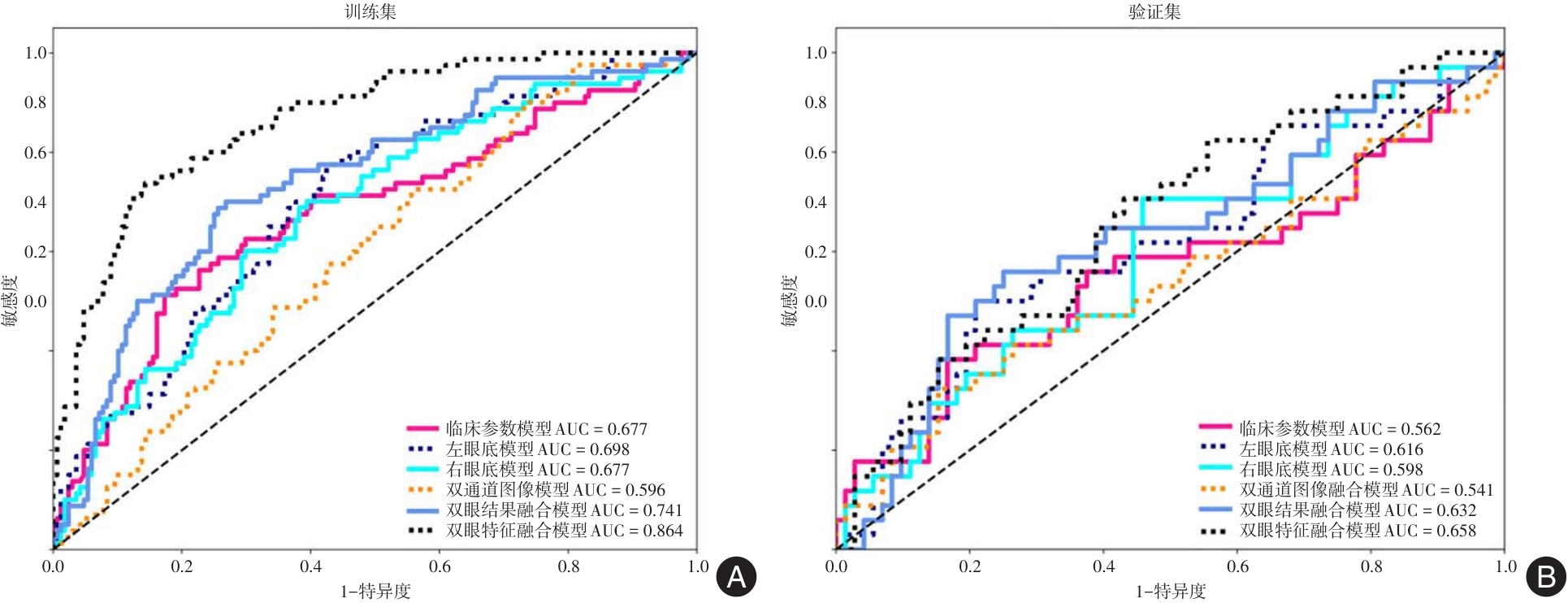
表2
预测DKD模型准确度、敏感度和特异度结果比较"
| 队列 | 模型算法 | 模型名称 | 准确度 | AUC(95%CI) | 敏感度 | 特异度 |
|---|---|---|---|---|---|---|
| 训练集 | SVM | 临床参数模型 | 0.725 | 0.677(0.602 ~ 0.752) | 0.512 | 0.626 |
| ResNet152 | 左眼底模型 | 0.640 | 0.698(0.630 ~ 0.767) | 0.705 | 0.575 | |
| 右眼底模型 | 0.636 | 0.677(0.606 ~ 0.749) | 0.700 | 0.605 | ||
| 双通道图像融合模型 | 0.534 | 0.596(0.523 ~ 0.669) | 0.725 | 0.443 | ||
| ResNet152 + Ensemble | 双眼结果融合模型 | 0.721 | 0.741(0.674 ~ 0.808) | 0.700 | 0.731 | |
| ResNet152 + Transformer | 双眼特征融合模型 | 0.818 | 0.864(0.817 ~ 0.911) | 0.737 | 0.856 | |
| 验证集 | SVM | 临床参数模型 | 0.689 | 0.562(0.434 ~ 0.689) | 0.382 | 0.633 |
| ResNet152 | 左眼底模型 | 0.698 | 0.616(0.497 ~ 0.736) | 0.500 | 0.692 | |
| 右眼底模型 | 0.594 | 0.598(0.481 ~ 0.716) | 0.706 | 0.542 | ||
| 双通道图像融合模型 | 0.679 | 0.541(0.415 ~ 0.667) | 0.324 | 0.647 | ||
| ResNet152 + Ensemble | 双眼结果融合模型 | 0.689 | 0.632(0.514 ~ 0.750) | 0.559 | 0.750 | |
| ResNet152 + Transformer | 双眼特征融合模型 | 0.713 | 0.658(0.547 ~ 0.768) | 0.706 | 0.769 |
图6
预测DKD模型AUC DeLong检验结果比较注:A,训练集DeLong检验;B,验证集DeLong检验"
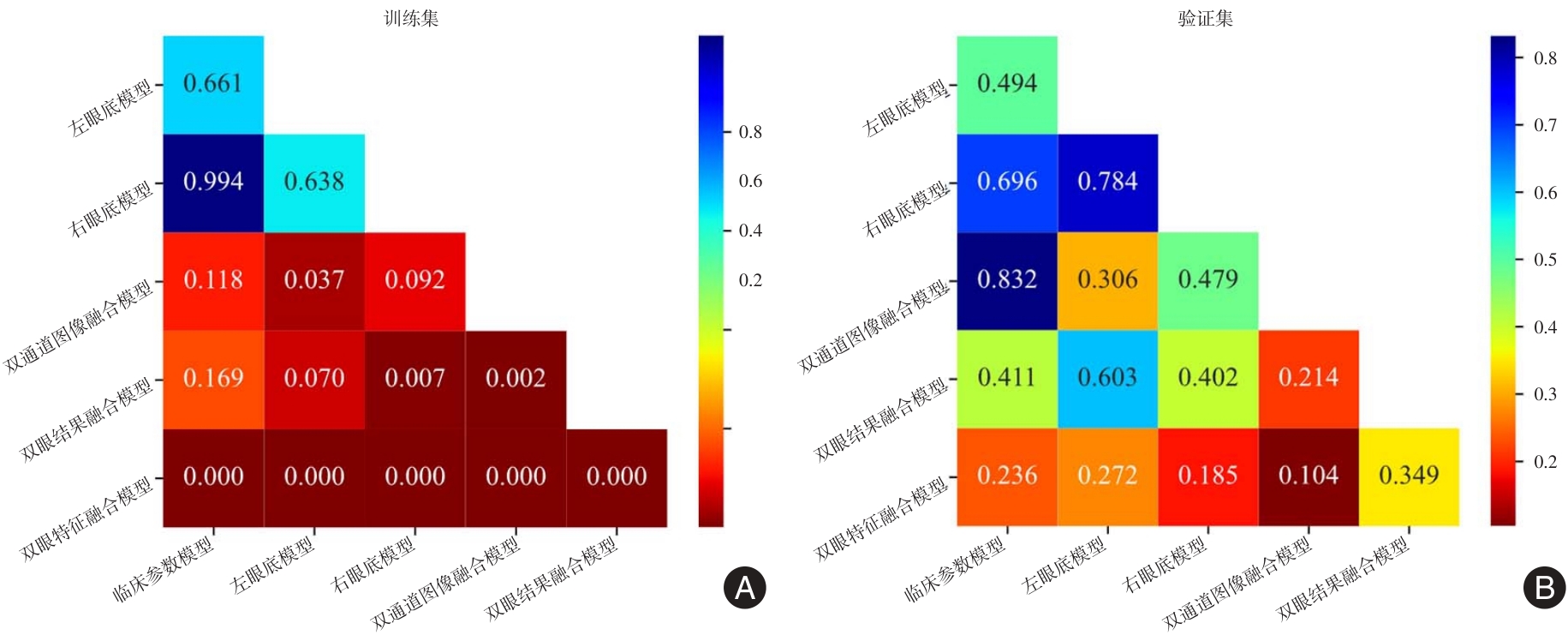
图7
预测DKD模型净重新分类指数结果比较注:A,训练集净重新分类指数;B,训练集净重新分类指数"
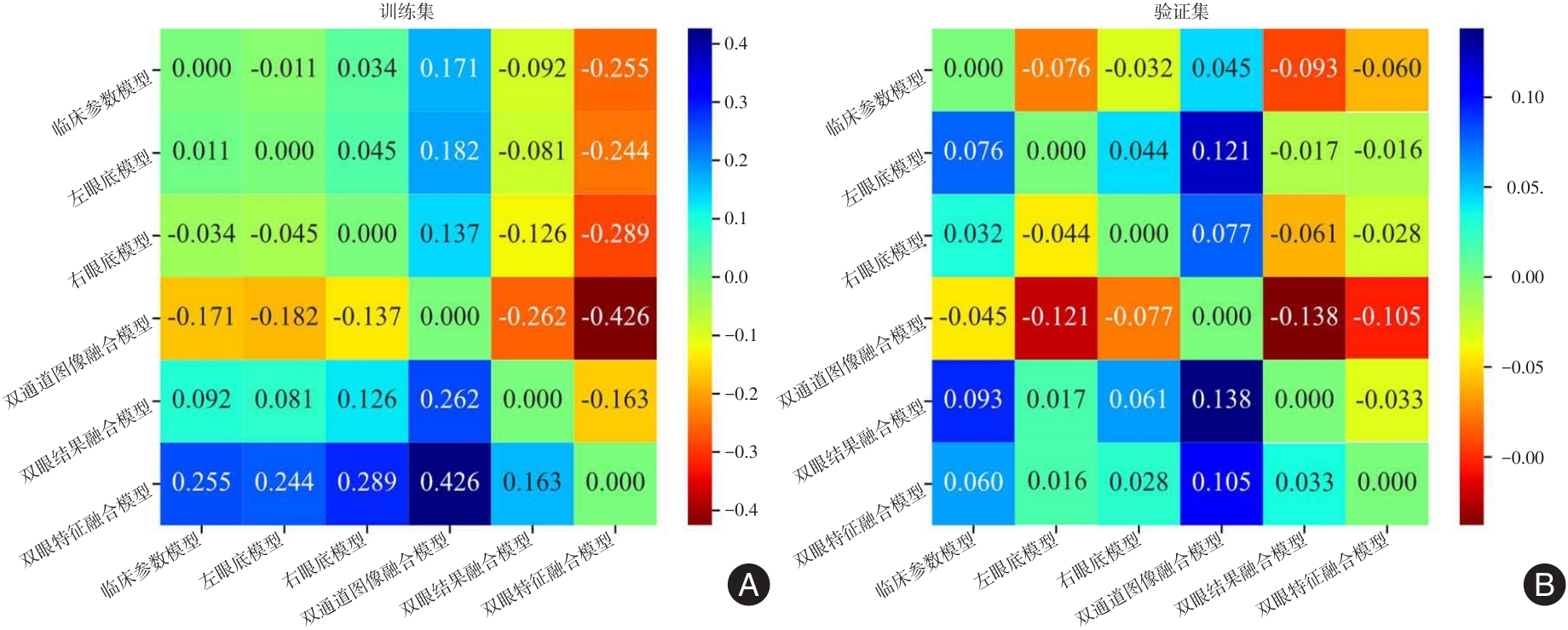
图8
预测DKD模型DCA曲线结果比较注:A,训练集DCA曲线;B,验证集DCA曲线"
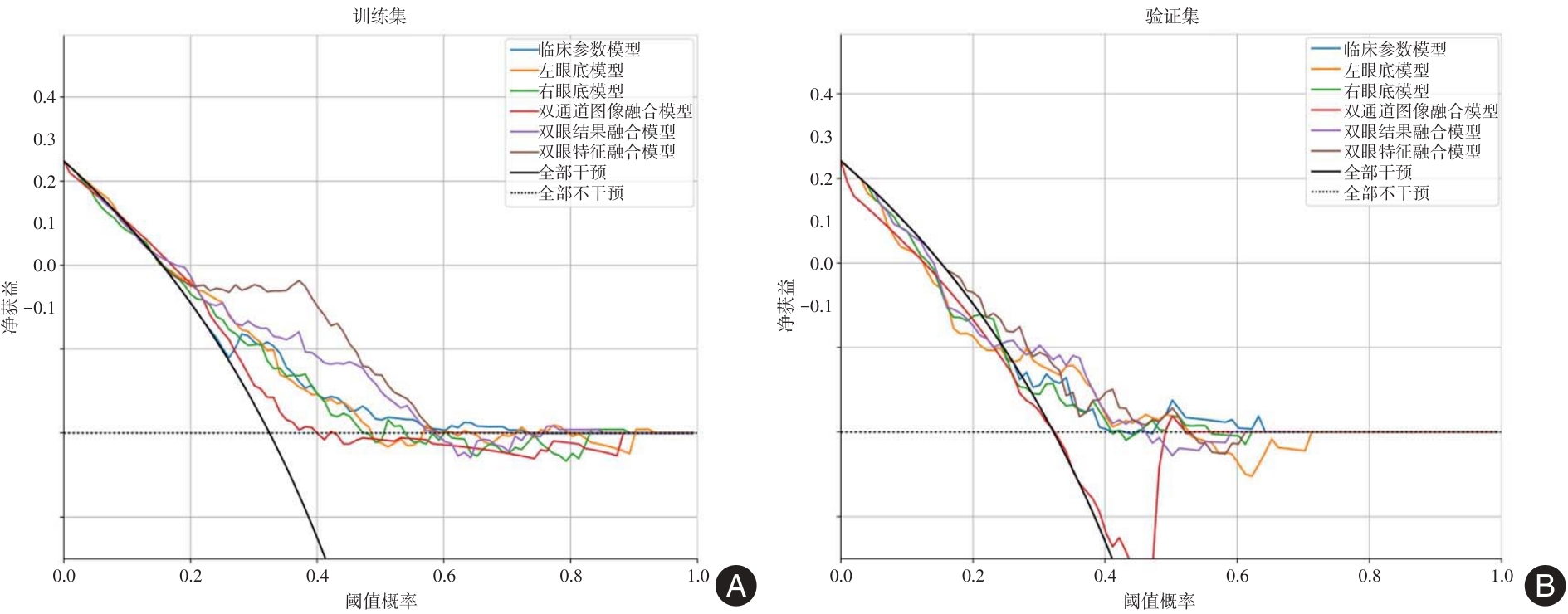
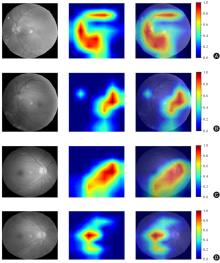
图9
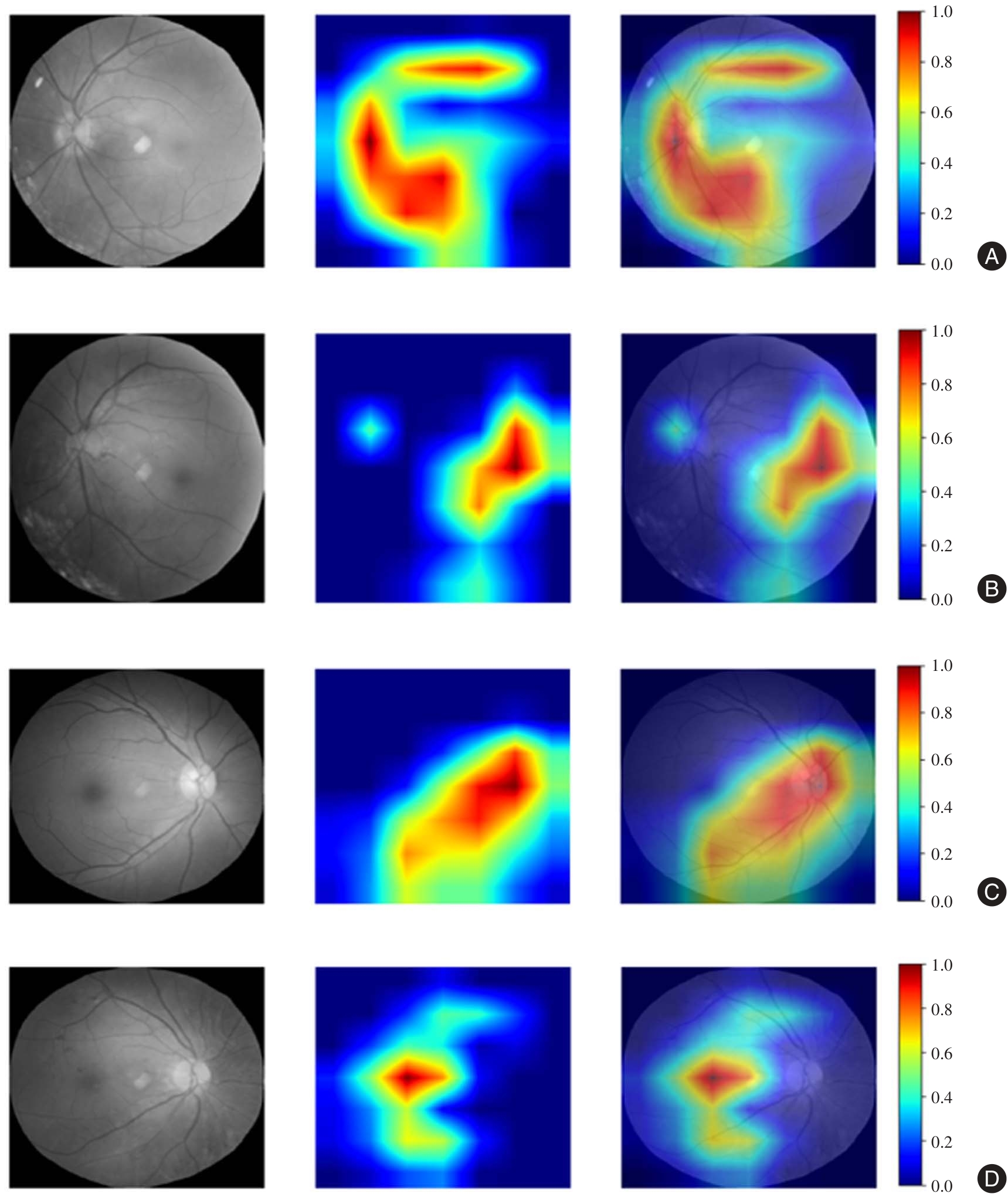
单眼DL模型可视化结果(Grad-CAM)注:A,DKD患者左眼底Grad-CAM显示,黄斑及血管走行区域激活,提示模型关注模式为黄斑及血管分布区域;B,NDKD患者左眼底Grad-CAM显示,非黄斑及血管走行区域激活,提示模型关注模式为非黄斑及血管分布区域;C,DKD患者右眼底Grad-CAM显示,黄斑及血管走行区域激活,提示模型关注模式为黄斑及血管分布区域;D,NDKD患者右眼底Grad-CAM显示,非黄斑及血管走行区域激活,提示模型关注模式为非黄斑及血管分布区域"
| [1] | Disease Kidney : Improving Global Outcomes (KDIGO) Diabetes Work Group. KDIGO 2022 clinical practice guideline for diabetes management in chronic kidney disease[J]. Kidney Int, 2022, 102(5S): S1-S127. |
| [2] |
SUN H, SAEEDI P, KARURANGA S, et al. IDF Diabetes Atlas: Global, regional and country-level diabetes prevalence estimates for 2021 and projections for 2045[J]. Diabetes Res Clin Pract, 2022, 183:109119. doi:10.1016/j.diabres.2023.110945
doi: 10.1016/j.diabres.2023.110945 |
| [3] | 莫泽纬,陈道雄,高勇义,等. 艾塞那肽治疗早期糖尿病肾病患者的疗效研究[J]. 中国热带医学,2017,17(7):714-717. |
| [4] |
ROSSING P, GROOP P H, SINGH R, et al. Prevalence of chronic kidney disease in type 1 diabetes among adults in the U.S[J]. Diabetes Care, 2024, 47(8): 1395-1399. doi:10.2337/dc24-0335
doi: 10.2337/dc24-0335 |
| [5] |
SABANAYAGAM C, XU D, TING D S W, et al. A deep learning algorithm to detect chronic kidney disease from retinal photographs in community-based populations[J]. Lancet Digit Health, 2020, 2(6): e295-e302. doi:10.1016/s2589-7500(20)30063-7
doi: 10.1016/s2589-7500(20)30063-7 |
| [6] |
CHEN J, ZHANG Q, LIU D, et al. Exosomes: Advances, development and potential therapeutic strategies in diabetic nephropathy[J]. Metabolism, 2021, 122:154834. doi:10.1016/j.metabol.2021.154834
doi: 10.1016/j.metabol.2021.154834 |
| [7] |
SUN Z, WANG K, MILLER J D, et al. External validation of the risk prediction model for early diabetic kidney disease in Taiwan population: A retrospective cohort study[J]. BMJ Open, 2022,12(12):e059139. doi:10.1136/bmjopen-2021-059139
doi: 10.1136/bmjopen-2021-059139 |
| [8] |
LIU X Z, DUAN M, HUANG H D, et al. Predicting diabetic kidney disease for type 2 diabetes mellitus by machine learning in the real world: A multicenter retrospective study[J]. Front Endocrinol (Lausanne), 2023, 14: 1184190. doi:10.3389/fendo.2023.1184190
doi: 10.3389/fendo.2023.1184190 |
| [9] |
LI Y, JIN N, ZHAN Q, et al. Machine learning-based risk predictive models for diabetic kidney disease in type 2 diabetes mellitus patients: A systematic review and meta-analysis[J]. Front Endocrinol (Lausanne), 2025, 16: 1495306. doi:10.3389/fendo.2025.1495306
doi: 10.3389/fendo.2025.1495306 |
| [10] |
BERMEJO S, GONZÁLEZ E, LÓPEZ-REVUELTA K, et al. The coexistence of diabetic retinopathy and diabetic nephropathy is associated with worse kidney outcomes[J]. Clin Kidney J, 2023, 16(10): 1656-1663. doi:10.1093/ckj/sfad142
doi: 10.1093/ckj/sfad142 |
| [11] |
LEE G W, LEE C H, KIM S G. Association of advanced chronic kidney disease with diabetic retinopathy severity in older patients with diabetes: A retrospective cross-sectional study[J]. J Yeungnam Med Sci, 2023, 40(2): 146-155. doi:10.12701/jyms.2022.00206
doi: 10.12701/jyms.2022.00206 |
| [12] |
ZHAO X, LIU Y, ZHANG W, et al. Relationships between retinal vascular characteristics and renal function in patients with type 2 diabetes mellitus[J]. Transl Vis Sci Technol, 2021,10(2):1-11. doi:10.1167/tvst.10.2.20
doi: 10.1167/tvst.10.2.20 |
| [13] |
YAN Y, YU L, SUN C, et al. Retinal microvascular changes in diabetic patients with diabetic nephropathy[J]. BMC Endocr Disord, 2023, 23(1):101. doi:10.1186/s12902-022-01250-w
doi: 10.1186/s12902-022-01250-w |
| [14] |
ALJEFRI S, ADEL F AL. The validity of diabetic retinopathy screening using nonmydriatic fundus camera and optical coherence tomography in comparison to clinical examination[J]. Saudi J Ophthalmol, 2021, 34(4):266-272. doi:10.4103/1319-4534.322617
doi: 10.4103/1319-4534.322617 |
| [15] |
IRODI A, ZHU Z, GRZYBOWSKI A, et al. The evolution of diabetic retinopathy screening[J]. Eye (Lond), 2025, 39(6):1040-1046. doi:10.1038/s41433-025-03633-4
doi: 10.1038/s41433-025-03633-4 |
| [16] |
MESSICA S, PRESIL D, HOCH Y, et al. Enhancing stroke risk and prognostic timeframe assessment with deep learning and a broad range of retinal biomarkers[J]. Artif Intell Med, 2024, 154:102927. doi:10.1016/j.artmed.2024.102927
doi: 10.1016/j.artmed.2024.102927 |
| [17] | WHITE T, SELVARAJAH V, WOLFHAGEN-SAND F, et al. Prediction of cardiovascular risk factors from retinal fundus photographs: Validation of a deep learning algorithm in a prospective non-interventional study in Kenya[J]. Diabetes Obes Metab, 2024, 26(7):2722-2731. |
| [18] | 何雪,马欢,李聪,等. 冠心病伴抑郁患者视网膜神经血管特征及其与抑郁严重程度的相关性[J]. 实用医学杂志,2025,41(4):515-521. |
| [19] |
ZHANG K, LIU X, XU J, et al. Deep-learning models for the detection and incidence prediction of chronic kidney disease and type 2 diabetes from retinal fundus images[J]. Nat Biomed Eng, 2021, 5(6):533-545. doi:10.1038/s41551-021-00745-6
doi: 10.1038/s41551-021-00745-6 |
| [20] |
BETZLER B K, CHEE E Y L, HE F, et al. Deep learning algorithms to detect diabetic kidney disease from retinal photographs in multiethnic populations with diabetes[J]. J Am Med Inform Assoc, 2023, 30(12):1904-1914. doi:10.1093/jamia/ocad179
doi: 10.1093/jamia/ocad179 |
| [21] |
MENG Z, GUAN Z, YU S, et al. Non-invasive biopsy diagnosis of diabetic kidney disease via deep learning applied to retinal images: A population-based study[J]. Lancet Digit Health, 2025, 7(5):100868. doi:10.1016/j.landig.2025.02.008
doi: 10.1016/j.landig.2025.02.008 |
| [22] |
DONG Z, WANG X, PAN S, et al. A multimodal transformer system for noninvasive diabetic nephropathy diagnosis via retinal imaging[J]. NPJ Digit Med, 2025, 8(1):50. doi:10.1038/s41746-024-01393-1
doi: 10.1038/s41746-024-01393-1 |
| [23] |
AMIRHAMZAH N A, WANZAKI W M D, WANABDULHALIM W H, et al. Evaluating the potential of retinal photography in chronic kidney disease detection: A review[J]. PeerJ, 2024, 12:e17786. doi:10.7717/peerj.17786
doi: 10.7717/peerj.17786 |
| [24] |
SONG J, ZHENG J, LI P, et al. An Effective Multimodal Image Fusion Method Using MRI and PET for Alzheimer's Disease Diagnosis[J]. Front Digit Health, 2021, 3:637386. doi:10.3389/fdgth.2021.637386
doi: 10.3389/fdgth.2021.637386 |
| [25] |
DE BOER I H, KHUNTI K, SADUSKY T, et.al. Diabetes management in chronic kidney disease: A consensus report by the American Diabetes Association (ADA) and Kidney Disease: Improving Global Outcomes (KDIGO)[J]. Kidney Int, 2022, 102(5):974-989. doi:10.1016/j.kint.2022.08.012
doi: 10.1016/j.kint.2022.08.012 |
| [26] |
COLCOMBE J, SOLLI E, KAISER A, et al. The Use of Retinal Imaging Including Fundoscopy, OCT, and OCTA for Cardiovascular Risk Stratification and the Detection of Subclinical Atherosclerosis[J]. Curr Atheroscler Rep, 2025, 27(1):23. doi:10.1007/s11883-024-01268-6
doi: 10.1007/s11883-024-01268-6 |
| [27] |
LEE S J V, GOH Y Q, ROJAS-CARABALI W, et al. Association between retinal vessels caliber and systemic health: A comprehensive review[J]. Surv Ophthalmol, 2025, 70(2):184-199. doi:10.1016/j.survophthal.2024.11.009
doi: 10.1016/j.survophthal.2024.11.009 |
| [28] | 张锐,周颖,倪文吉,等. 人工智能视网膜微血管分析在糖尿病并发症中的应用价值[J]. 实用医学杂志,2024,40(8):1142-1147. |
| [29] |
BAKER J, SAFARZADEH M A, INCOGNITO A V,et al. Functional optical coherence tomography at altitude: Retinal microvascular perfusion and retinal thickness at 3,800 meters[J]. J Appl Physiol (1985), 2022, 133(3): 534-545. doi:10.1152/japplphysiol.00132.2022
doi: 10.1152/japplphysiol.00132.2022 |
| [30] |
EL-HAG N A, SEDIK A, EL-SHAFAI W, et al. Classification of retinal images based on convolutional neural network[J]. Microsc Res Tech, 2021, 84(3): 394-414. doi:10.1002/jemt.23596
doi: 10.1002/jemt.23596 |
| [31] |
MUKHERJEE N, SENGUPTA S. Application of deep learning approaches for classification of diabetic retinopathy stages from fundus retinal images: A survey[J]. Multimed Tools Appl, 2024, 83(14): 43115-43175. doi:10.1007/s11042-023-17254-0
doi: 10.1007/s11042-023-17254-0 |
| [32] |
ERGUN O N, ILHAN H O. Advancing Diabetic Retinopathy Severity Classification Through Stacked Generalization in Ensemble Deep Learning Models[J]. Traitement du Signal, 2023, 40(6): 2495. doi:10.18280/ts.400614
doi: 10.18280/ts.400614 |
| [33] |
BALA R, SHARMA A, GOEL N. CTNet: Convolutional transformer network for diabetic retinopathy classification[J]. Neural Comput Appl, 2024, 36(9): 4787-4809. doi:10.1007/s00521-023-09304-3
doi: 10.1007/s00521-023-09304-3 |
| [34] |
LIU C, WANG W, LIAN J, et al. Lesion classification and diabetic retinopathy grading by integrating softmax and pooling operators into vision transformer[J]. Front Public Health, 2025, 12: 1442114. doi:10.3389/fpubh.2024.1442114
doi: 10.3389/fpubh.2024.1442114 |
| [35] |
REZAEE K, FARNAMI F. Innovative Approach for Diabetic Retinopathy Severity Classification: An AI-Powered Tool using CNN-Transformer Fusion[J]. J Biomed Phys Eng, 2025, 15(2): 137-158. doi:10.31661/jbpe.v0i0.2408-1811
doi: 10.31661/jbpe.v0i0.2408-1811 |
| [36] |
MAHMOOD M A, JAMEL L, ALTURKI N, et al. Leveraging artificial intelligence for diagnosis of children autism through facial expressions[J]. Sci Rep, 2025, 15(1): 11945. doi:10.1038/s41598-025-96014-6
doi: 10.1038/s41598-025-96014-6 |
| [37] |
MORANO J, ARESTA G, GRECHENIG C, et al. Deep Multimodal Fusion of Data With Heterogeneous Dimensionality via Projective Networks[J]. IEEE J Biomed Health Inform, 2024, 28(4): 2235-2246. doi:10.1109/jbhi.2024.3352970
doi: 10.1109/jbhi.2024.3352970 |
| [38] |
LIU Y, MU F, SHI Y, et al. Brain tumor segmentation in multimodal MRI via pixel-level and feature-level image fusion[J]. Front Neurosci, 2022, 16: 1000587. doi:10.3389/fnins.2022.1000587
doi: 10.3389/fnins.2022.1000587 |
| [1] | 马明梅,马晓春,马生花,李怡瑾,吉桂芳. 司美格鲁肽注射液治疗不同体质量指数2型糖尿病对糖脂代谢和脂肪因子的影响[J]. 实用医学杂志, 2025, 41(9): 1394-1400. |
| [2] | 韩英妹,李一杰,张衡,李伟庆,冯泽,王丰. 深度学习在阿尔茨海默病疾病转化预测影像学研究中的应用价值[J]. 实用医学杂志, 2025, 41(9): 1413-1424. |
| [3] | 胡高凯,牛亚楠,龚玉康,胡阳,徐瑞轩,高文山. 深度学习在腰椎疾病诊断、手术规划及术后预测中的应用研究进展[J]. 实用医学杂志, 2025, 41(6): 921-928. |
| [4] | 王静,王晖,苗宇宽,倪英群. 2型糖尿病周围神经病变患者足底动静态压力参数比较及相关因素分析[J]. 实用医学杂志, 2025, 41(4): 522-528. |
| [5] | 冯秀丽,郑之陈,张桐毓,周丽,徐宁,赵仁豪,杨腾,王娜,王国凤. 基于扫描式葡萄糖监测技术研究血糖波动与2型糖尿病足的相关性[J]. 实用医学杂志, 2025, 41(4): 569-574. |
| [6] | 李妍,金子燃,孙皓天,刘璇,高静. 自动心肌运动定量技术评价2型糖尿病合并肾功能不全患者左心室收缩功能[J]. 实用医学杂志, 2025, 41(3): 414-421. |
| [7] | 于晓濛,王宁. 胰岛素抵抗新型评价指标对2型糖尿病患者下肢动脉病变的风险预测[J]. 实用医学杂志, 2025, 41(21): 3371-3377. |
| [8] | 高晶,赵锦,王凡,刘康. 不同频率血液透析滤过联合高通量血液透析治疗对糖尿病肾病维持性血液透析患者肾功能、微炎症状态及左心功能的影响[J]. 实用医学杂志, 2025, 41(21): 3398-3404. |
| [9] | 宁潇雨,陈小燕. 生活方式干预在2型糖尿病临床防治中的新角色[J]. 实用医学杂志, 2025, 41(17): 2611-2616. |
| [10] | 赵敏,李智文,黄承龙,沈小菊,黄光明. 基于限制性立方样条分析2型糖尿病患者系统免疫炎症指数与维生素D的关系[J]. 实用医学杂志, 2025, 41(15): 2393-2397. |
| [11] | 张倩,曹云太,王志洁,周伯琪. 深度学习在早期胃癌内镜图像诊断中的研究进展[J]. 实用医学杂志, 2025, 41(14): 2160-2166. |
| [12] | 李京尧,朱晓迪,苏飞,张云凤,张乃霖,刘启泉. 代谢相关脂肪性肝病伴2型糖尿病患者幽门螺杆菌感染与炎症因子及肝纤维化进展的关系[J]. 实用医学杂志, 2025, 41(13): 2045-2051. |
| [13] | 王佳慧,郑可,李雪梅. 脂质组学在肾脏疾病中的应用与进展[J]. 实用医学杂志, 2025, 41(1): 1-6. |
| [14] | 张锐,周颖,倪文吉,黄亚,李丹丹,金涛,钟勇. 人工智能视网膜微血管分析在糖尿病并发症中的应用价值[J]. 实用医学杂志, 2024, 40(8): 1142-1147. |
| [15] | 胡希,李艳,刘洋. 深度学习在辅助生殖技术领域的应用进展[J]. 实用医学杂志, 2024, 40(7): 893-897. |
| 阅读次数 | ||||||
|
全文 |
|
|||||
|
摘要 |
|
|||||
