

The Journal of Practical Medicine ›› 2026, Vol. 42 ›› Issue (9): 1501-1510.doi: 10.3969/j.issn.1006-5725.2026.09.003
• Feature Reports:Breast carcinoma • Previous Articles
Weiyao LUO1,Yuhua FAN1,Yifu LI1,Juan CHEN1,Yongjie DENG3,Jianhua LIU2,Zhiwen HU2,Suihong MA1,2( )
)
Received:2025-12-28
Online:2026-05-10
Published:2026-04-29
Contact:
Suihong MA
E-mail:mshwork@163.com
CLC Number:
Weiyao LUO,Yuhua FAN,Yifu LI,Juan CHEN,Yongjie DENG,Jianhua LIU,Zhiwen HU,Suihong MA. Predicting molecular subtyping and optimal early response assessment in breast cancer neoadjuvant therapy: A deep learning ultrasound approach[J]. The Journal of Practical Medicine, 2026, 42(9): 1501-1510.
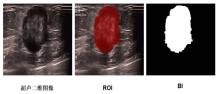
Fig.1
ROI delineation and binary images"
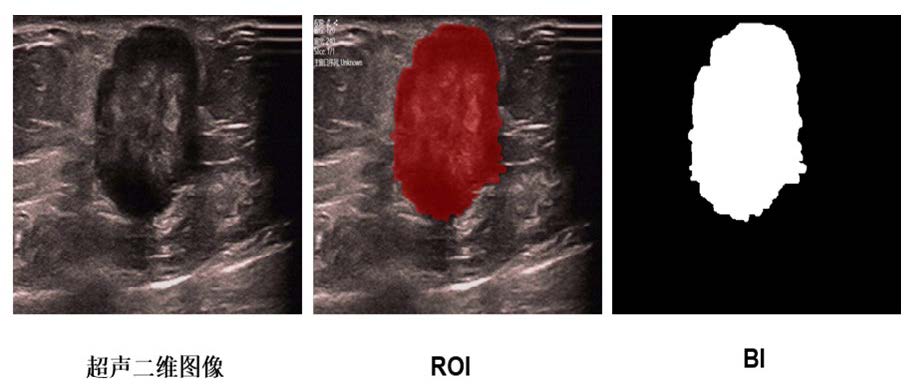
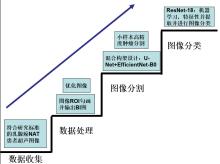
Fig.2
The image segmentation and classification workflow of the model"
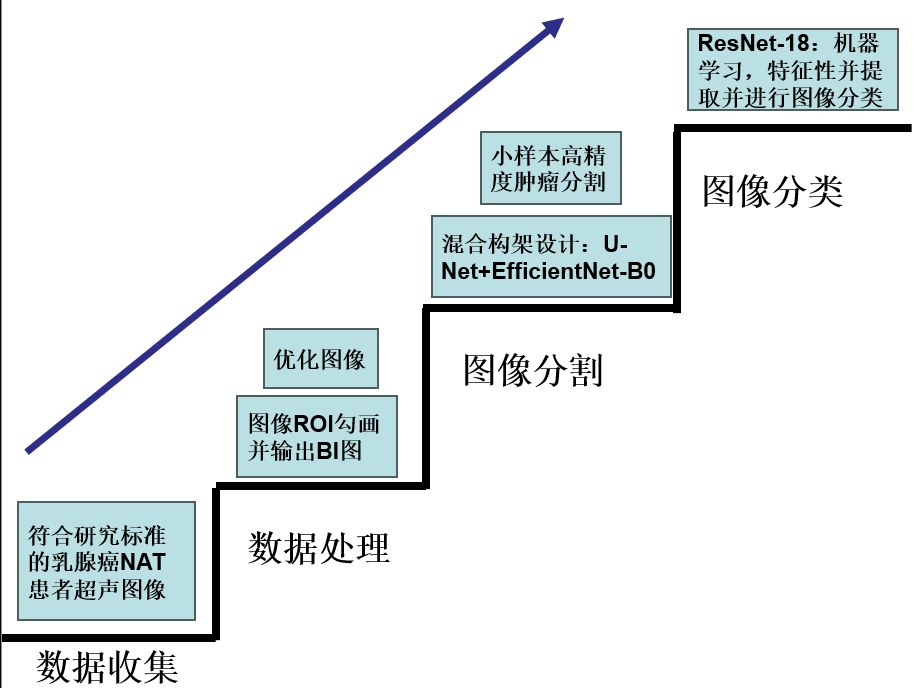
Fig.3
Deep learning workflow of the model"
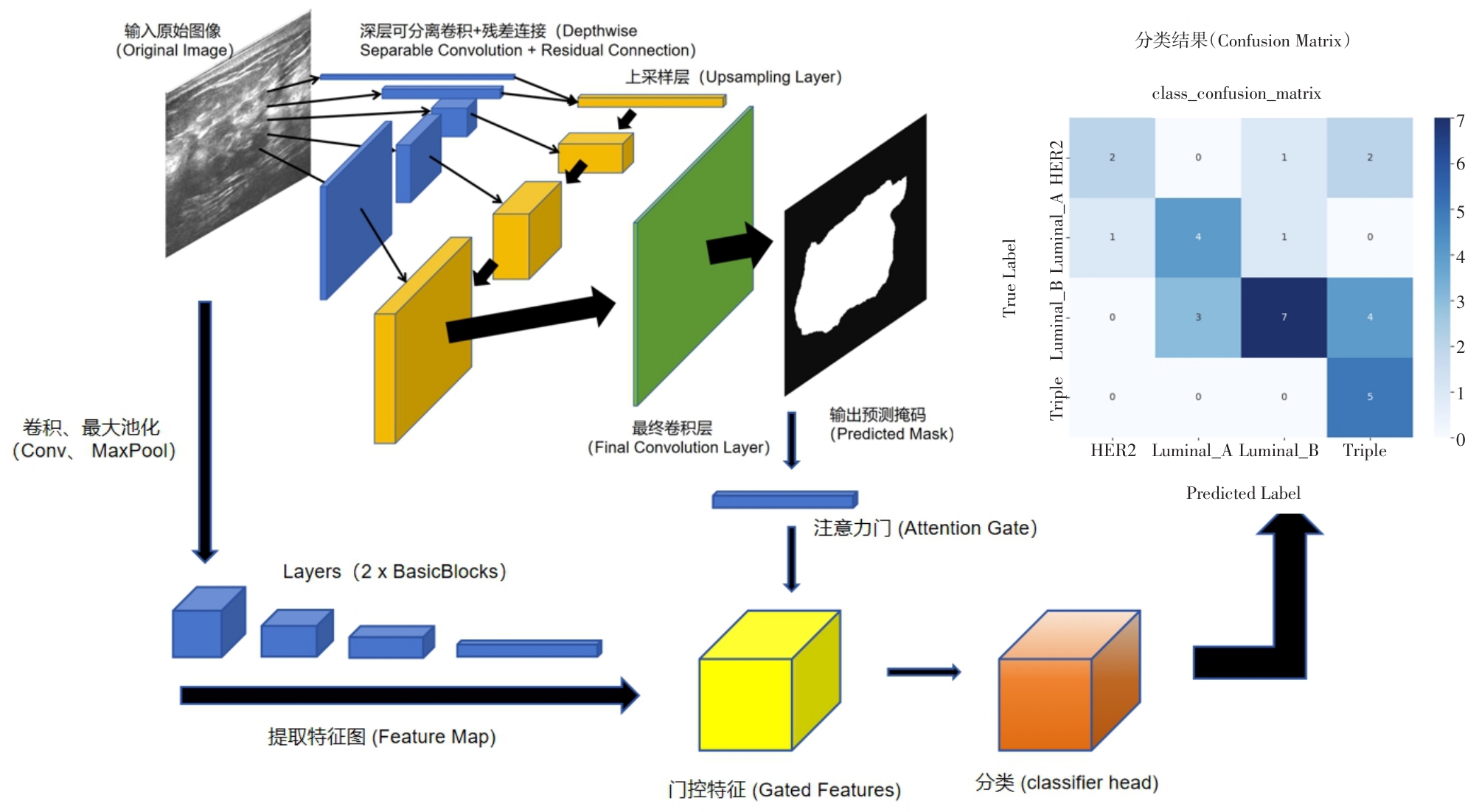
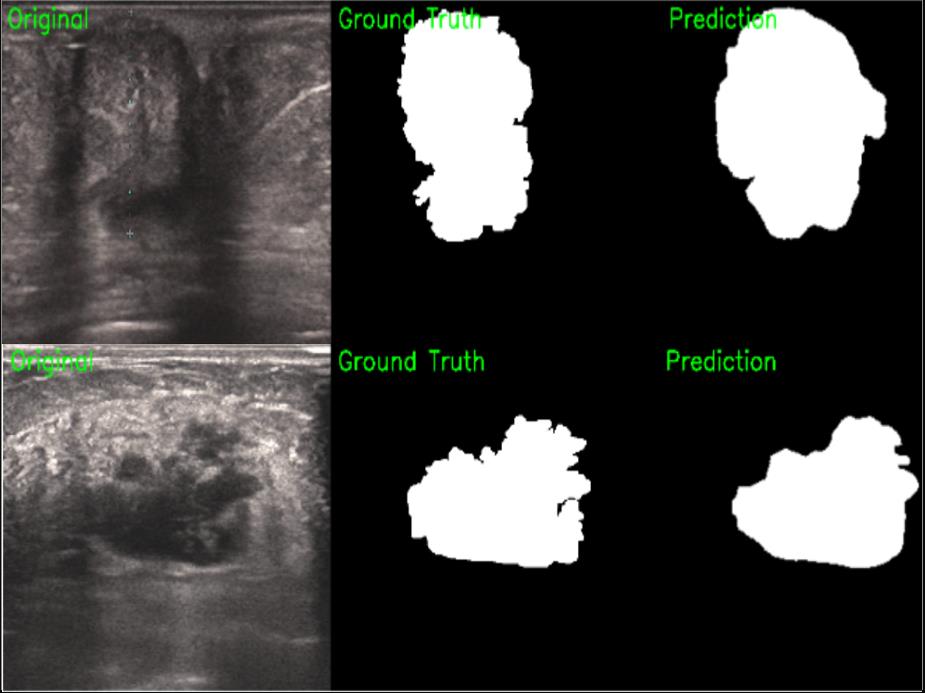
Fig.4
Model-based image segmentation and feature analysis"
Tab.1
Comparison of patient and clinical characteristics between the training and validation sets for the molecular subtype prediction and treatment response prediction studies"
| 临床及病理信息 | 研究目标一(预测分子分型) | t/χ2值 | P值 | 研究目标二(预测疗效) | t/χ2值 | P值 | ||
|---|---|---|---|---|---|---|---|---|
| 训练集(n = 127) | 验证集 (n = 49) | 训练集(n = 118) | 验证集 (n = 49) | |||||
| 年龄(x ± s)/岁 | 53.97 ± 9.01 | 53.78 ± 11.16 | 0.11 | 0.905 | 54.25 ± 9.88 | 53.61 ± 9.30 | 0.40 | 0.698 |
| 位置 | 2.19 | 0.139 | 1.28 | 0.258 | ||||
| 左 | 72 (56.7) | 21 (42.9) | 66 (55.9) | 22 (44.9) | ||||
| 右 | 55 (43.3) | 28 (57.1) | 52 (44.1) | 27 (55.1) | ||||
| 分子分型 | - | 0.593 | 0.43 | 0.418 | ||||
| Luminal A型 | 39 (30.7) | 17 (34.7) | 38 (32.2) | 16 (32.7) | ||||
| Luminal B型 | 37 (29.1) | 17 (34.7) | 37 (31.4) | 15 (30.6) | ||||
| HER-2过表达型 | 39 (30.7) | 10 (20.4) | 35 (29.7) | 11 (22.4) | ||||
| 三阴型 | 12 (9.4) | 5 (10.2) | 8 (6.8) | 7 (14.3) | ||||
| MP分级 | - | 1.71 | 0.789 | |||||
| G1 | - | - | 21 (17.8) | 9 (18.4) | ||||
| G2 | - | - | 22 (18.6) | 12 (24.5) | ||||
| G3 | - | - | 30 (25.4) | 14 (28.6) | ||||
| G4 | - | - | 15 (12.7) | 4 (8.2) | ||||
| G5 | - | - | 30 (25.4) | 10 (20.4) | ||||
| 疗效判定 | - | 1.00 | 0.318 | |||||
| 无显著缓解 | - | - | 73 (61.9) | 35 (71.4) | ||||
| 显著缓解 | - | - | 45 (38.1) | 14 (28.6) | ||||
| 边界(治疗前) | 13.80 | 0.001 | 9.76 | 0.008 | ||||
| 清楚 | 8 (6.3) | 13 (26.5) | 9 (7.6) | 10 v20.4) | ||||
| 尚清 | 68 (53.5) | 20 (40.8) | 66 (55.9) | 16 (32.7) | ||||
| 模糊 | 51 (40.2) | 16 (32.7) | 43 (36.4) | 23 (46.9) | ||||
| 纵横比(治疗前) | 0.77 | 0.380 | 0.001 | 0.970 | ||||
| < 1 | 80 (63.0) | 35 (71.4) | 75 (63.6) | 32 (65.3) | ||||
| > 1 | 47 (37.0) | 14 (28.6) | 43 (36.4) | 17 (34.7) | ||||
| 形态(治疗前) | - | 0.269 | - | 0.187 | ||||
| 不规则 | 54 (42.5) | 21 (42.9) | 50 (42.4) | 21 (42.9) | ||||
| 成角 | 48 (37.8) | 21 (42.9) | 49 (41.5) | 15 (30.6) | ||||
| 蟹足 | 0 (0.0) | 1 (2.0) | 0 (0.0) | 1 (2.0) | ||||
| 蟹足,成角 | 25 (19.7) | 6 (12.2) | 19 (16.1) | 12 (24.5) | ||||
| 内部回声(治疗前) | 2.77 | 0.096 | 8.64 | 0.003 | ||||
| 不均匀 | 91 (71.7) | 28 (57.1) | 72 (61.0) | 42 (85.7) | ||||
| 低回声 | 36 (28.3) | 21 (42.9) | 46 (39.0) | 7 (14.3) | ||||
| 肿瘤大小—长径(治疗前)(x ± s)/mm | 37.42 ± 22.78 | 32.21 ± 16.83 | 1.66 | 0.148 | 34.62 ± 20.76 | 39.04 ± 22.61 | 1.18 | 0.224 |
| 肿瘤大小—厚径(治疗前)(x ± s)/mm | 24.36 ± 15.22 | 22.89 ± 12.78 | 0.65 | 0.550 | 23.93 ± 15.90 | 25.16 ± 11.93 | 0.55 | 0.626 |
Tab.2
Summary of prediction results for molecular subtyping in the validation set"
| 分子分型 | 准确率(95%CI) | 特异度(95%CI) | 敏感度(95%CI) | PPV(95%CI) | NPV(95%CI) |
|---|---|---|---|---|---|
| Luminal A型 | 0.82 (0.68 ~ 0.91) | 0.81 (0.64 ~ 0.93) | 0.82 (0.57 ~ 0.96) | 0.70 (0.46 ~ 0.88) | 0.90 (0.73 ~ 0.98) |
| Luminal B型 | 0.88 (0.75 ~ 0.95) | 0.97 (0.84 ~ 1.00) | 0.71 (0.44 ~ 0.90) | 0.92 (0.64 ~ 1.00) | 0.86 (0.71 ~ 0.95) |
| HER-2过表达型 | 0.78 (0.63 ~ 0.88) | 0.82 (0.67 ~ 0.93) | 0.60 (0.26 ~ 0.88) | 0.46 (0.19 ~ 0.75) | 0.89 (0.74 ~ 0.97) |
| 三阴型 | 0.96 (0.86 ~ 1.00) | 1.00 (0.92 ~ 1.00) | 0.60 (0.15 ~ 0.95) | 1.00 (0.29 ~ 1.00) | 0.96 (0.85 ~ 1.00) |
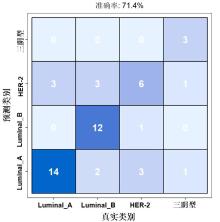
Fig.5
Confusion matrix for molecular subtyping prediction (validation set)"
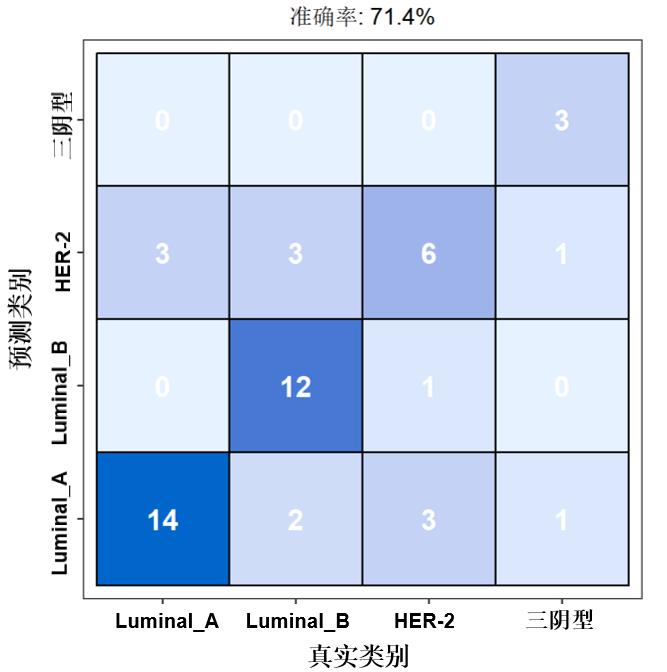
Tab.3
Summary of prediction results for treatment response in the validation set"
| 阶段 | 准确率(95%CI) | 特异度(95%CI) | 敏感度(95%CI) | PPV(95%CI) | NPV(95%CI) |
|---|---|---|---|---|---|
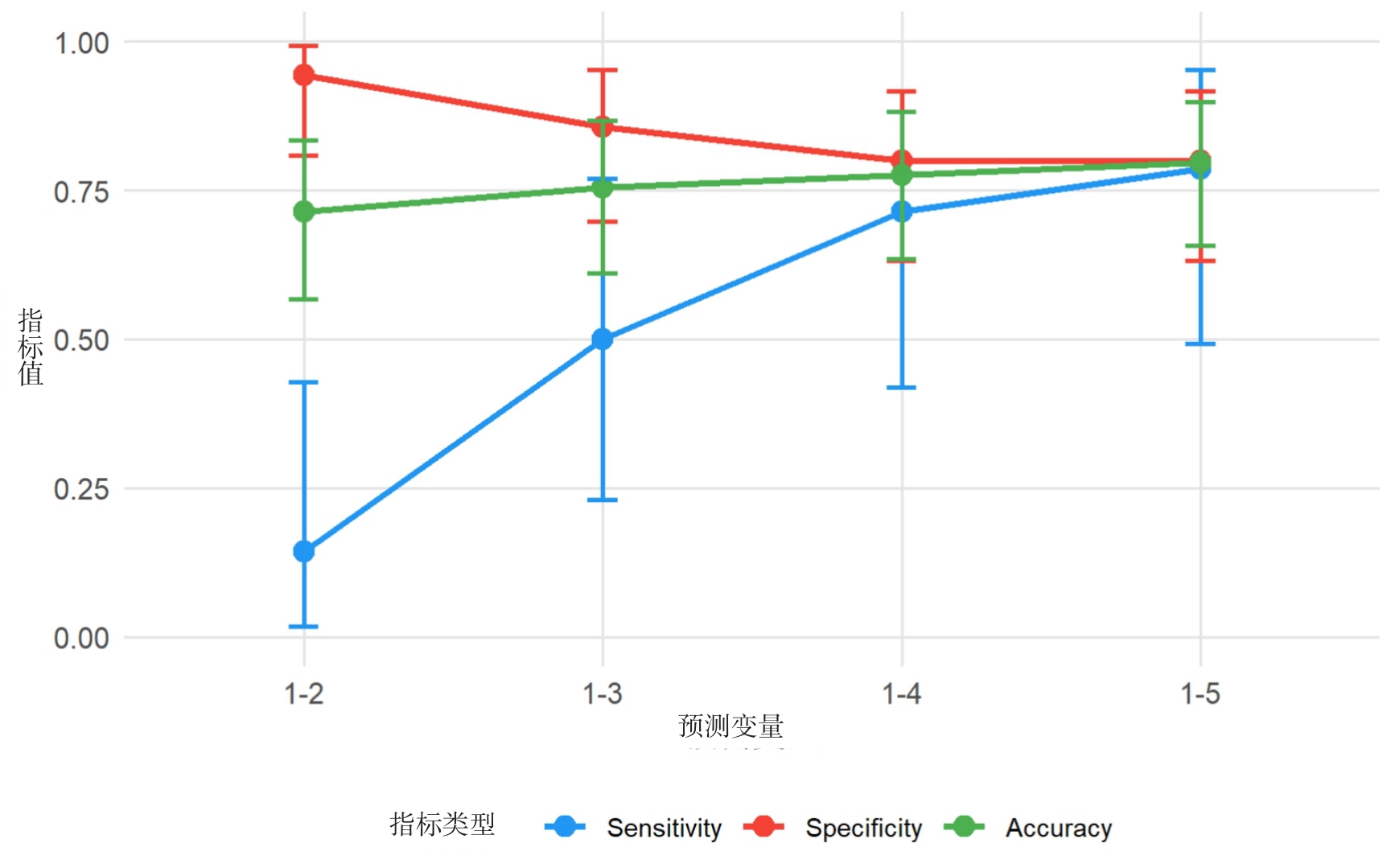
| 1—2(参照组) | 0.71 (0.57 ~ 0.83) | 0.94 (0.81 ~ 0.99) | 0.14 (0.02 ~ 0.43) | 0.50 (0.07 ~ 0.93) | 0.73 (0.58 ~ 0.85) |
| 1—3 | 0.76 (0.61 ~ 0.87) | 0.86 (0.70 ~ 0.95) | 0.50 (0.23 ~ 0.77) | 0.58 (0.28 ~ 0.85) | 0.81 (0.65 ~ 0.92) |
| 1—4 | 0.78 (0.63 ~ 0.88) | 0.80 (0.63 ~ 0.92) | 0.71 (0.42 ~ 0.92)* | 0.59 (0.33 ~ 0.82) | 0.88 (0.71 ~ 0.97) |
| 1—5 | 0.80 (0.66 ~ 0.90) | 0.80 (0.63 ~ 0.92) | 0.79 (0.49 ~ 0.95)* | 0.61 (0.36 ~ 0.83) | 0.90 (0.74 ~ 0.98) |
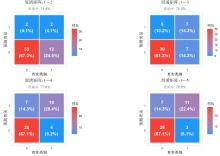
Fig.6
Confusion matrices for treatment response prediction at different NAT stages (validation set)"
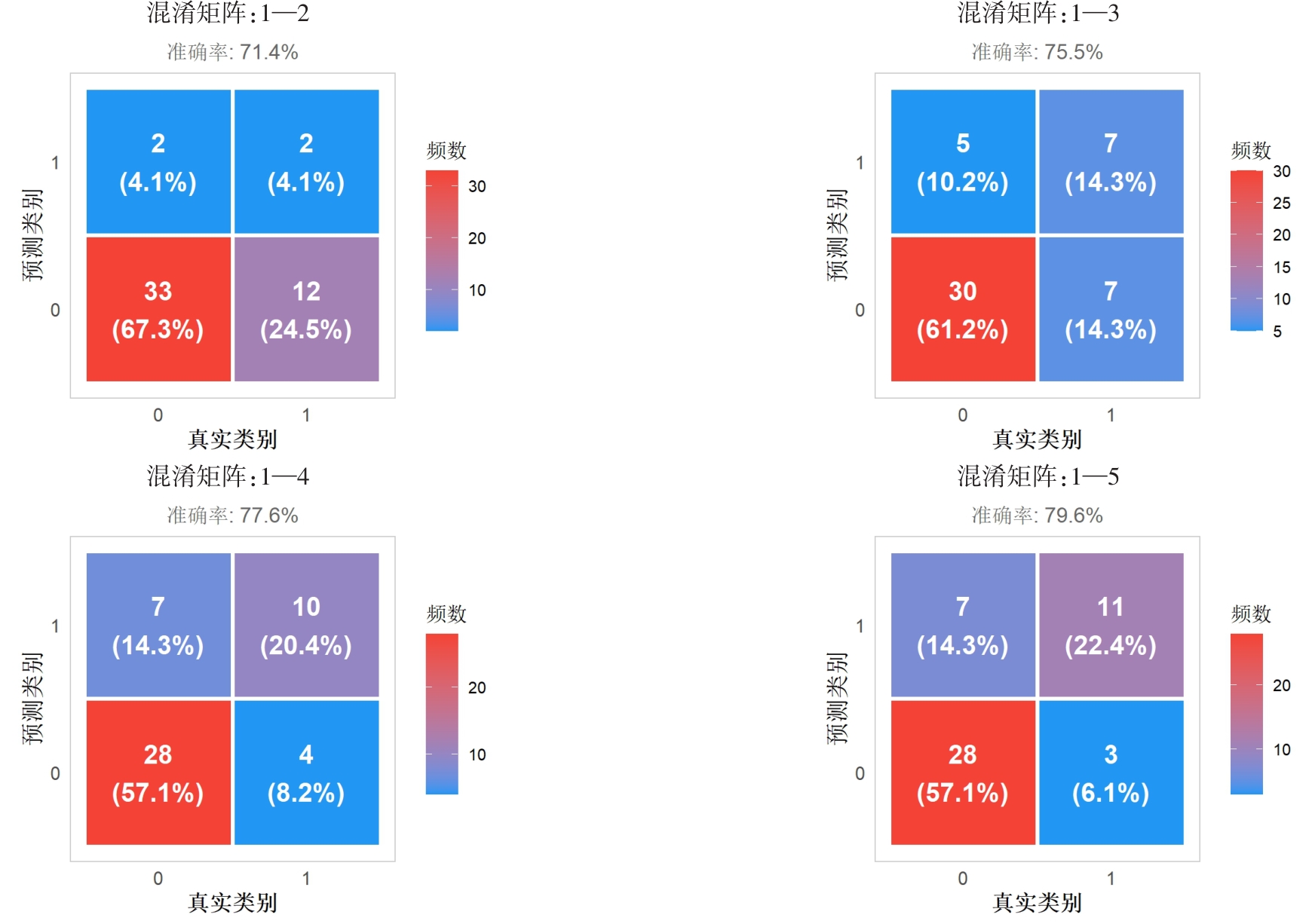
Fig.7
Prediction performance for treatment response across early NAT cycles (validation set)"
| [1] |
WANG X, XIA C, WANG Y, et al. Landscape of young breast cancer under 35 years in China over the past decades: A multicentre retrospective cohort study (YBCC-Catts study)[J]. E Clin Med, 2023, 64: 102243. doi: 10.1016/j.eclinm.2023.102243 .
doi: 10.1016/j.eclinm.2023.102243 |
| [2] |
LIU C, SUN L, NIU N, et al. Molecular classification of hormone receptor-positive /HER2-positive breast cancer reveals potential neoadjuvant therapeutic strategies[J]. Signal Trans Target Ther, 2025, 10(1):97. doi: 10.1038/s41392-025-02181-3 .
doi: 10.1038/s41392-025-02181-3 |
| [3] |
DENKERT C, RACHAKONDA S, KARN T, et al. Dynamics of molecular heterogeneity in high-risk luminal breast cancer-From intrinsic to adaptive subtyping[J]. Cancer Cell, 2025, 43(2):232-247.e4. doi: 10.1016/j.ccell.2025.01.002 .
doi: 10.1016/j.ccell.2025.01.002 |
| [4] |
ZHANG R Z, LIU D, KE Y, et al. A study on the impact of neoadjuvant therapy on molecular subtype conversion in breast cancer[J]. World J Surg Oncol, 2025, 23(1):155. doi: 10.1186/s12957-025-03801-6 .
doi: 10.1186/s12957-025-03801-6 |
| [5] |
WANG S, LIU J, SONG L, et al. Integrative multimodal ultrasound and radiomics for early prediction of neoadjuvant therapy response in breast cancer: A clinical study[J]. BMC cancer, 2025, 25(1):1156. doi: 10.1186/s12885-025-14556-4 .
doi: 10.1186/s12885-025-14556-4 |
| [6] |
WANG F, WANG Y, XIONG B, et al. Neoadjuvant pyrotinib and trastuzumab in HER2-positive breast cancer with no early response (NeoPaTHer): Efficacy, safety and biomarker analysis of a prospective, multicentre, response-adapted study[J]. Signal Trans Target Ther, 2025, 10(1):45. doi: 10.1038/s41392-025-02138-6 .
doi: 10.1038/s41392-025-02138-6 |
| [7] |
WANG J, CHU Y, WANG B, et al. A Narrative Review of Ultrasound Technologies for the Prediction of Neoadjuvant Chemotherapy Response in Breast Cancer[J]. Cancer Manag Res, 2021, 13:7885-7895. doi: 10.2147/CMAR.S331665 .
doi: 10.2147/CMAR.S331665 |
| [8] |
FU Y, ZHOU J, LI J. Diagnostic performance of ultrasound-based artificial intelligence for predicting key molecular markers in breast cancer: A systematic review and meta-analysis[J]. PloS One, 2024, 19(5):e0303669. doi: 10.1371/journal.pone.0303669 .
doi: 10.1371/journal.pone.0303669 |
| [9] |
XIE J, WEI J, SHI H, et al. A deep learning approach for early prediction of breast cancer neoadjuvant chemotherapy response on multistage bimodal ultrasound images[J]. BMC Med Imag, 2025, 25(1):26. doi: 10.1186/s12880-024-01543-7 .
doi: 10.1186/s12880-024-01543-7 |
| [10] |
ZHANG Y, XIAN M, CHENG H D, et al. BUSIS: A Benchmark for Breast Ultrasound Image Segmentation[J]. Healthcare, 2022, 10(4):729. doi: 10.3390/healthcare10040729 .
doi: 10.3390/healthcare10040729 |
| [11] |
LIU X, ZHOU L, CAI M, et al. Hybrid adaptive attention deep supervision-guided U-Net for breast lesion segmentation in ultrasound computed tomography images[J]. Med Bio Eng Comput, 2025. doi: 10.1007/s11517-025-03377-z .
doi: 10.1007/s11517-025-03377-z |
| [12] |
HUANG Y, YAO Z, LI L, et al. Deep learning radiopathomics based on preoperative US images and biopsy whole slide images can distinguish between luminal and non-luminal tumors in early-stage breast cancers[J]. EBio Med, 2023, 94:104706. doi: 10.1016/j.ebiom.2023.104706 .
doi: 10.1016/j.ebiom.2023.104706 |
| [13] |
FU Y, CHEN H J, ZHANG H, et al. Integrating multimodal ultrasound imaging and machine learning for predicting luminal and non-luminal breast cancer subtypes[J]. Front Oncol, 2025, 15:1558880. doi: 10.3389/fonc.2025.1558880 .
doi: 10.3389/fonc.2025.1558880 |
| [14] |
GU J, TONG T, XU D, et al. Deep learning radiomics of ultrasonography for comprehensively predicting tumor and axillary lymph node status after neoadjuvant chemotherapy in breast cancer patients: A multicenter study[J]. Cancer, 2023, 129(3):356-366. doi: 10.1002/cncr.34540 .
doi: 10.1002/cncr.34540 |
| [15] |
HUANG J X, LU Y, TAN Y T, et al. Elastography-based AI model can predict axillary status after neoadjuvant chemotherapy in breast cancer with nodal involvement: A prospective, multicenter, diagnostic study[J]. Int J Surg, 2025,111(1):221-229. doi: 10.1097/JS9.0000000000002105 .
doi: 10.1097/JS9.0000000000002105 |
| [16] |
张欣然, 沈燕, 胡姣姣,等.联合临床及超声多参数构建列线图预测人表皮生长因子受体2阳性乳腺癌的应用价值[J]. 实用医学杂志, 2025, 41 (18): 2812-2819. doi: 10.3969/j.issn.1006-5725.2025.18.005 .
doi: 10.3969/j.issn.1006-5725.2025.18.005 |
| [17] |
农盛, 李湛雄, 张琪,等. 可解释反向传播神经网络在预测前哨淋巴结1 ~ 2枚阳性乳腺癌患者腋窝淋巴结负荷中的价值[J]. 实用医学杂志, 2026, 42 (1): 45-55. doi: 10.3969/j.issn.1006-5725.2026.01.006 .
doi: 10.3969/j.issn.1006-5725.2026.01.006 |
| [18] |
ZENG Q, LIU L, HE C, et al. Early and noninvasive prediction of response to neoadjuvant therapy for breast cancer via longitudinal ultrasound and MR deep learning: A multicentre study [J]. Acad Radiol, 2025, 32(3):1264-1273. doi: 10.1016/j.acra.2024.10.033 .
doi: 10.1016/j.acra.2024.10.033 |
| [19] |
THOMAS J, MALLA L, SHIBWABO B. Advances in analytical approaches for background parenchymal enhancement in predicting breast tumor response to neoadjuvant chemotherapy: A systematic review[J]. PloS one, 2025, 20(3):e0317240. doi: 10.1371/journal.pone.0317240 .
doi: 10.1371/journal.pone.0317240 |
| [20] |
DU S, XIE W, GAO S, et al. Early prediction of neoadjuvant therapy response in breast cancer using MRI-based neural networks: data from the ACRIN 6698 trial and a prospective Chinese cohort[J]. Breast Cancer Res, 2025, 27(1):52. doi: 10.1186/s13058-025-02009-6 .
doi: 10.1186/s13058-025-02009-6 |
| [21] |
段玉灵, 周雪枝, 李永义,等. 不同MRI测量方式评估乳腺癌新辅助治疗疗效的临床价值[J]. 实用医学杂志, 2025, 41 (14): 2152-2159. doi: 10.3969/j.issn.1006-5725.2025.14.005 .
doi: 10.3969/j.issn.1006-5725.2025.14.005 |
| [22] |
QI X, WANG W, PAN S, et al. Predictive value of triple negative breast cancer based on DCE-MRI multi-phase full-volume ROI clinical radiomics model[J]. Acta Radiol, 2024, 65(2):173-184. doi: 10.1177/02841851231215145 .
doi: 10.1177/02841851231215145 |
| [23] |
WU J, GE L, JIN Y, et al. Development and validation of an ultrasound-based radiomics nomogram for predicting the luminal from non-luminal type in patients with breast carcinoma[J]. Front Oncol, 2022, 12:993466. doi: 10.3389/fonc.2022.993466 .
doi: 10.3389/fonc.2022.993466 |
| [24] |
ZHOU L, WU Y, WEN X, et al. Prediction model for assessing HER2 status patient with invasive ductal carcinoma based on clinical parameters and ultrasound features: A dual-center study[J]. BMC Women Health, 2025, 25(1):291. doi: 10.1186/s12905-025-03828-7 .
doi: 10.1186/s12905-025-03828-7 |
| [25] |
TONG Y, WEI Y, SUN P, et al. An ultrasound-based model for predicting the response to neoadjuvant chemotherapy in early stage triple negative breast cancer patients[J]. BMC medical imaging, 2025, 25(1):275. doi: 10.1186/s12880-025-01818-7 .
doi: 10.1186/s12880-025-01818-7 |
| [26] |
LIU S, DU S, GAO S, et al. A delta-radiomic lymph node model using dynamic contrast enhanced MRI for the early prediction of axillary response after neoadjuvant chemotherapy in breast cancer patients[J]. BMC cancer, 2023, 23(1):15. doi: 10.1186/s12885-022-10496-5 .
doi: 10.1186/s12885-022-10496-5 |
| [27] |
PAUWELS P, VAN DAM P A. The immune microenvironment characterisation and dynamics in hormone receptor-positive breast cancer before and after neoadjuvant endocrine therapy[J]. Cancer Med, 2023, 12(17):17901-17913. doi: 10.1002/cam4.6425 .
doi: 10.1002/cam4.6425 |
| [28] |
JING B, WANG J. A two-stage dual-task learning strategy for early prediction of pathological complete response to neoadjuvant chemotherapy for breast cancer using dynamic contrast-enhanced magnetic resonance images[J]. Physics Med Biol, 2025, 70(14):145030. doi: 10.1088/1361-6560/adee73 .
doi: 10.1088/1361-6560/adee73 |
| [29] |
LEE D N, LI Y, OLSSON L T, et al. Image analysis-based identification of high risk ER-positive, HER2-negative breast cancers[J]. Breast Cancer Res, 2024, 26(1):177. doi: 10.1186/s13058-024-01915-5 .
doi: 10.1186/s13058-024-01915-5 |
| [1] | Jiaqian ZHONG,Xiaoyan XIE,Yanling ZHENG. Advances in the application of multimodal ultrasound and artificial intelligence in the early diagnosis and prognostic prediction of breast cancer [J]. The Journal of Practical Medicine, 2026, 42(9): 1491-1500. |
| [2] | Huan LIN,Hongsheng LI,Mei HUANG,Guochun ZHANG,Neng WANG,Guanqun HUANG,Juan XU,Qingfeng ZOU,Xingyuan SHI,Wenguang HE,Feng LI,Yanqing CAI,xiaoping HUANG,Qiongdiao HUANG,Zejuan YANG,Runmei LUO,Jiewen ZHANG,Yi TANG,Chaoliang XU,Hongfei GAO,Weicai CHEN,Hao HU,Yongsheng YAO,Chu HUANG,Jiewen HUANG,Yichao HUANG,Yeyan LEI,Ming LUO,Zhe WU,Nangui YUAN,Yongting LIN. Consensus on integrative medicine cooling therapy management during the peri-chemotherapy period for breast cancer [J]. The Journal of Practical Medicine, 2026, 42(5): 723-733. |
| [3] | Zhengxia SUN,Lin ZHANG,Jiaqi CHANG,Hui XIE,Hui LIU,Qingming BIAN. Efficacy and safety of transversus thoracic muscle plane-pectoral nerve block combined with oxycodone-propofol opioid-sparing general anesthesia in breast-conserving surgery [J]. The Journal of Practical Medicine, 2026, 42(5): 734-741. |
| [4] | Sheng NONG,Zhanxiong LI,Qi ZHANG,Zhendong LU,Minping HONG,Wubiao CHEN,Zilin LIU. Predictive performance of an interpretable BPNN model for axillary lymph node burden in breast cancer patients with 1 ~ 2 sentinel lymph node positive [J]. The Journal of Practical Medicine, 2026, 42(1): 45-55. |
| [5] | Xin LIU,Yutao HE,Fangming TIAN,Haocheng TANG,Zhitian SHI,Lin. WANG. Exploration and challenges of neoadjuvant therapy in the management of resectable hepatocellular carcinoma [J]. The Journal of Practical Medicine, 2025, 41(23): 3780-3785. |
| [6] | Yingchao WU,Liushan CHEN,Yuqi LIANG,Jieting CHEN,Junfeng HUANG,Qian ZUO,Qianjun CHEN. Development of an organoid⁃based pan⁃TKI precision screening platform to enhance therapeutic efficacy of ET+CDK4/6 inhibitors in HR+/HER2⁃low breast cancer [J]. The Journal of Practical Medicine, 2025, 41(18): 2786-2795. |
| [7] | Xinran ZHANG,Yan SHEN,Jiaojiao HU,Qingqing CHEN,Yangjie XIAO,Feng LU,Shasha YUAN,Xiaohong FU. Study on the applied value of combined clinical and ultrasound multiparameter constructed nomogram for predicting HER⁃2⁃positive breast cancer [J]. The Journal of Practical Medicine, 2025, 41(18): 2812-2819. |
| [8] | Jingshuo LI,Shoushi LIU,Hongwei. GUO. Advances in the mechanism and therapeutic potential of Erianin⁃induced apoptosis in breast cancer cells [J]. The Journal of Practical Medicine, 2025, 41(14): 2132-2137. |
| [9] | Hai QIU,Yifei GUI,Yuan. LIU. Predictors of sentinel lymph node metastasis in clinical T1⁃2 N0 breast cancer patients with preoperatively normal axillary ultrasound [J]. The Journal of Practical Medicine, 2025, 41(14): 2143-2151. |
| [10] | Yuling DUAN,Xuezhi ZHOU,Yongyi LI,Lixia MA,Desheng YANG,Jiao CHENG,Yan WU,Tao LIU,Guoyuan JIANG,Mei. WANG. Clinical value analysis of different MRI measurement methods in evaluating the efficacy of neoadjuvant therapy for breast cancer [J]. The Journal of Practical Medicine, 2025, 41(14): 2152-2159. |
| [11] | Lu JIANG,Weipeng LYU,Sijing CHEN,Yanhua FANG,Shanshan LIANG. Inhibitory effect of disitamab vedotin on breast cancer cells with different HER⁃2 expression levels in tumor organoid culture system [J]. The Journal of Practical Medicine, 2025, 41(12): 1808-1815. |
| [12] | Yaqian DENG,Wenxiao LI,Zelin XU,Jinmei MA,Tingting DU,Wen LIU,Jun LI. Predictive value of growth orientation quantification combined with S⁃Detect technique for axillary lymph node metastasis in breast cancer [J]. The Journal of Practical Medicine, 2025, 41(1): 100-107. |
| [13] | Zixu SONG,Guangzheng ZHU,Chenxu GUO,Jiaqi WU,Ligong ZHANG,Jun. QIAN. Expression of SLC35A2 and PFDN2 in breast cancer and its relationship with clinical observables and prognosis [J]. The Journal of Practical Medicine, 2024, 40(4): 496-502. |
| [14] | Fen LIU,Hui ZHAO,Limin. GUO. Relationship between multi⁃omics combined detection and clinicopathological characteristics, neoadjuvant chemotherapy effect of breast cancer [J]. The Journal of Practical Medicine, 2024, 40(24): 3539-3546. |
| [15] | Yinghua ZENG,Wenji LI,Li. ZHENG. The Impact of the timing of initial dressing change following PICC catheterization on postoperative breast cancer patients [J]. The Journal of Practical Medicine, 2024, 40(19): 2772-2777. |
| Viewed | ||||||
|
Full text |
|
|||||
|
Abstract |
|
|||||
