

The Journal of Practical Medicine ›› 2025, Vol. 41 ›› Issue (23): 3744-3752.doi: 10.3969/j.issn.1006-5725.2025.23.017
• Clinical Research • Previous Articles
Fangyu SHI1,Pengfei HAO2,Like ZHANG1,Quanxiao. XU1( )
)
Received:2025-09-10
Online:2025-12-10
Published:2025-12-18
Contact:
Quanxiao. XU
E-mail:sdm899@163.com
CLC Number:
Fangyu SHI,Pengfei HAO,Like ZHANG,Quanxiao. XU. Expression characteristics of GZMB and CXCL9 and their regulatory significance in the tumor immune microenvironment and prognosis in gastric cancer patients[J]. The Journal of Practical Medicine, 2025, 41(23): 3744-3752.
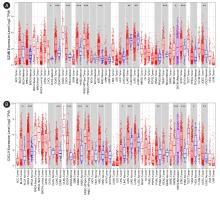
Fig.1
Box plots showing the differential expression of GZMB and CXCL9 in pan-cancer analysis"
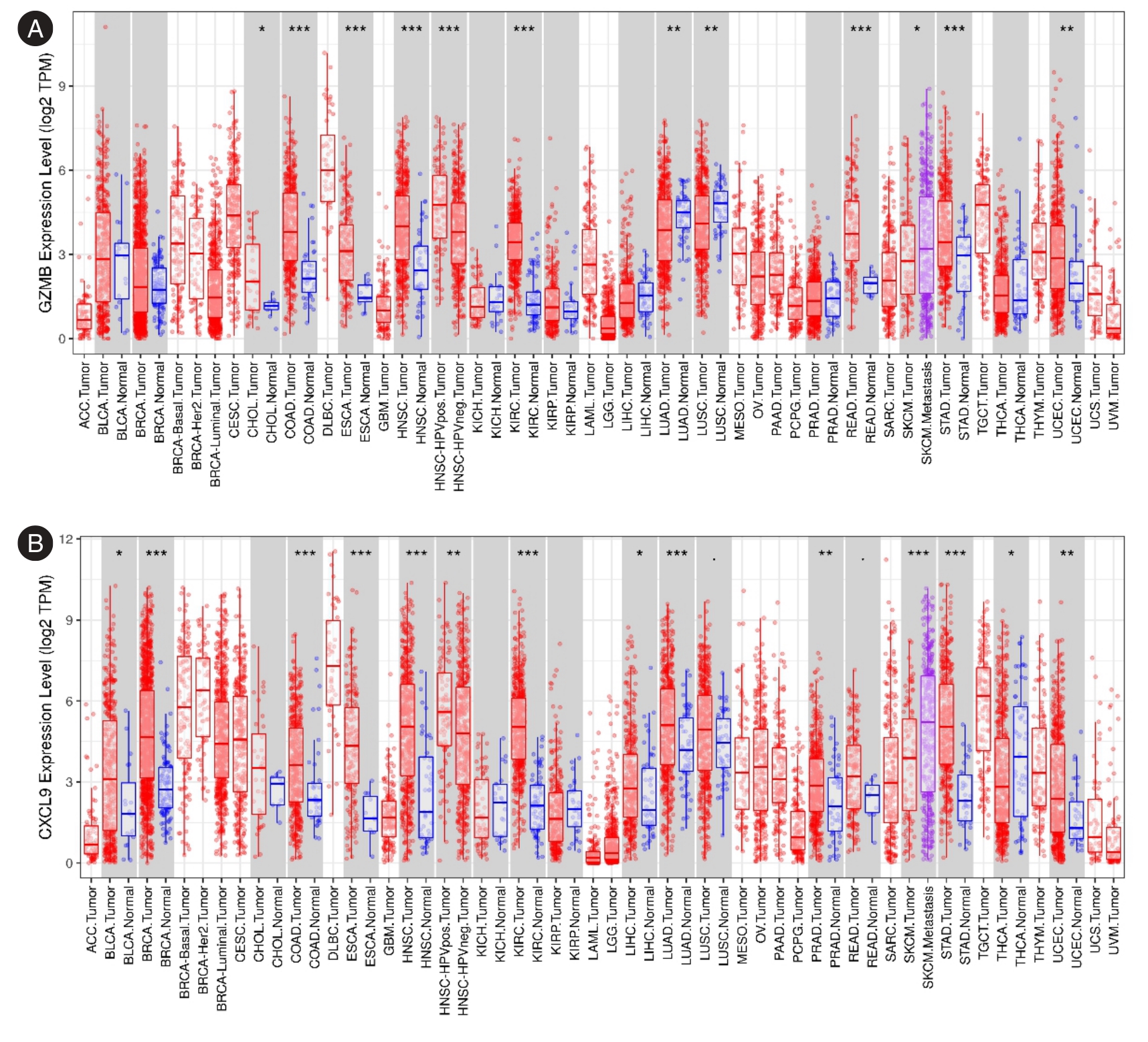
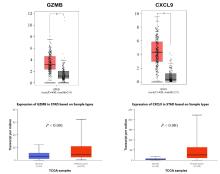
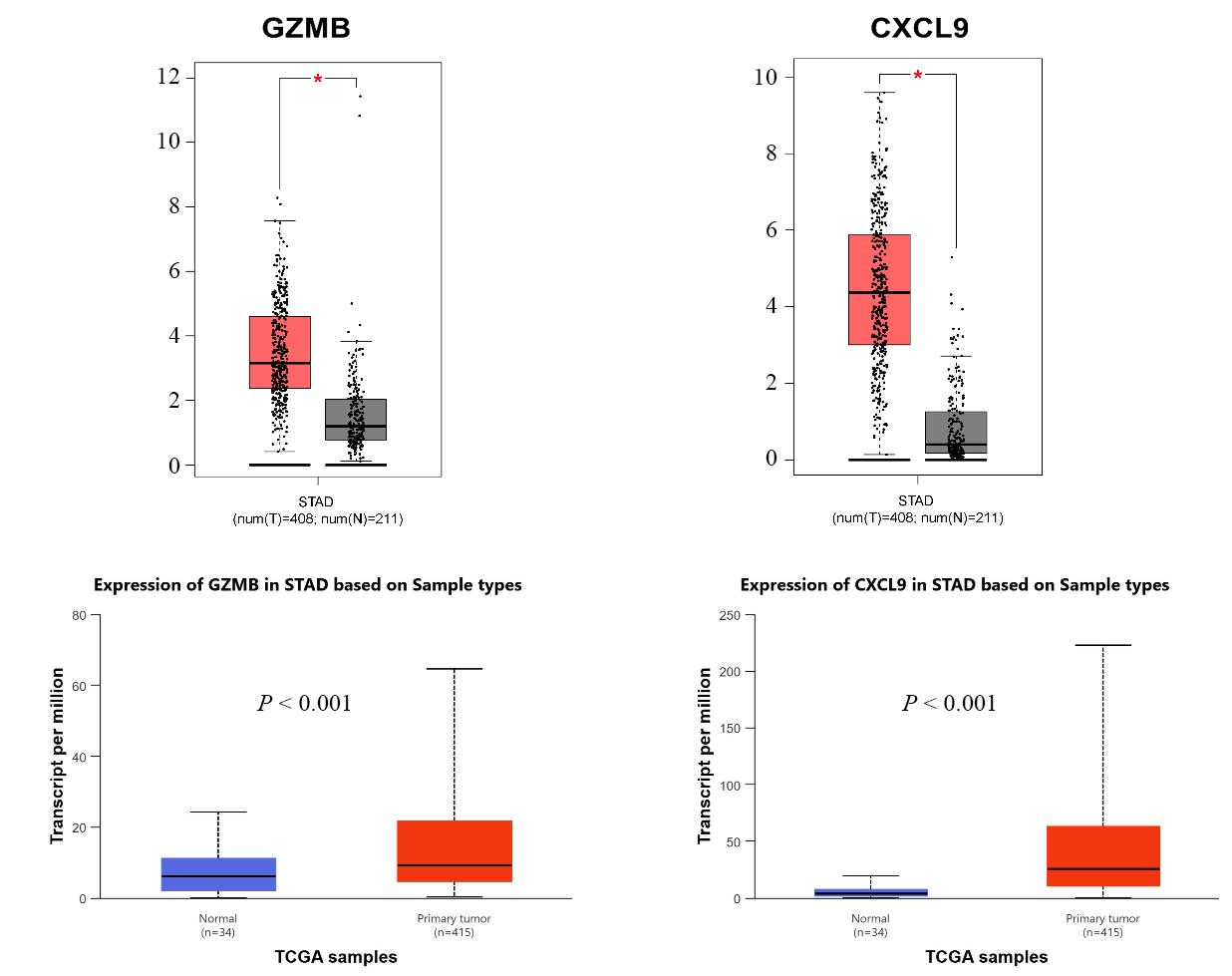
Fig.2
Expression of GZMB and CXCL9 in gastric cancer as predicted by the GEPIA and UALCAN databases"
Tab.1
The mRNA expression levels of GZMB and CXCL9 in gastric cancer tissues and matched adjacent normal tissues"
| 组别 | 例数 | GZMB | CXCL9 |
|---|---|---|---|
| 肿瘤组织 | 89 | 1.52 ± 0.44*** | 1.42 ± 0.42*** |
| 癌旁组织 | 89 | 1.00 ± 0.28 | 1.00 ± 0.29 |
Tab.2
Association between GZMB expression levels and clinicopathological characteristics in gastric cancer patients"
| 项目 | 例数(n = 89) | GZMB mRNA表达 | χ2值 | P值 | |
|---|---|---|---|---|---|
| 低表达(n = 46) | 高表达(n = 43) | ||||
| 性别 | 2.111 | 0.146 | |||
| 男 | 64 | 30 | 34 | ||
| 女 | 25 | 16 | 9 | ||
| 年龄 | 0.001 | 0.980 | |||
| ≥ 60岁 | 56 | 29 | 27 | ||
| < 60岁 | 33 | 17 | 16 | ||
| 病理分型 | 0.301 | 0.583 | |||
| 腺癌 | 42 | 23 | 19 | ||
| 其他 | 47 | 23 | 24 | ||
| 肿瘤分化程度 | 2.954 | 0.086 | |||
| 低/中分化 | 65 | 30 | 35 | ||
| 高分化 | 24 | 16 | 8 | ||
| TNM分期 | 0.652 | 0.419 | |||
| Ⅰ—Ⅱ期 | 52 | 25 | 27 | ||
| Ⅲ—Ⅳ期 | 37 | 21 | 16 | ||
| 肿瘤最大径 | 1.024 | 0.312 | |||
| < 5 cm | 38 | 22 | 16 | ||
| ≥ 5 cm | 51 | 24 | 27 | ||
| 有无淋巴结转移 | 0.949 | 0.330 | |||
| 无 | 47 | 22 | 25 | ||
| 有 | 42 | 24 | 18 | ||
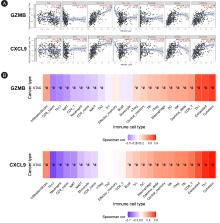
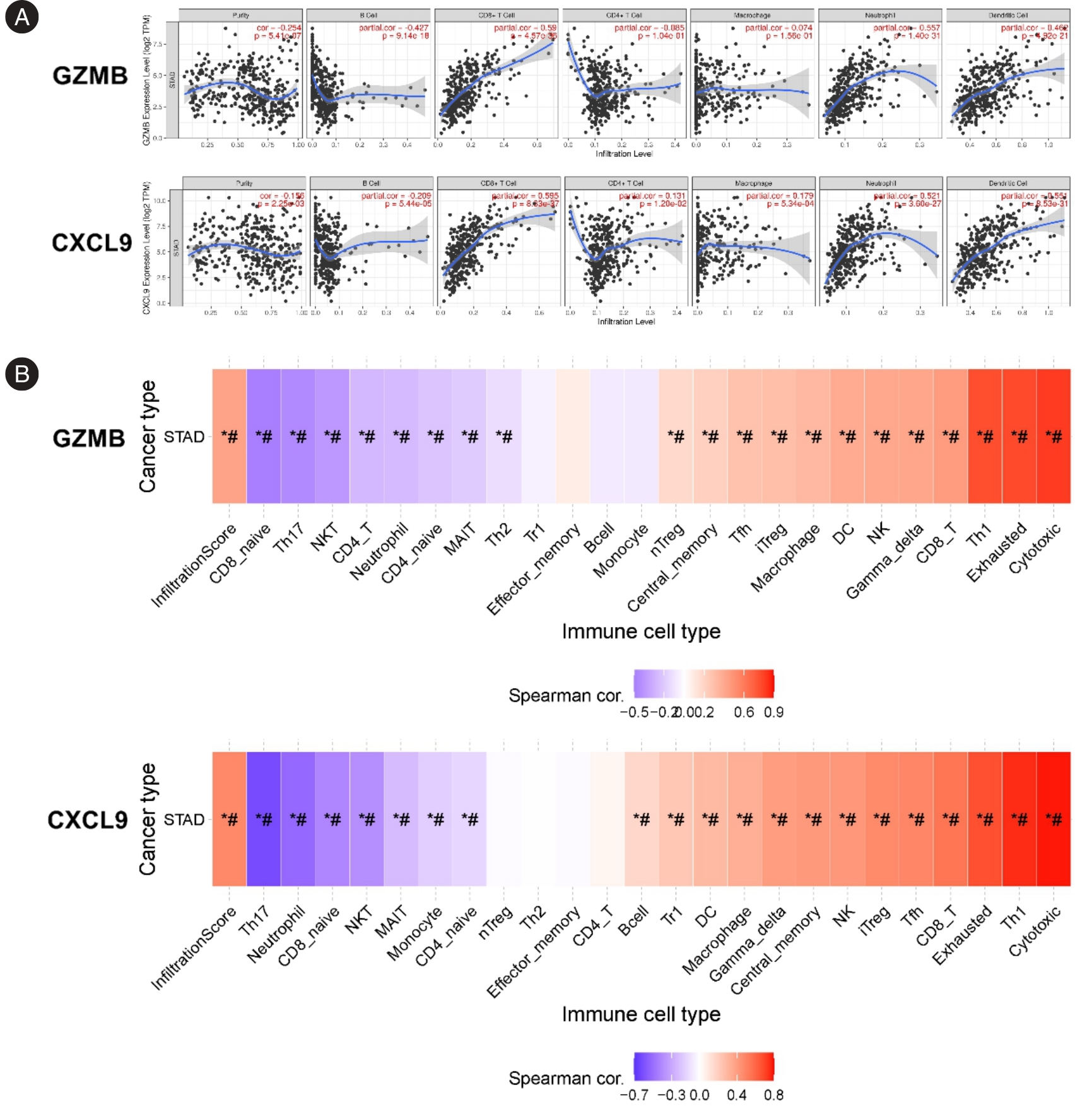
Fig.3
Analysis of immune cell infiltration associated with GZMB and CXCL9 expression in gastric cancer"
Tab.3
Correlation between CXCL9 expression levels and clinicopathological features in gastric cancer patients"
| 项目 | 例数(n = 89) | CXCL9 mRNA表达 | χ2 值 | P值 | |
|---|---|---|---|---|---|
| 低表达(n = 45) | 高表达(n = 44) | ||||
| 性别 | 0.091 | 0.763 | |||
| 男 | 64 | 33 | 31 | ||
| 女 | 25 | 12 | 13 | ||
| 年龄 | 0.547 | 0.459 | |||
| ≥ 60岁 | 56 | 30 | 26 | ||
| < 60岁 | 33 | 15 | 18 | ||
| 病理分型 | 2.555 | 0.110 | |||
| 腺癌 | 42 | 25 | 17 | ||
| 其他 | 47 | 20 | 27 | ||
| 分化程度 | 0.004 | 0.949 | |||
| 低/中分化 | 65 | 33 | 32 | ||
| 高分化 | 24 | 12 | 12 | ||
| TNM分期 | 0.016 | 0.900 | |||
| Ⅰ—Ⅱ期 | 52 | 26 | 26 | ||
| Ⅲ—Ⅳ期 | 37 | 19 | 18 | ||
| 肿瘤最大径 | 2.634 | 0.105 | |||
| < 5 cm | 38 | 23 | 15 | ||
| ≥ 5 cm | 51 | 22 | 29 | ||
| 有无淋巴结转移 | 0.105 | 0.746 | |||
| 无 | 47 | 23 | 24 | ||
| 有 | 42 | 22 | 20 | ||
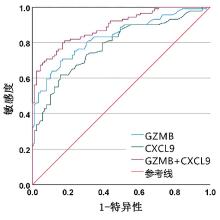
Fig.4
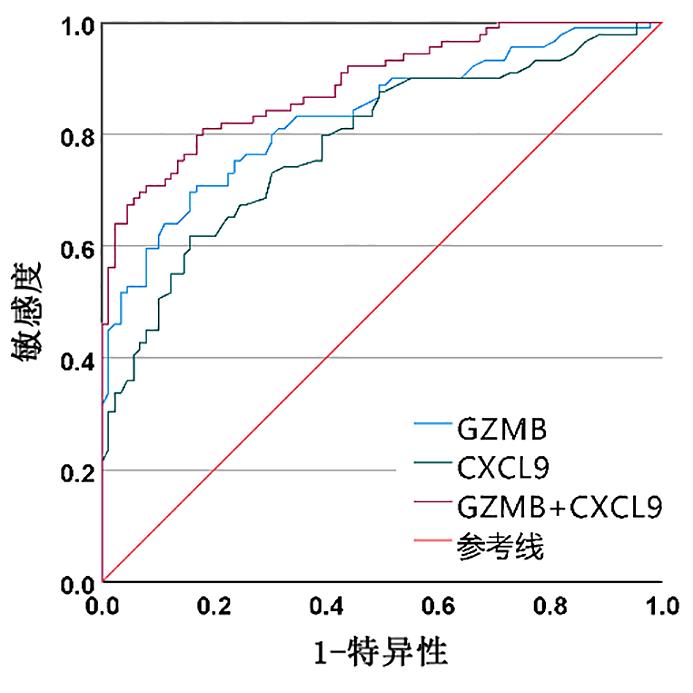
ROC curves of individual and combined detection of GZMB and CXCL9"
Tab.4
Diagnostic value of GZMB and CXCL9 mRNA expression levels for predicting prognosis in gastric cancer patients"
| 指标 | AUC | 约登指数 | 敏感度/% | 特异度/% | 95%CI |
|---|---|---|---|---|---|
| GZMB | 0.832 | 0.540 | 69.70 | 84.30 | 0.772 ~ 0.891 |
| CXCL9 | 0.782 | 0.461 | 61.80 | 84.30 | 0.715 ~ 0.850 |
| GZMB + CXCL9 | 0.890 | 0.630 | 69.70 | 93.30 | 0.843 ~ 0.936 |
Fig.5
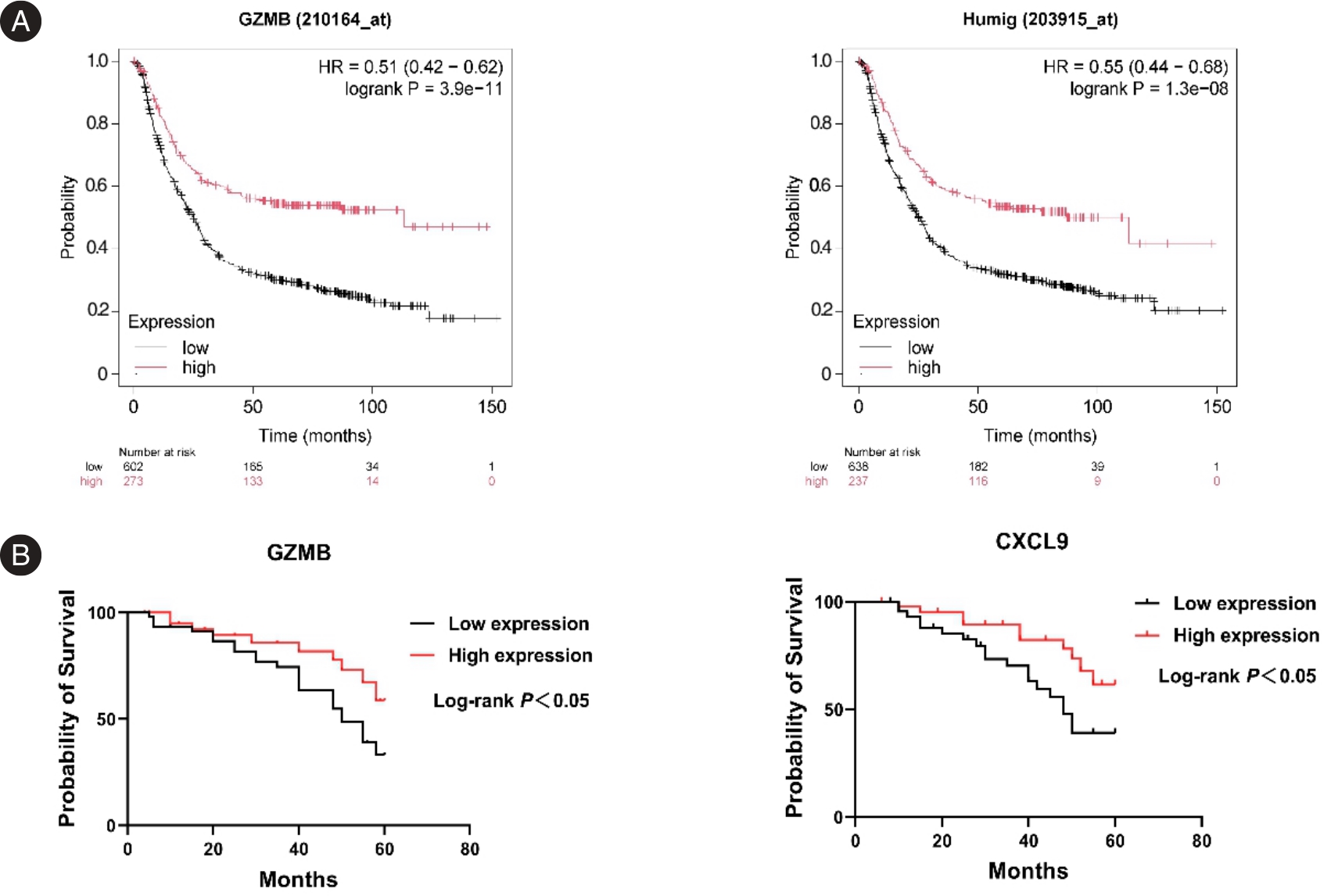
Comparison of survival curves between high and low expression groups of GZMB and CXCL9 in gastric cancer"
| [1] |
SUNG H, FERLAY J, SIEGEL R L. Global Cancer Statistics 2020: GLOBOCAN Estimates of Incidence and Mortality Worldwide for 36 Cancers in 185 Countries[J]. CA Cancer J Clin, 2021, 71(3): 209-249. doi:10.3322/caac.21660
doi: 10.3322/caac.21660 |
| [2] |
RAO X, ZHANG C, LUO H, et al. Targeting Gastric Cancer Stem Cells to Enhance Treatment Response[J]. Cells, 2022, 11(18): 2828-2830. doi:10.3390/cells11182828
doi: 10.3390/cells11182828 |
| [3] |
JIN X, LIU Z, YANG D, et al. Recent Progress and Future Perspectives of Immunotherapy in Advanced Gastric Cancer[J]. Front Immunol, 2022, 13: 948647-948650. doi:10.3389/fimmu.2022.948647
doi: 10.3389/fimmu.2022.948647 |
| [4] |
PENG Y, LIU C, LI M, et al. Identification of a prognostic and therapeutic immune signature associated with hepatocellular carcinoma[J]. Cancer Cell Int, 2021, 21(1): 98-100. doi:10.1186/s12935-021-01792-4
doi: 10.1186/s12935-021-01792-4 |
| [5] |
FU T, DAI L J, WU S Y, et al. Spatial architecture of the immune microenvironment orchestrates tumor immunity and therapeutic response[J]. J Hematol Oncol, 2021, 14(1): 98-101. doi:10.1186/s13045-021-01103-4
doi: 10.1186/s13045-021-01103-4 |
| [6] |
KHALAF K, HANA D, CHOU J T, et al. Aspects of the Tumor Microenvironment Involved in Immune Resistance and Drug Resistance[J]. Front Immunol, 2021, 12: 656364-656367. doi:10.3389/fimmu.2021.656364
doi: 10.3389/fimmu.2021.656364 |
| [7] |
LV B, WANG Y, MA D, et al. Immunotherapy: Reshape the Tumor Immune Microenvironment[J]. Front Immunol, 2022, 13: 844142-844145. doi:10.3389/fimmu.2022.844142
doi: 10.3389/fimmu.2022.844142 |
| [8] |
THOMPSON R, CAO X. Reassessing granzyme B: Unveiling perforin-independent versatility in immune responses and therapeutic potentials[J]. Front Immunol, 2024, 15: 1392535-1392536. doi:10.3389/fimmu.2024.1392535
doi: 10.3389/fimmu.2024.1392535 |
| [9] |
LIANG Z, PAN L, SHI J, et al. C1QA, C1QB, and GZMB are novel prognostic biomarkers of skin cutaneous melanoma relating tumor microenvironment[J]. Sci Rep, 2022, 12(1): 20460-20462. doi:10.1038/s41598-022-24353-9
doi: 10.1038/s41598-022-24353-9 |
| [10] |
OSHIMA T, HASHIMOTO I, HIROSHIMA Y, et al. Clinical Significance of Granzyme B Gene Expression in Pathological Stage Ⅱ/Ⅲ Gastric Cancer After Curative Gastrectomy[J]. Anticancer Res, 2024, 44(10): 4537-4542. doi:10.21873/anticanres.17282
doi: 10.21873/anticanres.17282 |
| [11] |
MIZOGUCHI K, KAWAJI H, KAI M, et al. Granzyme B Expression in the Tumor Microenvironment as a Prognostic Biomarker for Patients with Triple-Negative Breast Cancer[J]. Cancers (Basel), 2023, 15(18): 4456-4457. doi:10.3390/cancers15184456
doi: 10.3390/cancers15184456 |
| [12] |
GAO L, YING F, CAI J, et al. Identification and validation of pyroptosis-related gene landscape in prognosis and immunotherapy of ovarian cancer[J]. J Ovarian Res, 2023, 16(1): 27-29. doi:10.1186/s13048-022-01065-2
doi: 10.1186/s13048-022-01065-2 |
| [13] |
LIM R J, SALEHI-RAD R, TRAN L M, et al. CXCL9/10-engineered dendritic cells promote T cell activation and enhance immune checkpoint blockade for lung cancer[J]. Cell Rep Med, 2024, 5(4): 101479-104182. doi:10.1016/j.xcrm.2024.101479
doi: 10.1016/j.xcrm.2024.101479 |
| [14] |
WU L, SUN S, QU F, et al. CXCL9 influences the tumor immune microenvironment by stimulating JAK/STAT pathway in triple-negative breast cancer[J]. Cancer Immunol Immunother, 2023, 72(6): 1479-1492. doi:10.1007/s00262-022-03343-w
doi: 10.1007/s00262-022-03343-w |
| [15] |
QIAN C, HUI J, PENG Z, et al. Mucosal microbiota characterization in gastric cancer identifies immune-activated-related transcripts relevant gastric microbiome signatures[J]. Front Immunol, 2024, 15: 1435334-1435337. doi:10.3389/fimmu.2024.1435334
doi: 10.3389/fimmu.2024.1435334 |
| [16] |
HU G, SHEN S, ZHU M. CXCL9 is a dual‑role biomarker in colorectal cancer linked to mitophagy and modulated by ALKBH5[J]. Mol Med Rep, 2025, 32(1): 188-190. doi:10.3892/mmr.2025.13553
doi: 10.3892/mmr.2025.13553 |
| [17] |
SU Y, LIU J, TIAN Y, et al. HIF-1α Mediates Immunosuppression and Chemoresistance in Colorectal Cancer by Inhibiting CXCL9, -10 and -11[J]. Biomed Pharmacother, 2024, 173: 116427-116430. doi:10.1016/j.biopha.2024.116427
doi: 10.1016/j.biopha.2024.116427 |
| [18] | 卢旭满, 史正一, 雷元睿, 等. PCBP1在胃癌中的表达及其与铁死亡因子STUB1的关系[J]. 实用医学杂志, 2025, 41(19): 3026-3033. |
| [19] | 徐俊, 王晓丽, 倪静怡, 等. 维迪西妥单抗治疗晚期胃癌的临床疗效及安全性[J]. 实用医学杂志, 2024, 40(20): 2913-2197. |
| [20] |
MATSUOKA T, YASHIRO M. Bioinformatics Analysis and Validation of Potential Markers Associated with Prediction and Prognosis of Gastric Cancer[J]. Int J Mol Sci, 2024, 25(11): 5880-5883. doi:10.3390/ijms25115880
doi: 10.3390/ijms25115880 |
| [21] |
SU X, LIANG C, CHEN R, et al. Deciphering tumor microenvironment: CXCL9 and SPP1 as crucial determinants of tumor-associated macrophage polarity and prognostic indicators[J]. Mol Cancer, 2024, 23(1): 13-16. doi:10.1186/s12943-023-01931-7
doi: 10.1186/s12943-023-01931-7 |
| [22] |
GROLMUSZ V K, NAGY P, LIK I, et al. A common genetic variation in GZMB may associate with cancer risk in patients with Lynch syndrome[J]. Front Oncol, 2023, 13: 1005066-1005669. doi:10.3389/fonc.2023.1005066
doi: 10.3389/fonc.2023.1005066 |
| [23] |
HAN X, WEI Q, LV Y, et al. Ginseng-derived nanoparticles potentiate immune checkpoint antibody efficacy by reprogramming the cold tumor microenvironment[J]. Mol Ther, 2022, 30(1): 327-340. doi:10.1016/j.ymthe.2021.08.028
doi: 10.1016/j.ymthe.2021.08.028 |
| [24] |
SEITZ S, DREYER T F, STANGE C, et al. CXCL9 inhibits tumour growth and drives anti-PD-L1 therapy in ovarian cancer[J]. Br J Cancer, 2022, 126(10): 1470-1480. doi:10.1038/s41416-022-01763-0
doi: 10.1038/s41416-022-01763-0 |
| [25] |
NAGASE Y, KODAMA M. CXCL9 and CXCL13 shape endometrial cancer immune-activated microenvironment via tertiary lymphoid structure formation[J]. Cancer Sci, 2025, 116(5): 1193-1202. doi:10.1111/cas.16371
doi: 10.1111/cas.16371 |
| [26] |
MAJCHRZAK A, LEWANDOWSKI F, HRYNKIEWICZ R, et al. Granzyme B and melittin in cancer immunotherapy: Molecular mechanisms and therapeutic perspectives in head and neck cancers[J]. Front Immunol, 2025, 16: 1628014-1628017. doi:10.3389/fimmu.2025.1628014
doi: 10.3389/fimmu.2025.1628014 |
| [27] |
MICHAUD D, STEWARD C R. Regulatory B cells in cancer[J]. Immunol Rev, 2021, 299(1): 74-92. doi:10.1111/imr.12939
doi: 10.1111/imr.12939 |
| Viewed | ||||||
|
Full text |
|
|||||
|
Abstract |
|
|||||
