

The Journal of Practical Medicine ›› 2025, Vol. 41 ›› Issue (20): 3276-3282.doi: 10.3969/j.issn.1006-5725.2025.20.018
• Investigations • Previous Articles
Minhua LAI,Yanshan LIN( ),Fangliang ZOU,Yang ZHANG,Jing LONG,Huaan XIA,Lihong LIN,Yunzhi DENG,Ruiyun CHEN,Jianhua YANG,Yao XU,Tianwen. PENG
Received:2025-04-26
Online:2025-10-25
Published:2025-11-05
Contact:
Yanshan LIN
E-mail:81948918@qq.com
CLC Number:
Minhua LAI,Yanshan LIN,Fangliang ZOU,Yang ZHANG,Jing LONG,Huaan XIA,Lihong LIN,Yunzhi DENG,Ruiyun CHEN,Jianhua YANG,Yao XU,Tianwen. PENG. Research on the current status of penile erection hardness and its influencing factors in patients with non-obstructive azoospermia[J]. The Journal of Practical Medicine, 2025, 41(20): 3276-3282.
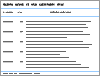
Tab.1
Demographic data of patients with NOA (n = 450)"
| 项目 | 例数 | 百分比/% | 项目 | 例数 | 百分比/% |
|---|---|---|---|---|---|
| 年龄 | 现居住地 | ||||
| 30岁以下 | 52 | 11.6 | 农村 | 133 | 29.6 |
| 30 ~ 40岁 | 336 | 74.7 | 城市 | 317 | 70.4 |
| 41 ~ 49岁 | 56 | 12.4 | 近1个月情绪压抑情况 | ||
| ≥ 50岁 | 6 | 1.3 | 很少 | 297 | 66.0 |
| 民族 | 有时 | 119 | 26.4 | ||
| 汉族 | 426 | 94.7 | 经常 | 34 | 7.6 |
| 其他 | 24 | 5.3 | 吸烟 | ||
| 学历 | 从不吸烟 | 232 | 51.6 | ||
| 初中及以下 | 123 | 27.3 | 经常吸烟 | 208 | 46.2 |
| 高中及中专 | 126 | 28.0 | 1 ~ 9支/d | 76 | 16.9 |
| 大专及以上 | 201 | 44.7 | 10 ~ 19支/d | 58 | 12.9 |
| 工作情况 | ≥ 20支/d | 74 | 16.4 | ||
| 在职 | 438 | 97.3 | 已戒烟 | 10 | 2.2 |
| 无业 | 12 | 2.7 | 饮酒 | ||
| BMI | 不饮酒 | 368 | 81.8 | ||
| 过轻 | 17 | 3.8 | 每周≤ 3次 | 72 | 16.0 |
| 正常 | 219 | 48.7 | 每周> 3次 | 10 | 2.2 |
| 超重 | 160 | 35.5 | 缺乏体育锻炼 | 287 | 63.8 |
| 肥胖 | 54 | 12.0 | 穿紧身裤和化纤内裤的习惯 | 12 | 2.7 |
| 近1个月睡眠质量情况 | 有泡温泉或蒸桑拿的习惯 | 6 | 1.3 | ||
| 较好 | 220 | 48.9 | 日常久坐 | 197 | 43.8 |
| 一般 | 196 | 43.6 | 有长期手淫的习惯 | 48 | 10.7 |
| 较差 | 34 | 7.5 |
Tab.2
The penis erection hardness level and the satisfaction degree of sexual life quality of patients with NOA (n = 450)"
| 项目 | 例数 | 百分比/% |
|---|---|---|
| 勃起硬度评分 | ||
| 4级 | 159 | 35.3 |
| 3级 | 245 | 54.5 |
| 2级 | 42 | 9.3 |
| 1级 | 4 | 0.9 |
| 性生活质量满意度 | ||
| 非常满意 | 112 | 24.9 |
| 基本满意 | 258 | 57.3 |
| 一般满意 | 43 | 9.6 |
| 不满意 | 18 | 4.0 |
| 非常不满意 | 14 | 3.1 |
| 无性生活 | 5 | 1.1 |
Tab.3
Analysis of the related factors of penile erectile rigidity in patients with NOA"
| 影响因素 | 阴茎勃起硬度 | χ2值 | P值 | 影响因素 | 阴茎勃起硬度 | χ2值 | P值 | ||
|---|---|---|---|---|---|---|---|---|---|
| 异常(n = 291) | 正常(n = 159) | 异常(n = 291) | 正常(n = 159) | ||||||
| 年龄 | 6.350 | 0.096 | 近1个月情绪压抑情况 | 3.558 | 0.169 | ||||
| 29岁及以下 | 26(9.0) | 26(16.4) | 很少 | 183(62.9) | 114(71.7) | ||||
| 30 ~ 40岁 | 222(76.3) | 114(71.7) | 有时 | 84(28.9) | 35(22.0) | ||||
| 41 ~ 49岁 | 38(13.1) | 18(11.3) | 经常 | 24(8.2) | 10(6.3) | ||||
| ≥ 50岁 | 5(1.7) | 1(0.6) | 吸烟 | 1.965 | 0.374 | ||||
| 现居住地 | 从不吸烟 | 154(53.0) | 78(49.1) | ||||||
| 农村 | 83(28.5) | 50(31.4) | 0.422 | 0.516 | 经常吸烟 | 129(44.3) | 79(49.7) | ||
| 城市 | 208(71.5) | 109(68.6) | 已戒烟 | 8(2.7) | 2(1.2) | ||||
| 民族 | 0.044 | 0.833 | 饮酒 | 11.434 | 0.003 | ||||
| 汉族 | 275(94.5) | 151(95.0) | 不饮酒 | 250(85.9) | 118(74.2) | ||||
| 其他 | 16(5.5) | 8(5.0) | 每周≤ 3次 | 38(13.1) | 34(21.4) | ||||
| 学历 | 7.861 | 0.020 | 每周> 3次 | 3(1.0) | 7(4.4) | ||||
| 大专及以上 | 116(39.9) | 85(53.5) | 缺乏体育锻炼 | 192(66.0) | 95(59.7) | 1.728 | 0.189 | ||
| 高中及中专 | 87(29.9) | 39(24.5) | 穿紧身裤和化纤 内裤的习惯 | 7(2.4) | 5(3.1) | 0.216 | 0.642 | ||
| 初中及以下 | 88(30.2) | 35(22.0) | 有泡温泉或蒸桑拿 的习惯 | 2(0.7) | 4(2.5) | 2.613 | 0.106 | ||
| 工作情况 | 0.022 | 0.883 | 日常久坐 | 126(43.3) | 71(44.7) | 0.077 | 0.782 | ||
| 在职 | 283(97.3) | 155(97.5) | 有长期手淫的习惯 | 29(10.0) | 19(11.9) | 0.425 | 0.515 | ||
| 无业 | 8(2.7) | 4(2.5) | 性生活质量满意度 | 26.837 | < 0.01 | ||||
| BMI | 1.639 | 0.651 | 非常满意 | 56(19.2) | 56(35.2) | ||||
| 过轻 | 13(4.5) | 4(2.5) | 基本满意 | 167(57.4) | 91(57.3) | ||||
| 正常 | 137(47.1) | 82(51.6) | 一般满意 | 39(13.4) | 4(2.5) | ||||
| 超重 | 106(36.4) | 54(34.0) | 不满意 | 15(5.2) | 3(1.9) | ||||
| 肥胖 | 35(12.1) | 19(11.9) | 非常不满意 | 10(3.4) | 4(2.5) | ||||
近1个月睡眠 质量情况 | 7.018 | 0.030 | 无性生活 | 4(1.4) | 1(0.6) | ||||
| 较好 | 129(44.3) | 91(57.2) | |||||||
| 一般 | 137(47.1) | 59(37.1) | |||||||
| 较差 | 25(8.6) | 9(5.7) | |||||||
Tab.4
The assignment of independent variables in logistic regression"
| 自变量 | 赋值方式 |
|---|---|
| 学历 | 1 =大专及以上,2 =高中及中专,3 =初中及以下 |
| 近1个月睡眠质量情况 | 1 =较好,2 =一般,3 =较差 |
| 饮酒 | 1 =不饮酒,2 =每周≤ 3次,3 =每周> 3次 |
| 性生活质量满意度 | 1 =非常不满意,2 =不满意,3 =一般满意,4 =基本满意,5 =非常满意,6 =无性生活 |
Tab. 5
Binary logistic multivariate regression analysis"
| 影响因素 | β | 标准误 | Wald值 | P值 | OR值 | 95%CI | |
|---|---|---|---|---|---|---|---|
| 下限 | 上限 | ||||||
| 学历 | -0.344 | 0.131 | 6.874 | 0.009 | 0.709 | 0.549 | 0.917 |
| 近1个月睡眠质量情况 | -0.445 | 0.178 | 6.289 | 0.012 | 0.641 | 0.452 | 0.907 |
| 饮酒 | 0.872 | 0.241 | 13.132 | < 0.01 | 2.393 | 1.493 | 3.836 |
| 性生活质量满意度 | 0.375 | 0.134 | 7.801 | 0.005 | 1.455 | 1.118 | 1.894 |
| 常量 | -1.000 | 0.695 | 2.071 | 0.150 | 0.368 | ||
| [1] | 刘馨蜜, 刘景, 吴珊珊. 空气污染对辅助生殖技术影响的相关研究进展及挑战[J]. 实用医学杂志, 2022, 38(21): 2639-2642. |
| [2] |
KOLETTIS P N. The evaluation and management of the azoospermic patient[J]. J Androl, 2002, 23(3): 293-305. doi:10.1002/j.1939-4640.2002.tb02231.x
doi: 10.1002/j.1939-4640.2002.tb02231.x |
| [3] |
JAROW J P, ESPELAND M A, LIPSHULTZ L I. Evaluation of the azoospermic patient[J]. J Urol, 1989, 142(1): 62-65. doi:10.1016/s0022-5347(17)38662-7
doi: 10.1016/s0022-5347(17)38662-7 |
| [4] |
CIOPPI F, ROSTA V, KRAUSZ C. Genetics of Azoospermia[J]. Int J Mol Sci, 2021, 22(6): 3264. doi:10.3390/ijms22063264
doi: 10.3390/ijms22063264 |
| [5] |
CHU Q J, HUA R, LUO C, et al. Relationship of genetic causes and inhibin B in non obstructive azoospermia spermatogenic failure[J]. BMC Med Genet, 2017, 18(1): 98. doi:10.1186/s12881-017-0456-x
doi: 10.1186/s12881-017-0456-x |
| [6] |
HERKOMMER K, MEISSNER V H, DINKEL A, et al. Prevalence, lifestyle, and risk factors of erectile dysfunction, premature ejaculation, and low libido in middle-aged men: First results of the Bavarian Men's Health-Study[J]. Andrology, 2024, 12(4): 801-808. doi:10.1111/andr.13524
doi: 10.1111/andr.13524 |
| [7] |
ZHANG H, COLONNELLO E, ZHANG H, et al. Erection Hardness Score in Masturbation Can Serve as a Preliminary Screening Tool for Organic Erectile Dysfunction[J]. Urology, 2023, 182: 149-154. doi:10.1016/j.urology.2023.08.016
doi: 10.1016/j.urology.2023.08.016 |
| [8] |
ZHANG H, COLONNELLO E, LIMONCIN E, et al. Validity of self-reported male sexual function scales in a young Chinese population: A comparative study with clinician-assisted evaluation[J]. Asian J Androl, 2024, 26(3): 321-327. doi:10.4103/aja202364
doi: 10.4103/aja202364 |
| [9] |
TSUJIMURA A, FUKUHARA S, CHIBA K, et al. Clinical Research Promotion Committee of the Japanese Society for Sexual Medicine. Erectile Function and Sexual Activity Are Declining in the Younger Generation: Results from a National Survey in Japan[J]. World J Mens Health, 2025, 43(1): 239-248. doi:10.5534/wjmh.240137
doi: 10.5534/wjmh.240137 |
| [10] |
TOPUZ B, EBILOGLU T, SARIKAYA S, et al. Evaluation of depression, anxiety and quality of life in patients with non-obstructive azoospermia[J]. Rev Int Androl, 2021, 19(2): 73-79. doi:10.1016/j.androl.2019.09.005
doi: 10.1016/j.androl.2019.09.005 |
| [11] |
CEGAR B, GRUJICIC S S, BJEKIC J, et al. Understanding the Male Perspective: Evaluating Quality of Life and Psychological Distress in Serbian Men Undergoing Infertility Treatment[J]. Life (Basel), 2023, 13(9): 1894. doi:10.3390/life13091894
doi: 10.3390/life13091894 |
| [12] |
GAHM E, PETERSON M, LARSSON K. Men's views on causes and consequences of erectile dysfunction or premature ejaculation in a primary care population: A qualitative study[J]. Scand J Prim Health Care, 2024, 42(2): 355-364. doi:10.1080/02813432.2024.2327501
doi: 10.1080/02813432.2024.2327501 |
| [13] |
LUCA G, PARRETTINI S, SANSONE A, et al. The Inferto-Sex Syndrome (ISS): Sexual dysfunction in fertility care setting and assisted reproduction[J]. J Endocrinol Invest, 2021, 44(10): 2071-2102. doi:10.1007/s40618-021-01581-w
doi: 10.1007/s40618-021-01581-w |
| [14] | 苏维, 冷区, 毛向明, 等. 低强度体外冲击波治疗勃起功能障碍的研究进展[J]. 实用医学杂志, 2020, 36(8): 1111-1115. |
| [15] |
SOLANKI A, GUPTA M, SINGH S, et al. Sexual dysfunction and marital adjustment in married men with alcohol dependence syndrome[J]. Ind Psychiatry J, 2024, 33(1): S101-S106. doi:10.4103/ipj.ipj_1_24
doi: 10.4103/ipj.ipj_1_24 |
| [16] |
MUKHOPADHYAY S, SHARMA S, AGGARWAL A, et al. Perceived stress, marital satisfaction, and sexual satisfaction in spouses of males having bipolar disorder with and without alcohol use disorder: A cross-sectional study[J]. Indian J Psychiatry, 2021, 63(3): 270-273. doi:10.4103/psychiatry.indianjpsychiatry_483_20
doi: 10.4103/psychiatry.indianjpsychiatry_483_20 |
| [17] |
GUTIERREZ-VELARDE P, VALLADARES-GARRIDO M J, PERALTA C I, et al. Poor sleep quality and erectile dysfunction in students from a Peruvian University: A cross-sectional study[J]. Front Public Health, 2023, 11: 932718. doi:10.3389/fpubh.2023.932718
doi: 10.3389/fpubh.2023.932718 |
| [18] | 胡海兵, 赵昆昆, 陈永毅 等. 睡眠相关性痛性勃起患者与正常男性夜间勃起功能的差异[J]. 中山大学学报(医学科学版), 2023, 44(4): 691-696. |
| [19] |
HARJU E, PAKARAINEN T, VASARAINEN H, et al. Health-Related Quality of Life, Self-esteem and Sexual Functioning Among Patients Operated for Penile Cancer - A Cross-sectional Study[J]. J Sex Med, 2021, 18(9): 1524-1531. doi:10.1016/j.jsxm.2021.06.015
doi: 10.1016/j.jsxm.2021.06.015 |
| [20] |
BAROUDI M, STOOR J P, BLAHED H, et al. Men and sexual and reproductive healthcare in the Nordic countries: A scoping review[J]. BMJ Open, 2021, 11(9): e052600. doi:10.1136/bmjopen-2021-052600
doi: 10.1136/bmjopen-2021-052600 |
| [21] |
BERSAMIN M, FISHER D A, MARCELL A V, et al. Deficits in young men's knowledge about accessing sexual and reproductive health services[J]. J Am Coll Health, 2017, 65(8): 579-584. doi:10.1080/07448481.2017.1352589
doi: 10.1080/07448481.2017.1352589 |
| [22] |
ELTERMAN D S, BHATTACHARYYA S K, MAFILIOS M, et al. The Quality of Life and Economic Burden of Erectile Dysfunction[J]. Res Rep Urol, 2021, 13: 79-86. doi:10.2147/rru.s283097
doi: 10.2147/rru.s283097 |
| [23] | 唐纯芳, 张茂玲, 陈妙虹,等. 女性不孕症患者亲密伴侣暴力发生现状及影响因素研究[J]. 实用医学杂志, 2023, 39(8): 1045-1051. |
| Viewed | ||||||
|
Full text |
|
|||||
|
Abstract |
|
|||||
