

The Journal of Practical Medicine ›› 2026, Vol. 42 ›› Issue (10): 1787-1797.doi: 10.3969/j.issn.1006-5725.2026.10.013
• Modernization of Traditional Chinese Medicine • Previous Articles
Yehuang WEI1,Weiqiang TAN1,Xiaoqian GONG1,Rongrong WANG1,Xudong LIU2,Rong LIU2( )
)
Received:2026-01-06
Online:2026-05-25
Published:2026-05-27
Contact:
Rong LIU
E-mail:125500438@qq.com
CLC Number:
Yehuang WEI,Weiqiang TAN,Xiaoqian GONG,Rongrong WANG,Xudong LIU,Rong LIU. The effect of Qushi Huoxue decoction on the NF-κB/Bcl-2 pathway in metabolic dysfunction-associated steatotic liver disease mice[J]. The Journal of Practical Medicine, 2026, 42(10): 1787-1797.

Tab.1
Primer sequences"
| 基因 | 上游(5′—3′) | 下游(5′—3′) |
|---|---|---|
| Bcl-2 | GAACTGGGGGAGGATTGTGG | GCATGCTGGGGCCATATAGT |
| Bax | GAACCATCATGGGGCTGGACA | GTGAGGACTCCAGCCACAAA |
| Caspase-3 | ACATGGGAGCAAGTCAGTGG | CGTCCACATCCGTACCAGAG |
| β-actin | GGTCGTCGACAACGGCTC | ATTCCCACCATCACACCCTGG |
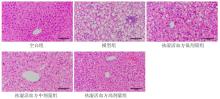
Fig.1
Comparison of hepatic histology by HE staining among different groups of mice (×200)"
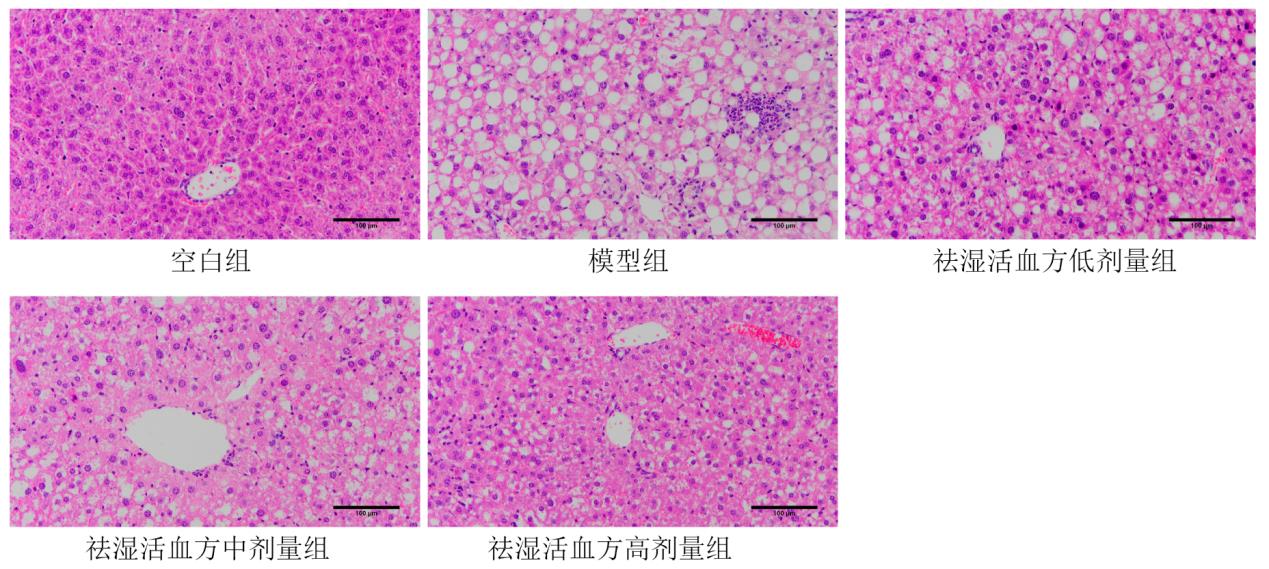
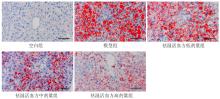
Fig.2
Comparison of hepatic lipid deposition by Oil red O staining among different groups of mice (×200)"
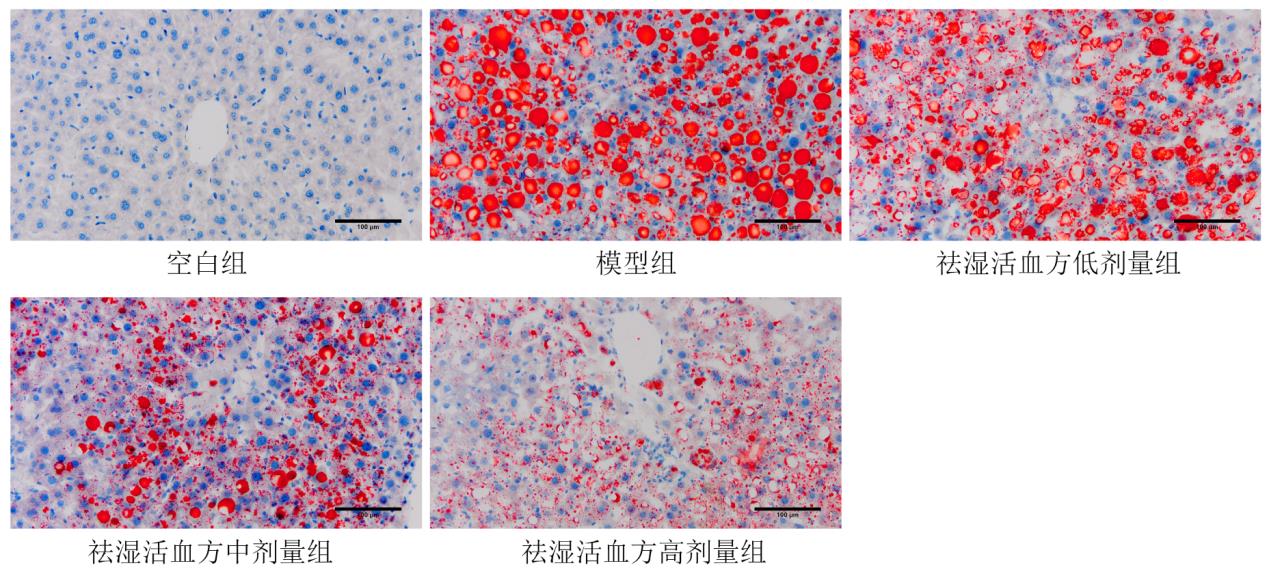
Fig.3
Comparison of serum liver function, lipid levels, and hepatic tissue oxidative stress markers among different groups of mice"
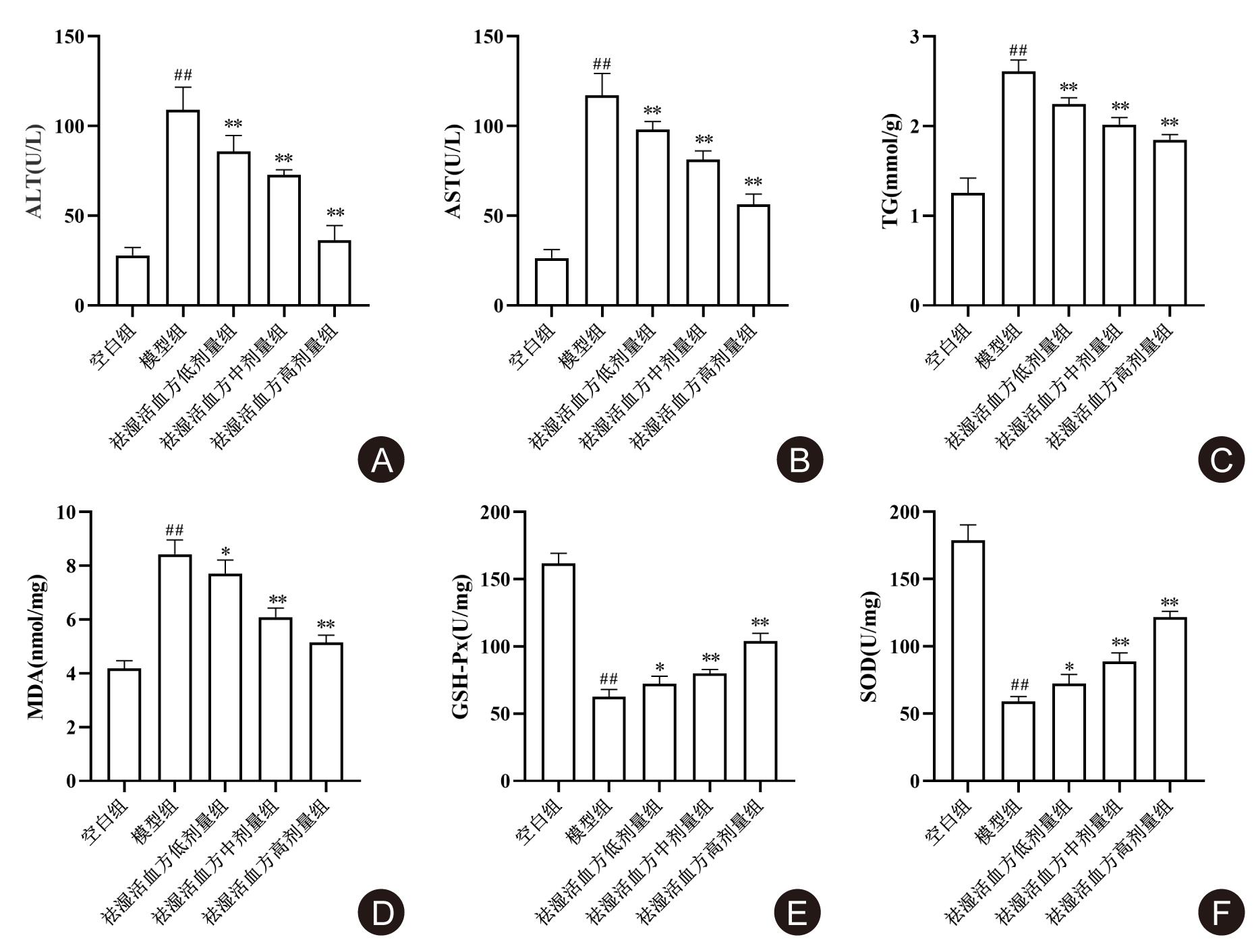
Fig.4
Comparison of Serum levels of inflammatory factors among different groups of mice"
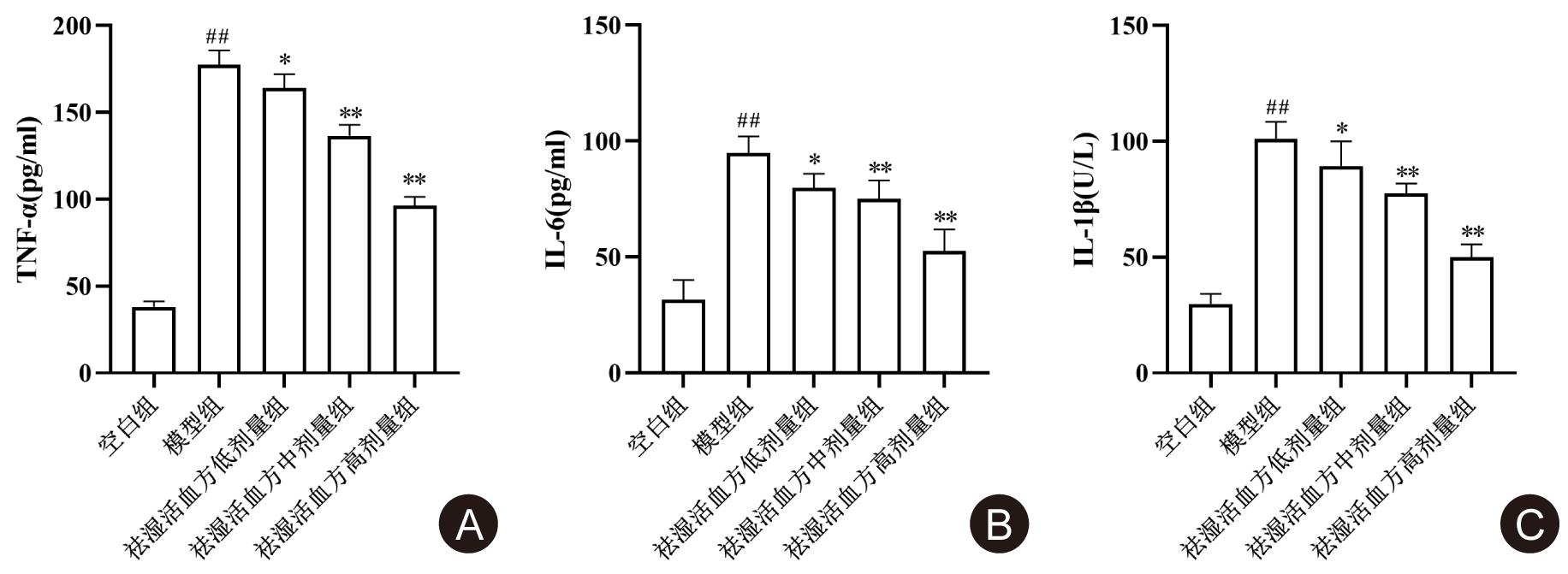
Fig.5
Comparison of apoptosis of hepatocytes among different groups of mice"
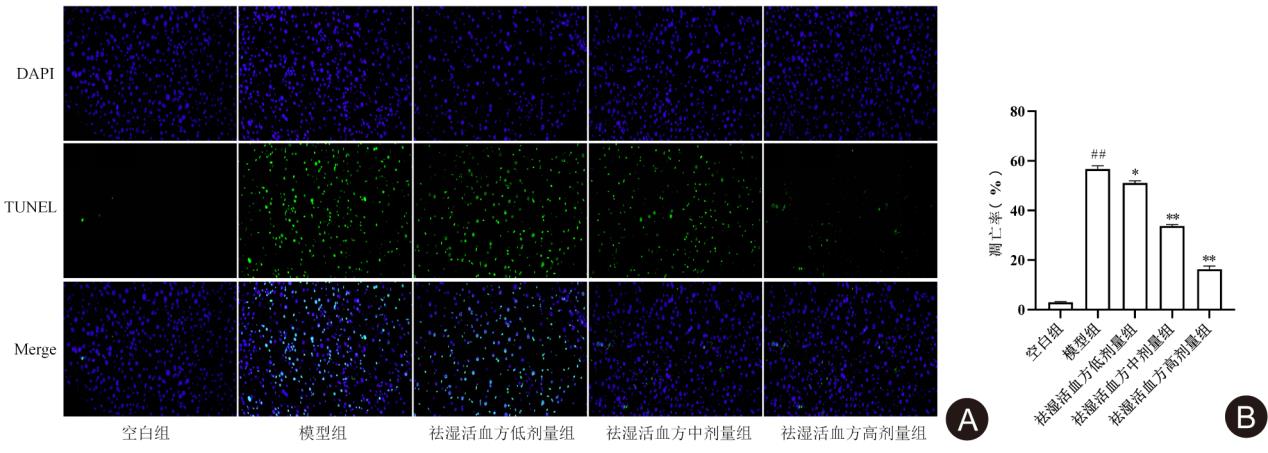
Fig.6
Effect of Qushi Huoxue Decoction on p-NF-κB protein expression of mice in each group"
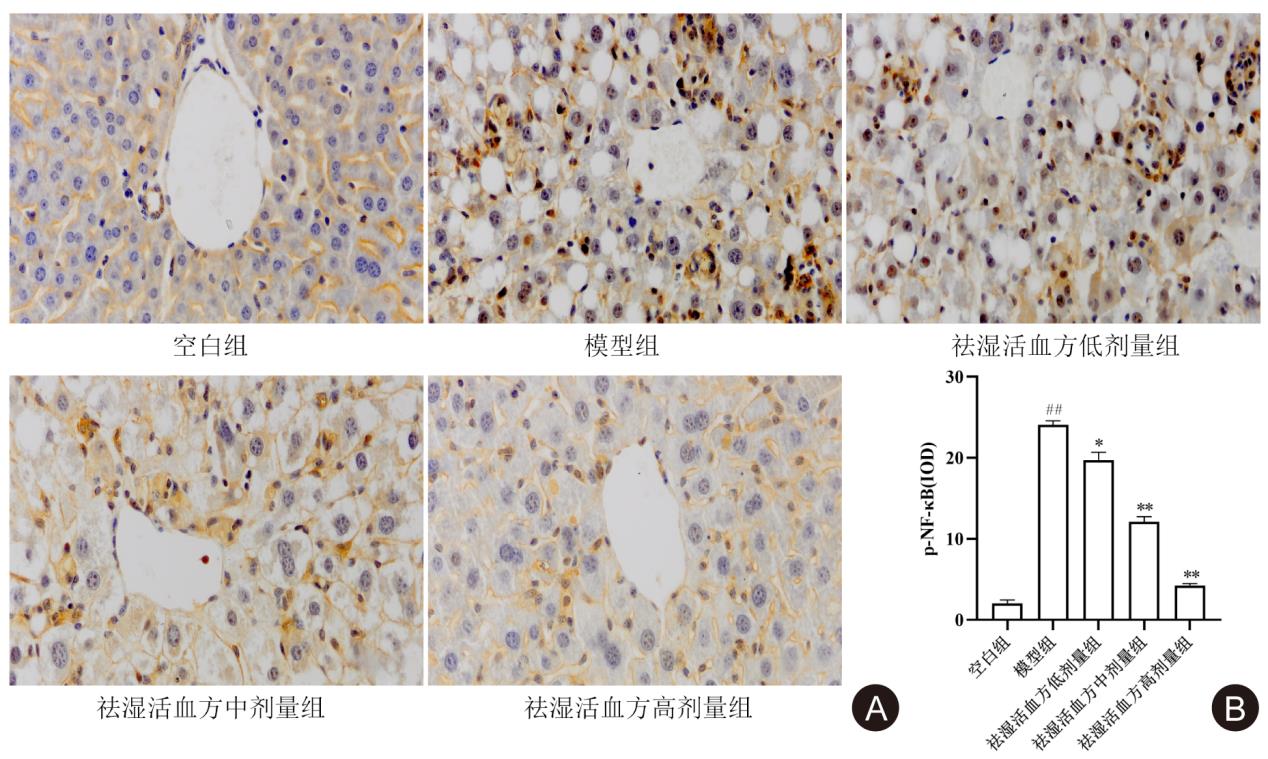
Fig.7
Effect of Qushi Huoxue Decoction on Bcl-2 protein expression of mice in each group"
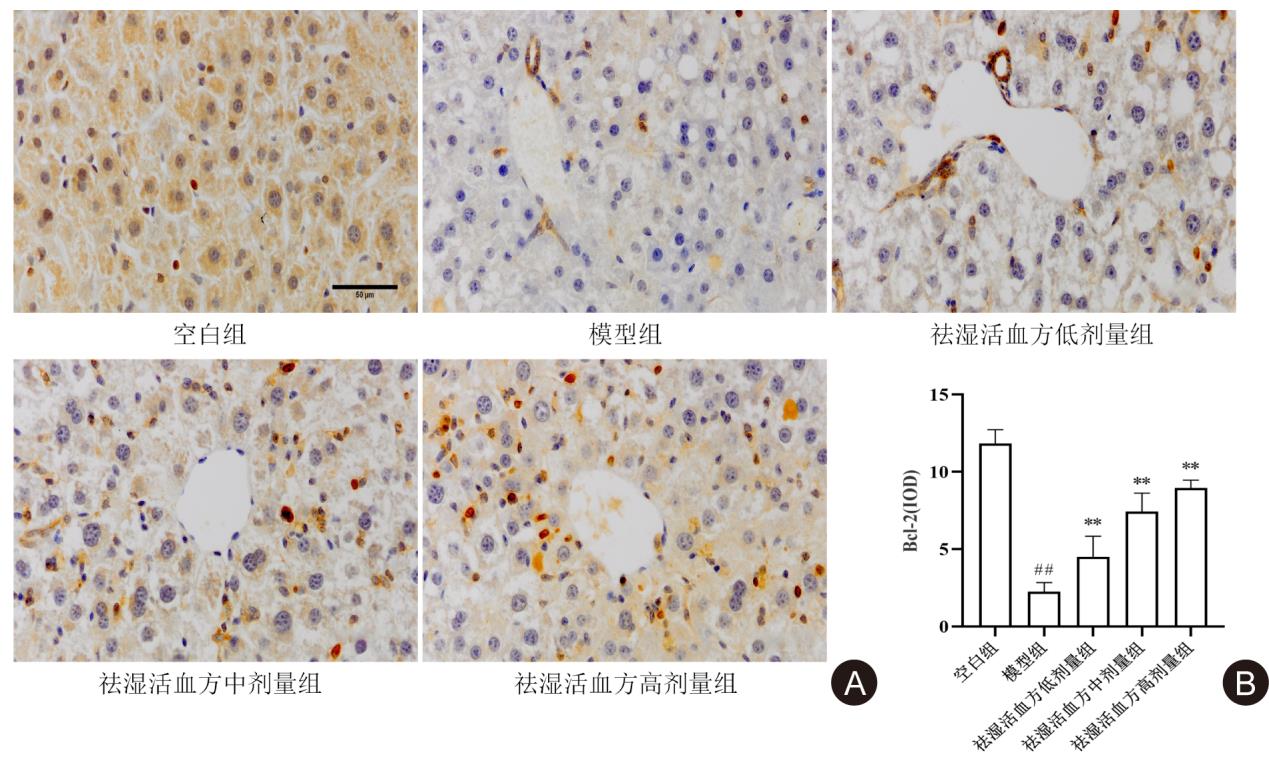
Fig.8
Effect of Qushi Huoxue Decoction on Bax protein expression of mice in each group"
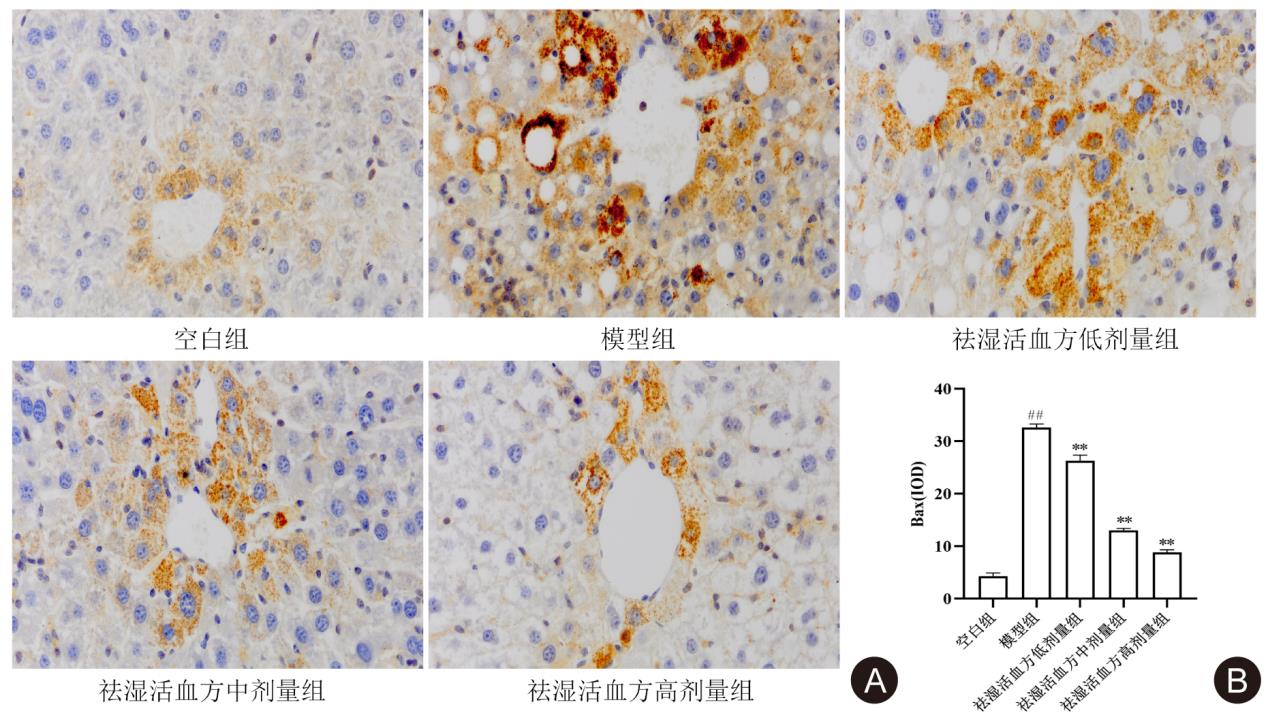
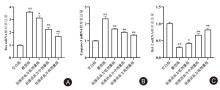
Fig.9
Effect of Qushi Huoxue Decoction on mRNA expression levels of apoptosis-related genes of mice in each group"
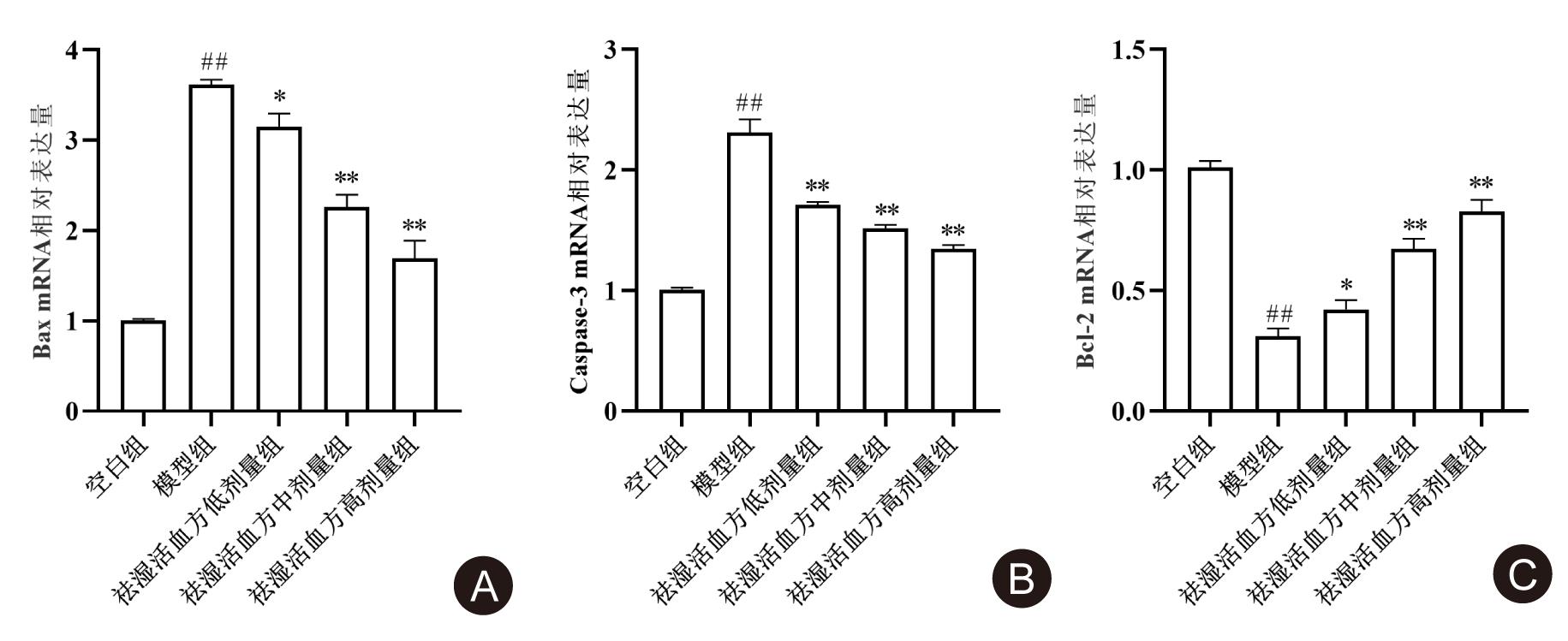
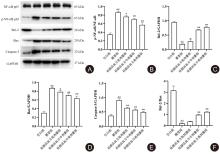
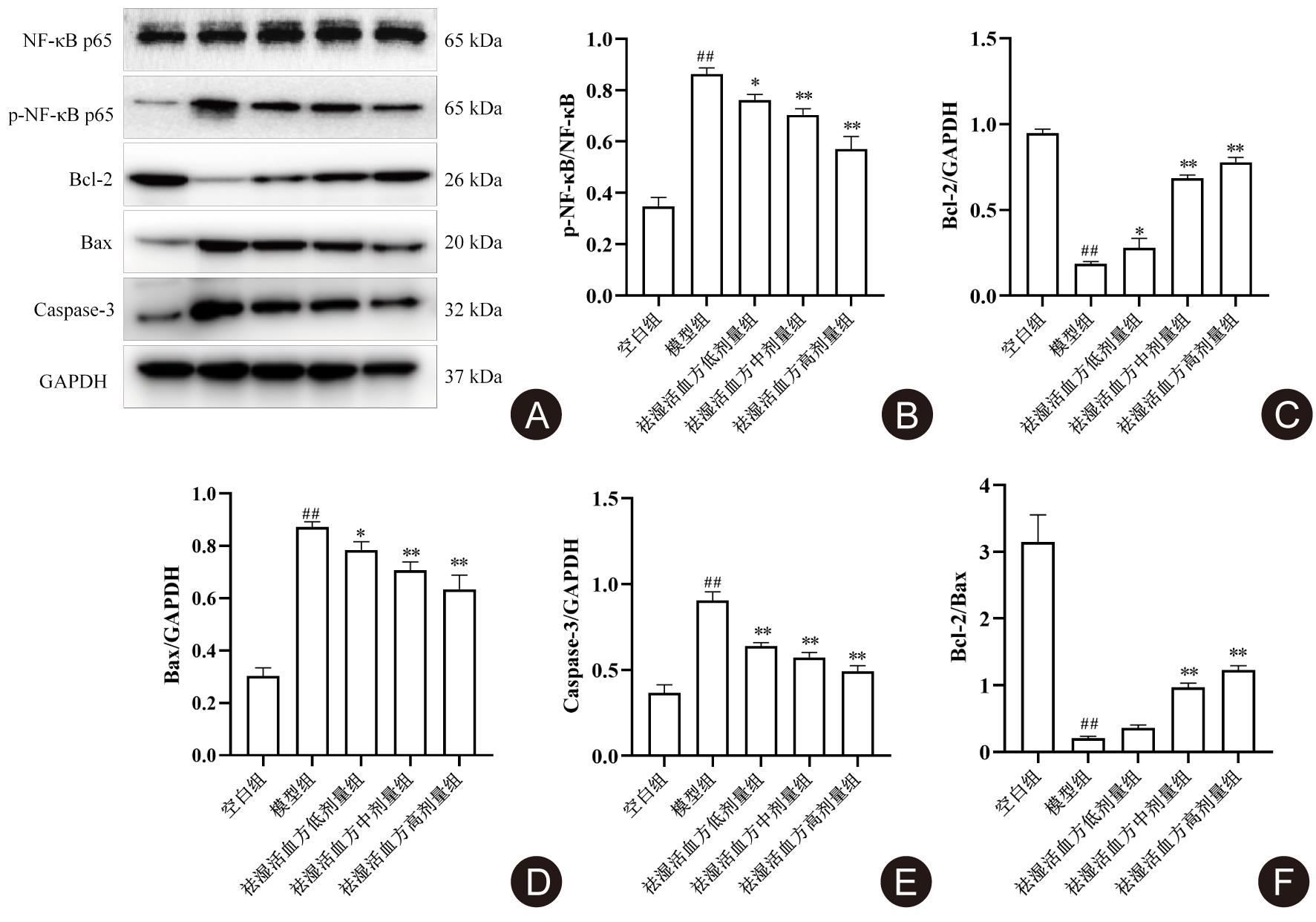
Fig.10
Effect of Qushi Huoxue Decoction on relative protein expression of p-NF-κB/NF-κB、Bcl-2、Bax、Caspase-3 and Bcl-2/Bax of mice in each group"
| [1] |
熊波,郑金鑫,谢芸琦,等.代谢相关脂肪性肝病患者血维生素特征及疾病严重程度相关性分析[J].中国热带医学, 2024, 24(1): 60-64+69. doi:10.13604/j.cnki.46-1064/r.2024.01.11 .
doi: 10.13604/j.cnki.46-1064/r.2024.01.11 |
| [2] |
赵冉, 沙卫红. 代谢相关脂肪性肝病的概念变更及其对临床实践的影响[J]. 实用医学杂志, 2022, 38(19): 2390-2394. doi:10.3969/j.issn.1006-5725.2022.19.003 .
doi: 10.3969/j.issn.1006-5725.2022.19.003 |
| [3] |
范建高, 徐小元, 南月敏, 等. 代谢相关(非酒精性)脂肪性肝病防治指南(2024年版)[J]. 实用肝脏病杂志, 2024, 27(4): 494-510.doi: 10.3760/cma.j.cn501113-20240327-00163
doi: 10.3760/cma.j.cn501113-20240327-00163 |
| [4] |
LEE H H, LEE H A, KIM E J, et al. Metabolic dysfunction-associated steatotic liver disease and risk of cardiovascular disease[J]. Gut, 2024, 73(3): 533-540. doi:10.1136/gutjnl-2023-331003 .
doi: 10.1136/gutjnl-2023-331003 |
| [5] |
BUZZETTI E, PINZANI M, TSOCHATZIS E A. The multiple-hit pathogenesis of non-alcoholic fatty liver disease (NAFLD)[J]. Metabolism, 2016, 65(8): 1038-1048. doi:10.1016/j.metabol.2015.12.012 .
doi: 10.1016/j.metabol.2015.12.012 |
| [6] |
RINELLA M E, NEUSCHWANDER-TETRI B A, SIDDIQUI M S, et al. AASLD Practice Guidance on the clinical assessment and management of nonalcoholic fatty liver disease[J]. Hepatology, 2023, 77(5): 1797-1835. doi:10.1097/HEP.0000000000000323 .
doi: 10.1097/HEP.0000000000000323 |
| [7] |
HUANG D Q, WONG V W S, RINELLA M E, et al. Metabolic dysfunction-associated steatotic liver disease in adults[J]. Nat Rev Dis Primers, 2025, 11: 14. doi:10.1038/s41572-025-00599-1 .
doi: 10.1038/s41572-025-00599-1 |
| [8] |
中国中西医结合学会消化系统疾病专业委员会. 非酒精性脂肪性肝病中西医结合诊疗专家共识(2025年)[J]. 中国中西医结合消化杂志, 2025, 33(4): 339-350.doi:10.3969/j.issn.1671-038X.2025.04.01 .
doi: 10.3969/j.issn.1671-038X.2025.04.01 |
| [9] |
徐新杰, 吴银凤, 吕萍, 等. 刘旭东教授治疗非酒精性脂肪肝经验总结[J]. 广西中医药, 2018, 41(1): 38-40. doi:10.3969/j.issn.1003-0719.2018.01.017 .
doi: 10.3969/j.issn.1003-0719.2018.01.017 |
| [10] |
刘旭东, 涂燕云, 张红星. 祛湿活血中药治疗非酒精性脂肪肝40例[J]. 陕西中医, 2013, 34(1): 16-18.doi:10.3969/j.issn.1000-7369.2013.01.008 .
doi: 10.3969/j.issn.1000-7369.2013.01.008 |
| [11] | 沈震, 费新应, 刘旭东. 祛湿活血方对慢性乙型肝炎合并非酒精性脂肪性肝病患者抗病毒疗效的影响[J]. 湖北中医杂志, 2015, 37(8): 38-39. |
| [12] |
谭伟强, 刘丽, 刘旭东, 等. 祛湿活血方调控AMPK/SREBP1c信号通路对HepG2脂肪肝细胞生长的影响[J]. 实用医学杂志, 2026, 42(3): 406-415. doi:10.3969/j.issn.1006-5725.2026.03.007 .
doi: 10.3969/j.issn.1006-5725.2026.03.007 |
| [13] |
谭伟强, 冉小柯, 潘兆权, 等. 基于网络药理学及实验验证探讨祛湿活血方治疗非酒精性脂肪性肝病的作用机制[J]. 中国药理学通报, 2025, 41(9): 1761-1768. doi:10.12360/CPB202411055 .
doi: 10.12360/CPB202411055 |
| [14] |
刘聪毅, 郑娜, 许晶晶, 等. 基于NF-κB信号通路探讨中药治疗非酒精性脂肪肝研究进展[J]. 世界科学技术-中医药现代化, 2025, 27(9): 2553-2568.doi:10.11842/wst.20250422008 .
doi: 10.11842/wst.20250422008 |
| [15] |
庞华珍, 李辉, 刘旭东, 等. 祛湿活血方作用非酒精性脂肪肝肝细胞转录组分析及验证[J]. 中国中西医结合杂志, 2024, 44(2): 208-215. doi:10.7661/j.cjim.20230621.280 .
doi: 10.7661/j.cjim.20230621.280 |
| [16] |
周伏喜. 大黄素对非酒精性脂肪肝大鼠的干预作用及可能机制研究[D]. 长沙: 中南大学, 2011. doi:10.7666/d.y1918248
doi: 10.7666/d.y1918248 |
| [17] |
LIU Y, TONG C, TANG Y, et al. Tanshinone IIA alleviates blast-induced inflammation, oxidative stress and apoptosis in mice partly by inhibiting the PI3K/Akt/FoxO1 signaling pathway[J]. Free Radic Biol Med, 2020, 152: 52-60. doi:10.1016/j.freeradbiomed.2020.02.032 .
doi: 10.1016/j.freeradbiomed.2020.02.032 |
| [18] | 黄璐. 丹参酮ⅡA通过调节PPAR-γ信号通路改善非酒精性脂肪肝纤维化的机制研究[D]. 广州: 南方医科大学, 2022. |
| [19] | 朱向阳. 荷叶碱对高脂膳食诱导的肥胖小鼠糖、脂代谢紊乱的干预机制研究[D]. 泰安: 山东农业大学, 2024. |
| [20] | 孙小扉,宋囡,曹媛,等.绞股蓝皂苷调节SIRT6/CREB/Nur77通路介导细胞凋亡对代谢相关脂肪性肝病小鼠的影响及机制[J/OL].中国实验方剂学杂志,1-13[2026-02-24].. |
| [21] |
JIANG L, YI R, CHEN H, et al. Quercetin alleviates metabolic-associated fatty liver disease by tuning hepatic lipid metabolism, oxidative stress and inflammation[J]. Anim Biotechnol, 2025, 36(1): 2442351. doi:10.1080/10495398.2024.2442351 .
doi: 10.1080/10495398.2024.2442351 |
| [22] |
ADLIMOGHADDAM A, ALBENSI B C. The nuclear factor kappa B (NF-κB) signaling pathway is involved in ammonia-induced mitochondrial dysfunction[J]. Mitochondrion, 2021, 57: 63-75. doi:10.1016/j.mito.2020.12.008 .
doi: 10.1016/j.mito.2020.12.008 |
| [23] |
TAN D Y, SHI H Y, LI C P, et al. Effect of nuclear factor-κB and angiotensin II receptor type 1 on the pathogenesis of rat non-alcoholic fatty liver disease[J]. World J Gastroenterol, 2015, 21(19): 5877-5883. doi:10.3748/wjg.v21.i19.5877 .
doi: 10.3748/wjg.v21.i19.5877 |
| [24] |
ZHANG Q, YU K, CAO Y, et al. miR-125b promotes the NF-κB-mediated inflammatory response in NAFLD via directly targeting TNFAIP3[J]. Life Sci, 2021, 270: 119071. doi:10.1016/j.lfs.2021.119071 .
doi: 10.1016/j.lfs.2021.119071 |
| [25] |
SINGH R, LETAI A, SAROSIEK K. Regulation of apoptosis in health and disease: The balancing act of BCL-2 family proteins[J]. Nat Rev Mol Cell Biol, 2019, 20(3): 175-193. doi:10.1038/s41580-018-0089-8 .
doi: 10.1038/s41580-018-0089-8 |
| [26] |
MOLDOVEANU T, FOLLIS A V, KRIWACKI R W, et al. Many players in BCL-2 family affairs[J]. Trends Biochem Sci, 2014, 39(3): 101-111. doi:10.1016/j.tibs.2013.12.006 .
doi: 10.1016/j.tibs.2013.12.006 |
| [27] |
LALIER L, VALLETTE F, MANON S. Bcl-2 family members and the mitochondrial import machineries: The roads to death[J]. Biomolecules, 2022, 12(2): 162. doi:10.3390/biom12020162 .
doi: 10.3390/biom12020162 |
| [28] |
LI L, WANG S, ZHOU W. Balance cell apoptosis and pyroptosis of caspase-3-activating chemotherapy for better antitumor therapy[J]. Cancers, 2022, 15(1): 26. doi:10.3390/cancers15010026 .
doi: 10.3390/cancers15010026 |
| [29] |
FRIEDMAN S L, NEUSCHWANDER-TETRI B A, RINELLA M, et al. Mechanisms of NAFLD development and therapeutic strategies[J]. Nat Med, 2018, 24(7): 908-922. doi:10.1038/s41591-018-0104-9 .
doi: 10.1038/s41591-018-0104-9 |
| [30] |
LI C P, LI J H, HE S Y, et al. Roles of Fas/Fasl, Bcl-2/Bax, and Caspase-8 in rat nonalcoholic fatty liver disease pathogenesis[J]. Genet Mol Res, 2014, 13(2): 3991-3999. doi:10.4238/2014.may.23.10 .
doi: 10.4238/2014.may.23.10 |
| [31] |
BAICHWAL V R, BAEUERLE P A. Activate NF-kappa B or die?[J]. Curr Biol, 1997, 7(2): R94-R96. doi:10.1016/s0960-9822(06)00046-7 .
doi: 10.1016/s0960-9822(06)00046-7 |
| [32] |
KOMEILI-MOVAHHED T, BASSIRIAN M, CHANGIZI Z, et al. SIRT1/NFκB pathway mediates anti-inflammatory and anti-apoptotic effects of rosmarinic acid on in a mouse model of nonalcoholic steatohepatitis (NASH)[J]. J Recept Signal Transduct Res, 2022, 42(3): 241-250. doi:10.1080/10799893.2021.1905665 .
doi: 10.1080/10799893.2021.1905665 |
| [33] |
FELDSTEIN A E, CANBAY A, GUICCIARDI M E, et al. Diet associated hepatic steatosis sensitizes to Fas mediated liver injury in mice[J]. J Hepatol, 2003, 39(6): 978-983. doi:10.1016/s0168-8278(03)00460-4 .
doi: 10.1016/s0168-8278(03)00460-4 |
| Viewed | ||||||
|
Full text |
|
|||||
|
Abstract |
|
|||||
