

The Journal of Practical Medicine ›› 2026, Vol. 42 ›› Issue (18): 3382-3390.doi: 10.3969/j.issn.1006-5725.2026.18.017
• Treatise:Mechanism and Practice • Previous Articles
Hongyan Wang, Shaohua Zhang, Fangfang Xue( )
Received:2026-07-01
Revised:2026-08-05
Accepted:2026-08-06
Online:2026-09-25
Published:2026-10-19
Contact:
Fangfang Xue
About author:Wang Hongyan collected of medical data and wrote the article; Zhang Shaohua and Luan Lixia revised the article and performed therapeutic procedures. Xue Fangfang designed the study and reviewed the article. All authors read and approved the final manuscript as submitted.
CLC Number:
Hongyan Wang, Shaohua Zhang, Fangfang Xue. Efficacy of combined electromyographic biofeedback and pelvic floor pulsed magnetic stimulation in elderly women with nocturia and its impact on sleep quality[J]. The Journal of Practical Medicine, 2026, 42(18): 3382-3390.
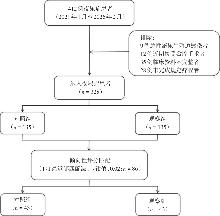
Fig.1
Flowchart of the study"
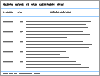
Tab.1
Comparison of baseline characteristics between the two groups before propensity score matching (PSM)"
| 项目 | 对照组(n = 135) | 观察组(n = 193) | t/Z/ | P |
|---|---|---|---|---|
| 年龄/岁 | 68.85 ± 5.56 | 70.07 ± 5.36 | 1.991 | 0.047 |
| BMI/(kg/m2) | 24.96 ± 3.15 | 25.53 ± 2.68 | 1.744 | 0.082 |
| 绝经年限/年 | 18.10 ± 5.15 | 19.66 ± 5.07 | 2.715 | 0.007 |
| 病程/个月 | 24.08 ± 10.04 | 27.64 ± 10.22 | 3.125 | 0.002 |
| 糖尿病/[例(%)] | 18(13.33) | 22(11.39) | 0.278 | 0.611 |
| 高血压/[例(%)] | 31(22.96) | 38(19.69) | 0.513 | 0.494 |
| 安眠药使用/[例(%)] | 20(14.81) | 32(16.58) | 0.186 | 0.759 |
| POP-Q分期[M(P 25, P 75)] | 3(2,3) | 3(2,3) | 0.239 | 0.811 |
| 夜尿次数[M(P 25, P 75)] | 4(3,4) | 4(3,4) | 0.860 | 0.390 |
| 夜间尿量/mL | 639.48 ± 139.86 | 601.99 ± 128.63 | 2.506 | 0.013 |
| 夜间觉醒次数[M(P 25, P 75)] | 4(4,5) | 4(3,4) | 1.634 | 0.102 |
| PSQI评分/分 | 14.01 ±1.96 | 14.77 ± 2.13 | 3.299 | 0.001 |
| OABSS评分/分 | 7.71 ± 1.93 | 8.23 ± 2.08 | 2.336 | 0.020 |
| Oxford盆底肌力[M(P 25, P 75)] | 2 (2,2) | 2 (2,2) | 0.396 | 0.692 |
| 盆底肌电平均值/μV | ||||
| 前静息肌电 | 7.74 ± 1.65 | 7.51 ± 1.39 | 1.370 | 0.172 |
| 快速收缩最大肌电 | 21.17 ± 4.04 | 20.98 ± 4.27 | 0.404 | 0.689 |
| 持续收缩肌电 | 15.71 ± 3.87 | 15.90 ± 3.38 | 0.470 | 0.639 |
| 耐力收缩肌电 | 8.56 ± 1.33 | 8.41 ± 1.36 | 0.972 | 0.332 |
| 后静息肌电 | 8.10 ± 1.39 | 8.31 ± 1.35 | 1.350 | 0.178 |
Tab.2
Comparison of baseline characteristics between the two groups after propensity score matching (PSM)"
| 项目 | 对照组(n = 43) | 观察组(n = 43) | t/Z/ | P |
|---|---|---|---|---|
| 年龄/岁 | 67.84 ± 4.63 | 68.65 ± 5.16 | 0.770 | 0.443 |
| BMI /(kg/m2) | 25.32 ± 2.31 | 25.17 ± 3.47 | 0.206 | 0.838 |
| 绝经年限/年 | 19.56 ± 5.56 | 20.21 ± 5.08 | 0.567 | 0.572 |
| 病程/个月 | 24.98 ± 11.01 | 27.88 ± 10.00 | 1.282 | 0.204 |
| 糖尿病/[例(%)] | 5(11.63) | 4(9.30) | 0.124 | 0.725 |
| 高血压/[例(%)] | 11(25.58) | 10(23.26) | 0.063 | 0.802 |
| 安眠药使用/[例(%)] | 5(11.63) | 3(6.98) | 0.551 | 0.458 |
| POP-Q分期[M(P 25, P 75)] | 2(2,3) | 2(2,3) | 1.026 | 0.305 |
| 夜尿次数[M(P 25, P 75)] | 4(3,4) | 4(3,5) | 0.988 | 0.323 |
| 夜间尿量/mL | 626.28 ± 133.92 | 650.72 ± 115.09 | 0.908 | 0.367 |
| 夜间觉醒次数[M(P 25, P 75)] | 4(4,5) | 4(4,5) | 0.482 | 0.630 |
| PSQI评分 | 14.56 ± 2.12 | 15.19 ± 2.09 | 1.381 | 0.171 |
| OABSS评分 | 7.88 ± 1.87 | 8.44 ± 1.96 | 1.349 | 0.181 |
| Oxford盆底肌力[M(P 25, P 75)] | 2(2,2) | 2(2,2) | 0.179 | 0.858 |
| 盆底肌电平均值/μV | ||||
| 前静息肌电 | 7.59 ± 1.70 | 7.24 ± 1.29 | 1.110 | 0.270 |
| 快速收缩最大肌电 | 20.16 ± 3.92 | 20.58 ± 4.42 | 0.470 | 0.640 |
| 持续收缩肌电 | 15.22 ± 3.36 | 16.07 ± 2.66 | 1.305 | 0.195 |
| 耐力收缩肌电 | 8.87 ± 1.25 | 8.44 ± 1.40 | 1.518 | 0.133 |
| 后静息肌电 | 7.78 ± 1.31 | 7.99 ± 1.47 | 0.720 | 0.474 |
Tab.3
Comparison of treatment outcomes between the two groups after propensity score matching (PSM)"
| 项目 | 对照组(n = 43) | 观察组(n = 43) | t/Z值 | P值 |
|---|---|---|---|---|
| 夜尿次数[ | 3(2,3) | 2(1,3) | 4.092 | < 0.001 |
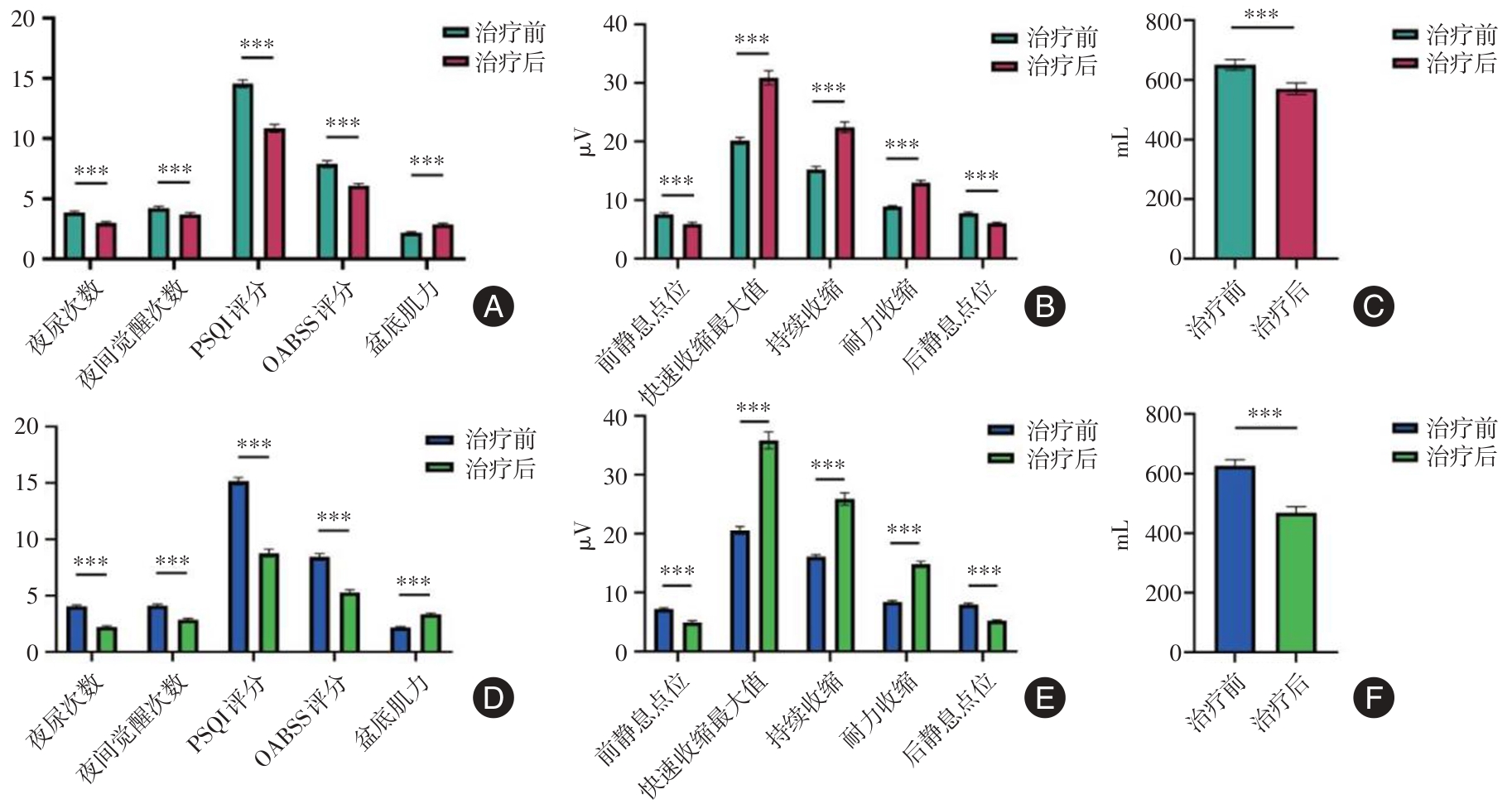
| 夜间尿量/mL | 570.35 ± 129.04 | 468.56 ± 140.52 | 3.449 | 0.001 |
| 夜间觉醒次数[ | 4(3,4) | 3(2,4) | 3.424 | 0.001 |
| PSQI评分/分 | 10.84 ± 2.18 | 8.79 ± 2.33 | 4.209 | < 0.001 |
| OABSS评分/分 | 6.07 ± 1.20 | 5.28 ± 1.58 | 2.612 | 0.011 |
| Oxford盆底肌力[M(P 25, P 75)] | 3(2,3) | 3(3,4) | 3.451 | 0.001 |
| 盆底肌电平均值/μV | ||||
| 前静息肌电 | 4.98 ± 1.72 | 5.91 ± 1.96 | 2.339 | 0.022 |
| 快速收缩最大肌电 | 30.92 ± 7.84 | 35.86 ± 9.27 | 2.668 | 0.009 |
| 持续收缩肌电 | 22.46 ± 5.96 | 25.91 ± 6.77 | 2.506 | 0.014 |
| 耐力收缩肌电 | 12.94 ± 3.13 | 14.83 ± 3.41 | 2.673 | 0.009 |
| 后静息肌电 | 6.05 ± 1.12 | 5.24 ± 1.07 | 3.470 | 0.001 |
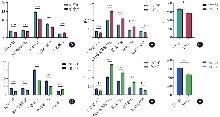
Fig.2
Comparison of changes in nocturia-related parameters before and sfter treatment between the two groups after PSM"
Tab.4
Multivariable logistic regression analysis of factors associated with treatment efficacy in patients with nocturia"
| 项目 | B | SE | Wald χ 2 | P值 | OR | 95%CI |
|---|---|---|---|---|---|---|
| 年龄 | 0.033 | 0.025 | 1.750 | 0.186 | 1.034 | 0.984 ~ 1.085 |
| 夜尿病程 | -0.034 | 0.026 | 1.742 | 0.187 | 0.967 | 0.920 ~ 1.016 |
| PSQI评分 | 0.244 | 0.144 | 2.874 | 0.090 | 1.276 | 0.963 ~ 1.691 |
| 夜尿次数 | 0.558 | 0.635 | 0.773 | 0.379 | 1.748 | 0.503 ~ 6.068 |
| 治疗方式 | 2.403 | 0.321 | 7.475 | 0.005 | 2.403 | 1.275 ~ 4.513 |
| [1] |
夜尿症临床诊疗中国专家共识编写组. 夜尿症临床诊疗中国专家共识[J]. 中华泌尿外科杂志, 2018, 39(8): 561-4. doi:10.3760/cma.j.issn.1000-6702.2018.08.001 .
|
| [2] |
|
| [3] |
中华医学会老年医学分会,北京医院国家老年医学中心,中国医学科学院老年医学研究院,等. 老年夜尿症患者生活方式及行为管理中国专家共识[J]. 现代泌尿外科杂志, 2025, 30(3): 193-195,206. doi:10.3969/j.issn.1009-8291.2025.03.003 .
|
| [4] |
|
| [5] |
|
| [6] |
|
| [7] |
|
| [8] |
|
| [9] |
李琼, 朱虹, 张丽丽. 电刺激联合生物反馈治疗产后盆底功能障碍效果的影响因素分析 [J]. 检验医学与临床, 2023, 20(3): 386-388.doi: 10.3969/j.issn.1672-9455.2023.03.023 .
|
| [10] |
刘曜安, 舒磊, 蔡志阳, 等. 磁刺激技术治疗盆底功能障碍性疾病的临床研究进展 [J]. 中国医刊, 2024, 59(12): 1304-1307.doi: 10.3969/j.issn.1008-1070.2024.12.008 .
|
| [11] |
夏艳梅, 杨霄, 程薇, 等. 电刺激联合生物反馈治疗对女性盆底功能障碍性疾病的预防效果 [J]. 川北医学院学报, 2019, 34(2): 284-287.doi: 10.3969/j.issn.1005-3697.2019.02.34 .
|
| [12] |
|
| [13] |
王永通, 金黑鹰, 张春霞, 等. 磁刺激联合生物反馈治疗盆底功能障碍性疾病的前瞻性非随机对照研究 [J]. 中华临床医师杂志(电子版), 2022, 16(7): 621-625. doi:10.3877/cma.j.issn.1674-0785.2022.07.004 .
|
| [14] |
何雨欣, 杨闪闪, 江美,等. 磁刺激联合生物反馈技术在压力性尿失禁中的临床应用价值 [J]. 实用妇产科杂志, 2024, 40(9): 762-765. doi:10.3969/j.issn.1003-6946.2024.9 .
|
| [15] |
王阳贇, 焦伟, 史朝亮, 等. 盆底磁刺激联合生物反馈治疗女性膀胱过度活动症的疗效观察 [J]. 现代泌尿外科杂志, 2019, 24(2): 98-101.doi: 10.3969/j.issn.1009-8291.2019. 02.004 .
|
| [16] |
|
| [17] |
|
| [18] |
|
| [19] |
|
| [20] |
|
| [21] |
|
| [22] |
|
| [23] |
刘雪梅, 邓凯贤, 梁建好, 等. 磁电刺激、智慧化运动处方联合新型矩阵射频治疗盆腔器官脱垂的疗效 [J]. 实用医学杂志, 2025, 41(20):3198-3205. doi:10.3969/j.issn.1006-5725. 2025.20.008 .
|
| [24] |
|
| [25] |
|
| [26] |
|
| [27] |
|
| [28] |
杨尚琪, 来永庆, 陈月英, 等. 膀胱过度活动症症状评分表评估膀胱过度活动症的临床研究[J]. 中华临床医师杂志(电子版), 2012, 6(16): 4675-4678.doi:10.3877/cma.j.issn.1674-0785.2012.16.033 .
|
| [29] |
|
| [30] |
朱开欣, 王江华, 朱丽娟, 等. 盆底表面肌电筛查对盆底功能障碍性疾病的预测作用[J]. 实用医学杂志, 2020, 36(16): 2255-2260. doi:10.3969/j.issn.1006-5725.2020.16.017 .
|
| [31] |
赵春梅, 魏秀然, 尹慧聪, 等. 盆底磁刺激联合生物反馈盆底肌肉训练治疗产后压力性尿失禁的疗效及对膀胱功能、盆底肌表面电信号的影响[J]. 临床和实验医学杂志, 2025, 24(7): 719-722. doi: 10.3969/j.issn.1671-4695.2025.07.012 .
|
| Viewed | ||||||
|
Full text |
|
|||||
|
Abstract |
|
|||||
