

实用医学杂志 ›› 2026, Vol. 42 ›› Issue (15): 2722-2729.doi: 10.3969/j.issn.1006-5725.2026.15.007
• 肿瘤诊治与预后专栏 • 上一篇
姜佳宬1,2,马洁3,朱伟1( )
)
收稿日期:2026-05-28
修回日期:2026-06-24
接受日期:2026-06-26
出版日期:2026-08-10
发布日期:2026-08-13
通讯作者:
朱伟
E-mail:zhuwei@ujs.edu.cn
基金资助:
Jiacheng JIANG1,2,Jie MA3,Wei ZHU1()
Received:2026-05-28
Revised:2026-06-24
Accepted:2026-06-26
Online:2026-08-10
Published:2026-08-13
Contact:
Wei ZHU
E-mail:zhuwei@ujs.edu.cn
摘要:
血小板是血液中仅次于红细胞的细胞成分,传统上被认为主要是参与止血与血栓形成。血小板表面表达的程序性死亡配体1(PD-L1),可直接抑制T细胞功能;此外,血小板还能通过包裹循环肿瘤细胞(CTCs)形成物理屏障,协同放大免疫抑制信号,构成肿瘤血行转移中的移动免疫屏障。本综述系统总结了血小板PD-L1(pPD-L1)的来源与调控机制,提出pPD-L1介导免疫逃逸的三重抑制模型;继而揭示了pPD-L1作为液体活检标志物,在逆转免疫检查点抑制剂(ICIs)耐药、抑制肿瘤血行转移方面的重要地位,为靶向pPD-L1的精准治疗提供理论依据。
中图分类号:
姜佳宬,马洁,朱伟. 血小板来源PD-L1在肿瘤血行转移中的免疫抑制效应及其靶向治疗策略[J]. 实用医学杂志, 2026, 42(15): 2722-2729.
Jiacheng JIANG,Jie MA,Wei ZHU. Immunosuppressive effects and targeted therapeutic strategies of platelet-derived PD-L1 in hematogenous tumor metastasis[J]. The Journal of Practical Medicine, 2026, 42(15): 2722-2729.
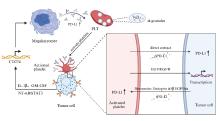
图1
血小板与肿瘤细胞之间的PD-L1双向调控与转移机制注:Megakaryocyte,巨核细胞;α-granules,α-颗粒;Activated platelet,活化的血小板;activate platelets,激活血小板;Tumor cell,肿瘤细胞;direct contact,直接接触;EGF,表皮生长因子;EGFR,表皮生长因子受体;Transcription,转录;fibronectin-1,纤维连接蛋白-1;integrin α5β1,整合素α5β1;GPIbα,血小板膜糖蛋白Ibα;tPD-L1,肿瘤细胞来源的PD-L1;IL-1β,白细胞介素-β1;GM-CSF,粒-巨噬细胞集落刺激因子;NF-κB,核转录因子-κB;STAT3,信号转导及转录激活因子3"
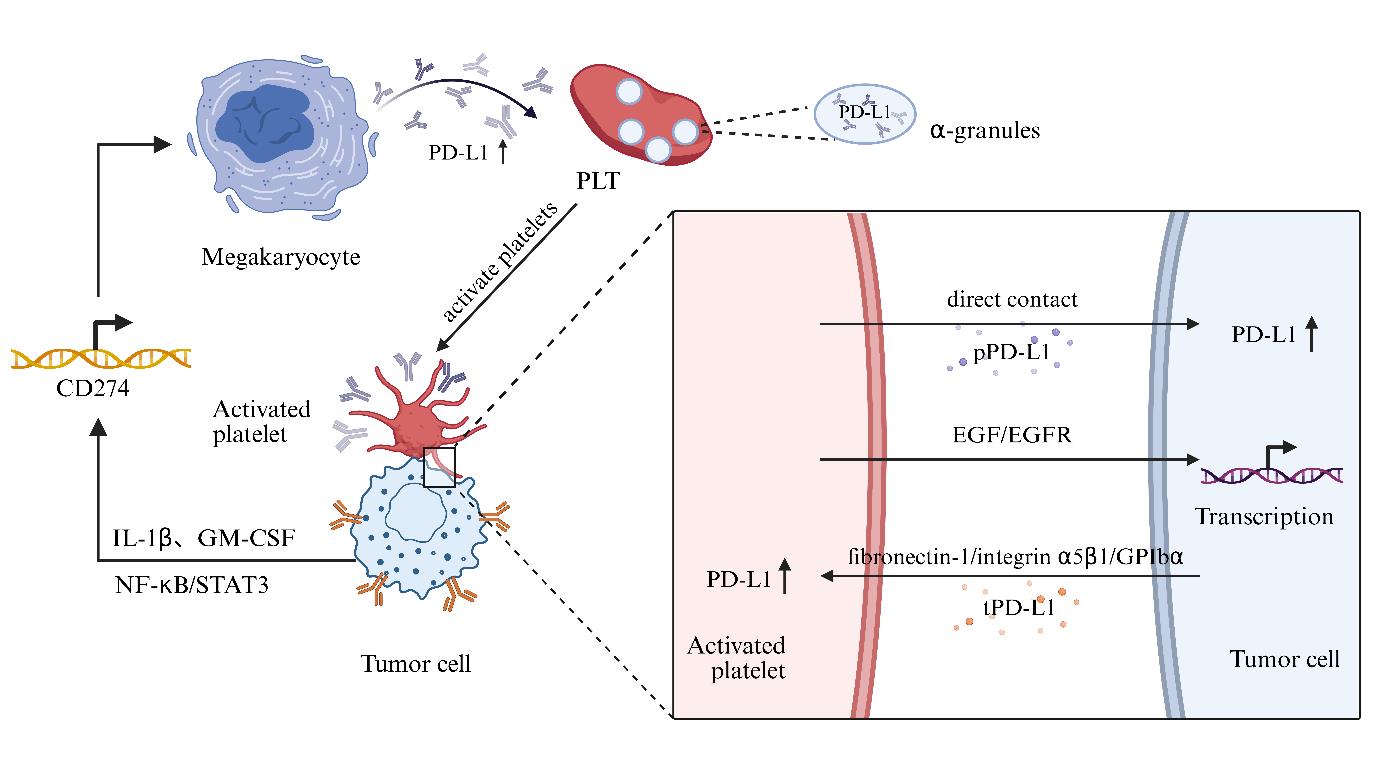

表1
小鼠与人PD-1/PD-L1通路的物种差异及对临床前研究的启示"
| 特征 | 小鼠 | 人 | 对临床前研究的启示 | 参考文献 |
|---|---|---|---|---|
| PD-1氨基酸同源性 | 与人类PD-1的氨基酸序列一致性为59.6% | - | 抗体交叉反应性有限 | [ |
| 对治疗性抗体的反应 | 部分抗体(如atezolizumab)可结合;其他(如durvalumab)不结合 | 全部可结合 | 需验证抗体在鼠源的交叉反应性 | [ |
| 小分子/肽类抑制剂 | 多数不结合mPD-L1 | 可结合 | 避免在小鼠模型中筛出假阴性 | [ |
| PD-1与PD-L1亲和力 | 较低(相对亲和力设为1) | 高(约为小鼠的3.2倍) | 人源化小鼠模型更准确评估药物 | [ |
| PD-1对Shp2招募效率 | 较低 | 更高(通过PEQ基序) | 小鼠模型可能低估PD-1通路抑制强度 | [ |
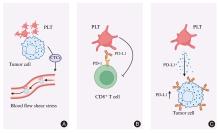
图2
三重抑制模型注:PLT,血小板;Tumor cell,肿瘤细胞;CTCs,循环肿瘤细胞;Blood flow shear stress,血管剪切力;CD8+ T cell,CD8+ T细胞。A,物理屏障;B,分子抑制;C,信号放大"
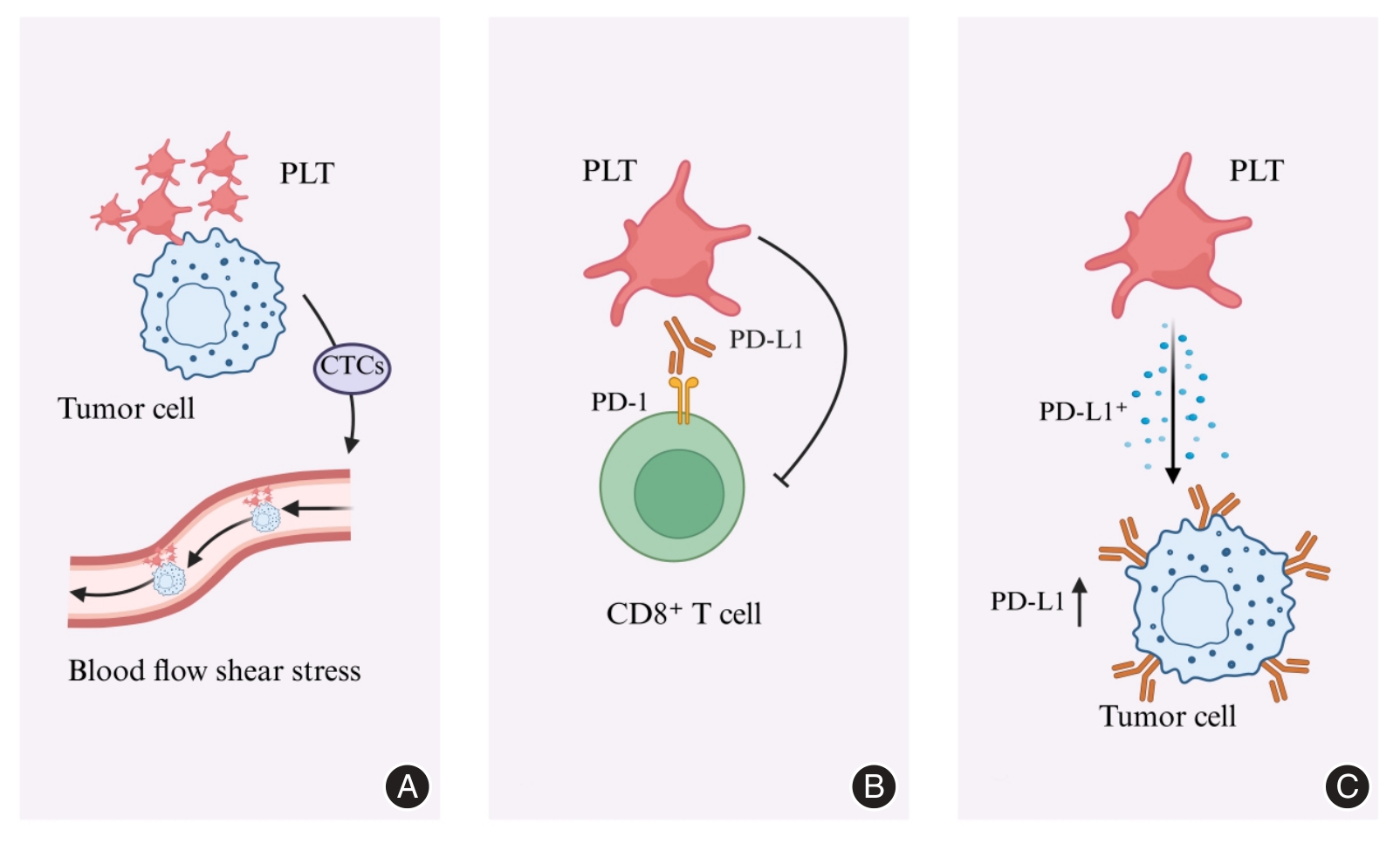
表2
靶向血小板PD-L1轴的主要治疗策略比较"
| 治疗策略 | 核心机制 | 优势 | 局限性/挑战 | 参考文献 |
|---|---|---|---|---|
| 减少pPD-L1的生成与膜转位 | 抑制血小板活化/聚集,减少pPD-L1上调及tPD-L1诱导 | 老药新用,安全性相对明确;临床转化快 | 出血风险;最佳联合方案未定;需前瞻性临床试验验证 | [12-13,33] |
| 直接削弱pPD-L1的免疫抑制功能 | 化学偶联anti-PD-L1并吸附光热剂;术后局部释放 | 肿瘤归巢;可联合光热治疗 | 制备复杂;储存期短;个体差异 | [ |
| 清除pPD-L1的细胞载体 | cRGD纳米颗粒靶向肿瘤相关血小板,诱导凋亡 | 精准干预,避免全身血小板耗竭 | 需验证TAPs特异性标志物;长期安全性 | [ |
| 仿生替代pPD-L1介导的靶向功能 | 血小板膜包裹纳米内核,继承靶向和免疫逃逸功能 | 无活细胞储存问题;易于规模化 | 膜提取及涂层工艺需标准化;体内稳定性待优化 | [ |
| [1] |
LI S, LU Z, WU S, et al. The dynamic role of platelets in cancer progression and their therapeutic implications[J]. Nat Rev Cancer, 2024, 24(1):72-87. doi: 10.1038/s41568-023-00639-6 .
doi: 10.1038/s41568-023-00639-6 |
| [2] |
何嘉豪, 江倩, 刘春丽.血栓弹力图与传统凝血功能检测的相关性与一致性分析[J]. 实用医学杂志, 2022, 38(5): 606-610. doi: 10.3969/j.issn.1006-5725.2022.05.016 .
doi: 10.3969/j.issn.1006-5725.2022.05.016 |
| [3] |
张旺发,李明欣,陈荣鹏,等. Ⅳ期结直肠癌化疗前血小板参数与化疗敏感性及预后的关系[J].实用医学杂志,2021,37(20):2608-2613. doi: 10.3969/j.issn.1006-5725.2021.20.008 .
doi: 10.3969/j.issn.1006-5725.2021.20.008 |
| [4] |
CHAMBERS A F, NAUMOV G N, VARGHESE H J, et al. Critical steps in hematogenous metastasis: an overview[J]. Surg Oncol Clin N Am, 2001,10(2):243-255. doi: 10.1016/s1055-3207(18)30063-2 .
doi: 10.1016/s1055-3207(18)30063-2 |
| [5] |
LEE D Y, IM E, YOON D, LEE Y S, et al. Pivotal role of PD-1/PD-L1 immune checkpoints in immune escape and cancer progression: Their interplay with platelets and FOXP3+Tregs related molecules, clinical implications and combinational potential with phytochemicals[J]. Semin Cancer Biol, 2022, 86(3):1033-1057. doi: 10.1016/j.semcancer.2020.12.001 .
doi: 10.1016/j.semcancer.2020.12.001 |
| [6] |
XIAO J, WANG H, LIU X, et al. From escort to target, the multidimensional roles and prospects of platelets in tumor immune checkpoint inhibitor therapy[J]. Front Immunol, 2026,17(3):1764513. doi: 10.3389/fimmu.2026.1764513 .
doi: 10.3389/fimmu.2026.1764513 |
| [7] |
ROLFES V, IDEL C, PRIES R, et al. PD-L1 is expressed on human platelets and is affected by immune checkpoint therapy[J]. Oncotarget, 2018, 9(44):27460-27470. doi: 10.18632/oncotarget.25446 .
doi: 10.18632/oncotarget.25446 |
| [8] |
GAN J, ZHANG X, GUO J. The role of platelets in tumor immune evasion and metastasis: mechanisms and therapeutic implications[J]. Cancer Cell Int, 2025,25(1):258. doi: 10.1186/s12935-025-03877-w .
doi: 10.1186/s12935-025-03877-w |
| [9] |
TRIVANOVIĆ D, MOJSILOVIĆ S, BOGOSAVLJEVIĆ N, et al. Revealing profile of cancer-educated platelets and their factors to foster immunotherapy development[J]. Transl Oncol, 2024, 40(2):101871. doi: 10.1016/j.tranon.2023.101871 .
doi: 10.1016/j.tranon.2023.101871 |
| [10] |
LU Q, YE H, ZHAO J, et al. Surface-Anchored Ticagrelor Gelatin Nanoparticles-Platelets System for Enhanced Anti-PD-L1 Therapy Response and Boosted Chemotherapeutic Efficacy of Nanomedicines[J]. Exploration (Beijing), 2025,5(3):20240084. doi: 10.1002/EXP.20240084 .
doi: 10.1002/EXP.20240084 |
| [11] |
ZASLAVSKY A B, ADAMS M P, CAO X, et al. Platelet PD-L1 suppresses anti-cancer immune cell activity in PD-L1 negative tumors[J]. Sci Rep, 2020, 10(1):19296. doi: 10.1038/s41598-020-76351-4 .
doi: 10.1038/s41598-020-76351-4 |
| [12] |
GUO Q, MALLOY M W, ROWETH H G, et al. Platelets upregulate tumor cell programmed death ligand 1 in an epidermal growth factor receptor-dependent manner in vitro[J]. Blood Adv, 2022, 6(20):5668-5675. doi: 10.1182/bloodadvances .
doi: 10.1182/bloodadvances |
| [13] |
LI J, LIU J, YANG S, et al. PD-L1 positive platelets mediate resistance to immune checkpoint inhibitors in patients with colorectal cancer[J]. Cell Commun Signal, 2025, 23(1):29. doi: 10.1186/s12964-025-02034-0 .
doi: 10.1186/s12964-025-02034-0 |
| [14] |
XU C, XIA Y, ZHANG B W, et al. Macrophages facilitate tumor cell PD-L1 expression via an IL-1β-centered loop to attenuate immune checkpoint blockade[J]. Med Comm, 2023, 4(2):e242. doi: 10.1002/mco2.242 .
doi: 10.1002/mco2.242 |
| [15] |
YI M, NIU M, XU L, et al. Regulation of PD-L1 expression in the tumor microenvironment[J]. Hematol Oncol, 2021, 14(1):10. doi: 10.1186/s13045-020-01027-5 .
doi: 10.1186/s13045-020-01027-5 |
| [16] |
RONG Q X, WANG F, GUO Z X, et al. GM-CSF mediates immune evasion via upregulation of PD-L1 expression in extranodal natural killer/T cell lymphoma[J]. Mol Cancer, 2021, 20(1):80. doi: 10.1186/s12943-021-01374-y .
doi: 10.1186/s12943-021-01374-y |
| [17] |
LI Z, LIU J, YAN M, et al. Tumor-educated platelets: from molecular mechanisms to liquid biopsy and therapeutic applications[J]. Int J Pharm, 2026, 694:126708. doi: 10.1016/j.ijpharm. 2026.126708 .
doi: 10.1016/j.ijpharm. 2026.126708 |
| [18] |
MASUBUCHI T, CHEN L, MARCEL N, et al. Functional differences between rodent and human PD-1 linked to evolutionary divergence[J]. Sci Immunol, 2025, 10(103):6295. doi: 10.1126/sciimmunol.ads6295 .
doi: 10.1126/sciimmunol.ads6295 |
| [19] |
MAGIERA-MULARZ K, KOCIK J, MUSIELAK B, et al. Human and mouse PD-L1: similar molecular structure, but different druggability profiles[J]. iScience, 2020, 24(1):101960. doi: 10.1016/j.isci.2020.101960 .
doi: 10.1016/j.isci.2020.101960 |
| [20] |
STAICU I. Human versus mouse PD-1[J]. Nat Immunol, 2025, 26(2):149. doi: 10.1038/s41590-025-02086-x .
doi: 10.1038/s41590-025-02086-x |
| [21] |
TANG M, ZHANG Z, WANG P, et al. Advancements in precision nanomedicine design targeting the anoikis-platelet interface of circulating tumor cells[J]. Acta Pharm Sin B, 2024, 14(8):3457-3475. doi: 10.1016/j.apsb.2024.04.034 .
doi: 10.1016/j.apsb.2024.04.034 |
| [22] |
SUN Y, LI T, DING L, et al. Platelet-mediated circulating tumor cell evasion from natural killer cell killing through immune checkpoint CD155-TIGIT[J]. Hepatology, 2025, 81(3):791-807. doi: 10.1097/HEP.0000000000000934 .
doi: 10.1097/HEP.0000000000000934 |
| [23] |
MAURER S, KROPP KN, KLEIN G, et al. Platelet-mediated shedding of NKG2D ligands impairs NK cell immune-surveillance of tumor cells[J]. Oncoimmunology, 2017, 7(2):e1364827. doi: 10.1080/2162402X.2017.1364827 .
doi: 10.1080/2162402X.2017.1364827 |
| [24] |
CHO M S, LEE H, GONZALEZ-DELGADO R, et al. Platelets Increase the Expression of PD-L1 in Ovarian Cancer[J]. Cancers (Basel), 2022, 14(10):2498. doi: 10.3390/cancers14102498 .
doi: 10.3390/cancers14102498 |
| [25] |
SMITH-OLIVER M R, GAUTAM D, PETRARCA G C, et al. Tumor-Associated Platelets Suppress T-Cell Function and Promote Immune Evasion in TNBC via the P-selectin/ P-selectin glycoprotein ligand-1 Pathway[J]. Cancer Res Commun, 2026,6(7):1640-1655. doi: 10.1158/2767-9764.CRC-26-0187 .
doi: 10.1158/2767-9764.CRC-26-0187 |
| [26] |
LIU Y, ZHANG Y, DING Y, et al. Platelet-mediated tumor metastasis mechanism and the role of cell adhesion molecules[J]. Crit Rev Oncol Hematol, 2021, 167:103502. doi: 10.1016/j.critrevonc.2021.103502 .
doi: 10.1016/j.critrevonc.2021.103502 |
| [27] |
VASILAKI D, BAKOPOULOU A, TSOUKNIDAS A, et al. Biophysical interactions between components of the tumor microenvironment promote metastasis[J]. Biophys Rev, 2021, 13(3):339-357. doi: 10.1007/s12551-021-00811-y .
doi: 10.1007/s12551-021-00811-y |
| [28] |
RASKOV H, ORHAN A, AGERBÆK M Ø, et al. The impact of platelets on the metastatic potential of tumour cells[J]. Heliyon, 2024, 10(14):e34361. doi: 10.1016/j.heliyon.2024.e34361 .
doi: 10.1016/j.heliyon.2024.e34361 |
| [29] |
HINTERLEITNER C, STRÄHLE J, MALENKE E, et al. Platelet PD-L1 reflects collective intratumoral PD-L1 expression and predicts immunotherapy response in non-small cell lung cancer[J]. Nat Commun, 2021, 12(1):7005. doi: 10.1038/s41467-021-27303-7 .
doi: 10.1038/s41467-021-27303-7 |
| [30] |
COLARUSSO C, FALANGA A, TERLIZZI M, et al. High levels of PD-L1 on platelets of NSCLC patients contributes to the pharmacological activity of Atezolizumab[J]. Biomed Pharmacother, 2023, 168:115709. doi: 10.1016/j.biopha.2023.115709 .
doi: 10.1016/j.biopha.2023.115709 |
| [31] |
LEE S W, JEONG S, KIM Y J, et al. Enhanced thrombopoiesis supplies PD-L1 to circulating immune cells via the generation of PD-L1-expressing platelets in patients with lung cancer[J]. Immunother Cancer, 2025, 13(2):e010193. doi: 10.1136/jitc-2024-010193 .
doi: 10.1136/jitc-2024-010193 |
| [32] |
DARGA E P, DOLCE E M, FANG F, et al. PD-L1 expression on circulating tumor cells and platelets in patients with metastatic breast cancer[J]. PLoS One, 2021, 16(11):e0260124. doi: 10.1371/journal.pone.0260124 .
doi: 10.1371/journal.pone.0260124 |
| [33] |
KÖTT J, MATTHES N, BAUER A T, et al. Synergistic effects of anticoagulants and platelet aggregation inhibitors with immune checkpoint inhibitors in cancer therapy: a comprehensive review of preclinical and clinical evidence[J]. Immunother Cancer, 2026 Feb 4;14(2):e013879. doi: 10.1136/jitc-2025-013879 .
doi: 10.1136/jitc-2025-013879 |
| [34] |
GAO Y, CHEN X, WANG B, et al. Engineering Platelets with PDL1 Antibodies and Iron Oxide Nanoparticles for Postsurgical Cancer Immunotherapy[J]. ACS Appl Bio Mater, 2023, 6(1):257-266. doi: 10.1021/acsabm.2c00869 .
doi: 10.1021/acsabm.2c00869 |
| [35] |
DA X, MO J, LI Q, et al. Targeted co-delivery of PD-L1 monoclonal antibody and sorafenib to circulating tumor cells via platelet-functionalized nanocarriers[J]. Biochem Biophys Res Commun, 2023, 671:335-342. doi: 10.1016/j.bbrc.2023.05.124 .
doi: 10.1016/j.bbrc.2023.05.124 |
| [36] |
WU S, WU Z, LU Z, et al. Selective apoptosis of tumor-associated platelets boosts the anti-metastatic potency of PD-1 blockade therapy[J]. Cell Rep Med, 2025, 6(3):101984. doi: 10.1016/j.xcrm.2025.101984 .
doi: 10.1016/j.xcrm.2025.101984 |
| [37] |
ZHANG Y, WANG Z J, WANG J, et al. Immunomodulating platelet-mimicking nanoparticles for AIE-based enhanced photodynamic immunotherapy against lung cancer[J]. Materials Today Bio, 2025, 32:101683. doi: 10.1016/j.mtbio.2025.101683 .
doi: 10.1016/j.mtbio.2025.101683 |
| [38] |
LV Y, MA G. Platelet-Based Nanotechnology Improves Cancer Immunotherapy[J]. Eur J Immunol, 2025, 55(7):e70017. doi: 10.1002/eji.70017 .
doi: 10.1002/eji.70017 |
| [39] |
GRANICA M, LASKOWSKI G, LINK-LENCZOWSKI P, et al. Modulation of N-glycosylation in the PD-1: PD-L1 axis as a strategy to enhance cancer immunotherapies[J]. Biochim Biophys Acta Rev Cancer, 2025, 1880(2):189274. doi: 10.1016/j.bbcan.2025.189274 .
doi: 10.1016/j.bbcan.2025.189274 |
| [40] |
WANG X, HUANG Y, LUO T, et al. Rewiring immune evasion in liver metastases: WNT11 as a central node - a mini review[J]. Front Oncol, 2025, 15(3):1666889. doi: 10.3389/fonc.2025. 1666889 .
doi: 10.3389/fonc.2025. 1666889 |
| [41] |
NASSER N J, SINDHU K K, NASSER L, et al. Immune Checkpoint Inhibition in Patients with Brain Metastases from Non-Small-Cell Lung Cancer: Emerging Mechanisms and Personalized Clinical Strategies[J]. Int J Mol Sci, 2025, 26(17):8624. doi: 10.3390/ijms26178624 .
doi: 10.3390/ijms26178624 |
| [42] |
CHEN Y, WOLTER T, GU Z, et al. Engineering platelets as cancer therapeutics[J]. Nat Rev Clin Oncol, 2026, 23(5):323-340. doi: 10.1038/s41571-026-01122-5 .
doi: 10.1038/s41571-026-01122-5 |
| [43] |
WANG Y, OGUNNAIKE E, YANG H, et al. Platelet-engineered CAR-T cells as adjuvant therapy after cancer surgery[J]. Proc Natl Acad Sci U S A, 2025, 122(51):e2522020122. doi: 10.1073/pnas.2522020122 .
doi: 10.1073/pnas.2522020122 |
| [1] | 张文洁,孙硕,任志悦,宫雨萌,孙有智,赵益. 色氨酸代谢重编程驱动肿瘤免疫逃逸的机制及中药增敏免疫治疗的研究进展[J]. 实用医学杂志, 2026, 42(9): 1525-1535. |
| [2] | 唐倩云,陆欣怡,陈钰,许涵洁,陈道桢. 烟酰胺激活NAMPT/NAD+代谢轴调控程序性死亡配体1表达促进宫颈癌恶性进展的作用机制[J]. 实用医学杂志, 2026, 42(9): 1536-1544. |
| [3] | 李丽丽,潘娜娜,许婧. 基于生后早期凝血指标和血小板计数的小于32周早产儿颅内出血风险评估[J]. 实用医学杂志, 2026, 42(6): 1057-1062. |
| [4] | 张瓅方,张晖,李凯,卞华. 食管鳞癌免疫微环境异质性及免疫治疗联合策略[J]. 实用医学杂志, 2026, 42(6): 944-951. |
| [5] | 牛忠鹏,项云,胡国生,方瑞,许从峰,沈中原. 不同剂量IVIG与阿司匹林联合治疗对川崎病患儿脂代谢、DeRitis比值及血小板参数的影响[J]. 实用医学杂志, 2026, 42(3): 486-496. |
| [6] | 陈进,王铃,张李玉,马海佳. 血小板生成素受体激动剂与小剂量利妥昔单抗治疗激素治疗无效或复发免疫性血小板减少症患者疗效及对凝血功能、T淋巴细胞水平的影响[J]. 实用医学杂志, 2026, 42(11): 2013-2018. |
| [7] | 刘师,文斌,李伟,朱恩芳,徐雪飞,陈明胜,桂莉. 不同制备方法自体富血小板凝胶治疗糖尿病足溃疡的效果比较及体外抑菌的时效性[J]. 实用医学杂志, 2026, 42(10): 1692-1702. |
| [8] | 邓波,彭曹霞,熊启连,辇伟奇,刘影. Ⅲ—Ⅳ期肺癌免疫检查点抑制剂治疗30天内非计划再入院风险预测模型[J]. 实用医学杂志, 2026, 42(1): 1-11. |
| [9] | 魏丽,林子怡,陈珍,孙荷静,董敏. TyG-BMI对接受免疫检查点抑制剂治疗的肿瘤患者发生免疫相关不良反应的风险分层价值[J]. 实用医学杂志, 2026, 42(1): 12-20. |
| [10] | 胡锦秋,毕晓艳,马军羽,李梦瑶,李荣,牙甫礼,张春梅. 四氢姜黄素通过下调ROS/p53信号通路抑制高糖诱导的血小板聚集和活化[J]. 实用医学杂志, 2025, 41(3): 305-312. |
| [11] | 马从顺,崔媛媛,朱婉珊,詹雪君,谭颖. 3种治疗方案对薄型子宫内膜患者冻融胚胎移植临床结局的影响[J]. 实用医学杂志, 2025, 41(22): 3474-3479. |
| [12] | 肖慧玲,何伟春. 免疫检查点抑制剂相关肾损伤的临床病理类型与发病机制[J]. 实用医学杂志, 2025, 41(21): 3315-3321. |
| [13] | 林雪烽,黄挺. 中性粒细胞/血小板比值联合C反应蛋白对下肢动脉硬化闭塞症患者死亡风险的预测价值[J]. 实用医学杂志, 2025, 41(19): 3078-3082. |
| [14] | 周洋,谢旻. 凝血收敛模型下肝素和疫苗诱导血小板减少症的发病机制与临床特征[J]. 实用医学杂志, 2025, 41(18): 2828-2838. |
| [15] | 姜浩,程凯理,陈柳. 血清血小板反应蛋白-1联合阿尔伯塔中风项目早期CT评分对大动脉闭塞性急性脑梗死患者预后的评估价值[J]. 实用医学杂志, 2025, 41(16): 2561-2567. |
| 阅读次数 | ||||||
|
全文 |
|
|||||
|
摘要 |
|
|||||
