实用医学杂志 ›› 2026, Vol. 42 ›› Issue (6): 959-968.doi: 10.3969/j.issn.1006-5725.2026.06.008

• 肿瘤诊治与预后专栏 • 上一篇    下一篇

具有pH响应性载硼替佐米纳米粒靶向治疗多发性骨髓瘤

尹茉莉1,罗文彬1,罗思宇2,林夕塞1,陈三强1,孙美艳1()   

  1. 1.吉林医药学院检验学院 (吉林 吉林 132013 )
    2.西安交通大学第二附属医院 (陕西 西安 710000 )
  • 收稿日期:2025-10-21 修回日期:2025-12-26 接受日期:2025-12-30 出版日期:2026-03-25 发布日期:2026-03-26
  • 通讯作者: 孙美艳 E-mail:sunmy990@163.com
  • 基金资助:
    国家自然科学基金资助项目(32573352);吉林省科技厅项目(20230101263JC);吉林省大学生创新创业训练项目(S202413706028)

pH-responsive bortezomib-loaded nanoparticles for targeted therapy of multiple myeloma

Moli YIN1,Wenbin LUO1,Siyu LUO2,Xisai LIN1,Sanqiang CHEN1,Meiyan SUN1()   

  1. 1.College of Laboratory Medicine,Jilin Medical University,Jilin 132013,Jilin,China
    2.The Second Affiliated Hospital of Xi'an Jiaotong University,Xi'an Jiaotong University,Xi'an 710000,Shaanxi,China
  • Received:2025-10-21 Revised:2025-12-26 Accepted:2025-12-30 Online:2026-03-25 Published:2026-03-26
  • Contact: Meiyan SUN E-mail:sunmy990@163.com

摘要:

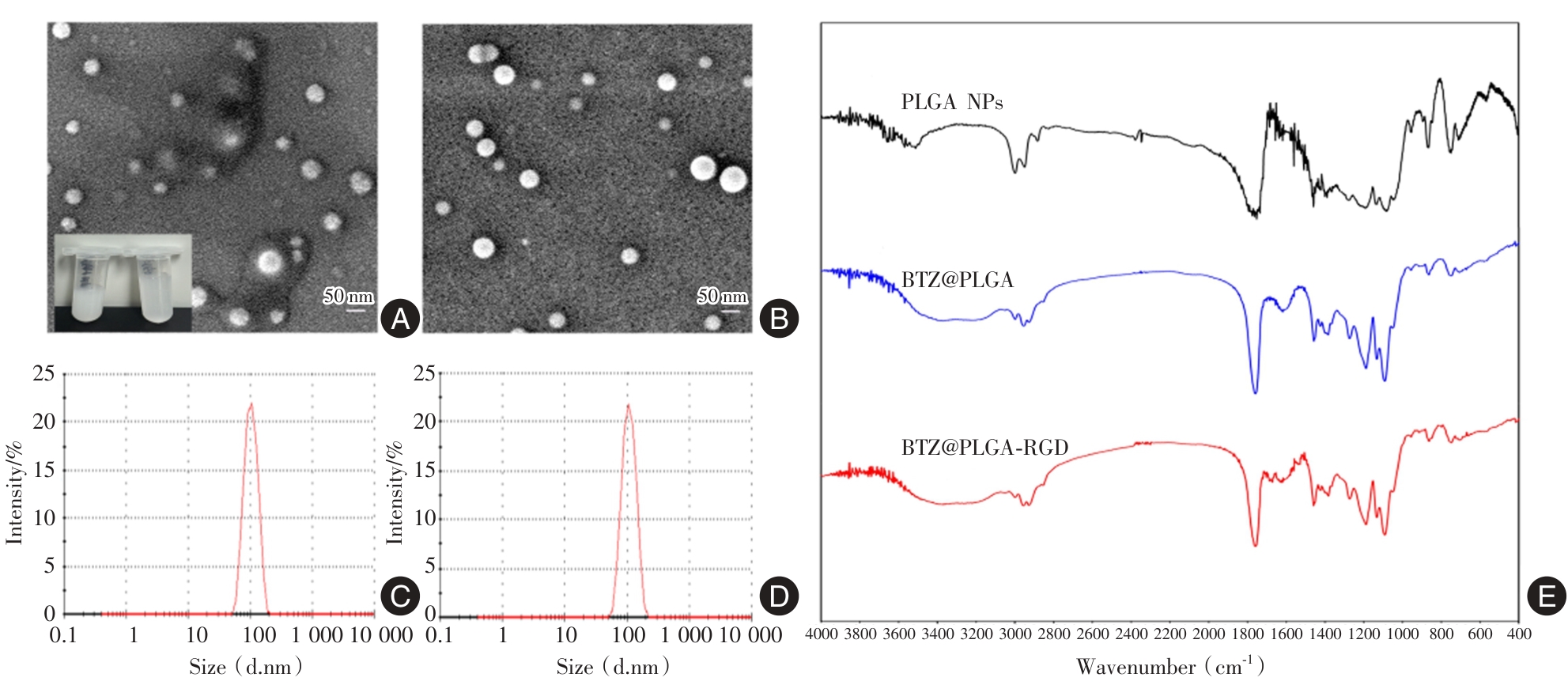
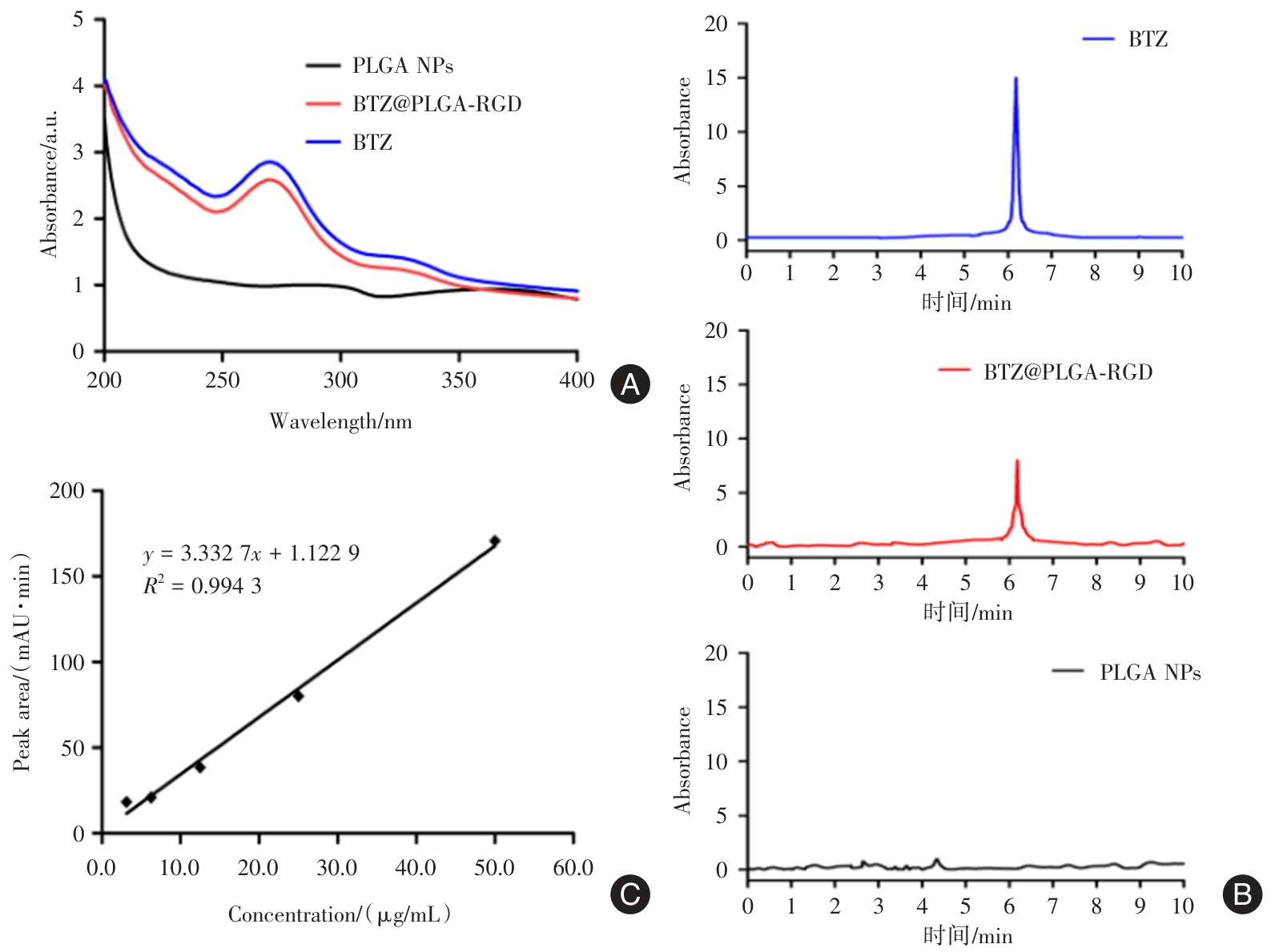
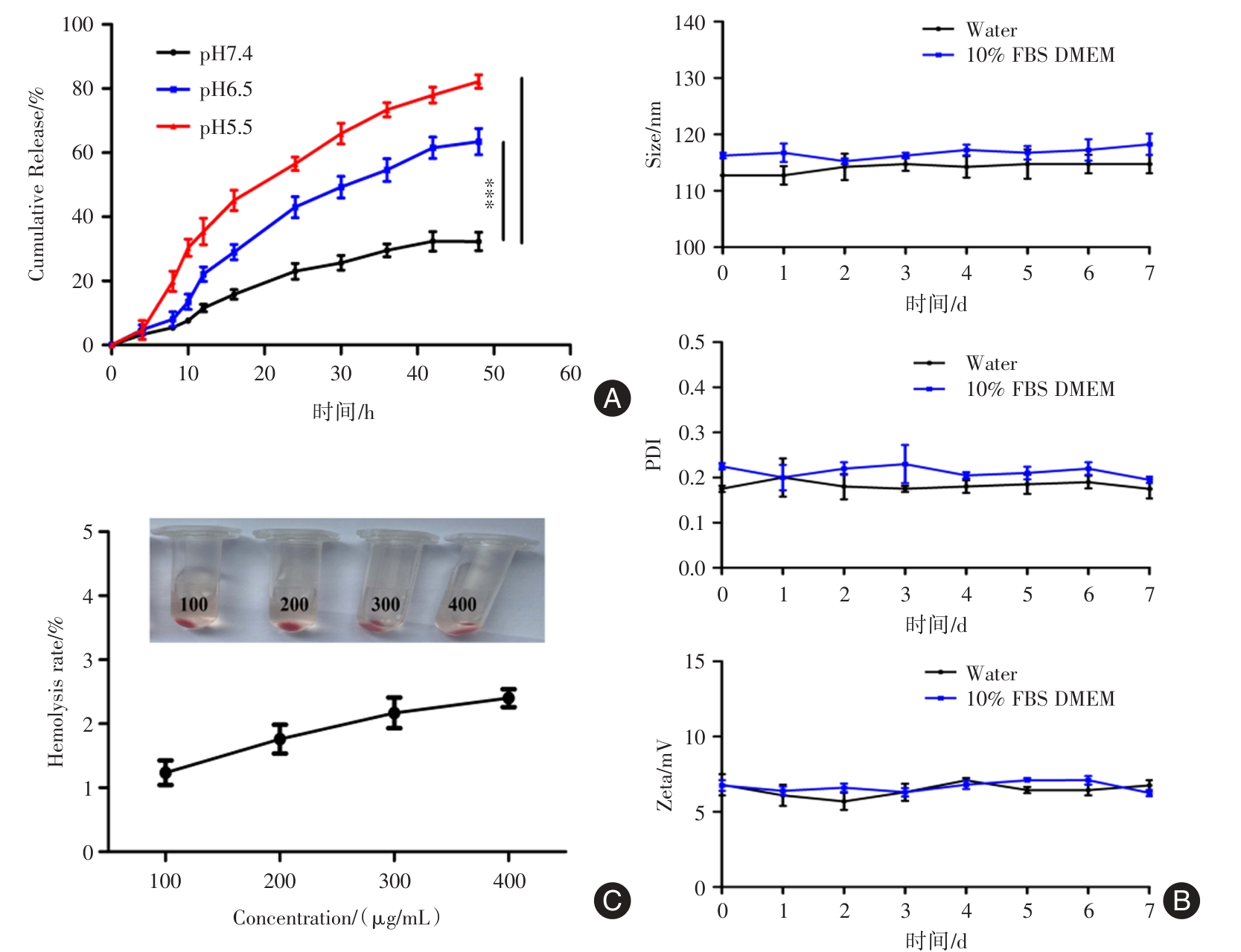
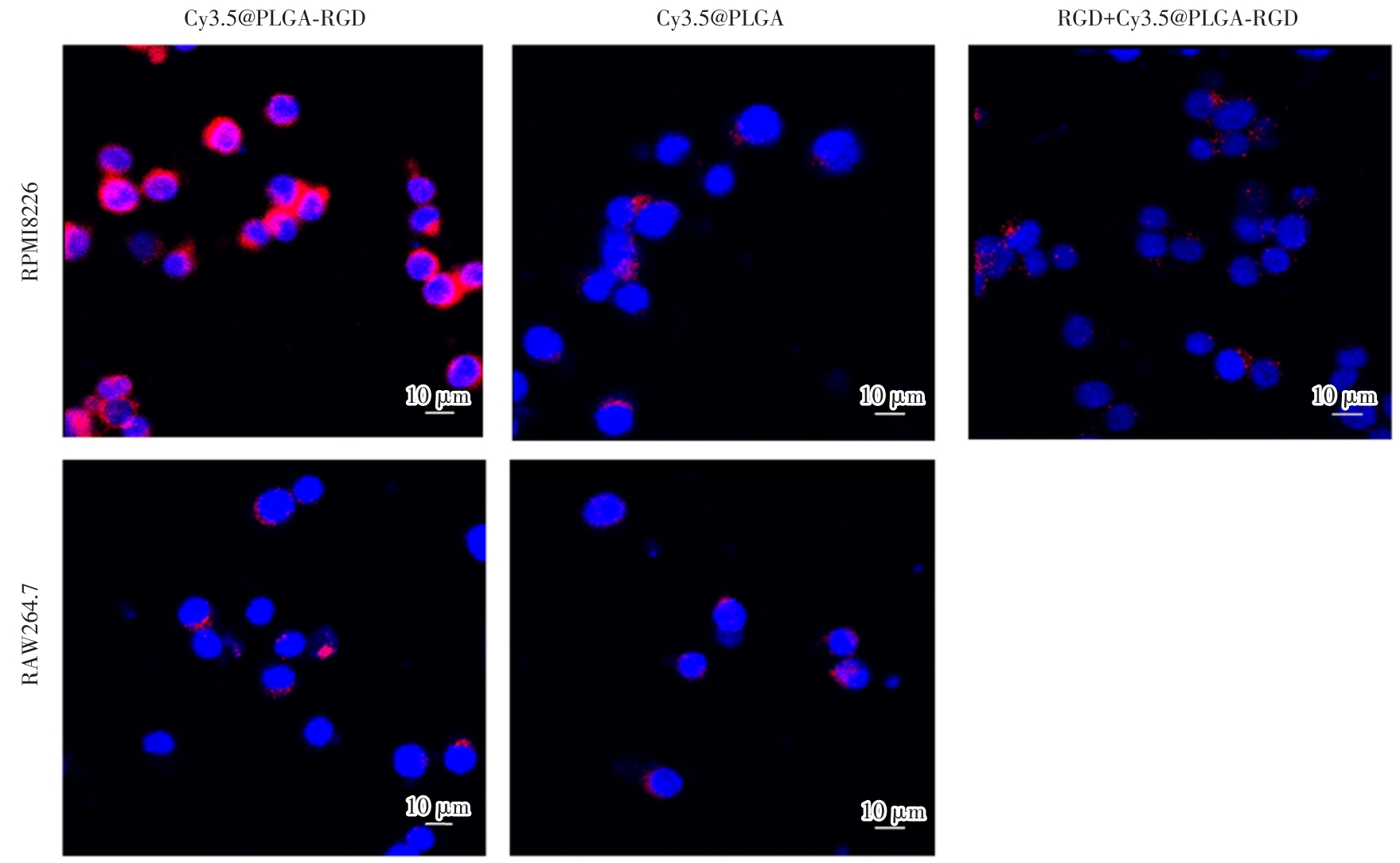
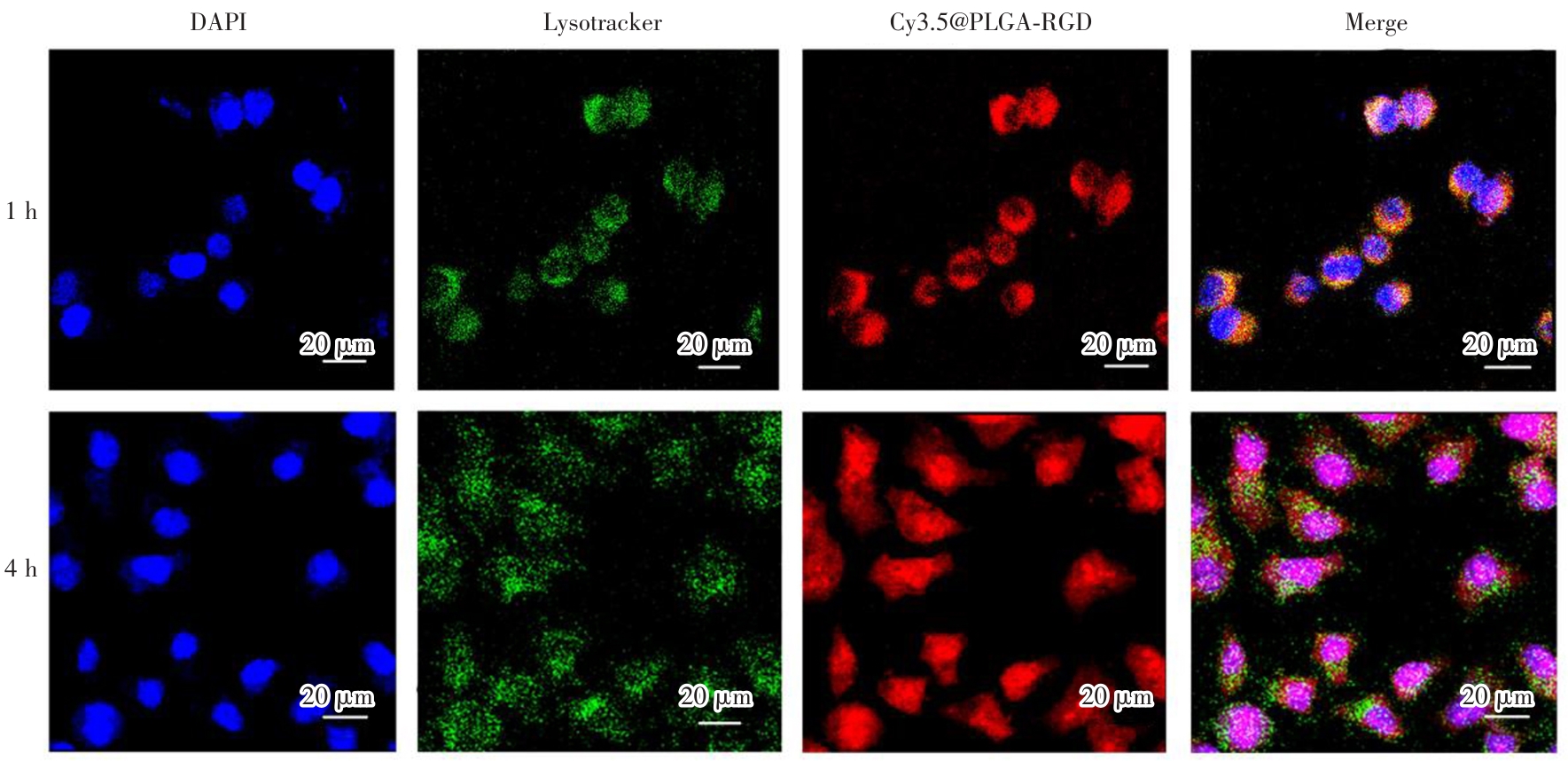
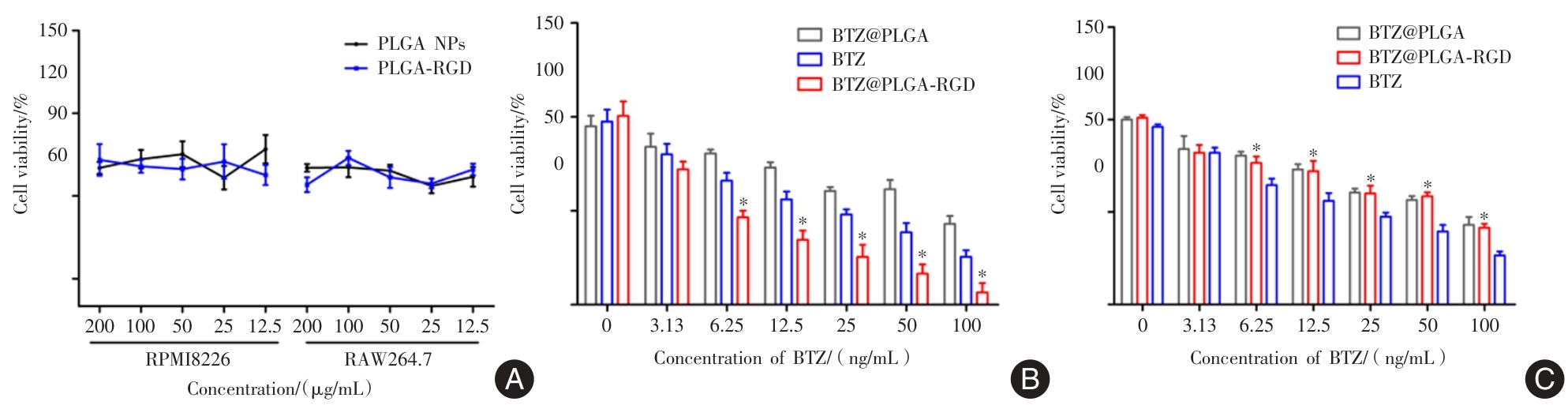
目的 制备一种靶向整合素αvβ3的载硼替佐米(bortezomib,BTZ)纳米粒(BTZ@PLGA-RGD),以实现多发性骨髓瘤(multiple myeloma,MM)的靶向治疗。 方法 采用乳化蒸发法及碳二亚胺法制备BTZ@PLGA-RGD聚合物纳米粒,通过扫描电子显微镜(SEM)、粒度分析动态光散射法(DLS)和傅里叶变换红外光谱(FTIR)对BTZ@PLGA-RGD纳米粒进行表征,并分析其稳定性、包封率、体外释药和血液相容性。通过CCK-8法和激光共聚焦显微镜(CLSM)验证BTZ@PLGA-RGD 纳米粒对细胞的毒性作用和细胞内的定位情况。 结果 BTZ@PLGA-RGD纳米粒大小均匀,呈球形,平均粒径为(113.7 ± 3.1)nm,表面带正电荷,电位为(+6.4 ± 1.3)mV,包封率为73.32%,稳定性和血液相容性均良好,具有pH响应性,在pH 5.5缓冲液中,48 h BTZ累计释放量达(82.34 ± 0.12)%。FTIR分析表明BTZ@PLGA-RGD纳米粒成功负载BTZ,且RGD肽成功偶联在其表面。根据细胞定位实验发现,因RGD肽介导的主动靶向作用使BTZ@PLGA-RGD纳米粒被RPMI8226细胞摄入更多,且其可实现溶酶体逃逸。CCK-8实验结果表明,BTZ@PLGA-RGD对RPMI8226细胞具有更强的毒性作用。 结论 BTZ@PLGA-RGD具有良好的稳定性、水溶性、靶向性、可控释药性及生物安全性,为MM靶向治疗提供新的研究策略。

关键词: 硼替佐米, 多发性骨髓瘤, 纳米粒, 表征, 靶向治疗

Abstract:

Objective The BTZ@PLGA-RGD nanoparticles that target integrin αvβ3 and are loaded with bortezomib (BTZ) were prepared to achieve targeted therapy for multiple myeloma (MM). Methods The emulsion solvent evaporation method and carbodiimide chemistry method were used to form BTZ@PLGA-RGD nanoparticles. The characterization of BTZ@PLGA-RGD nanoparticles was confirmed with scanning electron microscopy (SEM), dynamic light scattering (DLS), and fourier-transform infrared (FTIR). BTZ@PLGA-RGD nanoparticles were evaluated in terms of stability, encapsulation efficiency, release profile, and blood compatibility. The localization and cytotoxicity of BTZ@PLGA-RGD were determined using confocal laser scanning microscopy (CLSM) and the CCK-8 experiment. Results BTZ@PLGA-RGD nanoparticles were in a spherical shape with a uniform size distribution. The mean particle size of BTZ@PLGA-RGD nanoparticles was (113.7 ± 3.1) nm, accompanied by a positive surface charge of (+6.4 ± 1.3) mV. The entrapment efficiency of the BTZ@PLGA-RGD nanoparticles was 73.32%. These nanoparticles exhibited good long-term stability and blood compatibility. BTZ@PLGA-RGD nanoparticles had pH-responsive drug release properties, and the cumulative drug release (%) over 48 h was (82.34 ± 0.12)%. FTIR analysis indicated that BTZ was successfully loaded into the BTZ@PLGA-RGD nanoparticles, and RGD was successfully immobilized on the surface of the nanoparticles. The localization analysis showed that the active targeting effect mediated by the RGD peptide enabled the BTZ@PLGA - RGD nanoparticles to be taken up by RPMI8226 cells more efficiently, and these nanoparticles could achieve lysosome escape. The CCK-8 experimental results indicated that BTZ@PLGA-RGD nanoparticles exhibited stronger cytotoxicity against RPMI8226 cells. Conclusion BTZ@PLGA-RGD demonstrates outstanding stability, water solubility, targeting ability, controlled drug-release properties, and biological safety, offering a novel research strategy for MM targeted therapy.

Key words: bortezomib, multiple myeloma, nanoparticles, characterization, targeting therapy

中图分类号: