

The Journal of Practical Medicine ›› 2025, Vol. 41 ›› Issue (24): 3848-3859.doi: 10.3969/j.issn.1006-5725.2025.24.008
• Basic Research • Previous Articles
Yutang HUANG1,Weiqin DU1,Dong YUAN2,Tiantian LEI1,Chunjie WEN1,Lanxiang. WU1( )
)
Received:2025-07-03
Online:2025-12-25
Published:2025-12-25
Contact:
Lanxiang. WU
E-mail:lxwu@cqmu.edu.cn
CLC Number:
Yutang HUANG,Weiqin DU,Dong YUAN,Tiantian LEI,Chunjie WEN,Lanxiang. WU. The mechanism of JUP promoting the malignant progression of high⁃grade serous ovarian cancer[J]. The Journal of Practical Medicine, 2025, 41(24): 3848-3859.
Tab.1
Primer sequences used in this study"
| 基因名称 | 引物序列(5′—3′) |
|---|---|
| JUP | 上游引物: CATAGTTGAGACGCACAGAGTTC 下游引物: TCTCCAACCTGACATGCAACA |
| GAPDH | 上游引物: GCACCGTCAAGGCTGAGAAC 下游引物: TGGTGAAGACGCCAGTGGA |
| SETDB1 | 上游引物: GGTGGTCGCCAAATACAAA 下游引物: GGAAGCATAGCCATCATCAA |
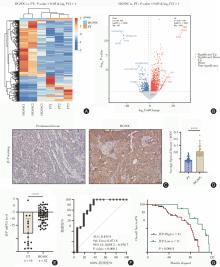
Fig. 1
JUP is highly expressed in human HGSOC tissues and is associated with poor prognosis of patients"
Tab.2
Univariate survival analysis of the patientsin HGSOC (OS)"
| 影响因素 | 总生存期/d | χ2值 | P值 |
|---|---|---|---|
| 年龄 | 3.652 | 0.056 | |
| < 56岁(n = 27) | 52.037 | ||
| ≥ 56岁(n = 25) | 78.080 | ||
| FIGO分期 | 5.707 | 0.0169 | |
| Ⅰ+Ⅱ(n = 19) | 83.263 | ||
| Ⅲ+Ⅳ(n = 33) | 53.788 | ||
| 淋巴结转移 | 4.193 | 0.0406 | |
| 阳性(n = 32) | 54.250 | ||
| 阴性(n = 20) | 81.050 | ||
| 大网膜转移 | 4.786 | 0.0287 | |
| 阳性(n = 28) | 52.464 | ||
| 阴性(n = 24) | 78.667 | ||
| JUP表达量 | 7.325 | 0.0068 | |
| 高表达(n = 41) | 57.341 | ||
| 低表达(n = 11) | 91.454 |
Tab. 3
Correlation between JUP expression and"
| 项目 | JUP低表达 | JUP高表达 | χ2值 | P值 |
|---|---|---|---|---|
| 年龄 | 0.767 | 0.3812 | ||
| < 56岁 | 7(13.5) | 20(38.5) | ||
| ≥ 56岁 | 4(7.7) | 21(40.4) | ||
| FIGO分期 | 1.951 | 0.1625 | ||
| Ⅰ+Ⅱ | 6(11.5) | 13(25.0) | ||
| Ⅲ+Ⅳ | 5(9.6) | 28(53.8) | ||
| 淋巴结转移 | 11.080 | 0.0009 | ||
| 阳性 | 2(3.8) | 30(57.7) | ||
| 阴性 | 9(17.3) | 11(21.2) | ||
| 大网膜转移 | 3.964 | 0.0465 | ||
| 阳性 | 3(5.8) | 25(48.1) | ||
| 阴性 | 8(15.4) | 16(30.8) |
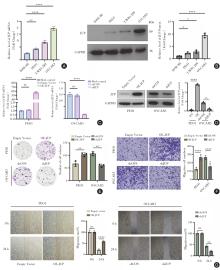
Fig.2
JUP promotes the proliferation, migration and invasion of HGSOC cells in vitro"
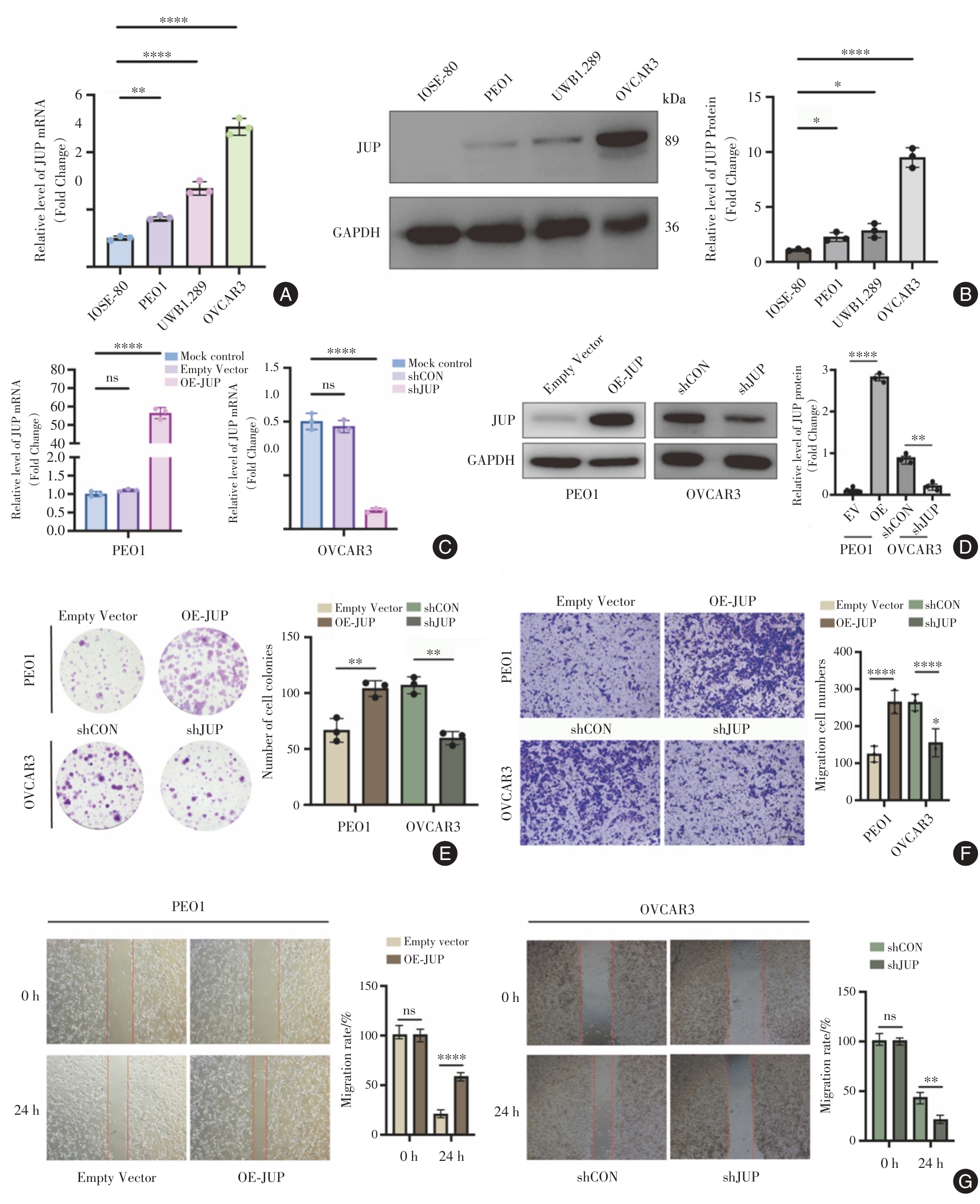
Fig. 3
The effect of JUP on HGSOC progression was validated in vivo"
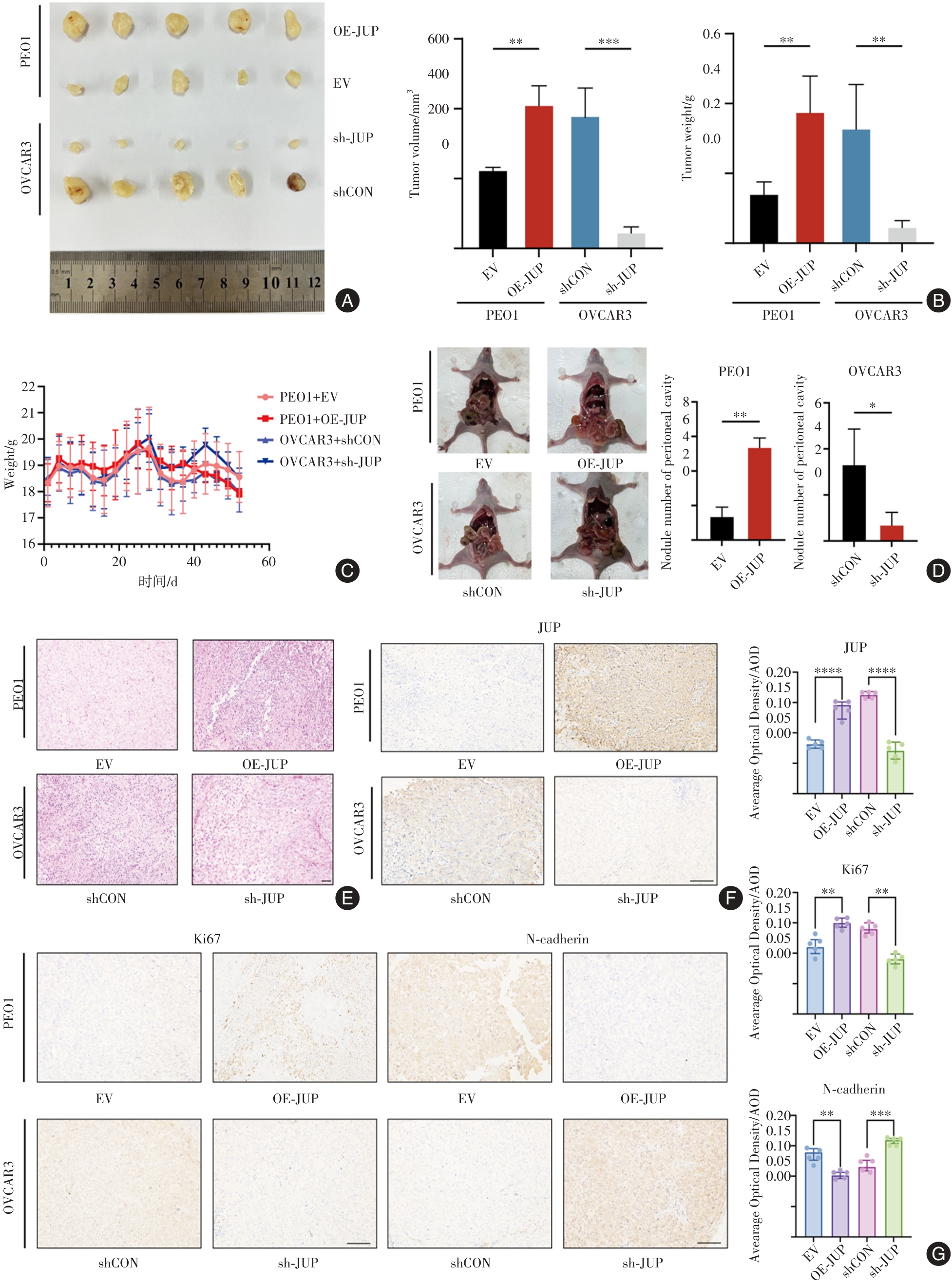
Fig.4
JUP interacts with SETDB1 and enhances its H3K9 methyltransferase activity in HGSOC cell lines"
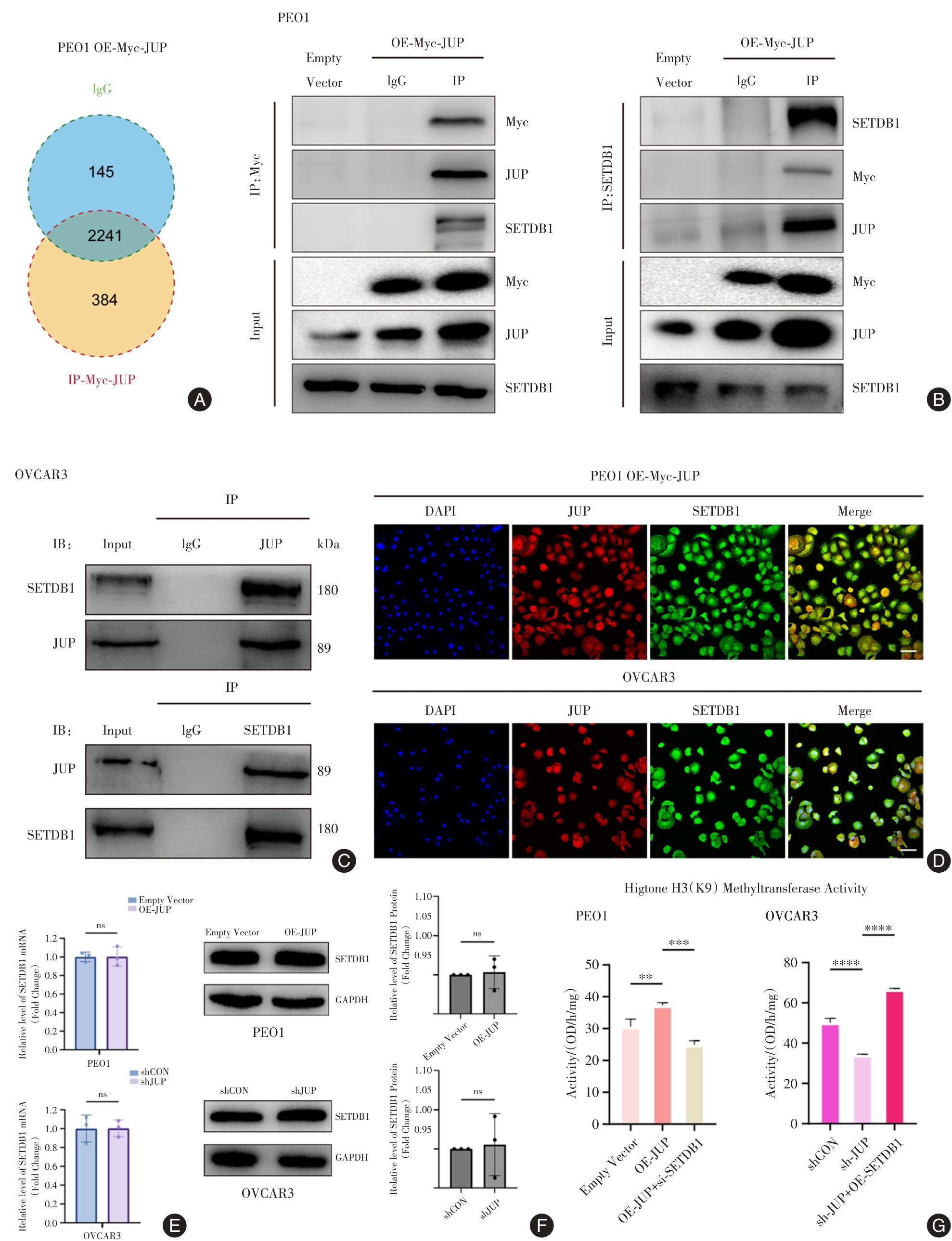
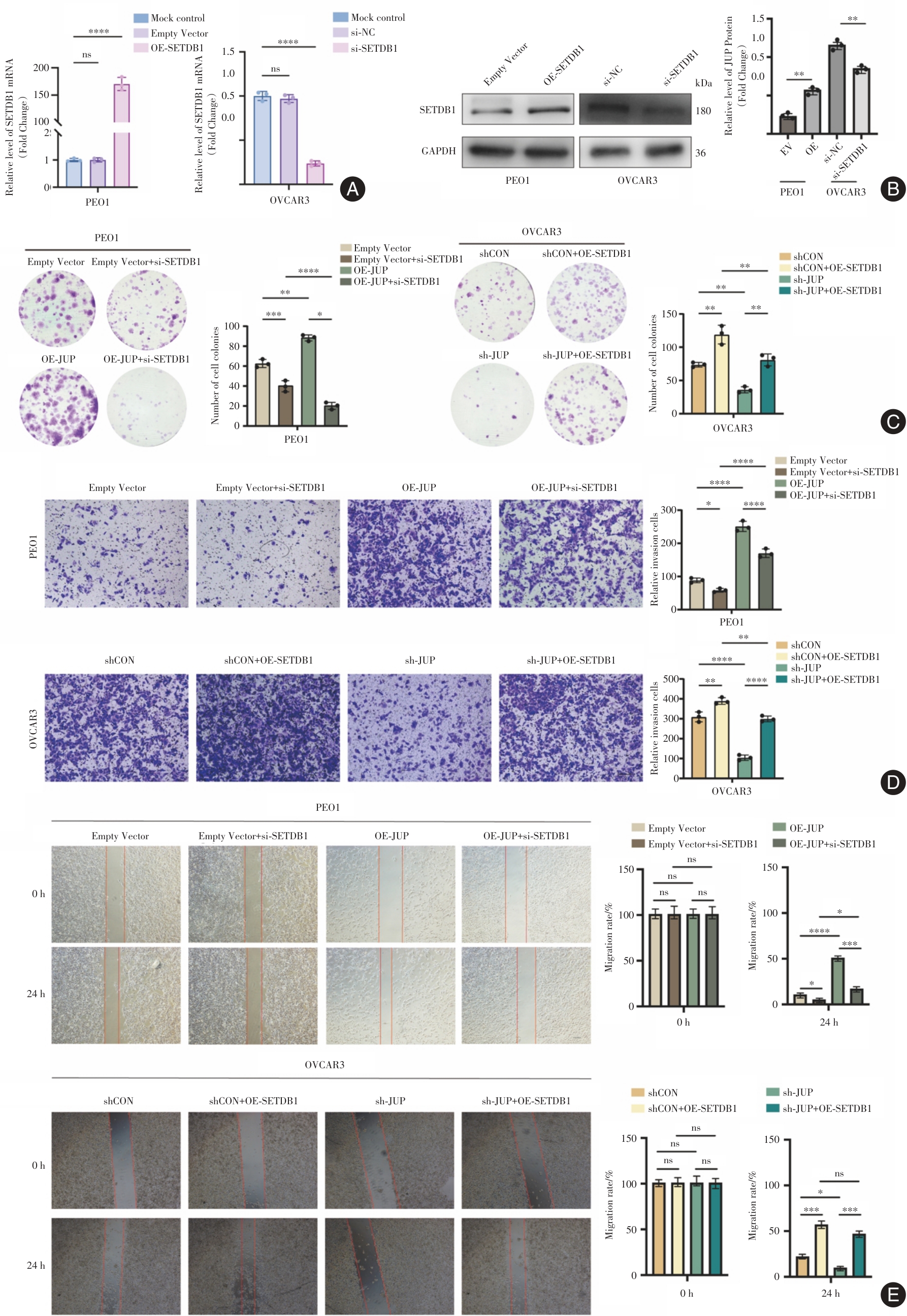
Fig.5
JUP promotes HGSOC cell proliferation, migration and invasion through SETDB1"
| [1] |
SIEGEL R L, KRATZER T B, GIAQUINTO A N, et al. Cancer statistics, 2025[J]. CA Cancer J Clin, 2025, 75(1): 10-45. doi:10.3322/caac.21871
doi: 10.3322/caac.21871 |
| [2] |
CARUSO G, WEROHA S J, CLIBY W. Ovarian Cancer: A Review[J]. JAMA, 2025, 334(14): 1278-1291. doi:10.1001/jama.2025.9495
doi: 10.1001/jama.2025.9495 |
| [3] |
SANTORO A, ANGELICO G, TRAVAGLINO A, et al. The multiple facets of ovarian high grade serous carcinoma: A review on morphological, immunohistochemical and molecular features[J]. Crit Rev Oncol Hematol, 2025, 208: 104603. doi:10.1016/j.critrevonc.2024.104603
doi: 10.1016/j.critrevonc.2024.104603 |
| [4] |
DENG M, YANG R, JIANG J, et al. The silent spread: Exploring diverse metastatic pathways in high-grade serous ovarian cancer[J]. Front Med (Lausanne), 2025, 12: 1539024. doi:10.3389/fmed.2025.1539024
doi: 10.3389/fmed.2025.1539024 |
| [5] |
FU R, HU R, LI W, et al. Unveiling drug resistance pathways in high-grade serous ovarian cancer (HGSOC): Recent advances and future perspectives[J]. Front Immunol, 2025, 16: 1556377. doi:10.3389/fimmu.2025.1556377
doi: 10.3389/fimmu.2025.1556377 |
| [6] |
KORDOWITZKI P, LANGE B, ELIAS K M, et al. Transforming treatment paradigms: Focus on personalized medicine for high-grade serous ovarian cancer[J]. CA Cancer J Clin, 2025, 75(5): 436-460. doi:10.3322/caac.70008
doi: 10.3322/caac.70008 |
| [7] |
GAILLARD S, LACCHETTI C, ARMSTRONG D K, et al. Neoadjuvant Chemotherapy for Newly Diagnosed, Advanced Ovarian Cancer: ASCO Guideline Update[J]. J Clin Oncol, 2025, 43(7): 868-891. doi:10.1200/op-24-00999
doi: 10.1200/op-24-00999 |
| [8] |
POLAJZER S, CERNE K. Precision Medicine in High-Grade Serous Ovarian Cancer: Targeted Therapies and the Challenge of Chemoresistance[J]. Int J Mol Sci, 2025, 26(6): 2545. doi:10.3390/ijms26062545
doi: 10.3390/ijms26062545 |
| [9] |
DIAS M P, MOSER S C, GANESAN S, et al. Understanding and overcoming resistance to PARP inhibitors in cancer therapy[J]. Nat Rev Clin Oncol, 2021, 18(12): 773-791. doi:10.1038/s41571-021-00532-x
doi: 10.1038/s41571-021-00532-x |
| [10] |
GUPTA R, KUMAR R, PENN C A, et al. Immune evasion in ovarian cancer: Implications for immunotherapy and emerging treatments[J]. Trends Immunol, 2025, 46(2): 166-181. doi:10.1016/j.it.2024.12.006
doi: 10.1016/j.it.2024.12.006 |
| [11] |
WANG J, DEAN D C, HORNICEK F J, et al. RNA sequencing (RNA-Seq) and its application in ovarian cancer[J]. Gynecol Oncol, 2019, 152(1): 194-201. doi:10.1016/j.ygyno.2018.10.002
doi: 10.1016/j.ygyno.2018.10.002 |
| [12] | 何婉珊, 洪小山, 陈冠桥, 等. 基于转录组测序技术筛选NSUN2在卵巢癌细胞的基因差异表达[J]. 实用医学杂志, 2023, 39(9): 1079-1085. |
| [13] |
LI J, SWOPE D, RAESS N, et al. Cardiac tissue-restricted deletion of plakoglobin results in progressive cardiomyopathy and activation of beta-catenin signaling[J]. Mol Cell Biol, 2011, 31(6): 1134-1144. doi:10.1128/mcb.01025-10
doi: 10.1128/mcb.01025-10 |
| [14] |
DING W, SUN J, SONG S, et al. Junction Plakoglobin - A Dual-Role Player in Cancer Biology[J]. Int J Surg, 2025, 111(6): 3920-3930. doi:10.1097/js9.0000000000002365
doi: 10.1097/js9.0000000000002365 |
| [15] |
CHEN K, ZENG J, SUN Y, et al. Junction plakoglobin regulates and destabilizes HIF2alpha to inhibit tumorigenesis of renal cell carcinoma[J]. Cancer Commun (Lond), 2021, 41(4): 316-332. doi:10.1002/cac2.12142
doi: 10.1002/cac2.12142 |
| [16] |
WANG Z, HU J, CHEN J, et al. ICAT promotes colorectal cancer metastasis via binding to JUP and activating the NF-kappaB signaling pathway[J]. J Clin Lab Anal, 2022, 36(10): e24678. doi:10.1002/jcla.24678
doi: 10.1002/jcla.24678 |
| [17] |
LHEUREUX S, GOURLEY C, VERGOTE I, et al. Epithelial ovarian cancer[J]. Lancet, 2019, 393(10177): 1240-1253. doi:10.1016/s0140-6736(18)32552-2
doi: 10.1016/s0140-6736(18)32552-2 |
| [18] |
LIU J F, KONSTANTINOPOULOS P A, MATULONIS U A. PARP inhibitors in ovarian cancer: Current status and future promise[J]. Gynecol Oncol, 2014, 133(2): 362-369. doi:10.1016/j.ygyno.2014.02.039
doi: 10.1016/j.ygyno.2014.02.039 |
| [19] | 黄山高, 吴月玲, 张颖. 瞄准未来:卵巢癌靶向治疗的新进展[J]. 实用医学杂志, 2024, 40(14): 1901-1907. |
| [20] |
DENG X, SHEN A, JIANG L. Bioinformatics analysis of JUP in patients with acute myocardial infarction and its potential application in clinical prognostic evaluation[J]. Front Cardiovasc Med, 2025, 12: 1531309. doi:10.3389/fcvm.2025.1531309
doi: 10.3389/fcvm.2025.1531309 |
| [21] |
VAHIDNEZHAD H, YOUSSEFIAN L, FAGHANKHANI M, et al. Arrhythmogenic right ventricular cardiomyopathy in patients with biallelic JUP-associated skin fragility[J]. Sci Rep, 2020, 10(1): 21622. doi:10.1038/s41598-020-78344-9
doi: 10.1038/s41598-020-78344-9 |
| [22] |
YANG L, HUANG W, BAI X, et al. Androgen dihydrotestosterone promotes bladder cancer cell proliferation and invasion via EPPK1-mediated MAPK/JUP signalling[J]. Cell Death Dis, 2023, 14(6): 363. doi:10.1038/s41419-023-05882-1
doi: 10.1038/s41419-023-05882-1 |
| [23] |
XIA J, MA N, SHI Q, et al. XAF1 promotes colorectal cancer metastasis via VCP-RNF114-JUP axis[J]. J Cell Biol, 2024, 223(2): e202303015. doi:10.1083/jcb.202303015
doi: 10.1083/jcb.202303015 |
| [24] |
CHEN Y, YANG L, QIN Y, et al. Effects of differential distributed-JUP on the malignancy of gastric cancer[J]. J Adv Res, 2021, 28: 195-208. doi:10.1016/j.jare.2020.06.026
doi: 10.1016/j.jare.2020.06.026 |
| [25] |
HU J, HUANG R, LIANG C, et al. TRIM50 Inhibits Gastric Cancer Progression by Regulating the Ubiquitination and Nuclear Translocation of JUP[J]. Mol Cancer Res, 2023, 21(10): 1107-1119. doi:10.1158/1541-7786.mcr-23-0113
doi: 10.1158/1541-7786.mcr-23-0113 |
| [26] |
KANG Y K. SETDB1 in Early Embryos and Embryonic Stem Cells[J]. Curr Issues Mol Biol, 2015, 17: 1-10. doi:10.21775/cimb.017.001
doi: 10.21775/cimb.017.001 |
| [27] |
MARKOULI M, STREPKOS D, PIPERI C. Structure, Activity and Function of the SETDB1 Protein Methyltransferase[J]. Life (Basel), 2021, 11(8): 817. doi:10.3390/life11080817
doi: 10.3390/life11080817 |
| [28] |
LUO H, WU X, ZHU X H, et al. The functions of SET domain bifurcated histone lysine methyltransferase 1 (SETDB1) in biological process and disease[J]. Epigenetics Chromatin, 2023, 16(1): 47. doi:10.1186/s13072-023-00519-1
doi: 10.1186/s13072-023-00519-1 |
| [29] | LAZARO-CAMP V J, SALARI K, MENG X, et al. SETDB1 in cancer: Overexpression and its therapeutic implications[J]. Am J Cancer Res, 2021, 11(5): 1803-1827. |
| [30] |
WANG W, WANG J, ZHANG X, et al. Serum circSETDB1 is a promising biomarker for predicting response to platinum-taxane-combined chemotherapy and relapse in high-grade serous ovarian cancer[J]. Onco Targets Ther, 2019, 12: 7451-7457. doi:10.2147/ott.s220700
doi: 10.2147/ott.s220700 |
| [31] |
YANG H, SUI L, CAI C, et al. SETDB1 promotes progression through upregulation of SF3B4 expression and regulates the immunity in ovarian cancer[J]. J Ovarian Res, 2024, 17(1): 34. doi:10.1186/s13048-024-01358-8
doi: 10.1186/s13048-024-01358-8 |
| [32] |
STREPKOS D, MARKOULI M, KLONOU A, et al. Histone Methyltransferase SETDB1: A Common Denominator of Tumorigenesis with Therapeutic Potential[J]. Cancer Res, 2021, 81(3): 525-534. doi:10.1158/0008-5472.can-20-2906
doi: 10.1158/0008-5472.can-20-2906 |
| Viewed | ||||||
|
Full text |
|
|||||
|
Abstract |
|
|||||
