

The Journal of Practical Medicine ›› 2026, Vol. 42 ›› Issue (17): 3150-3157.doi: 10.3969/j.issn.1006-5725.2026.17.014
• Treatise:Mechanism and Practice • Previous Articles Next Articles
Huimin Zheng, Fengqing Song, Mengchun Wu, Xiaoxing Tan, tao Yu, Jing Du( )
Received:2026-06-04
Online:2026-09-10
Published:2026-10-10
Contact:
Jing Du
About author:Zheng Huimin spearheaded the conceptual design, collected research data, completed figure preparation, and performed core manuscript drafting. Song Fengqing provided overall academic guidance for the study and manuscript modification. Wu Mengchun and Tan Xiaoxing participated in clinical data collection and collation. Du Jing, as the corresponding author, executed critical revision of the final manuscript and assumed responsibility for final approval of the version to be published. All authors read and approved the final manuscript as submitted.
CLC Number:
Huimin Zheng, Fengqing Song, Mengchun Wu, Xiaoxing Tan, tao Yu, Jing Du. Heterogeneity analysis of cryptogenic and non-cryptogenic liver abscesses and the clinical value of mNGS in pathogen diagnosis[J]. The Journal of Practical Medicine, 2026, 42(17): 3150-3157.
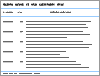
Tab. 1
Comparison of clinical characteristics between cryptogenic and non-cryptogenic pyogenic liver abscess"
| 临床特征 | 隐源性肝脓肿(n = 105) | 非隐源性肝脓肿(n = 62) | t/χ²值 | P值 |
|---|---|---|---|---|
| 年龄(x ± s)/岁 | 58.22 ± 14.37 | 58.34 ± 12.97 | -0.054 | 0.957 |
| 性别/[例(%)] | 0.004 | 0.946 | ||
| 男 | 73(69.52) | 42(67.74) | ||
| 女 | 32(30.48) | 20(32.26) | ||
| 基础疾病/[例(%)] | ||||
| 糖尿病 | 41(39.05) | 14(22.58) | 4.786 | 0.029 |
| 高血压 | 24(22.86) | 13(20.97) | 0.081 | 0.776 |
| 胆道系统疾病 | 0(0.00) | 44(70.97) | - | < 0.001* |
| 恶性肿瘤 | 3(2.86) | 29(46.77) | 48.540 | < 0.001 |
| 肝外转移/[例(%)] | 9(8.57) | 2(3.23) | 1.810 | 0.178 |
| 临床表现/[例(%)] | ||||
| 发热 | 91(86.67) | 40(64.52) | 11.311 | 0.001 |
| 腹痛 | 56(53.33) | 35(56.45) | 0.153 | 0.696 |
| 恶心呕吐 | 34(32.38) | 11(17.74) | 4.244 | 0.039 |
| 畏寒寒战 | 62(59.05) | 29(46.77) | 3.186 | 0.203 |
| 肝区叩痛 | 24(22.86) | 12(19.35) | 0.912 | 0.634 |
| 入住ICU/[例(%)] | 22(20.95) | 6(9.68) | 3.551 | 0.06 |
| SOFA( )/分 | 7.82 ± 3.95 | 10.00 ± 4.52 | -1.166 | 0.254 |
| APACHEⅡ( )/分 | 17.27 ± 8.03 | 24.83 ± 8.50 | -2.201 | 0.054 |
| 预后/例 | - | 0.671* | ||
| 好转 | 102 | 59 | ||
| 预后不佳 | 3 | 3 | ||
| 治疗/例 | - | 0.003* | ||
| 药物保守治疗 | 13 | 3 | ||
| 药物+穿刺引流 | 90 | 50 | ||
| 药物+手术 | 2 | 9 |
Tab.2
Comparison of laboratory examinations between cryptogenic and non-cryptogenic pyogenic liver abscess"
| 实验室检查 | 隐源性肝脓肿(n = 105) | 非隐源性肝脓肿(n = 62) | Z/t值 | P值 |
|---|---|---|---|---|
| WBC/(×109/L) | 13.06(10.38,17.05) | 13.79(9.87,18.26) | -0.14 | 0.885 |
| N%/% | 85.70(80.60,90.65) | 81.55(75.38,88.03) | -2.60 | 0.009 |
| LY%/% | 7.60(4.85,11.60) | 9.45(5.60,14.50) | -1.80 | 0.071 |
| Hb( )/(g/L) | 112.54 ± 20.60 | 103.98 ± 21.70 | 2.54 | 0.012 |
| Hct | 0.34(0.30,0.39) | 0.33(0.28,0.38) | -1.88 | 0.061 |
| PLT/(×109/L) | 199.00(127.00,323.00) | 282.00(126.25,365.00) | -1.45 | 0.146 |
| ALT/(U/L) | 46.00(25.00,79.00) | 40.50(21.00,79.00) | 1.42 | 0.157 |
| AST/(U/L) | 48.00(25.00,86.00) | 41.50(24.00,58.00) | -1.04 | 0.299 |
| ALP/(U/L) | 139.00(94.00,217.00) | 143.00(105.00,230.00) | -0.31 | 0.757 |
| TBIL/(μmol/L) | 17.10(11.60,26.50) | 20.70(12.10,36.10) | -1.12 | 0.265 |
| ALB( )/(g/L) | 29.37 ± 6.05 | 29.92 ± 8.70 | -0.48 | 0.632 |
| Urea/(mmol/L) | 77.00(64.00,96.00) | 69.50(58.00,97.00) | -1.04 | 0.299 |
| Crea/(μmol/L) | 5.80(4.10,8.00) | 5.35(3.30,8.10) | -1.29 | 0.199 |
| PCT/(ng/mL) | 11.24(1.66,42.83) | 3.05(0.42,31.8) | -2.36 | 0.018 |
| 病原学/例 | < 0.001* | |||
| 单一 | 104 | 45 | ||
| 混合 | 1 | 17 |
Tab.3
Comparison of imaging findings between cryptogenic and non-cryptogenic pyogenic liver abscess"
| 影像学 | 隐源性肝脓肿(n = 105) | 非隐源性肝脓肿(n = 62) | χ²值 | P值 |
|---|---|---|---|---|
| 脓肿数量 | 0.30 | 0.584 | ||
| 单个 | 85(80.95) | 48(77.42) | ||
| 多个 | 20(19.05) | 14(22.58) | ||
| 脓肿部位 | 7.71 | 0.021 | ||
| 右叶 | 82(78.10) | 42(67.74) | ||
| 左叶 | 19(18.10) | 10(16.13) | ||
| 左 + 右叶 | 4(3.81) | 10(16.13) | ||
| 脓肿大小 | 3.15 | 0.207 | ||
| 小 | 25(23.81) | 8(12.90) | ||
| 大 | 69(65.71) | 45(72.58) | ||
| 巨大 | 11(10.48) | 9(14.52) |
Tab.4
Pathogen detection results of mNGS versus conventional bacterial culture in 41 patients with pyogenic liver"
| 项目 | 传统培养阳性 | 传统培养阴性 | 合计 |
|---|---|---|---|
| 合计 | 30 | 11 | 41 |
| mNGS阳性 | 28 | 11 | 39 |
| mNGS阴性 | 2 | 0 | 2 |
Tab.5
Comparison of diagnostic performance between mNGS and conventional culture"
| 指标 | mNGS | 传统培养 | χ 2/Z值 | P值 |
|---|---|---|---|---|
| 阳性检出率/[例(%)] | 39(95.12) | 30(73.17) | 4.923 | 0.22 |
| 检出病原种类/种 | 21 | 5 | - | |
| 检测时间[M(P25,P75 )]/h | 24.0(20.0,36.0) | 90.0(70.0,126.0) | -5.463 | < 0.01 |
| 厌氧菌检出/例 | 5 | 0 | - | |
| 培养阴性而mNGS阳性/例 | 11 | 0 | - | |
| 双阳性病例完全一致率/% | 78.6 | - | - | |
| 双阳性病例部分一致率/% | 10.7 | - | - | |
| 双阳性病例完全不一致率/% | 10.7 | - | - |
Tab.6
Distribution of etiological consistency in double-positive cases"
| 病原一致性分类 | 例数 | 占比/% | 典型案例 |
|---|---|---|---|
| 完全一致(检出菌相同) | 22 | 78.6 | mNGS 与培养均检出肺炎克雷伯菌 |
| 部分一致(mNGS 多检出菌) | 3 | 10.7 | 培养检出肺炎克雷伯菌,mNGS 额外检出具核梭杆菌(厌氧菌) |
| 完全不一致(无重叠菌) | 3 | 10.7 | 培养检出大肠埃希菌,mNGS检出中间链球菌 |
Tab.7
Multivariate binary logistic regression analysis of independent factors associated with cryptogenic pyogenic liver abscess"
| 变量 | β | 标准误 | Wald χ 2 | P值 | OR值 | 95%CI |
|---|---|---|---|---|---|---|
| 发热 | 1.329 | 0.411 | 10.462 | 0.001 | 3.778 | 1.688 ~ 8.456 |
| 糖尿病 | 0.794 | 0.384 | 4.286 | 0.038 | 2.212 | 1.043 ~ 4.691 |
| 血红蛋白 | 0.018 | 0.008 | 4.871 | 0.027 | 1.019 | 1.002 ~ 1.035 |
| [1] |
|
| [2] |
|
| [3] |
|
| [4] |
|
| [5] |
|
| [6] |
|
| [7] |
|
| [8] |
|
| [9] |
|
| [10] |
|
| [11] |
|
| [12] |
|
| [13] |
|
| [14] |
|
| [15] |
|
| [16] |
|
| [17] |
|
| [18] |
|
| [19] |
|
| [20] |
|
| [21] |
|
| [22] |
|
| [23] |
|
| [24] |
|
| [25] |
龙思萍, 刘志礼, 黄山虎, 等. 宏基因二代测序在脊柱感染诊治中的应用进展[J]. 实用医学杂志, 2024, 40(1): 119-122, 128. doi:10.3969/j.issn.1006-5725.2024.01.021 .
|
| [26] |
|
| [27] |
|
| [1] | Zhisheng WU,Yang WU,Lina GUAN. Analysis of influencing factors of atherosclerotic stenosis of the intracranial segment of the vertebral artery based on brain-carotid artery ultrasound parameters [J]. The Journal of Practical Medicine, 2026, 42(12): 2200-2207. |
| [2] | Jiangqiao ZHAO,Liping FU,Long YANG,Zhiqiang DONG,Shuli SONG,Benxin YANG. Expression and diagnostic value of serine⁃threonine kinase 1 and isochorismatase domain⁃containing 1 in gastric cancer [J]. The Journal of Practical Medicine, 2025, 41(13): 2033-2038. |
| [3] | Bingjie QUAN,Yijing LIU,Xiaoqin LI,Fang ZHOU. Clinical features of hepatitisassociatedaplastic anemia in children [J]. The Journal of Practical Medicine, 2025, 41(1): 84-89. |
| [4] | Xiuqin TAN,Shunyou DENG,Caimao HUANG,Enzhong LI,Xiaoyan. CHEN. The correlation between trace elements selenium and iodine and thyroid nodules in Guangzhou area [J]. The Journal of Practical Medicine, 2024, 40(8): 1153-1159. |
| [5] | Ming HOU,Youqiang LI,Xuemei LI,Junfeng JIA,Junying CHANG. Construction of a risk prediction model of lung involvement based on chest CT and clinical features in patients with primary Sjogren's syndrome [J]. The Journal of Practical Medicine, 2024, 40(3): 400-405. |
| [6] | Ying LIU,Yun LIU,Jiahui LIU,Lu WANG,Wenrui HOU,Xiaoli LI,Junxin XIANG,Dianming. LI. An analysis on clinical characteristics in patients with lung adenocarcinomas tested positive for EGFR mutation in pleural effusion [J]. The Journal of Practical Medicine, 2024, 40(1): 43-47. |
| [7] |
HE Dehua, LIU Ming, CHEN Qimin, LIU Xu..
Application of metagenomic next⁃generation sequencing in the etiological detection in patients with severe pneumonia [J]. The Journal of Practical Medicine, 2023, 39(8): 948-952. |
| [8] |
HUANG Chunming, HU Zhongwei, HUANG Yun, ZHAN Yuanjing..
Relationship between early viral load and clinical characteristics of Delta variant of SARS⁃Cov⁃2 [J]. The Journal of Practical Medicine, 2022, 38(5): 532-536. |
| [9] |
LI Ying, LI Qing, WANG Xuan, ZHOU Lijun, TAN Zhi. .
Research advances in burning mouth syndrome [J]. The Journal of Practical Medicine, 2022, 38(19): 2486-2490. |
| [10] |
CHENG Cheng, XU Rixin, ZHANG Qiang, CAO Tianqing, LIU Xiaodong, XIE Yong, MEI Hongbin..
Clinical features of patients with spontaneous coronary artery dissection and follow⁃up for different treat⁃ments
[J]. The Journal of Practical Medicine, 2021, 37(3): 348-352.
|
| [11] |
DING Ping′ an, YANG Peigang, TIAN Yuan, HU Yiyang, GUO Honghai, LIU Yang, ZHANG Zhidong, WANG Dong, LI Yong, ZHAO Qun..
Analysis of clinicopathological characteristics and prognosis of gastric cancer patients with left supraclavic⁃ ular lymph node metastasis [J]. The Journal of Practical Medicine, 2021, 37(13): 1695-1700. |
| [12] | MA Yuqi, LIANG Mingming, YIN Huafa. Clinical characteristics and prognostic factors of new bunia viral infection [J]. The Journal of Practical Medicine, 2020, 36(23): 3231-3236. |
| [13] | PU Jing, ZHOU Peng, WANG Qiulin, HU Jun, HOU Jixin, WANG Peijian. Clinical characteristics and risk factors of hypertension with acute myocardial infarction of silent [J]. The Journal of Practical Medicine, 2020, 36(20): 2802-2805. |
| Viewed | ||||||
|
Full text |
|
|||||
|
Abstract |
|
|||||
