

The Journal of Practical Medicine ›› 2026, Vol. 42 ›› Issue (9): 1670-1680.doi: 10.3969/j.issn.1006-5725.2026.09.024
• Treatise: Clinical Practice • Previous Articles
Anna HOU,Ruonan XU,Fengwei JIAO,Song MI,Liming ZHANG( )
)
Received:2026-01-04
Online:2026-05-10
Published:2026-04-29
Contact:
Liming ZHANG
E-mail:cyyyzlm@sina.com
CLC Number:
Anna HOU,Ruonan XU,Fengwei JIAO,Song MI,Liming ZHANG. Validation of a novel high-flow tracheal interface with adjustable positive end-expiratory pressure in an ex vivo lung model of acute respiratory distress syndrome[J]. The Journal of Practical Medicine, 2026, 42(9): 1670-1680.
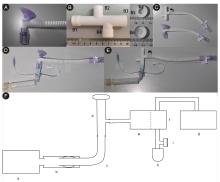
Fig.1
The apparatus involved in the benchtop experiment"
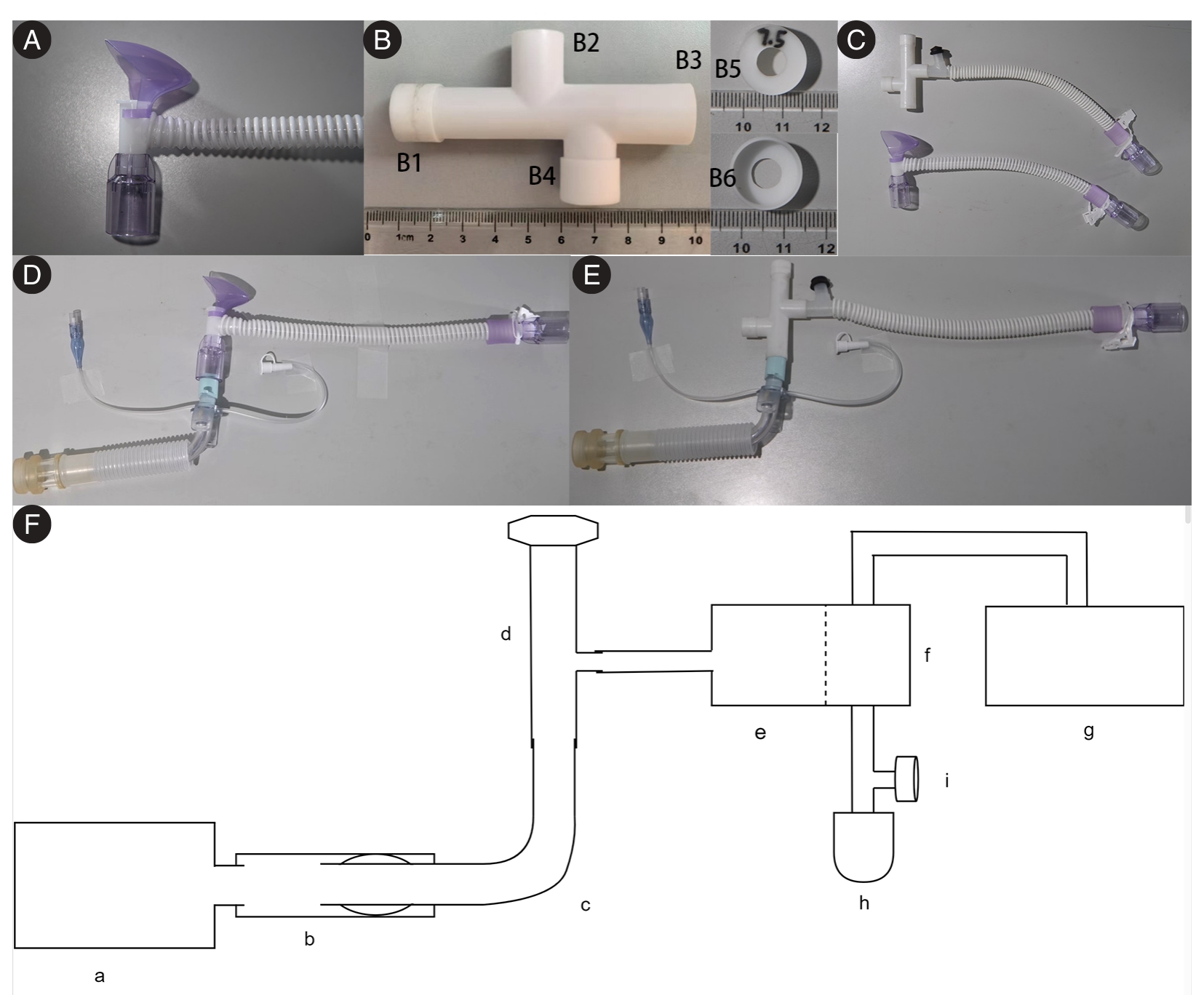
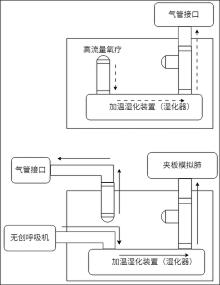
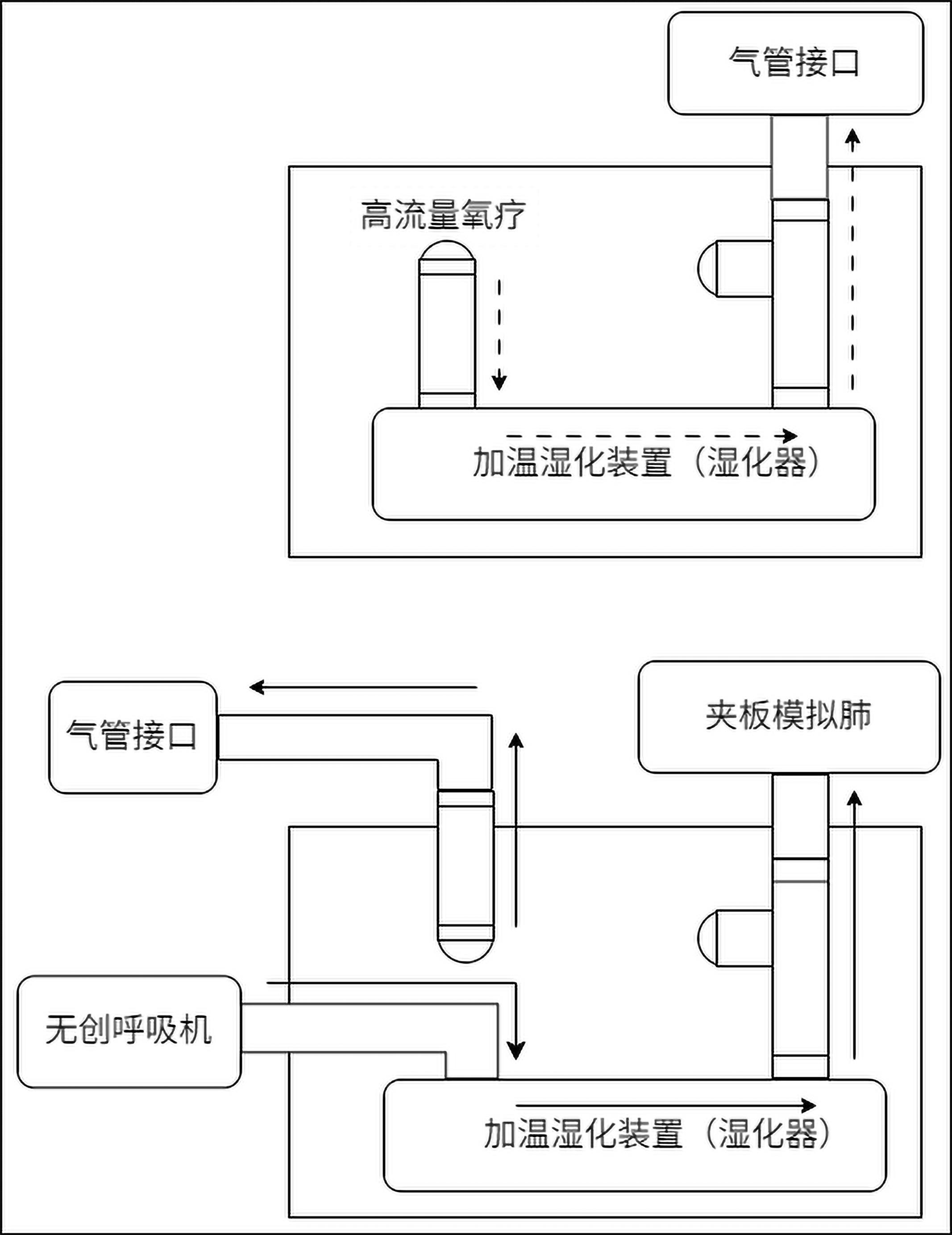
Fig.2
Schematic representation of gas flow pathways in unmodified high-flow oxygen device (upper panel) and in the modified setup of this study (lower panel)"

Tab.1
Primary and secondary endpoint parameters in the bench experiment"
| 参数 | 接口类型 | 气体流量/(L/min) | ||||||||
|---|---|---|---|---|---|---|---|---|---|---|
| 10 | 20 | 30 | 40 | 50 | 60 | 70 | 80 | P值※ | ||
| PEEP/cmH2O | 传统接口 | 0.4 ± 0.2 | 0.8 ± 0.2 | 1.6 ± 0.2 | 2.5 ± 0.3 | 3.2 ± 0.3 | 5.0 ± 0.3 | 6.1 ± 0.5 | 7.9 ± 0.6 | < 0.001 |
| 新型接口 | 0.5 ± 0.2 | 1.0 ± 0.3 | 2.5 ± 0.2 | 3.9 ± 0.5 | 5.1 ± 0.5 | 7.3 ± 0.5 | 10.1 ± 0.6 | 13.4 ± 0.6 | < 0.001 | |
| P值* | 0.605 | 0.233 | < 0.001 | < 0.001 | < 0.001 | < 0.001 | < 0.001 | < 0.001 | ||
| FRC/mL | 传统接口 | 1 502.8 ± 16.3 | 1 511.7 ± 16.6 | 1 522.4 ± 16.5 | 1 537.5 ± 11.6 | 1 553.4 ± 15.0 | 1 578.4 ± 19.3 | 1 604.3 ± 17.9 | 1 650.7 ± 19.3 | < 0.001 |
| 新型接口 | 1 509.7 ± 14.8 | 1 519.7 ± 19.9 | 1 534.6 ± 14.6 | 1 559.3 ± 13.4 | 1 588.5 ± 17.4 | 1 670.5 ± 17.4 | 1 781.6 ± 15.1 | 1 963.7 ± 13.2 | < 0.001 | |
| P值* | 0.335 | 0.337 | 0.096 | 0.001 | < 0.001 | < 0.001 | < 0.001 | < 0.001 | ||
| Vt/mL | 传统接口 | 235.7 ± 6.3 | 229.2 ± 6.9 | 221.3 ± 12.6 | 216.7 ± 16.8 | 212.6 ± 7.0 | 209.1 ± 24.5 | 208.2 ± 8.5 | 205.2 ± 7.8 | < 0.001 |
| 新型接口 | 239.3 ± 9.2 | 227.3 ± 10.2 | 216.0 ± 21.3 | 208.6 ± 10.7 | 198.6 ± 5.9 | 189.9 ± 10.4 | 182.9 ± 11.1 | 178.3 ± 14.9 | < 0.001 | |
| P值* | 0.323 | 0.623 | 0.514 | 0.218 | < 0.001 | 0.034 | < 0.001 | < 0.001 | ||
| Ptp-EI/cmH2O | 传统接口 | 8.1 ± 1.0 | 8.3 ± 1.1 | 8.6 ± 1.2 | 9.0 ± 0.9 | 9.3 ± 0.8 | 9.7 ± 0.4 | 10.2 ± 0.9 | 11.0 ± 0.6 | < 0.001 |
| 新型接口 | 8.3 ± 1.1 | 8.5 ± 1.1 | 9.4 ± 0.8 | 9.8 ± 0.9 | 10.1 ± 1.4 | 10.5 ± 0.9 | 11.9 ± 1.1 | 14.0 ± 0.8 | < 0.001 | |
| P值* | 0.680 | 0.695 | 0.110 | 0.078 | 0.130 | 0.031 | 0.001 | < 0.001 | ||
| Ptp-EE/cmH2O | 传统接口 | 0.0 ± 0.1 | 0.1 ± 0.1 | 0.6 ± 0.1 | 1.3 ± 0.2 | 2.2 ± 0.2 | 3.4 ± 0.3 | 4.9 ± 0.2 | 5.7 ± 0.3 | < 0.001 |
| 新型接口 | 0.1 ± 0.1 | 0.5 ± 0.1 | 1.4 ± 0.2 | 2.6 ± 0.2 | 4.1 ± 0.3 | 6.2 ± 0.2 | 7.3 ± 0.3 | 9.5 ± 0.3 | < 0.001 | |
| P值* | 0.003 | < 0.001 | < 0.001 | < 0.001 | < 0.001 | < 0.001 | < 0.001 | < 0.001 | ||
PIP/ cmH2O | 传统接口 | -3.5 ± 0.5 | -3.1 ± 0.4 | -3.0 ± 0.5 | -2.6 ± 0.5 | -2.3 ± 0.6 | -2.2 ± 0.7 | -1.9 ± 0.6 | -1.6 ± 0.4 | < 0.001 |
| 新型接口 | -3.6 ± 0.7 | -3.0 ± 0.4 | -2.5 ± 0.5 | -2.2 ± 0.6 | -1.9 ± 0.5 | -1.3 ± 0.5 | -0.9 ± 0.4 | -0.5 ± 0.4 | < 0.001 | |
| P值* | 0.710 | 0.497 | 0.063 | 0.128 | 0.154 | 0.003 | < 0.001 | < 0.001 | ||
| PEP/cmH2O | 传统接口 | 3.4 ± 0.8 | 3.9 ± 0.6 | 4.9 ± 0.5 | 5.3 ± 0.8 | 6.3 ± 0.5 | 7.5 ± 0.7 | 9.0 ± 0.4 | 10.2 ± 0.8 | < 0.001 |
| 新型接口 | 3.8 ± 0.5 | 4.9 ± 0.4 | 6.1 ± 0.4 | 7.5 ± 0.5 | 8.3 ± 0.4 | 10.4 ± 0.6 | 12.4 ± 0.5 | 14.8 ± 0.6 | < 0.001 | |
| P值* | 0.213 | 0.001 | < 0.001 | < 0.001 | < 0.001 | < 0.001 | < 0.001 | < 0.001 | ||
| PEIC/cmH2O | 传统接口 | -5.0 ± 0.1 | -4.9 ± 0.5 | -4.8 ± 0.3 | -4.8 ± 0.4 | -4.7 ± 0.5 | -4.7 ± 0.3 | -4.6 ± 0.3 | -4.2 ± 0.3 | < 0.001 |
| 新型接口 | -4.8 ± 0.3 | -4.7 ± 0.3 | -4.7 ± 0.4 | -4.6 ± 0.4 | -4.4 ± 0.3 | -4.0 ± 0.3 | -3.7 ± 0.3 | -2.6 ± 0.3 | < 0.001 | |
| P值* | 0.060 | 0.353 | 0.323 | 0.304 | 0.043 | < 0.001 | < 0.001 | < 0.001 | ||
| PEEC/cmH2O | 传统接口 | -0.1 ± 0.1 | -0.1 ± 0.1 | 0.0 ± 0.0 | 0.1 ± 0.1 | 0.2 ± 0.1 | 0.3 ± 0.1 | 0.5 ± 0.1 | 0.8 ± 0.1 | < 0.001 |
| 新型接口 | -0.1 ± 0.1 | 0.0 ± 0.2 | 0.1 ± 0.1 | 0.2 ± 0.1 | 0.4 ± 0.1 | 0.9 ± 0.1 | 1.5 ± 0.1 | 2.3 ± 0.1 | < 0.001 | |
| P值* | 0.809 | 0.308 | < 0.001 | 0.001 | < 0.001 | < 0.001 | < 0.001 | < 0.001 | ||
| FiO2/% | 传统接口 | 34.8 ± 1.1 | 37.7 ± 1.3 | 42.7 ± 1.7 | 45.0 ± 2.2 | 47.2 ± 1.7 | 47.8 ± 2.2 | 48.3 ± 2.5 | 48.2 ± 1.9 | < 0.001 |
| 新型接口 | 35.4 ± 1.2 | 38.7 ± 3.0 | 43.7 ± 2.1 | 46.2 ± 2.1 | 47.8 ± 2.4 | 48.1 ± 2.5 | 48.6 ± 2.1 | 49.0 ± 2.5 | < 0.001 | |
| P值* | 0.277 | 0.349 | 0.231 | 0.237 | 0.545 | 0.760 | 0.763 | 0.469 | ||
Fig.3
Comparison of conventional and novel interface at different flow rates"
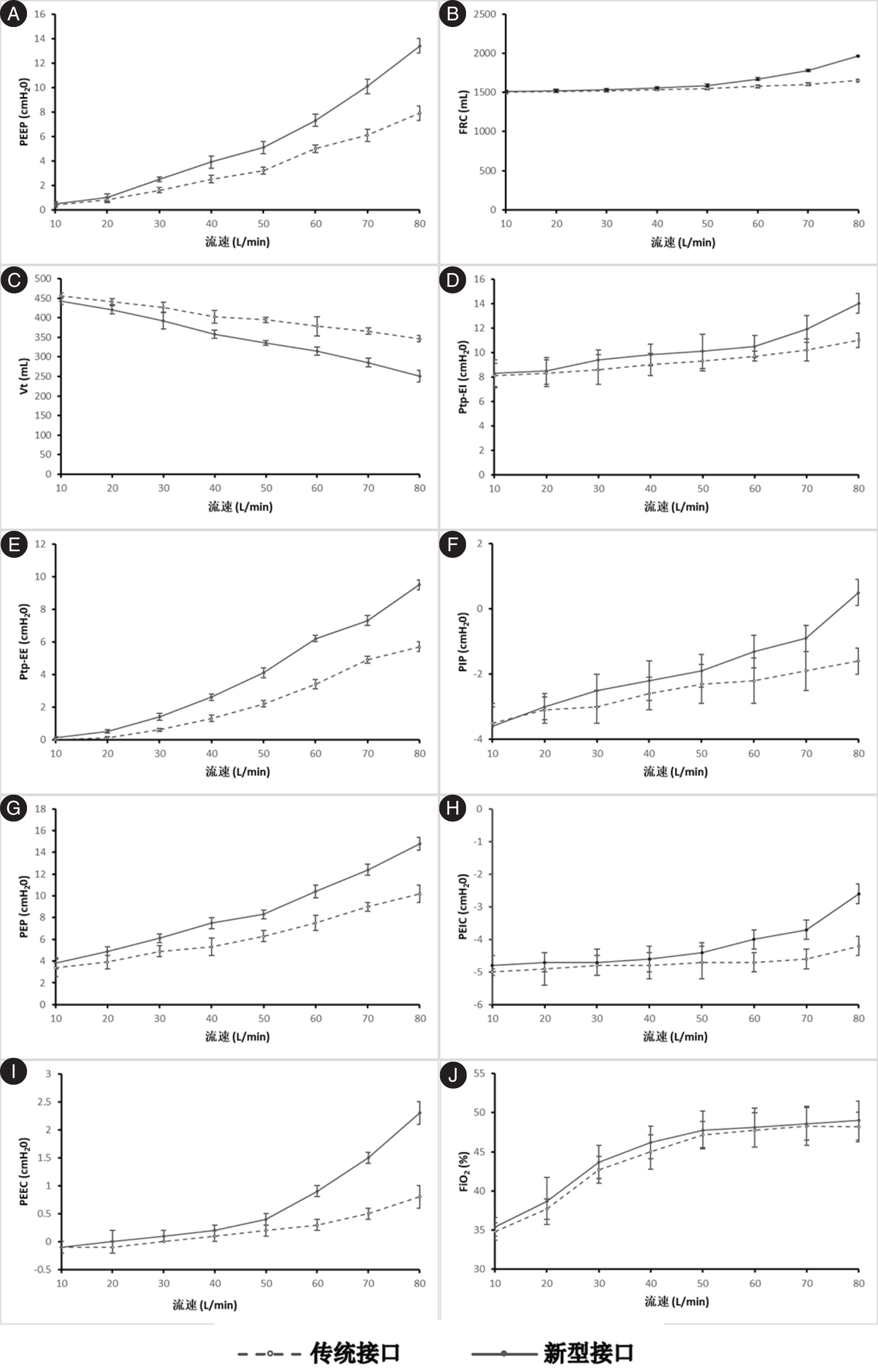
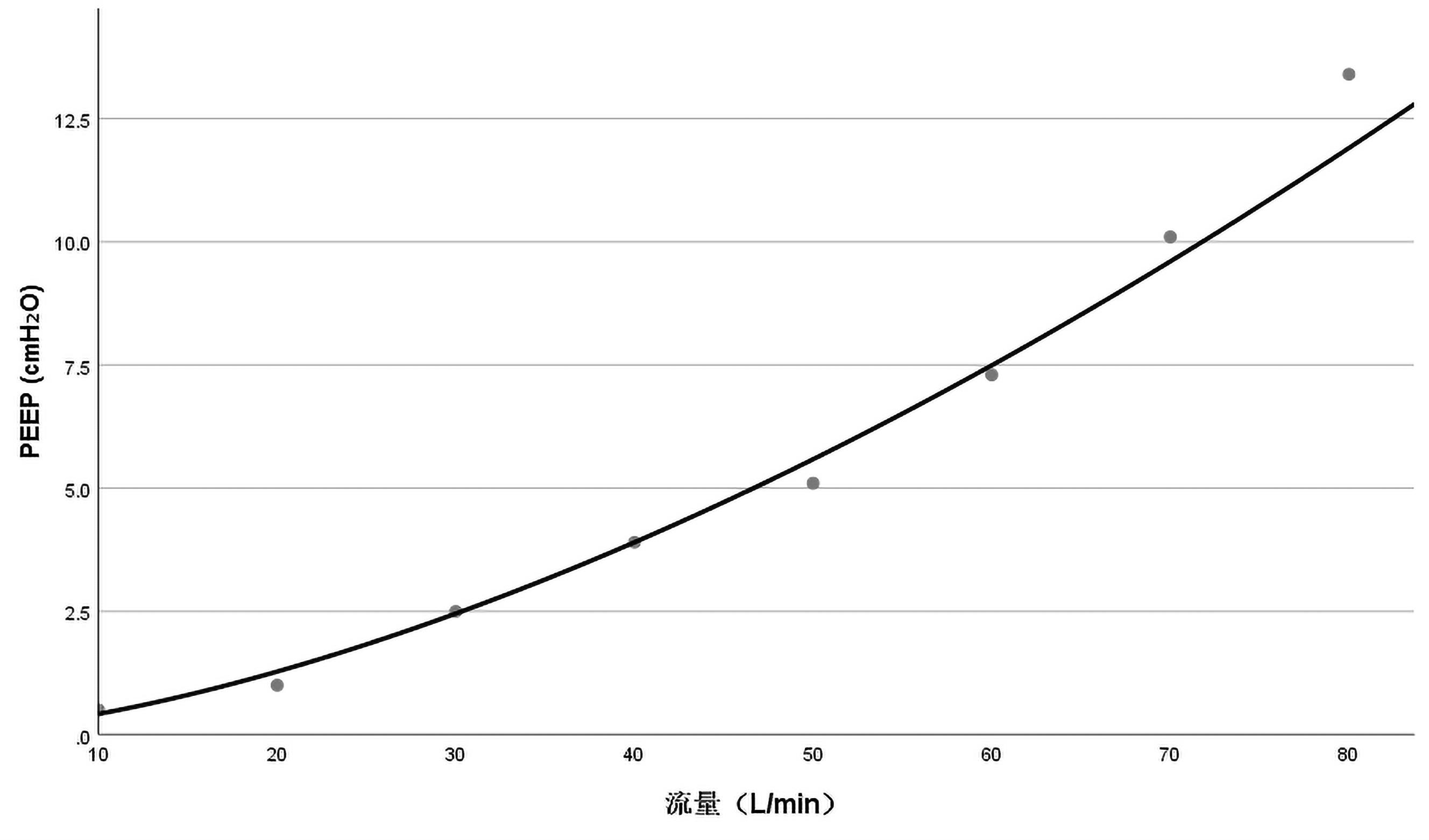
Fig.4
Relationship between PEEP and flow rate during novel interface"
| [1] |
GRASSELLI G, CALFEE C S, CAMPOROTA L, et al. ESICM guidelines on acute respiratory distress syndrome: Definition, phenotyping and respiratory support strategies[J]. Intensive Care Med, 2023, 49(7): 727-759. doi: 10.1007/s00134-023-07050-7 .
doi: 10.1007/s00134-023-07050-7 |
| [2] |
BELLANI G, PHAM T, LAFFEY J, et al. Incidence of Acute Respiratory Distress Syndrome-Reply[J]. JAMA, 2016, 316(3): 347. doi:10.1001/jama.2016.6471 .
doi: 10.1001/jama.2016.6471 |
| [3] |
ABE T, MADOTTO F, PHAM T, et al. Epidemiology and patterns of tracheostomy practice in patients with acute respiratory distress syndrome in ICUs across 50 countries[J]. Crit Care, 2018, 22(1): 195. doi: 10.1186/s13054-018-2126-6 .
doi: 10.1186/s13054-018-2126-6 |
| [4] |
AQUINO ESPERANZA J, PELOSI P, BLANCH L. What's new in intensive care: Tracheostomy-what is known and what remains to be determined[J]. Intensive Care Med, 2019, 45(11): 1619-1621. doi: 10.1007/s00134-019-05758-z .
doi: 10.1007/s00134-019-05758-z |
| [5] |
ESTEBAN A, FRUTOS-VIVAR F, MURIEL A, et al. Evolution of mortality over time in patients receiving mechanical ventilation[J]. Am J Respir Crit Care Med, 2013, 188(2): 220-230. doi: 10.1164/rccm.201212-2169OC .
doi: 10.1164/rccm.201212-2169OC |
| [6] |
PAPAZIAN L, CORLEY A, HESS D, et al. Use of high-flow nasal cannula oxygenation in ICU adults: A narrative review[J]. Intensive Care Med, 2016, 42(9): 1336-1349. doi: 10.1007/s00134-016-4277-8 .
doi: 10.1007/s00134-016-4277-8 |
| [7] |
SZTRYMF B, MESSIKA J, BERTRAND F, et al. Beneficial effects of humidified high flow nasal oxygen in critical care patients: A prospective pilot study[J]. Intensive Care Med, 2011, 37(11): 1780-1786. doi: 10.1007/s00134-011-2354-6 .
doi: 10.1007/s00134-011-2354-6 |
| [8] |
FRAT J P, THILLE A W, MERCAT A, et al. High-flow oxygen through nasal cannula in acute hypoxemic respiratory failure[J]. N Engl J Med, 2015, 372(23): 2185-2196. doi: 10.1056/NEJMoa1503326 .
doi: 10.1056/NEJMoa1503326 |
| [9] |
MESSIKA J, AHMED K BEN, GAUDRY S, et al. Use of High-Flow Nasal Cannula Oxygen Therapy in Subjects With ARDS: A 1-Year Observational Study[J]. Respir Care, 2015, 60(2): 162-169. doi: 10.4187/respcare.03423 .
doi: 10.4187/respcare.03423 |
| [10] |
NAGATA K, MORIMOTO T, FUJIMOTO D, et al. Efficacy of High-Flow Nasal Cannula Therapy in Acute Hypoxemic Respiratory Failure: Decreased Use of Mechanical Ventilation[J]. Respir Care, 2015, 60(10): 1390-1396. doi: 10.4187/respcare.04026 .
doi: 10.4187/respcare.04026 |
| [11] |
HERNÁNDEZ G, VAQUERO C, COLINAS L, et al. Effect of Postextubation High-Flow Nasal Cannula vs Noninvasive Ventilation on Reintubation and Postextubation Respiratory Failure in High-Risk Patients: A Randomized Clinical Trial[J]. JAMA, 2016, 316(15): 1565-1574. doi: 10.1001/jama.2016.14194 .
doi: 10.1001/jama.2016.14194 |
| [12] |
HERNáNDEZ G, VAQUERO C, GONZáLEZ P, et al. Effect of Postextubation High-Flow Nasal Cannula vs Conventional Oxygen Therapy on Reintubation in Low-Risk Patients: A Randomized Clinical Trial[J]. JAMA, 2016, 315(13): 1354-1361. doi: 10.1001/jama.2016.2711 .
doi: 10.1001/jama.2016.2711 |
| [13] |
徐鸿, 孙伟, 廖宗华, 等. 高流量氧疗湿化治疗仪联合还原型谷胱甘肽治疗慢性阻塞性肺疾病急性加重期患者的疗效[J]. 实用医学杂志, 2023, 39(5): 607-612. doi: 10.3969/j.issn.1006-5725.2023.05.014 .
doi: 10.3969/j.issn.1006-5725.2023.05.014 |
| [14] |
安莉, 熊晓苗, 李民晟,等. 经鼻高流量湿化氧疗与无创正压通气对高龄慢性阻塞性肺疾病急性加重合并轻中度高碳酸血症患者的疗效比较[J]. 实用医学杂志, 2025, 41(9): 1332-1338. doi: 10.3969/j.issn.1006-5725.2025.09.009 .
doi: 10.3969/j.issn.1006-5725.2025.09.009 |
| [15] |
STÉPHAN F. High-Flow Nasal Oxygen Therapy for Postextubation Acute Hypoxemic Respiratory Failure-Reply[J]. JAMA, 2015, 314(15): 1644-1645. doi: 10.1001/jama.2015.11438 .
doi: 10.1001/jama.2015.11438 |
| [16] |
GROVES N, TOBIN A. High flow nasal oxygen generates positive airway pressure in adult volunteers[J]. Aust Crit Care, 2007, 20(4): 126-131. doi: 10.1016/j.aucc.2007.08.001 .
doi: 10.1016/j.aucc.2007.08.001 |
| [17] |
CORLEY A, CARUANA L R, BARNETT A G, et al. Oxygen delivery through high-flow nasal cannulae increase end-expiratory lung volume and reduce respiratory rate in post-cardiac surgical patients[J]. Br J Anaesth, 2011, 107(6): 998-1004. doi: 10.1093/bja/aer265 .
doi: 10.1093/bja/aer265 |
| [18] |
PARKE R L, MCGUINNESS S P. Pressures delivered by nasal high flow oxygen during all phases of the respiratory cycle[J]. Respir Care, 2013, 58(10): 1621-1624. doi: 10.4187/respcare.02358 .
doi: 10.4187/respcare.02358 |
| [19] |
VILLALBA D S, MATESA A, BONI S, et al. Impact of High-Flow Nasal Cannula Oxygen Therapy on the Pressure of the Airway System in Humans[J]. Respir Care, 2024, 70(1): 10-16. doi: 10.4187/respcare.12082 .
doi: 10.4187/respcare.12082 |
| [20] |
MITAKA C, ODOH M, SATOH D, et al. High-flow oxygen via tracheostomy facilitates weaning from prolonged mechanical ventilation in patients with restrictive pulmonary dysfunction: Two case reports[J]. J Med Case Rep, 2018, 12(1): 292. doi: 10.1186/s13256-018-1832-7 .
doi: 10.1186/s13256-018-1832-7 |
| [21] |
LIONELLO F, GUARNIERI G, ARCARO G, et al. High-Flow Tracheal Oxygen for Tracheostomy Tube Removal in Lung Transplant Recipients[J]. J Clin Med, 2023, 12(24): 7566. doi: 10.3390/jcm12247566 .
doi: 10.3390/jcm12247566 |
| [22] |
LYTRA E, KOKKORIS S, POULARAS I, et al. The effect of high-flow oxygen via tracheostomy on respiratory pattern and diaphragmatic function in patients with prolonged mechanical ventilation: A randomized, physiological, crossover study[J]. J Intensive Med, 2024, 4(2): 202-208. doi: 10.1016/j.jointm.2023.11.008 .
doi: 10.1016/j.jointm.2023.11.008 |
| [23] |
MOORHOUSE J, ALI T, MOORHOUSE T, et al. Poorly placed tracheostomy tubes: Effects on flow and resistance[J]. J Intensive Care Soc, 2015, 16(4): 282-286. doi: 10.1177/1751143715582040 .
doi: 10.1177/1751143715582040 |
| [24] |
CHEN G Q, SUN X M, WANG Y M, et al. Additional Expiratory Resistance Elevates Airway Pressure and Lung Volume during High-Flow Tracheal Oxygen via Tracheostomy[J]. Sci Rep, 2019, 9(1): 14542. doi: 10.1038/s41598-019-51158-0 .
doi: 10.1038/s41598-019-51158-0 |
| [25] |
NATALINI D, GRIECO D L, SANTANTONIO M T, et al. Physiological effects of high-flow oxygen in tracheostomized patients[J]. Ann Intensive Care, 2019, 9(1): 114. doi: 10.1186/s13613-019-0591-y .
doi: 10.1186/s13613-019-0591-y |
| [26] |
HOU A, MI S, JIAO F, et al. Design and simulation-based evaluation of a novel tracheostomy high-flow therapy device interface: A preclinical study[J]. PeerJ, 2025, 13: e20445. doi: 10.7717/peerj.20445 .
doi: 10.7717/peerj.20445 |
| [27] |
PARKE R, MCGUINNESS S, ECCLESTON M. Nasal high-flow therapy delivers low level positive airway pressure[J]. Br J Anaesth, 2009, 103(6): 886-890. doi: 10.1093/bja/aep280 .
doi: 10.1093/bja/aep280 |
| [28] |
PARKE R L, ECCLESTON M L, MCGUINNESS S P. The effects of flow on airway pressure during nasal high-flow oxygen therapy[J]. Respir Care, 2011, 56(8): 1151-1155. doi: 10.4187/respcare.01106 .
doi: 10.4187/respcare.01106 |
| [29] |
ASHBAUGH D G, BIGELOW D B, PETTY T L, et al. Acute respiratory distress in adults[J]. Lancet, 1967, 2(7511): 319-323. doi: 10.1016/s0140-6736(67)90168-7 .
doi: 10.1016/s0140-6736(67)90168-7 |
| [30] |
THOMAS M, JOSHI R, CAVE G. How Much PEEP Does High Flow Deliver via Tracheostomy? A Literature Review and Benchtop Experiment[J]. Crit Care Res Pract, 2021, 2021: 6036891. doi: 10.1155/2021/6036891 .
doi: 10.1155/2021/6036891 |
| [31] |
KUMAR H, SPENCE C J, TAWHAI M H. Modeling the pharyngeal pressure during adult nasal high flow therapy[J]. Respir Physiol Neurobiol, 2015, 219: 51-57. doi: 10.1016/j.resp.2015.06.011 .
doi: 10.1016/j.resp.2015.06.011 |
| [32] |
LUO J C, LU M S, ZHAO Z H, et al. Positive End-Expiratory Pressure Effect of 3 High-Flow Nasal Cannula Devices[J]. Respir Care, 2017, 62(7): 888-895. doi: 10.4187/respcare.05337 .
doi: 10.4187/respcare.05337 |
| [33] |
MATTHAY M A, ZEMANS R L, ZIMMERMAN G A, et al. Acute respiratory distress syndrome[J]. Nat Rev Dis Primers, 2019, 5(1): 18. doi: 10.1038/s41572-019-0069-0 .
doi: 10.1038/s41572-019-0069-0 |
| [34] |
MERTENS M, TABUCHI A, MEISSNER S, et al. Alveolar dynamics in acute lung injury: Heterogeneous distension rather than cyclic opening and collapse[J]. Crit Care Med, 2009, 37(9): 2604-2611. doi: 10.1097/CCM.0b013e3181a5544d .
doi: 10.1097/CCM.0b013e3181a5544d |
| [35] |
CRESSONI M, CADRINGHER P, CHIURAZZI C, et al. Lung inhomogeneity in patients with acute respiratory distress syndrome[J]. Am J Respir Crit Care Med, 2014, 189(2): 149-158. doi: 10.1164/rccm.201308-1567OC .
doi: 10.1164/rccm.201308-1567OC |
| [36] |
LEITH D E, BROWN R. Human lung volumes and the mechanisms that set them[J]. Eur Respir J, 1999, 13(2): 468-472. doi: 10.1183/09031936.99.13246899 .
doi: 10.1183/09031936.99.13246899 |
| [37] |
RAHN H, OTIS A B, ET A. The pressure-volume diagram of the thorax and lung[J]. Am J Physiol, 1946, 146(2): 161-178. doi: 10.1152/ajplegacy.1946.146.2.161 .
doi: 10.1152/ajplegacy.1946.146.2.161 |
| [38] |
YOSHIDA T, FUJINO Y, AMATO M B, et al. Fifty Years of Research in ARDS. Spontaneous Breathing during Mechanical Ventilation. Risks, Mechanisms, and Management[J]. Am J Respir Crit Care Med, 2017, 195(8): 985-992. doi: 10.1164/rccm.201604-0748CP .
doi: 10.1164/rccm.201604-0748CP |
| [39] |
MAURI T, ALBAN L, TURRINI C, et al. Optimum support by high-flow nasal cannula in acute hypoxemic respiratory failure: Effects of increasing flow rates[J]. Intensive Care Med, 2017, 43(10): 1453-1463. doi: 10.1007/s00134-017-4890-1 .
doi: 10.1007/s00134-017-4890-1 |
| [40] |
RAMACHANDRAN L, JHA O K, SIRCAR M. High-flow Tracheal Oxygenation: A New Tool for Difficult Weaning[J]. Indian J Crit Care Med, 2021, 25(2): 224-227. doi: 10.5005/jp-journals-10071-23724 .
doi: 10.5005/jp-journals-10071-23724 |
| [41] |
VADI S, PHADTARE S, SHETTY K. High-flow Oxygen Therapy via Tracheostomy to Liberate COVID-19-induced ARDS from Invasive Ventilation: A Case Series[J]. Indian J Crit Care Med, 2021, 25(6): 724-728. doi: 10.5005/jp-journals-10071-23858 .
doi: 10.5005/jp-journals-10071-23858 |
| [42] |
HERNÁNDEZ MARTÍNEZ G, RODRIGUEZ M L, VAQUERO M C, et al. High-Flow Oxygen with Capping or Suctioning for Tracheostomy Decannulation[J]. N Engl J Med, 2020, 383(11): 1009-1017. doi: 10.1056/NEJMoa2010834 .
doi: 10.1056/NEJMoa2010834 |
| [43] |
CORLEY A, EDWARDS M, SPOONER A J, et al. High-flow oxygen via tracheostomy improves oxygenation in patients weaning from mechanical ventilation: A randomised crossover study[J]. Intensive Care Med, 2017, 43(3): 465-467. doi: 10.1007/s00134-016-4634-7 .
doi: 10.1007/s00134-016-4634-7 |
| [1] | Jianlei LÜ,Min LIU,Yao DAI,Kang. HUANG. The effect of PEEP strategy guided by bedside chest CT in moderate to severe ARDS [J]. The Journal of Practical Medicine, 2025, 41(24): 3867-3874. |
| [2] | Mo DENG,Mishan JIA,Yanqing TIAN,Zhiqing ZHENG,Hui WANG,Na. HAN. Temporal predictive value of sTREM⁃1, PCT, and MRP8/14 for ARDS in severe pulmonary tuberculosis patients [J]. The Journal of Practical Medicine, 2025, 41(22): 3552-3557. |
| [3] | Haowen ZHU,Shijie XU,Ran LIU,Xinhua HONG,Yiting XUE,Wenze TIAN,Zhen. SU. Effects of two driving pressure-based methods to set positive end-expiratory pressure on pulmonary mechanics and oxygenation in patients undergoing laparoscopic and thoracoscopic esophagectomy [J]. The Journal of Practical Medicine, 2025, 41(14): 2217-2223. |
| [4] | Bo YANG,Zhaoquan. JIN. The clinical efficacy of sivelestat sodium combined with ulinastatin for sepsis⁃induced acute respiratory distress syndrome [J]. The Journal of Practical Medicine, 2024, 40(5): 621-626. |
| [5] | Jingcai WANG,Chunyan GUO,Lixin YANG,Xiaoqing. JING. Correlation of serum RAGE and HMGB1 expression with the occurrence of acute respiratory distress syndrome and IFN⁃γ/IL⁃4 ratio in patients with severe pneumonia [J]. The Journal of Practical Medicine, 2024, 40(4): 515-520. |
| [6] | Aiqin LI,Zhen ZHANG,Ya′nan XU,Jinyuan ZHU,Xu. ZHANG. Research progress on the interaction between macro⁃phages and fibroblasts in ARDS pulmonary fibrosis [J]. The Journal of Practical Medicine, 2024, 40(4): 571-574. |
| [7] | Feng ZHOU,Qixiang YIN,Faxing WEI,Haimin LIN,Huazhong CAI,Yikun. CHEN. The value of serum AQP1 level combined with EVLWI in assessing the severity and prognosis of ARDS due to sepsis [J]. The Journal of Practical Medicine, 2024, 40(17): 2483-2488. |
| [8] |
HOU Yongzhe, ZHANG Qin, ZHAO Xiaochen, HE Miao, YU Lingling, BAI Hai, WU Tao..
Research progress of extracellular vesicles derived from mesenchymal stem cells in treatment of acute lung injury [J]. The Journal of Practical Medicine, 2023, 39(3): 390-394. |
| [9] | Ying LIU,Xianjun CHEN,Chuan XIAO,Jia YUAN,Qing LI,Lu LI,Jinfeng YANG,Feng. SHEN. Regulatory effect of LPAR1 gene on tissue factor and plasminogen activator inhibitor-1 in LPSstimulated type II alveolar epithelial cells [J]. The Journal of Practical Medicine, 2023, 39(18): 2323-2329. |
| [10] | LI Qing, GU Jiarun, XIAO Chuan, SHEN Feng, LIU Ying, LI Lu, HE Juan, LI Wei, LI Shuwen, LIU Bo, CHEN Xianjun.. Effects of gingerol on alveolar hypercoagulation and fibrinolytic inhibition in rats with LPS⁃induced acute respiratory distress syndrome [J]. The Journal of Practical Medicine, 2023, 39(10): 1218-1223. |
| [11] |
ZHENG Xinghao , LI Qing, SHEN Feng, YANG Guixia, LI Xiang, XIAO Chuan..
Regulation of emodin on expressions of procoagulant and fibrinolytic inhibitors in LPS⁃stimulated alveolar epithelial cell type Ⅱ [J]. The Journal of Practical Medicine, 2022, 38(24): 3032-3036. |
| [12] |
LI Jinlan, ZHANG Lizhong, FAN Liuru, LI Xiaoyan..
The role of Angiotensin⁃2 and soluble receptor for advanced glycation end products in the pathogenesis of septic associated Acute respiratory distress syndrome [J]. The Journal of Practical Medicine, 2022, 38(24): 3095-3105. |
| [13] |
LIANG Wenmei, FU Bao, ZHAO Xiaoyu, SU De, DAI Dahua, GONG Minmin, FU Xiaoyun. .
Effects of Xuebijing Injection combined with low molecular weight heparin on PTX3 and HPSE levels in elderly patients with acute respiratory distress syndrome
[J]. The Journal of Practical Medicine, 2022, 38(14): 1814-1818.
|
| [14] |
HE Zichun, ZHANG Jiayi.
Changes and clinical significance of autophagy ⁃ related protein in sepsis patients complicated with ARDS [J]. The Journal of Practical Medicine, 2021, 37(9): 1131-1135. |
| Viewed | ||||||
|
Full text |
|
|||||
|
Abstract |
|
|||||
