

The Journal of Practical Medicine ›› 2026, Vol. 42 ›› Issue (1): 37-44.doi: 10.3969/j.issn.1006-5725.2026.01.005
• Oncology: Diagnosis, Treatment and Prevention • Previous Articles Next Articles
Haiwen PAN,Yongqiang LAO( ),Weichun LIANG,Yongbo HU,Mingshuang WANG,Qingbin LI,Zongquan MO,Guokai FENG
Received:2025-09-26
Online:2026-01-10
Published:2026-01-14
Contact:
Yongqiang LAO
E-mail:18927748778@163.com
CLC Number:
Haiwen PAN,Yongqiang LAO,Weichun LIANG,Yongbo HU,Mingshuang WANG,Qingbin LI,Zongquan MO,Guokai FENG. To observe the clinical efficacy of curettage and devascularization of osteoid osteoma guided by orthopedic surgical robot navigation[J]. The Journal of Practical Medicine, 2026, 42(1): 37-44.
Tab.1
Comparison of general data between the two groups"
| 一般资料 | 对照组(n = 30) | 观察组(n = 30) | χ2/t值 | P值 |
|---|---|---|---|---|
| 年龄(x ± s)/岁 | 16.63 ± 9.07 | 16.23 ± 8.39 | -0.177 | 0.860 |
| 性别 | 0.317 | 0.573 | ||
| 男 | 20(66.7) | 22(73.3) | ||
| 女 | 10(33.3) | 8(26.7) | ||
| 部位 | 5.028 | 0.081 | ||
| 胫骨 | 8(26.7) | 9(30.0) | ||
| 股骨 | 12(40.0) | 18(60.0) | ||
| 其他 | 10(33.3) | 3(10.0) | ||
| 病灶最大径(x ± s)/mm | 9.30 ± 3.29 | 8.60 ± 4.38 | -0.703 | 0.485 |
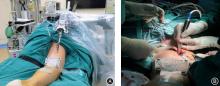
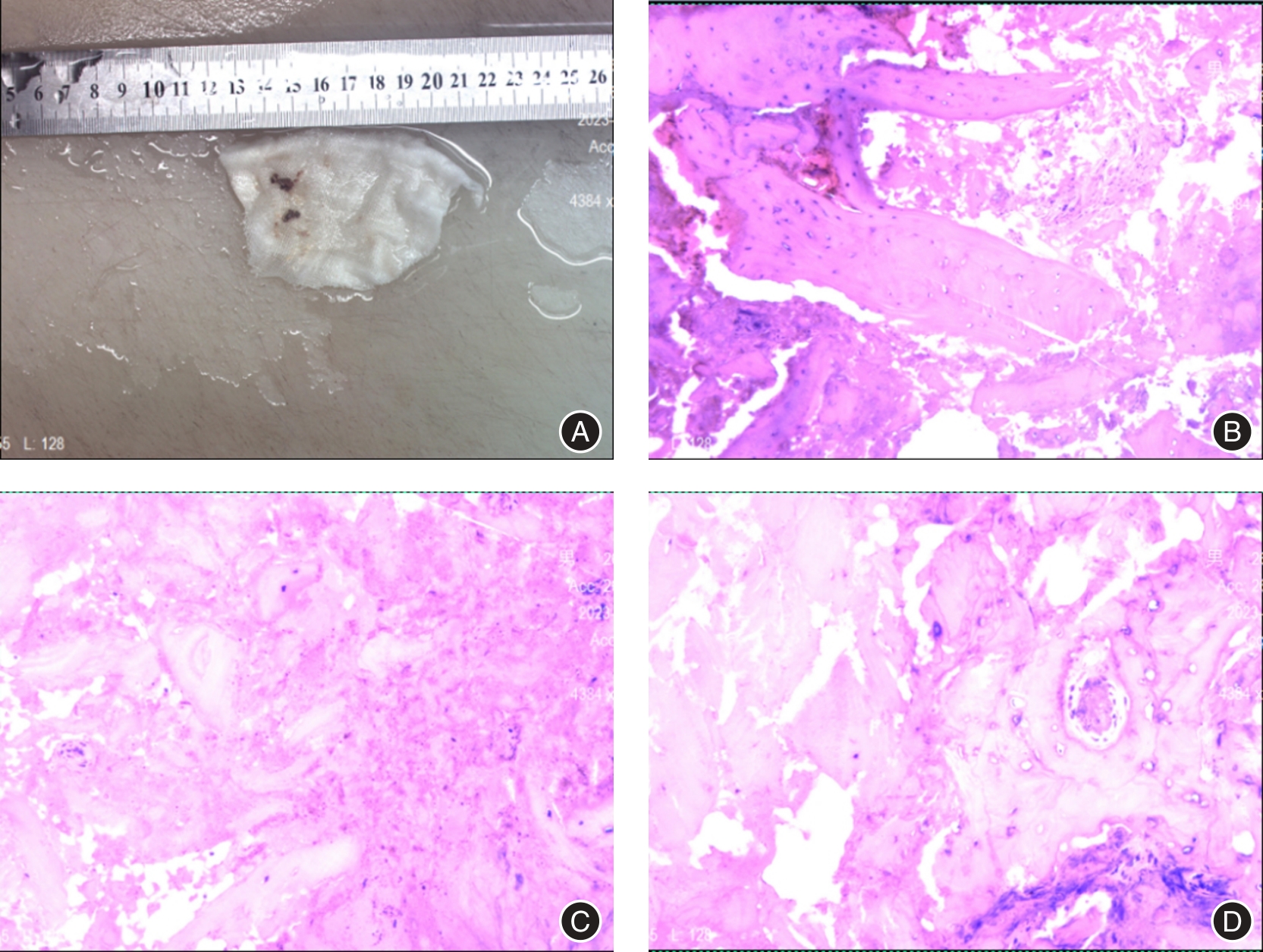
Fig.1
Intraoperative photos of lesion curettage and inactivation guided by robot-assisted navigation"
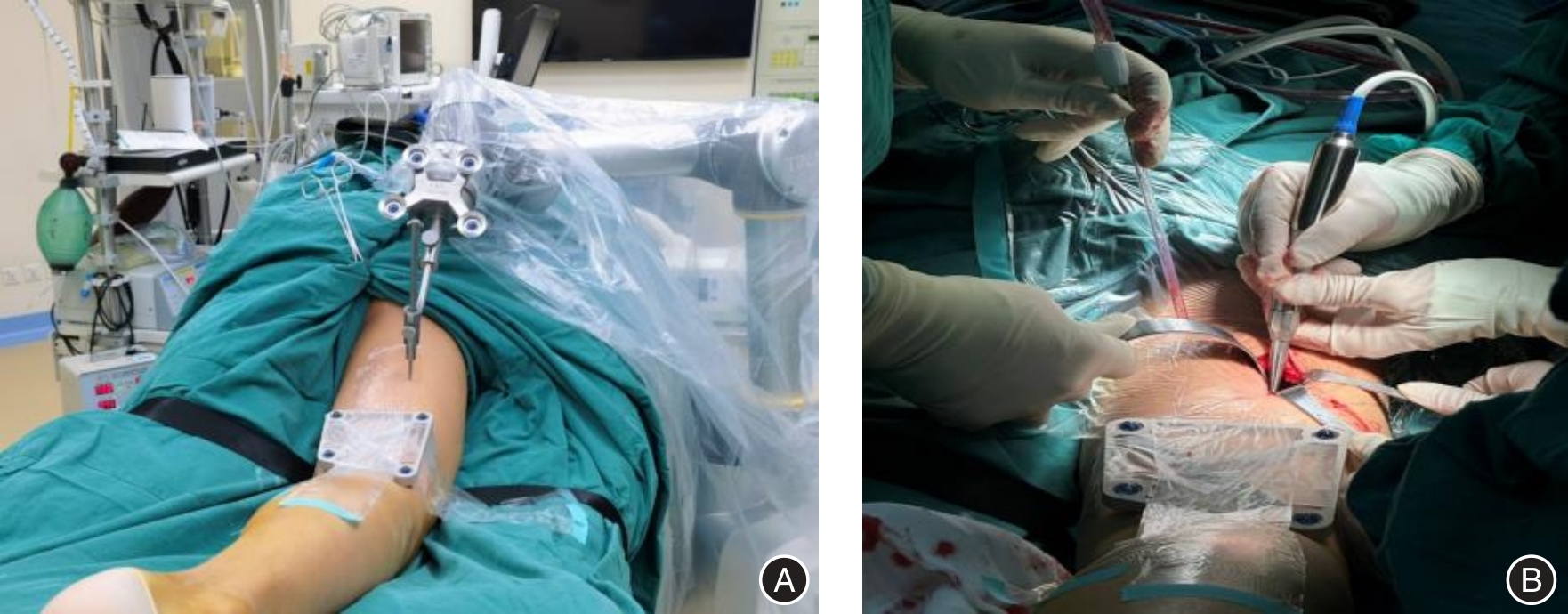
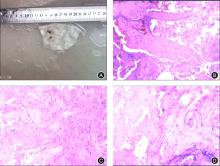
Fig.2
Pathological diagram(HE,× 400)"
Tab.2
Comparison of VAS scores before and after operation between the two groups"
| 组别 | 例数 | VAS疼痛评分 | |
|---|---|---|---|
| 术前 | 术后 | ||
| 对照组 | 30 | 6.20 ± 1.10 | 3.13 ± 0.73 |
| 观察组 | 30 | 6.13 ± 1.04 | 2.47 ± 0.86 |
| t值 | -0.242 | -3.236 | |
| P值 | 0.810 | 0.002 | |
Tab.3
Comparison of clinically relevant indicators between the two groups"
| 组别 | 例数 | 手术骨窗面积/cm2 | 手术出血量/mL | 手术时间/min | 术后住院时间/d |
|---|---|---|---|---|---|
| 对照组 | 30 | 2.67 ± 2.46 | 45.07 ± 9.82 | 72.40 ± 44.26 | 5.07 ± 3.08 |
| 观察组 | 30 | 0.68 ± 0.93 | 29.90 ± 12.50 | 29.67 ± 11.14 | 3.40 ± 1.43 |
| t值 | -4.158 | -5.226 | -5.129 | -2.686 | |
| P值 | 0.000 | 0.000 | 0.000 | 0.010 |
Tab.4
Comparison of the number of bone grafts, bone grafts and internal fixation between the two groups"
| 组别 | 例数 | 植骨数量(x ± s)/mL | 植骨 | 内固定 |
|---|---|---|---|---|
| 对照组 | 30 | 2.80 ± 2.93 | 15(50.0) | 3(10.0) |
| 观察组 | 30 | 1.37 ± 1.63 | 13(43.3) | 0(0.0) |
| χ2/t值 | -2.342 | 0.268 | 3.158 | |
| P值 | 0.024 | 0.605 | 0.076 |
Tab.5
Comparison of satisfaction rates between"
| 组别 | 例数 | 满意 | 基本满意 | 不满意 | 总满意率/% |
|---|---|---|---|---|---|
| 对照组 | 30 | 29(96.7) | 1(3.3) | 0(0.0) | 100.0 |
| 观察组 | 30 | 30(100.0) | 0(0.0) | 0(0.0) | 100.0 |
| χ2值 | 1.017 | ||||
| P值 | 0.313 |
Tab.6
Comparison of clinical efficacy between the two groups"
| 组别 | 例数 | 优 | 良 | 可 | 差 | 总优良率/% |
|---|---|---|---|---|---|---|
| 对照组 | 30 | 20(66.7) | 7(23.3) | 3(10.0) | 0(0.0) | 90.0 |
| 观察组 | 30 | 24(80.0) | 6(20.0) | 0(0.0) | 0(0.0) | 100.0 |
| χ2值 | 3.441 | |||||
| P值 | 0.179 |
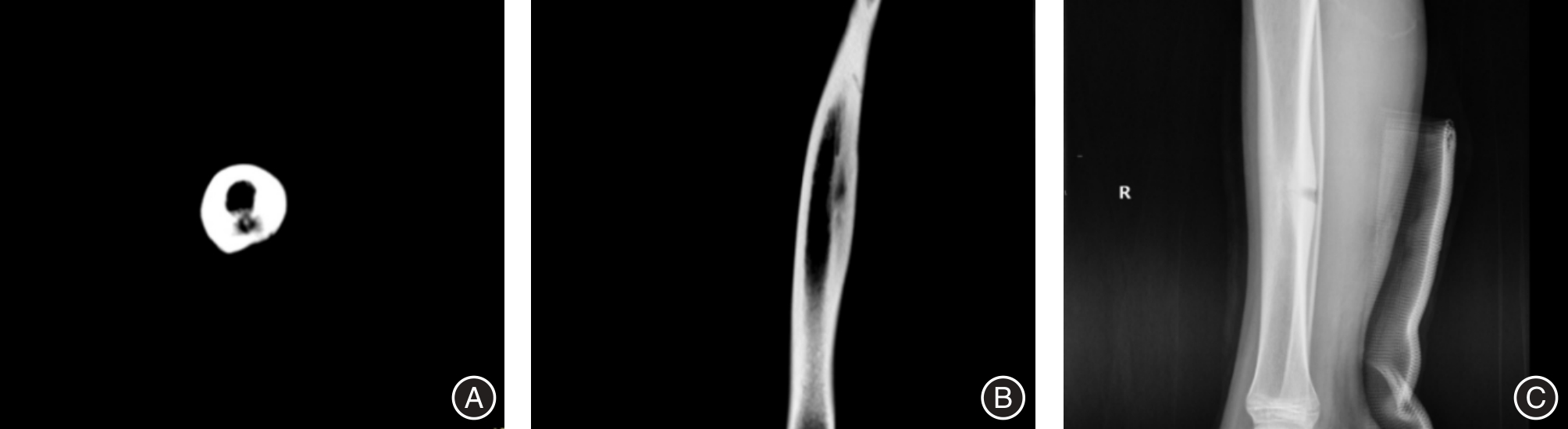
Fig.3
Results of imaging examination before and after operation"
Tab.7
Comparison of complications and postoperative recurrence rates between the two groups"
| 组别 | 例数 | 并发症 | 术后复发率/% | ||||
|---|---|---|---|---|---|---|---|
| 神经血管损伤 | 病理性骨折 | 术后感染 | 关节僵硬 | 总发生率/% | |||
| 对照组 | 30 | 0(0.0) | 1(3.3) | 0(0.0) | 0(0.0) | 3.3 | 10.0 |
| 观察组 | 30 | 0(0.0) | 0(0.0) | 0(0.0) | 0(0.0) | 0.0 | 0.0 |
| χ2值 | 1.017 | 3.158 | |||||
| P值 | 0.313 | 0.076 | |||||
| [1] |
巩春甫,旷甫国,苟亚伟,等. CT引导下经皮微波消融治疗四肢骨样骨瘤的临床研究[J]. 中国骨与关节杂志,2023,12(5):357-360. doi:10.3969/j.issn.2095-252X.2023.05.007 .
doi: 10.3969/j.issn.2095-252X.2023.05.007 |
| [2] |
范竟一,孙保胜,张学军,等. 射频消融和开放手术治疗儿童股骨骨样骨瘤的临床效果[J]. 武警医学,2023,34(12):1046-1049. doi:10.3969/j.issn.1004-3594.2023.12.009 .
doi: 10.3969/j.issn.1004-3594.2023.12.009 |
| [3] |
MEYER J, ROLVIEN T, REITER A, et al. Osteoid osteoma in the bones of the hand: A systematic literature review[J]. Arch Orthop Trauma Surg, 2023,143(8):5437-5444. doi: 10.1007/s00402-023-04839-5 . Epub 2023 Mar 20.
doi: 10.1007/s00402-023-04839-5 |
| [4] |
SANGWAN A, GOYAL A, GAMANAGATTI S, et al. Osteoid Osteoma of Scaphoid Treated with Radiofrequency Ablation[J]. J Hand Surg Asian Pac Vol, 2022,27(4):711-716. doi: 10.1142/S2424835522720316 .
doi: 10.1142/S2424835522720316 |
| [5] |
ELNAGGAR M E, ALBASTAKI A, RASHWAN M, et al. Epiphyseal osteoid osteoma of the proximal tibial epiphysis treated by CT-guided radiofrequency ablation: A case report[J]. Radiol Case Rep, 2023,18(8):2607-2611. doi: 10.1016/j.radcr.2023.04.045 .
doi: 10.1016/j.radcr.2023.04.045 |
| [6] |
李勇,买吾兰,郭龙轩,等. 手术机器人引导经皮穿刺射频消融治疗骨样骨瘤[J]. 生物骨科材料与临床研究,2024,21(2):16-20. doi:10.3969/j.issn.1672-5972.2024.02.004 .
doi: 10.3969/j.issn.1672-5972.2024.02.004 |
| [7] |
徐海荣,李远,单华超,等. 机器人辅助与导航辅助治疗骨样骨瘤的回顾性队列研究[J]. 首都医科大学学报,2024,45(5):795-800. doi:10.3969/j.issn.1006-7795.2024.05.008 .
doi: 10.3969/j.issn.1006-7795.2024.05.008 |
| [8] |
中国临床肿瘤学会(CSCO)骨肉瘤专家委员会,中国抗癌协会肉瘤专业委员会. 经典型骨肉瘤临床诊疗专家共识[J]. 临床肿瘤学杂志,2012,17(10):931-933. doi:10.3969/j.issn.1009-0460.2012.10.016 .
doi: 10.3969/j.issn.1009-0460.2012.10.016 |
| [9] |
张超,李甲振,张岩,等. 开放手术与CT引导下微创射频消融手术治疗骨样骨瘤的效果[J]. 河南医学研究,2022,31(11):1977-1980.doi:10.3969/j.issn.1004-437X.2022.11.015 .
doi: 10.3969/j.issn.1004-437X.2022.11.015 |
| [10] |
李广学,郭卫,唐顺,等. 骨样骨瘤的诊断与治疗[J]. 中国骨伤,2010,23(8):629-631. doi:10.3969/j.issn.1003-0034. 2010. 08.024 .
doi: 10.3969/j.issn.1003-0034. 2010. 08.024 |
| [11] |
LE CORROLLER T, VIVES T, MATTEI J C, et al. Osteoid Osteoma: Percutaneous CT-guided Cryoablation Is a Safe, Effective, and Durable Treatment Option in Adults[J]. Radiology, 2022,302(2):392-399. doi: 10.1148/radiol.2021211100 .
doi: 10.1148/radiol.2021211100 |
| [12] |
邹相杰,陶天奇,蒋逸秋. 踝关节镜下清理联合局部微骨折术治疗距骨骨样骨瘤[J]. 中医正骨,2022,34(3):73-76.doi:10.3969/j.issn.1001-6015.2022.03.019 .
doi: 10.3969/j.issn.1001-6015.2022.03.019 |
| [13] |
宋乐,姜亮,韩嵩博,等. 99Tcm-MDP骨显像评估脊柱骨样骨瘤及成骨细胞瘤射频消融效果[J]. 中国医学影像学杂志,2020,28(4):281-284,289. doi:10.3969/j.issn.1005-5185. 2020. 04.011 .
doi: 10.3969/j.issn.1005-5185. 2020. 04.011 |
| [14] |
郑波,胡伟,马小燕,等. CT引导微波消融治疗下肢骨样骨瘤的临床研究[J]. 微创医学,2019,14(6):712-715. doi:10.11864/j.issn.1673.2019.06.07 .
doi: 10.11864/j.issn.1673.2019.06.07 |
| [15] |
程国朝,李冀,耿震,等. 非牵引透视下股骨颈骨样骨瘤关节镜切除术[J]. 中国矫形外科杂志,2021,29(5):455-458. doi:10.3977/j.issn.1005-8478.2021.05.16 .
doi: 10.3977/j.issn.1005-8478.2021.05.16 |
| [16] |
ARRIGONI F, BRUNO F, GIANNERAMO C, et al. Evolution of the imaging features of osteoid osteoma treated with RFA or MRgFUS during a long-term follow-up: A pictorial review with clinical correlations[J]. Radiol Med, 2020,125(6):578-584. doi: 10.1007/s11547-020-01134-w .
doi: 10.1007/s11547-020-01134-w |
| [17] |
TOMASIAN A, JENNINGS J W. Benign Bone Tumors Beyond Osteoid Osteoma: Percutaneous Minimally Invasive Image-Guided Interventions[J]. Cardiovasc Intervent Radiol, 2023,46(11):1483-1494. doi: 10.1007/s00270-023-03515-w .
doi: 10.1007/s00270-023-03515-w |
| [18] |
DÜZGÜN F, TOSYALI H K, TARHAN S. Our Single Center Experience in Osteoid Osteoma Patients Treated with CTGuided Percutaneous Radiofrequency Ablation Treatment and Follow-up[J]. Curr Med Imaging, 2024,20:e270623218293. doi: 10.2174/1573405620666230627095757 .
doi: 10.2174/1573405620666230627095757 |
| [19] |
BIANCHI G, ZUGARO L, PALUMBO P, et al. Interventional Radiology's Osteoid Osteoma Management: Percutaneous Thermal Ablation[J]. J Clin Med, 2022,11(3):723. doi: 10.3390/jcm11030723 .
doi: 10.3390/jcm11030723 |
| [20] |
VITA F, TUZZATO G, PEDERIVA D, et al. Osteoid Osteoma of the Hand: Surgical Treatment versus CT-Guided Percutaneous Radiofrequency Thermal Ablation[J]. Life (Basel), 2023,13(6):1351. doi: 10.3390/life13061351 .
doi: 10.3390/life13061351 |
| [21] |
SAHIN C, BAYRAK A H, BANKAOGLU M, et al. Radiological Recovery of Osteoid Osteoma after CT Guided Percutaneous Radiofrequency Ablation[J]. J Coll Physicians Surg Pak, 2022,32(8):1056-1059. doi: 10.29271/jcpsp.2022.08.1056 .
doi: 10.29271/jcpsp.2022.08.1056 |
| [22] |
李恒元,严晓波,黄鑫,等. "O"型臂导航下小切口磨钻刮除治疗骨样骨瘤[J]. 中华骨科杂志,2023,43(3):164-171. doi:10.3760/cma.j.cn121113-20220908-00528 .
doi: 10.3760/cma.j.cn121113-20220908-00528 |
| [23] |
SHU M, KE J. The surgical management of osteoid osteoma: A systematic review[J]. Front Oncol, 2022,12:935640. doi: 10.3389/fonc.2022.935640 .
doi: 10.3389/fonc.2022.935640 |
| [24] |
ALHARBI S K, ALASEEM A M, ALHOMAIED W A, et al. Osteoid Osteoma of the Calcaneus in a Young Patient Treated With Radiofrequency Ablation: A Case Report[J]. Cureus, 2023,15(11):e48521. doi: 10.7759/cureus.48521 .
doi: 10.7759/cureus.48521 |
| [25] |
李卓宇,刘巍峰,邓志平,等. 骨科机器人辅助骨样骨瘤切除的早期疗效研究[J]. 中国修复重建外科杂志,2023,37(11):1319-1325. doi:10.7507/1002-1892.202308032 .
doi: 10.7507/1002-1892.202308032 |
| [1] | Ying ZOU,Jihua LIU,Jingyi LI,Hai BI,Yan SHI,Xiudi LU,Qibo. ZHANG. Efficacy of transfer learning artificial intelligence model based on ultrasound in evaluating the probability of malignancy of partially cystic thyroid nodule [J]. The Journal of Practical Medicine, 2025, 41(6): 889-895. |
| [2] | Xinguo WU,Ruhua ZHENG,Xin CHANG,Chunyan NIU,Fuyu. ZHANG. Interpretation of ACG clinical practice guideline in 2024: treatment of helicobacter pylori infection [J]. The Journal of Practical Medicine, 2025, 41(4): 459-464. |
| [3] | Daojun BAO,Gomei ZHU,Gehong PENG. New directions in treatment for lower extremity varicose veins: Advances in ultrasound⁃guided microwave ablation applications [J]. The Journal of Practical Medicine, 2025, 41(15): 2435-2440. |
| [4] | Cunyao LI,Xiaoliang YANG,Can WEI,Wei QI,Junfeng JING,Yanbin. ZHANG. Application of 3D digital hologram and intraoperative navigation technology in laparoscopic partial nephrectomy [J]. The Journal of Practical Medicine, 2025, 41(14): 2191-2198. |
| [5] | Heng XU,Ting ZHANG,Qin YIN,Liping CHEN,Wen SHEN,Wen ZHU. Ultrasound⁃guided PRP and silver needle thermal synergy in early osteonecrosis of the femoral head [J]. The Journal of Practical Medicine, 2025, 41(11): 1711-1717. |
| [6] | Shiyun WANG,Zhanying TANG,Jie LIN,Qian CHEN,Fangyu LI,Zhengquan YANG,Zhijun. HU. The effect of COMP gene mutation on the clinical efficacy and prognosis of the treatment of carpal tunnel syndrome with ultrasound⁃guided crochet knife [J]. The Journal of Practical Medicine, 2024, 40(8): 1126-1131. |
| [7] | Binbin ZHANG,Yongrui WU,Chao LI,Kai FAN,Jingtang ZHANG. Clinical application of personalized osteotomy guide based on rapid 3D printing in knee arthroplasty [J]. The Journal of Practical Medicine, 2024, 40(17): 2448-2453. |
| [8] | Xi′nan CHEN,Xudong. XU. Progress of electromagnetic navigation bronchoscopy in diagnosis and treatment of pulmonary nodules [J]. The Journal of Practical Medicine, 2024, 40(1): 1-6. |
| [9] | Xiaojing ZHAO,Hui LIANG,Yuna GUO,Baishan. WU. Effectiveness of high voltage long duration pulsed radiofrequency versus low temperature plasma radiofrequence ablation in the treatment of cervicogenic headache [J]. The Journal of Practical Medicine, 2024, 40(1): 85-90. |
| [10] | SUN Wenxi , YANG Yifan# , LIN Rui, ZHAO Shuai, LIU Bingxin, WANG Hongshen, LI Yongjin, CHEN Bolai. . Application progress of orthopedic robotic assistance in cervical surgery [J]. The Journal of Practical Medicine, 2023, 39(9): 1179-1184. |
| [11] |
NIU Chunyan, CHEN Yao, SONG Yongqiang..
Key points of the American Association of Clinical Endocrinology Clinical Practice Guideline for the diagno⁃ sis and management of nonalcoholic fatty liver disease in primary care and endocrinology clinical settings co ⁃sponsored [J]. The Journal of Practical Medicine, 2023, 39(3): 267-273. |
| [12] | Wenchuang CHEN,Yong LI,Rongbin CHEN,Lixin TAN,Xinyuan. LIN. Clinical observation of percutaneous vertebroplasty assisted by four⁃axis positioning 3D printing guide plate [J]. The Journal of Practical Medicine, 2023, 39(24): 3227-3232. |
| [13] | Song QUAN,Zhe. WANG. Song Emphasis on standardized clinical treatment of recurrent implant failure [J]. The Journal of Practical Medicine, 2023, 39(21): 2693-2697. |
| [14] | LI Junjie, TANG Lanlan, YANG Zhenyuan, DENG Qiang, ZHANG Yanjun, LIU Yandong. . Application of iRobot II of orthopedic robotic system in percutaneous endoscopic nucleus pulposectomy [J]. The Journal of Practical Medicine, 2023, 39(12): 1564-1570. |
| [15] | WANG Ke, XU Peng, ZHANG Ying, ZHANG Yibin, JI Xinchen, WANG Jian. . Comparative analysis of Chinese and foreign guidelines for the treatment of myasthenia gravis [J]. The Journal of Practical Medicine, 2022, 38(8): 917-922. |
| Viewed | ||||||
|
Full text |
|
|||||
|
Abstract |
|
|||||
