实用医学杂志 ›› 2026, Vol. 42 ›› Issue (13): 2371-2380.doi: 10.3969/j.issn.1006-5725.2026.13.013

• 慢性病防治专栏 • 上一篇    

基于TRPC6信号通路探讨膜肾方调控自噬治疗特发性膜性肾病的作用机制

丁秀1,2,3,4,李颖霞1,3,4,李慧1,3,4,邹新蓉1,3,4()   

  1. 1.湖北省中医院肾病科 (湖北 武汉 430061 )
    2.湖北中医药大学中医学院 (湖北 武汉 430061 )
    3.湖北省中医药研究院,( 湖北 武汉 430061 )
    4.中医肝肾研究及应用湖北省重点实验室,(湖北 武汉 430061 )
  • 收稿日期:2026-04-28 出版日期:2026-07-10 发布日期:2026-07-14
  • 通讯作者: 邹新蓉 E-mail:frank_judy@163.com
  • 基金资助:
    湖北省自然科学基金联合基金项目(2023AFD181);湖北省中医药管理局中医药青年人才项目(ZY2025Q022)

Mechanism of moshen formula in treating idiopathic membranous nephropathy by regulating autophagy via the TRPC6 signaling pathway

Xiu DING1,2,3,4,Yingxia LI1,3,4,Hui LI1,3,4,Xinrong ZOU1,3,4()   

  1. 1.Department of Nephrology,Hubei Provincial Hospital of Traditional Chinese Medicine,Wuhan 430061,Hubei,China
    2.School of Traditional Chinese Medicine,Hubei University of Chinese Medicine,Wuhan 430061,Hubei,China
    3.Hubei Provincial Academy of Traditional Chinese Medicine,Wuhan 430061,Hubei,China
    4.Hubei Provincial Key Laboratory of Liver and Kidney Research and Application of Traditional Chinese Medicine,Wuhan 430061,Hubei,China
  • Received:2026-04-28 Online:2026-07-10 Published:2026-07-14
  • Contact: Xinrong ZOU E-mail:frank_judy@163.com

摘要:

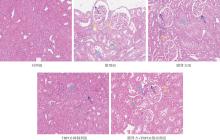
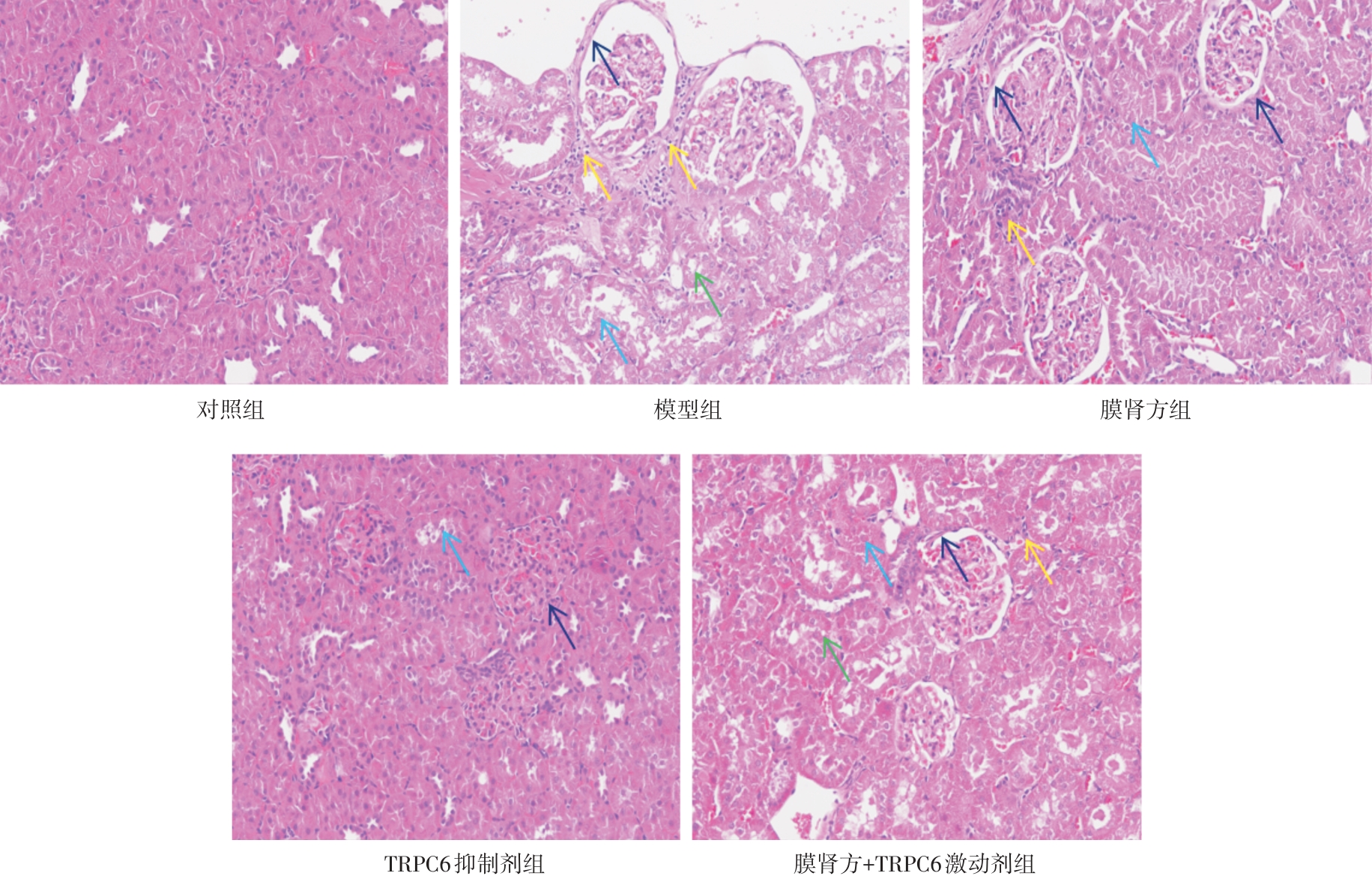
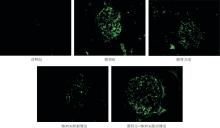
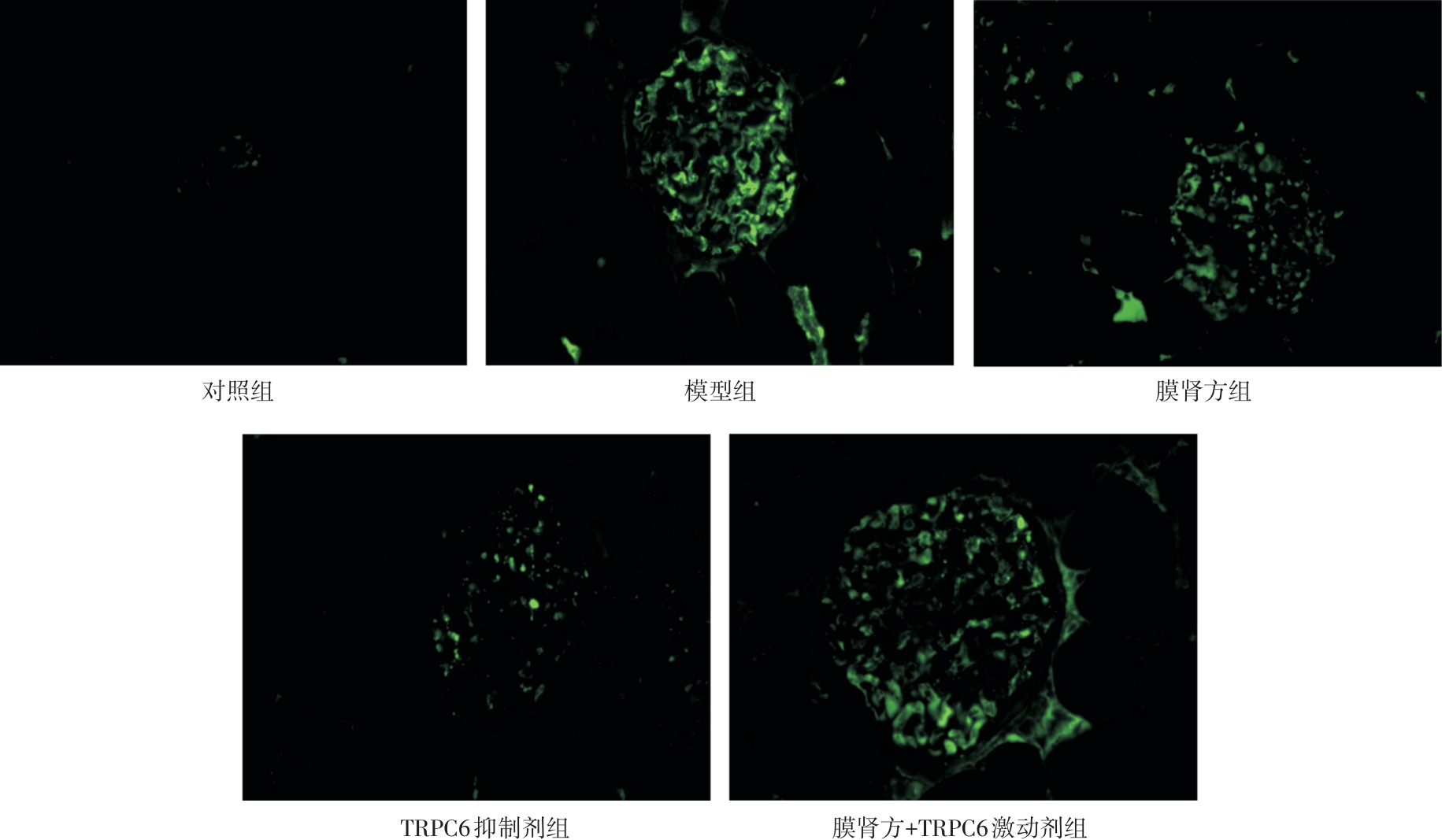
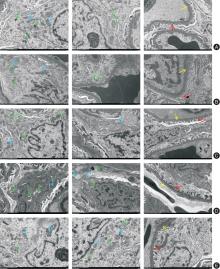
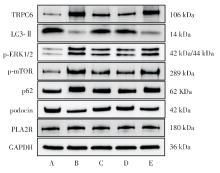
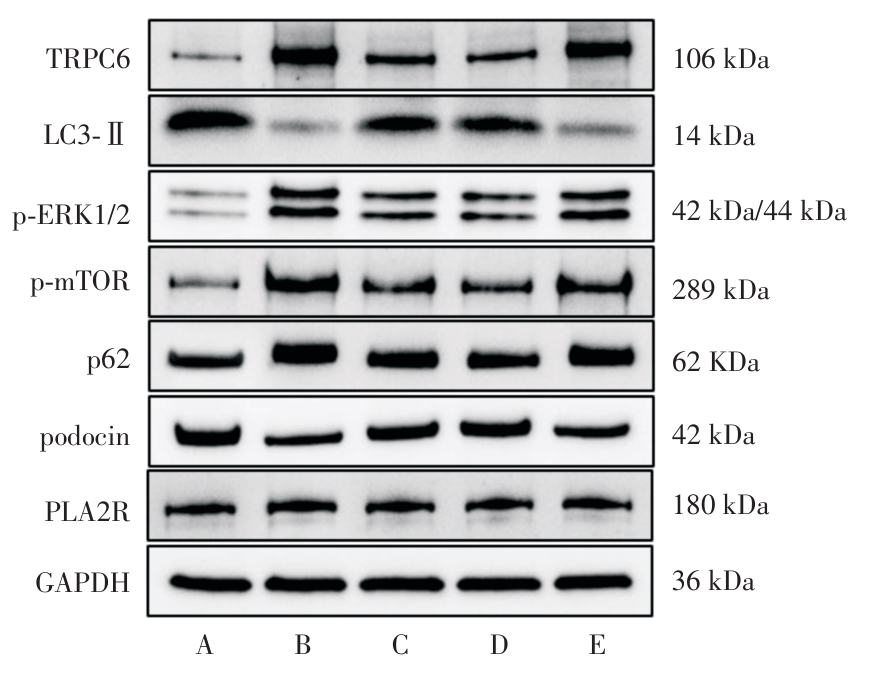
目的 研究膜肾方通过瞬时受体电位阳离子通道6(TRPC6)信号通路调控自噬治疗特发性膜性肾病的作用机制。 方法 40只雄性SD大鼠,随机选取8只为对照组,其余32只大鼠均采用阳离子化牛血清白蛋白诱导造模,分为模型组、膜肾方组、TRPC6抑制剂组及膜肾方+TRPC6激动剂组,每组8只。对照组及模型组予等量生理盐水灌胃,其余3组予相应药物处理4周。观察大鼠一般情况;检测血肌酐、血白蛋白及24 h尿蛋白水平;苏木素-伊红(HE)染色观察肾小球基底膜增厚及炎性细胞浸润情况;免疫荧光检测肾小球IgG沉积情况;透射电镜观察肾小球基底膜、足突、自噬体的情况;Western blot(WB)检测各组大鼠肾组织TRPC6、微管相关蛋白1轻链3-Ⅱ(LC3-Ⅱ)、磷酸化细胞外信号调节激酶1/2(p-ERK1/2)、磷酸化哺乳动物雷帕霉素靶蛋白(p-mTOR)、泛素结合蛋白p62、足突蛋白podocin、磷脂酶A2受体(PLA2R)表达水平。 结果 与对照组相比,模型组大鼠精神萎靡、食少便溏、毛发枯槁,伴血肌酐升高、血白蛋白降低、24 h尿蛋白增加(P 0.01),TRPC6、p-ERK1/2、p-mTOR、p62及PLA2R表达水平升高(P 0.01),LC3-Ⅱ及podocin表达水平下降(P 0.01),肾小球基底膜明显增厚、间质炎性浸润,IgG沉积显著增加,电镜下足突广泛融合、线粒体嵴断裂、自噬水平低下;与模型组相比,膜肾方组大鼠一般状态、生化指标及病理损伤均改善,自噬流恢复,TRPC6、p-ERK1/2、p-mTOR及p62表达水平下降(P 0.01),LC3-Ⅱ及podocin表达水平升高(P 0.01);与膜肾方组相比,TRPC6抑制剂组TRPC6、p-mTOR、p62表达下降更显著(P 0.05),但生化指标及podocin、LC3-Ⅱ表达差异无统计学意义(P 0.05);膜肾方联用TRPC6激动剂后,通路调控及自噬改善作用减弱(P 0.05)。 结论 膜肾方可有效改善特发性膜性肾病大鼠的一般状态、生化指标及肾组织病理损伤,其机制可能与抑制TRPC6信号通路下调ERK/mTOR恢复自噬流及上调podocin有关;基于综合表型,膜肾方与TRPC6抑制剂疗效相当,而激活TRPC6减弱膜肾方保护效应,揭示TRPC6是膜肾方发挥肾保护作用的关键靶点。

关键词: 膜肾方, 特发性膜性肾病, 瞬时受体电位阳离子通道6信号通路, 自噬

Abstract:

Objective To investigate the mechanism by which Moshen Formula treats idiopathic membranous nephropathy (IMN) through the regulation of autophagy via the TRPC6 signaling pathway. Methods Forty male SD rats were randomly divided into a control group (n = 8) and a model group (n = 32). The model group was induced by cationic bovine serum albumin and then further divided into four subgroups: the model subgroup, the Moshen Formula subgroup, the TRPC6 inhibitor subgroup, and the Moshen Formula + TRPC6 agonist subgroup, with 8 rats in each subgroup. The control group and the model subgroup were administered normal saline by gavage, whereas the other three subgroups were given corresponding drugs for 4 weeks. The general condition of the rats was observed. The levels of serum creatinine, serum albumin, and 24-hour urinary protein were measured. Hematoxylin-eosin (HE) staining was carried out to observe the thickening of the glomerular basement membrane and the infiltration of inflammatory cells. Immunofluorescence was employed to detect the deposition of IgG in the glomeruli. Transmission electron microscopy was utilized to observe the glomerular basement membrane, foot processes, and autophagosomes. Western blot was conducted to detect the expression levels of transient receptor potential cation channel 6 (TRPC6), microtubule-associated protein 1 light chain 3-Ⅱ (LC3-Ⅱ), phosphorylated extracellular signal-regulated kinase 1/2 (p-ERK1/2), phosphorylated mammalian target of rapamycin (p-mTOR), ubiquitin-binding protein p62, podocin, and phospholipase A2 receptor (PLA2R) in renal tissues. Results Compared with the control group, the rats in the model group exhibited lethargy, a reduction in food intake, loose stools, and dull hair. Additionally, there were significant increases in serum creatinine, a decrease in serum albumin, and an elevation in 24-hour urinary protein (P 0.01). The expression levels of TRPC6, p-ERK1/2, p-mTOR, p62, and PLA2R were significantly elevated (P 0.01), whereas the expression levels of LC3-Ⅱ and podocin were decreased (P 0.01). Renal pathological examination indicated marked thickening of the glomerular basement membrane, interstitial inflammatory infiltration, an increase in IgG deposition, extensive foot-process fusion, disrupted mitochondrial cristae, and impaired autophagy. Compared with the model group, the rats in the Moshen Formula group showed improvements in their general condition, biochemical indicators, and pathological injury. There was a restoration of autophagic flux, a decrease in the expression levels of TRPC6, p-ERK1/2, p-mTOR, and p62 (P 0.01), and an increase in the expression levels of LC3-II and podocin (P 0.01). Compared with the Moshen Formula group, the TRPC6 inhibitor group demonstrated more significant decreases in the expression of TRPC6, p-mTOR, and p62 (P 0.05). However, there were no significant differences in biochemical parameters, podocin, and LC3-Ⅱ expression (P 0.05). After the combination of the Moshen Formula with a TRPC6 agonist, the pathway-regulating and autophagy-improving effects were attenuated (P 0.05). Conclusions The Moshen Formula effectively enhances the general condition, biochemical parameters, and alleviates renal pathological damage in rats with IMN. Its mechanism might involve the inhibition of the TRPC6 signaling pathway, the down-regulation of ERK/mTOR, the restoration of autophagic flux, and the up-regulation of podocin. Based on comprehensive phenotypes, the Moshen Formula demonstrated comparable efficacy to a TRPC6 inhibitor. In contrast, the activation of TRPC6 diminished the protective effects of the Moshen Formula, indicating that TRPC6 is a crucial target for the renoprotective action of the Moshen Formula.

Key words: Moshen Formula, idiopathic membranous nephropathy, TRPC6 signaling pathway, autophagy

中图分类号: