实用医学杂志 ›› 2026, Vol. 42 ›› Issue (1): 72-78.doi: 10.3969/j.issn.1006-5725.2026.01.009

• 慢性病防治专栏 • 上一篇    下一篇

骨髓间充质干细胞外泌体缓解小鼠哮喘模型的功能和机制

徐丽娜,何小双,刘冬,邬超()   

  1. 石河子大学第一附属医院呼吸与危重症医学科 (新疆 石河子 832008 )
  • 收稿日期:2025-08-11 出版日期:2026-01-10 发布日期:2026-01-14
  • 通讯作者: 邬超 E-mail:mail@healthy.vip
  • 基金资助:
    国家自然科学基金资助项目(81960005);石河子大学科研项目(ZZZC2023057);兵团科技计划项目(2023ZD019);兵团科技计划项目(2024AB066)

The study on the function and mechanism of bone marrow mesenchymal stem cell exosomes in alleviating the mouse asthma model

Lina XU,Xiaoshuang HE,Dong LIU,Chao WU()   

  1. Department of Respiratory and Critical Care Medicine,First Affiliated Hospital of Shihezi University,Shihezi 832008,Xinjiang,China
  • Received:2025-08-11 Online:2026-01-10 Published:2026-01-14
  • Contact: Chao WU E-mail:mail@healthy.vip

摘要:

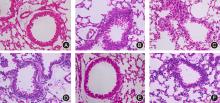
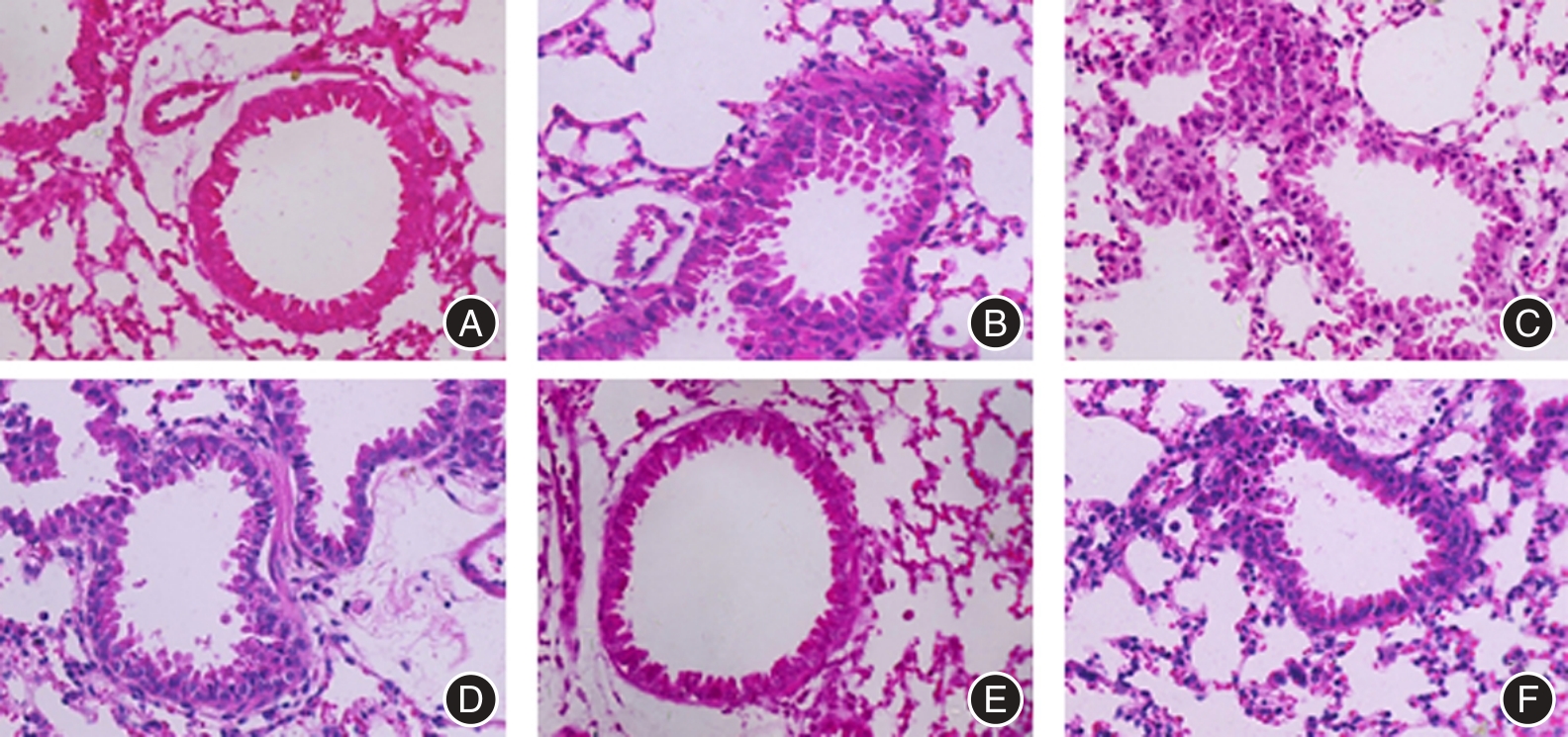
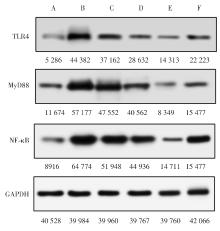
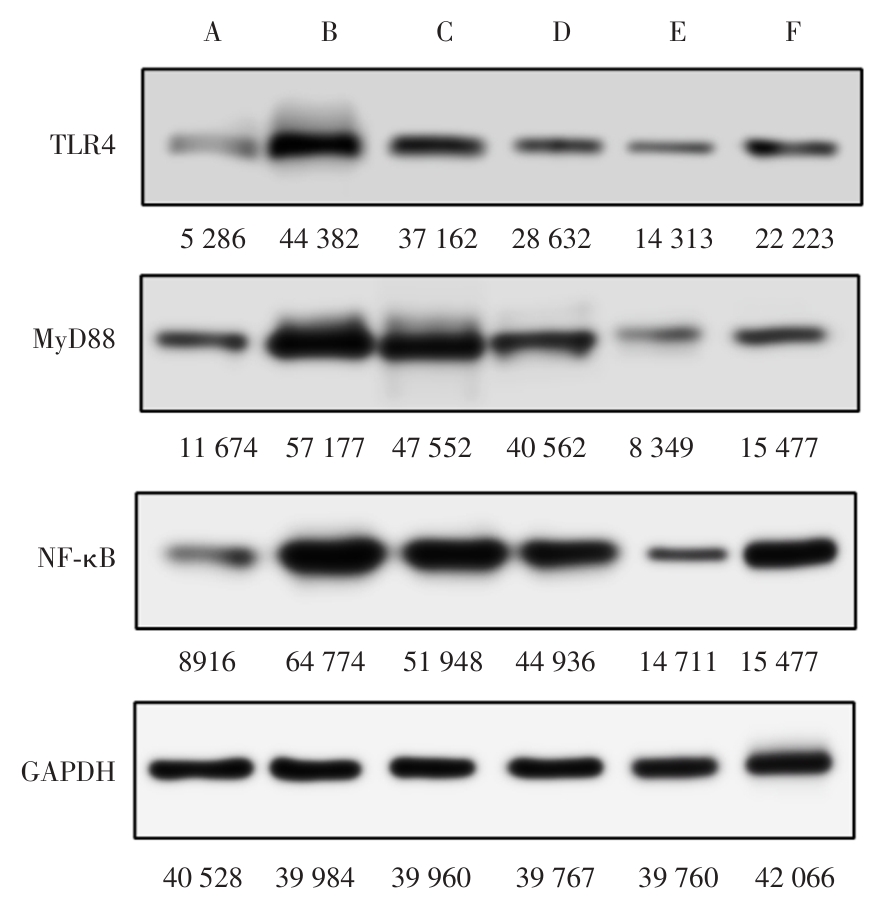
目的 探究骨髓间充质干细胞外泌体对小鼠哮喘模型的影响及机制。 方法 C57/6J小鼠分为对照组、模型组、外泌体5、10、20 μg组和外泌体20 μg + RS09 TFA组,给药结束后,检测各组小鼠气道阻力,苏木精-伊红(HE)染色检测小鼠气道损伤,酶联免疫吸附试验(ELISA)检测小鼠肺泡液炎症因子白细胞介素-4(IL-4)、白细胞介素-5(IL-5)、白细胞介素-13(IL-13)浓度,比色法检测肺泡液丙二醛(MDA)、过氧化氢酶(CAT)和超氧化物歧化酶(SOD),Western blot检测小鼠肺组织Toll样受体4(TLR4)、髓分化因子88(MyD88)、核因子 κB(NF-κB)表达。 结果 与模型组相比,外泌体5、10、20 μg组小鼠气道阻力显著降低(P < 0.05),肺泡液IL-4、IL-5、IL-13、MDA浓度显著降低(P < 0.05),CAT和SOD浓度显著增加(P < 0.05),TLR4、MyD88和NF-κB表达均显著下调(P < 0.05)。与外泌体20 μg组比较,外泌体20 μg + RS09 TFA组小鼠气道阻力显著增加(P < 0.05),肺泡液IL-4、IL-5、IL-13、MDA浓度显著升高(P < 0.05),CAT和SOD浓度显著降低(P < 0.05),TLR4、MyD88和NF-κB表达均显著上调(P < 0.05)。 结论 骨髓间充质干细胞外泌体可通过抑制TLR4/MyD88/NF-κB信号通路缓解小鼠哮喘。

关键词: 哮喘, 骨髓间充质干细胞, 外泌体, 炎症, 气道阻力, TLR4/MyD88/NF-κB信号通路

Abstract:

Objective The aim of this study was to investigate the effects and mechanisms of bone marrow mesenchymal stem cell exosomes on the mouse asthma models. Methods C57/6J mice were divided into control group, model group, exosome (5, 10, and 20 μg), and exosome (20 μg) + RS09 TFA group. After administration of the respective treatment, airway resistance was measured in each group of mice. Hematoxylin and eosin (HE) staining was used to detect airway damage in mice. Enzyme-linked immunosorbent assay (ELISA) was applied to detect the concentrations of inflammatory factors interleukin-4 (IL-4), interleukin-5 (IL-5), and interleukin-13 (IL-13) in the alveolar fluid of mice. The colorimetric method was used to determine the concentrations of malondialdehyde (MDA), catalase (CAT), and superoxide dismutase (SOD) in the alveolar fluid. Western blot was used to detect the expression of Toll-like receptor 4 (TLR4), myeloid differentiation factor 88 (MyD88), and nuclear factor κB (NF-κB) in the lung tissues of mice. Results Compared with the model group, the airway resistance in the exosome 5, 10, 20 μg groups decreased significantly (P < 0.05); the concentrations of IL-4, IL-5, IL-13, and MDA in the alveolar fluid of mice decreased significantly (P < 0.05); while the concentrations of CAT and SOD increased significantly (P < 0.05); additionally, the expression of TLR4, MyD88, and NF-κB were all significantly downregulated (P < 0.05). Compared with the exosome 20 μg group, the airway resistance in the exosome 20 μg + RS09 TFA group increased significantly (P < 0.05), the concentrations of IL-4, IL-5, IL-13, and MDA in the alveolar fluid of mice increased significantly (P < 0.05), while the concentrations of CAT and SOD decreased significantly (P < 0.05), the expression of TLR4, MyD88, and NF-κB were all significantly upregulated (P < 0.05). Conclusion Bone marrow mesenchymal stem cell exosomes can alleviate mouse asthma by inhibiting the TLR4/MyD88/NF-κB signaling pathway.

Key words: asthma, bone marrow mesenchymal stem cells, exosomes, inflammation, airway resistance, TLR4/MyD88/ NF-κB signaling pathway

中图分类号: