实用医学杂志 ›› 2026, Vol. 42 ›› Issue (14): 2513-2520.doi: 10.3969/j.issn.1006-5725.2026.14.004

• 心脑血管疾病专栏 • 上一篇    

3种术式治疗幕上高血压脑出血的短期预后与再出血风险比较

李昂1,洪庆峰2,刘巍2,朱建晨2,张亚隆2,方大钊1,2()   

  1. 1.南京医科大学附属淮安第一医院神经外科 (江苏 淮安 223300 )
    2.新疆生产建设兵团第七师医院神经外科;(新疆奎屯 833200 )
  • 收稿日期:2026-04-19 出版日期:2026-07-25 发布日期:2026-08-05
  • 通讯作者: 方大钊 E-mail:fangdazhao110@126.com
  • 基金资助:
    新疆生产建设兵团第七师胡杨河市科技计划项目(2025A10);江苏省淮安市科技计划项目(HAB2024005)

Comparison of short-term prognosis and rebleeding risk among three surgical approaches for supratentorial hypertensive intracerebral hemorrhage

Ang LI1,Qingfeng HONG2,Wei LIU2,Jianchen ZHU2,Yalong ZHANG2,Dazhao FANG1,2()   

  1. 1.Department of Neurosurgery,Nanjing Medical University Affiliated Huai'an First People's Hospital,Huai'an 223300,Jiangsu,China
    2.Department of Neurosurgery,the Seventh Division Hospital of Xinjiang Production and Construction Corps,Kuitun 833200,Xinjiang,China
  • Received:2026-04-19 Online:2026-07-25 Published:2026-08-05
  • Contact: Dazhao FANG E-mail:fangdazhao110@126.com

摘要:

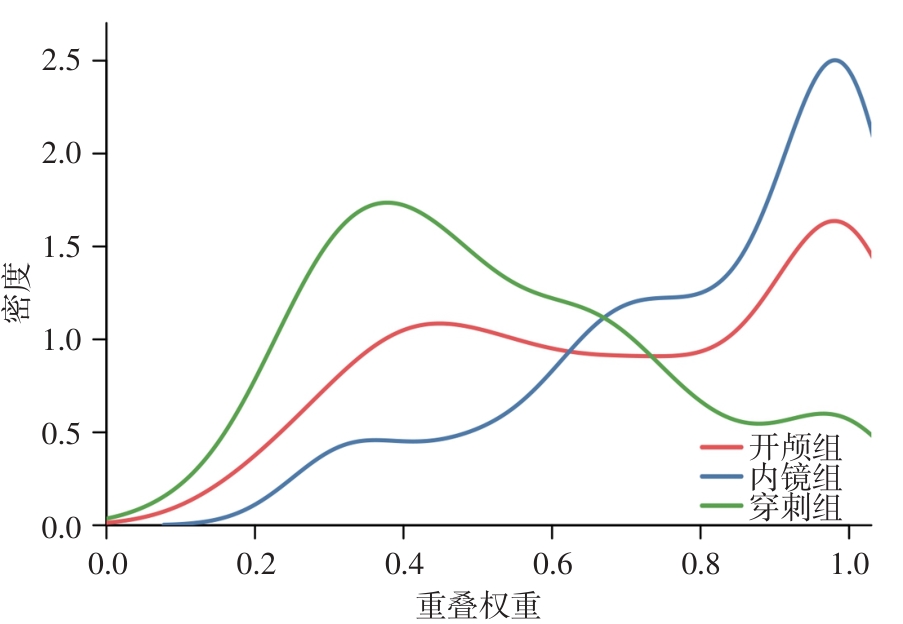
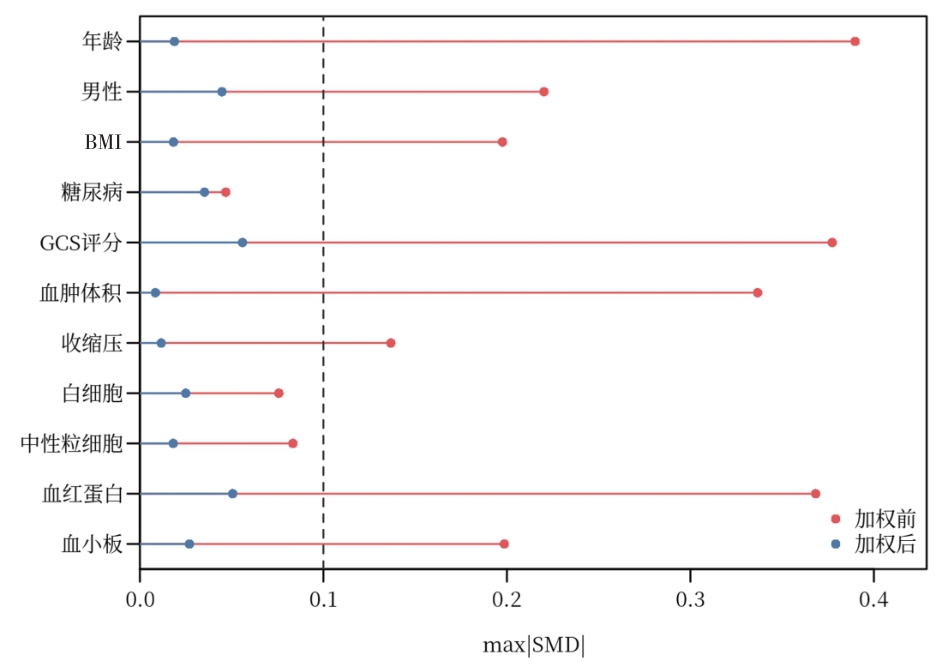
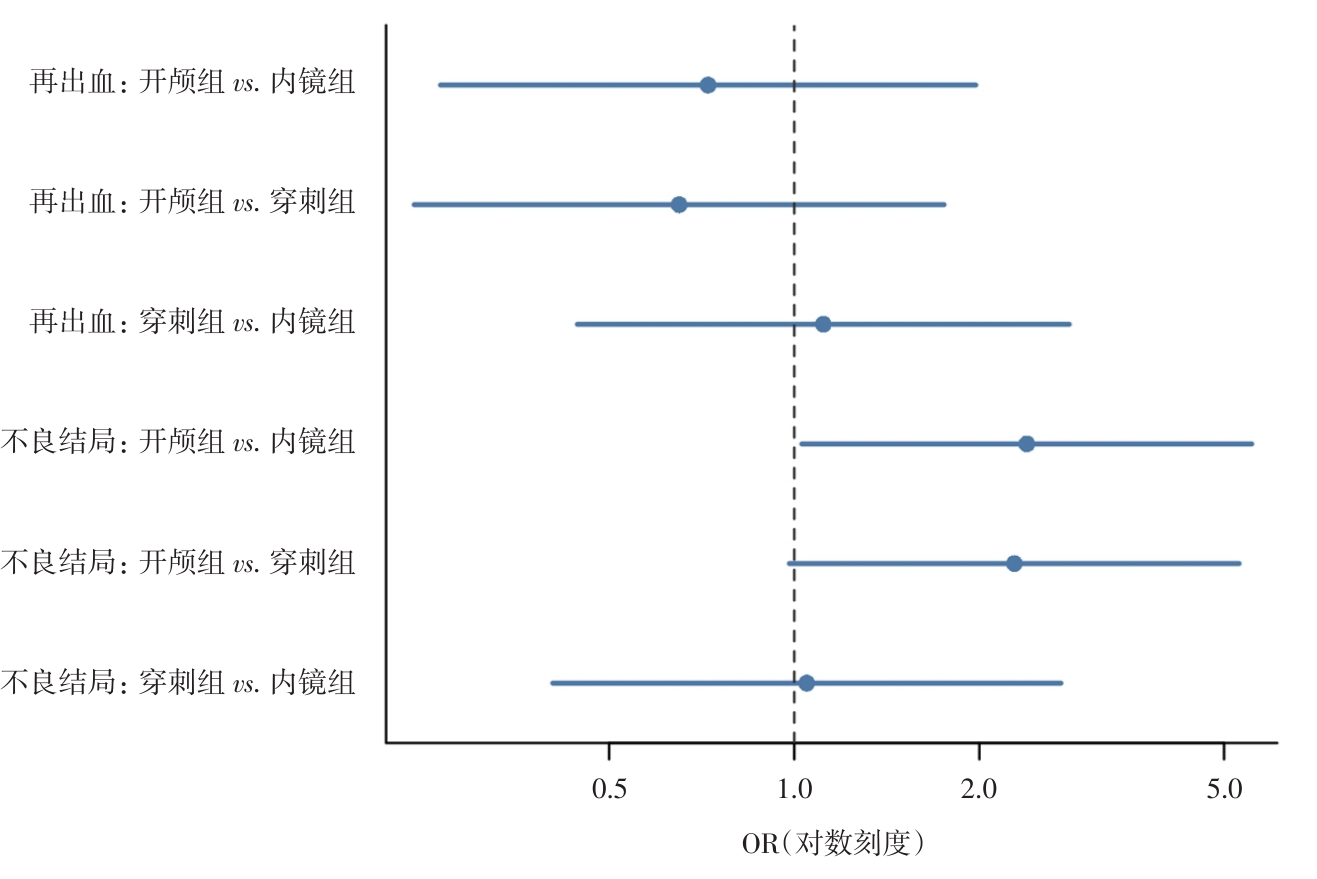
目的 比较神经内镜下血肿清除术(内镜组)、软通道穿刺引流联合尿激酶灌注术(穿刺组)与开颅血肿清除术(开颅组)治疗幕上高血压脑出血(hypertensive intracerebral hemorrhage, HICH)患者的短期神经功能预后及再出血风险。 方法 回顾性纳入南京医科大学附属淮安第一医院神经外科2021年1月至2025年12月收治的384例幕上HICH患者,按术式分为开颅组(121例)、内镜组(107例)和穿刺组(156例)。纳入标准为血肿体积30 ~ 80 mL、入院格拉斯哥昏迷评分(Glasgow coma scale, GCS)5 ~ 12分。采用三分类倾向评分重叠加权(propensity score overlap weighting,PS-OW)法平衡组间基线特征。主要结局为出院时改良Rankin量表(modified Rankin scale, mRS)评分 ≥ 4分(定义为不良预后);次要结局包括再出血率、出院GCS评分、住院时间及总费用。 结果 加权后,3组基线协变量达到良好平衡(所有标准化均数差绝对值 < 0.1)。加权后不良预后事件率,开颅组为22.8%,高于内镜组的11.0%和穿刺组的11.5%。与内镜组相比,开颅组不良预后风险升高[比值比(odds ratio, OR)= 2.389,95%CI:1.029 ~ 5.545,P = 0.043];与穿刺组比较,开颅组风险亦呈升高趋势(OR = 2.280,95%CI:0.982 ~ 5.290,P = 0.055)。3组间再出血率差异无统计学意义。开颅组住院时间最长、总费用最高,穿刺组最低;内镜组出院GCS评分略优于开颅组。 结论 在3种术式均适用的重叠人群中,与微创术式相比,开颅血肿清除术与较差的短期神经功能预后及更高的医疗负担相关,而3种术式的再出血风险无显著临床差异。

关键词: 高血压脑出血, 开颅术, 神经内镜下血肿清除术, 软通道穿刺引流术, 再出血, 倾向评分重叠加权

Abstract:

Objective To compare the short-term neurological prognosis and rebleeding risk among patients with supratentorial hypertensive intracerebral hemorrhage (HICH) who were treated with neuroendoscopic hematoma evacuation (neuroendoscopy group), soft-channel puncture drainage with urokinase infusion (puncture group), and craniotomy for hematoma evacuation (craniotomy group). Methods A total of 384 patients with supratentorial HICH who were admitted to the Department of Neurosurgery, Huai'an First People's Hospital Affiliated to Nanjing Medical University between January 2021 and December 2025 were retrospectively enrolled. These patients were assigned to the craniotomy group (n = 121), neuroendoscopy group (n = 107), and puncture group (n = 156) based on the surgical modality. The inclusion criteria were a hematoma volume ranging from 30 to 80 mL and an admission Glasgow coma scale (GCS) score between 5 and 12. Three-category propensity score overlap weighting (PS-OW) was employed to balance the baseline characteristics across the groups. The primary outcome was a poor short-term prognosis, which was defined as a modified Rankin scale (mRS) score of 4 or higher at the time of discharge. Secondary outcomes included the rebleeding rate, the GCS score at discharge, the length of hospital stay, and the total hospitalization cost. Results After weighting, the baseline covariates were well-balanced among the three groups (all absolute standardized mean differences < 0.1). The weighted event rate of poor prognosis in the craniotomy group was 22.8%, which was higher than the 11.0% in the neuroendoscopy group and the 11.5% in the puncture group. When compared with the neuroendoscopy group, the craniotomy group exhibited a significantly higher risk of poor prognosis (odds ratio [OR]=2.389, 95%CI: 1.029 - 5.545, P = 0.043). A similar trend was noted when comparing the craniotomy group with the puncture group (OR = 2.280, 95%CI: 0.982 - 5.290, P = 0.055). No statistically significant difference in the rebleeding rate was detected among the three groups. The craniotomy group had the longest hospital stay and the highest total cost, whereas the puncture group had the lowest. The neuroendoscopy group presented a slightly better GCS score at discharge than the craniotomy group. Conclusions In the overlapping population eligible for all three surgical modalities, craniotomy was associated with a poorer short-term neurological prognosis and a greater medical burden compared with minimally invasive approaches. Meanwhile, no clinically significant difference in rebleeding risk was observed among the three procedures.

Key words: hypertensive intracerebral hemorrhage, craniotomy, neuroendoscopic hematoma evacuation, soft-channel puncture drainage, rebleeding, propensity score overlap weighting

中图分类号: