

The Journal of Practical Medicine ›› 2026, Vol. 42 ›› Issue (1): 72-78.doi: 10.3969/j.issn.1006-5725.2026.01.009
• Chronic Disease Control • Previous Articles Next Articles
Lina XU,Xiaoshuang HE,Dong LIU,Chao WU( )
)
Received:2025-08-11
Online:2026-01-10
Published:2026-01-14
Contact:
Chao WU
E-mail:mail@healthy.vip
CLC Number:
Lina XU,Xiaoshuang HE,Dong LIU,Chao WU. The study on the function and mechanism of bone marrow mesenchymal stem cell exosomes in alleviating the mouse asthma model[J]. The Journal of Practical Medicine, 2026, 42(1): 72-78.
Fig.1
The result of bone marrow mesenchymal stem cell identification"
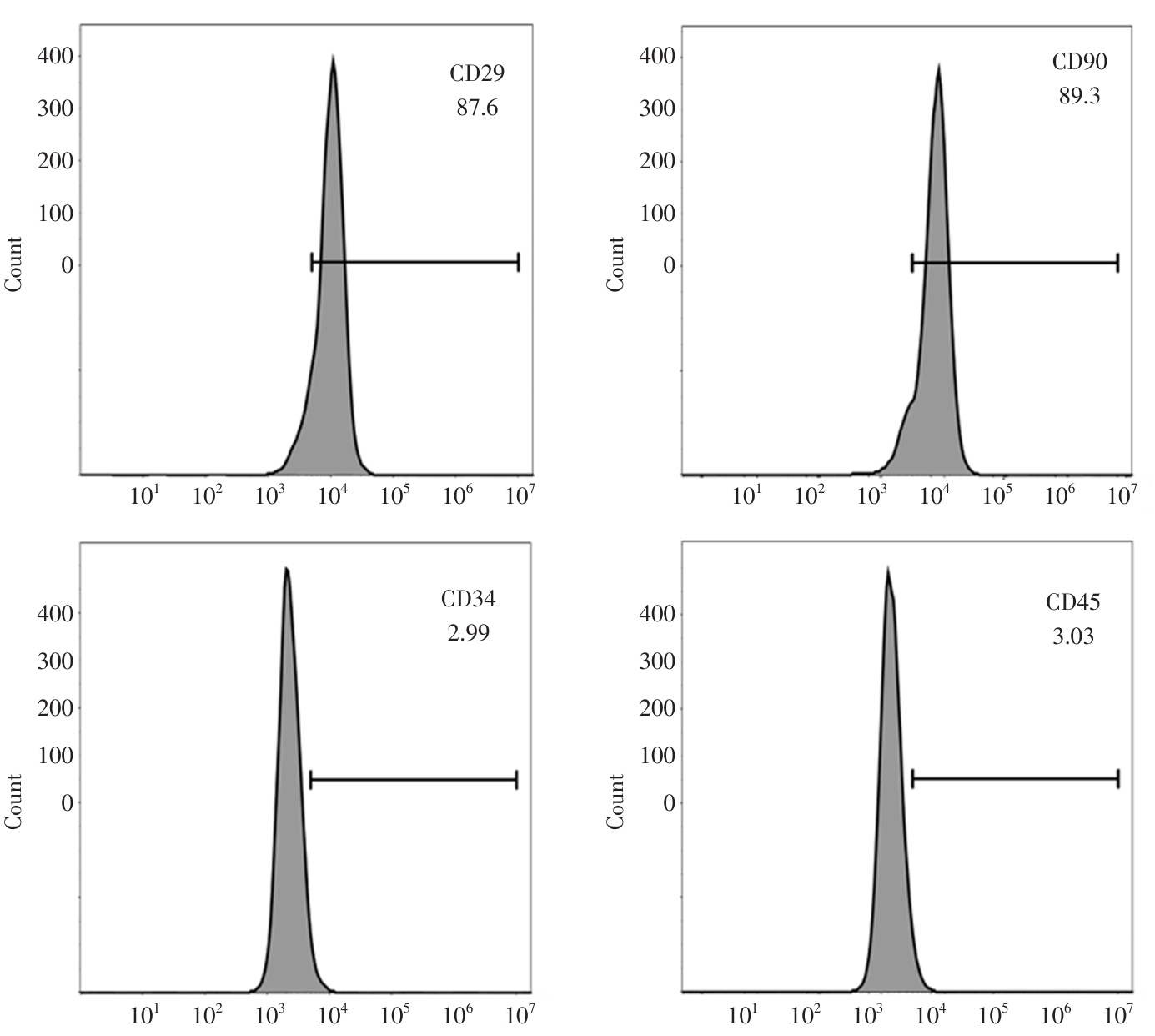
Fig.2
Identification of the structure and biomarkers of exosomes"
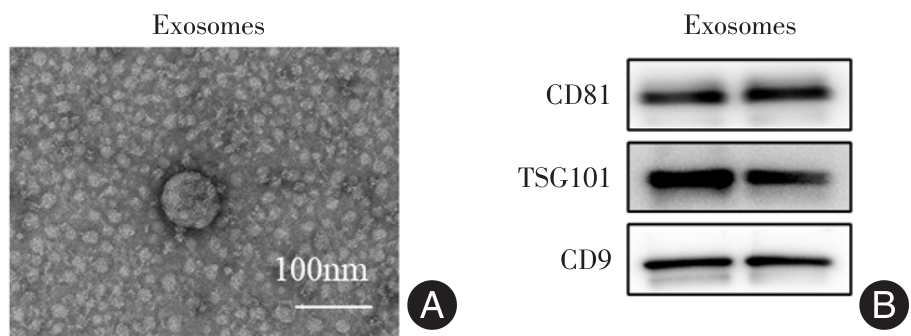
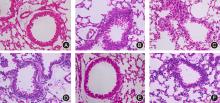
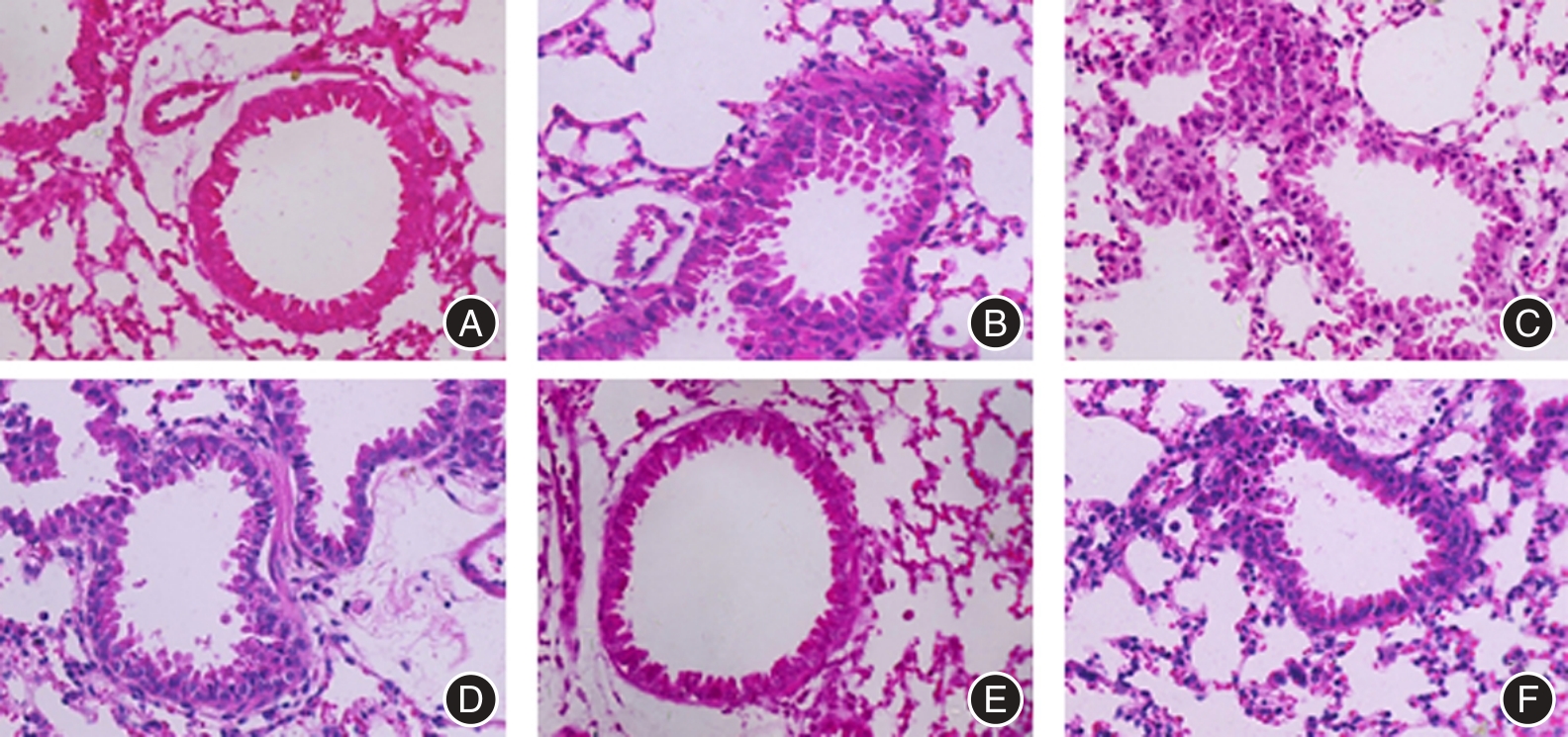
Fig.3
The airway tissue injury of mice was evaluated by HE staining (× 200)"

Tab.1
Effect of bone marrow mesenchymal stem cell exosomes on airway resistance in asthmatic mice"
| 组别 | 乙酰甲胆碱 | ||||
|---|---|---|---|---|---|
| 0 mg/mL | 6.25 mg/mL | 12.5 mg/mL | 25 mg/mL | 50 mg/mL | |
| 对照组 | 0.16 ± 0.05 | 0.23 ± 0.11 | 0.26 ± 0.11 | 0.34 ± 0.04 | 0.36 ± 0.06 |
| 模型组 | 0.22 ± 0.04 | 0.34 ± 0.05* | 0.82 ± 0.03* | 0.95 ± 0.06* | 1.14 ± 0.03* |
| 外泌体 5 μg 组 | 0.19 ± 0.06 | 0.29 ± 0.04a | 0.68 ± 0.06a | 0.80 ± 0.15a | 0.98 ± 0.10a |
| 外泌体 10 μg 组 | 0.18 ± 0.03 | 0.25 ± 0.05a | 0.41 ± 0.03a | 0.56 ± 0.10a | 0.83 ± 0.08a |
| 外泌体 20 μg 组 | 0.17 ± 0.05 | 0.18 ± 0.02a | 0.32 ± 0.01a | 0.30 ± 0.12a | 0.56 ± 0.06a |
| 外泌体 20 μg + RS09 FTA 组 | 0.19 ± 0.03 | 0.28 ± 0.03b | 0.65 ± 0.06b | 0.73 ± 0.07b | 0.92 ± 0.04b |
| F值 | 3.18 | 20.10 | 45.30 | 52.16 | 120.50 |
| P值 | 0.15 | < 0.001 | < 0.001 | < 0.001 | < 0.001 |
Tab.2
Effects of bone marrow mesenchymal stem cell exosomes on the concentrations of IL-4, IL-5 and IL-13 in mouse alveolar fluid"
| 组别 | IL-4/ (pg/mL) | IL-5/ (pg/mL) | IL-13/ (pg/mL) |
|---|---|---|---|
| 对照组 | 21.91 ± 1.66 | 21.87 ± 1.55 | 40.18 ± 1.67 |
| 模型组 | 41.20 ± 2.23* | 45.27 ± 1.90* | 67.53 ± 2.09* |
| 外泌体 5 μg 组 | 36.15 ± 0.83a | 39.71 ± 1.76 | 58.89 ± 3.01a |
| 外泌体 10 μg 组 | 29.80 ± 3.19a | 35.54 ± 3.06a | 53.04 ± 2.44a |
| 外泌体 20 μg 组 | 19.85 ± 1.41a | 23.67 ± 3.78a | 42.95 ± 2.72a |
外泌体 20 μg + RS09 FTA 组 | 37.07 ± 1.76b | 40.39 ± 1.76b | 59.99 ± 1.18b |
| F值 | 57.18 | 49.54 | 64.64 |
| P值 | < 0.001 | < 0.001 | < 0.001 |
Tab.3
Effects of bone marrow mesenchymal stem cell exosomes on the concentrations of MDA, CAT and SOD in mouse alveolar fluid"
| 组别 | MDA/ (nmol/mL) | CAT/ (nmol/mL) | SOD/ (nmol/mL) |
|---|---|---|---|
| 对照组 | 2.50 ± 0.18 | 8.38 ± 0.43 | 15.53 ± 0.15 |
| 模型组 | 5.25 ± 0.10* | 2.28 ± 0.30* | 6.82 ± 0.32* |
| 外泌体 5 μg 组 | 4.58 ± 0.29a | 4.15 ± 0.38a | 8.05 ± 0.26a |
| 外泌体 10 μg 组 | 4.01 ± 0.11a | 6.34 ± 0.49a | 10.30 ± 0.54a |
| 外泌体 20 μg 组 | 3.25 ± 0.20a | 7.60 ± 0.46a | 13.05 ± 1.49a |
外泌体 20 μg + RS09 FTA 组 | 4.33 ± 0.21b | 4.90 ± 0.73b | 9.20 ± 0.34b |
| F值 | 76.62 | 58.29 | 71.03 |
| P值 | < 0.001 | < 0.001 | < 0.001 |
Tab.4
Effects of bone marrow mesenchymal stem cell exosomes on the TLR4, MyD88 and NF-κ B expression in lung tissue"
| 组别 | TLR4 | MyD88 | NF-κB |
|---|---|---|---|
| 对照组 | 0.13 ± 0.02 | 0.29 ± 0.09 | 0.22 ± 0.05 |
| 模型组 | 1.11 ± 0.05* | 1.43 ± 0.14* | 1.62 ± 0.10* |
| 外泌体 5 μg 组 | 0.93 ± 0.03a | 1.19 ± 0.08 a | 1.30 ± 0.02a |
| 外泌体 10 μg 组 | 0.72 ± 0.05a | 1.02 ± 0.04a | 1.13 ± 0.07a |
| 外泌体 20 μg 组 | 0.36 ± 0.04a | 0.21 ± 0.05a | 0.37 ± 0.06a |
外泌体 20 μg + RS09 FTA 组 | 0.56 ± 0.06b | 0.39 ± 0.04b | 1.06 ± 0.05b |
| F值 | 204.80 | 121.40 | 208.60 |
| P值 | < 0.001 | < 0.001 | < 0.001 |
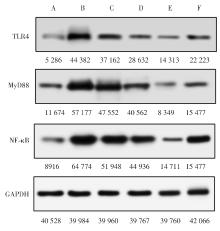
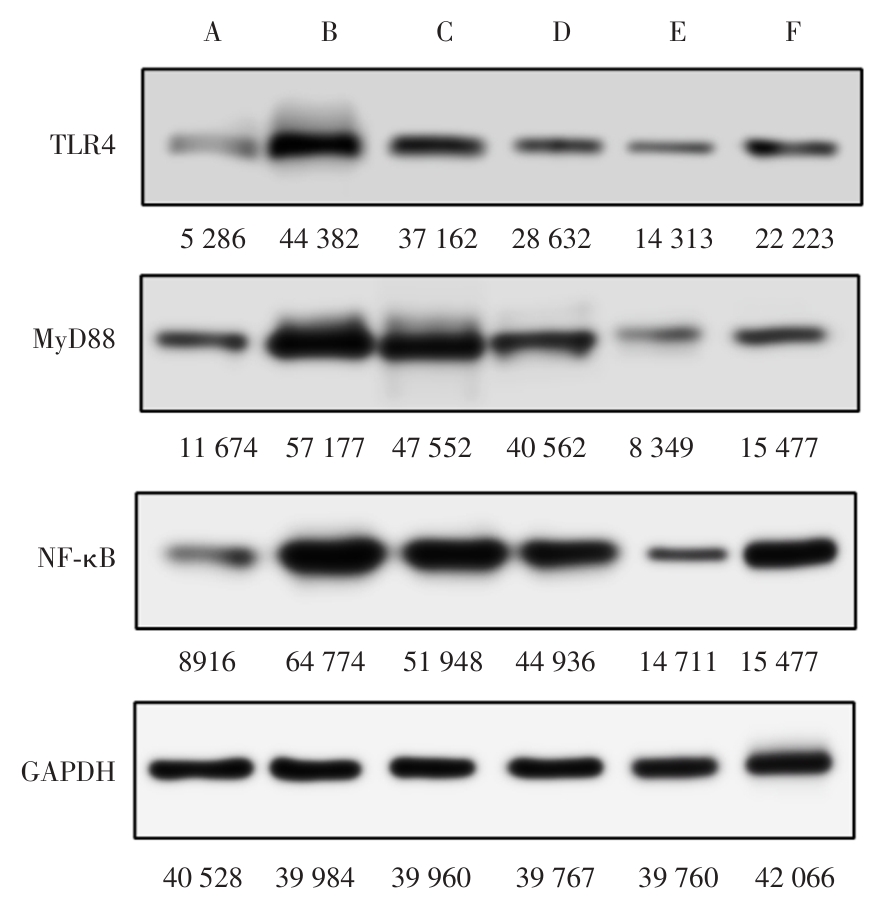
Fig.4
Western blot was used to detect TLR4, MyD88, NF-κB expression in mice lung"
| [1] |
ARMEFTIS C, GRATZIOU C, SIAFAKAS N, et al. An update on asthma diagnosis[J]. J Asthma, 2023,60(12):2104-2110. doi: 10.1080/02770903.2023.2228911 .
doi: 10.1080/02770903.2023.2228911 |
| [2] |
BOURDIN A, BRUSSELLE G, COUILLARD S, et al. Phenotyping of Severe Asthma in the Era of Broad-Acting Anti-Asthma Biologics[J]. J Allergy Clin Immunol Pract, 2024, 12(4):809-823. doi: 10.1016/j.jaip.2024.01.023 .
doi: 10.1016/j.jaip.2024.01.023 |
| [3] |
MELÉN E, ZAR H J, SIROUX V, et al. Asthma Inception: Epidemiologic Risk Factors and Natural History Across the Life Course[J]. Am J Respir Crit Care Med, 2024, 210(6):737-754.doi: 10.1164/rccm.202312-2249SO .
doi: 10.1164/rccm.202312-2249SO |
| [4] |
GAYEN S, DACHERT S, LASHARI B H, et al. Critical Care Management of Severe Asthma Exacerbations[J]. J Clin Med, 2024, 13(3):859-875. doi: 10.3390/jcm13030859 .
doi: 10.3390/jcm13030859 |
| [5] |
MARQUES L, VALE N. Salbutamol in the Management of Asthma: A Review[J]. Int J Mol Sci, 2022, 23(22):14207-14225. doi: 10.3390/ijms232214207 .
doi: 10.3390/ijms232214207 |
| [6] |
CHOI JY, HUR J, JEON S, et al. Effects of human adipose tissue- and bone marrow-derived mesenchymal stem cells on airway inflammation and remodeling in a murine model of chronic asthma[J]. Sci Rep, 2022, 12(1):12032-12040. doi: 10.1038/s41598-022-16165-8 .
doi: 10.1038/s41598-022-16165-8 |
| [7] |
TAN F, LI X, WANG Z, et al. Clinical applications of stem cell-derived exosomes[J]. Signal Transduct Target Ther. 2024, 9(1):17-47. doi: 10.1038/s41392-023-01704-0 .
doi: 10.1038/s41392-023-01704-0 |
| [8] |
AGUSTI A, FABBRI L, LAHOUSSE L, et al. Single inhaler triple therapy (SITT) in asthma: Systematic review and practice implications[J]. Allergy, 2022, 77(4):1105-1113. doi: 10.1111/all.15076 .
doi: 10.1111/all.15076 |
| [9] |
LIN Z, WU Y, XU Y, et al. Mesenchymal stem cell-derived exosomes in cancer therapy resistance: recent advances and therapeutic potential[J]. Mol Cancer, 2022, 21(1):179-195. doi: 10.1186/s12943-022-01650-5 .
doi: 10.1186/s12943-022-01650-5 |
| [10] |
LI L, ZHANG X, CHEN Y. Human Umbilical Cord Mesenchymal Stem Cell Exosome-derived miR-335-5p Alleviated Lipopolysaccharide-induced Acute Lung Injury by Regulating the m6A Level of ITGβ4 Gene[J]. Curr Med Chem, 2024, 31(33):5448-5467. doi: 10.2174/0109298673273833231220062213 .
doi: 10.2174/0109298673273833231220062213 |
| [11] |
FENG C Y, BAI S Y, LI M L, et al. Adipose-Derived Mesenchymal Stem Cell-Derived Exosomal miR-301a-3p Regulates Airway Smooth Muscle Cells During Asthma by Targeting STAT3[J]. J Asthma Allergy, 2022, 28(15):99-110. doi: 10.2147/JAA.S335680 .
doi: 10.2147/JAA.S335680 |
| [12] |
HE L, NORRIS C, PALAGUACHI-LOPEZ K, et al. Nasal oxidative stress mediating the effects of colder temperature exposure on pediatric asthma symptoms[J]. Pediatr Res, 2024, 96(4):1045-1051. doi: 10.1038/s41390-024-03196-2 .
doi: 10.1038/s41390-024-03196-2 |
| [13] |
CHE J, WANG H, DONG J, et al. Human umbilical cord mesenchymal stem cell-derived exosomes attenuate neuroinflammation and oxidative stress through the NRF2/NF-κB/NLRP3 pathway[J]. CNS Neurosci Ther, 2024, 30(3):e14454- e14465. doi: 10.1111/cns.14454 .
doi: 10.1111/cns.14454 |
| [14] |
VITALE R, MARZOCCO S, POPOLO A. Role of Oxidative Stress and Inflammation in Doxorubicin-Induced Cardiotoxicity: A Brief Account[J]. Int J Mol Sci, 2024,25(13):7477-7496. doi: 10.3390/ijms25137477 .
doi: 10.3390/ijms25137477 |
| [15] |
ZHAO D, JI H, ZHAO H, et al. BMSC-derived exosomes regulate the Treg/Th17 balance through the miR-21-5p/TLR4/MyD88/NF-κB pathway to alleviate dry eye symptoms in mice[J]. In Vitro Cell Dev Biol Anim, 2024, 60(6):644-656. doi: 10.1007/s11626-024-00910-6 .
doi: 10.1007/s11626-024-00910-6 |
| [1] | Zhicong LIU,Daiyin LIU,Juntian LONG,Chixing CHENG,Jian HUANG. Exosomal lncRNA CIAT1 promotes collective invasion of bladder cancer [J]. The Journal of Practical Medicine, 2025, 41(9): 1299-1308. |
| [2] | Lulin CHEN,Tingjie YANG,Meng SUN,Xin LI,Yiming GUO,Yuqing YANG,Yudong CAO,Wenzhe LI,Jiangshu YUAN,Honghui YANG. Association between coronary inflammation and malnutrition on prognosis in patients with coronary artery disease [J]. The Journal of Practical Medicine, 2025, 41(7): 1010-1017. |
| [3] | Chunxue KONG,Qiqi LIU,Liwei ZHANG,Chuansha WU,Longzhu XIONG,Guowei ZHANG,Minyue CAO,Ping LI,Ting ZHOU. Montelukast sodium inhibits airway inflammation through Phd2/Hif⁃1Α pathway in asthmatic mice [J]. The Journal of Practical Medicine, 2025, 41(5): 664-669. |
| [4] | Jiyue ZHU,Bo ZHANG,Yaru LI,Liuye. HUANG. The predictive value of the systemic inflammation response index for non⁃curative resection after endoscopic submucosal dissection for early colorectal cancer [J]. The Journal of Practical Medicine, 2025, 41(5): 716-723. |
| [5] | Rongxin LI,Li HUANG,Yueyang ZENG,Shuhui ZHANG,Yiran CHEN,Yuli LIU,Tieming. MA. Exploring the mechanism of electroacupuncture to improve cognitiveimpairment in alzheimer′s disease model rats based on NF⁃κB/NLRP3/Caspase⁃1 signaling pathway [J]. The Journal of Practical Medicine, 2025, 41(3): 322-329. |
| [6] | Yusheng HUANG,Xinyu LIU,Suishan. ZHOU. Study on the culture and biological characteristics of SD rat bone marrow mesenchymal stem cells using optimized whole marrow adhesion method [J]. The Journal of Practical Medicine, 2025, 41(24): 3860-3866. |
| [7] | Aiqiang LI,Ning ZHAO,Xusheng ZHANG,Haiping. LIU. Research progress on the treatment of femoral skull necrosis by extracellular vesicles from bone marrow mesenchymal stem cells [J]. The Journal of Practical Medicine, 2025, 41(23): 3631-3637. |
| [8] | Bin SUN,Ni LI,Lin YAN,Qizhao WANG,Min ZHANG,Yuehan YANG,Huan. QIN. Microglia mediate neuroinflammation and immune cell recruitment in blue light‑damaged retina [J]. The Journal of Practical Medicine, 2025, 41(23): 3666-3675. |
| [9] | Jianqiang WEI,Jing YIN,Mingyan HONG,Jianzhong CUI,Kaijie WANG,Hongyu WANG,Xinwang CAI,Wenqian ZHANG,Huan LIU. Study on the correlation between the expression of inflammatory cytokines in cerebrospinal fluid and the severity and prognosis of spontaneous intracerebral hemorrhage [J]. The Journal of Practical Medicine, 2025, 41(22): 3558-3565. |
| [10] | Chunhui LIU,Ruipeng WU,Zhiqiang WANG,Wensheng SHAN,Shaojun. LI. Molecular mechanisms and diagnostic value of seminal plasma exosomal miR-26a-5p targeting PTEN in idiopathic teratozoospermia [J]. The Journal of Practical Medicine, 2025, 41(20): 3256-3266. |
| [11] | Xu QIN,Lihong. SUN. The microbe-immune-virus regulatory network in pediatric asthma:From mechanism to clinic [J]. The Journal of Practical Medicine, 2025, 41(20): 3297-3304. |
| [12] | Xingwei WU,Jianying WANG,Chengxiao GUO,Ziyi LIU,Chao SUN,Fei. YU. The effect of remimazolam on modulating the ROS/RAGE/NF-κB signaling pathway in LPS-induced microglial inflammation [J]. The Journal of Practical Medicine, 2025, 41(2): 153-161. |
| [13] | Yan YANG,Mingyi HU,Chengling WANG,Jiewen TAN. Current status and prospects of hyperbaric oxygen therapy for children with autism [J]. The Journal of Practical Medicine, 2025, 41(18): 2820-2827. |
| [14] | E LI,Wuhan HONG,Zhenxian WANG,Rong CHEN. Comparison of the diagnostic value of serum IL⁃6, IL⁃8, TREM1, uPAR and presepsin in patients with septic shock [J]. The Journal of Practical Medicine, 2025, 41(18): 2937-2944. |
| [15] | Chao WANG,Qianqian XU,Shujuan ZHANG,Yanping ZHU. Effect of human umbilical cord mesenchymal stem cell-derived exosomes on microglial polarization in neonatal rats with white matter injury [J]. The Journal of Practical Medicine, 2025, 41(16): 2447-2454. |
| Viewed | ||||||
|
Full text |
|
|||||
|
Abstract |
|
|||||
