

The Journal of Practical Medicine ›› 2025, Vol. 41 ›› Issue (20): 3256-3266.doi: 10.3969/j.issn.1006-5725.2025.20.016
• Medical Examination and Clinical Diagnosis • Previous Articles Next Articles
Chunhui LIU1,Ruipeng WU2,Zhiqiang WANG1,Wensheng SHAN1,Shaojun. LI3( )
)
Received:2025-05-26
Online:2025-10-25
Published:2025-11-05
Contact:
Shaojun. LI
E-mail:kendog@163.com
CLC Number:
Chunhui LIU,Ruipeng WU,Zhiqiang WANG,Wensheng SHAN,Shaojun. LI. Molecular mechanisms and diagnostic value of seminal plasma exosomal miR-26a-5p targeting PTEN in idiopathic teratozoospermia[J]. The Journal of Practical Medicine, 2025, 41(20): 3256-3266.
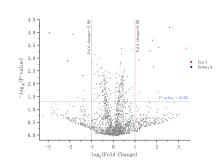
Fig.1
Volcano plot of differentially expressed miRNAs"
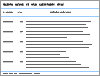
Tab.1
List of differentially expressed miRNAs in seminal plasma exosomes"
| miRNAs | MI编号 | 功能 | 表型/疾病 | Up/Down |
|---|---|---|---|---|
| hsa-miR-23b-3p | MIMAT0000418 | 抑制癌细胞增殖,促进转移性乳腺癌休眠 | 转移性乳腺癌 | Down |
| hsa-miR-212-5p | MIMAT0000269 | 抗血管平滑肌细胞增殖,减轻肺血管重构 | 抗血管平滑肌细胞增殖,抗肺血管重构 | Down |
| hsa-miR-381-3p | MIMAT0000736 | 参与神经功能调控,影响MAPK信号通路 | 铝暴露导致的认知障碍 | Up |
| hsa-miR-370-3p | MIMAT0000722 | 调控靶基因FGF7,影响神经元功能 | 铝暴露导致的认知障碍 | Up |
| hsa-miR-26a-5p | MIMAT0000082 | 调控氧化应激、细胞增殖与凋亡,调控DNA修复,拮抗磷酸化 | 精子异常,肝癌,肺纤维化 | Up |
| hsa-miR-29a-5p | MIMAT0004516 | 靶向胶原蛋白基因,抑制纤维化;调节DNA甲基化相关酶 | 肝纤维化、慢性淋巴细胞白血病 | Down |
| hsa-miR-92a-3p | MIMAT0000092 | 抑制抑癌基因表达;参与血管内皮功能调控 | 结直肠癌、动脉粥样硬化 | Up |
| hsa-miR-155-5p | MIMAT0000646 | 促炎性调控,增强免疫应答及B细胞分化 | 淋巴细胞白血病、自身免疫性疾病 | Up |
| hsa-miR-17-5p | MIMAT0000070 | 调控细胞周期;促进血管生成 | 胃癌、肺癌(与EGFR突变相关) | Down |
| hsa-miR-139-5p | MIMAT0000250 | 调控TET2和TET3表达,参与基因沉默 | 空腔脏器肿瘤(调控表观遗传修饰) | Up |
| hsa-miR-15a-5p | MIMAT0000068 | 抑制细胞增殖,促进凋亡;调控免疫检查点PD-1/PD-L1通路 | 慢性淋巴细胞白血病、心血管疾病 | Up |
Tab.2
Base sequence information of predicted target genes"
| miRNA靶基因 | 预测的碱基对序列 | 位点性质 |
|---|---|---|
| PTEN 3'UTR | 5'-CAUCAUAAGAAACAUACUUGAA-3' | 8mer |
| miR-26a-5p | 3'-UCGGAUAGGACCUAAUGAACUU-5' |
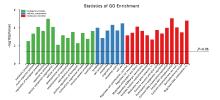
Fig.2
GO enrichment results of target genes"
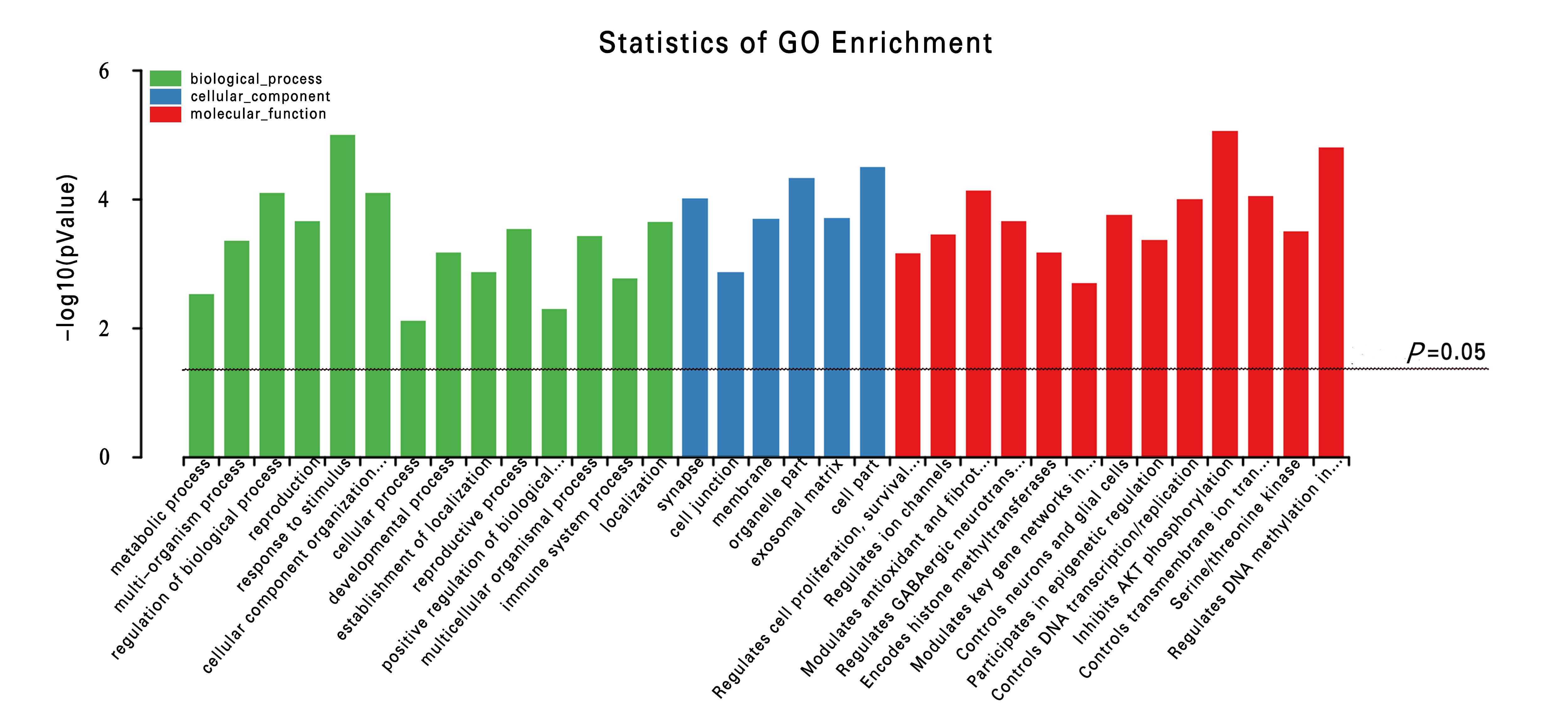
Fig.3
KEGG pathway enrichment results of target genes"
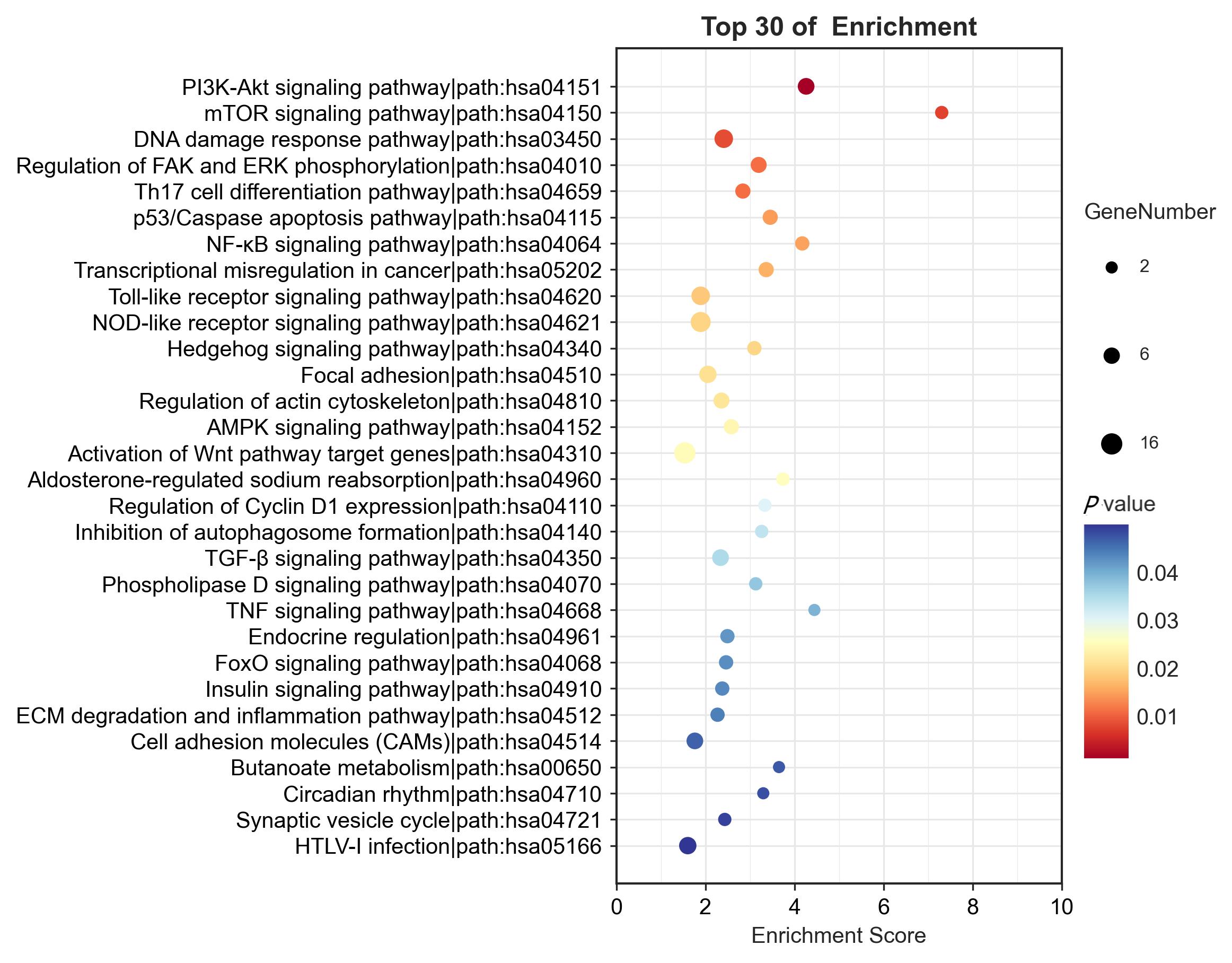
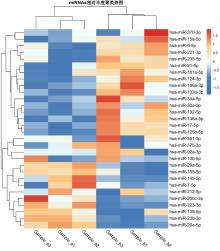
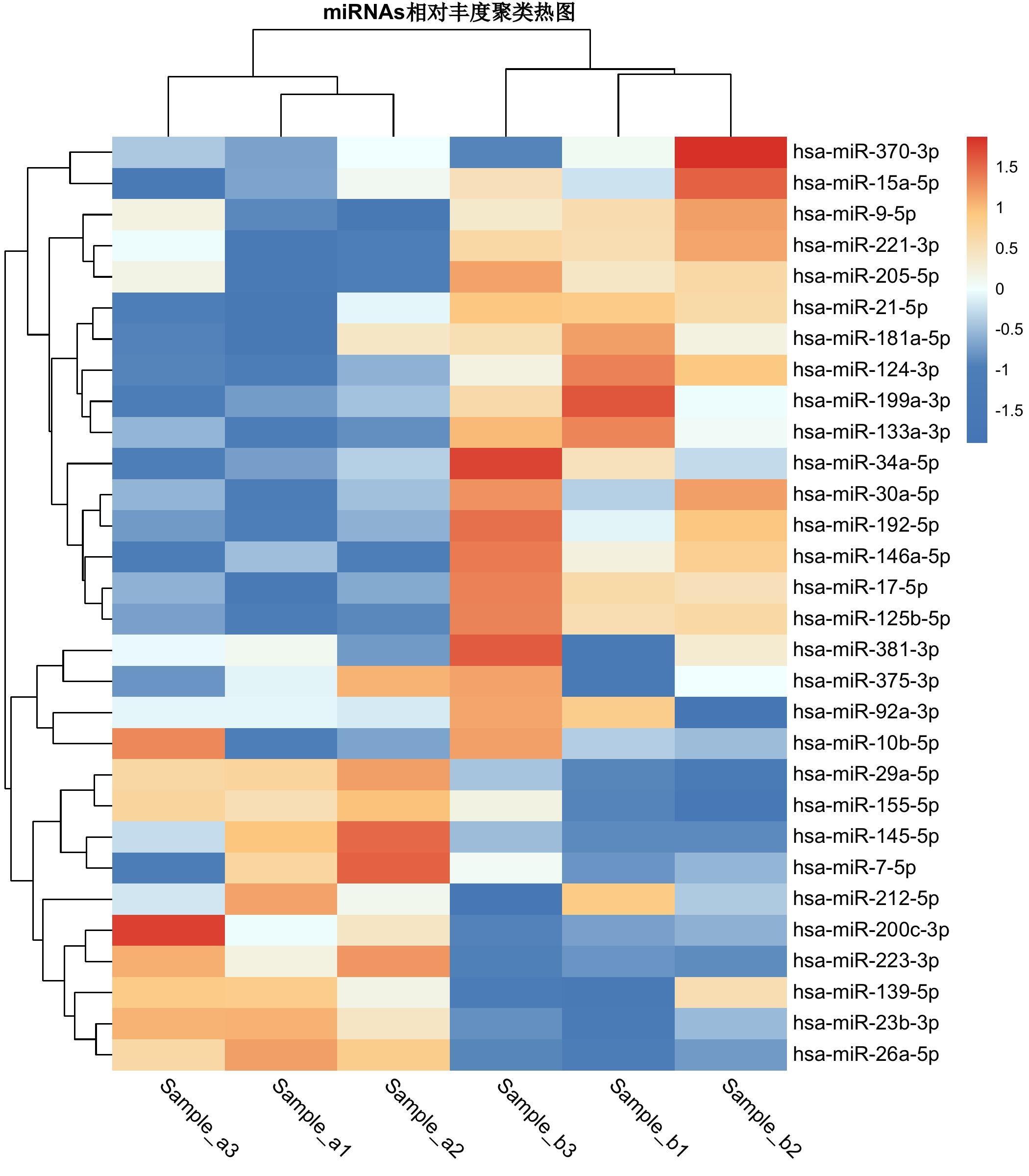
Fig.4
Clustering heatmap of differentially expressed miRNAs"
Tab.3
Intergroup comparison results of baseline data"
| 组别 | 例数 | 年龄/岁 | 精子浓度/ (×106·mL-1) | PR/% | T/(ng/mL) | FSH/ (mIU/mL) | LH/ (mIU/mL) | miR-26a-5p | PTEN |
|---|---|---|---|---|---|---|---|---|---|
| NC组 | 70 | 28.32 ± 5.85 | 69.25 ± 12.21 | 37.18 ± 5.28 | 4.26 ± 1.36 | 5.34 ± 1.65 | 4.19 ± 1.56 | 1.000 ± 0.000 | 1.000 ± 0.000 |
| TZS组 | 84 | 27.26 ± 6.31 | 76.75 ± 10.35 | 39.34 ± 6.34 | 4.13 ± 1.05 | 6.18 ± 1.88 | 4.53 ± 1.16 | 1.625 ± 0.213 * | 0.452 ± 0.121 * |
| F值 | 1.125 | 3.842 | 1.477 | 1.395 | 2.654 | 2.639 | 16.361 | 24.762 | |
| P值 | 0.784 | 0.521 | 0.845 | 0.698 | 0.593 | 0.498 | < 0.001 | < 0.001 |
Fig.5
Comparison of relative expression levels of miR-26a-5p and PTEN among different groups"
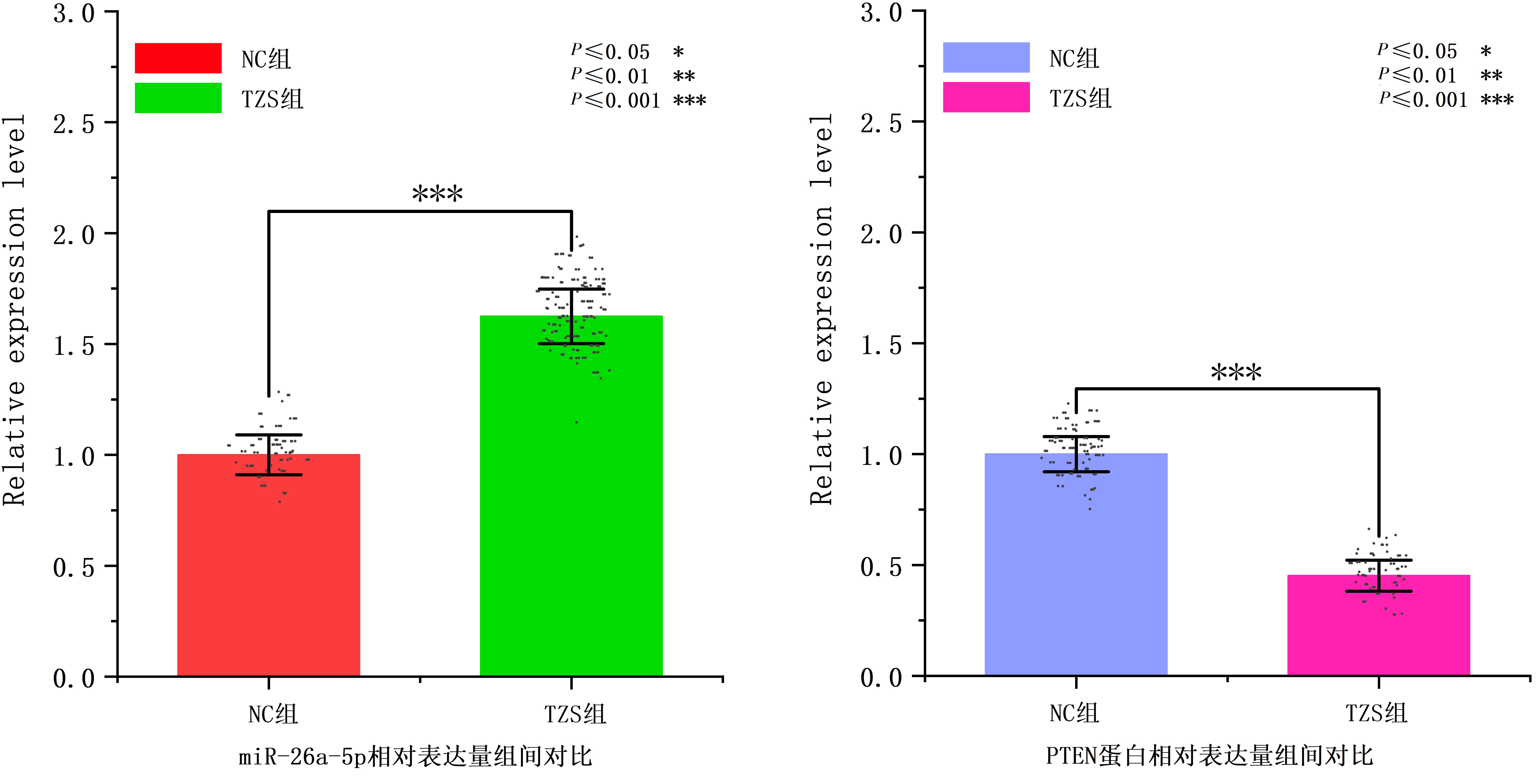
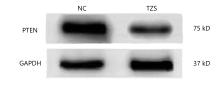
Fig.6
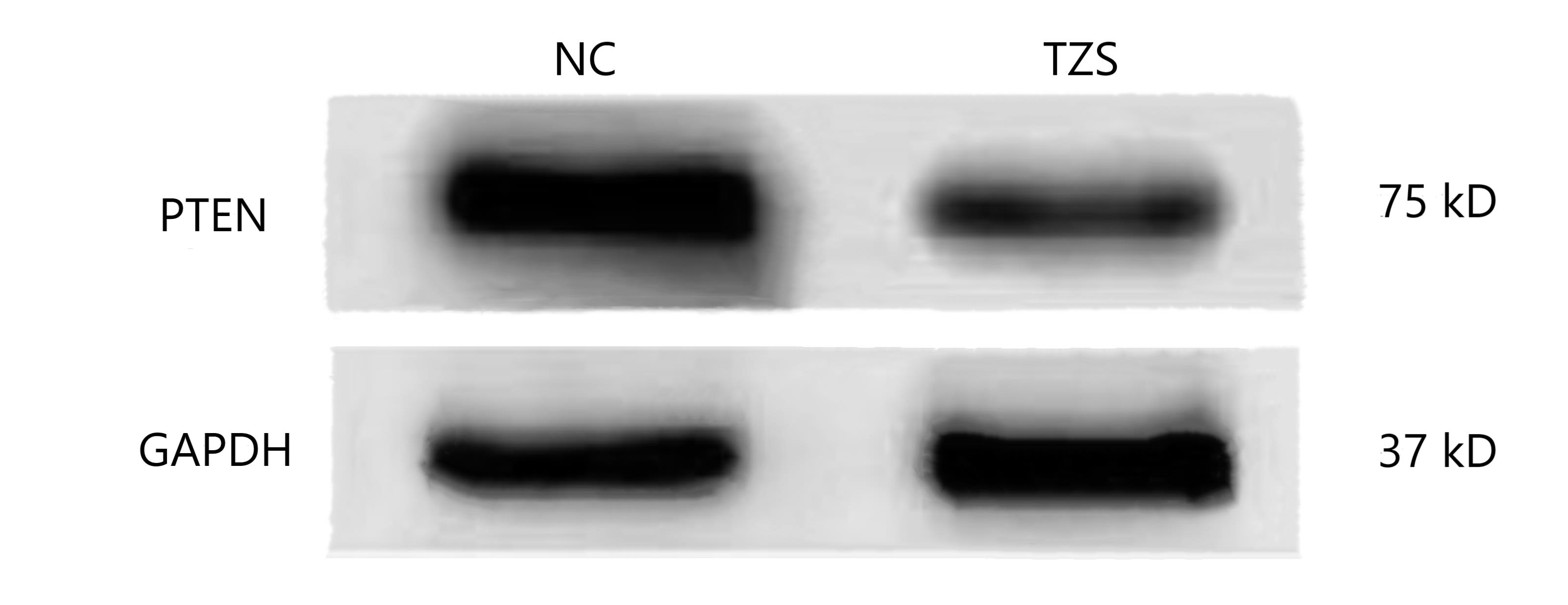
Relative expression levels of PTEN protein normalized to GAPDH"
Tab.4
Correlation analysis of miR-26a-5p, PTEN, and the percentage of normal sperm morphology (Spearman's Rank Correlation)"
| 变量 | miR-26a-5p | PTEN | 正常形态精子占比(NC组) | 正常形态精子占比(TZS组) |
|---|---|---|---|---|
| miR-26a-5p | — | r = -0.878 P = 0.000 | r = -0.585 P = 0.036 | r = -0.762 P = 0.016 |
| PTEN | r = -0.878 P = 0.000 | — | r = 0.638 P = 0.023 | r = 0.821 P = 0.002 |
| 正常形态精子占比(NC组) | r = -0.585 P = 0.036 | r = 0.638 P = 0.023 | — | r = -0.214 P = 0.437 |
| 正常形态精子占比(TZS组) | r = -0.762 P = 0.016 | r = 0.821 P = 0.002 | r = -0.214 P = 0.437 | — |
Tab.5
Dual-luciferase reporter assay of miR-26a-5p and PTEN"
| 项目 | WT + NC mimic | WT + miR-26a-5p mimic | MUT + NC mimic | MUT + miR-26a-5p mimic | |
|---|---|---|---|---|---|
| Firefly luciferase | Group 1 | 321 514 | 241 265 | 168 549 | 125 489 |
| Group 2 | 315 284 | 236 584 | 171 594 | 121 687 | |
| Group 3 | 312 541 | 231 984 | 163 658 | 119 864 | |
| AVG | 316 446.333 | 236 611.0 | 167 933.666 | 122 346.666 | |
| Renilla luciferase | Group 1 | 313 548 | 136 847 | 158 954 | 129 824 |
| Group 2 | 318 744 | 131 654 | 168 964 | 126 846 | |
| Group 3 | 316 954 | 125 875 | 169 896 | 122 364 | |
| AVG | 316 415.333 | 131 458.666 | 165 938.0 | 126 344.666 | |
| Ratio RLUC/FLUC | Group 1 | 0.9 752 234 739 | 0.5 672 061 841 | 0.9 430 729 343 | 1.0 345 448 605 |
| Group 2 | 1.0 109 742 327 | 0.5 564 788 828 | 0.9 846 731 238 | 1.0 423 956 544 | |
| Group 3 | 1.0 141 197 474 | 0.542 602 076 | 1.0 381 160 713 | 1.0 208 484 545 | |
| AVG | 1.0 016 053 275 | 0.5 555 898 331 | 0.9 881 163 435 | 1.0 326 776 375 | |
| Normalization | AVG | 1.000 ± 0.107 | 0.552 ± 0.076 * | 0.985 ± 0.064 | 1.025 ± 0.086 |
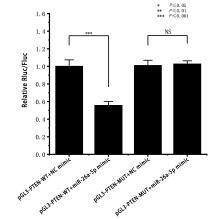
Fig.7
Validation results of the dual-luciferase reporter gene assay"
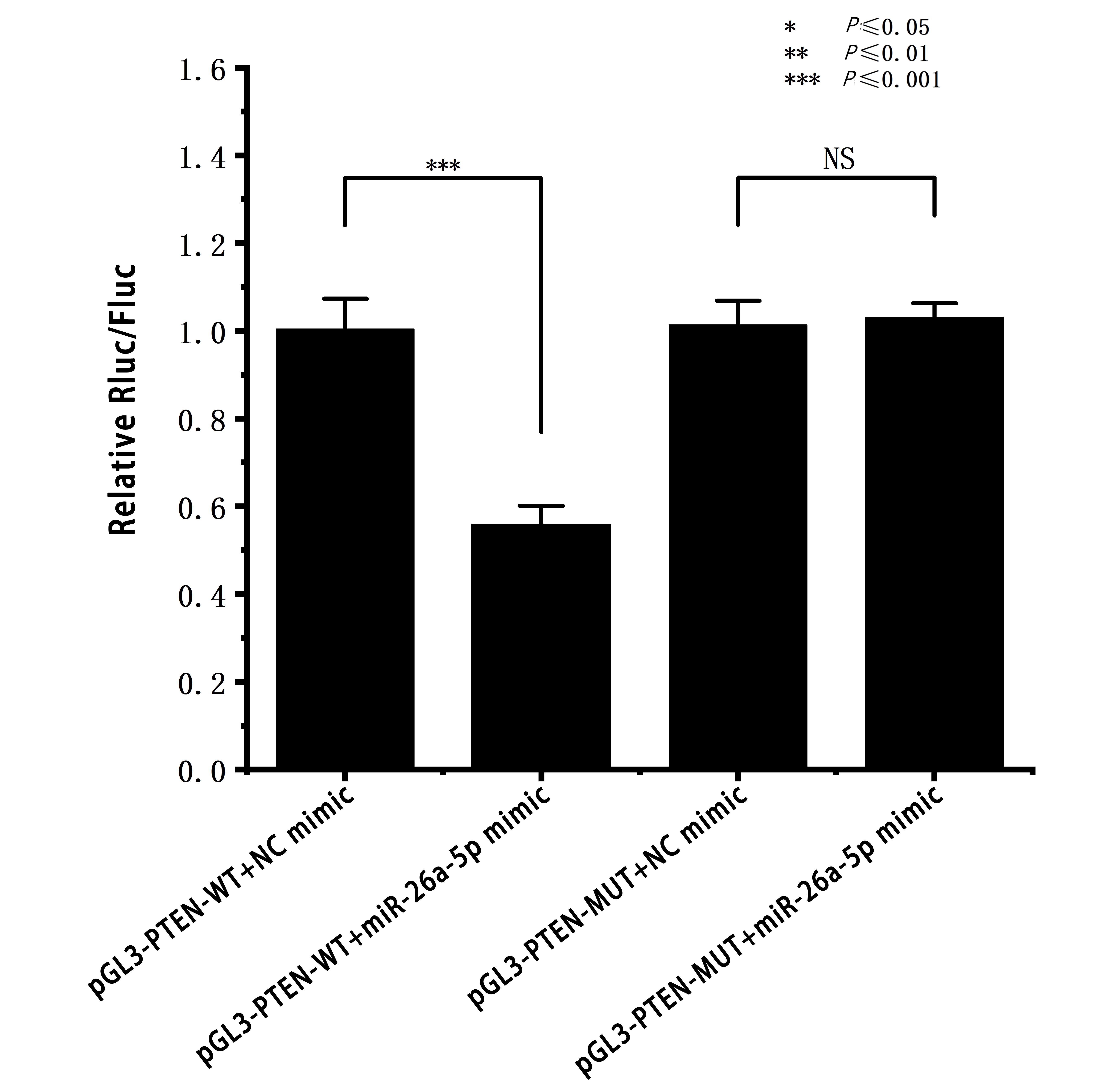
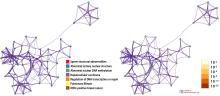
Fig.8
Co-expression network of interacting genes"
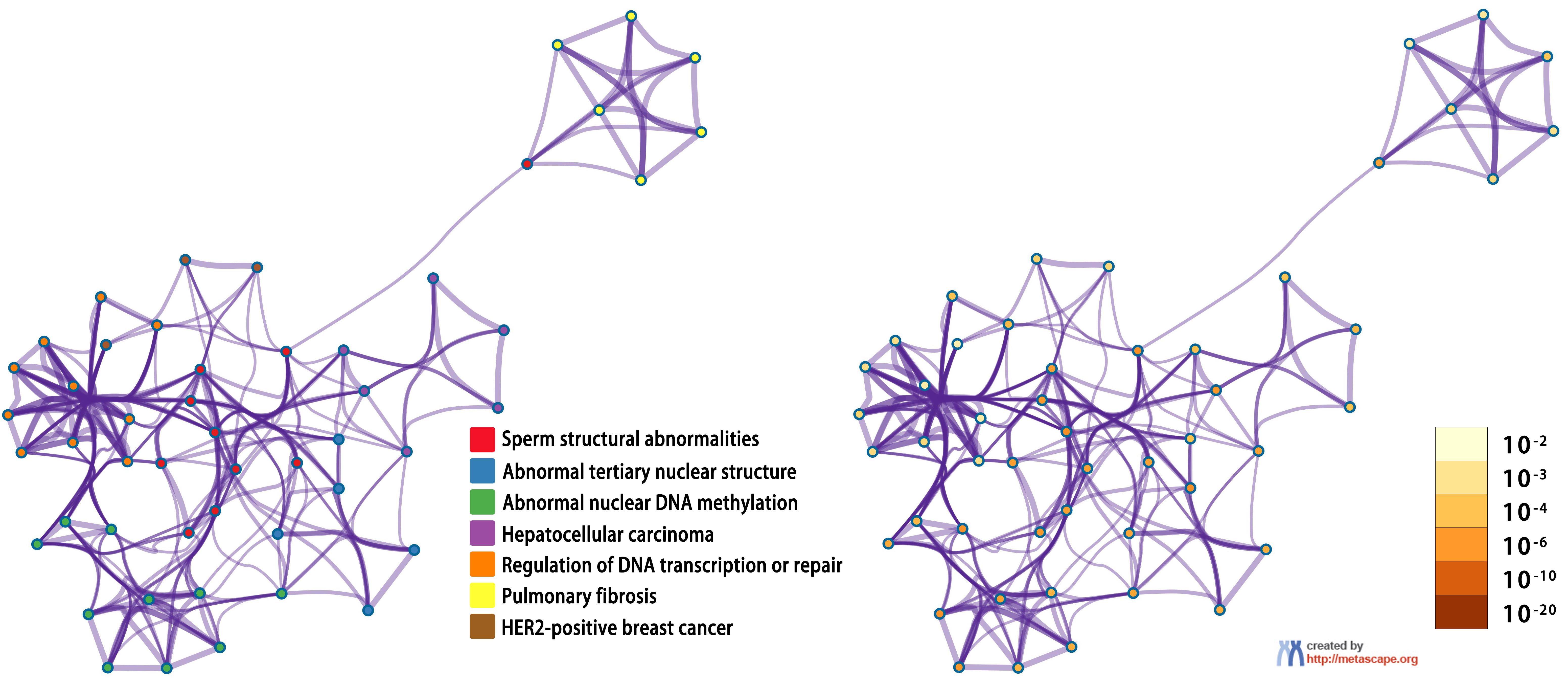
Fig.9
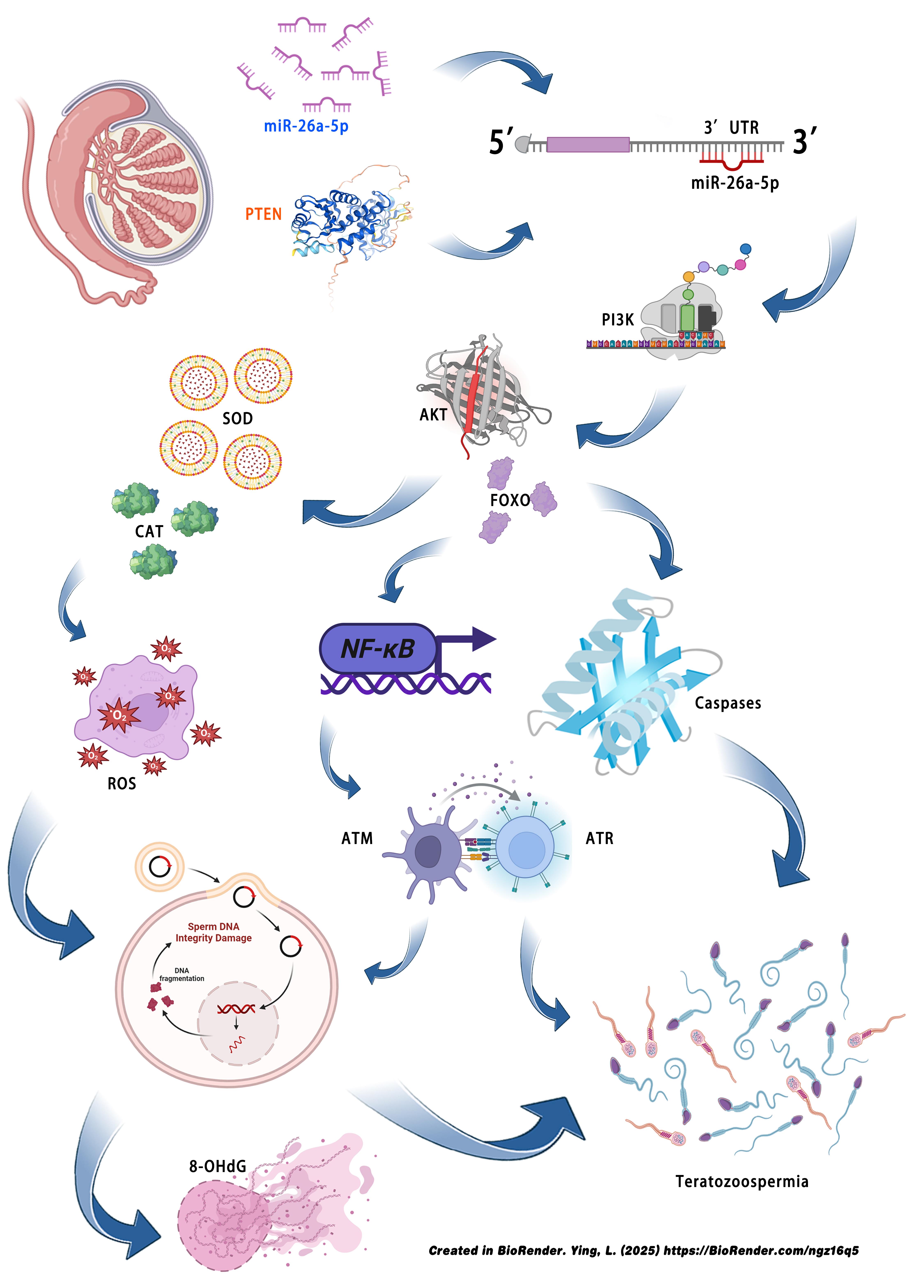
Potential pathways through which miR-26a-5p regulates target gene to influence sperm morphology"
Tab.6
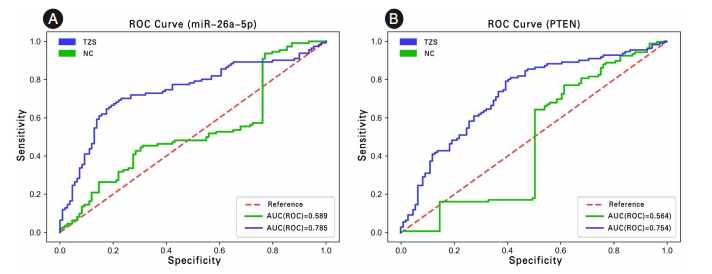
Diagnostic efficacy, sensitivity, and specificity of miR-26a-5p and PTEN for Sperm Morphological Abnormalities"
| 组别 | 指标 | AUCROC | 95%CI | P值 | 灵敏度/% | 特异度/% |
|---|---|---|---|---|---|---|
| NC组 | miR-26a-5p | 0.589 | 0.538 ~ 0.636 | 0.569 | 36.7 | 29.3 |
| PTEN | 0.564 | 0.512 ~ 0.596 | 0.694 | 32.9 | 26.4 | |
| TZS组 | miR-26a-5p | 0.785 | 0.719 ~ 0.894 | < 0.000 1 | 78.9 | 71.3 |
| PTEN | 0.754 | 0.696 ~ 0.826 | < 0.000 1 | 73.3 | 75.1 |
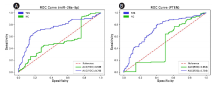
Fig.10
ROC curves for diagnostic efficacy"
| [1] |
HARMAK H, REDOUANE S, CHAROUTE H, et al. In silico exploration and molecular dynamics of deleterious SNPs on the human TERF1 protein triggering male infertility [J]. J Biomol Struct Dyn, 2023, 41(24): 14665-14688. doi:10.1080/07391102.2023.2193995
doi: 10.1080/07391102.2023.2193995 |
| [2] |
FAN Y, HUANG C, CHEN J, et al. Mutations in CCIN cause teratozoospermia and male infertility [J]. Sci Bull (Beijing), 2022, 67(20): 2112-2123. doi:10.1016/j.scib.2022.09.026
doi: 10.1016/j.scib.2022.09.026 |
| [3] |
CHANG Y, JIANG X, LIU W, et al. Molecular genetic mechanisms of teratozoospermia [J]. Zygote, 2023, 31(2): 101-110. doi:10.1017/s0967199422000594
doi: 10.1017/s0967199422000594 |
| [4] |
KYRGIAFINI M A, GIANNOULIS T, CHATZIPARASIDOU A, et al. Unveiling the Genetic Complexity of Teratozoospermia: Integrated Genomic Analysis Reveals Novel Insights into lncRNAs' Role in Male Infertility [J]. Int J Mol Sci, 2023, 24(19): 15002. doi:10.3390/ijms241915002
doi: 10.3390/ijms241915002 |
| [5] |
BI X, JIN H, WAN F, et al. Loss-of-function variant in TDRD6 cause male infertility with severe oligo-astheno-teratozoospermia in human and mice [J]. J Cell Mol Med, 2024, 28(18): e18580. doi:10.1111/jcmm.18580
doi: 10.1111/jcmm.18580 |
| [6] | World Health Organization. WHO Laboratory Manual for the Examination and Processing of Human Semen. 6th ed [M]. Geneva: World Health Organization, 2021. |
| [7] |
WYNS C, VOGIATZI P, SALEH R, et al. Sperm morphology value in assisted reproduction: Dismantling an enigma and key takeaways for the busy clinician [J]. Ther Adv Reprod Health, 2024, 18:26334941241303888. doi:10.1177/26334941241303888
doi: 10.1177/26334941241303888 |
| [8] | OLIVEIRA L C S L, COSTA E C, MARTINS F D G, et al. Probiotics supplementation in the treatment of male infertility: A Systematic Review [J]. JBRA Assist Reprod, 2024, 28(2): 341-348. |
| [9] |
NAGHI P, ZAHA I A, STEFAN L, et al. Teratozoospermia and Embryo Development: The Significance of Sperm Selection in In Vitro Fertilization Success [J]. J Clin Med, 2025, 14(11): 3763. doi:10.3390/jcm14113763
doi: 10.3390/jcm14113763 |
| [10] |
罗英, 徐楗荧, 林小民, 等. 精子DNA碎片率与男性不育及其配偶早期复发性流产的关系 [J]. 实用医学杂志, 2021, 37(16): 2133-2136. doi:10.3969/j.issn.1006-5725.2021.16.020
doi: 10.3969/j.issn.1006-5725.2021.16.020 |
| [11] | 朱媛媛, 卞玉莹, 徐天, 等. 男性不育患者精浆miR-135a-5p和miR-135b-5p水平检测的价值 [J]. 临床检验杂志, 2023, 41(10): 740-744. |
| [12] |
ZHANG Y T, SHEN G, ZHOU L C, et al. Novel variations in TENT5D lead to teratozoospermia in infertile patients [J]. Andrology, 2024, 12(6): 1336-1346. doi:10.1111/andr.13589
doi: 10.1111/andr.13589 |
| [13] |
LIANG G, WANG Q, ZHANG G, et al. Differentially expressed miRNAs and potential therapeutic targets for asthenospermia [J]. Andrologia, 2022, 54(1): e14265. doi:10.1111/and.14265
doi: 10.1111/and.14265 |
| [14] | 刘俊生, 李悦嘉, 毕佳杰, 等. 精浆外泌体调控精子运动的研究进展 [J]. 中国男科学杂志, 2023, 37(5): 143-146. |
| [15] | 赵聪, 王宁, 李海松, 等. 精液外泌体在男性不育症中的研究进展 [J]. 中国男科学杂志, 2023, 37(4): 128-132. |
| [16] |
YAP YS, PATRIZIO P, CIMMINO L, et al. The Small Non-Coding RNA Profile of Human and Mouse Sperm [J]. Noncoding RNA, 2025, 11(1): 15. doi:10.3390/ncrna11010015
doi: 10.3390/ncrna11010015 |
| [17] | 沈重飞, 陈亮, 肖炜强, 等. 男性特发性少精症、弱精症精液外泌体miR-34c表达水平变化及临床意义 [J]. 中国性科学, 2021, 30(9): 30-33. |
| [18] | 余亮亮, 李朋. 少精症、弱精症患者精浆miR-34c的表达及意义 [J]. 中国现代医生, 2022, 60(33): 44-47, 97. |
| [19] |
CHEN T, ZHANG B, HE G, et al. Gut-Derived Exosomes Mediate the Microbiota Dysbiosis-Induced Spermatogenesis Impairment by Targeting Meioc in Mice [J]. Adv Sci (Weinh), 2024, 11(22): e2310110. doi:10.1002/advs.202310110
doi: 10.1002/advs.202310110 |
| [20] |
LIANG G, ZHU X, ZHANG Z, et al. microRNAs in aged sperm confer psychiatric symptoms to offspring through causing the dysfunction of estradiol signaling in early embryos [J]. Cell Discov, 2022, 8(1): 63. doi:10.1038/s41421-022-00414-1
doi: 10.1038/s41421-022-00414-1 |
| [21] | ABBASSI M, SAYEL H, MOUHI H EL, et al. A Case of Severe Teratozoospermia and Infertility Due to Homozygous Mutation c.144delC in the AURKC Gene [J]. Cureus, 2023, 15(8): e43376. |
| [22] | 赵银银, 邱娴娴, 肖跃海, 等. PM2.5对男性生殖系统的影响研究进展 [J]. 实用医学杂志, 2021, 37(9): 1222-1226. |
| [23] | 王万伦, 刘桐佳, 张婷, 等. 不同阻滞阶段非梗阻性无精子症的生物信息学分析 [J]. 国际生殖健康/计划生育杂志, 2022, 41(4): 270-297. |
| [24] | 张星雨, 祝天喻, 张清荣,等. 精子发生障碍的遗传学研究进展 [J]. 遗传, 2021, 43(5): 473-486. |
| [25] |
LI Y, LU Z, LU J, et al. Sperm metabolomic signatures of asthenozoospermia and teratozoospermia in Chinese reproductive-age men [J]. Sci Rep, 2025, 15(1): 23932. doi:10.1038/s41598-025-09787-1
doi: 10.1038/s41598-025-09787-1 |
| [1] | Yuhai QIAO,Chunhua DU,Xinhong ZHAO,Xiaodong MENG,Jianfei. ZHANG. Construction and validation of a risk prediction model for clinical characteristics of patients with chronic non⁃bacterial prostatitis [J]. The Journal of Practical Medicine, 2025, 41(14): 2224-2230. |
| [2] | Liangxi LU,Haiwang LU,Wenjie WANG,Jun SHI,Zhimin HUANG,Bin BIN. To investigate the mechanism of mitochondrial autophagy regulating the expression of NLRP3 inflammasome in prostate tissue in rats with experimental autoimmune prostatitis [J]. The Journal of Practical Medicine, 2025, 41(12): 1816-1824. |
| [3] | Liangxi LU,Hong SHI,Zhimin HUANG,Jie LU,Wenjie. WANG. Exploring mechanism of TLR4/NF⁃κB⁃NLRP3 inflammasome signaling pathway in experimental autoimmune prostatitis rats [J]. The Journal of Practical Medicine, 2025, 41(6): 800-805. |
| [4] | Peng XU,Yun ZHOU,Rong JIA,Can QI,Linmeng SHI,Jingda GAO,Dengwei CHU,Xu. GAO. Clinical efficacy of testicular fascial compartment decompression in the treatment of testicular torsion in children [J]. The Journal of Practical Medicine, 2025, 41(2): 220-224. |
| [5] | Ben WU,Rui ZHOU,Tong BAO,Qunfeng WANG,Chong SHU,Xiaoxiang WU. Transurethral resection of prostate for treating benign prostatic hyperplasia: A comparative study of efficacy and safety of three procedures [J]. The Journal of Practical Medicine, 2024, 40(22): 3202-3207. |
| [6] | Kaiqiang WANG,Zhi CAO,Wei WANG,Chenglin YANG,Yue YANG,Huifen ZHANG,Xaioming ZHANG. Effects of Diosmine on semen quality and sex hormone concentration in patients with spermatovenous ligation [J]. The Journal of Practical Medicine, 2024, 40(3): 389-393. |
| Viewed | ||||||
|
Full text |
|
|||||
|
Abstract |
|
|||||
