

The Journal of Practical Medicine ›› 2026, Vol. 42 ›› Issue (1): 101-109.doi: 10.3969/j.issn.1006-5725.2026.01.013
• Chronic Disease Control • Previous Articles
Na LI( ),Liying QIAO,Chuhao ZHEN
Received:2025-10-21
Online:2026-01-10
Published:2026-01-14
Contact:
Na LI
E-mail:l15932533623@163.com
CLC Number:
Na LI,Liying QIAO,Chuhao ZHEN. Association of serum omentin-1 and chemerin levels with the risk of major adverse cardiovascular events in elderly patients with coronary heart disease[J]. The Journal of Practical Medicine, 2026, 42(1): 101-109.
Tab.1
Comparison of baseline data between the two groups"
| 指标 | MACE组(n = 97) | 无MACE组(n = 203) | t/χ2值 | P值 |
|---|---|---|---|---|
| 年龄(x ± s)/岁 | 74.31 ± 4.03 | 73.58 ± 3.79 | 1.529 | 0.127 |
| BMI(x ± s)/(kg/m2) | 25.16 ± 2.22 | 24.73 ± 2.41 | 1.482 | 0.139 |
| 病程(x ± s)/年 | 5.03 ± 1.26 | 4.89 ± 1.40 | 0.836 | 0.404 |
| 性别 | 0.023 | 0.878 | ||
| 男 | 55(56.70) | 117(57.64) | ||
| 女 | 42(43.30) | 86(42.36) | ||
| 合并基础疾病 | 0.470 | 0.493 | ||
| 糖尿病 | 59(60.82) | 115(56.65) | ||
| 高脂血症 | 71(73.20) | 155(76.35) | 0.352 | 0.553 |
| 高血压 | 63(64.95) | 121(59.61) | 0.790 | 0.374 |
| 冠脉病变支数 | 10.049 | 0.002 | ||
| 单支 | 25(25.77) | 91(44.83) | ||
| 多支 | 72(74.23) | 112(55.17) | ||
| 病变血管 | 4.307 | 0.116 | ||
| 右冠脉 | 27(27.83) | 37(18.23) | ||
| 左前降支 | 41(42.27) | 107(52.71) | ||
| 左回旋支 | 29(29.90) | 59(29.06) | ||
| Gensini积分(x ± s)/分 | 51.97 ± 9.05 | 47.35 ± 7.11 | 4.806 | < 0.001 |
| 吸烟史 | 42(43.30) | 81(39.90) | 0.313 | 0.576 |
| 饮酒史 | 55(56.70) | 96(47.29) | 2.325 | 0.127 |
Tab.2
Comparison of serum omega-3 and chemerin levels between the two groups"
| 组别 | 例数 | omentin-1/(ng/L) | Chemerin/(ng/L) |
|---|---|---|---|
| MACE组 | 97 | 654.42 ± 120.77 | 114.32 ± 29.28 |
| 无MACE组 | 203 | 1 008.53 ± 268.19 | 81.61 ± 20.03 |
| t值 | 12.409 | 11.918 | |
| P值 | < 0.001 | < 0.001 |
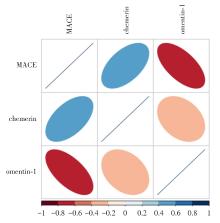
Fig.1
A matrix diagram showing the correlation between the occurrence of MACE and serum omentin-1 and chemerin levels in elderly patients with CHD"
Tab.3
Comparison of clinical data between the two groups"
| 指标 | MACE组(n = 97) | 无MACE组(n = 203) | t/χ2值 | P值 |
|---|---|---|---|---|
| 实验室指标 | ||||
| Hb/(g/L) | 127.38 ± 19.65 | 126.22 ± 21.03 | 0.456 | 0.649 |
| WBC/(× 109/L) | 8.05 ± 1.72 | 7.93 ± 1.86 | 0.535 | 0.593 |
| PLT/(×109/L) | 211.07 ± 22.68 | 209.23 ± 25.56 | 0.604 | 0.546 |
| LDL-C/(mmol/L) | 3.06 ± 0.65 | 2.97 ± 0.50 | 1.319 | 0.188 |
| HDL-C/(mmol/L) | 1.05 ± 0.50 | 1.11 ± 0.33 | 1.237 | 0.217 |
| TC/(mmol/L) | 5.23 ± 0.80 | 5.13 ± 0.85 | 0.971 | 0.332 |
| D-D/(mg/L) | 0.66 ± 0.10 | 0.64 ± 0.08 | 1.864 | 0.063 |
| TG/(mmol/L) | 1.65 ± 0.48 | 1.59 ± 0.50 | 0.985 | 0.326 |
| CRP/(mg/L) | 8.96 ± 1.96 | 6.18 ± 1.53 | 13.402 | < 0.001 |
| 心功能指标 | ||||
| LVESD/mm | 37.16 ± 5.60 | 36.68 ± 5.22 | 0.728 | 0.467 |
| LVEDD/mm | 54.06 ± 4.39 | 51.87 ± 5.63 | 3.371 | 0.001 |
| LVEF/% | 48.15 ± 7.29 | 57.43 ± 6.96 | 10.637 | < 0.001 |
| 药物使用情况/[例(%)] | ||||
| 钙离子拮抗剂 | 20(20.62) | 58(28.57) | 2.158 | 0.142 |
| 氯吡格雷 | 87(89.69) | 198(97.54) | 8.507 | 0.004 |
| 他汀类 | 76(78.35) | 162(79.80) | 0.084 | 0.771 |
| ACEI/ARB | 89(91.75) | 201(99.01) | 10.743 | 0.001 |
| β-受体阻滞剂 | 83(85.57) | 195(96.06) | 10.633 | 0.001 |
| 阿司匹林 | 90(92.78) | 202(99.51) | 11.433 | 0.001 |
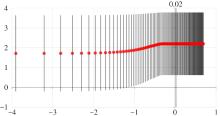
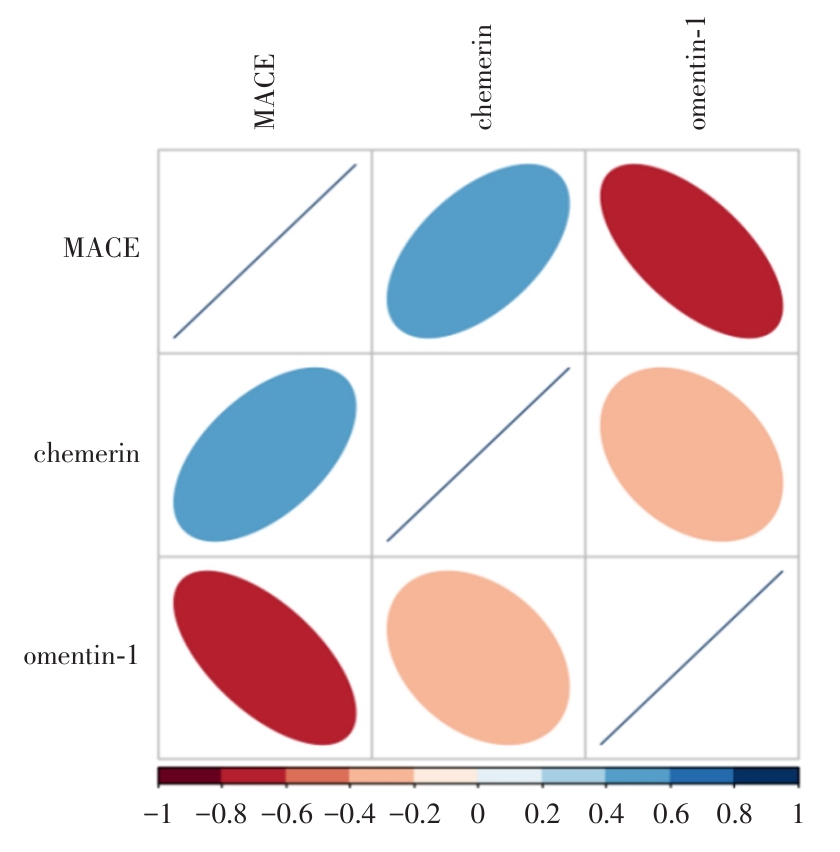
Fig.2
Cross-validation diagram of Lasso regression"
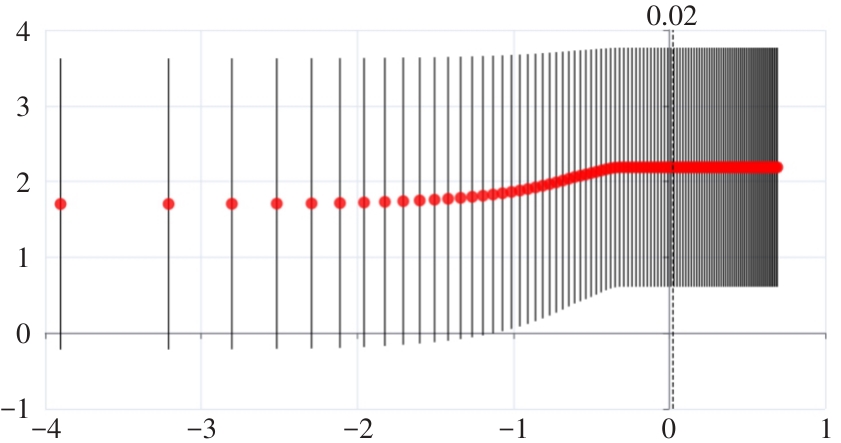
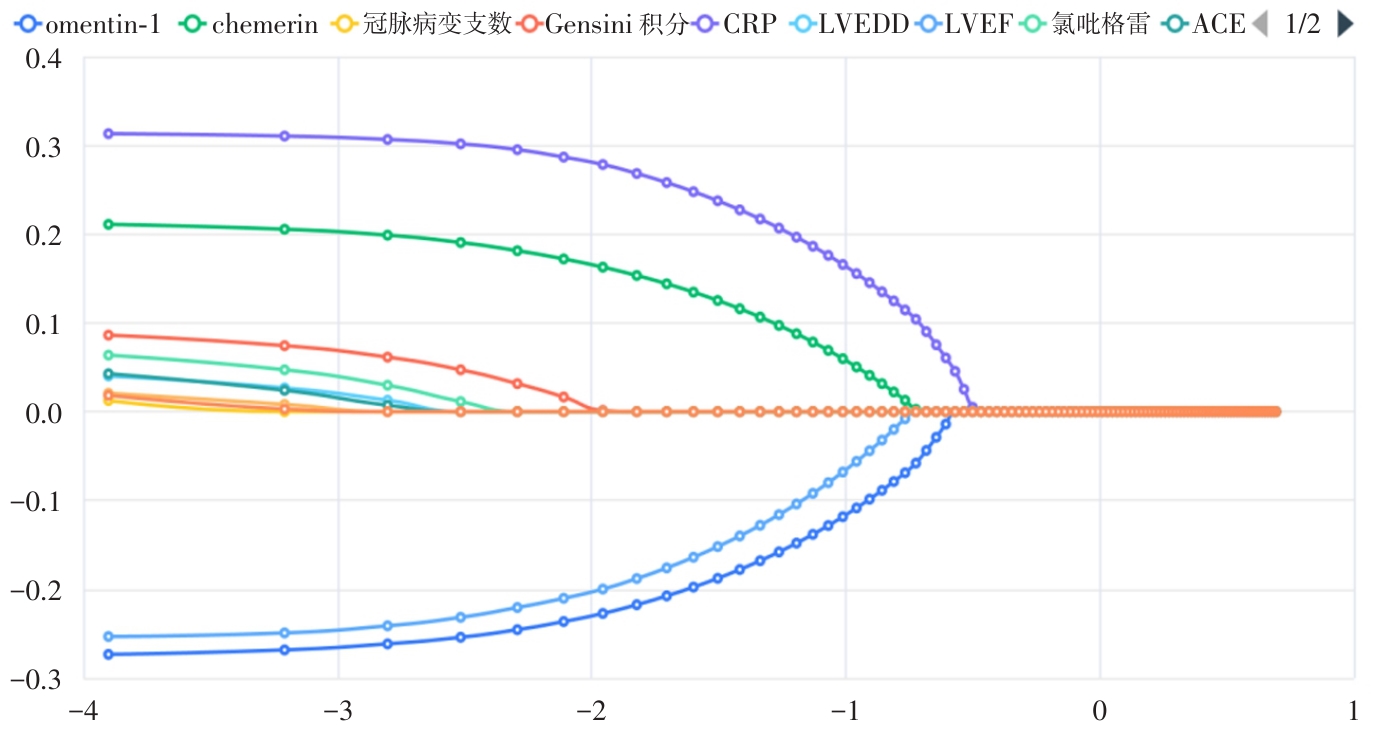
Fig.3
Relationship between λ and model regression coefficient"
Tab.4
Multivariate logistic regression analysis of the risk of MACE in elderly patients with CHD"
| 变量 | β | SE | Waldχ2 | OR | 95%CI | P值 |
|---|---|---|---|---|---|---|
| omentin-1 | -0.006 | 0.001 | 18.513 | 0.994 | 0.992 ~ 0.997 | < 0.001 |
| chemerin | 0.034 | 0.011 | 9.333 | 1.035 | 1.012 ~ 1.058 | 0.002 |
| Gensini积分 | 0.082 | 0.036 | 5.209 | 1.086 | 1.012 ~ 1.165 | 0.022 |
| CRP | 0.913 | 0.192 | 22.685 | 2.491 | 1.711 ~ 3.627 | < 0.001 |
| LVEDD | 0.078 | 0.053 | 2.144 | 1.081 | 0.974 ~ 1.200 | 0.143 |
| LVEF | -0.195 | 0.043 | 20.518 | 0.823 | 0.756 ~ 0.895 | < 0.001 |
| 常量 | -4.160 | 4.245 | 0.960 | 0.016 | 0.327 |
Tab.5
Predictive value of ometin-1 and chemerin for the occurrence of MACE in elderly patients with CHD"
| 指标 | AUC(95%CI) | Z值 | P值 | 约登指数 | 临界值 | 敏感度/% | 特异度/% |
|---|---|---|---|---|---|---|---|
| omentin-1 | 0.893(0.852 ~ 0.926) | 21.173 | < 0.001 | 0.707 | 827 ng/L | 93.81 | 76.85 |
| chemerin | 0.841(0.794 ~ 0.880) | 12.349 | < 0.001 | 0.624 | 105 ng/L | 73.20 | 89.16 |
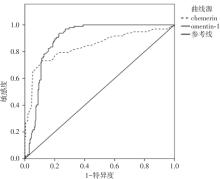
Fig.4
ROC curves of omentin-1 and chemerin in predicting the occurrence of MACE in elderly patients with CHD"
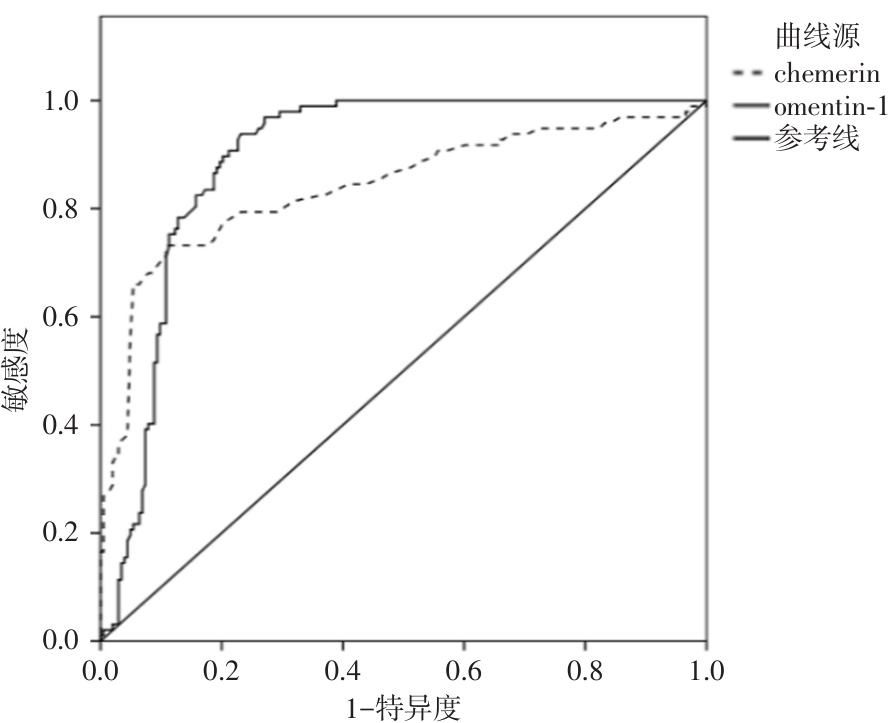
Fig.5
A nomogram for predicting the risk of MACE in elderly patients with CHD"
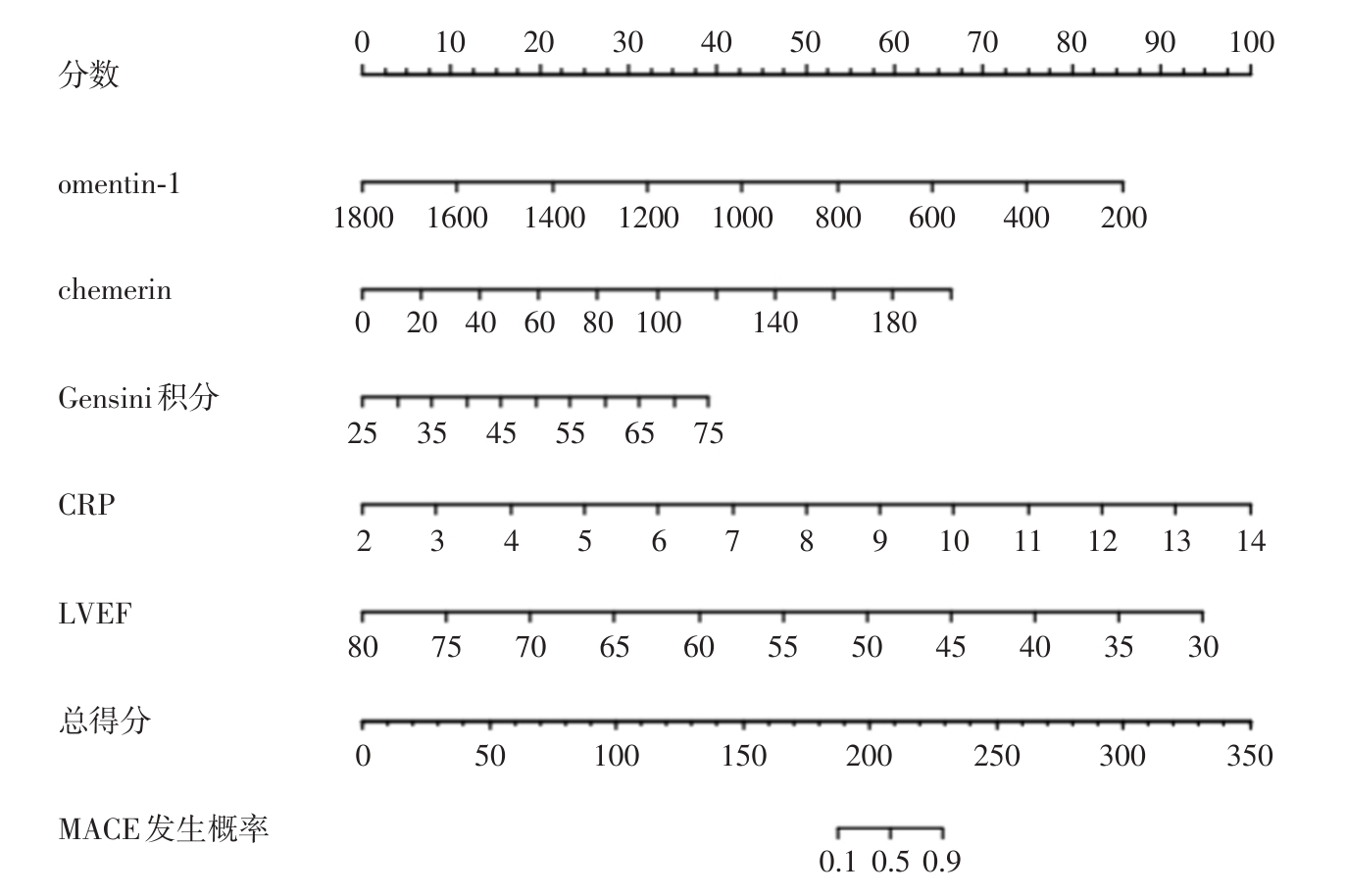
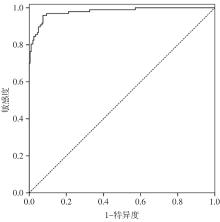
Fig.6
ROC curve of the nomogram for predicting the risk of MACE in elderly patients with CHD"
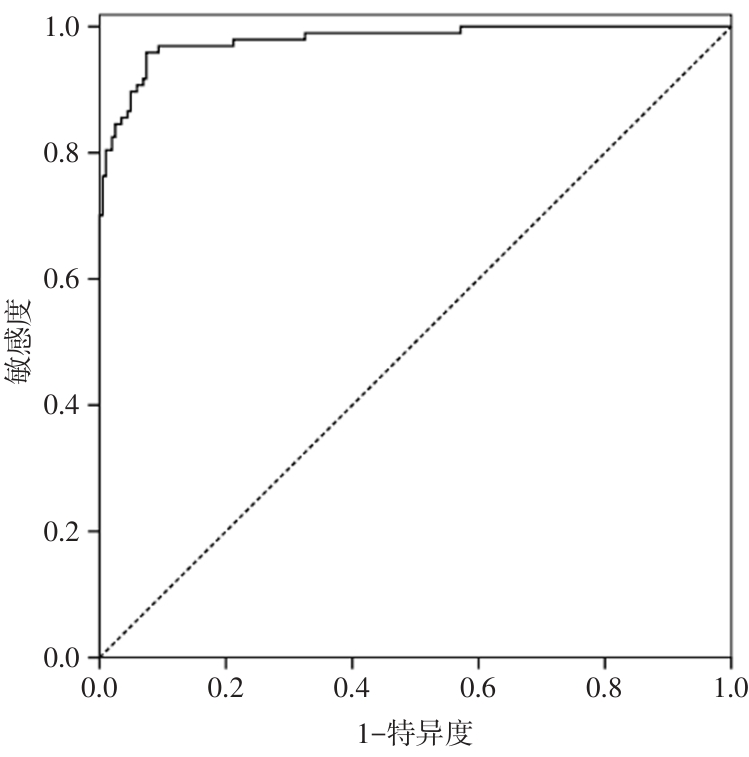
Fig.7
Calibration curve of the nomogram for predicting the risk of MACE in elderly patients with CHD"
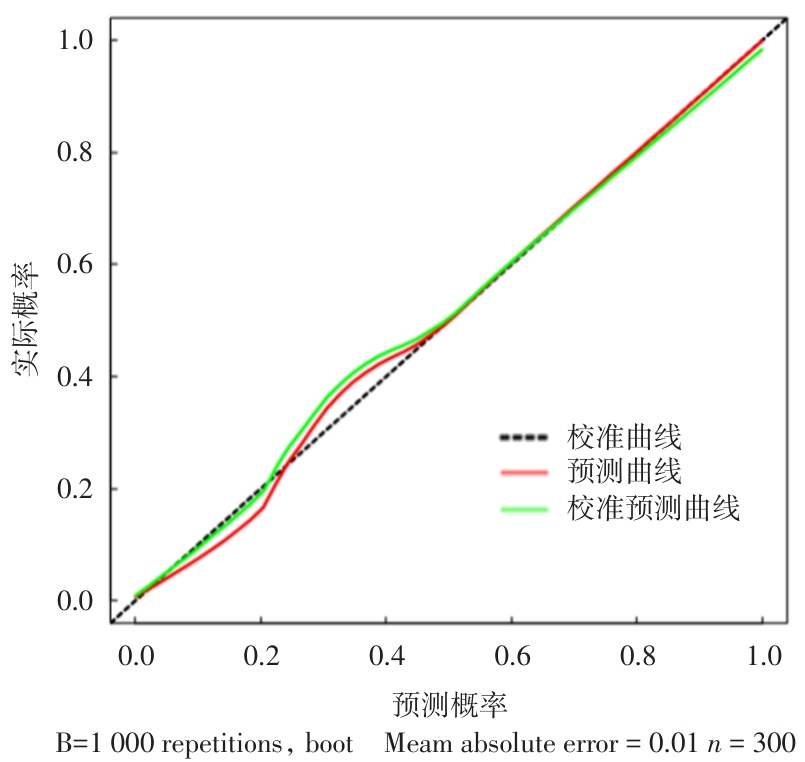
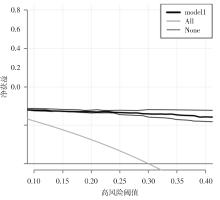
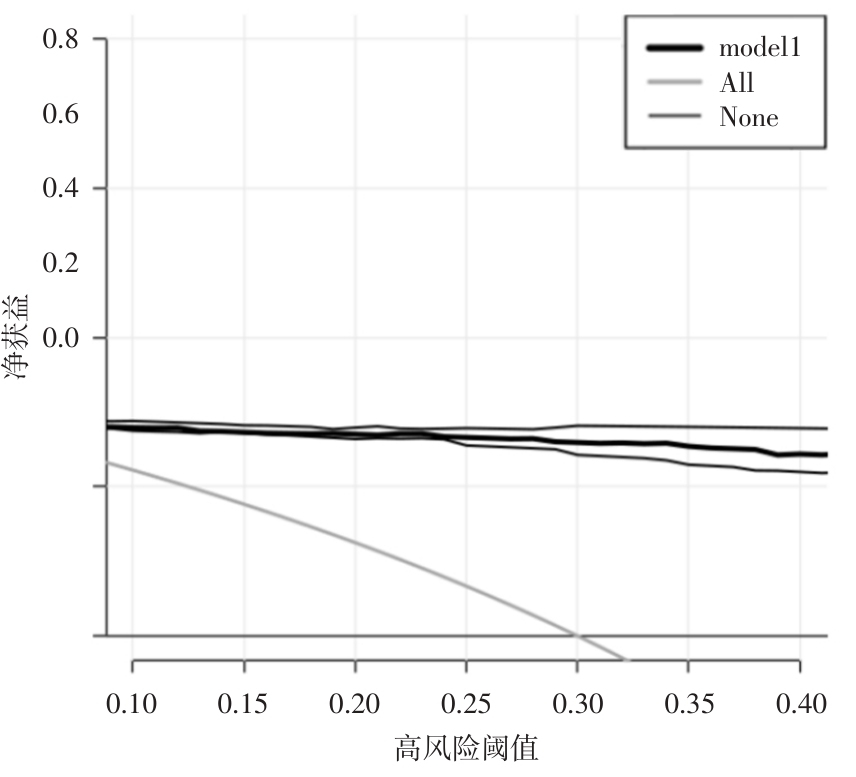
Fig.8
Clinical decision curve of the nomogram for predicting the risk of MACE in elderly patients with CHD"
| [1] |
GAIDAI O, CAO Y, LOGINOV S. Global Cardiovascular Diseases Death Rate Prediction[J]. Curr Probl Cardiol, 2023, 48(5): 101622. doi: 10.1016/j.cpcardiol.2023.101622 .
doi: 10.1016/j.cpcardiol.2023.101622 |
| [2] |
汪宇, 缪莹, 林强, 等. 甘油三酯葡萄糖指数联合腰围对泸州地区中老年人群10年新发冠心病的前瞻性队列研究[J]. 实用医学杂志, 2024, 40(12): 1731-1736. doi: 10.3969/j.issn. 1006-5725.2024.12.020 .
doi: 10.3969/j.issn. 1006-5725.2024.12.020 |
| [3] |
RALAPANAWA U, SIVAKANESAN R. Epidemiology and the Magnitude of Coronary Artery Disease and Acute Coronary Syndrome: A Narrative Review[J]. J Epidemiol Glob Health, 2021, 11(2): 169-177. doi: 10.2991/jegh.k.201217.001 .
doi: 10.2991/jegh.k.201217.001 |
| [4] |
ALI S, ALAM R, AHASN H, et al. Role of adipokines (omentin and visfatin) in coronary artery disease[J]. Nutr Metab Cardiovasc Dis, 2023, 33(3): 483-493. doi: 10.1016/j.numecd. 2022. 11.023 .
doi: 10.1016/j.numecd. 2022. 11.023 |
| [5] |
中华医学会, 中华医学会杂志社, 中华医学会全科医学分会, 等. 稳定性冠心病基层诊疗指南(2020年)[J]. 中华全科医师杂志, 2021, 20(3): 265-273. doi: 10.3760/cma.j.cn114798-20210120-00079 .
doi: 10.3760/cma.j.cn114798-20210120-00079 |
| [6] |
古晓东, 翁锐强, 赵俊丽, 等. NLRC3在血管内皮细胞中的功能初探及在冠心病中的诊断价值[J]. 中国病理生理杂志, 2025, 41(4): 661-668. doi: 10.3969/j.issn.1000-4718. 2025. 04.005 .
doi: 10.3969/j.issn.1000-4718. 2025. 04.005 |
| [7] |
钱程昱, 王琳升, 熊兴江, 等. 血清低密度脂蛋白胆固醇、超敏C反应蛋白联合颈动脉超声参数诊断疑似冠心病患者的价值[J]. 实用医学杂志, 2025, 41(09): 1401-1406.doi:10.3969/j.issn.1006-5725.2025.09.019 .
doi: 10.3969/j.issn.1006-5725.2025.09.019 |
| [8] |
KEDHI E, HERMANIDES R S, DAMBRINK J E, et al. TransCatheter aortic valve implantation and fractional flow reserve-guided percutaneous coronary intervention versus conventional surgical aortic valve replacement and coronary bypass grafting for treatment of patients with aortic valve stenosis and complex or multivessel coronary disease (TCW): An international, multicentre, prospective, open-label, non-inferiority, randomised controlled trial[J]. Lancet, 2025, 404(10471): 2593-2602. doi: 10.1016/S0140-6736(24)02100-7 .
doi: 10.1016/S0140-6736(24)02100-7 |
| [9] |
李明辉, 吴永健. 稳定性冠心病患者经皮冠状动脉介入治疗理念的变迁[J]. 中国循环杂志, 2025, 40(1): 95-99. doi: 10.3969/j.issn.1000-3614.2025.01.012 .
doi: 10.3969/j.issn.1000-3614.2025.01.012 |
| [10] |
TAO S, YU L, LI J, et al. Association between the triglyceride-glucose index and 1-year major adverse cardiovascular events in patients with coronary heart disease and hypertension[J]. Cardiovasc Diabetol, 2023, 22(1): 305.doi: 10.1186/s12933-023-02018-9 .
doi: 10.1186/s12933-023-02018-9 |
| [11] |
SHIMMONO H, TOKUSHIGE A, KANDA D, et al. Association of preoperative clinical frailty and clinical outcomes in elderly patients with stable coronary artery disease after percutaneous coronary intervention[J]. Heart Vessels, 2023, 38(10): 1205-1217. doi: 10.1007/s00380-023-02276-3 .
doi: 10.1007/s00380-023-02276-3 |
| [12] |
ZHAO A, XIAO H, ZHU Y, et al. Omentin-1: a newly discovered warrior against metabolic related diseases[J]. Expert Opin Ther Targets, 2022, 26(3): 275-289. doi: 10.1080/14728222. 2022.2037556 .
doi: 10.1080/14728222. 2022.2037556 |
| [13] |
GAO S, HE Y, LIU Y, et al. Dan-Lou tablets reduce inflammatory response by inhibiting the activation of NLRP3 inflammasome for coronary heart disease[J]. Phytomedicine, 2024, 131: 155773. doi: 10.1016/j.phymed.2024.155773 .
doi: 10.1016/j.phymed.2024.155773 |
| [14] |
SILALAHI T, ALWI I, SUYATNA F, et al. Curcumin's Effect on Inflammatory Response following Percutaneous Coronary Intervention in Adult Patients with Stable Coronary Heart Disease[J]. Int J Angiol, 2021, 30(2): 132-138. doi: 10.1016/j.phymed. 2024.155773 .
doi: 10.1016/j.phymed. 2024.155773 |
| [15] |
KARAMPELA I, VALLIANOU N G, TSILINGIRIS D, et al. Diagnostic and Prognostic Value of Serum Omentin-1 in Sepsis: A Prospective Study in Critically Ill Patients[J]. Medicina (Kaunas), 2023, 59(5): 833. doi: 10.3390/medicina59050833 .
doi: 10.3390/medicina59050833 |
| [16] |
YIN L, TANG H, QU J, et al. Chemerin regulates glucose and lipid metabolism by changing mitochondrial structure and function associated with androgen/androgen receptor[J]. Am J Physiol Endocrinol Metab, 2024, 326(6): E869-E887. doi: 10.1152/ajpendo.00104.2023 .
doi: 10.1152/ajpendo.00104.2023 |
| [17] |
WANG Y, ZHANG X, REN M, et al. LncRNA LUCAT1 offers protection against human coronary artery endothelial cellular oxidative stress injury through modulating hsa-miR-6776-5p/LRRC25 axis and activating autophagy flux[J]. J Transl Med, 2024, 22(1): 1171. doi: 10.1186/s12967-024-05966-2 .
doi: 10.1186/s12967-024-05966-2 |
| [18] |
WANG Y, LIU Y, YANG R, et al. Remnant cholesterol for the detection of glucose metabolic states in patients with coronary heart disease angina pectoris[J]. Acta Diabetol, 2022, 59(10): 1339-1347. doi: 10.1007/s00592-022-01935-7 .
doi: 10.1007/s00592-022-01935-7 |
| [19] |
KO C Y, LIN Y Y, ACHUDHAN D, et al. Omentin-1 ameliorates the progress of osteoarthritis by promoting IL-4-dependent anti-inflammatory responses and M2 macrophage polarization[J]. Int J Biol Sci, 2023, 19(16): 5275-5289. doi: 10.7150/ijbs. 86701 .
doi: 10.7150/ijbs. 86701 |
| [20] |
MA L, ZHANG X, ZHANG C, et al. Omentin-1 attenuates inflammation and barrier damage in DSS-induced ulcerative colitis in mice by inhibiting endoplasmic reticulum stress[J]. Gen Physiol Biophys, 2022, 41(3): 221-230. doi: 10.4149/gpb_2022012 .
doi: 10.4149/gpb_2022012 |
| [21] |
HUANG X, CHEN C, CHEN Y, et al. Omentin-1 alleviate interleukin-1β(IL-1β)-induced nucleus pulposus cells senescence[J]. Bioengineered, 2022, 13(5): 13849-13859. doi: 10.1080/21655979.2022.2084495 .
doi: 10.1080/21655979.2022.2084495 |
| [22] |
WU Q, CHEN Y, CHEN S, et al. Correlation between adiponectin, chemerin, vascular endothelial growth factor and epicardial fat volume in patients with coronary artery disease[J]. Exp Ther Med, 2020, 19(2): 1095-1102. doi: 10.3892/etm.2019.8299 .
doi: 10.3892/etm.2019.8299 |
| [23] |
TANG C, CHEN G, WU F, et al. Endothelial CCRL2 induced by disturbed flow promotes atherosclerosis via chemerin-dependent β2 integrin activation in monocytes[J]. Cardiovasc Res, 2023, 119(9): 1811-1824. doi: 10.1093/cvr/cvad085 .
doi: 10.1093/cvr/cvad085 |
| [24] |
乔羽, 王晓磊, 吴长江, 等. 葛根-丹参对糖尿病相关动脉粥样硬化小鼠脂肪因子稳态的影响[J]. 中国病理生理杂志, 2024, 40(12): 2238-2244. doi: 10.3969/j.issn.1000-4718. 2024.12.006 .
doi: 10.3969/j.issn.1000-4718. 2024.12.006 |
| [25] |
KUKLA M, MENZYK T, DEMBINSKI M, et al. Anti-inflam-matory adipokines: Chemerin, vaspin, omentin concentrations and SARS-CoV-2 outcomes[J]. Sci Rep, 2021, 11(1): 21514. doi: 10.1038/s41598-021-00928-w .
doi: 10.1038/s41598-021-00928-w |
| [26] |
SU X, CHENG Y, ZHANG G, et al. Chemerin in inflammatory diseases[J]. Clin Chim Acta, 2021, 517: 41-47. doi: 10.1016/j.cca.2021.02.010 .
doi: 10.1016/j.cca.2021.02.010 |
| Viewed | ||||||
|
Full text |
|
|||||
|
Abstract |
|
|||||
