

The Journal of Practical Medicine ›› 2026, Vol. 42 ›› Issue (4): 698-705.doi: 10.3969/j.issn.1006-5725.2026.04.022
• Original Articles • Previous Articles
Shu ZHOU,Shuhan YANG( ),Zengxia WANG,Xuening WANG,Ruihan FENG,Lili PENG,Meiling YANG
Received:2025-09-29
Online:2026-02-25
Published:2026-02-25
Contact:
Shuhan YANG
E-mail:1572204596@qq.com
CLC Number:
Shu ZHOU,Shuhan YANG,Zengxia WANG,Xuening WANG,Ruihan FENG,Lili PENG,Meiling YANG. The clinical application value of SAVE, APACHEⅡ score combined with circulating biomarkers in predicting the 90 day survival prognosis of patients with AMICS treated with VA-ECMO[J]. The Journal of Practical Medicine, 2026, 42(4): 698-705.

Tab.1
Comparison of general information between survival group and death group"
| 项目 | 死亡组(n = 63) | 生存组(n = 73) | χ2/t值 | P值 | MD(95% CI) |
|---|---|---|---|---|---|
| 性别/例 | 0.174 | 0.676 | |||
| 男 | 34 | 42 | |||
| 女 | 29 | 31 | |||
| 年龄/岁 | 72.06 ± 5.62 | 70.03 ± 5.09 | 2.233 | 0.027 | 2.03(0.21 ~ 3.85) |
| BMI/(kg/m2) | 22.47 ± 2.36 | 22.28 ± 2.20 | 0.490 | 0.625 | 0.19(-0.050 ~ 0.88) |
| 文化程度/[例(%)] | 0.164 | 0.685 | |||
| 高中及以下 | 46(73.02) | 51(69.86) | |||
| 大专及以上 | 17(26.98) | 22(30.14) | |||
| 居住地/[例(%)] | 0.309 | 0.578 | |||
| 城镇 | 54(85.72) | 60(82.19) | |||
| 农村 | 9(14.28) | 13(17.81) | |||
| 高血压/[例(%)] | 29(46.03) | 36(49.32) | 0.146 | 0.702 | |
| 糖尿病/[例(%)] | 27(42.85) | 33(45.21) | 0.076 | 0.782 | |
| 高血脂/[例(%)] | 20(31.75) | 24(32.87) | 0.020 | 0.888 | |
| 吸烟史/[例(%)] | 27(42.85) | 26(35.62) | 0.745 | 0.389 | |
| 饮酒史/[例(%)] | 23(36.51) | 25(34.25) | 0.075 | 0.783 | |
| 血糖/(mmol/L) | 4.18 ± 0.58 | 4.24 ± 0.54 | 0.631 | 0.529 | -0.06(-0.24 ~ 0.12) |
| 收缩压/mmHg | 138.24 ± 10.73 | 138.02 ± 10.56 | 0.121 | 0.904 | 0.22(-3.54 ~ 3.98) |
| 舒张压/mmHg | 86.43 ± 7.42 | 86.08 ± 7.13 | 0.283 | 0.778 | 0.35(-2.07 ~ 2.77) |
| 心率/(次/min) | 95.27 ± 10.65 | 95.43 ± 10.57 | 0.088 | 0.930 | -0.16(-3.92 ~ 3.60) |
| SAVE评分/分 | -6.84 ± 3.46 | -4.03 ± 3.17 | 5.444 | < 0.001 | -2.81(-4.09 ~ 1.53) |
| APACHE Ⅱ评分/分 | 26.64 ± 3.28 | 24.13 ± 2.94 | 4.754 | < 0.001 | 2.51(1.32 ~ 3.70) |
| 血红蛋白/(g/L) | 122.37 ± 10.73 | 123.08 ± 10.96 | 0.384 | 0.702 | -0.71(-4.35 ~ 2.93) |
| 血钾/(mmol/L) | 3.28 ± 0.65 | 3.30 ± 0.66 | 0.179 | 0.858 | -0.02(-0.25 ~ 0.21) |
| 血钠/(mmol/L) | 135.22 ± 5.53 | 135.17 ± 5.41 | 0.055 | 0.956 | 0.05(-1.83 ~ 1.93) |
| 血钙/(mmol/L) | 2.52 ± 0.17 | 2.54 ± 0.19 | 0.648 | 0.518 | -0.02(-0.08 ~ 0.04) |
| 血磷/(mmol/L) | 1.34 ± 0.14 | 1.33 ± 0.13 | 0.436 | 0.664 | 0.01(-0.03 ~ 0.05) |
| 总胆固醇/(mmol/L) | 4.65 ± 0.71 | 4.52 ± 0.62 | 1.152 | 0.251 | 0.13(-0.10 ~ 0.36) |
| 甘油三酯/(mmol/L) | 1.34 ± 0.26 | 1.28 ± 0.23 | 1.443 | 0.151 | 0.06(-0.01 ~ 0.13) |
| 低密度脂蛋白/(mmol/L) | 2.64 ± 0.30 | 2.52 ± 0.28 | 2.435 | 0.016 | 0.12(0.02 ~ 0.22) |
| 高密度脂蛋白/(mmol/L) | 1.37 ± 0.28 | 1.48 ± 0.33 | 2.094 | 0.038 | -0.11(-0.22 ~ 0.00) |
| 乳酸/(mmol/L) | 4.15 ± 0.83 | 3.54 ± 0.72 | 4.639 | < 0.001 | 0.61(0.35 ~ 0.87) |
| CRP/(mg/L) | 24.73 ± 2.72 | 22.82 ± 2.29 | 4.495 | < 0.001 | 1.91(1.08 ~ 2.74) |
| cTn1/(ng/mL) | 7.93 ± 0.96 | 7.15 ± 0.93 | 4.851 | < 0.001 | 0.78(0.41 ~ 1.15) |
| BNP/(pg/mL) | 436.62 ± 46.52 | 403.78 ± 39.21 | 4.521 | < 0.001 | 32.84(16.23 ~ 49.45) |
Tab.2
Independent variable assignment"
| 自变量 | 赋值 |
|---|---|
| 年龄 | 原值 |
| SAVE评分 | 原值 |
| APACHE Ⅱ评分 | 原值 |
| 低密度脂蛋白 | 原值 |
| 高密度脂蛋白 | 原值 |
| 乳酸 | 原值 |
| CRP | 原值 |
| cTn1 | 原值 |
| BNP | 原值 |
Tab.3
Influencing factors of 90 day mortality in AMICS patients after VA-ECMO treatment"
| 因素 | B | SE | Wald | P值 | HR | 95%CI |
|---|---|---|---|---|---|---|
| 年龄 | 0.007 | 0.046 | 0.021 | 0.885 | 1.007 | 0.920 ~ 1.101 |
| SAVE评分 | -0.142 | 0.062 | 5.181 | 0.023 | 0.867 | 0.768 ~ 0.980 |
| APACHEⅡ评分 | 0.550 | 0.091 | 30.600 | < 0.001 | 1.652 | 1.383 ~ 1.973 |
| 低密度脂蛋白 | -0.792 | 0.744 | 1.132 | 0.287 | 0.453 | 0.105 ~ 1.948 |
| 高密度脂蛋白 | -0.635 | 0.791 | 0.645 | 0.422 | 0.530 | 0.112 ~ 2.498 |
| 乳酸 | 1.162 | 0.331 | 2.322 | < 0.001 | 3.195 | 1.670 ~ 6.111 |
| CRP | 0.463 | 0.104 | 19.655 | < 0.001 | 1.589 | 1.295 ~ 1.950 |
| cTn1 | 0.876 | 0.246 | 12.669 | < 0.001 | 2.400 | 1.482 ~ 3.887 |
| BNP | 0.007 | 0.005 | 1.565 | 0.211 | 1.007 | 0.996 ~ 1.017 |
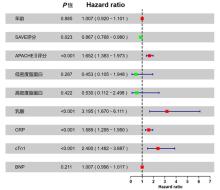
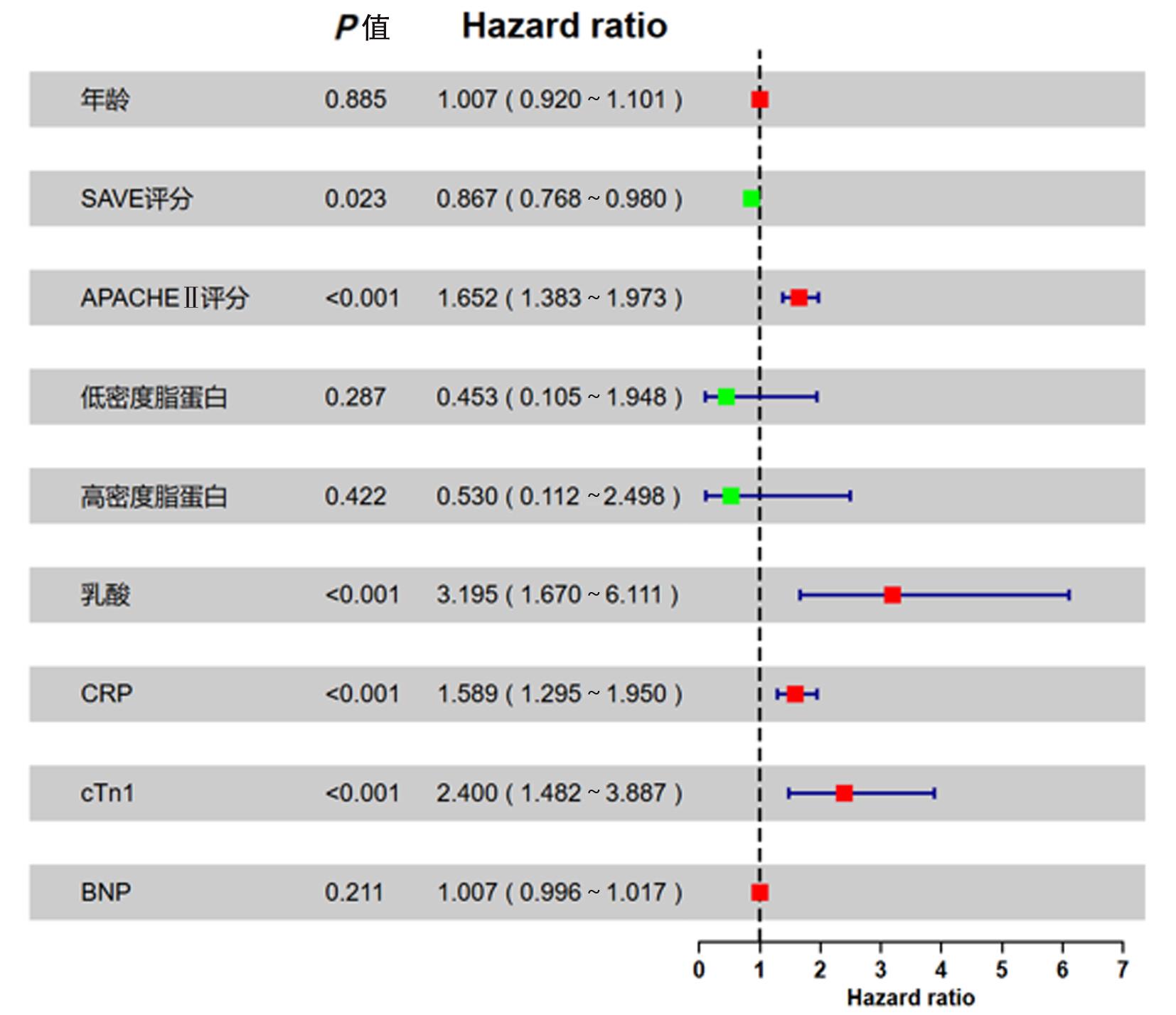
Fig.1
Cox regression forest plot of significant variables"
Tab.4
Clinical application value of SAVE score, APACHE Ⅱ score, lactate, CRP, and cTn1 in 90 day survival prognosis ofAMICS patients treated with VA-ECMO"
| 指标 | AUC | 标准误差 | 95% CI | P值 | cut-off值 | 约登指数 | 敏感度/% | 特异度/% |
|---|---|---|---|---|---|---|---|---|
| 0.678* | 0.046 | 0.593 ~ 0.756 | < 0.001 | ≤ -4.301分 | 0.293 | 84.13 | 45.21 | |
| APACHE Ⅱ评分 | 0.845* | 0.033 | 0.773 ~ 0.901 | < 0.001 | > 25.076分 | 0.528 | 85.71 | 67.12 |
| 乳酸 | 0.695* | 0.045 | 0.610 ~ 0.771 | < 0.001 | > 3.900 mmol/L | 0.295 | 65.08 | 64.38 |
| CRP | 0.670* | 0.046 | 0.584 ~ 0.748 | < 0.001 | > 23.752 mg/L | 0.256 | 57.14 | 68.49 |
| cTn1 | 0.756* | 0.041 | 0.675 ~ 0.825 | < 0.001 | > 7.755 ng/mL | 0.411 | 60.32 | 80.82 |
| 联合检测 | 0.941 | 0.018 | 0.888 ~ 0.974 | < 0.001 | > 0.532 | 0.754 | 90.48 | 84.93 |
| ZSAVE评分-联合检测 | 5.731 | |||||||
| ZAPACHE II评分-联合检测 | 3.573 | |||||||
| Z乳酸-联合检测 | 5.544 | |||||||
| ZCRP-联合检测 | 5.983 | |||||||
| ZcTn1-联合检测 | 4.807 |
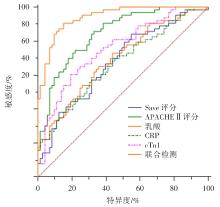
Fig.2
ROC curve of the clinical application value ofSAVE score, APACHE Ⅱ score, lactate, CRP,and cTn1 in the 90 day survival prognosis of AMICSpatients treated with VA-ECMO"
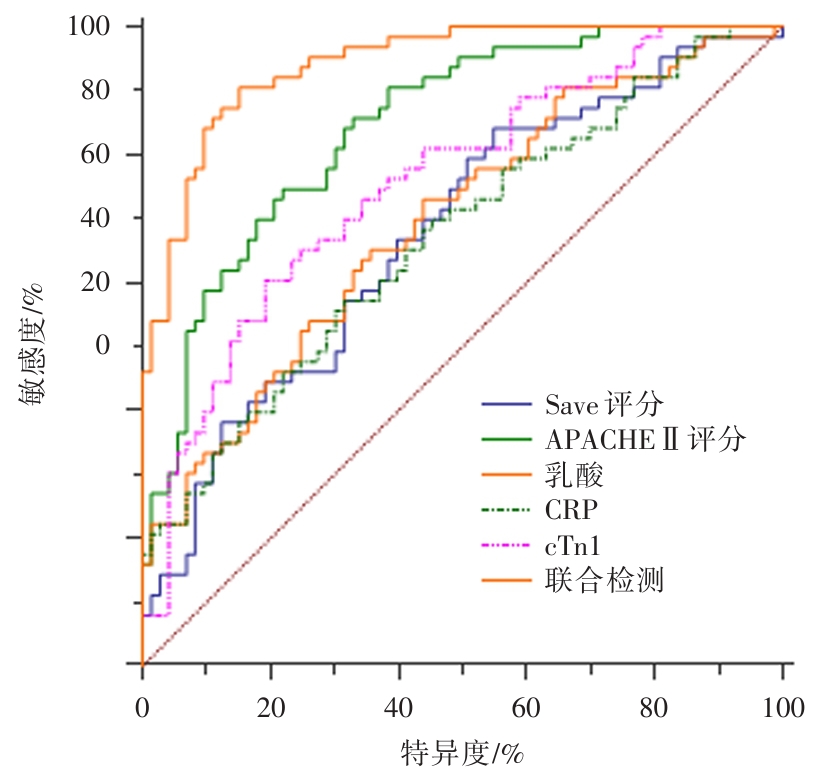
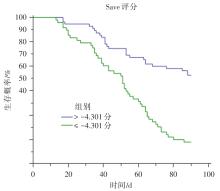
Fig.3
Kaplan Meier survival curve of SAVE score"
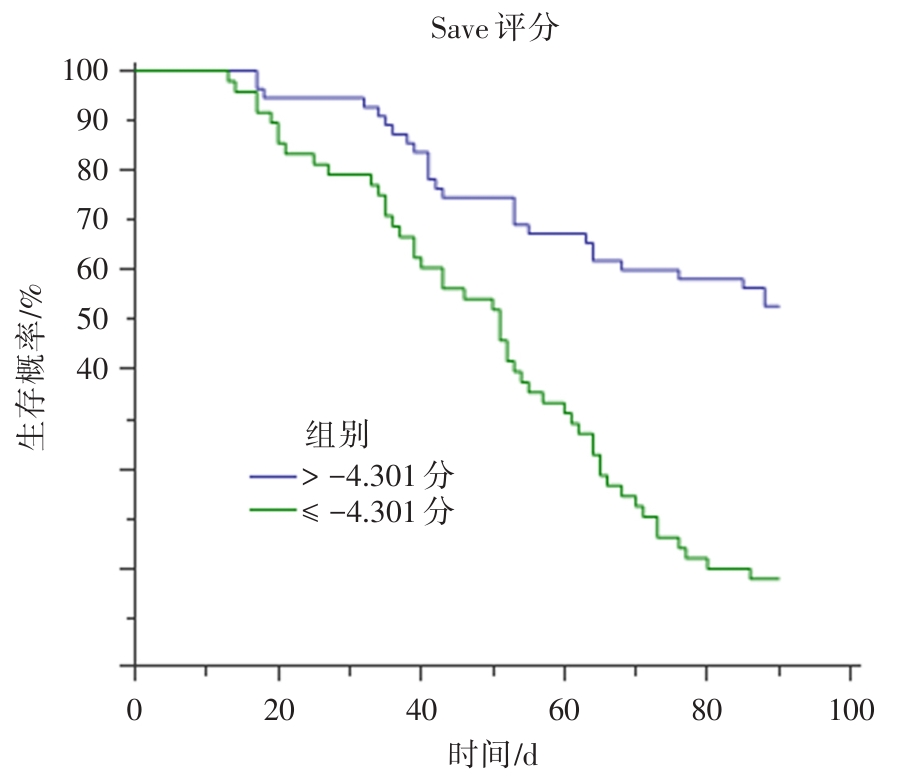
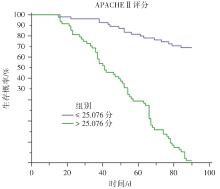
Fig.4
Kaplan Meier survival curve of APACHE Ⅱ score"
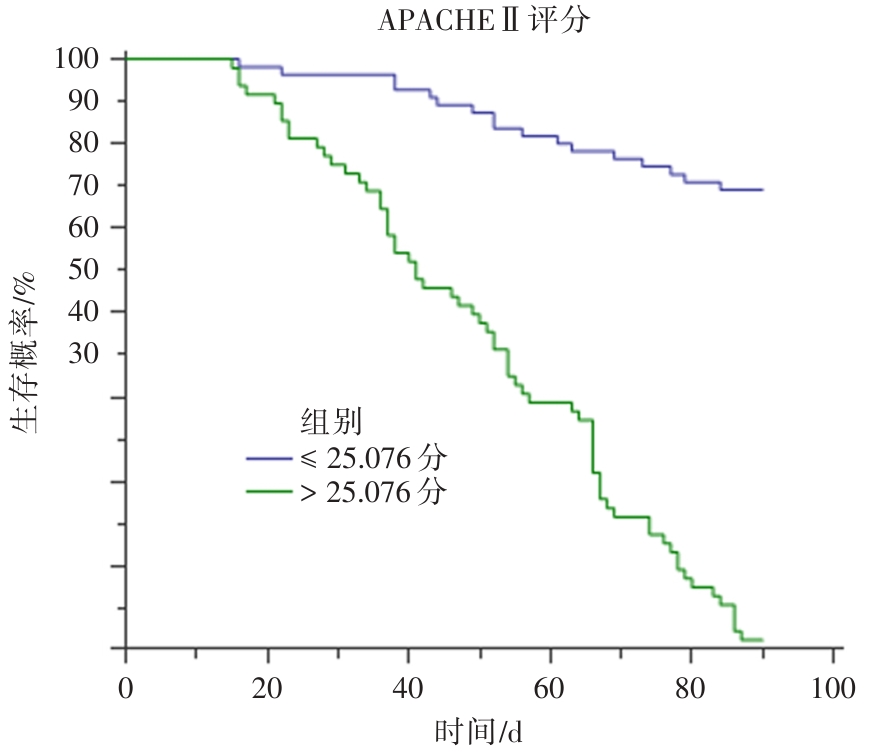
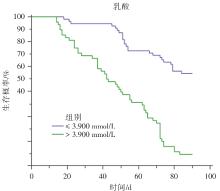
Fig.5
Kaplan Meier survival curve of lactate"
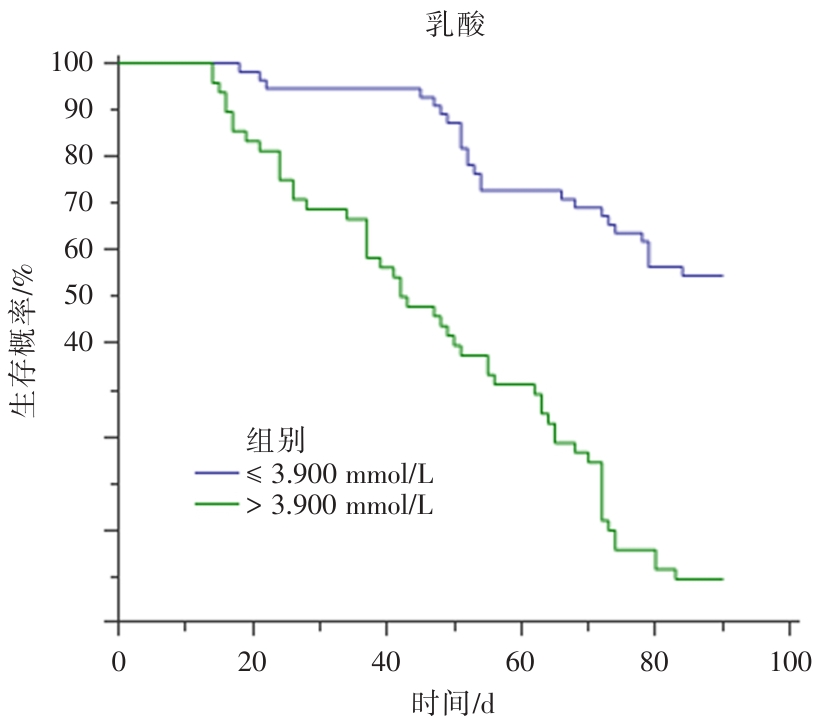
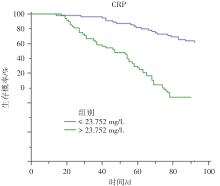
Fig.6
CRP Kaplan Meier survival curve"
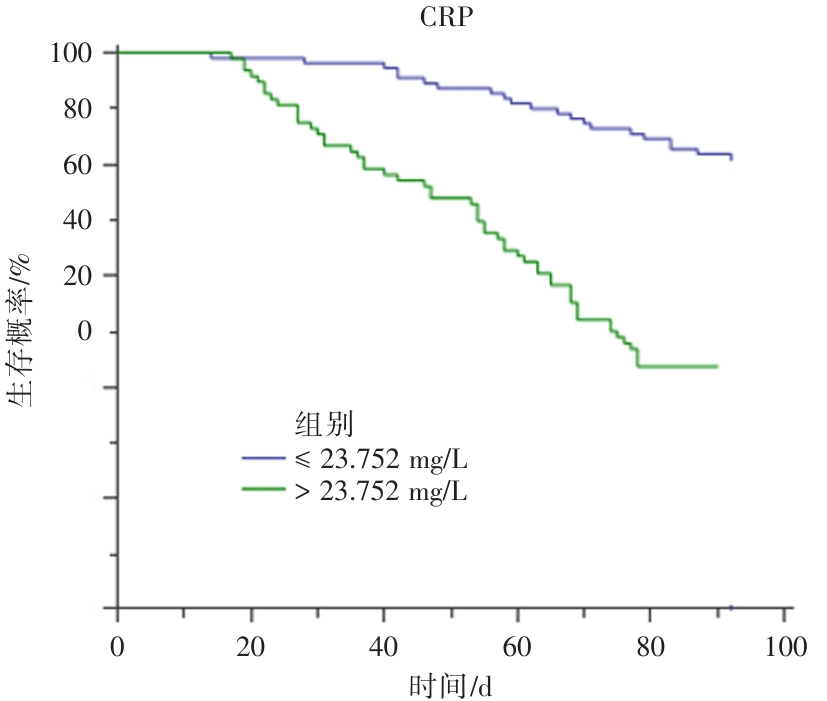
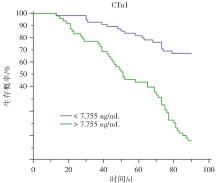
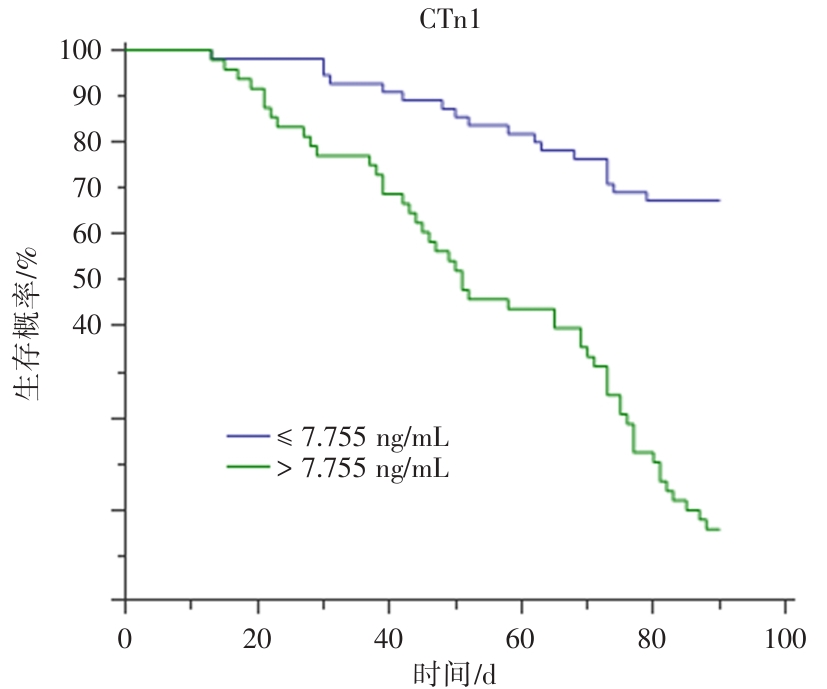
Fig.7
Kaplan Meier survival curve of cTn1"
| [1] |
徐莉,汪健飞,郑枫,等. 超声心动图评价急性心肌梗死Ⅱ期心脏康复前后心功能及同步性[J]. 江苏大学学报(医学版),2023,33(1):54-56.doi:10.13312/j.issn.1671-7783.y220181 .
doi: 10.13312/j.issn.1671-7783.y220181 |
| [2] |
ZEYMER U, BUENO H, GRANGER CB, et al. Acute Cardiovascular Care Association position statement for the diagnosis and treatment of patients with acute myocardial infarction complicated by cardiogenic shock: A document of the Acute Cardiovascular Care Association of the European Society of Cardiology[J].Eur Heart J Acute Cardiovasc Care,2020,9(2):183-197.doi: 10.1177/2048872619894254 .
doi: 10.1177/2048872619894254 |
| [3] |
何罗宜,刘品晶,黄静铭,等. 静脉-动脉体外膜肺氧合治疗患者合并毛细血管渗漏综合征分布状态、危险因素及预后[J].实用医学杂志,2025,41(4):542-546.doi:10.3969/j.issn.1006-5725.2025.04.012 .
doi: 10.3969/j.issn.1006-5725.2025.04.012 |
| [4] |
AYYAD A, FADEL R, ALQARQAZ M. 100.76 Assessing Mortality Risk in Cardiogenic Shock Patients on VA-ECMO: The Role of SAVE Score, SOFA Score, and 8-Hour Lactate Clearance[J]. JACC Cardiovasc Interv, 2024, 17(): S23-S24.doi:10.1016/j.jcin.2024.01.158 .
doi: 10.1016/j.jcin.2024.01.158 |
| [5] |
ZOU X, LI S, FANG M, et al. Acute physiology and chronic health evaluation II score as a predictor of hospital mortality in patients of coronavirus disease 2019[J]. Crit Care Med,2020, 48(8): e657-e665.doi: 10.1097/CCM.0000000000004411 .
doi: 10.1097/CCM.0000000000004411 |
| [6] |
SARHADI V K, ARMENGOL G. Molecular biomarkers in cancer[J]. Biomolecules, 2022, 12(8): 1021.doi: 10.3390/biom 12081021 .
doi: 10.3390/biom 12081021 |
| [7] |
中国医师协会中西医结合医师分会,中国中西医结合学会心血管病专业委员会,中国中西医结合学会重症医学专业委员会,等. 急性心肌梗死中西医结合诊疗指南[J]. 中国中西医结合杂志,2018,38(3):272-284.doi:10.7661/j.cjim.20180119.038 .
doi: 10.7661/j.cjim.20180119.038 |
| [8] |
中华医学会心血管病学分会心血管急重症学组,中华心血管病杂志编辑委员会. 心源性休克诊断和治疗中国专家共识(2018)[J]. 中华心血管病杂志,2019,47(4):265-277.doi:10.3760/cma.j.issn.0253-3758.2019.04.003 .
doi: 10.3760/cma.j.issn.0253-3758.2019.04.003 |
| [9] |
SCHMIDT M, BURRELL A, ROBERTS L,et al. Predicting survival after ECMO for refractory cardiogenic shock: The survival after veno-arterial-ECMO (SAVE)-score[J]. European heart journal, 2015, 36(33): 2246-2256.doi: 10.1093/eurheartj/ehv194 .
doi: 10.1093/eurheartj/ehv194 |
| [10] |
GILANI M T, RAZAVI M, AZAD A M. A comparison of Simplified Acute Physiology Score Ⅱ, Acute Physiology and Chronic Health Evaluation Ⅱ and Acute Physiology and Chronic Health Evaluation Ⅲ scoring system in predicting mortality and length of stay at surgical intensive care unit[J]. Niger Med J, 2014,55(2): 144-147.doi: 10.4103/0300-1652.129651 .
doi: 10.4103/0300-1652.129651 |
| [11] |
TOMARCHIO E, MOMIGLIANO F, GIOSA L, et al. The intricate physiology of veno-venous extracorporeal membrane oxygenation: An overview for clinicians[J]. Perfusion, 2024, 39(): 49S-65S.doi: 10.1177/02676591241238156 .
doi: 10.1177/02676591241238156 |
| [12] |
GALVÁN-ROMÁN F, FERNÁNDEZ-HERRERO I, ARIZA-SOLÉ A, et al. Prognosis of cardiogenic shock secondary to culprit left main coronary artery lesion‐related myocardial infarction[J]. ESC Heart Failure, 2023, 10(1): 111-120.doi: 10.1002/ehf2.14128 .
doi: 10.1002/ehf2.14128 |
| [13] |
BECHER PM, GOSSING A, SCHRAGE B, et al. Procedural volume and outcomes in patients undergoing VA-ECMO support[J]. Critical Care, 2020, 24(1): 291.doi: 10.1186/s13054-020-03016-z .
doi: 10.1186/s13054-020-03016-z |
| [14] |
黄新新,丁琦,冯晔子,等. 静脉-动脉体外膜肺氧合联合主动脉内球囊反搏在急性心肌梗死合并心源性休克患者经皮冠脉介入术中的应用效果[J]. 中国临床医生杂志, 2025, 53(3):379-384.doi:10.3969/j.issn.2095-8552.2025.03.028 .
doi: 10.3969/j.issn.2095-8552.2025.03.028 |
| [15] |
WANG S, TAO S, ZHU Y, et al. AI-powered model for predicting mortality risk in VA-ECMO patients: A multicenter cohort study[J]. Sci Rep, 2025, 15(1): 10362.doi: 10.1038/s41598-025-94734-3 .
doi: 10.1038/s41598-025-94734-3 |
| [16] |
李水仙,唐俊鹏,杨正飞,等. 改良危重症营养风险评分与急诊重症监护室脓毒症患者住院病死率的相关性分析[J]. 中山大学学报(医学科学版),2025,46(2):328-334. doi: 10.13471/j.cnki.j.sun.yat-sen.univ(med.sci).2025.0217 .
doi: 10.13471/j.cnki.j.sun.yat-sen.univ(med.sci).2025.0217 |
| [17] |
GONZÁLEZ A, RICHARDS AM, DE BOER RA, et al. Cardiac remodelling⁃Part 1: From cells and tissues to circulating biomarkers. A review from the Study Group on Biomarkers of the Heart Failure Association of the European Society of Cardiology[J]. Eur J Heart Fail,2022,24(6): 927-943.doi: 10.1002/ejhf.2493 .
doi: 10.1002/ejhf.2493 |
| [18] |
YAN C, XU Z, HUANG W. Cellular senescence affects cardiac regeneration and repair in ischemic heart disease[J]. Aging Dis, 2021, 12(2): 552.doi: 10.14336/AD.2020.0811 .
doi: 10.14336/AD.2020.0811 |
| [19] |
SCHILLER P, HELLGREN L, VIKHOLM P. Survival after refractory cardiogenic shock is comparable in patients with Impella and veno-arterial extracorporeal membrane oxygenation when adjusted for SAVE score[J]. Eur Heart J Acute Cardiovasc Care, 2019, 8(4): 329-337.doi: 10.1177/2048872618799745 .
doi: 10.1177/2048872618799745 |
| [20] |
NG WT, LING L, JOYNT GM, et al. An audit of mortality by using ECMO specific scores and APACHE Ⅱ scoring system in patients receiving extracorporeal membrane oxygenation in a tertiary intensive care unit in Hong Kong[J].J Thorac Dis, 2019, 11(2): 445.doi: 10.21037/jtd.2018.12.121 .
doi: 10.21037/jtd.2018.12.121 |
| [21] |
MINEO C. Lipoprotein receptor signalling in atherosclerosis[J]. Cardiovascular research, 2020, 116(7): 1254-1274.doi: 10.1093/cvr/cvz338 .
doi: 10.1093/cvr/cvz338 |
| [22] |
JIA C, ANDERSON J L C, GRUPPEN E G, et al. High-density lipoprotein anti-inflammatory capacity and incident cardiovascular events[J]. Circulation, 2021, 143(20): 1935-1945.doi: 10.1161/CIRCULATIONAHA.120.050808 .
doi: 10.1161/CIRCULATIONAHA.120.050808 |
| [23] |
肖浩,崔晓磊,刘亮,等. ECMO支持下治疗急性心肌梗死合并心源性休克患者的预后分析[J]. 中国中西医结合急救杂志, 2023, 30(5):557-562.doi:10.3969/j.issn.1008-9691. 2023. 05.009 .
doi: 10.3969/j.issn.1008-9691. 2023. 05.009 |
| [24] |
KOLOGRIVOVA I, KERCHEVA M, PANTELEEV O, et al. The role of inflammation in the pathogenesis of cardiogenic shock secondary to acute myocardial infarction: A narrative review[J]. Biomedicines, 2024, 12(9): 2073.doi: 10.3390/biomedicines12092073 .
doi: 10.3390/biomedicines12092073 |
| [25] |
李金滨,全美玲,李晓雪. 急性心肌梗死合并心源性休克发生院内死亡预测模型的建立[J]. 中国循证心血管医学杂志, 2024, 16(3):283-287.doi:10.3969/j.issn.1674-4055. 2024. 03.07 .
doi: 10.3969/j.issn.1674-4055. 2024. 03.07 |
| [26] |
张晔,孙婷婷,张海峰,等. 急性心肌梗死合并心源性休克院内死亡的预测模型建立与验证[J]. 中西医结合心脑血管病杂志, 2023, 21(24):4570-4575.doi:10.12102/j.issn.1672-1349. 2023.24.017 .
doi: 10.12102/j.issn.1672-1349. 2023.24.017 |
| [27] |
刘亮,肖浩,崔晓磊,等. 乳酸对ECMO支持下急性心肌梗死合并心源性休克患者预后的影响[J]. 河北医药, 2024, 46(11):1632-1635.doi:10.3969/j.issn.1002-7386.2024.11.006 .
doi: 10.3969/j.issn.1002-7386.2024.11.006 |
| Viewed | ||||||
|
Full text |
|
|||||
|
Abstract |
|
|||||
