

The Journal of Practical Medicine ›› 2025, Vol. 41 ›› Issue (24): 3824-3833.doi: 10.3969/j.issn.1006-5725.2025.24.005
• Brain Science and Psychosomatic Medicine • Previous Articles
Lifei CAI1,2,Shibin WANG1,Hua SHAO1,Guowei LUO1,Yuqing XIAO1,Fujun. JIA1( )
)
Received:2025-08-22
Online:2025-12-25
Published:2025-12-25
Contact:
Fujun. JIA
E-mail:jiafujun@126.com
CLC Number:
Lifei CAI,Shibin WANG,Hua SHAO,Guowei LUO,Yuqing XIAO,Fujun. JIA. Clinical features and psychological resilience of adolescent patients with depressive disorder and non⁃suicidal self⁃harm behaviors: A survey analysis of the depressive dual⁃pathway model[J]. The Journal of Practical Medicine, 2025, 41(24): 3824-3833.

Tab.1
Comparison of three groups in demographic, family environment, life experience and personal factors"
| 指标 | KD(n = 51) | NOR1(n = 24) | NOR2(n = 24) | χ2/F值 | P值 |
|---|---|---|---|---|---|
| 性别(女) | 40(78.40) | 16(66.70) | 18(75.00) | 1.19 | 0.54 |
| 年龄(x ± s)/岁 | 15.47 ± 1.68 | 14.46 ± 1.59 | 15.58 ± 1.59 | 3.78 | 0.51 |
| 户籍(农村) | 19(37.30) | 13(54.20) | 5(20.80) | 5.69 | 0.06 |
| 独生 | 22(43.10) | 8(33.30) | 7(29.20) | 1.58 | 0.45 |
| 寄宿或走读(寄宿) | 27(52.90) | 7(29.20) | 8(33.30) | 4.84 | 0.09 |
| 留守 | 15(29.40)△ | 0(0.00)?# | 7(29.20)? | 9.05 | 0.01 |
| 父母负面婚姻 | 28(54.90)△# | 1(4.20)?# | 6(25.00)?△ | 19.87 | < 0.001 |
| 家庭成员缺失 | 2(3.90) | 0(0.00) | 0(0.00) | 1.92 | 1.00 |
| 情感忽视 | 33(64.70)△# | 1(4.20)?# | 6(25.00)?△ | 28.00 | < 0.001 |
| 躯体虐待 | 8(15.70) | 0(0.00) | 2(8.30) | 4.53 | 0.10 |
| 情感虐待 | 24(47.10)△# | 0(0.00)? | 1(4.20)? | 26.60 | < 0.001 |
| 性虐待 | 6(11.80) | 0(0.00) | 2(8.30) | 0.96 | 0.28 |
| 躯体忽视 | 6(11.80) | 2(8.30) | 3(12.50) | 4.35 | 0.34 |
| 心理韧性(x ± s)/分 | 65.71 ± 14.09△ | 88.21 ± 11.32? | 80.88 ± 11.32?△ | 43.43 | < 0.001 |
| 抑郁症状(x ± s)/分 | 31.80 ± 9.33△ | 2.46 ± 2.06? | 24.25 ± 7.18?△ | 59.93 | < 0.001 |
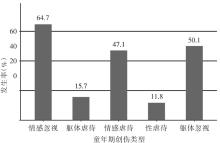
Fig.1
Prevalence of various childhood trauma types among NSSI adolescents"
Tab.2
The difference of general data between KD1 and KD2"
| 变量 | KD组(n = 51) | KD1组(n = 43) | KD2组(n = 8) | U/χ2值 |
|---|---|---|---|---|
| 年龄/岁 | 15.3 | 16.0 | 14.5 | 143.00 |
| 女性/[例(%)] | 40(78.4) | 34(79.0) | 6(75.0) | 0.07 |
| HAMD/分 | 31.80 ± 1.31 | 33.07 ± 1.27 | 25.00 ± 4.26 | 91.50? |
| 心理韧性/分 | 65.71 ± 1.97 | 64.35 ± 2.07 | 73.00 ± 5.51 | 119.50 |
| NSSI/次数 | 17.40 ± 1.38 | 17.80 ± 1.50 | 15.70 ± 3.70 | 158.50 |
Tab.3
Correlations between different childhood trauma types and NSSI"
| 创伤类型 | 例数 | NSSI | |
|---|---|---|---|
| r值 | P值 | ||
| 情感忽视 | 33 | 0.582 | < 0.001 |
| 躯体虐待 | 8 | 0.464 | 0.002 |
| 情感虐待 | 24 | 0.433 | 0.004 |
| 性虐待 | 6 | 0.069 | 0.659 |
| 躯体忽视 | 26 | 0.454 | 0.002 |
Tab.4
Descriptive statistics and correlation coefficient matrix for variables in KD1"
| 变量 | M | SD | CTQ | HAMD | 心理韧性 | NSSI |
|---|---|---|---|---|---|---|
| CTQ | 53.98 | 1.98 | 1 | |||
| HAMD | 33.07 | 1.27 | 0.441?? | 1 | ||
| 心理韧性 | 64.35 | 2.07 | -0.441?? | -0.235 | 1 | |
| NSSI | 20.26 | 1.56 | 0.606?? | 0.312? | -0.772?? | 1 |
Tab.5
Mediation model of childhood trauma and NSSI behavior"
| 效应 | 影响路径 | Est | Std | Z值 |
|---|---|---|---|---|
| 直接效应 | CTQ?NSSI | 0.259 | 0.075 | 3.442?? |
| 间接效应 | CTQ?心理韧性 | -0.461 | 0.143 | -3.226?? |
| 心理韧性?NSSI | -0.473 | 0.072 | -6.564?? | |
| 中介效应 | CTQ?心理韧性?NSSI | 0.218 | 0.075 | 2.895?? |
| 总效应 | CTQ?NSSI总体水平 | 0.477 | 0.095 | 4.993?? |
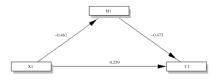
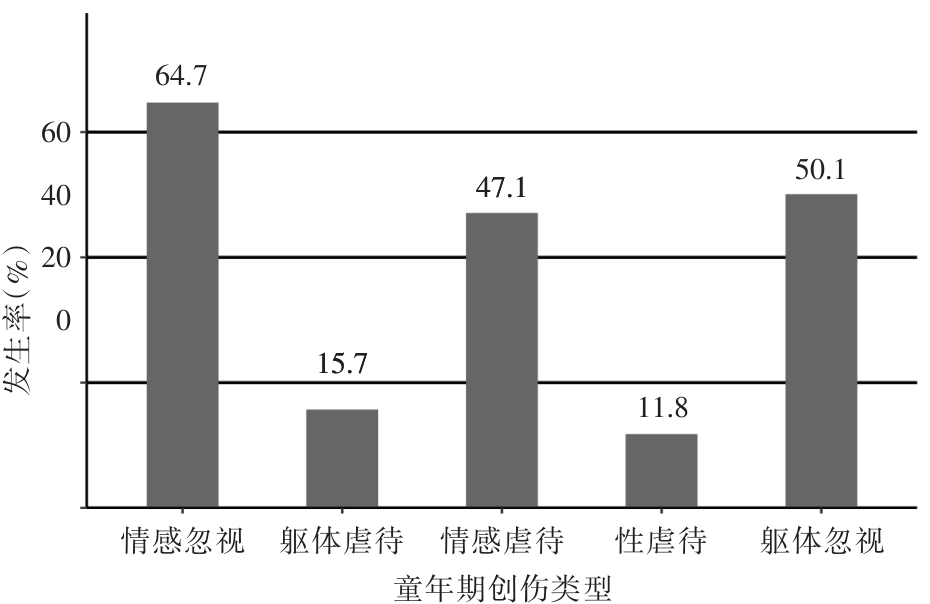
Fig.2
A mediating model of psychological toughness in the relationship between childhood trauma and NSSI"
Tab.6
Moderation test of depressive emotion in the mediation effect model"
| 变量 | 方程1(NSSI) | 方程2(韧性) | 方程1(NSSI) | 方程2(NSSI) | |||||||||||
|---|---|---|---|---|---|---|---|---|---|---|---|---|---|---|---|
| β | SE | t值 | β | SE | t值 | β | SE | t值 | β | SE | t值 | ||||
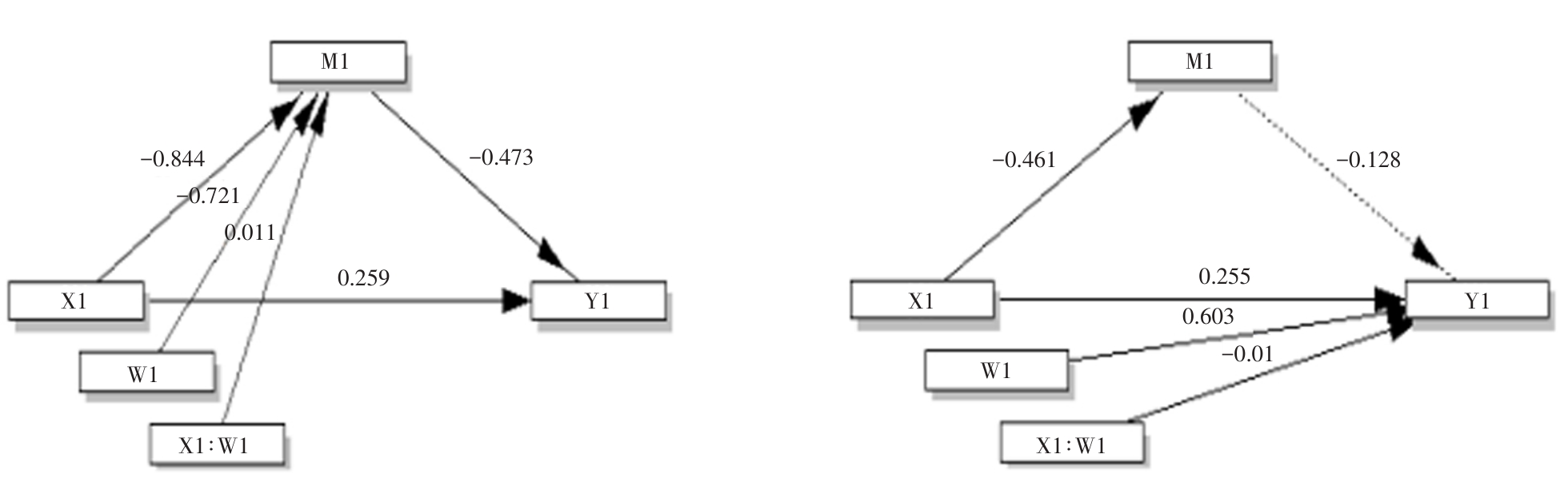
| X1 | 0.25 | 0.06 | 3.73?? | -0.84 | 0.25 | -3.25?? | 0.25 | 0.07 | 3.46 | -0.46 | 0.14 | -3.22?? | |||
| M1 | -0.12 | 0.07 | -1.80? | ||||||||||||
| W1 | -0.72 | 0.22 | -3.24?? | 0.60 | 0.10 | 5.82?? | |||||||||
| X1:W1 | 0.01 | 0.00 | 2.71?? | ||||||||||||
| M1:W1 | -0.01 | 0.00 | -6.97?? | ||||||||||||
| 间接效应 | 0.22 | 0.08 | 2.73?? | 0.20 | 0.07 | 2.75?? | |||||||||
| 总效应 | 0.37 | 0.10 | 3.64?? | 0.46 | 0.09 | 4.86?? | |||||||||
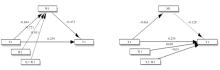
Fig.3
Childhood trauma and NSSI: A mediation model with two moderating effects"
| [1] |
WAFY G, AJAYI L, SIDDIQI S, et al. The Progression of Lethality Across Multiple Suicide Attempts: A Systematic Review[J]. Arch Suicide Res, 2025, 29(3): 581-602. doi:10.1080/13811118.2024.2394671
doi: 10.1080/13811118.2024.2394671 |
| [2] | 孙茜, 李玉龙, 叶兰仙, 等. 青少年非自杀性自伤风险因素和发病机制的研究进展[J]. 新医学, 2023, 54(1): 17-21. |
| [3] |
ISKRIC A, CENITI A K, BERGMANS Y, et al. Alexithymia and self-harm: A review of nonsuicidal self-injury, suicidal ideation, and suicide attempts[J]. Psychiatry Res, 2020, 288: 112920. doi:10.1016/j.psychres.2020.112920
doi: 10.1016/j.psychres.2020.112920 |
| [4] |
KIEKENS G, CLAES L, HASKING P, et al. A longitudinal investigation of non-suicidal self-injury persistence patterns, risk factors, and clinical outcomes during the college period[J]. Psychol Med, 2023, 53(13): 6011-6026. doi:10.1017/s0033291722003178
doi: 10.1017/s0033291722003178 |
| [5] |
SIVERTSEN B, O'CONNOR R C, O'CONNOR D B, et al. Non-suicidal self-harm among adolescents with substantiated childhood maltreatment: Findings from the Norwegian Triple-S Study[J]. Child Abuse Negl, 2025, 167: 107598. doi:10.1016/j.chiabu.2025.107598
doi: 10.1016/j.chiabu.2025.107598 |
| [6] | 林丽华, 甘明星, 郭治斌, 等. 心理虐待与忽视对青少年非自杀性自伤行为的影响: 有调节的中介效应[J]. 中国临床心理学杂志, 2020, 28(6): 1140-1143. |
| [7] |
KALISCH R, BAKER D G, BASTEN U, et al. The resilience framework as a strategy to combat stress-related disorders[J]. Nat Hum Behav, 2017, 1(11): 784-790. doi:10.1038/s41562-017-0200-8
doi: 10.1038/s41562-017-0200-8 |
| [8] |
GE Y, XIAO Y, LI M, et al. Maladaptive cognitive regulation moderates the mediating role of emotion dysregulation on the association between psychosocial factors and non-suicidal self-injury in depression[J]. Front Psychiatry, 2023, 14: 1279108. doi:10.3389/fpsyt.2023.1279108
doi: 10.3389/fpsyt.2023.1279108 |
| [9] |
SHEEHAN D V, LECRUBIER Y, SHEEHAN K H, et al. The Mini-International Neuropsychiatric Interview (M.I.N.I.): The development and validation of a structured diagnostic psychiatric interview for DSM-IV and ICD-10[J]. J Clin Psychiatry, 1998, 59(): 22-33, 34-57. doi:10.1016/s0924-9338(99)80239-9
doi: 10.1016/s0924-9338(99)80239-9 |
| [10] |
GEORGIEVA S, TOMAS J M, NAVARRO-PÉREZ J J. Systematic review and critical appraisal of Childhood Trauma Questionnaire - Short Form (CTQ-SF)[J]. Child Abuse Negl, 2021, 120: 105223. doi:10.1016/j.chiabu.2021.105223
doi: 10.1016/j.chiabu.2021.105223 |
| [11] |
HAIDL T K, HEDDERICH D M, ROSEN M, et al. The non-specific nature of mental health and structural brain outcomes following childhood trauma[J]. Psychol Med, 2023, 53(3): 1005-1014. doi:10.1017/s0033291721002439
doi: 10.1017/s0033291721002439 |
| [12] | 胡月琴, 甘怡群. 青少年心理韧性量表的编制和效度验证[J]. 心理学报, 2008,40(8): 902-912. |
| [13] |
WHITLOCK J, EXNER-CORTENS D, PURINGTON A. Assessment of nonsuicidal self-injury: Development and initial validation of the Non-Suicidal Self-Injury-Assessment Tool (NSSI-AT)[J]. Psychol Assess, 2014, 26(3): 935-946. doi:10.1037/a0036611
doi: 10.1037/a0036611 |
| [14] |
SHEN X, LI Y, FENG J, et al. Current status and associated factors of psychological resilience among the Chinese residents during the coronavirus disease 2019 pandemic[J]. Int J Soc Psychiatry, 2022, 68(1): 34-43. doi:10.1177/0020764020980779
doi: 10.1177/0020764020980779 |
| [15] |
LI H, CUI L, LI J, et al. Comparative efficacy and acceptability of neuromodulation procedures in the treatment of treatment-resistant depression: A network meta-analysis of randomized controlled trials[J]. J Affect Disord, 2021, 287: 115-124. doi:10.1016/j.jad.2021.03.019
doi: 10.1016/j.jad.2021.03.019 |
| [16] |
HOLMBECK G N. Toward terminological, conceptual, and statistical clarity in the study of mediators and moderators: Examples from the child-clinical and pediatric psychology literatures[J]. J Consult Clin Psychol, 1997, 65(4): 599-610. doi:10.1037//0022-006x.65.4.599
doi: 10.1037//0022-006x.65.4.599 |
| [17] |
KAZDIN A E, NOCK M K. Delineating mechanisms of change in child and adolescent therapy: Methodological issues and research recommendations[J]. J Child Psychol Psychiatry, 2003, 44(8): 1116-1129. doi:10.1111/1469-7610.00195
doi: 10.1111/1469-7610.00195 |
| [18] |
DIAGO M, VILA-BADIA R, SERRA-ARUMÍ C, et al. Emotional abuse and perceived stress: The most relevant factors in suicide behavior in first-episode psychosis patients[J]. Psychiatry Res, 2022, 315: 114699. doi:10.1016/j.psychres.2022.114699
doi: 10.1016/j.psychres.2022.114699 |
| [19] |
SZEIFERT N M, OLÁH B, GONDA X. The mediating role of adult attachment styles between early traumas and suicidal behaviour[J]. Sci Rep, 2025, 15(1): 15855. doi:10.1038/s41598-025-00831-8
doi: 10.1038/s41598-025-00831-8 |
| [20] |
FAN H, LIU L, ZHAO X, et al. Associations of non-suicidal self-injury with childhood maltreatment and inflammatory cytokines in adolescents with major depressive disorder[J]. BMC Psychiatry, 2025, 25(1) :672. doi:10.1186/s12888-025-07047-0
doi: 10.1186/s12888-025-07047-0 |
| [21] |
LIU R T, SCOPELLITI K M, PITTMAN S K, et al. Childhood maltreatment and non-suicidal self-injury: A systematic review and meta-analysis[J]. Lancet Psychiatry, 2018, 5(1): 51-64. doi:10.1016/s2215-0366(17)30469-8
doi: 10.1016/s2215-0366(17)30469-8 |
| [22] |
INFURNA M R, REICHL C, PARZER P, et al. Associations between depression and specific childhood experiences of abuse and neglect: A meta-analysis[J]. J Affect Disord, 2016, 190: 47-55. doi:10.1016/j.jad.2015.09.006
doi: 10.1016/j.jad.2015.09.006 |
| [23] |
IP J, MCMAIN S F, CHAPMAN A L, et al. The role of emotion dysregulation and interpersonal dysfunction in nonsuicidal self-injury during dialectical behavior therapy for borderline personality disorder[J]. Behav Res Ther, 2024, 180: 104594. doi:10.1016/j.brat.2024.104594
doi: 10.1016/j.brat.2024.104594 |
| [24] |
NOCK M K, PRINSTEIN M J. Contextual features and behavioral functions of self-mutilation among adolescents[J]. J Abnorm Psychol, 2005, 114(1): 140-146. doi:10.1037/0021-843x.114.1.140
doi: 10.1037/0021-843x.114.1.140 |
| [25] |
HUMPHREYS K L, LEMOULT J, WEAR J G, et al. Child maltreatment and depression: A meta-analysis of studies using the Childhood Trauma Questionnaire[J]. Child Abuse Negl, 2020, 102: 104361. doi:10.1016/j.chiabu.2020.104361
doi: 10.1016/j.chiabu.2020.104361 |
| [26] |
MERRICK M T, FORD D C, PORTS K A, et al. Vital Signs: Estimated Proportion of Adult Health Problems Attributable to Adverse Childhood Experiences and Implications for Prevention - 25 States, 2015-2017[J]. MMWR Morb Mortal Wkly Rep, 2019, 68(44): 999-1005. doi:10.15585/mmwr.mm6844e1
doi: 10.15585/mmwr.mm6844e1 |
| [27] |
ANGELAKIS I, AUSTIN J L, GOODING P. Association of Childhood Maltreatment With Suicide Behaviors Among Young People: A Systematic Review and Meta-analysis[J]. JAMA Netw Open, 2020, 3(8): e2012563. doi:10.1001/jamanetworkopen.2020.12563
doi: 10.1001/jamanetworkopen.2020.12563 |
| [28] |
GÁLBER M, NAGY S A, ORSI G, et al. Hippocampal subfield and amygdala volumes are associated with difficulties in emotion regulation of depressed patients with a history of childhood maltreatment[J]. Front Psychiatry, 2025, 16: 1641745. doi:10.3389/fpsyt.2025.1641745
doi: 10.3389/fpsyt.2025.1641745 |
| [29] |
MEI Z, CAI C, WANG T, et al. Interventions to promote resilience in children and adolescents: A systematic review and meta-analysis of randomized controlled trials[J]. Gen Hosp Psychiatry, 2025, 96: 295-306. doi:10.1016/j.genhosppsych.2025.08.011
doi: 10.1016/j.genhosppsych.2025.08.011 |
| [30] |
SCHEFFER M, BOCKTING C L, BORSBOOM D, et al. A Dynamical Systems View of Psychiatric Disorders-Theory: A Review[J]. JAMA Psychiatry, 2024, 81(6): 618-623. doi:10.1001/jamapsychiatry.2024.0215
doi: 10.1001/jamapsychiatry.2024.0215 |
| [31] |
YOU J, LEUNG F. The role of depressive symptoms, family invalidation and behavioral impulsivity in the occurrence and repetition of non-suicidal self-injury in Chinese adolescents: A 2-year follow-up study[J]. J Adolesc, 2012, 35(2): 389-395. doi:10.1016/j.adolescence.2011.07.020
doi: 10.1016/j.adolescence.2011.07.020 |
| [32] |
FARES-OTERO N E, CARRANZA-NEIRA J, WOMERSLEY J S, et al. Child maltreatment and resilience in adulthood: A systematic review and meta-analysis[J]. Psychol Med, 2025, 55: e163. doi:10.1017/s0033291725001205
doi: 10.1017/s0033291725001205 |
| [33] |
MASTEN A S, TYRELL F A, CICCHETTI D. Resilience in development: Pathways to multisystem integration[J]. Dev Psychopathol, 2023, 35(5): 2103-2112. doi:10.1017/s0954579423001293
doi: 10.1017/s0954579423001293 |
| [34] |
CHANG J J, JI Y, LI Y H, et al. Childhood trauma and depression in college students: Mediating and moderating effects of psychological resilience[J]. Asian J Psychiatr, 2021, 65: 102824. doi:10.1016/j.ajp.2021.102824
doi: 10.1016/j.ajp.2021.102824 |
| [1] | Xue HE,Huan MA,Cong LI,Yan WANG,Yu KUANG,Lei LIU,Honghua YU,Xiaohong. YANG. Retinal neurovascular characteristics and their correlation with depression severity in patients with coronary artery disease and depression [J]. The Journal of Practical Medicine, 2025, 41(4): 515-521. |
| [2] | Wenjuan WANG,Zhuoxuan LAI,Lingling ZHANG,Yafang DENG,Zonglian GUO,Wenzhi. CAI. The Influence of Late Pregnancy Perineal Massage Combined with Hip Training on Labor Outcomes and Psychological Elasticity of Primiparous Pregnant Women [J]. The Journal of Practical Medicine, 2024, 40(7): 1017-1022. |
| [3] | Zhengyuan HUANG,Lirong ZHAO,Kexuan ZHANG,Gaohua WANG,Benhong. ZHOU. The neuroregulatory effects and potential applications of urolithins in mental disorders [J]. The Journal of Practical Medicine, 2023, 39(18): 2405-2410. |
| [4] |
LIU Li, LIU Chunyun, LI Junyi, MA Zhihui, ZHANG Yuqing..
Psychological resilience and its influencing factors in the frontline medical staff during the fight against novel coronavirus pneumonia [J]. The Journal of Practical Medicine, 2021, 37(8): 979-983. |
| Viewed | ||||||
|
Full text |
|
|||||
|
Abstract |
|
|||||
