

The Journal of Practical Medicine ›› 2026, Vol. 42 ›› Issue (9): 1536-1544.doi: 10.3969/j.issn.1006-5725.2026.09.007
• Oncology: Diagnosis, Treatment and Prevention • Previous Articles
Qianyun TANG1,Xinyi LU2,Yu CHEN1,Hanjie XU1,Daozhen CHEN1,3( )
)
Received:2025-12-13
Online:2026-05-10
Published:2026-04-29
Contact:
Daozhen CHEN
E-mail:chendaozhen@163.com
CLC Number:
Qianyun TANG,Xinyi LU,Yu CHEN,Hanjie XU,Daozhen CHEN. Nicotinamide promotes cervical cancer progression via the NAMPT/NAD+ axis-mediated regulation of PD-L1[J]. The Journal of Practical Medicine, 2026, 42(9): 1536-1544.

Tab.1
Primers sequence"
| 基因名称 | 引物序列 |
|---|---|
| NAMPT | 上游:5'-TAAAAGCTGTTCCTGAGGGCT-3' |
| 下游:5'-AGAATTTGTGGCCACTGTGATTG-3' | |
| PD-L1 | 上游:5'-CTGCTTGTCCAGATGACTTCGG-3' |
| 下游:5'-CTGGTTGATGGTCTTGTGGTTG-3' | |
| β-actin | 上游:5'-TCCATCATGAAGTGTGACGT-3' |
| 下游:5'-GAGCAATGATCTTGATCTTCAT-3' |
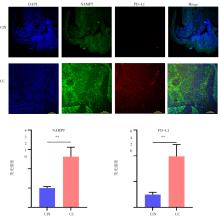
Fig.1
Upregulated expression of NAMPT and PD-L1 in cervical cancer"
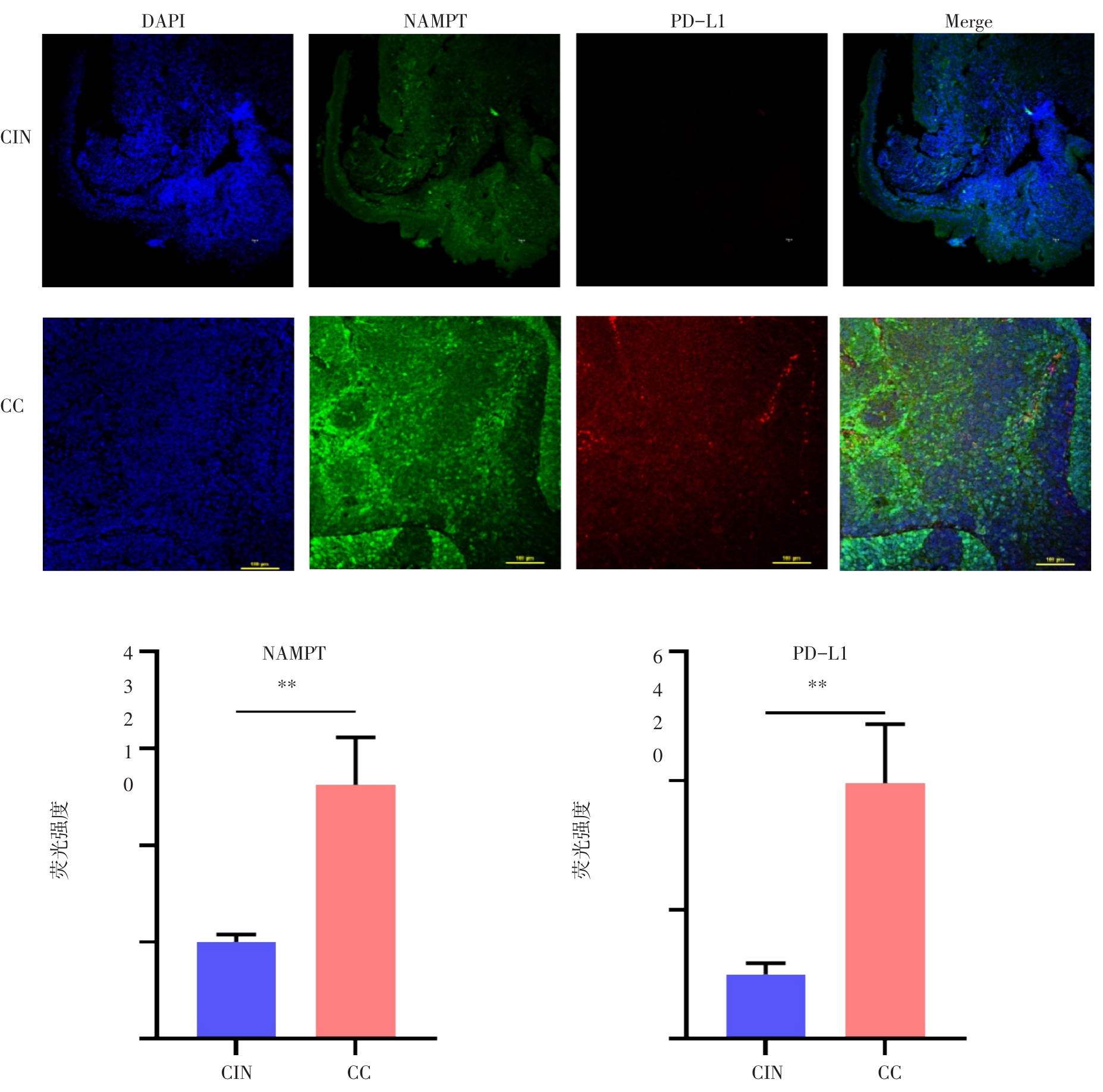
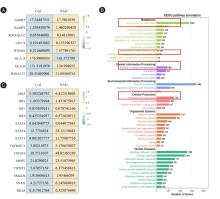
Fig.2
Effect of NAD+ treatment on differential gene expression in cervical cancer cells and pathway enrichment analysis"
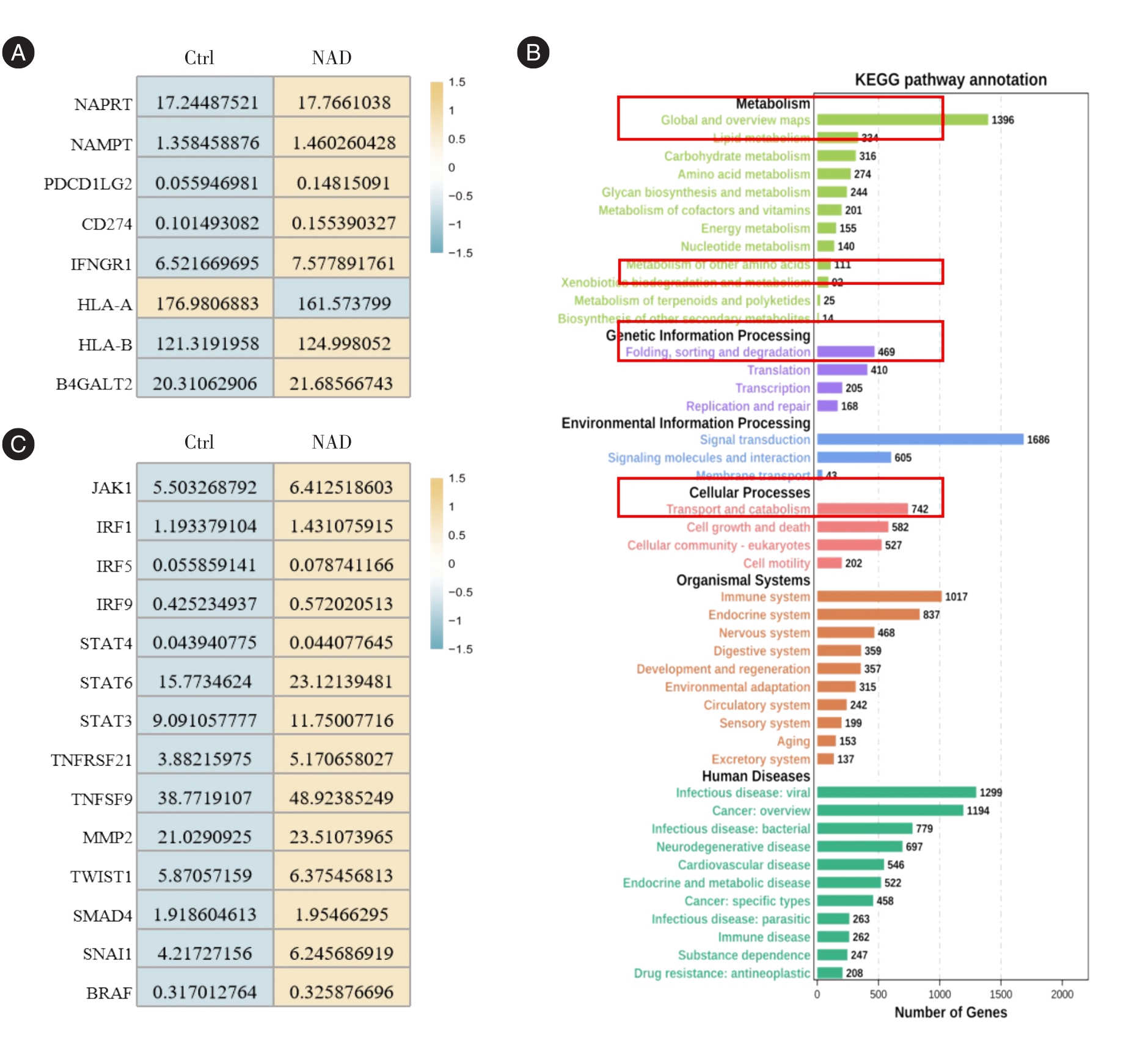
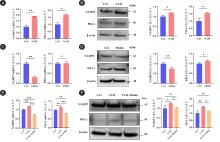
Fig.3
NAM upregulates PD-L1 expression by relying on NAMPT"
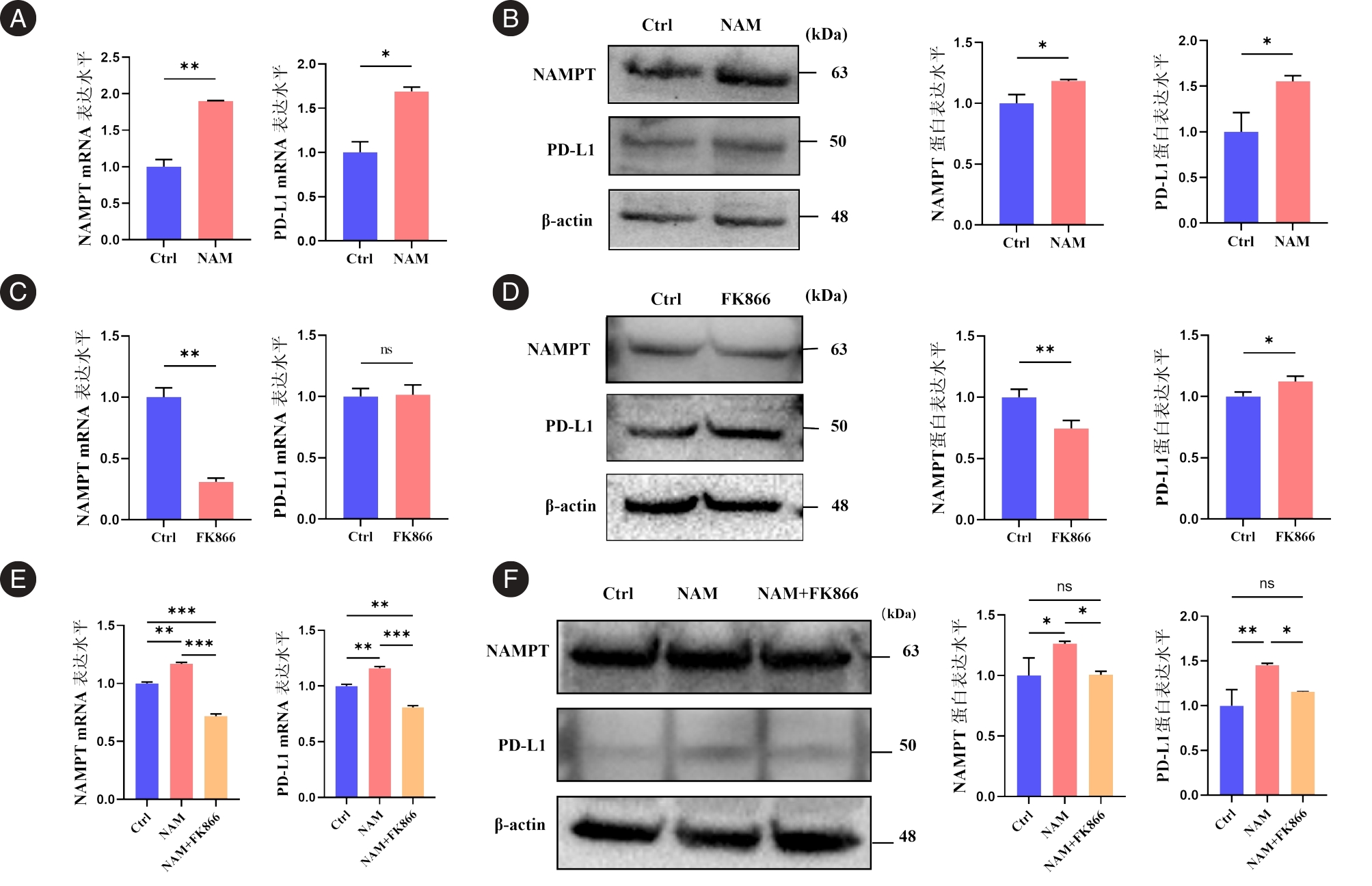
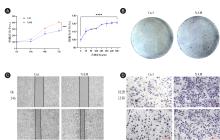
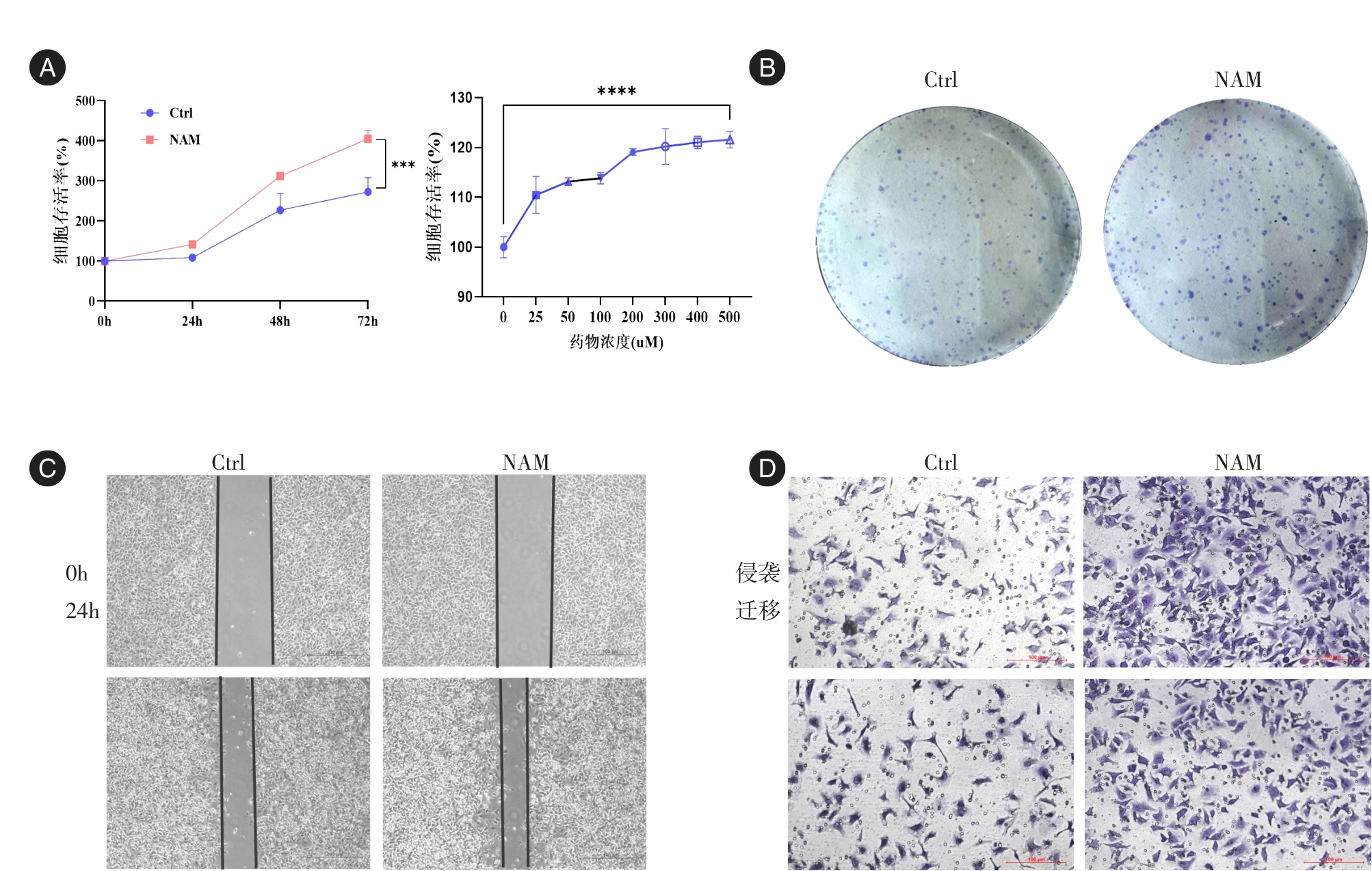
Fig.4
NAM promotes the proliferation, invasion, and migration of cervical cancer cells"
Tab.2
Effects of NAM on the biological behavior of cervical cancer cells(n = 3)"
| 组别 | 细胞克隆数/个 | 24 h细胞迁移面积比 | 细胞迁移数/个 | 细胞侵袭数/个 |
|---|---|---|---|---|
| Ctrl组 | 136.67 ± 20.50 | 1.00 ± 0.14 | 213.33 ± 15.14 | 207.67 ± 12.10 |
| NAM组 | 294.67 ± 10.07 | 1.23 ± 0.15 | 321.00 ± 19.67 | 545.00 ± 51.68 |
| t值 | 11.98 | 2.88 | 7.51 | 11.01 |
| P值 | 0.000 | 0.024 | 0.002 | 0.000 |
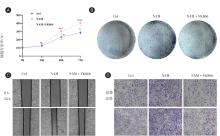
Fig.5
Inhibition of NAMPT reverses the proliferation, invasion and migration of cervical cancer cells induced by NAM"
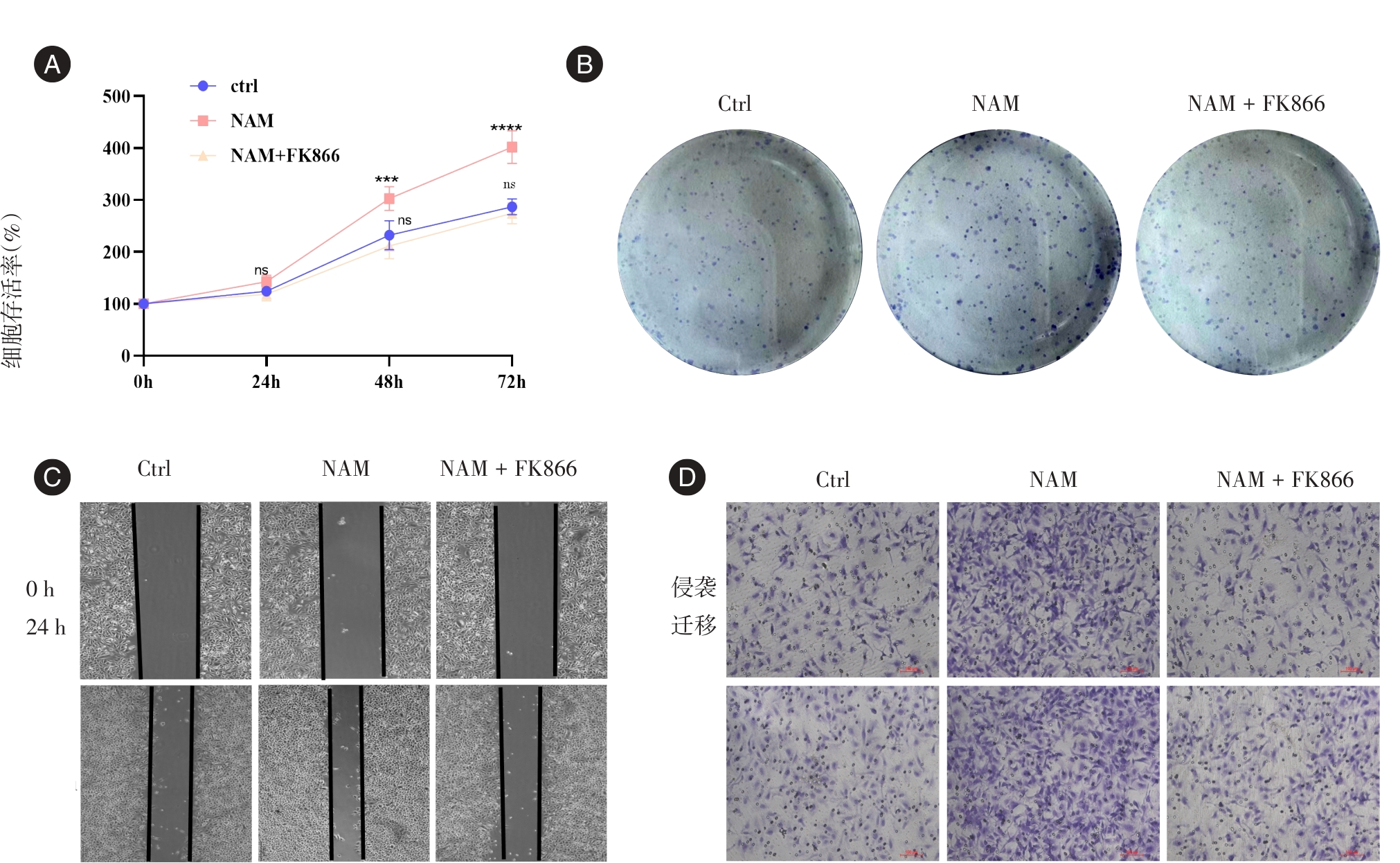
Tab.3
Effects of NAM on the biological behavior of cervical cancer cells after inhibition of NAMPT expression(n = 3)"
| 组别 | 细胞克隆数/个 | 24 h细胞迁移面积比 | 细胞迁移数/个 | 细胞侵袭数/个 |
|---|---|---|---|---|
| Ctrl组 | 184.00 ± 15.52 | 1.00 ± 0.12 | 254.33 ± 28.04 | 262.33 ± 20.66 |
| NAM组 | 329.33 ± 26.41* | 1.76 ± 0.24* | 583.33 ± 8.14* | 619.33 ± 26.08* |
| NAM + FK866组 | 186.33 ± 15.89# | 1.27 ± 0.20# | 297.67 ± 27.10# | 216.00 ± 6.08# |
| [1] |
HAN B, ZHENG R, ZENG H, et al. Cancer incidence and mortality in China, 2022[J].J Natl Cancer Cent, 2024,4(1):47-53.doi:10.1016/j.jncc.2024.01.006 .
doi: 10.1016/j.jncc.2024.01.006 |
| [2] |
TEWARI K S, COLOMBO N, MONK B J, et al. Pembrolizumab or Placebo Plus Chemotherapy With or Without Bevacizumab for Persistent, Recurrent, or Metastatic Cervical Cancer: Subgroup Analyses From the KEYNOTE-826 Randomized Clinical Trial[J].JAMA Oncol, 2024,10(2):185-192.doi:10.1001/jamaoncol.2023.5410 .
doi: 10.1001/jamaoncol.2023.5410 |
| [3] |
KRUGER S, ILMER M, KOBOLD S, et al. Advances in cancer immunotherapy 2019-latest trends[J].J Exp Clin Cancer Res, 2019,38(1):268.doi:10.1186/s13046-019-1266-0 .
doi: 10.1186/s13046-019-1266-0 |
| [4] |
JEONG H, KOH J, KIM S, et al. Cell-intrinsic PD-L1 signaling drives immunosuppression by myeloid-derived suppressor cells through IL-6/Jak/Stat3 in PD-L1-high lung cancer[J].J Immunother Cancer, 2025,13(3):e010612.doi:10.1136/jitc-2024-010612 .
doi: 10.1136/jitc-2024-010612 |
| [5] |
张雨峤, 梅伟健.免疫检查点抑制剂治疗实体瘤的标志性成果[J].实用医学杂志, 2024,40(2): 272-277.doi:10.3969/j.issn.1006-5725.2024.02.025 .
doi: 10.3969/j.issn.1006-5725.2024.02.025 |
| [6] |
GE Y, ZHANG Y, ZHAO K N, et al. Emerging Therapeutic Strategies of Different Immunotherapy Approaches Combined with PD-1/PD-L1 Blockade in Cervical Cancer[J].Drug Des Devel Ther, 2022,16(1):3055-3070.doi:10.2147/DDDT.S374672 .
doi: 10.2147/DDDT.S374672 |
| [7] |
WANG S, LI J, XIE J, et al. Programmed death ligand 1 promotes lymph node metastasis and glucose metabolism in cervical cancer by activating integrin β4/SNAI1/SIRT3 signaling pathway[J].Oncogene, 2018,37(30):4164-4180.doi:10.1038/s41388-018-0252-x .
doi: 10.1038/s41388-018-0252-x |
| [8] |
NAVAS L E, CARNERO A. NAD+ metabolism, stemness, the immune response, and cancer[J].Signal Transduct Target Ther, 2021,6(1):1-2.doi:10.1038/s41392-020-00354-w .
doi: 10.1038/s41392-020-00354-w |
| [9] |
CHIANG Y F, HUANG K C, HUANG T C, et al. Regulatory roles of NAMPT and NAD+metabolism in uterine leiomyoma progression: Implications for ECM accumulation, stemness, and microenvironment[J].Redox Biol, 2024,78:103411.doi:10.1016/j.redox.2024.103411 .
doi: 10.1016/j.redox.2024.103411 |
| [10] |
HONG S M, LEE A Y, KIM B J, et al.NAMPT-Driven M2 Polarization of Tumor-Associated Macrophages Leads to an Immunosuppressive Microenvironment in Colorectal Cancer[J].Adv Sci (Weinh), 2024,11(14):e2303177.doi:10.1002/advs.202303177 .
doi: 10.1002/advs.202303177 |
| [11] |
KUDO K, GREER Y E, YOSHIDA T, et al. Dual-inhibition of NAMPT and PAK4 induces anti-tumor effects in 3D-spheroids model of platinum-resistant ovarian cancer[J].Cancer Gene Ther, 2024,31(5):721-735.doi:10.1038/s41417-024-00748-w .
doi: 10.1038/s41417-024-00748-w |
| [12] |
ZHOU G, QIN G, ZHANG Z, et al. Identification of tryptophan metabolism- and immune-related genes signature and prediction of immune infiltration landscape in bladder urothelial carcinoma[J].Front Immunol, 2023,14(1):1283792.doi:10.3389/fimmu.2023.1283792 .
doi: 10.3389/fimmu.2023.1283792 |
| [13] |
YANG Y, WANG Z, HE M, et al. NAD+ biosynthesis metabolism predicts prognosis and indicates immune microenvironment for breast cancer[J].Pathol Oncol Res, 2023,29(1):1610956.doi:10.3389/pore.2023.1610956 .
doi: 10.3389/pore.2023.1610956 |
| [14] |
LV H, LV G, CHEN C, et al. NAD+ Metabolism Maintains Inducible PD-L1 Expression to Drive Tumor Immune Evasion[J].Cell Metab, 2021,33(1):110-127.e5.doi:10.1016/j.cmet.2020.10.021 .
doi: 10.1016/j.cmet.2020.10.021 |
| [15] |
MINAFÒ Y A, ANTONINI D, DELLAMBRA E. NAD+ Metabolism-Related Gene Profile Can Be a Relevant Source of Squamous Cell Carcinoma Biomarkers[J].Cancers (Basel), 2024,16(2):309.doi:10.3390/cancers16020309 .
doi: 10.3390/cancers16020309 |
| [16] |
CHEN K C, DHAR T, CHEN C R, et al. Nicotinamide phosphoribosyltransferase modulates PD-L1 in bladder cancer and enhances immunotherapeutic sensitivity[J].Biochim Biophys Acta Mol Basis Dis, 2024,1870(4):167106.doi:10.1016/j.bbadis.2024.167106 .
doi: 10.1016/j.bbadis.2024.167106 |
| [17] |
DENG Y, HU B, MIAO Y, et al. A Nicotinamide Phosphoribosyltransferase Inhibitor, FK866, Suppresses the Growth of Anaplastic Meningiomas and Inhibits Immune Checkpoint Expression by Regulating STAT1[J].Front Oncol, 2022,2(1):836257.doi:10.3389/fonc.2022.836257 .
doi: 10.3389/fonc.2022.836257 |
| [18] |
LUCENA-CACACE A, OTERO-ALBIOL D, JIMÉNEZ-GARCÍA M P, et al. NAMPT Is a Potent Oncogene in Colon Cancer Progression that Modulates Cancer Stem Cell Properties and Resistance to Therapy through Sirt1 and PARP[J].Clin Cancer Res, 2018,24(5):1202-1215. doi:10.1158/1078-0432.CCR-17-2575 .
doi: 10.1158/1078-0432.CCR-17-2575 |
| [19] |
HE X L, GUO H J, LEI Y R, et al. NAMPT promotes the malignant progression of HBV-associated hepatocellular carcinoma through activation of SREBP1-mediated lipogenesis[J].FASEB J, 2024,38(2):e23444.doi:10.1096/fj.202300070RRR .
doi: 10.1096/fj.202300070RRR |
| [20] |
孙良璋, 徐正水, 张丹杰, 等. NAMPT及高糖高胰岛素微环境对人顺铂耐药肺癌细胞株增殖和转移的影响[J].现代生物医学进展, 2023,23(24):4620-4626+4619.doi:10.13241/j.cnki.pmb.2023.24.004 .
doi: 10.13241/j.cnki.pmb.2023.24.004 |
| [21] |
王艳辉,柳雅慧,任丽.NAMPT基因对肾癌细胞增殖和凋亡的影响及其机制研究[J].天津医科大学学报, 2021,27(4):343-348+378.doi:10.20135/j.issn.1006-8147.2021.04.006 .
doi: 10.20135/j.issn.1006-8147.2021.04.006 |
| [22] |
GAO P, ZUO C, YUAN W, et al. Spatiotemporal multi-omics analysis uncovers NAD-dependent immunosuppressive niche triggering early gastric cancer[J].Signal Transduct Target Ther, 2025,10(1):313.doi:10.1038/s41392-025-02390-w .
doi: 10.1038/s41392-025-02390-w |
| [23] |
李雯, 黄海生, 黄斌, 等. 程序性死亡配体-1、人表皮生长因子受体-2在浸润性尿路上皮癌中的表达相关性及对预后影响[J].实用医学杂志, 2026, 42(2): 194-200.doi:10.3969/j.issn.1006-5725.2026.02.004 .
doi: 10.3969/j.issn.1006-5725.2026.02.004 |
| [24] |
HU T, WAN X, WU H, et al.Predictive values of PD-L1 expression for survival outcomes in patients with cervical cancer: A systematic review and meta-analysis[J].Ginekol Pol, 2022,93(10):767-774.doi:10.5603/GP.a2022.0071 .
doi: 10.5603/GP.a2022.0071 |
| [1] | Wen LI,Haisheng HUANG,Bin HUANG,Li HAN. Expression correlation of PD⁃L1 and Her⁃2 in invasive urothelial carcinoma and their impact on prognosis [J]. The Journal of Practical Medicine, 2026, 42(2): 194-200. |
| [2] | Dongmei FANG,Yuanyuan QI,Chunjing CAO,Fang WANG,Mingze. LI. Clinical significance of circular RNA circ-PHC3 expression in cervical cancer tissues and its effects on the proliferation, migration and invasion of cervical cancer cells [J]. The Journal of Practical Medicine, 2025, 41(20): 3145-3154. |
| [3] | Xiuwei YANG,Abuduxukuer RUKEYEMU,Gang NIU. Association between genetic polymorphisms in XRCC1 and XRCC3 genes and cervical cancer susceptibility [J]. The Journal of Practical Medicine, 2025, 41(18): 2878-2883. |
| [4] | Yekun HE,Ying LONG,Lizhang CEN,Desheng. YAO. Research progress of perineural invasion in gynecological malignant tumors [J]. The Journal of Practical Medicine, 2025, 41(12): 1929-1935. |
| [5] | Jing HU,Xu WANG,Xiaoqin GONG,Rui LING,Tao YOU,Chunhua DAI,Ye TIAN,Fei. CHEN. Analysis of dosimetric parameters of acute radiation enteritis in cervical cancer patients treated with concurrent chemoradiotherapy [J]. The Journal of Practical Medicine, 2024, 40(5): 672-676. |
| [6] | Baoni JIANG,Meiqin ZHANG,Lu YANG,Zhiyuan CHEN,Na′na HAN. Application and prospects of ctDNA detection in HPV associated cervical cancer [J]. The Journal of Practical Medicine, 2024, 40(2): 129-132. |
| [7] | Ping LI,Tuo TANG,Aixue ZHENG,Luping ZHANG,Tao WANG,Xian HONG,Zhihui DENG. Generation of MCM2 gene inducible knockout cervical cancer HeLa cells and its effect on DNA replication [J]. The Journal of Practical Medicine, 2024, 40(2): 133-139. |
| [8] | Shenglong YUAN,Huanhuan HU,Zhen GONG. Efficacy of the ACS NSQIP surgical risk calculator in open radical hysterectomy [J]. The Journal of Practical Medicine, 2024, 40(2): 140-145. |
| [9] | Min WANG,Dan MU,Dejun KONG,Li YANG,Lu YE,Dan HE. HPV16 E6 regulates miR-23a expression and promotes invasion and migration of cervical cancer cells [J]. The Journal of Practical Medicine, 2024, 40(2): 146-152. |
| [10] | Fei CHEN,Xiaoqin GONG,Yunpeng YU,Tao YOU,Xu WANG,Chunhua DAI,Jing HU. Feasibility of automatic segmentation of CTV and OARs in postoperative radiotherapy for cervical cancer using AccuLearning [J]. The Journal of Practical Medicine, 2024, 40(2): 153-157. |
| [11] | Yongzhen ZHANG,Shanshan WANG,Hailing ZHAO,Liwei. XU. Levels and clinical significance of serum miR-651 and miR-630 in patients with cervical cancer [J]. The Journal of Practical Medicine, 2024, 40(2): 158-162. |
| [12] | Pixi WEI,Yu DENG,Cailing ZHAO,Liu XU,Min ZHANG. The expression of WDR5 in cervical cancer tissue and its relationship with clinical and pathological characteristics of patients [J]. The Journal of Practical Medicine, 2024, 40(2): 169-173. |
| [13] | Qingwei ZHANG,Rutie. YIN. Hotspots and advances on diagnosis and treatment for cervical cancer [J]. The Journal of Practical Medicine, 2024, 40(17): 2357-2362. |
| [14] |
ZHONG Hua, ZENG Meiqing, ZHOU Yuting, HE Shunqing, LU Binghui..
Transfection of human cervical cancer cell HeLa by ultrasound microbubble contrast agent carrying pcD⁃ NA⁃STC1 [J]. The Journal of Practical Medicine, 2023, 39(8): 936-943. |
| [15] |
LU Yanyue, ZHAO Xinxin, LIU Liyan, WANG Kai, YE Jingwen, LIU Lingyun, WANG Baojin..
Effect and mechanism of endogenous aromatic ligand ITE on the biological behavior of cervical cancer cells [J]. The Journal of Practical Medicine, 2023, 39(6): 679-687. |
| Viewed | ||||||
|
Full text |
|
|||||
|
Abstract |
|
|||||
