

实用医学杂志 ›› 2025, Vol. 41 ›› Issue (20): 3297-3304.doi: 10.3969/j.issn.1006-5725.2025.20.021
• 综述 • 上一篇
秦旭,孙丽红( )
)
收稿日期:2025-08-20
出版日期:2025-10-25
发布日期:2025-11-05
通讯作者:
孙丽红
E-mail:sunlihong9797@126.com
基金资助:
Xu QIN,Lihong. SUN()
Received:2025-08-20
Online:2025-10-25
Published:2025-11-05
Contact:
Lihong. SUN
E-mail:sunlihong9797@126.com
摘要:
儿童哮喘是一种复杂的异质性疾病,其易感性在生命早期受宿主遗传、环境暴露、微生物定植与免疫发育共同影响。生命早期气道病毒感染是明确的风险因素,但其致病作用高度依赖于宿主背景。新兴的证据揭示了该网络中多层次的调控机制:肠道菌群不仅通过其代谢产物(如丁酸盐)抑制驱动过敏性IgE产生的Tfh13细胞轴,其影响更扩展至跨界成员。例如,肠道共生原生动物可驱动2型天然淋巴细胞(ILC2s)从肠道迁移至肺部,而肠道病毒组(噬菌体)则可通过TLR9通路被宿主直接感知,二者均独立影响哮喘易感性。此外,早期病毒感染还能通过代谢重编程建立长期的先天免疫记忆(训练免疫)。解析该网络有助于阐明疾病异质性,并为开发新型生物标志物(如口咽微生物组、血清微生物细胞外囊泡(EVs))及构建多维风险预测模型(整合人工智能技术)提供依据,推动儿童哮喘的个体化精准防治。
中图分类号:
秦旭,孙丽红. 儿童哮喘的微生物-免疫-病毒调控网络:从机制到临床[J]. 实用医学杂志, 2025, 41(20): 3297-3304.
Xu QIN,Lihong. SUN. The microbe-immune-virus regulatory network in pediatric asthma:From mechanism to clinic[J]. The Journal of Practical Medicine, 2025, 41(20): 3297-3304.
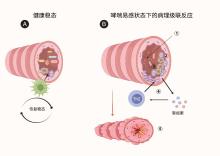
图1
从健康气道稳态到病毒触发的哮喘形成病理级联反应示意图注:A,健康稳态表现为完整的上皮屏障和平衡的微生物组,能有效清除病毒并恢复稳态;B,在易感个体中,病理级联反应进展:①气道微生态稳态破坏;②病毒入侵作为触发事件;③病毒与细菌协同破坏上皮屏障;④警报素(TSLP、IL-33、IL-25等)释放和异常的2型炎症反应;⑤持续的炎症循环,最终导致气道重塑和哮喘形成"
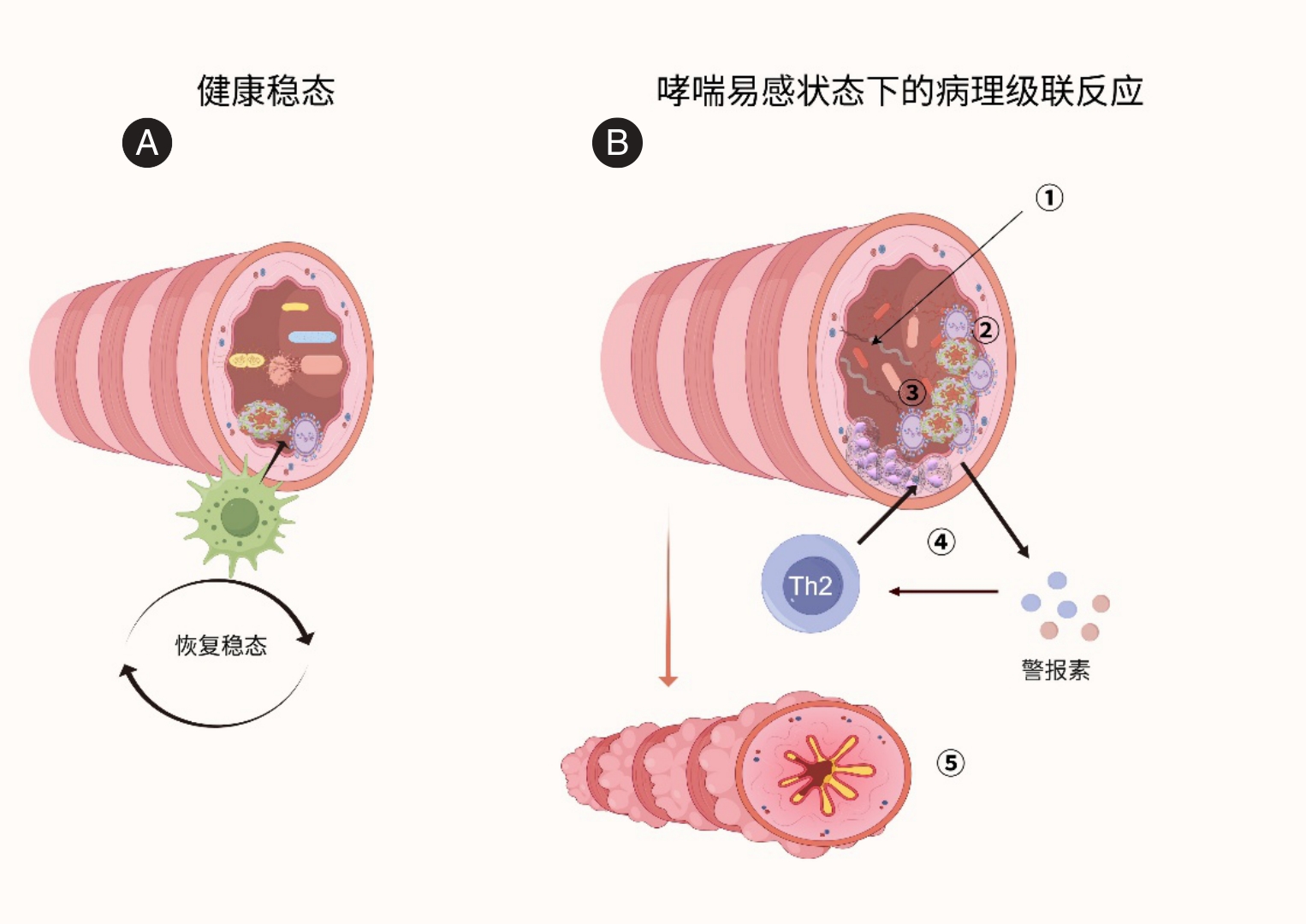

表1
近期研究中识别的儿童哮喘相关内型"
| 内型 | 关键驱动因素 | 免疫通路 | 临床表型 |
|---|---|---|---|
| 向哮喘演进型[ | 流感嗜血杆菌富集 | 2型免疫上调(如骨膜素POSTN);上皮重塑信号 | 持续性哮喘 |
| 单纯学龄前喘息[ | 无特异性驱动因素 | 1型免疫/中性粒细胞炎症特征 | 短暂性喘息 |
| 病毒-细菌协同驱动型[ | 特定细菌(肺炎链球菌)活跃转录 (脂肪酸/糖酵解通路);常无RV | Th2/Th17通路;宿主IFN-α/γ应答下调;T细胞活化上调 | 高远期哮喘风险 |
| RV-C驱动的T2高反应型[ | RV-C感染;莫拉菌属主导 | 高T2细胞因子应答(IL-4, IL-5, IL-13);鞘脂代谢下调 | 高复发性喘息和哮喘风险 |
| RSV驱动的IFN高反应型[ | RSV感染(可合并RV);肺炎链球菌/卡他莫拉菌共优势;特应性背景 | 高IFN-α/γ应答;PI3K-Akt-mTOR信号通路激活 | 高远期哮喘风险 |
| 固定性气流阻塞型[ | 嗜血杆菌属/ 奈瑟氏菌属主导 | 混合性粒细胞性炎症;PD-L1通路可能相关 | 固定性气流受限;对支气管扩张剂反应差 |
| [1] | GLOBAL INITIATIVE FOR ASTHMA. Global Strategy for Asthma Management and Prevention, 2025 [EB/OL]. (2025-05-06)[2025-08-20]. . |
| [2] |
GEORAS S N, KHURANA S. Update on asthma biology [J]. J Allergy Clin Immunol, 2024, 153(5): 1215-1228. doi:10.1016/j.jaci.2024.01.024
doi: 10.1016/j.jaci.2024.01.024 |
| [3] |
NATALINI J G, SINGH S, SEGAL L N, et al. The dynamic lung microbiome in health and disease [J]. Nat Rev Microbiol, 2023, 21(4): 222-235. doi:10.1038/s41579-022-00821-x
doi: 10.1038/s41579-022-00821-x |
| [4] |
YAGI K, HUFFNAGLE G B, LUKACS N W, et al. The Lung Microbiome during Health and Disease [J]. Int J Mol Sci, 2021, 22(19): 10872. doi:10.3390/ijms221910872
doi: 10.3390/ijms221910872 |
| [5] |
STOKHOLM J, BLASER M J, THORSEN J, et al. Maturation of the gut microbiome and risk of asthma in childhood [J]. Nat Commun, 2018, 9(1): 141. doi:10.1038/s41467-018-03150-x
doi: 10.1038/s41467-018-03150-x |
| [6] |
SIKDER M, RASHID R B, AHMED T, et al. Maternal diet modulates the infant microbiome and intestinal Flt3L necessary for dendritic cell development and immunity to respiratory infection [J]. Immunity, 2023, 56(5): 1098-1114. doi:10.1016/j.immuni.2023.03.002
doi: 10.1016/j.immuni.2023.03.002 |
| [7] |
BURROWS K, NGAI L, CHIARANUNT P, et al. A gut commensal protozoan determines respiratory disease outcomes by shaping pulmonary immunity [J]. Cell, 2025, 188(2): 316-330. doi:10.1016/j.cell.2024.11.020
doi: 10.1016/j.cell.2024.11.020 |
| [8] |
ÖZÇAM M, LYNCH S V. The gut–airway microbiome axis in health and respiratory diseases [J]. Nat Rev Microbiol, 2024, 22(8): 492-506. doi:10.1038/s41579-024-01048-8
doi: 10.1038/s41579-024-01048-8 |
| [9] |
PATTARONI C, MACOWAN M, CHATZIS R, et al. Early life inter-kingdom interactions shape the immunological environment of the airways [J]. Microbiome, 2022, 10(1): 34. doi:10.1186/s40168-021-01201-y
doi: 10.1186/s40168-021-01201-y |
| [10] |
ZHANG I, PLETCHER S D, GOLDBERG A N, et al. Fungal Microbiota in Chronic Airway Inflammatory Disease and Emerging Relationships with the Host Immune Response [J]. Front Microbiol, 2017, 8: 2477. doi:10.3389/fmicb.2017.02477
doi: 10.3389/fmicb.2017.02477 |
| [11] |
BANZON T M, VON MUTIUS E, PHIPATANAKUL W. The Microbiome in Clinical Allergy and Immunology: Emerging Role as Friend and Foe [J]. J Allergy Clin Immunol Pract, 2022, 10(9): 2252-2253. doi:10.1016/j.jaip.2022.06.024
doi: 10.1016/j.jaip.2022.06.024 |
| [12] |
LIU Y, TEO S M, MÉRIC G, et al. The gut microbiome is a significant risk factor for future chronic lung disease [J]. J Allergy Clin Immunol, 2023, 151(4): 943-952. doi:10.1016/j.jaci.2022.12.810
doi: 10.1016/j.jaci.2022.12.810 |
| [13] |
KAHHALEH F G, BARRIENTOS G, CONRAD M L. The gut‐lung axis and asthma susceptibility in early life [J]. Acta Physiol, 2024, 240(3): e14092. doi:10.1111/apha.14092
doi: 10.1111/apha.14092 |
| [14] |
PATRICK D M, SBIHI H, DAI D L Y, et al. Decreasing antibiotic use, the gut microbiota, and asthma incidence in children: Evidence from population-based and prospective cohort studies [J]. Lancet Respir Med, 2020, 8(11): 1094-1105. doi:10.1016/s2213-2600(20)30052-7
doi: 10.1016/s2213-2600(20)30052-7 |
| [15] |
ROSAS-SALAZAR C, HARTERT T V. New Insights Into the Role of Antibiotic Use in Infancy and the Upper Airway Microbiome in Childhood Asthma Development [J]. Clin Infect Dis, 2021, 72(9): 1555-1556. doi:10.1093/cid/ciaa266
doi: 10.1093/cid/ciaa266 |
| [16] |
TOIVONEN L, SCHUEZ-HAVUPALO L, KARPPINEN S, et al. Antibiotic Treatments During Infancy, Changes in Nasal Microbiota, and Asthma Development: Population-based Cohort Study [J]. Clin Infect Dis, 2021, 72(9): 1546-1554. doi:10.1093/cid/ciaa262
doi: 10.1093/cid/ciaa262 |
| [17] |
BORBET T C, PAWLINE M B, ZHANG X, et al. Influence of the early-life gut microbiota on the immune responses to an inhaled allergen [J]. Mucosal Immunol, 2022, 15(5): 1000-1011. doi:10.1038/s41385-022-00544-5
doi: 10.1038/s41385-022-00544-5 |
| [18] |
TEO S M, MOK D, PHAM K, et al. The Infant Nasopharyngeal Microbiome Impacts Severity of Lower Respiratory Infection and Risk of Asthma Development [J]. Cell Host Microbe, 2015, 17(5): 704-715. doi:10.1016/j.chom.2015.03.008
doi: 10.1016/j.chom.2015.03.008 |
| [19] |
TEO S M, TANG H H F, MOK D, et al. Airway Microbiota Dynamics Uncover a Critical Window for Interplay of Pathogenic Bacteria and Allergy in Childhood Respiratory Disease [J]. Cell Host Microbe, 2018, 24(3): 341-352. doi:10.1016/j.chom.2018.08.005
doi: 10.1016/j.chom.2018.08.005 |
| [20] |
DRISCOLL A J, ARSHAD S H, BONT L, et al. Does respiratory syncytial virus lower respiratory illness in early life cause recurrent wheeze of early childhood and asthma? Critical review of the evidence and guidance for future studies from a World Health Organization-sponsored meeting [J]. Vaccine, 2020, 38(11): 2435-2448. doi:10.1016/j.vaccine.2020.01.020
doi: 10.1016/j.vaccine.2020.01.020 |
| [21] |
HOMAIRA N, BRIGGS N, OEI J L, et al. Association of Age at First Severe Respiratory Syncytial Virus Disease With Subsequent Risk of Severe Asthma: A Population-Based Cohort Study [J]. J Infect Dis, 2019, 220(4): 550-556. doi:10.1093/infdis/jiy671
doi: 10.1093/infdis/jiy671 |
| [22] |
MAKRINIOTI H, ZHU Z, SAGLANI S, et al. Infant Bronchiolitis Endotypes and the Risk of Developing Childhood Asthma: Lessons From Cohort Studies [J]. Arch Bronconeumol, 2024, 60(4): 215-225. doi:10.1016/j.arbres.2024.02.009
doi: 10.1016/j.arbres.2024.02.009 |
| [23] |
MALINCZAK C A, FONSECA W, HRYCAJ S M, et al. Early-life pulmonary viral infection leads to long-term functional and lower airway structural changes in the lungs [J]. Am J Physiol-Lung Cell Mol Physiol, 2024, 326(3): L280-L291. doi:10.1152/ajplung.00300.2023
doi: 10.1152/ajplung.00300.2023 |
| [24] |
CURREN B, AHMED T, RASHID R B, et al. A maternal high-fat diet predisposes to infant lung disease via increased neutrophil-mediated IL-6 trans-signaling [J]. Cell Rep, 2024, 43(11): 114974. doi:10.1016/j.celrep.2024.114974
doi: 10.1016/j.celrep.2024.114974 |
| [25] |
HOSKINSON C, DAI DLY, DEL BEL K L, et al. Delayed gut microbiota maturation in the first year of life is a hallmark of pediatric allergic disease [J]. Nat Commun, 2023, 14(1): 4785. doi:10.1038/s41467-023-40336-4
doi: 10.1038/s41467-023-40336-4 |
| [26] |
HU C, VAN MEEL E R, MEDINA-GOMEZ C, et al. A population-based study on associations of stool microbiota with atopic diseases in school-age children [J]. J Allergy Clin Immunol, 2021, 148(2): 612-620. doi:10.1016/j.jaci.2021.04.001
doi: 10.1016/j.jaci.2021.04.001 |
| [27] |
YU B, PEI C, PENG W, et al. Microbiota-derived butyrate alleviates asthma via inhibiting Tfh13-mediated IgE production [J]. Signal Transduct Target Ther, 2025, 10(1): 181. doi:10.1038/s41392-025-02263-2
doi: 10.1038/s41392-025-02263-2 |
| [28] |
POPPLE S J, BURROWS K, MORTHA A, et al. Remote regulation of type 2 immunity by intestinal parasites [J]. Semin Immunol, 2021, 53: 101530. doi:10.1016/j.smim.2021.101530
doi: 10.1016/j.smim.2021.101530 |
| [29] |
LEAL RODRÍGUEZ C, SHAH S A, RASMUSSEN M A, et al. The infant gut virome is associated with preschool asthma risk independently of bacteria [J]. Nat Med, 2024, 30(1): 138-148. doi:10.1038/s41591-023-02685-x
doi: 10.1038/s41591-023-02685-x |
| [30] |
YOUNG G R, NELSON A, STEWART C J, et al. Bacteriophage communities are a reservoir of unexplored microbial diversity in neonatal health and disease [J]. Curr Opin Microbiol, 2023, 75: 102379. doi:10.1016/j.mib.2023.102379
doi: 10.1016/j.mib.2023.102379 |
| [31] |
BERNI CANANI R, CAMINATI M, CARUCCI L, et al. Skin, gut, and lung barrier: Physiological interface and target of intervention for preventing and treating allergic diseases [J]. Allergy, 2024, 79(6): 1485-1500. doi:10.1111/all.16092
doi: 10.1111/all.16092 |
| [32] |
GUAN W J, PENG Y, ZI X X, et al. Motile Ciliary Disorders in Chronic Airway Inflammatory Diseases: Critical Target for Interventions [J]. Curr Allergy Asthma Rep, 2018, 18(9): 48. doi:10.1007/s11882-018-0802-x
doi: 10.1007/s11882-018-0802-x |
| [33] |
BUDDEN K F, SHUKLA S D, REHMAN S F, et al. Functional effects of the microbiota in chronic respiratory disease [J]. Lancet Respir Med, 2019, 7(10): 907-920. doi:10.1016/s2213-2600(18)30510-1
doi: 10.1016/s2213-2600(18)30510-1 |
| [34] |
TAYLOR S L, LEONG L E X, CHOO J M, et al. Inflammatory phenotypes in patients with severe asthma are associated with distinct airway microbiology [J]. J Allergy Clin Immunol, 2018, 141(1): 94-103. doi:10.1016/j.jaci.2017.03.044
doi: 10.1016/j.jaci.2017.03.044 |
| [35] |
DIVER S, HALDAR K, MCDOWELL P J, et al. Relationship between inflammatory status and microbial composition in severe asthma and during exacerbation [J]. Allergy, 2022, 77(11): 3362-3376. doi:10.1111/all.15425
doi: 10.1111/all.15425 |
| [36] |
KIM Y, PARK M, KIM S, et al. Respiratory Microbiome Profiles Are Associated With Distinct Inflammatory Phenotype and Lung Function in Children With Asthma [J]. J Investig Allergol Clin Immunol, 2024, 34(4): 246-256. doi:10.18176/jiaci.0918
doi: 10.18176/jiaci.0918 |
| [37] |
MACOWAN M, PATTARONI C, BONNER K, et al. Deep multiomic profiling reveals molecular signatures that underpin preschool wheeze and asthma [J]. J Allergy Clin Immunol, 2025, 155(1): 94-106. doi:10.1016/j.jaci.2024.08.017
doi: 10.1016/j.jaci.2024.08.017 |
| [38] |
NETEA M G, DOMÍNGUEZ-ANDRÉS J, BARREIRO L B, et al. Defining trained immunity and its role in health and disease [J]. Nat Rev Immunol, 2020, 20(6): 375-388. doi:10.1038/s41577-020-0285-6
doi: 10.1038/s41577-020-0285-6 |
| [39] |
LI H, MA L, LI W, et al. Proline metabolism reprogramming of trained macrophages induced by early respiratory infection combined with allergen sensitization contributes to development of allergic asthma in childhood of mice [J]. Front Immunol, 2022, 13: 977235. doi:10.3389/fimmu.2022.977235
doi: 10.3389/fimmu.2022.977235 |
| [40] |
JANSEN K, WIRZ O F, VAN DE VEEN W, et al. Loss of regulatory capacity in Treg cells following rhinovirus infection [J]. J Allergy Clin Immunol, 2021, 148(4): 1016-1029. doi:10.1016/j.jaci.2021.05.045
doi: 10.1016/j.jaci.2021.05.045 |
| [41] | BRYANT N, MUEHLING L M, WAVELL K, et al. Rhinovirus as a driver of airway T cell dynamics in children with treatment- refractory recurrent wheeze [J]. Am J Respir Crit Care Med, 2021, 204(9): 1079-1090. |
| [42] | 刘瀚旻, 洪建国. 学龄前儿童哮喘的诊断:任务与挑战 [J]. 中华儿科杂志, 2024, 62(4): 289-291. |
| [43] |
SARKAR S, RATHO R K, SINGH M, et al. Role of Viral Load and Host Cytokines in Determining the Disease Severity of Respiratory Syncytial Virus-Associated Acute Lower Respiratory Tract Infections in Children [J]. Jpn J Infect Dis, 2023, 76(4): 233-239. doi:10.7883/yoken.jjid.2022.673
doi: 10.7883/yoken.jjid.2022.673 |
| [44] |
TAN K S, LIM R L, LIU J, et al. Respiratory Viral Infections in Exacerbation of Chronic Airway Inflammatory Diseases: Novel Mechanisms and Insights From the Upper Airway Epithelium [J]. Front Cell Dev Biol, 2020, 8: 99. doi:10.3389/fcell.2020.00099
doi: 10.3389/fcell.2020.00099 |
| [45] |
DJEDDI S, FERNANDEZ-SALINAS D, HUANG G X, et al. Rhinovirus infection of airway epithelial cells uncovers the non-ciliated subset as a likely driver of genetic risk to childhood-onset asthma [J]. Cell Genomics, 2024, 4(9): 100636. doi:10.1016/j.xgen.2024.100636
doi: 10.1016/j.xgen.2024.100636 |
| [46] |
REGIS E, FONTANELLA S, CURTIN J A, et al. Association between polymorphisms on chromosome 17q12-q21 and rhinovirus-induced interferon responses [J]. J Allergy Clin Immunol, 2024, 154(2): 308-315. doi:10.1016/j.jaci.2024.03.005
doi: 10.1016/j.jaci.2024.03.005 |
| [47] |
HAN M, ISHIKAWA T, STROUPE C C, et al. Deficient inflammasome activation permits an exaggerated asthma phenotype in rhinovirus C-infected immature mice [J]. Mucosal Immunol, 2021, 14(6): 1369-1380. doi:10.1038/s41385-021-00436-0
doi: 10.1038/s41385-021-00436-0 |
| [48] |
FONSECA W, MALINCZAK C A, SCHULER C F, et al. Uric acid pathway activation during respiratory virus infection promotes Th2 immune response via innate cytokine production and ILC2 accumulation [J]. Mucosal Immunol, 2020, 13(4): 691-701. doi:10.1038/s41385-020-0264-z
doi: 10.1038/s41385-020-0264-z |
| [49] |
SCHULER C F, MALINCZAK C, BEST S K K, et al. Inhibition of uric acid or IL‐1β ameliorates respiratory syncytial virus immunopathology and development of asthma [J]. Allergy, 2020, 75(9): 2279-2293. doi:10.1111/all.14310
doi: 10.1111/all.14310 |
| [50] |
RAJPUT C, HAN M, ISHIKAWA T, et al. Early-life heterologous rhinovirus infections induce an exaggerated asthma-like phenotype [J]. J Allergy Clin Immunol, 2020, 146(3): 571-582. doi:10.1016/j.jaci.2020.03.039
doi: 10.1016/j.jaci.2020.03.039 |
| [51] |
CHIRKOVA T, ROSAS-SALAZAR C, GEBRETSADIK T, et al. Effect of Infant RSV Infection on Memory T Cell Responses at Age 2-3 Years [J]. Front Immunol, 2022, 13: 826666. doi:10.3389/fimmu.2022.826666
doi: 10.3389/fimmu.2022.826666 |
| [52] | 于晓峰, 刘华书, 雷丽莉, 等. 呼吸道合胞病毒及人鼻病毒感染致喘息急性发作婴幼儿的临床特征差异及炎性指标分析 [J]. 实用医学杂志, 2025, 41(15): 2355-2361. |
| [53] |
NARAYANA J K, TSANEVA-ATANASOVA K, CHOTIRMALL S H. Microbiomics-focused Data Integration: A Fresh Solve for the Rubik's Cube of Endophenotyping? [J]. Am J Respir Crit Care Med, 2022, 206(4): 365-368. doi:10.1164/rccm.202205-0860ed
doi: 10.1164/rccm.202205-0860ed |
| [54] |
BAJINKA O, OUEDRAOGO S Y, LI N, et al. Multiomics as instrument to promote 3P medical approaches for the overall management of respiratory syncytial viral infections [J]. EPMA J, 2025, 16(1): 217-238. doi:10.1007/s13167-024-00395-z
doi: 10.1007/s13167-024-00395-z |
| [55] |
ORZOŁEK I, AMBROŻEJ D, MAKRINIOTI H, et al. Severe bronchiolitis profiling as the first step towards prevention of asthma [J]. Allergol Immunopathol (Madr), 2023, 51(3): 99-107. doi:10.15586/aei.v51i3.788
doi: 10.15586/aei.v51i3.788 |
| [56] |
ZHU Z, CAMARGO C, RAITA Y, et al. Nasopharyngeal airway dual-transcriptome of infants with severe bronchiolitis and risk of childhood asthma: A multicenter prospective study [J]. J Allergy Clin Immunol, 2022, 150(4): 806-816. doi:10.1016/j.jaci.2022.04.017
doi: 10.1016/j.jaci.2022.04.017 |
| [57] |
RAITA Y, CAMARGO C, BOCHKOV Y A, et al. Integrated-omics endotyping of infants with rhinovirus bronchiolitis and risk of childhood asthma [J]. J Allergy Clin Immunol, 2021, 147(6): 2108-2117. doi:10.1016/j.jaci.2020.11.002
doi: 10.1016/j.jaci.2020.11.002 |
| [58] |
RAITA Y, PÉREZ-LOSADA M, FREISHTAT R J, et al. Integrated omics endotyping of infants with respiratory syncytial virus bronchiolitis and risk of childhood asthma [J]. Nat Commun, 2021, 12(1): 3601. doi:10.1038/s41467-021-23859-6
doi: 10.1038/s41467-021-23859-6 |
| [59] |
MCDOWELL A, KANG J, YANG J, et al. Machine-learning algorithms for asthma, COPD, and lung cancer risk assessment using circulating microbial extracellular vesicle data and their application to assess dietary effects [J]. Exp Mol Med, 2022, 54(9): 1586-1595. doi:10.1038/s12276-022-00846-5
doi: 10.1038/s12276-022-00846-5 |
| [60] |
DHARIWAL J, CAMERON A, WONG E, et al. Pulmonary Innate Lymphoid Cell Responses during Rhinovirus-induced Asthma Exacerbations In Vivo: A Clinical Trial [J]. Am J Respir Crit Care Med, 2021, 204(11): 1259-1273. doi:10.1164/rccm.202010-3754oc
doi: 10.1164/rccm.202010-3754oc |
| [61] |
ABDEL-AZIZ M I, THORSEN J, HASHIMOTO S, et al. Oropharyngeal Microbiota Clusters in Children with Asthma or Wheeze Associate with Allergy, Blood Transcriptomic Immune Pathways, and Exacerbation Risk [J]. Am J Respir Crit Care Med, 2023, 208(2): 142-154. doi:10.1164/rccm.202211-2107oc
doi: 10.1164/rccm.202211-2107oc |
| [62] | 王雯, 王斐然, 郭越, 等. 2型及非2型支气管哮喘患者呼吸道共生微生物网络的作用特征 [J]. 中华结核和呼吸杂志, 2024, 47(12): 1121-1129. |
| [63] |
PIJNENBURG M W, FREY U, DE JONGSTE J C, et al. Childhood asthma: Pathogenesis and phenotypes [J]. Eur Respir J, 2022, 59(6): 2100731. doi:10.1183/13993003.00731-2021
doi: 10.1183/13993003.00731-2021 |
| [64] |
TOPOL E J. High-performance medicine: The convergence of human and artificial intelligence [J]. Nat Med, 2019, 25(1): 44-56. doi:10.1038/s41591-018-0300-7
doi: 10.1038/s41591-018-0300-7 |
| [1] | 李丹 范宇杭 李耕旭 陈新春 孙国华 李世峰. GNA15对重型哮喘患儿预后的预测价值 [J]. 实用医学杂志, 2022, 38(6): 758-762. |
| [2] | 贾艳会, 杜双双, 刘树业, .
循环肿瘤DNA 在胰腺癌诊治研究进展
|
| 阅读次数 | ||||||
|
全文 |
|
|||||
|
摘要 |
|
|||||
