实用医学杂志 ›› 2025, Vol. 41 ›› Issue (20): 3249-3255.doi: 10.3969/j.issn.1006-5725.2025.20.015

• 医学检查与临床诊断 • 上一篇    

妇幼人群两种梅毒反向检测流程诊断效能的一致性比较及CLIA假阳性的影响因素

卢伟明1,李洁文2,古春明1,郭军飞1,赖科峰1,郑冼华1,骆明勇1()   

  1. 1.广东省妇幼保健院检验科 (广东 广州 511442 )
    2.广东医科大学医学技术学院 (广东 东莞 523800 )
  • 收稿日期:2025-07-02 出版日期:2025-10-25 发布日期:2025-11-05
  • 通讯作者: 骆明勇 E-mail:luo-my@163.com
  • 基金资助:
    广东省自然科学研究基金项目(2022A1515012226);广东省医学科研基金项目(B2025090)

Consistency verification of reverse screening strategy for syphilis in maternal and child populations and assocliation between S/CO value and false positive rate of CLIA

Weiming LU1,Jiewen LI2,Chunming GU1,Junfei GUO1,Kefeng LAI1,Xianhua ZHENG1,Mingyong. LUO1()   

  1. *.Department of Clinical Laboratory,Guangdong Women and Children Hospital,Guangzhou 511442,Guangdong,China
  • Received:2025-07-02 Online:2025-10-25 Published:2025-11-05
  • Contact: Mingyong. LUO E-mail:luo-my@163.com

摘要:

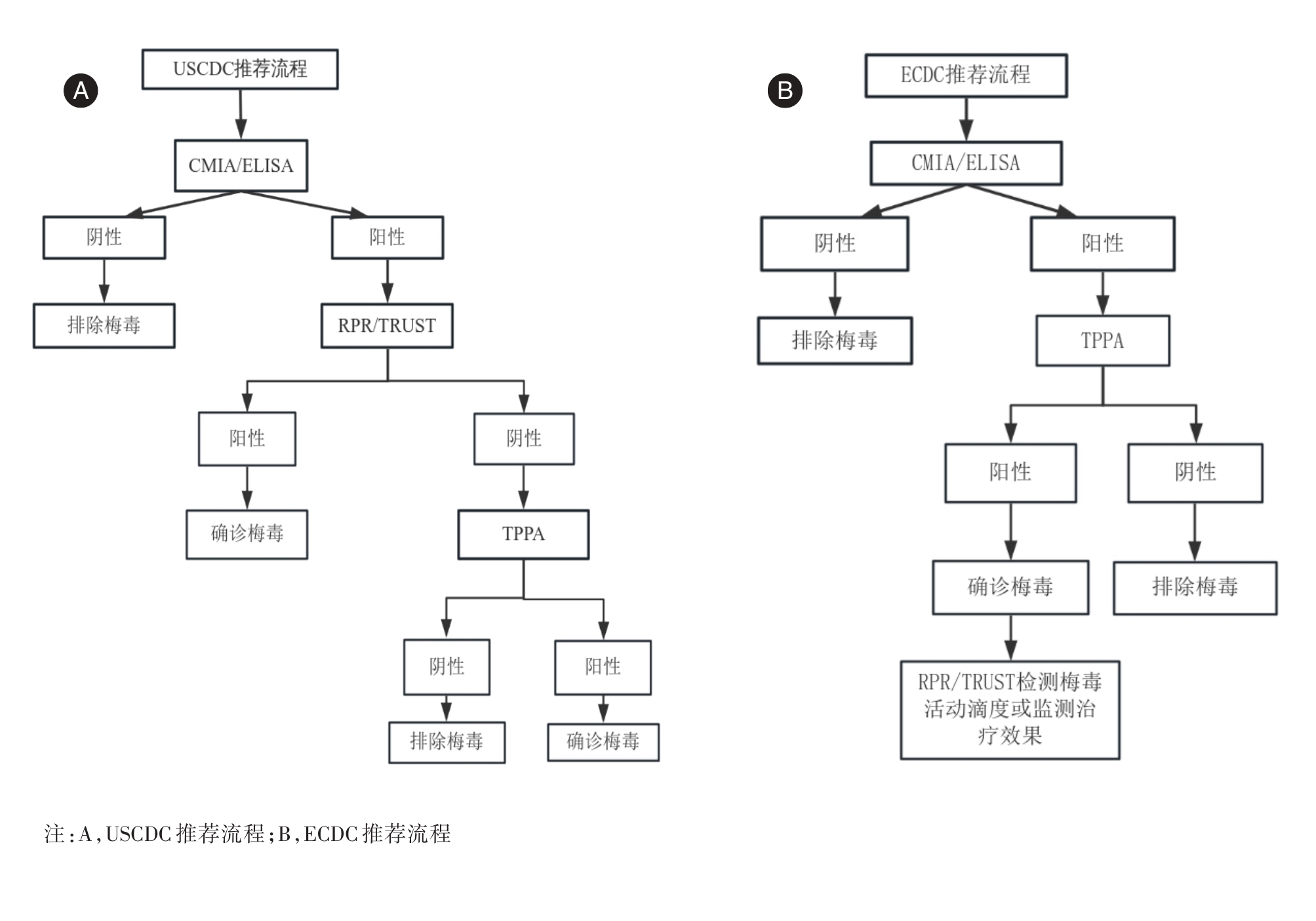
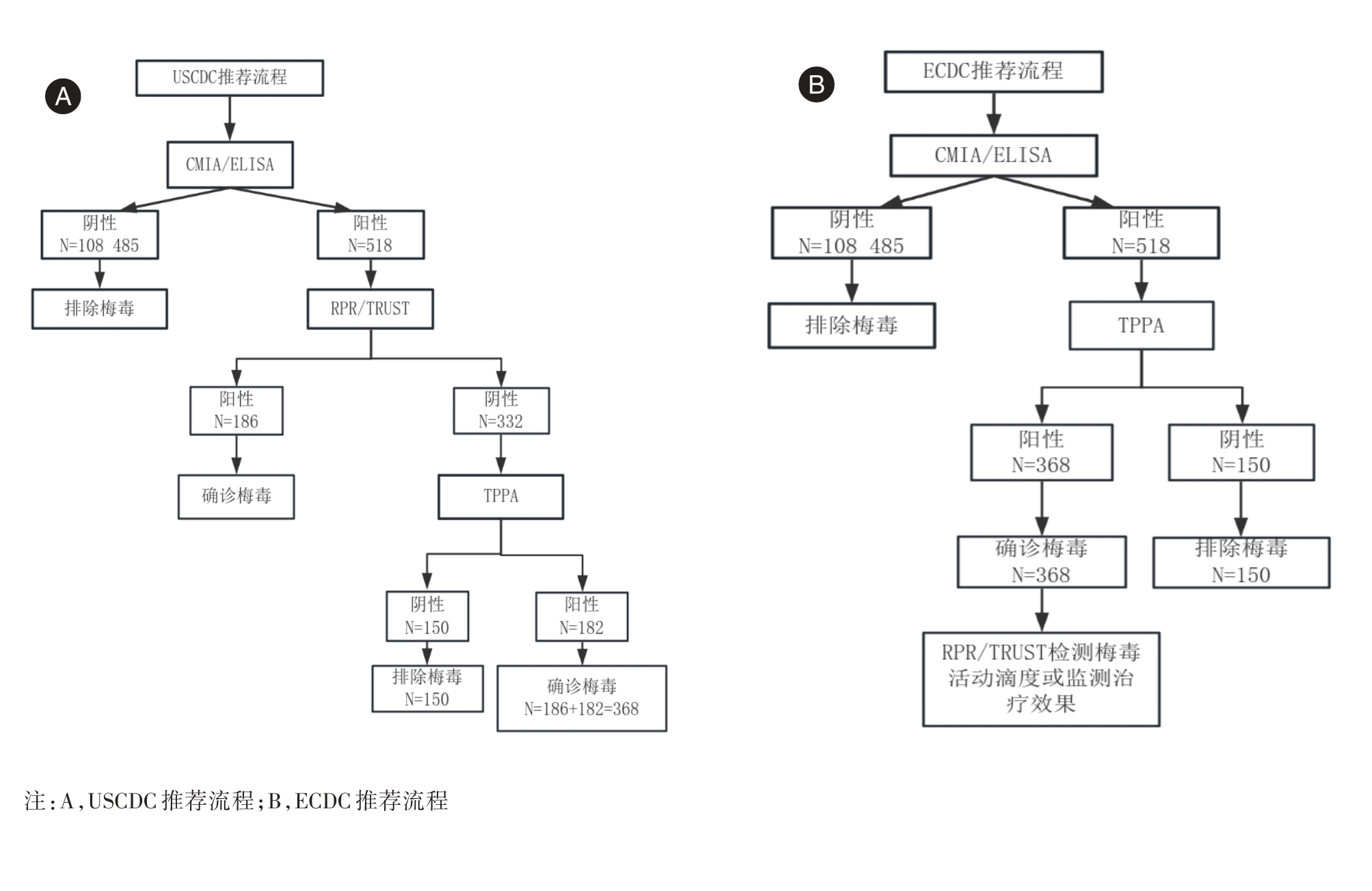
目的 比较美国疾病预防控制中心(USCDC)与欧洲疾病预防控制中心(ECDC)推荐的两种梅毒反向检测流程在妇幼人群诊断效能的一致性,探讨化学发光免疫试验(CLIA)假阳性的影响因素。 方法 回顾分析2021—2023年109 003例就诊人员的梅毒血清学检测结果,所有就诊人员均采用CLIA筛查梅毒特异性抗体,筛查阳性者同时采用甲苯胺红不加热血清试验(TRUST)和梅毒螺旋体颗粒凝集试验(TPPA)检测。运用kappa一致性检验比较USCDC与ECDC推荐的两种梅毒反向检测流程诊断梅毒的一致性,并分析CLIA假阳性在不同S/CO区间及不同人群间的分布特征。 结果 依据两种梅毒反向检测流程梅毒阳性率均为0.34%,该院人群梅毒患病率高于全国水平,未发现CLIA阳性、TRUST阳性而TPPA阴性的病例,两种方案kappa值为1.0,在妇幼人群中的诊断效能无差异;CLIA真阳性率为71.04%,其真阳性率与S/CO值呈正相关,当1.0 < S/CO ≤ 3.0之间时,CLIA真阳性率21.88%,S/CO值> 10时真阳性率100%;青年期CLIA假阳性率最高,为38.75%,妊娠及流产状态的育龄女性假阳性占比最大,为40.00%。 结论 两种梅毒反向检测流程在梅毒低流行妇幼人群具有相同的诊断效能,CLIA灵敏度高,对于S/CO < 10时,尤其是成年育龄女性,需注意假阳性存在,避免误诊及不必要的临床干预。

关键词: 梅毒, 反向检测流程, S/CO值, 假阳性

Abstract:

Objective To compare the diagnostic performance of two syphilis reverse testing protocols recommended by the U.S. Centers for Disease Control and Prevention (USCDC) and the European Centre for Disease Prevention and Control (ECDC) within maternal and child populations, and to explore the factors contributing to false-positive results in chemiluminescent immunoassays (CLIA). Methods A retrospective analysis was performed on serological test results from 109,003 patients collected between 2021 and 2023. All participants were initially screened for specific syphilis antibodies using CLIA, and those with positive results underwent confirmatory testing with both the toluidine red unheated serum test (TRUST) and the Treponema pallidum particle agglutination assay (TPPA). The kappa statistic was employed to assess the diagnostic agreement between the USCDC and ECDC protocols, while also analyzing the distribution patterns of CLIA false-positive results across varying S/CO value ranges and demographic groups. Results Both protocols achieved a syphilis positivity rate of 0.34%. The hospital's high-prevalence syphilis screening program identified no cases with CLIA-positive or TRUST-positive but TPPA-negative results, suggesting high specificity in this population. The two protocols demonstrated perfect agreement with a Kappa value of 1.0, indicating no significant difference in diagnostic performance between maternal and child populations. CLIA exhibited a true positive rate of 71.04%, which was positively correlated with S/CO values: 21.88% when 1.0 < S/CO ≤ 3.0 and 100% when S/CO > 10. The highest false positive rate for CLIA (38.75%) was observed among young adults, while the largest proportion of false positives-reaching 40.00%—was associated with pregnancy and abortion status. Conclusions The two reverse detection methods for syphilis exhibit comparable diagnostic efficacy in women and children from populations with low syphilis prevalence. CLIA demonstrates high sensitivity; however, when the S/CO ratio is less than 10, particularly in adult women of childbearing age, clinicians should remain vigilant for potential false-positive results to prevent misdiagnosis and unnecessary medical interventions.

Key words: syphilis, reverse detection process, S/CO value, false-positive

中图分类号: